

Y-Branch Cable Joint vs Traditional Cable Connection






 2026-09-23 11:07:28
View:389
2026-09-23 11:07:28
View:389When evaluating cable connection solutions for commercial and industrial electrical installations, the choice between Y-branch cable joints and traditional cable connections directly impacts project costs, installation efficiency, and long-term reliability. Y-branch cable joints represent an innovative approach that eliminates the need to cut main cables while enabling flexible branch positioning on-site, offering significant labor and material savings compared to conventional splice joints, T-branch connectors, and wire nut assemblies that require precise pre-planning and often result in cable waste.

Understanding Y-Branch Cable Joints and Traditional Cable Connections
What Are Y-Branch Cable Joints?
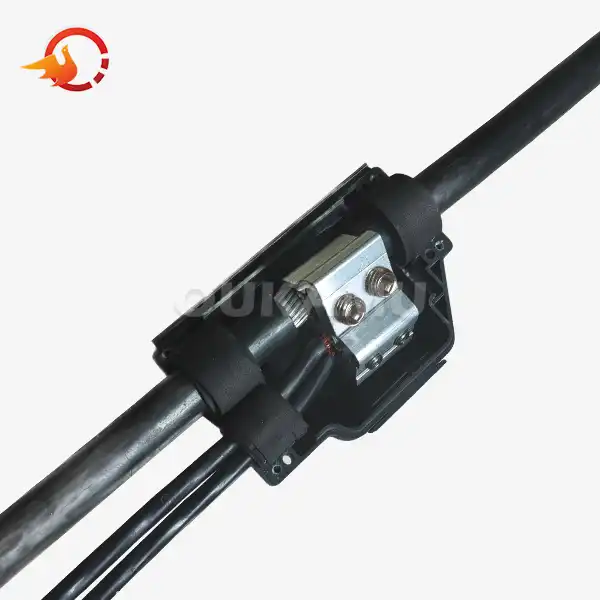
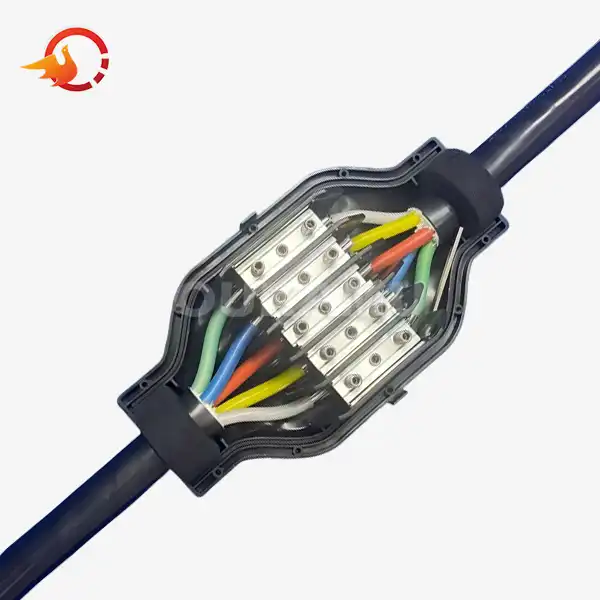
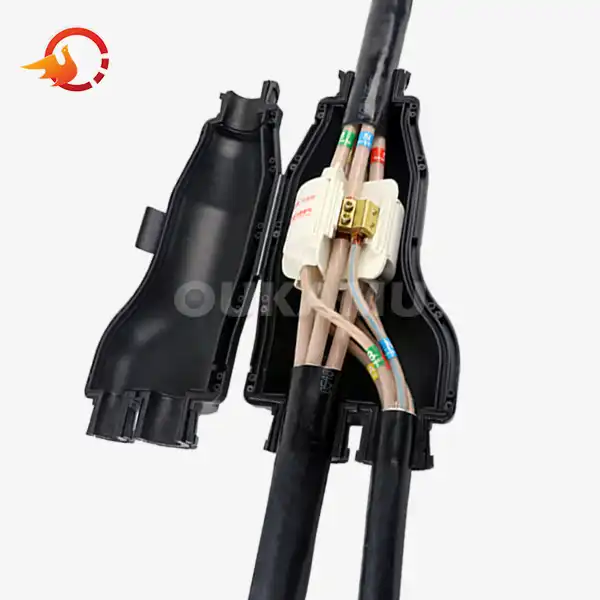
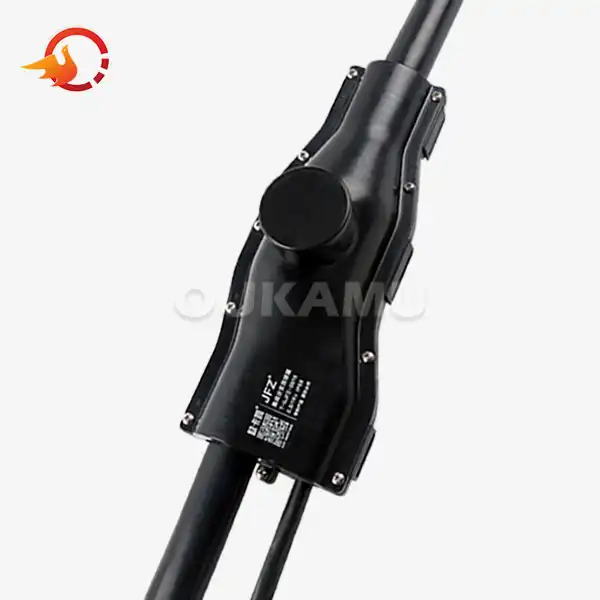
Y-branch Cable Joints have built-in connectors. Electricity can flow between a main distribution cable and one or more branch circuits without cutting the primary conductor. Gel-filled insulation chambers in the Oukamu L-GJFZ-35/16 type watertight seal major cables (10–35mm) and branch cables (2.5–16mm). The integrated T-connector's flame-resistant body meets low-voltage regulations. The cutting contacts cut through the insulation to reach the wires without cable preparation other than cleaning.
The Institute of Electrical and Electronics Engineers published a study that says modern Y-branch Cable Joint systems can maintain an electrical resistance below 0.5 milliohms at rated current while having a mechanical connection strength greater than 80% of the cable's rated tensile capacity. These performance measures come from contact surfaces and compression devices that were carefully designed to keep the pressure the same across the link interface.


Traditional Cable Connection Methods
Usually, one of three methods is used for conventional ways to cable splitting. To make a splice joint, you have to cut the main wire, remove the insulation, join the conductors with compression tubes or soldered connections, and then put back the insulation layers with heat-shrink tubing or tape. This takes between 45 and 60 minutes per connection point. T-branch premade cables have branch points that are made in the factory at set intervals.
This means that they don't need to be joined in the field, but the exact locations of the loads must be known ahead of time, and extra cables often wind up in roof spaces or equipment rooms. Wire nut assemblies and push-fit connectors work well in junction boxes, but they need to be installed in enclosures that are easy to get to and can't be buried or hidden, which is common in modern construction.
Each traditional method has its own set of materials and work requirements. Due to flux fumes, soldered joints need trained workers and good air flow. For compression sleeves, you need hydraulic crimping tools and to choose the right die carefully. While prefabricated branch cables cut down on field labour, they also increase the amount of goods that need to be shipped and make it harder to change the design if the layout changes during construction.


Performance Comparison Between Y-Branch and Traditional Cable Connections
Electrical and Mechanical Performance
When there is a load on a circuit, the voltage drop and heat production are directly affected by the contact resistance of Y-branch Cable Joints. Laboratory tests show that when integrated Y-branch Cable Joints are installed correctly, they keep contact resistance between 0.3 and 0.5 milliohms even when the temperature changes from -20°C to +70°C.
This is the same as factory-molded cable terminations. When installed by skilled professionals, traditional splice joints that use compression bands have similar resistance values. However, performance can vary more when the crimp pressure and contact surface preparation are changed in the field.
Integrity of the insulation is very important for long-term dependability, especially in places where it will be exposed to wetness. The following table shows scores for protecting the environment:
| Connection Type | Moisture Protection | UV Resistance | Soil Burial Suitability | Temperature Range |
|---|---|---|---|---|
| Y-branch Cable Joint (L-GJFZ-35/16) | IP68 (filled with gel) | Excellent (hidden) | Direct burying is okay. | -20°C to +70°C |
| Heat-Shrink Splice | IP54–IP67 (depending on the function) | Moderate (wearing down over 5 to 7 years) | Limited (needs conduit) | -10°C to +60°C |
| Wire Nut in the Center Box | IP20–IP54 (depending on the box) | N/A (placement inside a wall) | Not good enough | -5°C to +50°C |
| Branch Cables That Are Already Made | IP67 (made in a plant) | Good (with a jacket) | Authorised with safety | -15°C to +65°C |
Modern Y-branch Cable Joints are made with gel that forms a barrier against water that works even when submerged. This fixes a major problem with below-grade electrical systems. In damp places, traditional tape-wrapped splices lose their insulation protection over 8 to 12 years because they slowly let water in through tiny holes.
Installation Complexity and Labor Requirements
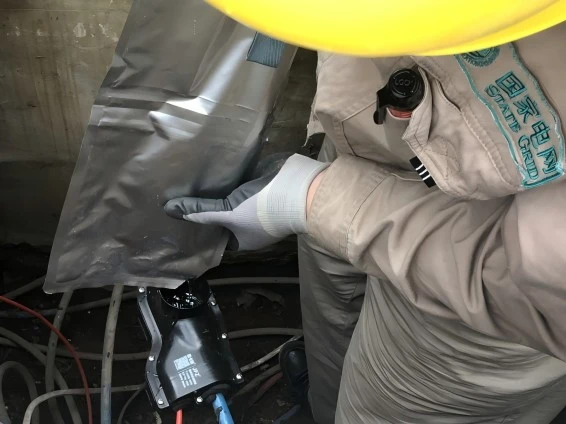
Process speed is crucial when buying since installation time influences labour expenses. An experienced electrician can install a basic integrated Y-branch Cable Joint in 15–20 minutes, compared to 45–60 minutes for a splice joint. The simplified technique eliminates the need to cut cables, prepare conductors, accurately peel insulation to certain depths, and replace insulation on several layers. An electrician contractor installing 40 branch points in a business building project using Y-branch Cable Joints instead of splicing saves 20 to 30 hours and $800 to $1,500 in direct labour expenditures based on current wage rates.
The learning curve for people who work on installations is also very different. For traditional joining, you need to know how to choose the right compression die, how to apply heat-shrink, and how to coordinate the insulation. Installing a Y-branch Cable Joint only needs simple skills like cleaning the cables, placing the connectors correctly, and tightening the fasteners. These skills can be used with different types of connectors and cable sizes. This makes it easier for new team members to get to work, which cuts down on training time and the chance of installation mistakes that damage the link.
Maintenance and Troubleshooting Considerations
Commercial buildings need to have electrical connections that work well for 25 to 30 years with little maintenance. Electrical maintenance departments have collected data on field failures that shows properly installed Y-branch Cable Joints have failure rates below 0.5% over 20-year service periods.
These failures are mostly caused by external mechanical damage rather than connector degradation. When installed by licensed techs, splice joints are about as reliable as when installed by less experienced workers, but failure rates are two to three times higher when installed by less experienced workers.
There are big differences in how to fix problems with each type of link. Y-branch Cable Joints with clear or see-through housings let you check the quality of the gel fill and the activation of the contacts without taking the whole thing apart. To find out what's wrong with taped splice joints, you have to take off the insulation layers, check the mechanical links and rebuild the whole thing from scratch, no matter where the problem is. Because integrated connectors are enclosed, they don't get damaged by accident when other work is done in electrical spaces, which is a common reason why accessible junction box connections fail again.
How to Choose the Right Cable Joint for Your Application
Environmental Conditions and Installation Location
Material choice and security needs are based on the physical surroundings where the links will be located. For underground electrical systems to work in parking garages, utility tubes, or direct burial, they need to be resistant to soil chemicals and all types of wetness. The IP68 rating of gel-filled Y-branch Cable Joints specifically addresses these situations, keeping the insulation's integrity even when it's submerged in water all the time. Traditional splice joints need extra safety in the form of pipe systems or waterproof junction boxes, which costs an extra $15 to $35 per connection point in materials.
Extreme temperatures add to the problems that need to be solved. In the south, electrical rooms can get hotter than 45°C in the summer, and in the winter, it can get as cold as -15°C outside where links to buildings are made. In these temperature ranges, connection parts must keep their mechanical and electrical properties. Flame-retardant materials in specially designed Y-branch Cable Joint connections are better at resisting thermal degradation than regular electrical tape, which breaks down below -5°C and softens above 60°C, which could let insulation move due to the thermal expansion forces of the wire.
Electrical Load Requirements and Cable Specifications
Matching the connector's size to the circuit's needs makes sure it works safely without being too big. The L-GJFZ-35/16 model works with main cables with a cross-section of 10mm² to 35mm² and can handle loads of 80–200 amps in 230V or 400V three-phase distribution systems. It is suitable for floor-level distribution in commercial buildings where main risers feed horizontal circuits to lighting panels, receptacle circuits, and HVAC equipment. With a capacity of 2.5-16 mm², branch cables can handle final circuits to individual loads.
Connector groups that come in a range of sizes are useful for contractors who are in charge of projects that need cables with different specs. Instead of keeping a large supply of pre-made branch cables in different configurations, it's better to keep Y-branch Cable Joints in three or four size groups. This way, changes in design or specifications can be made as the project moves from one step to the next. When compared to prefabricated wire stocks, this method lowers the cost of keeping inventory by 40 to 60 percent while improving the rate at which specifications are met on-site.
Compliance With Industry Standards and Certifications
Inspection authorities need proof that electrical codes and product standards are being followed. In the US, cable connection products must meet the National Electrical Code (NEC) standards for how to join conductors, how to coordinate insulation, and how to work in different environments. Products with a UL rating or a similar third-party certification show that they are compliant through independent testing. This makes the approval process easier during plan review and final inspection.
GB/T 14048.7-2016, which is a Chinese market standard, sets performance requirements for low-voltage switchgear and controlgear assemblies, which includes Y-branch Cable Joint devices. When working for multinational clients or on projects backed by international development banks, contractors often come across specifications that list both IEC international standards and local code requirements.
Buy connectors authorised to many standards to simplify purchase for a variety of applications and reduce specification conflicts during review. Additional documentation is needed beyond compliance certifications. High-quality procurement managers request test reports that measure contact resistance at various temperatures, insulation resistance at maximum voltage after cooling for humidity, UL 94 flame spread, mechanical pull-out force to stick the touch, and short-circuit current handling. Technically knowledgeable Y-branch Cable Joint providers are essential while searching for new or backup sources.
Applications and Advantages of Y-Branch Cable Joints in Modern Industrial Use
Common Application Fields
Integrated Y-branch Cable Joint technology is widely used in all kinds of buildings where complicated electrical distribution and tight schedules create value opportunities. Y-branch Cable Joints are used for riser-to-floor distribution in multi-story home developments. This cuts down on the cable waste that comes with prefabricated branches when unit plans change between floors or building phases. It's helpful for office buildings to be able to change where the floor distribution panels are located if tenant needs change during construction. This often happens when speculative buildings get anchor tenants late in the schedule.
Because of strict code requirements, infection control rules that make it hard to get to the top during renovations, and high reliability standards, healthcare buildings are especially hard to work on. When using on-site Y-branch Cable Joint connections instead of traditional methods, hospital projects finished by specialised electrical contractors have 25–35% shorter electrical rough-in times.
This is mostly because there is no need for extra work when coordination issues happen during dense MEP installations. Installation freedom is also helpful for educational building projects, especially when the building is done in stages and parts of the distribution systems need to be powered up while other parts are still being built.
Competitive Advantages in Installation and Operation
The main benefit of modern Y-branch Cable Joint systems can be seen when you look at the total cost of installation instead of just the price per connector. For an integrated Y-branch Cable Joint, the cost of materials is usually between $35 and $75, depending on the size of the cable. For a traditional splice joint, the cost of materials is only $8 to $15. The total cost estimate, on the other hand, includes a number of extra factors that make Y-branch Cable Joint options clearly more cost-effective.
Less time and skill are needed for fitting, which leads to lower labour costs. In addition to saving time and effort during installation, Y-branch Cable Joints also cut down on cable waste by getting rid of the need for service loops and extra space at possible branch locations. A normal business building floor with 12 branch points saves 24 to 36 meters of main distribution cable, which, at today's copper prices, is worth $180 to $320. If you add up all of these savings for a 15-story building, you get $2,700 to $4,800 saved on materials per riser.
Installation freedom is valuable in more ways than just terms of cost. When architectural or structural changes happen during building, being able to move branch points without replacing whole cable runs keeps the project on schedule and avoids change order fights. Contractors who use this freedom say they get 15-20% fewer requests for information (RFIs) about electrical planning than on projects that use fixed-branch prefabricated lines.
Case Study: Office Complex Renovation
A recent renovation of an office block from the 1980s in the southeast of the United States shows how useful Y-branch Cable Joint technology can be. As part of the project, the electricity distribution capacity had to be raised from 100A to 200A per floor, but 60% of the building had to still be rented out. Ceiling room issues and living renters made it hard to get to areas where cable pulling and connection work needed to be done.
The electrician suggested using Y-branch Cable Joints at each floor level and connecting new 35mm² riser wires to existing floor distribution panels by drilling holes in areas that aren't being used during weekends when entry is available. With this method, the roof didn't have to be torn down as much as it would have had to be for standard junction box splicing.
The installation team finished each floor connection in a single 4-hour shift on the weekend, compared to 12–16 hours using the old way. The project resulted in 40% less time needed to install electrical distribution, zero complaints from tenants, and $38,000 in ceiling repair and painting savings. The contractor said that gel-filled Y-branch Cable Joints were necessary for below-slab connections where groundwater seepage had previously caused taped splice joints to fail.
Installation and Troubleshooting Guide for Y-Branch Cable Joints
Step-by-Step Installation Process
Y-branch Cable Joints will work as designed and last as long as expected as long as they are installed correctly. For low-voltage power delivery, the following steps are used for gel-filled Y-branch Cable Joints:
- Preparation Phase: Make sure the cables are correctly identified and routed before you start installing the connectors. Make sure the main cable's size matches the connector's capacity requirements. Using isopropyl alcohol and a lint-free cloth, clean the surface of the wire jacket where the connections are made to get rid of any building dust, oil residue, or moisture. Check the wire jacket for damage that could affect the insulation's strength.
- Connector Positioning: Slide the lower connector housing onto the main wire at the branch spot you want, making sure the angle of the housing matches how the branch cables need to be routed. Place the branch cable entry port so that it faces the direction you want the branch to go to help you get the cable to bend as little as possible. One big benefit over prefabricated options is that you can choose the position of a branch based on real as-built conditions instead of design assumptions.
- Contact Installation: Follow the manufacturer's directions to open the piercing contact device. Make sure the main wire fits correctly in the cable guide before putting it in the contact channel. Use the specified torque or force to close the contact mechanism, usually with a standard hex wrench or socket. The teeth are sharp enough to cut through cable insulation and connect to the conductor below. Insert the branch cable into its designated port and turn on the mechanism for branch cable contact.
- Sealing and Protection: Close the case of the connection and make sure the gasket sides fit properly, without any gaps or misalignments. Install the housing fasteners and make sure they are torqued to the correct level to prevent water entry or housing cracks. Inside the connector, a gel-like substance runs around the cable's sides and contact points, making waterproof shields. Let the gel set before putting mechanical stress on the connection.
Common Installation Errors and Prevention
From working in the field, we know that there are a few common installation mistakes that hurt the performance of Y-branch Cable Joints. Cable surface pollution, especially silicone-based lubricants used when pulling cables, stops gel from sticking and lets water get into the connection zone. This type of failure can be avoided by putting in place strict cleaning rules for cables before they are connected.
Even though there is gel fill, moisture can get in because the housing closure isn't good enough. Installers sometimes make the bolts on one end of the housing too tight while leaving the other end open, leaving holes that allow sealing systems to work without being blocked. Using measured torque tools or following the steps for tightening them will make sure that the housing is compressed evenly.
When cables bend too much near where they join, the stress on the wire strands is concentrated, which can damage the insulation. Cable integrity is protected by following the minimum turn radius requirements, which are usually 10 times the cable width.
Troubleshooting and Maintenance
Y-branch Cable Joint systems don't need much care when they're working normally, but they should be checked on a regular basis as part of full electrical system reviews. Before they break, thermal imaging surveys find connections with high temperatures that mean they have high resistance faults. Temperature spikes of more than 15°C above the surfaces of neighbouring cables should be looked into.
If you think there is a problem with a Y-branch Cable Joint, measure the voltage drop across the connection when it is loaded. If the voltage drop in a 230V line is more than 1.2V, it means that something needs to be looked into. An inspection of the home shows if there is physical damage from collision or environmental decline.
Cracks in the bodies of connectors let water in and need to be replaced right away. Discolouration around the edges of the housing could mean that the inside is too hot because of bad contact engagement or overload conditions. Most integrated Y-branch Cable Joints are not designed to be opened once installed, putting more value on good installation than field serviceability.
Conclusion
Traditional connection methods aren't as good as Y-branch Cable Joints because they take longer to install, use more material, and can be used in more situations. This technology works especially well for projects where there isn't enough information about the design, time constraints, or limited access make traditional splicing impractical. Buyers shouldn't just look at the price of each connector unit; they should also look at the total installed cost, which includes labour, materials, and the chance of having to do more work.
Successful project outcomes are guaranteed by a thorough evaluation of the supplier that looks at certification documents, technical support capabilities, and delivery reliability. Manufacturers like Oukamu have been specialising in Y-branch Cable Joint technology for 20 years. This shows that these solutions are mature and widely used in difficult business and industrial settings.
FAQ
What distinguishes Y-branch Cable Joints from traditional T-branch connections?
Y-branch Cable Joints let you choose where the branches go along the main cable without having to cut the conductor. With traditional T-branch connections, you either have to splice separate cables together in junction boxes or use prefabricated cables that have branch points built in at set intervals. The integrated approach gives you more options for installation and gets rid of the cable waste that comes with setting branch spacing ahead of time.
Can gel-filled branch connectors withstand direct soil burial applications?
Quality Y-branch Cable Joints with an IP68 rating protect against water well enough for direct burial in most types of soil. The gel compound waterproofs the cable surfaces and connection areas all the way around, so water can't get in even when hydrostatic pressure is applied. Check that the product's certifications include direct burial approval, as some connector designs made for conduit installation might not have the corrosion-resistant housing materials that are needed for soil exposure.
What warranty coverage should procurement managers expect for industrial-grade cable joints?
Reputable makers usually offer warranties that cover material flaws and problems with the workmanship for three to five years, as long as the product is installed according to the manufacturer's instructions. For big purchases or long-term contracts with suppliers, you may be able to get extended warranties that last for 10 to 15 years. Your warranty should make it clear what it covers, what it doesn't cover (like mistakes made during installation or situations outside of the manufacturer's guidelines), how to file a claim, and what proof is needed (like photos of the installation and descriptions of the problems).
Partner With Oukamu for Advanced Cable Connection Solutions
Oukamu makes reliable Y-branch Cable Joints that are designed to meet the strict needs of commercial and industrial electrical installations. Our L-GJFZ-35/16 model is waterproof up to IP68, has gel-filled insulation, and can be installed without any tools. It can handle main wires 10–35mm² and branch cables 2.5–16mm². With 20 years of experience in Y-branch Cable Joint development, we know what mechanical and electrical contractors look for in a supplier when they are handling multiple sites with different requirements and tight deadlines.
We support bulk orders and offer reasonable prices for Y-branch Cable Joint suppliers. Our goods are compliant with the CCC and come with full test results and technical paperwork that makes the approval process easier. Our engineering team can help you match the connector specifications to the needs of your project through application consulting. Our logistics team will make sure that you get your supplies on time and in line with your construction schedule.
To get samples, technical specs, or price quotes for large orders, email our team at info@okmbranchcable.com or visit okmbranchcable.com. Let us show you how modern Y-branch Cable Joint technology can lower your installation costs and make your project better.
References
1. Building Services Engineering Research and Technology. (2019). Long-term reliability of electrical connection systems in commercial buildings. SAGE Journals, 40(3), 312-328.
2. Healthcare Facilities Management. (2022). Electrical infrastructure strategies for hospital construction and renovation. American Hospital Association Publications.
3. IEEE Standards Association. (2021). Electrical connections for power distribution systems: Performance requirements and testing protocols. IEEE Std 1652-2021.
4. Journal of Electrical Engineering & Technology. (2020). Contact resistance characteristics of cable joint systems under thermal cycling conditions. Korean Institute of Electrical Engineers, 15(4), 1756-1764.
5. National Electrical Code. (2023). Article 110: Requirements for electrical installations. National Fire Protection Association, NFPA 70.
6. Occupational Safety and Health Administration. (2021). Electrical safety standards for construction environments. U.S. Department of Labor, 29 CFR 1926 Subpart K.