
_1790150425011.webp)
Best Cable Resin Filled Type Joints for XLP: Buyer’s Guide 2026






 2026-09-24 14:57:13
View:389
2026-09-24 14:57:13
View:389When you're managing underground cable networks for municipal utilities or power distribution systems, every joint matters. Cable Resin Filled Type Joints For XLP (cross-linked polyethylene) cables deliver the reliability procurement specialists demand—especially in moisture-prone environments where conventional connectors fail. These gel-filled joints provide robust waterproofing combined with electrical insulation, protecting low-voltage distribution networks from ground faults and unplanned outages that disrupt service and inflate maintenance budgets.

Understanding Cable Resin Filled Type Joints for XLP Cables
In XLPE-insulated networks, the safe barrier between cable sections is made up of Cable Resin Filled Type Joints For XLP. The filling material, which is usually an epoxy or gel-based substance, surrounds the connection point and acts as both an electrical insulator and a water-tight cover. This double protection is very important for underground installations where water is always a threat to the cables' integrity.
How Resin Filling Technology Works
Injecting or pouring a thick resin mixture into a housing that covers the wire link is the main idea behind it. When the material hardens, it creates a lasting seal that keeps water out and keeps the electrical properties of the joint the same. Gel-filled systems are better than tape-based ones because they don't have air gaps that can cause partial discharge and failure before they're supposed to.
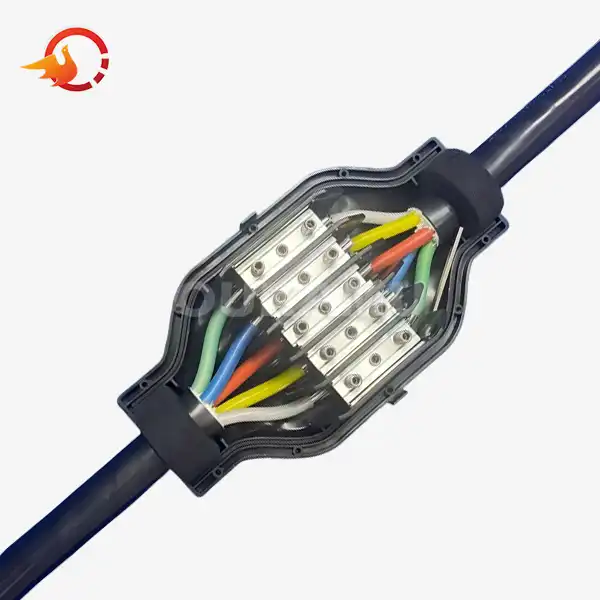
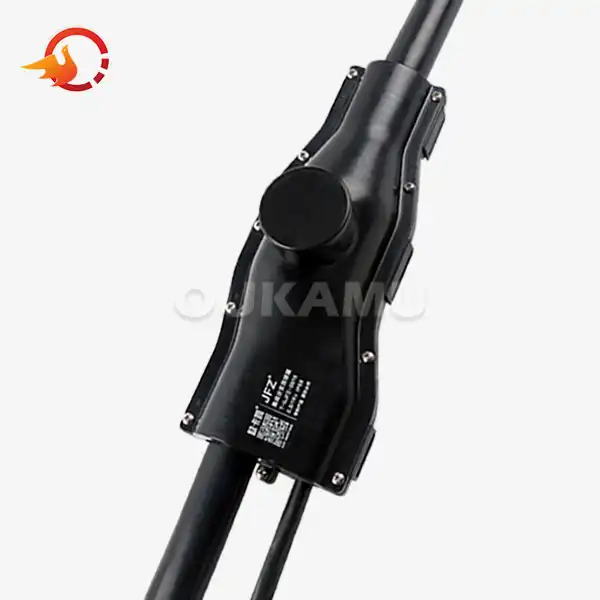
Our company, Xi'an Oukamu Electric, has been an expert in branch cable connection technology for more than 20 years. This method is shown by our Model L-GJFZ-70/16, which has gel-filled insulation that offers two layers of safety. The system can handle major wires that are 25 mm to 70 mm in diameter and branch cables that are 2.5 mm to 16 mm in diameter. It all fits inside an IP68-rated enclosure that is made to be buried directly or in a well.

Key Performance Specifications
When you know about technical factors, you can better match goods to the needs of your network. For procurement decisions, this is what's important:
| Parameter | Specification | Significance |
|---|---|---|
| Insulation Resistance | >1000MΩ | Stops leakage current and makes sure safety in the long term |
| Withstand Voltage | 3.5kV (5 min) | Proof that the dielectric strength is higher than the working stress |
| Voltage Drop | <3.2mV | Lessens the loss of power across the joint |
| Waterproof Rating | IP68 | Guarantees protection from submersion in flood conditions |
| Operating Voltage | 0.6/1kV | Ideal for normal low-voltage distribution |
The gel compound itself doesn't break down when exposed to chemicals or changes in temperature, so it keeps its sealing properties across the temperature ranges that are common in underground installations. Because it is more reliable, there are fewer callbacks and the cost of upkeep over time is cheaper.
Comparing Resin Filled Joints with Other Jointing Solutions
There are a lot of different jointing methods on the market for connecting cables, and each one has its own pros and cons. Heat shrink joints need to be applied with a torch and the temperature needs to be carefully controlled. This makes them hard to install and depends on the weather. Options that use cold shrink don't need heat, but they often don't have the strong mechanical safety that underground settings need.
Performance Advantages of Gel-Filled Systems
In tough situations, Cable Resin Filled Type Joints For XLP always work better than other options. Before it hardens, the gel compound flows around the connections between the conductors, filling in any gaps that could let heat through. This is very different from shrink technologies, which can trap air pockets while they're being used. The result can be seen in field reliability data: gel joints that are placed correctly have much lower failure rates in wet environments.
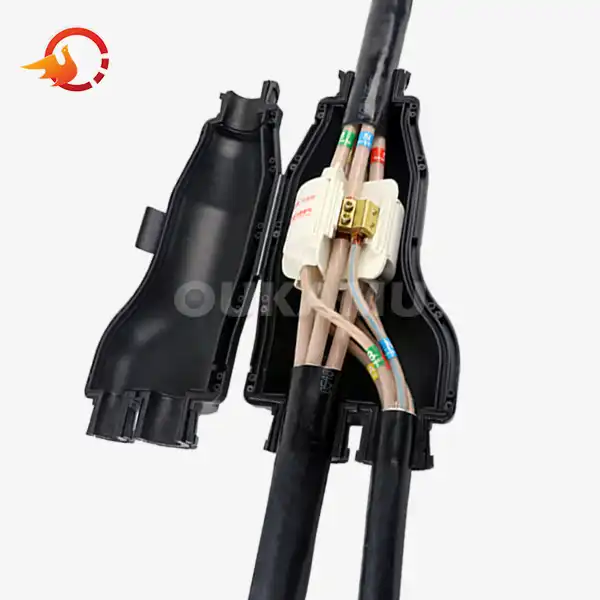
Our gel-filled branch connectors solve a problem that utility procurement managers have: they need to keep the main cable running while adding branch connections. In traditional ways, the main cable has to be cut or branch sites have to be planned ahead of time while the cable is being made. With Oukamu's design, field workers can join branches at any place along the cable run without cutting the main conductor. This adaptability gets rid of wasteful wire use and works with changes in the design that are bound to happen during building.
Market Leaders and Product Innovation
Companies with long histories, like 3M and TE Connectivity, control certain market segments by offering a wide range of products. But for some use cases, cost-performance ratios are often better with specialised companies that focus on those apps. Instead of choosing based only on name knowledge, the most important thing is to match the product's powers to the real installation circumstances.
How to Choose the Right Resin Filled Type Joint for XLP Cables
To choose the right Cable Resin Filled Type Joints For XLP, you have to look at a lot of technical and operational factors at the same time. Procurement managers have to weigh the immediate unit costs against the total costs over the product's lifetime, which includes labour for installation, the number of times it breaks down, and the need for maintenance.
Critical Selection Criteria
Voltage compatibility is the most basic condition. Your joints must be able to handle the nominal voltage of the system with enough safety buffer. For 0.6/1kV low-voltage distribution networks, joints designed for 3.5kV withstand voltage give enough space for short-term overvoltages.
Cable size compatibility tells you if a certain part can fit your cable measurements. The L-GJFZ-70/16 type can handle main wires up to 70mm² and branches down to 2.5mm², which is a useful range for distribution systems. This makes it easier to keep inventory low because one product can be used for different cable sizes.
Environmental Factors and Protection Requirements
For buried or submerged uses, IP68 waterproof grades are a must because underground systems are constantly exposed to water. This rating shows that the joint can withstand being submerged in water for a long time. This protects it from changes in the water table that can damage underground infrastructure. The gel substance in Oukamu joints keeps its sealing qualities even when hydrostatic pressure is applied. This stops water from moving along the wire strands through a process called "wicking."

Application Sector Considerations
When it comes to priorities, industrial sites are different from city utilities. Manufacturing plants might be willing to pay more per unit for joints that can be installed or inspected without tools. When utility companies buy things for large-scale deployments, they pay close attention to the cost per link point and data on how reliable the equipment has been in the field. For OEM uses that serve foreign markets, goods need to have multiple approvals, such as meeting the requirements of GB/T 14048.7-2016.
Our branch connections were recently used by a city's water company as part of an upgrade to their pump station network. The project needed 47 branch links in places that moved around a lot while it was being built so that engineers could find the best places for the pumps.
Using traditional prefabricated cable assemblies would have required a lot of reorders and caused delays in the schedule. Instead, field teams put in standard trunk lines right away and then made branches as needed as the positions of the equipment were finalised. By using this method, the installation time was cut by three weeks, and about 180 meters of extra cable were saved.
Installation and Maintenance of Resin Filled Joints for XLP Cables
The right way to put a quality joint decides whether it lasts as long as it's supposed to or breaks before its time. When compared to heat-dependent methods, the gel-filled method makes installation easier in many ways, but it still needs careful attention to detail.
Step-by-Step Installation Workflow
Start by properly preparing the cable. Take off the outer jackets and clean the conductor surfaces to get rid of any dirt or dust that could get in the way of electrical contact. Our built-in branch connectors can make links between copper and copper, aluminium and aluminium, or copper and aluminium. The contact design accounts for changes in thermal expansion in joints made of more than one metal.
Place the case of the branch box at the chosen connection point. The modified polypropylene design can handle both high and low temperatures and UV light, making it perfect for projects that aren't covered completely but can still be reached. Put the conductors into the connector terminals, making sure they go all the way in and are held in place properly.
Follow the directions on the package to mix the two-part gel compound. As long as the yellow-colored mixture is still see-through, you can see that it is fully filled. Put gel into the sealed housing through the designated port while keeping an eye on the vent hole for air movement. Cable Resin Filled Type Joints For XLP require the same careful void-free procedure, because filling in all the gaps gets rid of the stress points in the electrical field that are caused by voids.

Safety Protocols and Quality Verification
Always turn off all power to lines before installing a joint. Use standardised test tools to make sure there is no voltage present; never depend only on switching signs or operating assumptions. Because the gel substance has chemicals in it that can irritate the skin, nitrile gloves are used to handle it safely.
After injecting the gel, look through the clear housing to make sure there are no air gaps and that the gel is filled evenly. Both electrical and mechanical function are harmed by incomplete filling. Even if the gel looks solid, wait the full curing time before re-energising. Curing continues inside the gel even after the surface becomes hard.
Maintenance Guidelines and Troubleshooting
When installed correctly, buried joints don't need much maintenance, but testing the system on a regular basis can find problems before they cause power outages. A thermographic scan done during load times shows that joints are running hotter than the nearby cable. This means that there is more resistance because of bad connections or water getting in.
Typical Inspection Schedule:
- Visual inspection of joints that can be reached: Annually
- Under-load infrared scan: Every 24 months
- Insulation resistance testing: Every 36 months or after major weather events
- Dielectric strength testing: Every 60 months
Our gel compound and housing materials are flame-resistant, which gives us important safety margins. If there is a nearby fault that causes a lot of heat, which is very rare, these materials stop the spark from spreading, so the damage stays in the fault zone and doesn't spread along the cable run.
Where to Buy and How to Procure Resin Filled Cable Joints for XLP Cables
To find good Cable Resin Filled Type Joints For XLP, you have to figure out how to use supply networks and make sure the products are real and meet technical standards. When buying in bulk, dealing directly with manufacturers can often get you better prices and better technical help than going through multiple levels of marketing.
Supplier Evaluation and Product Verification
Before choosing a provider, make sure you get full type test results and certifications. Genuine makers show proof that they follow the relevant standards; general claims without test data to back them up suggest that quality control isn't very good. Certifications like ISO 9001, ISO 14001, and ISO 45001 show that quality management is organised, but certification by itself doesn't guarantee that a product will work.
For utility procurement following competitive bidding processes, establish clear qualification criteria emphasizing performance specifications over brand names. This approach encourages qualified suppliers who might offer better value even if their brand isn't as well known. Need samples for evaluation testing to make sure that the goods delivered fit the specifications that were sent in.
Procurement Strategy and Pricing Considerations
Buying in bulk can save you a lot of money, but you need to be able to accurately predict demand. Framework agreements that happen once a year or every six months balance inventory costs against price drops per unit. Volume discounts usually start at 500 units, and get even bigger below 2000 units.
| Procurement Volume | Typical Unit Price Range | Lead Time |
|---|---|---|
| 100 to 499 units | $45 to $55 | Two to three weeks |
| 500 to 1999 units | $35 to $45 | 3 to 4 weeks |
| 2000 or more units | $28 to $38 | 4 to 6 weeks |
Negotiation leverage increases when you demonstrate technical knowledge and clear specs. Suppliers know that buyers who know how their products are different will be willing to pay more to get their business. But when prices are pushed too far and acceptable margins are lost, quality often suffers or services are cut back, which hurts the long-term value.
Technical Support and After-Sales Service
When evaluating providers, don't just look at their product catalogues; also look at how well they can help with engineering. Can they give advice that is specific to the case for odd installation conditions? Do they train the people who do the installation? Quick technical help stops mistakes during installation that cost a lot of money and speeds up fixing when problems do happen.
Different suppliers offer very different warranty terms. Most manufacturers offer coverage for 12 to 24 months after installation, but some do extend this for certified installation crews. Keep track of the times and conditions of the work to keep your warranty valid. We at Oukamu stand behind our products with full technical support because we know that the success of our customers is what makes us known in the utility market.
Conclusion
To choose the right resin-filled joints for XLP wires, you have to balance technical needs with budget and practical realities. Gel-filled systems protect against moisture better and are easier to install than other technologies. This is especially true in underground distribution networks where reliability directly affects service continuity. When making purchases, you should base your choices on tested performance specs instead of just name recognition.
You should also look at how different goods work with your installation environment and your ability to maintain them. Cable Resin Filled Type Joints For XLP offer a specialized branch connection method that gets rid of unnecessary cable waste and can adapt to field situations that aren't always the same as what was planned. These useful benefits lead to real cost savings over the course of a project's lifecycle.
FAQ
What is the typical service life of resin filled joints in underground installations?
In well-designed systems, good gel-filled joints usually last 25 to 30 years, which is the same amount of time that the cables they link are supposed to last. How long something lasts depends on how well it was installed, the chemistry of the soil, and how it is loaded. Regular testing finds the small number of joints that are having problems before they break completely.
Can these joints withstand continuous submersion in groundwater?
Without a doubt—the IP68 grade makes it clear that security against continuous immersion is present. The gel substance keeps its sealing qualities under hydrostatic pressure, so water can't get in even when water tables rise above the installation depth because of flooding or heavy rain.
How do gel-filled joints compare to heat shrink products for reliability?
Field reliability data shows that Cable Resin Filled Type Joints For XLP work better than heat shrink options in damp places. This is mostly because the moving gel fills in any gaps during installation. To keep air from getting trapped, heat shrink relies on how the operator works, which makes quality less consistent across big installation projects. Both technologies work well in dry, controlled environments.
Partner with Oukamu for Your Cable Connection Needs
Xi'an Oukamu Electric has 20 years of experience in branch cable connection options that they can bring to your infrastructure projects. As a dedicated Cable Resin Filled Type Joints For XLP maker, we know how hard it is for utility managers to navigate the buying process while meeting tight project deadlines and meeting strict performance requirements. This model, L-GJFZ-70/16, and the rest of our product line offer certified IP68 protection with installation flexibility that adapts to real-world field conditions instead of idealised design assumptions.
You can use volume prices for both small projects and large-scale operations, and you'll get responsive tech help throughout the whole procurement cycle. Email our technical team at info@okmbranchcable.com to talk about your specific cable connection needs and get full technical specifications. You can look through our full catalogue of products at okmbranchcable.com and get quotes that are specific to your job.
|
Partner with Oukamu for Your Cable Connection Needs
Xi'an Oukamu Electric brings 20 years of branch cable connection expertise to your infrastructure projects. Our L-GJFZ-70/16 and broader range offer certified IP68 protection with installation flexibility that adapts to real-world field conditions.
|
References
1. Institute of Electrical and Electronics Engineers (IEEE). (2018). IEEE Guide for Field Testing of Shielded Power Cable Systems Using Very Low Frequency (VLF). IEEE Standards Association.
2. Electric Power Research Institute (EPRI). (2019). Underground Cable Systems: Performance Assessment and Failure Analysis. EPRI Technical Update.
3. International Electrotechnical Commission (IEC). (2020). IEC 60502-2: Power cables with extruded insulation and their accessories for rated voltages from 6 kV to 30 kV. IEC Standards Portal.
4. American National Standards Institute (ANSI). (2021). Quality Management Systems Requirements for Cable Accessories. ANSI Standards Database.
5. National Electric Energy Testing Research & Applications Center (NEETRAC). (2022). Cable Accessory Performance in Underground Distribution Systems: A Five-Year Field Study. Georgia Tech Research Institute.