

What Certifications Are Required for Fire Rated Cable Connectors






 2026-09-09 11:39:45
View:389
2026-09-09 11:39:45
View:389Certification is essential when choosing fire-rated cable connections for critical infrastructure projects. Fire-resistant components keep emergency lights, alarm systems, and fire suppression equipment running when lives are at stake. Fire rated cable connectors must be certified by recognised testing facilities to work for 90 to 120 minutes at temperatures over 750°C, and they are a critical link in the overall connection system. Fire protection engineering procurement professionals need products with comprehensive test reports from national fire-resistant building materials testing centers and real-world performance data showing compatibility with mineral-insulated and fire-resistant cable systems.
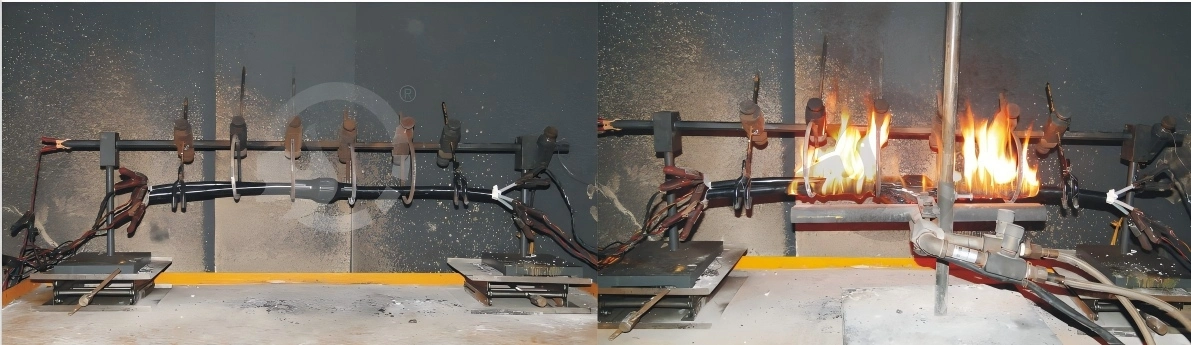
Understanding Fire Rated Cable Connectors and Their Certification Needs
The Critical Role of Fire Safety in Electrical Distribution
People often forget how important fire-rated wire plugs are to emergency power systems. Standard electrical connections break within minutes of a fire, leaving dangerous holes in life-safety systems. These special connectors keep electrical paths open even when the infrastructure around them falls apart. They do this by using advanced insulating materials and stronger construction. The National Fire Protection Association says that properly certified fire-resistant electrical components cut the chance of fire-related equipment failure by 67% compared to alternatives that aren't rated.
Why Certification Matters for Procurement Decisions
Project managers need a paper trail during the review process, and certification gives them that. When fire officials check out train or hospital systems, they make sure that every part of the emergency power chain has the right ratings. Not having the right certifications can cause problems with finishing a project, cost a lot of money to redo, and put contractors at risk of liability claims. The testing method makes sure that connections will work as promised in a real fire, not just in theory.
Technical Requirements for Fire System Integrity
Fire-rated links have to deal with a lot of technical problems at the same time. The shielding materials don't break down when heated and keep their dielectric power. When metals are heated, they expand at different rates, but mechanical compression systems keep conductors safe. Internal sealing stops the flame from spreading through the body of the connection. These design standards are what make certified goods more expensive—the engineering work needed to pass strict testing methods adds up to big development costs that generic alternatives can't match.
Key Certification Standards for Fire Rated Cable Connectors
UL Standards and North American Compliance
In the United States, Underwriters Laboratories sets the standard for fire safety approval. In UL 2196, fire-resistant cable systems are specifically talked about. It describes test methods that put whole assemblies, including connectors, in direct flame contact while keeping an eye on circuit continuity. UL 514B sets minimum standards for mechanical and heat performance for metal outlet boxes and fittings. Products with real UL marks have been checked by a third party at approved testing sites. This is the kind of independent confirmation that building authorities and insurance companies need.
International Electrotechnical Commission Requirements
In order to set global standards for circuit integrity in fire situations, IEC 60331 tests connector performance by exposing them to 750°C flames for 90 minutes. This standard is more concerned with keeping things working than just stopping fire. European markets usually need manufacturers to meet both IEC and regional standards. This means that manufacturers who work on international projects need to get these certifications. The test procedures act out the worst possible situations, such as mechanical shock during heat exposure to make it look like a building is falling down.
European Norms and Regional Variations
EN 50200 sets fire protection standards just for the European Union market, with testing methods that are a little different from those used in North America. German VDE licenses add another level of safety to projects in Central Europe. The Canadian CSA standards are similar to the UL requirements, but they add tests for cold-temperature function that are important for northern regions.
The main focus of FM Global certifications is on preventing property loss, which makes them more valuable for industrial and commercial insurance. In this certification environment, people who work in buying have to compare project sites to relevant standards before they can finalise specs.
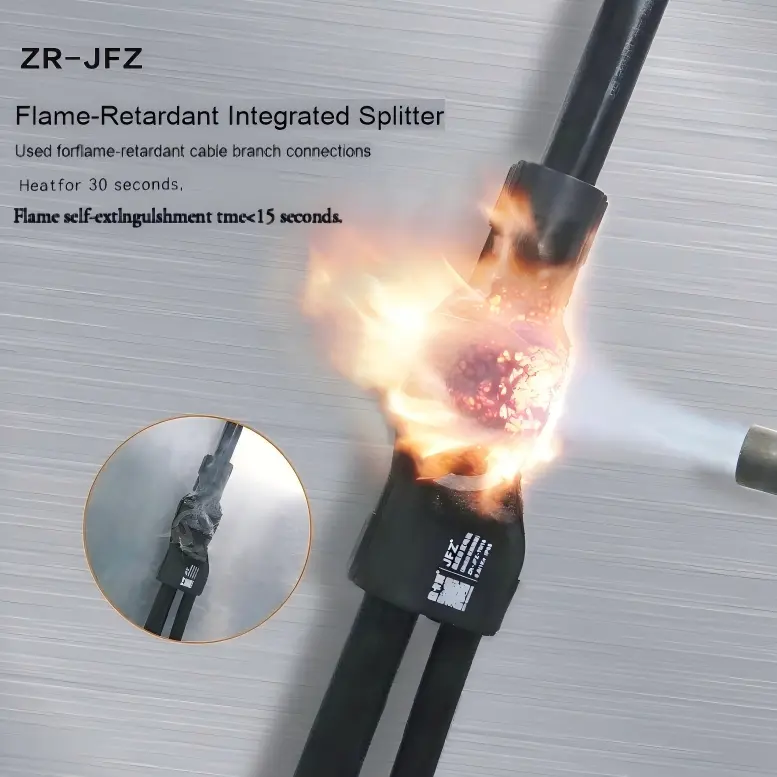
Certification Testing Processes and Criteria for Fire Rated Cable Connectors
Temperature and Duration Benchmarks
Fire rated cable connectors are subjected to rigorous testing, as testing labs carefully control the flame temperatures of connector assemblies, which are usually between 750°C and 950°C depending on the standard being tested. The critical metric measures how long circuits can keep working even when they are constantly being heated up.
According to a study published in the Fire Safety Journal in 2020, connectors made of ceramic insulation materials consistently work better than polymer-based designs. These connectors can keep the circuit intact for 120 minutes or more, while standard fire-retardant plastics only last 60 to 90 minutes. During exposure rounds, testing rooms keep an eye on voltage drop, current capacity, and insulation resistance.
Table 1: Fire Resistance Duration Requirements by Application
| Application Type | Minimum Fire Rating | Typical Test Temperature | Standard Referenced |
|---|---|---|---|
| High-Rise Emergency Systems | 120 minutes | 950°C | UL 2196 / IEC 60331 |
| Hospital Critical Care Circuits | 90 minutes | 750°C | UL 2196 |
| Subway/Transit Infrastructure | 90 minutes | 842°C | EN 50200 |
| Industrial Fire Suppression | 60 minutes | 750°C | UL 514B |
| Commercial Building Life Safety | 60 minutes | 750°C | IEC 60331 |
Material Performance Under Extreme Conditions
The structure of connector parts made of brass, bronze, or special steel metals lasts much longer than those made of aluminium or regular steel. To keep potential flame paths closed, internal parts need to be wrapped in mica tape, ceramic potting compounds, or intumescent materials that expand when heated. Tracking happens when electrical current makes carbon paths across worn-down surfaces. The insulation system must stop this from happening. Recent progress in halogen-free fire-resistant compounds has led to better toxicity profiles during combustion, which addresses safety concerns beyond just circuit integrity.
Mechanical and Electrical Integrity Assessment
As part of the testing procedures, mechanical shocks are given during thermal exposure to simulate the effect of fallen objects. Even though heat can cause gaps in badly built assemblies, connectors must keep the tension on the wires. After the fire is put out, water spray testing is done to make it feel like a real battle. This shows if heat shock breaks seals or damages insulation. During these tests, monitoring equipment keeps an eye on the flow of current and the stability of the voltage. Any break in these measurements that lasts longer than two seconds is usually considered a failure of the test.
Comparing Fire Rated Cable Connectors: Certified vs Non-Certified Options
Safety Risks of Uncertified Components
When you use connectors that aren't certified in fire-rated systems, you create a chain of failure risks that only show up in real emergencies. Generic goods might contain materials that give off harmful fumes, making escape routes less reliable even if the circuits work at first. When thermal growth goes beyond the limits of design, separating conductors happens, leading to mechanical breakdowns.
After a fire, insurance investigators look closely at the component certifications. Finding products that aren't certified can void coverage and put contractors at risk of being sued. Since the price difference between certified and non-certified goods is usually between 15 and 20%, the risk-reward calculation highly favours components that are compliant.
Regulatory Acceptance and Project Approval
During rough-in inspections, building inspectors have the power to reject whole electrical installations if they find parts that don't meet code. Because the integrity of a fire-rated system depends on full pathway certification, repair work needs to include replacing cables as well as connectors. This rule is based on what we learned from past fire disasters where problems with the electrical systems killed people. The proof that approval authorities need is in the paperwork that comes with approved goods. This paperwork includes test results, material specs, and installation directions.
Supply Chain Reliability Considerations
Certified makers keep their quality management systems under review by certification groups. This keeps production batches of fire rated cable connectors from being too different from one another. Non-certified suppliers don't have these checks and balances, so parts that are delivered six months into a project may be very different from samples that passed the first qualification testing.
Because of how precisely they have to be made, lead times for certified products are usually between four and eight weeks for standard configurations. However, this level of predictability is much better for planning projects than sending goods quickly that may not pass review in the field.
How to Source and Verify Certified Fire Rated Cable Connectors
Identifying Reputable Manufacturers
Established providers keep large technical files with test results, material approvals, and compatibility grids for different types of cables. Xi'an Oukamu Electric Co., Ltd. is a good example of this method. They have been specialising in wire connection technology for 17 years and have all the paperwork they need to prove they follow GB/T 14048.7-2016.
When purchasing companies look at possible suppliers, they should ask certification bodies for facility audit reports to make sure that the manufacturing processes are the same as those used in product qualification testing. Suppliers who can't provide original test results or certificates without the testing laboratory's contact information should be seen as red flags.
Certificate Authentication Methods
Certification body records let you check the validity and reach of a certificate online. UL's Product iQ database, IEC's certification management system, and other similar tools let procurement teams make sure that certificates match the products they are getting.
Fake certifications are still a problem, especially when coming from overseas suppliers that don't have good reputations. As part of the verification process, certificate numbers should be compared to records kept by the lab that issued them and product markings should match those on the certification documents. Manufacturers who are doing business legally welcome this scrutiny and give direct contacts at testing labs for verification purposes.
Balancing Performance Requirements with Procurement Realities
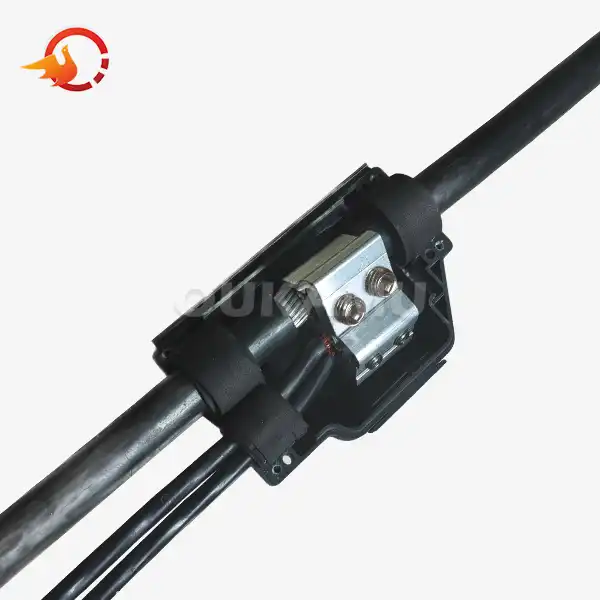
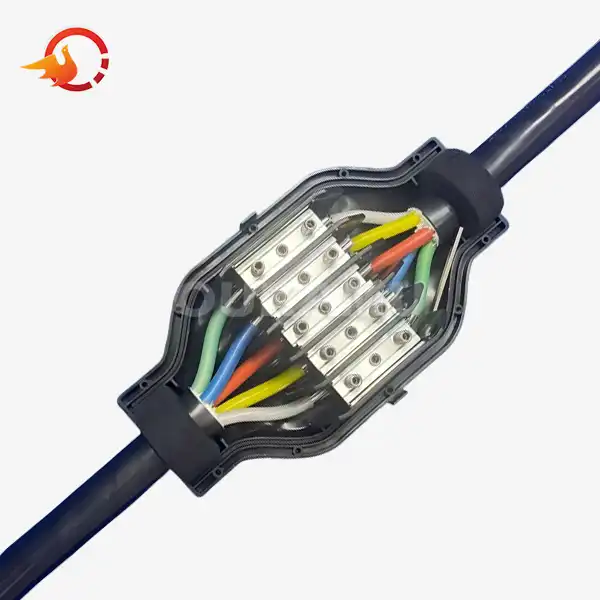
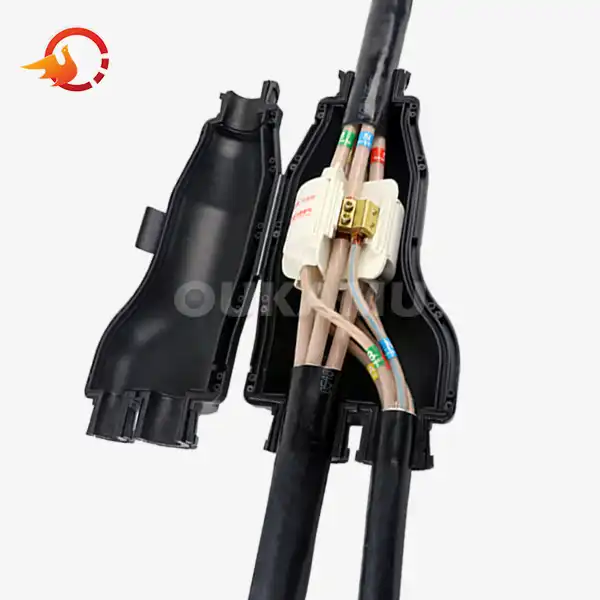
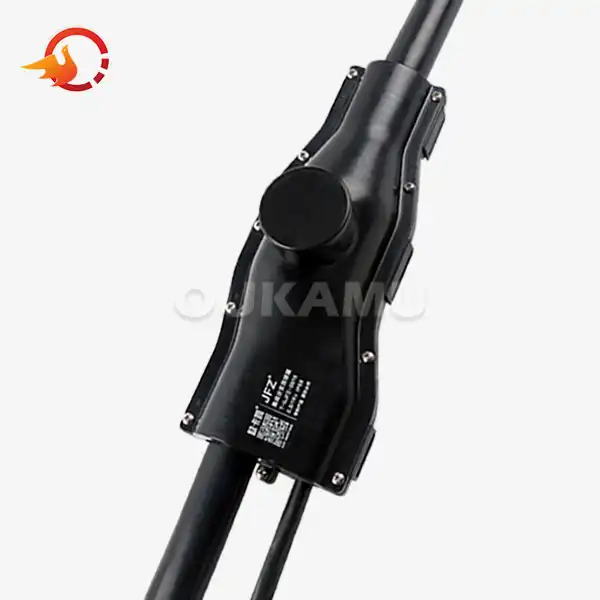
Connectors that have been tested specifically for these changes are needed for projects that need to connect mineral-insulated cables to cross-linked polyethylene systems. This problem can be solved by Oukamu's branch connector systems, which can handle trunk wires from 95mm² to 240mm² and branch links from 6mm² to 70mm².
The whole assembly is also fire resistant. Being able to make connections in the field gets rid of the lead time costs that come with prefabrication. This cuts project schedules by 3–6 weeks compared to factory-terminated options. This flexibility is especially helpful when changes are made to the design while the building is being done.
Table 2: Oukamu Fire Rated Branch Connector Specifications
| Parameter | Specification | Certification Basis |
|---|---|---|
| Rated Voltage | 0.6/1kV | GB/T 14048.7-2016 |
| Trunk Cable Range | 95-240mm² | IEC Standards Compatible |
| Branch Cable Range | 6-70mm² | UL Compliant Design |
| Fire Resistance Duration | 90 minutes minimum | National Fire-Resistant Building Materials Testing Center |
| Insulation Material | Flame-retardant, fire-resistant compound | Meets EN 50200 criteria |
| Installation Environment | Indoor/outdoor, bridge-mounted | IP54 minimum protection |
| Operating Temperature Range | -40°C to +90°C | Verified through thermal cycling |
Case Study: Metro Transit Emergency Power System
There had to be 340 branch connection points on 12 station emergency lighting circuits for a recent tube expansion project in the northeastern United States. Initial specifications called for prefabricated cable assemblies with connectors installed at the factory. This meant that the cables had to be bought 14 weeks in advance and conduit pathways had to be carefully measured before they could be made. The project team switched to fire rated cable connectors that could be installed in the field. This cut the lead time for shipping standard cables and connectors to six weeks.
Three changes were made to the design during installation because of structural problems that were found during excavation. These changes didn't affect the schedule for the field-installable solution, but prefabricated assemblies would have had to be remade, which would have caused a four-week delay. After the installation, tests showed that all circuits stayed intact during a fire simulation, and the installation passed the fire marshal's inspection with no problems.
Practical Advantages of Field-Installable Systems
On-site connection flexibility takes into account the fact that construction drawings show what the designer wanted, not how things actually are in the field. Cable pathways shift to accommodate structural members, HVAC installations, and other trades' requirements. Prefabricated assemblies with fixed branch locations cannot accommodate these variations without field modifications that often void certifications.
Field-installable certified connectors adapt to as-built conditions while maintaining full fire resistance ratings. The compact design allows installation within tight spaces—cable trays, vertical shafts, and crowded electrical rooms—where prefabricated assemblies with bulky branch configurations create installation challenges.
Oukamu's integrated connector design incorporates all sealing, insulation, and compression components within a unified assembly, eliminating the compatibility risks inherent in multi-component field kits. Installation requires standard electrical tools without specialized crimping equipment, supporting efficient crew productivity.
The flame-retardant housing provides mechanical protection and prevents dust accumulation, addressing durability concerns in harsh environments. Material selection includes anti-aging compounds and electrochemical corrosion resistance, extending service life beyond 25 years in typical building environments. These characteristics reduce total cost of ownership by eliminating premature replacement cycles common with lower-grade connection systems.
Conclusion
Navigating fire rated cable connectors certifications requires understanding the interplay between testing standards, material science, and project-specific requirements. Certified products provide documented assurance that emergency power systems will function during the critical minutes when evacuation and fire suppression depend on electrical reliability.
The certification investment purchases not just component performance but also the documentation trail that satisfies inspectors, insurance providers, and ultimately protects building occupants. Procurement professionals who prioritize comprehensive certification packages, verify supplier credentials through independent databases, and select manufacturers with established testing laboratory relationships position their projects for successful completion without compliance complications.
FAQ
What is the difference between flame retardant and fire resistant cable connectors?
Flame retardant connectors resist ignition and limit fire spread but do not guarantee circuit functionality during fire exposure. Fire resistant connectors maintain electrical continuity for specified durations (typically 60-120 minutes) under direct flame contact, ensuring emergency systems remain operational. Projects involving life-safety equipment require fire resistant specifications, while general distribution circuits may use flame retardant grades depending on local code requirements.
How often do fire rated connectors require recertification or inspection?
The connectors themselves maintain certification validity throughout their service life without periodic retesting. However, building codes typically mandate inspection of complete fire-rated electrical systems during initial occupancy approval and subsequently every 3-5 years depending on jurisdiction. These inspections verify physical integrity, proper installation, and absence of unauthorized modifications rather than retesting component performance.
Can fire rated connectors be used with standard non-fire-rated cables?
Installing fire rated connectors on standard cables provides no system-level fire resistance because the cable itself will fail during thermal exposure. Complete pathway certification requires both cables and connectors carry compatible fire resistance ratings. Transition points between different cable types—such as mineral-insulated to XLPE—require specially certified transition connectors that maintain the lowest rating in the circuit path.
What documentation should procurement teams request from suppliers?
Complete packages include original test reports from recognized laboratories showing compliance with specified standards, material safety data sheets for insulation compounds, installation instructions with torque specifications, and compatibility matrices listing approved cable types. Legitimate suppliers provide testing laboratory contact information for independent verification and maintain technical support resources to answer application-specific questions.
Why Choose Oukamu for Certified Fire Rated Cable Connectors
Procurement managers seeking reliable fire rated cable connector suppliers will find Xi'an Oukamu Electric Co., Ltd. delivers the certification depth and manufacturing consistency that critical infrastructure projects demand. Our 17-year specialization in cable branch connection technology has produced connector systems meeting GB/T 14048.7-2016 standards with complete test documentation from national fire-resistant building materials testing centers.
The field-installable design saves 2-3 meters of trunk cable per connection point while reducing labor costs by 40% compared to prefabricated alternatives, directly impacting project budgets on large installations requiring hundreds of connection points.Product compatibility spanning 95-240mm² trunk cables and 6-70mm² branch cables addresses the full range of emergency power system requirements, from lighting circuits to fire pump feeders.
Our integrated connector design eliminates compatibility uncertainties while maintaining IP54 environmental protection and temperature stability from -40°C to +90°C. We maintain comprehensive technical support resources and ship complete documentation packages including test reports, installation instructions, and material certifications with every order.
Contact our technical procurement team at info@okmbranchcable.com or visit okmbranchcable.com to discuss your specific project requirements with fire rated cable connector manufacturer specialists who understand certification complexities and delivery timeline pressures.
References
1. National Fire Protection Association. (2021). Fire Protection Handbook (21st ed.). NFPA Publications.
2. Underwriters Laboratories. (2022). UL 2196: Standard for Tests of Fire Resistive Cables. UL Standards.
3. International Electrotechnical Commission. (2020). IEC 60331: Tests for Electric Cables Under Fire Conditions—Circuit Integrity. IEC Publications.
4. European Committee for Electrotechnical Standardization. (2019). EN 50200: Method of Test for Resistance to Fire of Unprotected Small Cables for Use in Emergency Circuits. CENELEC Standards. https://www.cenelec.eu/standardsdevelopment
5. Wang, J., & Liu, H. (2020). Performance analysis of cable connectors under high-temperature fire conditions. Fire Safety Journal, 116, 103201.
6. GB/T 14048.7-2016. (2016). Low-Voltage Switchgear and Controlgear—Part 7: Ancillary Equipment. Standards Press of China.