
_1790150425011.webp)
LV Cable Jointing vs Cable Termination: Key Differences





 2026-09-02 16:16:26
View:389
2026-09-02 16:16:26
View:389When managing electrical infrastructure, understanding the distinction between LV cable jointing and cable termination becomes critical for project success. LV cable jointing refers to connecting two separate cable segments to extend power distribution networks or repair damaged sections, maintaining continuity across runs. Cable termination, conversely, involves attaching cable ends to equipment, switchgear, or distribution panels to enable power delivery.
Both processes ensure system integrity, yet their applications, tools, and technical requirements differ significantly. Procurement managers and project officers must grasp these differences to specify appropriate materials, control costs, and maintain compliance with safety standards throughout installation and operation.
Understanding LV Cable Jointing and Termination
Core Functions in Electrical Systems
LV Cable Jointing connects different parts of wire without stopping the flow of data in the network. This method is very useful for adding to current circuits, fixing problems, or adapting to changes in the plan while the building is being built. In this process, the insulation is taken off, the wires are connected, and the protected layers are put back on using special materials that are made to fit the cable's original specs.
Terminating a cable does something different: it gets the ends of the cable ready to safely connect to equipment. Terminations control the electrical stress at connection places, which keeps the insulation from breaking down and keeps the structure stable. If you connect to transformers, circuit breakers, or motor controls the right way, you protect both people and devices from electrical dangers.
Application Contexts
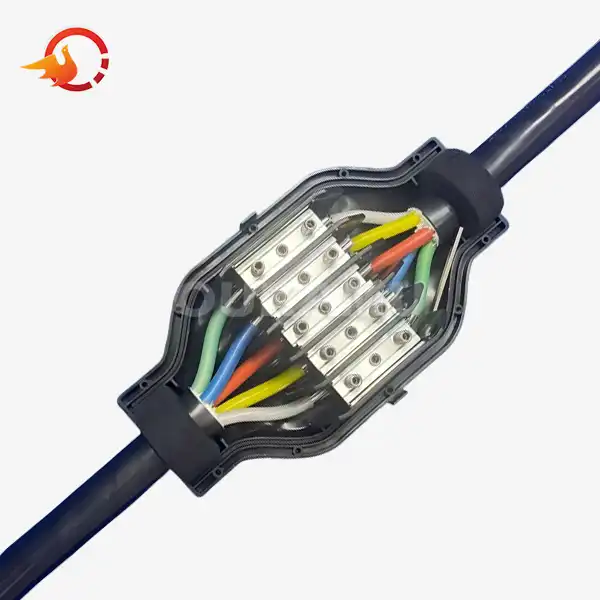
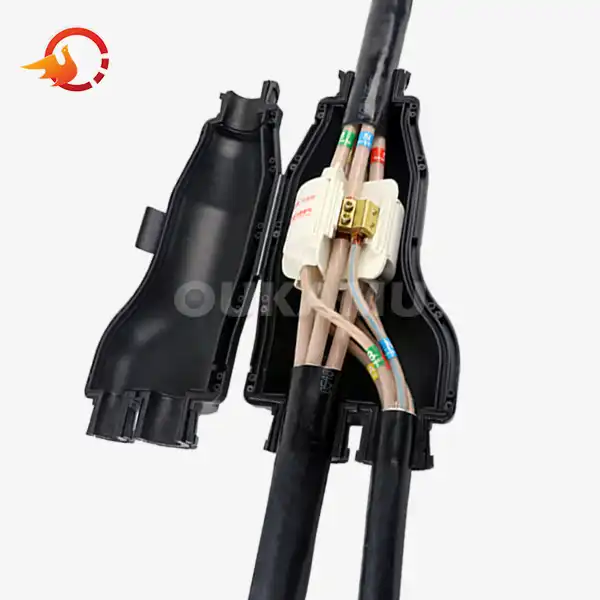
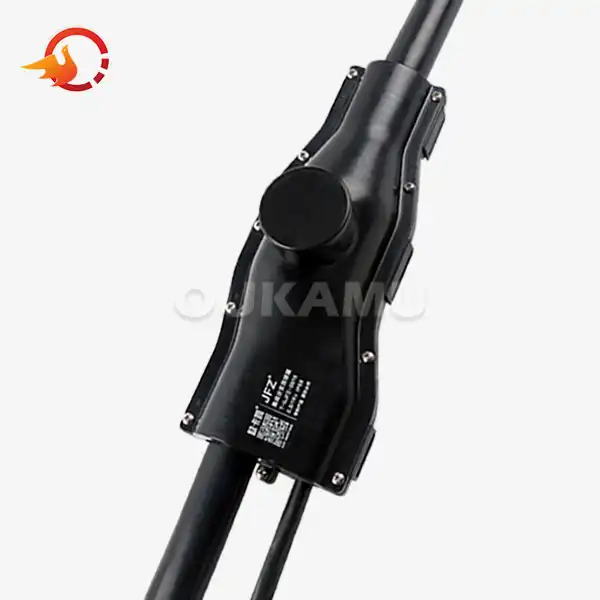
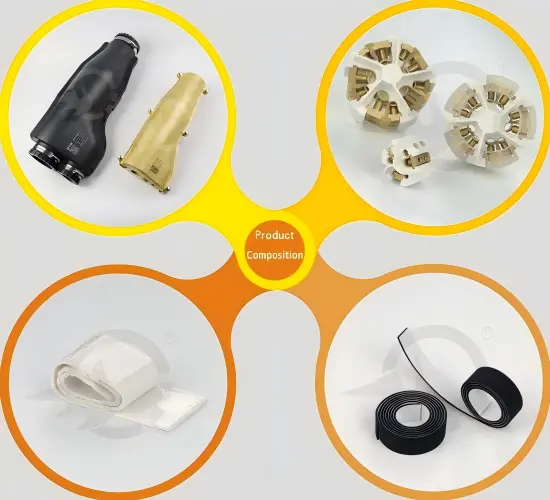
Jointing techniques allow for long cable runs across large manufacturing floors in industrial facilities where pre-made lengths are not useful. Branch connections, like our ZR-JFZ-95/70 type, give techs more freedom on the job site because they can connect to major cables in exact spots without having to cut or plan where the branches will go ahead of time. Because it can be changed, less cable is wasted and complicated layouts are made easier.
At every ending, like distribution boards, control screens, and machine interfaces, terminations are very important. The reliability of operations is directly affected by the strength of these links. Terminations that aren't done right can cause sparks, voltage drops, and even fires. For safety-conscious operations, it's essential to use the right method and material.
Technical Comparison: LV Cable Jointing vs Cable Termination
Jointing Methods and Materials
The LV Cable Jointing landscape offers multiple technological approaches, each suited to specific conditions:
Heat Shrink Joints use polymer tubes that get smaller when heated, sealing tightly around wires. These joints work great in places that get a lot of moisture, protecting the environment well. To avoid air pockets during installation, heat guns and trained workers who know how to use them and how to calculate shrinking ratios are needed.
Cold Shrink Joints come on unremovable bases that are already stretched out. Installers only need to take out the core, which lets the stretchy material automatically press onto the wire. This method gets rid of the need for heat tools, which makes it safer to use in places where open flames or high temperatures could be dangerous. The trade-off is that the materials are more expensive than heat shrink options.
Resin-Filled Joints use epoxy compounds that are liquid and harden when they dry. Even though resin joints have great electrical properties, they take longer to install because they need to cure for 24 to 72 hours. They work well for fixed positions where there isn't much movement or vibration.
Branch jointing has changed a lot thanks to new technologies like Oukamu's combined T-connector technology. Our method doesn't require cutting the main wire, so the integrity of the conductor is maintained and branch taps can be made anywhere. The flame-retardant and fire-resistant design meets GB/T 14048.7-2016 norms and can be used again and again, which makes upkeep easier.
Termination Techniques
Methods of termination put an emphasis on safe mechanical attachment and controlled electrical stress:
Mechanical Lugs are held in place by mechanical lugs that use set screws or compression bolts. These terminations make it easy to disconnect them for maintenance, but they need to be torqued correctly so they don't come loose over time. When used with metal wires that might move when pressure is put on them, they work well.
Crimp Terminations use special tools to bend metal sleeves around wires to make lasting connections. When crimped correctly, links match or exceed the strength of the wire, making them very reliable. To get uniform results, the process needs the right dies and crimping tools that are regulated.
Compression Fittings use hydraulic tools to press connections onto wires, making joints that are gas-tight and won't rust. This method works well for high-current situations where the link resistance needs to stay low for the life of the installation.
| Aspect | Cable Jointing | Cable Termination |
|---|---|---|
| Primary Purpose | Connects cable segments | Connects cables to equipment |
| Typical Methods | Heat shrink, cold shrink, resin, T-connector | Mechanical lug, crimp, compression |
| Reversibility | Some methods reusable (T-connector) | Generally permanent (except mechanical) |
| Installation Time | 30-90 minutes (varies by type) | 15-45 minutes per termination |
| Environmental Protection | Full sealing against moisture/dust | Dependent on enclosure design |
Standards and Performance Metrics
There are international rules that must be followed for both jointing and termination work. IEC 60502 lists the standards for power lines, and BS 6622 talks about cables that can handle voltages up to 1kV. EN 50393 sets standards for installations that buying teams should use to make sure that suppliers are following them.
When judging performance, electrical resistance, insulation integrity, and environmental resilience are all taken into account. At rated current, good joints keep resistance below 5 microhms, which keeps heat from building up. To stop leaking currents, insulation resistance should be higher than 100 megohms. Testing in the environment shows that the product can handle changes in temperature and water entry (IP ratings).
Procurement Considerations for LV Cable Jointing and Termination Solutions
Kit Versus Component Purchasing
The first step in the procurement plan is to choose between full LV Cable Jointing kits and individual parts. Comprehensive kits are convenient because they come with all the parts you need along with notes on how to install them. This makes buying them easier and makes sure that all the parts work together. This method works well for contractors who work on a lot of projects with similar needs.
When you buy components in bulk, you save money on costs for high-volume processes. Buying hardware, insulation materials, and conductors separately lets you make changes and might lower the cost per unit. But this approach needs technical know-how to choose products that work well together and keep track of relationships with multiple suppliers.
The ZR-JFZ-95/70 branch cable joint from Oukamu is a great example of a combined system. This method takes the guesswork out of wiring because it is made for main lines 35-95mm² and branch cables 16-70mm². The whole set comes with a flame-resistant housing, waterproof sealing, and built-in connectors, so it's ready to use right away. This integration keeps tested compatibility and saves procurement officers the work of coordinating multiple vendors.
Cost Analysis and Lifecycle Value
The initial purchase price is only a small part of what it costs to own something. Smart buyers look at:
Installation Labor: Quick-install methods, such as cold shrink joints, cut down on the time needed for on-site work. When you connect dozens or hundreds of joints, a link that takes 30 minutes instead of 90 minutes saves a lot of time and effort. When compared to traditional jointing methods, Oukamu's no-cut system saves two to three hours per installation.
Material Waste: Pre-cut wires often leave pieces that can't be used. With on-site branch options, techs only cut what is needed for each application, so there is no waste. Over the lifecycle of a project, material saves make up for the higher unit prices of advanced jointing systems.
Maintenance Expenses: Joints that can be used again and again, like our T-connector, lower future costs. When changes need to be made to the circuit, techs can break and move branches without having to buy new, expensive parts. When making changes to traditional joints, they often need to be replaced completely.
Failure Costs: Bad connections cause downtime that is much worse than the money saved. If a part in a factory breaks, the lost output could be thousands of dollars per hour. Investing in tried-and-true options from well-known companies lowers these risks.
Supplier Evaluation Criteria
When looking for trusted partners, you need to look at more than just price. To be sure you're following the rules, look for ISO 9001 quality management and product approvals that match your target markets. Oukamu has been specializing in branch cable technology for 20 years, which shows that they have the long-term knowledge that makes sure products get better and production is consistent.
Stability in the supply line is very important. Just-in-time procurement strategies work best when vendors keep enough inventory on hand so that projects don't get behind schedule. When looking for a supplier, find out about their lead times, minimum order quantities, and emergency surge capacity.
Technical help is what sets key partners apart from commodity providers. Manufacturers who give installation training, application engineering, and fixing help make their products more valuable than just the things they sell. Technical teams that are quick to respond to problems on-site avoid expensive delays and make sure that the right steps are taken to complete the project.
Step-by-Step Guide: LV Cable Jointing Procedure vs Termination Process
Cable Jointing Workflow
LV Cable Jointing preparation is the first step to proper jointing. Installers measure and mark the locations of the cables to make sure they are the right length for the job and don't have too much extra space that makes managing the cables harder. Cleaning gets rid of impurities that make shielding and bonding less effective—even small amounts of surface oil can cause failure points.
Preparing the conductor needs to be done carefully. Stripping tools take off the outer jacketing without damaging the insulation underneath. When it comes to multi-core cables, each conductor is given individual care by being stripped to the exact lengths required by joint manufacturer guidelines. When wire lengths aren't all the same, stress builds up and speeds up failure.
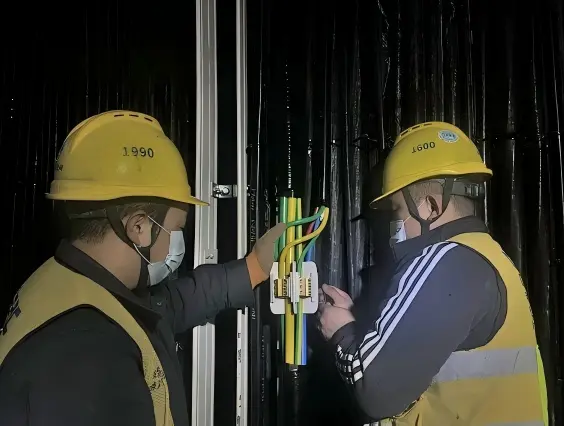
Each type of joint has a different connection system. For heat shrink applications, parts must be slid onto cables before the conductors are joined. It is important to place the parts correctly because they can't be moved after they shrink. When installing cold shrink systems, workers make sure the parts are in the right place before taking out the support cores. Our T-connector system makes this a lot easier: the integrated design clamps onto the main wire without having to strip it, and branch cables join securely through mechanical interfaces.
The process is finished with sealing and restoration. Overlaying existing cable insulation to stop water from getting in is necessary to restore the original level of protection. Testing makes sure the quality—measuring the insulation resistance makes sure the parts are put together correctly before turning on the circuits.
Termination Process Steps
Preparing the wire end is the first step in termination. Installers take off the outer insulation to get to the conductors, which they then cut to the right length, which is usually the same as the lug barrel depth plus the connection clearance. Conductor stranding is taken care of: the ends of each wire are cleaned and bent to keep them from breaking while they are being inserted.
Attaching a lug or socket exactly as the maker says to do is important. Crimp terminations need the right die choice to match the size of the conductor and the type of lug. Hydraulic crimping tools use calibrated pressure to compress the conductor evenly without putting too much stress on it. Torque wrenches need to be set to certain values for mechanical lugs. If you undertighten them, they can come loose, but if you overtighten them, the conductors get damaged.
Controlling stress is an important last step that is often missed. When a wire ends, the insulation cutoff point is where most of the electrical load is. Stress control materials, which are usually semi-conductive tapes or glue, change the voltage stress over time, which keeps the insulation from breaking. As the power goes up, this step becomes more crucial.
Quality is confirmed by a final inspection and tests. Visual checks find problems that are easy to see, like exposed conductors, incomplete crimps, or insulation that is damaged. Conductor continuity and insulation resistance are measured during electrical testing, and the results are written down for compliance records.
| Product Specification | ZR-JFZ-95/70 Branch Joint |
|---|---|
| Main Cable Range | 35-95 mm² |
| Branch Cable Range | 16-70 mm² |
| Rated Voltage | 0.6/1 kV |
| Insulation Type | Flame-retardant, fire-resistant |
| Protection Rating | Waterproof, dustproof, anti-corrosion |
| Installation Method | No main cable cutting required |
| Reusability | Fully reusable for modifications |
| Compliance Standards | GB/T 14048.7-2016 |
| Cable Savings | 2-3 meters per branch point |
Common Challenges and Best Practices in LV Cable Jointing and Termination
Jointing Issues and Solutions
The most common way for LV Cable Jointing to fail is for moisture to get in. Insulation resistance goes down when water gets into it, which can lead to short circuits or ground faults. This issue happens because of poor sealing during installation, with gaps appearing where heat shrink material doesn't stick together tightly or cold shrink parts don't contract evenly.
For prevention, building must be done with great care. Preparing the surface is very important because even a little moisture or dirt can stop the adhesive from sticking properly. Installers should use desiccant materials and work quickly to cut down on exposure time in humid places. High-quality materials are important. For example, premium heat shrink products have adhesive liners that flow when heated and fill in tiny gaps that plain materials leave open.
Insulation leaks are often caused by bad stripping methods. Nicking the insulation of the conductor while the outer jacket is being removed makes weak spots where the voltage stress is highest. Over time, these broken areas get worse, which causes them to track and eventually break. This risk can be eliminated by learning how to use a stripping tool properly and keep the blade in good shape.
These ideas were shown in a city's building project. Within months of turning on a new delivery network, contractors first had a number of joint failures. An investigation found that installers were rushing through the steps of cleaning the surface, leaving behind cable dust that made it impossible for the heat shrink to stick properly. After strict cleaning and inspection processes were put in place, the joints worked without any problems for years.
Termination Challenges
Many problems happen when crimping is done wrong. Under-crimped connections have a lot of resistance, which makes heat that oxidizes the interface between the conductor and the lug. This oxidation makes the resistance even higher, starting a loop of damage that ends with the link breaking. Over-crimping crushes conductors, which lowers their cross-sectional area and makes stress spots where strands break when the wires move.
Solution needs the right tools and methods. Hydraulic crimping tools with preset dies make sure that the tension is always the right amount. Dies must match both the size of the conductor and the size of the lug barrel. Using the wrong dies will always give unreliable results, no matter what method is used. Tool alignment and die checking should be done on a regular basis to catch wear before it hurts quality.
When stress control isn't good enough, terminations fail too soon, especially in cables that work above 600V. Electrical fields gather at the edges of insulation when stress is not properly managed. This speeds up decay through partial discharge activity. This slow, unseen damage builds up over months or years before it fails completely.
Best practice applies stress control materials per manufacturer specifications. Semi-conductive tapes create gradual transitions from cable insulation to termination hardware. Some modern terminations incorporate geometric stress control through carefully profiled interfaces that distribute electrical stress naturally without additional materials.
Standards Compliance and Documentation
Following standards like IEC 60502, BS 6622, and EN 50393 ensures that LV Cable Jointing systems are safe and can work with each other. These specs list the minimum performance needs, testing methods, and installation methods that have been developed over many years of experience in the field. Teams in charge of buying things should make sure that the goods they choose have the right certifications from well-known testing labs.
Documentation practices don't get enough attention until there are problems. For each joint and end, full records should include the date of installation, the name of the contractor, the batch number of the materials, and the test results. This information is very helpful for fixing problems, making warranty claims, and governmental checks.
Digital systems for documentation make this process easier. Photo documentation records the stages of installation, and records can be accessed by maintenance teams years later thanks to cloud-based databases. When changes need to be made, techs can look over the original installation details to make sure everything works together and that the right steps were taken.
Real-World Application: Commercial Building Renovation
A recent renovation job in a Chicago business building showed how useful modern LV Cable Jointing branch technology can be. The building's old electricity system needed to be updated to meet the needs of modern tenants, but keeping operations going while the work was being done was very hard. Using the old method, a lot of cables would have to be replaced, which would mean closing down floors while new lines were set up. For the main distribution risers, the project team chose Oukamu T-connector branch joints instead. This let electricians connect new branch circuits to existing main feeders without turning off power to rooms that were already being used.
Installation freedom was very important because renter needs changed during building. When a renter moved their data center to a different floor, electricians just removed the branch joint that was broken, moved it three meters along the main line, and then connected it back up—all in one repair window. Using normal methods, this change would have required replacing a lot of cables.
The project was finished 30% faster and cost less because there was no cable waste. The reusable joints were especially liked by the building management because they mean that future renter changes can be made without a lot of electrical work. This lowers the lifetime costs and keeps tenants happy.
Conclusion
Knowing the difference between LV Cable Jointing and termination helps you make smart buying choices that combine performance, cost, and operating needs. Jointing uses heat shrink, cold shrink, or new T-connector technology to extend and fix cable runs. Termination, on the other hand, uses mechanical, crimp, or compression methods to safely connect cables to equipment.
Project managers can choose the best solutions when they know about the application contexts, technical specs, and installation processes. To be successful at procurement, you need to look at the full lifecycle costs, such as installation labor, material efficiency, and upkeep costs, instead of just the original buy prices. Following foreign standards and keeping detailed records makes sure that the system will work well for a long time and follow all regulations.
FAQ
Can cable jointing be performed on energized circuits?
Performing LV Cable Jointing on lines that are already live is very dangerous and is against almost all safety standards. To do the process, you have to expose the conductors and remove the insulation, which you can't do safely on circuits that are already energized. Before any jointing work can begin, the power must be turned off, lockout/tagout steps must be followed, and the voltage must be checked. Specialized hot-line techniques are sometimes used for emergency repairs in important buildings, but they need highly trained staff, special tools, and specific engineering approval.
What factors determine whether to use heat shrink or cold shrink joints?
When the right amount of heat is applied, heat shrink joints usually work very well and don't cost too much. Cold shrink joints work great in tight areas where heat tools won't work, in dangerous places where open flames aren't allowed, or when fitting needs to be done quickly. Temperature sensitivity is important. Some wire insulations break down at temperatures used for heat shrink applications, so cold shrink options are needed. Selection is also affected by the details of the project and the amount of training of the worker.
Are jointing kits compatible across different cable brands and sizes?
Compatibility for LV Cable Jointing kits depends not on the brand of the wire itself, but the spread of line sizes and insulation types. Good jointing kits list conductor cross-sections that are compatible (in mm² or AWG) and insulation materials that are compatible (PVC, XLPE, or EPR). The ZR-JFZ-95/70 from Oukamu can hold main cables from 35 to 95 mm² and branches from 16 to 70 mm². It works with all common cable types in these sizes. Before choosing joints for a certain job, you should always check the manufacturer's match charts.
Partner with Oukamu for Reliable LV Cable Jointing Solutions
Oukamu has been specializing in LV Cable Jointing branch technology for 20 years, which helps electrical distributors and project contractors find reliable cable connection systems. Our ZR-JFZ-95/70 model offers installation flexibility that traditional methods can't match. It connects branch circuits without cutting the main cable, so there's no need to plan ahead, and it lets you change the position of the equipment while it's being installed.
GB/T 14048.7-2016 standards are met by the combined T-connector design, which has a flame-resistant housing, waterproof sealing, and reuse construction all in a small package. This method cuts down on waste, saves two to three hours of labor per connection point, and makes it easier to make changes in the future. We encourage purchasing managers, project officers, and people who buy electrical products to look into how our manufacturer capabilities can help you reach your business goals.
Email our team at info@okmbranchcable.com for technical details, project advice, or to get a model to look over. You can find out about all of our cutting edge cable connection solutions at okmbranchcable.com. These are designed for tough commercial, industrial, and infrastructure uses.
References
1. Institute of Electrical and Electronics Engineers, "IEEE Guide for Field Testing and Evaluation of the Insulation of Shielded Power Cable Systems Rated 5 kV and Above," IEEE Standard 400-2012, 2012.
2. British Standards Institution, "Cables with Extruded Cross-Linked Polyethylene Insulation for Rated Voltages from 3.8/6.6 kV to 19/33 kV," BS 6622:2007, 2007.
3. International Electrotechnical Commission, "Power Cables with Extruded Insulation and Their Accessories for Rated Voltages from 1 kV up to 30 kV," IEC 60502-2:2014, 2014.
4. National Fire Protection Association, "National Electrical Code (NEC) Article 110 - Requirements for Electrical Installations," NFPA 70:2023 Edition, 2023.
5. Standardization Administration of China, "Low-voltage Switchgear and Controlgear - Part 7: Ancillary Equipment - Terminal Blocks for Copper Conductors," GB/T 14048.7-2016, 2016.
6. European Committee for Electrotechnical Standardization, "Distribution Cables of Rated Voltage 0.6/1 kV - Test Methods," EN 50393:2006, 2006.