

_1790150425011.webp)
Cable Jointing Basics: Tools, Methods, and Best Practices Guide






 2026-08-31 16:10:28
View:389
2026-08-31 16:10:28
View:389Cable jointing represents a fundamental skill in electrical installation work, connecting conductors to maintain continuous power distribution across residential, commercial, and industrial applications. This comprehensive guide walks through essential tools, proven techniques, and industry standards that ensure safe, durable connections. Whether you're managing procurement for electrical distributors or overseeing installation projects, understanding these fundamentals helps you make informed decisions about materials, labor requirements, and long-term reliability while optimizing project costs and timelines.

Understanding Cable Jointing – Fundamentals and Types
In contrast to temporary splicing techniques, Cable Jointing makes permanent electrical connections between conductors. This process keeps the stability of the circuit and keeps links safe from things like water, dust, and physical stress. Knowing these basics helps buying teams choose the right supplies and guess what the project will need.
Differentiating Cable Joints from Cable Splices
In traditional splicing, wires are cut and then put back together using terminal blocks, crimp connectors, or solder covers. Cable joints, on the other hand, offer more durable options that are better for the environment. Modern methods for joining things together include insulation layers, waterproofing compounds, and mechanical reinforcements that make the link last a lot longer. This difference is important to keep in mind when choosing materials for long-lasting projects that won't need a lot of maintenance.
Common Types of Cable Joints and Their Applications
There are different jointing methods for different types of installations:
- Heat Shrink Joints: These are made of polyolefin tube that shrinks when heated, sealing the joints tightly. Heat shrink technology works well in controlled environments where installers have access to heat guns and enough time to cure—usually 24 hours for surfaces that can be touched and 72 hours before they can be fully used.
- Cold Shrink Joints: These are pre-expanded silicone rubber bands that can shrink without heat being applied. They are useful in dangerous places where open flames or high temperatures could be dangerous. These joints make installation easier while still providing the same level of protection.
- Mechanical Joints: These use compression fittings and bolted connections to make it possible to take things apart for future changes. Terminal blocks are the easiest mechanical choice; all you need are screwdrivers and enough room in the enclosure.
- Resin Joints: Epoxy-based systems are better at keeping out the environment for uses that are buried or underwater. It takes about 24 hours for the resin to harden enough to handle and 72 hours for it to reach full strength. It takes a few weeks for the resin to reach full hardness.
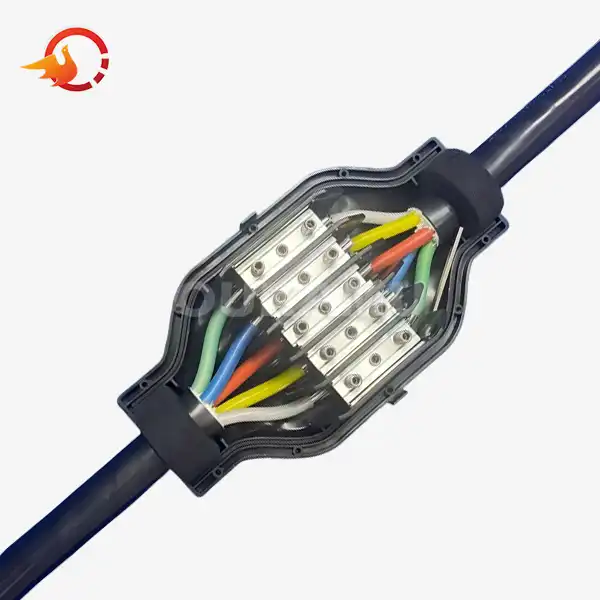
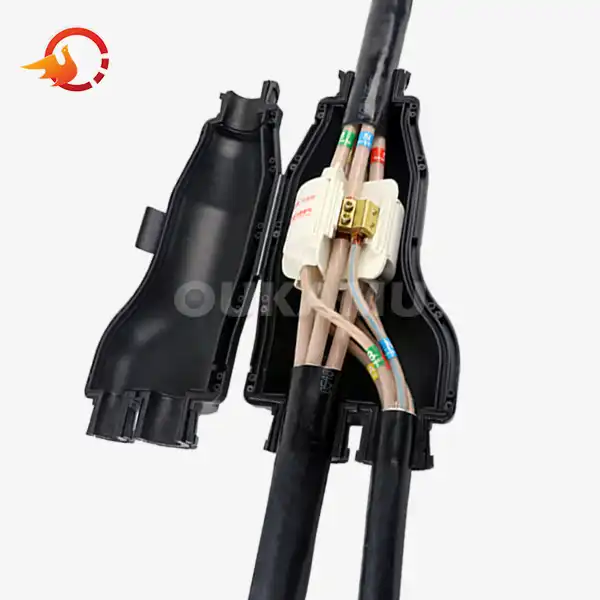
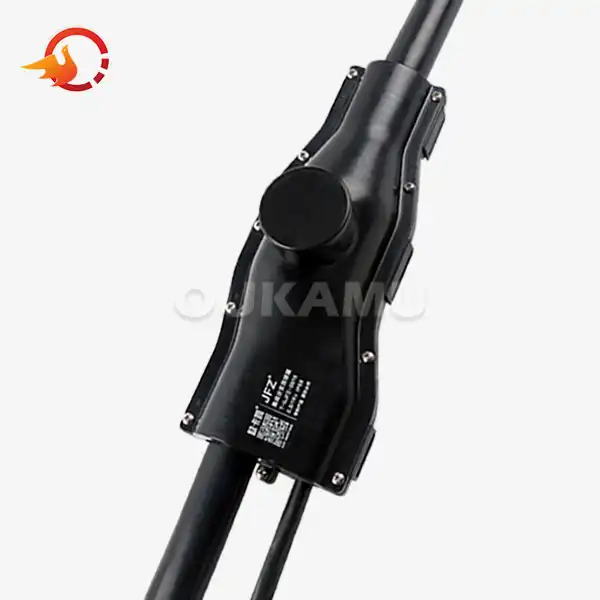
Modern branch cable connectors, such as the ZR-JFZ-150/50 type, offer creative options that get rid of the need to cut the main line completely. This technology works with main cables that are 50 to 150 mm long and branch cables that are 6 to 50 mm long. It can handle a 0.6/1kV maximum power and meets the requirements of GB/T 14048.7-2016.
International Standards and Safety Regulations
IEC 60502 sets the standards for power cables, and IEEE 404 talks about how to place cables properly. The UK's BS 7671 wire rules and the US's NEC (National Electrical Code) set safety standards that affect the products that can be bought. Following these rules makes sure that all international projects work together and lowers the risk of being sued. These certificates show that performance claims have been checked by a third party, which supports quality assurance standards throughout the buying chain.
Essential Tools and Equipment for Effective Cable Jointing
The right tools have a direct effect on the quality of the connections and how quickly they are installed. Professional-grade tools cut down on mistakes and speed up the time it takes to finish a job. Cable Jointing requires high-quality equipment to ensure safety and longevity.
Must-Have Jointing Tools and Materials
Core equipment includes cable strippers that are calibrated for certain types of insulation, hydraulic crimping tools for making compression connectors, and torque wrenches that are calibrated to make sure the right amount of mechanical tension. Insulation doesn't get damaged when shrink tubing is applied with heat guns that let you control the temperature. Digital insulation resistance tests make sure that connections are solid before they are turned on.
Jointing kits include connectors, insulation materials, and sealing solutions that are all suitable and match the specs of the wire. Pre-assembled kits make it easier to buy things while making sure that all of the parts work together. Brands like 3M, NKT, and Rexel offer complete systems that come with technical support from the manufacturer during installation.
Selecting Industrial-Grade Equipment
Material choices for tool housings, motor rates for powered equipment, and guarantee coverage are all things to think about when it comes to durability. Tools that have an IP65 grade for ingress protection can be used in dusty building sites. When compared to manual tools, battery-powered hydraulic crimpers are easier to move around. This is especially helpful when working on large sites or in high places.
Certifications from manufacturers show how the products have been tested and how quality is controlled. Tools with UL or CE marks show that they meet safety standards. The people who buy things should check the calibration certificates of the test tools to make sure that measurements are correct, which can change the results of acceptance testing.
Personal Protective Equipment and Maintenance Protocols
Baseline PPE includes insulated gloves rated for working voltages, safety glasses that protect against metal pieces during cutting, and arc-rated clothes for real-life work situations. Level 3 Health and Safety certifications or equivalents make sure that workers know how to spot hazards and take steps to reduce their impact.
Schedules for tool repair keep tools from breaking down too soon, which slows down projects. Hydraulic crimpers need to have their oil changed and their pressure checked every so often. When cutting blades make ragged cuts that damage connection surfaces, they need to be sharpened or replaced. Electronic testing tools don't get damaged by wetness when they are stored in climate-controlled areas.

Step-by-Step Cable Jointing Process and Techniques
Systematic methods cut down on mistakes and make sure that all installation teams deliver the same high-quality work. At each stage, documentation helps with fixing problems and making warranty claims. Following a standardized Cable Jointing protocol is essential for industrial compliance.
Cable Preparation: Cleaning, Stripping, and Inspection
Cleaning gets rid of things that get in the way of electricity flowing. Surfaces can be prepared with abrasive pads or solvents made for cable materials that don't damage the conductor strands. When done right, stripping takes off the insulation to a certain length without damaging the wires, which would cause them to break under electrical stress.
Visual inspection finds flaws in the manufacturing process or damage from handling before it is put into joints. Conductor strand counts, insulation thickness measurements, and armor integrity checks make sure that the materials meet the requirements. Megohmmeter testing finds insulation decay that could lead to early failures after the jointing is finished.
Comparing Jointing Methods: Performance and Use Cases
Heat Shrink vs. Cold Shrink: Heat shrink uses less material but needs heat sources and time to cure. Cold shrinking gets rid of the need for tools and speeds up installations, which is especially helpful when project deadlines are tight or when working in places where temperature is important. Once it's in place, cold shrink does the same job of keeping out water and protecting against mechanical damage.
Mechanical vs. Resin Joints: Mechanical links let you make changes to the system or fix problems in the future. For projects that will be underground for good and won't be accessible in the future, resin joints are the best way to seal them against the environment. When figuring out costs, you should think about things like labor time (mechanical joints are easier to install) and long-term maintenance needs (resin joints need less work).
Integrated branch connections are a third type that combines mechanical strength with assembly freedom. The ZR-JFZ model makes branch connections without cutting the main wires. During installation, branch positions are changed based on the real-world situations rather than the assumptions made during design. This gives you more options, which cuts down on cable waste by 2 to 3 meters per connection and gets rid of the need to reserve lengths.
| Jointing Method | Installation Time | Environmental Rating | Future Accessibility | Typical Cost Range |
|---|---|---|---|---|
| Heat Shrink | 3 to 4 hours (including cure time) | IP67 with the right seal | Limited (destructive removal) | $ |
| Cold Shrink | 1 to 2 hours | IP67 | Limited (destructive removal) | $$ |
| Mechanical (Terminal Block) | 30 to 60 minutes | IP20 to IP54 (depends on case) | Very good (reversible) | $ |
| Resin Cast | 4 to 6 hours (including cure time) | IP68 | None (permanent) | $$$ |
| Branch Connector (ZR-JFZ-150/50) | 45 to 90 minutes | IP65 (flame retardant, waterproof) | Good (reusable) | $$ |
Quality Control and Post-Installation Testing
Insulation resistance testing checks how much leakage there is between the wires and the ground. Usually, more than 1 megohm of leakage per kilovolt of operating voltage is acceptable. Continuity testing makes sure that the electrical lines fit the designs of the circuits. High-potential (hipot) testing uses voltages above normal working levels to find insulation that isn't strong enough and could break while it's being used.
A visual check shows that the mechanical security is correct, that the sealing material was applied correctly, and that the wire is not exposed. When the system is first turned on, thermal imaging finds hot spots that mean there are high-resistance connections that need to be fixed. Documentation photos serve as starting points for future maintenance checks, and they can help with warranty claims if something breaks down too soon.
Best Practices for Cable Jointing in B2B Procurement Projects
Strategic planning during the procurement process stops problems with compatibility and delays in the installation schedule. When material specs are in line with project needs, change orders and cost overruns are less likely to happen. Efficient Cable Jointing procurement requires coordination between engineering and supply chain teams.
Aligning Joint Types with Project Specifications
The voltage values must be higher than the working levels by a safe amount, which is usually 20% more than the nominal voltages. Material choice is based on things like high temperatures, chemical exposure, and wetness levels in the environment. When compared to climate-controlled indoor settings, installations that are buried need stronger shields against moisture.
The type of cable affects the choice of joint. Stranded conductors need compression connections to keep the strands from breaking, while solid conductors can use screw ends. Aluminum wires need anti-oxidant chemicals to stop galvanic corrosion at the points where they join. Different building codes and insurance companies have different flame-retardant requirements, which affects the types of insulation that can be used.
Balancing Cost-Effectiveness with Performance Quality
In a life-cycle cost study, the starting prices of materials, the rates of labor for installation, the expected frequency of maintenance, and the replacement costs over the expected service lives are all taken into account. Even tho premium materials cost more to buy, they often end up saving you money in the long run because they last longer and need less maintenance.
Buying in bulk takes advantage of savings of scale. Using fewer variations of the same product across projects makes managing inventory easier and raises the number of units that can be ordered at once to get big savings. Long-term ties with suppliers ensure stable prices and quick distribution of goods when the market is short.
Workforce Training and Certification Requirements
Technical understanding and hands-on experience are needed for a good repair. Techs are ready for problems that might come up in the field after going thru training programs that cover wire theory, jointing processes, and safety rules. Certifications from reputable organizations show that people are competent, and they back up the quality assurance paperwork that project requirements and regulatory agencies need.
Teams stay up to date on new technologies and code requirements by continuing their education. Manufacturers often offer training that is specific to their products. This helps improve the quality of installations and gets crews used to the best ways to use their tools. Proof that you completed the training helps prove your qualifications during project checks.
Documentation and Compliance Management
Full records show where materials came from, how they were installed, and how they were tested. Material certifications show that the product meets the requirements. Test results show that the acceptance conditions were met. Because of how things were installed in the field, as-built plans may not match the details in the design papers.
This paperwork helps with warranty claims, government inspections, and planning for future maintenance. Digital systems make it easier to keep track of records and make them easy to find during checks. Liability risks can be reduced by making sure that retention plans match regulatory standards and statute of limitations periods.
A construction company that was in charge of installing electricity in 20 buildings in an industrial park used branch connector technology to make their distribution network run more smoothly. By using built-in T-connectors for low-voltage systems, they got rid of the need to cut cables during branch setups.
Being able to change branch places on-site meant that unexpected structural problems could be solved without having to rethink cable lines. Compared to traditional pre-branched cable systems, this method saved about 15% on cable materials and 30% on installation time. The plugs could be used more than once, which made future growth easier when more equipment needed power connections. This kept expensive projects like replacing cables from happening.
How to Choose and Purchase Cable Jointing Solutions
Making smart buying choices means balancing technical needs, budget limits, and the dependability of the supplier. Systematic evaluation methods find the best solutions for each situation. Selecting the right Cable Jointing products is critical for long-term infrastructure stability.
Evaluating Product Specifications and Certifications
The main things that are used to choose cables are their voltage ratings, current capacities, and compatibility with cable sizes. Mismatches can be avoided by comparing these specs to the project needs. Certification marks that show standards have been met give people confidence in performance promises. Third-party testing results give more thorough information about performance than what is stated in marketing literature.
Temperature ratings affect both how the equipment is used and how it is stored. Products that are rated for high temperatures cost a lot, but they are important in tough settings. In the same way, chemical resistance ratings are important in places like factories where corrosive substances might be present.
Comparing Market Options and Cost-Benefit Analysis
Different price points are available for different sets of features from leading manufacturers. Premium brands offer a wide range of products and full expert help to meet a wide range of needs. Value-oriented sellers focus on core product categories and offer low prices for standard requirements.
| Product Feature | Standard Terminal Block | Heat Shrink Kit | ZR-JFZ-150/50 Branch Connector |
|---|---|---|---|
| Main Cable Cutting Required | Yes | Yes | No |
| Cable Size Range | 6-35mm | 10–95 mm | Main: 50–150 mm; Branch: 6–50 mm |
| Installation Environment | Inside (IP20–IP44) | Indoors and outdoors (IP67) | Indoors and outdoors (IP65) |
| Reusability | Very good | Not at all | Yes |
| Cable Length Savings | Not at all | Not at all | 2-3 meters per joint |
| Compliance Standards | Listed by UL | IEC 60502 | GB/T 14048.7-2016 |
| Average Installation Time | 30–45 min | 3 to 4 hours | 45 to 90 min |
When figuring out the total cost of ownership, these things are added up over the expected work lives. Higher material costs can be balanced out by products that don't need as much building work, especially in markets where wages are high. Even tho they cost more to buy, styles that don't need to be maintained lower long-term costs.
Managing Bulk Orders: Lead Times and Pricing
Volume commitments get better prices and make sure that materials are available on time for projects. Suppliers usually have pricing structures with different levels and breakpoints at certain quantities. By negotiating yearly deals with expected numbers, you can plan your budget and still have room for changes that are unique to each project.
Schedule delays can be avoided with good lead time management. Standard items are sent out within days, but items made to special requirements may take weeks or months to make. These schedules can be met by starting the procurement process early in the design phase. Strategies for buffer stock protect against transportation problems without making it too expensive to keep goods on hand.
Sourcing from Trusted Suppliers and Distributor Networks
Having a connection with a seller gives you access to technical knowledge, product training, and helpful customer service. Distributor networks let you store goods close to home, which cuts down on shipping times and costs. Multi-location suppliers help with projects that span multiple geographic areas by making sure that products are always available and priced fairly.
When working on long-term projects that need regular material deliveries, it's important that the supplier is financially stable. Credit checks and checking references lower the risk of disruptions in the supply chain. The identification of a backup supplier gives you options in case the primary sources have problems.
Conclusion
Procurement experts and project managers can improve the results of electrical installations by learning the fundamentals of Cable Jointing. Knowing what tools are needed, how to put things together, and how to check the quality of the work lets you choose the right materials while keeping cost and performance needs in mind.
When compared to older methods, new innovations like integrated branch connections offer big benefits thru flexible installation, lower material costs, and easier upkeep. Choosing the right products, having skilled installation teams, clear paperwork, and smart relationships with suppliers that make sure materials are available and technical support is available throughout the lifetime of the project are all things that make it a success.
FAQ
What qualifications do installers need for cable jointing work?
Training in electrical science and safety certifications are prerequisites for professional Cable Jointing. For power supply and distribution cables, the VQ Level 3 training covers the most important technical topics. Some safety licenses are CITB Site Safety Plus or Level 1 Health and Safety in the Construction Environment. Before being allowed to work on your own, you need to gain practical experience while being supervised. Manufacturers offer specialized product training to make sure that installers are familiar with the best ways to use certain jointing systems.
How long does cable jointing resin take to cure properly?
It takes about 24 hours for epoxy cement joints to harden into solid, touchable surfaces that can be handled carefully. After 72 hours, there is full curing, which lets regular operating stress happen. Over the course of a few weeks, the material slowly hardens all the way thru, going from 99% strength to 100% strength. This slow change doesn't have an effect on how well most things work in real life. Temperature, humidity, and other environmental factors affect how fast something cures. For example, warmer temperatures speed up the process, while cold temperatures make it take longer.
Can cables be joined safely in all situations?
For safe wire joining, you need the right tools, the right materials, and the right containers. For flexible power cords, you need in-line screw terminal boxes with cable clamps that hold down both the inner and outer insulation. Junction boxes can be used in permanent setups as long as the wires that go into them are mechanically fastened with clips all the way along their length. Branch connectors are an option that keep the integrity of the wire while offering connection places. The weather determines the amount of mechanical protection and insulation that is needed for long-term dependability without sacrificing safety.
Partner with a Trusted Cable Jointing Supplier for Your Next Project
Oukamu focuses on advanced branch Cable Jointing connector technology, offering solutions that make installations easier and lower the cost of projects. Our ZR-JFZ-150/50 type gets rid of the need to cut main cables, lets you move branches around easily, and saves two to three meters of wire per connection point. We've been specializing in branch cable joints for 20 years, so we know the problems that electrical stores, project contractors, and distributors all along the supply chain face when they need to buy things.
Our designs are flame-resistant and waterproof, and they meet GB/T 14048.7-2016 standards. They also have reuse features that let you make changes to the network in the future. Our team offers quick technical support and reasonable prices, whether you're looking for inventory stock, managing bulk project procurement, or looking for custom specifications.
Email our experts at info@okmbranchcable.com to talk about your needs and find out how our manufacturer-direct solutions can help your electrical installation projects go more smoothly. You can look at all of our products and detailed information at okmbranchcable.com.
References
1. International Electrotechnical Commission. (2014). Power Cables with Extruded Insulation and Their Accessories for Rated Voltages from 1 kV up to 30 kV – Part 1: Cables for Rated Voltages of 1 kV and 3 kV. IEC 60502-1:2014 Standard.
2. Institute of Electrical and Electronics Engineers. (2012). IEEE Standard for Cable Systems in Substations. IEEE Std 404-2012, Power and Energy Society.
3. British Standards Institution. (2018). Requirements for Electrical Installations: BS 7671:2018 (IET Wiring Regulations, 18th Edition). BSI Standards Publication.
4. National Fire Protection Association. (2020). National Electrical Code (NEC) NFPA 70-2020. NFPA Standards Council.
5. Standardization Administration of China. (2016). Low-Voltage Switchgear and Controlgear – Part 7: Ancillary Equipment – Terminal Blocks for Copper Conductors. GB/T 14048.7-2016 National Standard.
6. Davies, R. E. (2017). Cable Jointing and Termination Techniques for Power Distribution Networks. Electrical Installation Journal, Volume 43, pp. 128-145.