
_1790150425011.webp)
LV Cable Jointing Installation Guide for Beginners






 2026-08-19 11:10:40
View:389
2026-08-19 11:10:40
View:389When tackling electrical distribution projects, mastering LV Cable Jointing becomes essential for ensuring safe, reliable power connections. This guide walks you through fundamental techniques, best practices, and modern solutions like innovative branch connectors that eliminate the need to cut main cables. Whether you're a procurement officer sourcing jointing kits or an engineering team planning installations, understanding these processes helps reduce costs, improve safety, and ensure compliance with international standards like IEC and GB/T 14048.7-2016.

Understanding LV Cable Jointing Basics
What Is LV Cable Jointing and Why Does It Matter?
LV Cable Jointing is the process of connecting low voltage electrical lines, which usually work at 0.6/1kV, so that the electricity stays flowing and the insulation stays intact across distribution networks. In home, business, and industrial settings, these joints are important places to connect things. A well-done joint stops power loss, reduces electrical problems, and makes cables last longer. Joints connect two cable pieces or make branch connections without cutting the main line. Terminations end a cable run.
Core Components and Terminology
Understanding basic terms makes it easier to talk to suppliers and installation teams. Some important parts are the connector bodies, which hold the electrical connection, the insulation materials (such as heat shrink tubes, resin compounds, or cold shrink sleeves), and the sealing layers, which keep out moisture and other environmental contaminants. Branch joints let you connect two places along a main cable, while through joints link two ends of a cable in a straight line.
Types of Cable Joints: Matching Technology to Application
There are different jointing methods that work best in different construction situations and for different budgets:
- Heat Shrink Joints use tubes that get smaller when they get hot. This makes a tight seal around the connection. They have great electrical qualities and are very strong, which makes them perfect for outdoor systems that need strong protection from the elements.
- Cold Shrink Joints have rubber covers that are already stretched out and shrink onto the wires when the supporting core is taken away. They don't need a heat source or special tools to be installed, which cuts down on time and removes fire risks in small areas.
- Resin Joints involve liquid resin being poured into a mold that has a connection point in it. After 24 to 72 hours of curing, they offer better protection and mechanical stability. These joints work great in basement situations where getting water in is a big problem.
- Pre-Moulded Joints come as precisely measured pieces that have already been put together in the workshop. This ensures uniform quality but limits options for non-standard cable sizes.
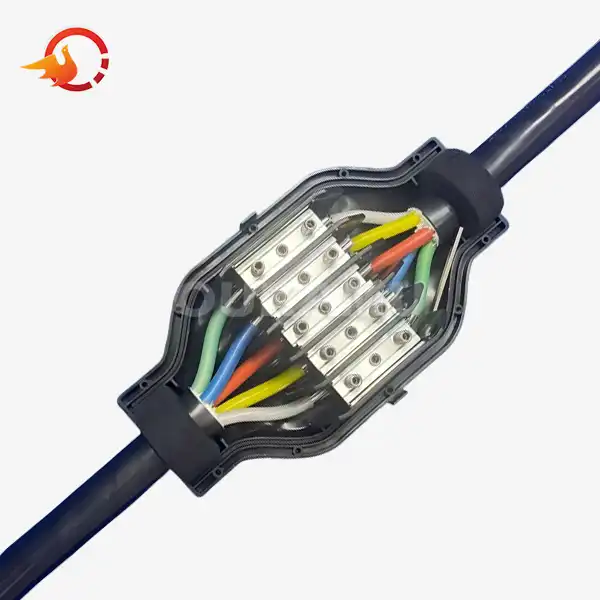
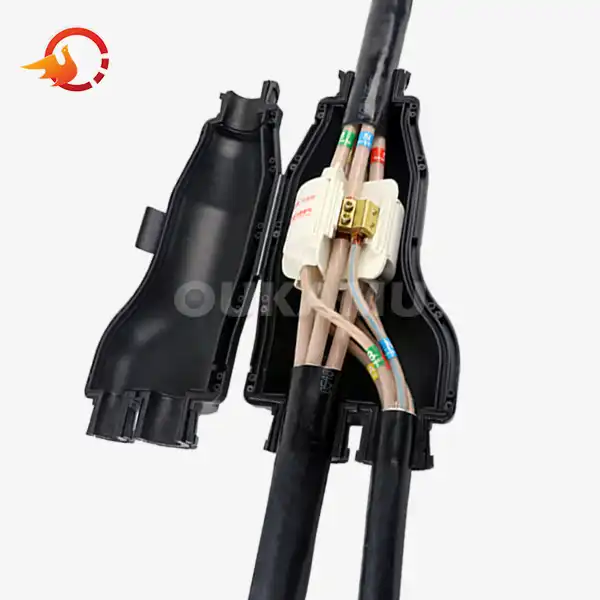
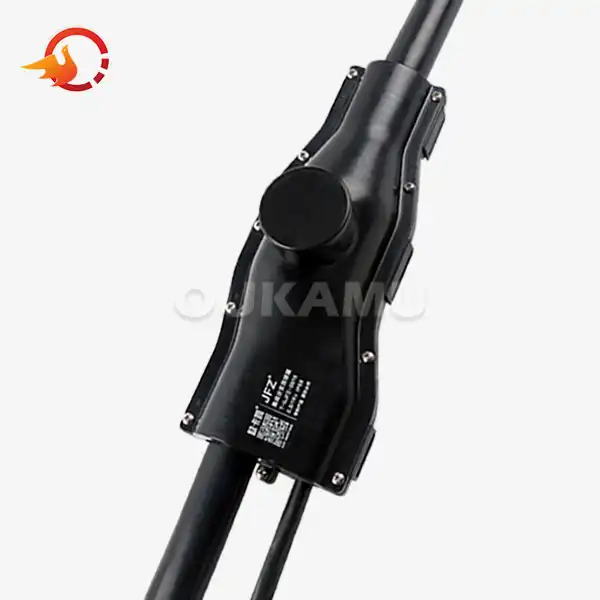
The field has been changed a lot by new branch connection technology. With products like the ZR-JFZ-95/70 series, operators can make branch circuits without cutting main cables. This is a big step forward that saves two to three meters of cable per connection point while keeping the purity of the trunk line.
International Standards and Compliance Requirements
Following well-known rules makes sure that a product is reliable and legal in all places. IEC 60502 lists the requirements for power cables with extruded insulation, and IEEE 404 talks about how to test cable joints. The European standard EN 50393 talks about how to join distribution lines. When looking for jointing goods, make sure that the certifications meet GB/T 14048.7-2016 or similar area standards for the Chinese market. These certificates show that the goods can handle electric stress, environmental conditions, and mechanical loads for the whole time they are working.
Essential Safety Precautions and PPE
When doing electrical work, you have to follow strict safety rules. Before you start any LV Cable Jointing work, use lockout/tagout steps to make sure that all power is off. Insulated gloves rated for working volts, safety glasses to protect against particulate matter while preparing cables, and flame-resistant clothes when using heat shrink methods are all things that workers must have on hand.
When working with resin systems, it's important to have enough air flow because curing compounds give off fumes. A full safety training should go over what to do in an emergency, where to find fire extinguishers, and how to talk to other people on a team.
The LV Cable Jointing Installation Process: Step-by-Step Guide
Essential Tools and Materials Checklist
When you prepare properly, you avoid delays and get good results. Standard tool kits for LV Cable Jointing should have voltage testers, heat guns with temperature settings for shrink tubes, crimping tools that match socket sizes, and cable strippers that remove insulation layers without hurting wires. Different types of joints need different materials, but they usually need jointing kits that are made to fit the wire, cleaning liquids to get dirt off of the circuit surfaces, and insulation tape for extra layers of protection.
To choose the right jointing kits, you need to match the cable parameters. Think about the type of conductor (copper or aluminum), the range of cable diameters, the type of insulator (PVC, XLPE, or EPR), and the surroundings. The ZR-JFZ-95/70 model, which is made for main cables that are 35–95 mm and branch cables that are 16–70 mm, shows how exact standard matching can improve performance while keeping costs low.
Cable Preparation: The Foundation of Reliable Joints
Quality preparation has a direct effect on how long joints last. Start by measuring and marking where the cables will go, making sure there is enough length for working room, which is usually 300–400 mm past where the end joint will be. Carefully remove the upper sheaths using circular cutting methods that don't score the insulation below. As directed by the connection maker, cut away the insulation from the ends of the conductors until they reach a depth of 15 to 25 mm for compression connectors.
Use lint-free cloths and approved liquids to clean exposed wires very well. Oxidation or contamination creates points of resistance that heat up and speed up the breakdown process. To keep aluminum wires from reoxidizing, add joint compound right away after cleaning them. Check the conductor strands for damage; even small nicks can cause electrical stress to build up and cause failures.
Core Jointing Techniques: Connecting Conductors Safely
The way the joints are connected is different for each type, but they all work the same way. For compression connections, make sure that no strands stick out when you put prepared conductors fully into the connector barrels. Crimp with measured tools at marked locations; not crimping enough causes high resistance, and crimping too much damages conductor strands.
Heat Shrink Application requires tubes to be placed before they can be connected electrically. Slide the heat shrink tube over the joint until it is in the middle. To get rid of stored air, spread the heat out widely by moving in a circle from the middle to the edges. The tube shouldn't have any bubbles or wrinkles and should fit together smoothly.
Resin Joint Assembly involves putting the wire in a mold or case, mixing the two-part resin according to the manufacturer's instructions, and pouring it slowly so that air doesn't get trapped. The time it takes to cure varies from 24 hours for working strength to 72 hours for full electrical qualities.
Innovative Branch Connection Technology offers a paradigm change. With the built-in T-connector system, installers can add branches anywhere without cutting the main cables. The operator only needs to wrap the connection body around the main wire, connect the branch conductor to the right terminal, and then tighten the whole thing up. This method keeps the trunk cable's continuity, gets rid of splice points that could fail, and can be changed if the layout changes during installation.
| Joint Type | Installation Time | Skill Level Required | Best Application | Reusability |
|---|---|---|---|---|
| Heat Shrink | 30-45 minutes | Moderate | Outside, overhead lines | No |
| Cold Shrink | 15-25 minutes | Basic | Inside, small places | No |
| Resin | 2-3 hours (plus cure time) | Advanced | Underground places that are wet | No |
| T-Connector (ZR-JFZ-95/70) | 10-20 minutes | Basic | Branch circuits, retrofit projects | Yes |
Insulation and Sealing: Protecting Your Investment
The dielectric strength stays the same and moisture doesn't get in when insulation is properly restored. Add more insulation layers until they reach or go beyond the thickness of the original wire insulation. For heat shrink ways, you might need more than one layer of tubes. The inner tubes restore the electrical insulation, and the outer tubes protect the surroundings.
LV Cable Jointing is a critical procedure where how you use sealing compound is important, especially for joints that are buried. Fill up all the empty spaces in cable housings to keep moisture out. Some methods use mastic tapes that don't crack and can bend to fit small wire movements. LV Cable Jointing also benefits from modern branch connectors, which, because they are flame-resistant and waterproof, get rid of many of the steps needed for traditional sealing. They also offer better environmental resistance, such as protection against aging and electrochemical corrosion.
Testing Protocols and Quality Assurance Checks
Never turn on a joint without first trying it to make sure it's safe. Visual inspection shows that the assembly was done correctly. Look for full heat shrink contraction, no exposed wires, and mechanical connections that are tight. Using a megohmmeter to test insulation resistance confirms the dielectric's integrity; for new installations, readings should be higher than 100 megohms. Keep track of test results for maintenance purposes and to make sure your warranty is valid.
Compression links must have enough pinching force to pass mechanical pull tests. Destructive testing on production parts isn't possible, but sampling on a regular basis during big projects makes sure the quality of the installation. After the power is turned on, thermal imaging finds hot spots that mean high-resistance links before they fail.
Common Installation Challenges and Troubleshooting
Installers often have to deal with limited space that makes putting together joints harder. By planning ahead for cable routing and joint locations, you can avoid working in tight spaces. When changes need to be made, reusable connector systems are very helpful because they let you move branch points around without throwing away materials or starting from scratch, which cuts down on project costs by a large amount.
Installers also have to deal with problems in the environment. When resin cures, high humidity can make bonding less effective, so temporary enclosures or dehumidification are needed. When it's cold outside, drying times are longer and heat shrink tubes are less flexible, so longer heating processes or warming up the workspace are needed.
Key Comparison and Decision Making in LV Cable Jointing Solutions
Jointing vs. Termination: Understanding the Difference
Joints and terminations are both ways to connect cables, but they are used for different things. Terminations are the end of a wire run where it connects to equipment. They need different stress control and connection hardware. LV Cable Jointing joins pieces of wire together or makes branches in a delivery system. Picking the wrong type of product can put you at risk and cause problems with how it works. Jointing options are necessary to stretch current circuits or make connection places in the middle.
Heat Shrink vs. Resin: Performance and Cost Analysis
Installing heat shrink joints is faster (usually 30 to 45 minutes per joint) and doesn't require as much training. The prices of materials range from moderate to high, depending on the grade. In dry places, they work great, but they need to be carefully installed in underground uses to keep water out.
Because resin joints are better at keeping water out and protecting against mechanical damage, they are the best choice for straight burial installs. Longer drying times—often 24 to 72 hours before energization—can make it take longer to finish a job. The cost of materials stays about the same, but the cost of work goes up because the installation takes longer.
Modern branch connection methods are a great option for specific scenarios. The ZR-JFZ-95/70's integrated design blends installation speed that's similar to cold shrink methods with environmental safety that's similar to resin systems. It also lets you make branches without damaging the material.
Pre-Moulded vs. Cold Shrink: Matching Products to Scenarios
Pre-moulded joints come as full systems that are made to fit specific types and sizes of cables. They make sure quality is consistent by making everything in one place, but they aren't flexible enough for non-standard cables or changes made in the field. For procurement, wire specifications must be perfectly matched, and wait times are longer for custom sizes.
Cold shrink technology makes it possible to be precise in the factory and flexible in the field at the same time. Installers only need to carry a smaller number of SKUs to accommodate small changes in size. Cold shrink is good for jobs with tight deadlines because it is easy to install. But once they are put in place, cold shrink joints can't be opened again to check on them or make changes. Reusable connector systems, on the other hand, get around this problem completely.
Indoor vs. Outdoor Environmental Considerations
Controlled environments with stable temperatures and little moisture are good for installations that are done inside. This lets lighter-duty jointing methods be used, which lowers the cost of the materials. Cable bridges and pipelines protect against mechanical damage, so impact-resistant joint housings are not needed as much.
Temperature changes, UV light, rain, and mechanical damage are all things that can happen to outdoor installations. Joints need to be made of materials that don't fade in the sun, have strong closing systems, and often need extra mechanical support. Advanced branch connectors are designed to meet these needs by being flame-retardant, fire-resistant, and waterproof. They keep working well in a wide range of temperatures and environments that would damage traditional jointing methods.
Material Quality and Supplier Selection Strategy
Quality of parts has a direct effect on how well joints work and how long they last. Conductor links should be made of materials that are highly conductive and have covering that doesn't rust. During their entire design life, insulation materials must keep their insulating strength even when they are heated or charged. Sealing materials should not break down when exposed to UV light, high temperatures, and chemical contaminants that are typical in industrial settings.
When looking at different suppliers, make sure they have the right manufacturing certifications, ask for test reports that show how well the products work in electrical and environmental conditions, and look at the warranty terms to see how much the manufacturer trusts the products to last. Well-known brands like 3M, Raychem, and TE Connectivity have track records that you can rely on. On the other hand, niche manufacturers like Oukamu focus on coming up with new ways to do things like connect branches.
Procurement Guide: How to Source High-Quality LV Cable Jointing Products
Leading Brands and Manufacturer Capabilities
There are a number of well-known companies in the global LV Cable Jointing market, each with their own area of expertise. 3M has a wide range of products in both heat shrink and cold shrink technologies, and they have great expert help. Raychem (TE Connectivity) was the first company to use heat shrink technology, and its goods are known for being of the highest quality and suited for tough environments. With goods that meet EN norms, NKT focuses on the European market.
Specialized manufacturers bring innovation to specific niches. For twenty years, Oukamu has focused on branch cable jointing technology, creating combined T-connector systems that solve installation problems that other joint makers don't think of. This specialization makes goods like the ZR-JFZ-95/70 that have features that aren't found in regular catalogs, like connections that can be used again and again, main cables that don't need to be cut, and placement that is flexible and changes based on actual conditions rather than assumptions made during design.
Certification Requirements and Quality Standards
Certifications should be required by the procurement specifications. UL listing proves that a product is safe for use in North America, while CE marking proves that it is safe for use in Europe. GB/T 14048.7-2016 certification is necessary for projects in China or exports to markets close to China. IEC certifications prove that electrical performance meets standards around the world.
In addition to basic safety standards, you should ask for test results that show particular performance factors, such as resistance to insulation when wet, resistance to thermal cycling, flame resistance grades (V-0, V-1, or V-2 classifications), and resistance to mechanical impact. These reports show if goods really meet the claims of their specifications or if they just meet the bare requirements for certification.
Optimal Purchasing Channels for B2B Procurement
Direct relationships with manufacturers are helpful for buying in bulk or on a regular basis. Manufacturers offer expert assistance, the ability to make custom products, and good prices for large orders. But the minimum order quantity might be higher than what the project needs, and wait times for specialized things can go on for weeks or months.
Authorized distributors make sure that there is enough inventory and technical support. They keep common product lines in stock so they can be sent out right away, and they keep in touch with manufacturers for technical questions and warranty support. Distributor prices include a fee, but buyers don't have to pay for the costs of keeping goods.
Smaller buyers now have more choices thanks to online industry providers. Platforms bring together products from many different manufacturers so that you can compare specs and prices. However, technical support may be limited, and the authenticity of the product needs to be checked—fake electrical parts are very dangerous.
Case Study: Municipal Infrastructure Project
A regional utility had to do a retrofit project that involved connecting 45 branch cables to existing 95 mm trunk cables that served residential areas. In the past, major cables would have to be cut, through joints would have to be installed, and then different branch joints would have to be added. This would require about 90 joints, which would cost a lot of money and take two weeks to install.
The engineering team got rid of all major cable cuts by selecting Oukamu ZR-JFZ-95/70 branch connectors. After following the right steps for isolating the cables, installers put T-connectors at the needed branch points along live cable routes, joined the branch circuits, and were done in less than a week. Because the design could be used again and again, three connections could be moved when utility conflicts were found in the as-built conditions. Compared to the original figures, the project saved more than 35% of its cost, and the total system reliability was improved by lowering the number of joints and keeping the integrity of the trunk cables.
Volume Discounts and Custom Order Opportunities
Standard pricing structures usually have tiers: list prices for small amounts, discounts of 10-15% for moderate amounts (50–100 units), and negotiated prices for big orders. Maintenance spares should be included in project-specific volume estimates. Keeping 10-15% more inventory on hand avoids delays when joints need to be replaced during installation or the first few weeks of operation.
Custom product development is possible for projects with specific needs or a lot of ongoing sales. The costs of development range from moderate (like changing existing designs to fit non-standard cable sizes) to high (like making completely new joint configurations). Development usually takes between 3 and 6 months, which includes testing and making prototypes. When project requirements make it impossible for standard catalog items to work, custom products give you a competitive edge.
| Specification Parameter | ZR-JFZ-95/70 (Branch Connector) | Standard Heat Shrink Joint | Resin Through Joint |
|---|---|---|---|
| Main Cable Range | 35-95mm | N/A (point-to-point) | 35-150mm typical |
| Branch Cable Range | 16-70mm | N/A | N/A |
| Rated Voltage | 0.6/1kV | 0.6/1kV | 0.6/1kV |
| Installation Time | 10-20 minutes | 30-45 minutes | 2-3 hours + cure time |
| Main Cable Cutting Required | No | Yes | Yes |
| Reusable/Adjustable | Yes | No | No |
| Flame Retardant Rating | Compliant GB/T 14048.7-2016 | Material dependent | Material dependent |
| Typical Cost per Unit | Moderate | Moderate | Higher (materials + labor) |
Balancing Cost and Quality in Procurement Decisions
Initial buying price is only one part of the total cost of owning. For complicated joints that need specialized skills and more time to install, the cost of work often exceeds the cost of materials. Reusable connector systems cost more for the materials they use, but they save money on labor costs because they can be installed more quickly and can be changed in the field without having to throw away materials.
Total prices are greatly affected by how reliable something is over its working life. When a joint fails, it needs to be fixed right away, which costs more because of the higher labor rates, and fault currents can damage equipment. During outages, businesses lose money. At first, choosing tested goods from reliable companies with the right certifications may seem more expensive, but it ends up saving you money in the long run because they last longer and break down less often.
Maintenance accessibility should be taken into account during product selection. Non-reusable joints require complete replacement during any modification or repair. Reusable connector systems enable inspection, testing, and repositioning without material replacement, reducing ongoing maintenance costs throughout the installation's operational life—often 20-30 years for building infrastructure.
Conclusion
By learning how to do LV Cable Jointing, electrical professionals can make power distribution systems that are reliable and don't cost too much. This guide has talked about basic types of joints, thorough installation steps, and strategic buying factors that will help the job succeed. Integrated T-connector branch systems are new innovations that get rid of old problems like main cables, fixed branch positions, and connections that can't be used again.
They also protect the environment better and give you more installation options. By choosing the right jointing technologies for the job, installing them correctly, and keeping up with preventative maintenance plans, engineering teams can build distribution systems that work well for decades with low lifecycle costs.
FAQ
What are the most common types of LV cable joints used in industrial settings?
Heat shrink joints are most often used in industrial settings for general-purpose tasks because they offer a good mix of performance, cost, and installation speed. Resin joints are used in underground installations where better protection against moisture makes the longer installation time worth it. Integrated branch connector systems like the ZR-JFZ-95/70 are becoming more popular because they can make branch circuits without cutting main wires. This is especially useful for retrofit projects and setups that need to be able to move branches around easily.
How long does it typically take to install an LV cable joint?
How long it takes to install depends a lot on the type of joint and how experienced the worker is. Cold shrink joints take 15 to 25 minutes to install, heat shrink joints take 30 to 45 minutes, and resin joints take 2 to 3 hours, plus 24 to 72 hours to cure before they can be used. With modern T-connector branch systems, installs are done in 10 to 20 minutes, and the main steps of breaking cables and getting them ready that take longer with older methods are skipped.
Can jointing kits be used for both indoor and outdoor installations?
Different jointing products are made for indoor or outdoor use depending on the needs of protecting the environment. Outdoor-rated joints have materials that are resistant to UV light, better sealing systems, and weatherproof housings that go beyond what is required for indoor joints. Always make sure that the environmental scores on the goods you choose are right for where they will be installed. Flame-resistant and waterproof branch connectors that meet GB/T 14048.7-2016 standards are examples of high-tech products that work reliably in both environments, making it easier to buy things and keep track of inventory.
Contact Oukamu for Professional LV Cable Jointing Solutions
Xi'an Oukamu Electric Co., Ltd. has specialized in innovative branch cable connection technology for over 20 years, pioneering solutions that transform how electrical contractors and project teams approach cable jointing challenges. Our ZR-JFZ-95/70 series and comprehensive range of LV cable jointing products deliver proven performance across industrial, infrastructure, and commercial applications.
As a trusted cable jointing supplier, we provide complete technical support throughout your project lifecycle—from product selection and specification development to installation guidance and after-sales service. Our integrated T-connector systems eliminate the need to cut main cables while providing reusable, flame-retardant, and waterproof connections that comply with GB/T 14048.7-2016 and international safety standards.
Procurement teams benefit from our flexible volume options accommodating projects from small retrofit installations to large-scale infrastructure developments. We understand the procurement challenges electrical distributors and contractors face—balancing quality, cost, delivery schedules, and technical support. Visit okmbranchcable.com to explore our complete product catalog, technical specifications, and case studies demonstrating real-world performance. Contact our engineering team at info@okmbranchcable.com to discuss your specific project requirements and receive tailored product recommendations that optimize both installation efficiency and long-term reliability.
References
1. Institute of Electrical and Electronics Engineers (IEEE), "IEEE Guide for Field Testing of Shielded Power Cable Systems Using Very Low Frequency (VLF) Voltage," IEEE Standard 400.2, 2019.
2. International Electrotechnical Commission (IEC), "Power Cables with Extruded Insulation and Their Accessories for Rated Voltages from 1 kV up to 30 kV," IEC 60502 Series, 2021 Edition.
3. National Electrical Contractors Association (NECA), "Standard for Installing and Maintaining Electrical Systems in Commercial Buildings," NECA/BICSI 568, 2020.
4. Zhang, Wei and Liu, Hongming, "Reliability Analysis of Low Voltage Cable Joint Failure Modes in Urban Distribution Networks," Journal of Electrical Engineering Technology, Vol. 15, 2020, pp. 1247-1256.
5. European Committee for Electrotechnical Standardization (CENELEC), "Tests on Electric Cables Under Fire Conditions - Part 1: Test on a Single Vertical Insulated Wire or Cable," EN 60332-1-2, 2018.
6. British Standards Institution (BSI), "Electric Cables - Calculation of the Current Rating - Part 1: Current Rating Equations and Calculation of Losses,