

_1790150425011.webp)
Best Cable Joint Solutions for Industrial Electrical Systems






 2026-08-20 10:46:29
View:389
2026-08-20 10:46:29
View:389When industrial electrical systems require uninterrupted power distribution, cable joint solutions are essential to operational continuity. The choice of connection technology directly affects reliability, maintenance costs, and safety. For procurement professionals, understanding the differences between traditional jointing and modern branch connection systems can significantly improve project budgets and installation schedules. Advanced cable joint technologies address key issues such as rigid installation, material waste, and labor-heavy processes, while complying with international safety standards.

Understanding Cable Joints and Their Functions
What Cable Joints Actually Do in Industrial Systems
When two different cable pieces are joined together or branch connections are made in a power distribution network, Cable Joints keep both the electrical conductivity and mechanical strength. These parts keep wetness out, mechanical stress out, and electrical insulating breakdown out. Cable Joints make sure that power always moves smoothly from the main power cables to the equipment and lighting systems in industry settings, like factories and transportation projects.
Core Components and Material Considerations
Quality Cable Joints have several layers of protection, including insulation sleeves that match the cable's voltage rating, waterproof sealing compounds, and outer shells that don't catch fire. For example, cross-linked polyethylene is used as insulation, and silicone rubber is used to block off the surroundings. These materials were chosen because they can handle high and low temperatures and chemicals. The internal connection device needs to firmly hold wires without cutting main cables. This keeps the structural integrity of the original cable.
Safety Standards and Compliance Requirements
International safety procedures, such as IEC standards and regional laws, must be followed by industrial Cable Joints. In the US market, following the National Electrical Code (NEC) rules makes sure that laws are followed and workers are safe. Products that meet GB/T 14048.7-2016 standards have been through a lot of tests to make sure they work well with electricity, don't catch fire, and last a long time. When purchasing officers choose goods for mission-critical projects, these certifications give them peace of mind.
Comparison of Cable Joint Types: Choosing the Optimal Solution
Heat Shrink vs. Cold Shrink Technologies
To make tight seals around wire connections, heat shrink joints need special tools and controlled heating. This method insulates very well, but it needs to be installed by skilled professionals in the right weather. Instead of cold shrink, alternatives use pre-expanded rubber sleeves that shrink when the support cores are taken out. This makes installation faster and easier without the need for tools. However, both methods have a flaw: they usually involve cutting the main wire, which changes it permanently and could create weak spots.
Branch Cable Joints: A Paradigm Shift
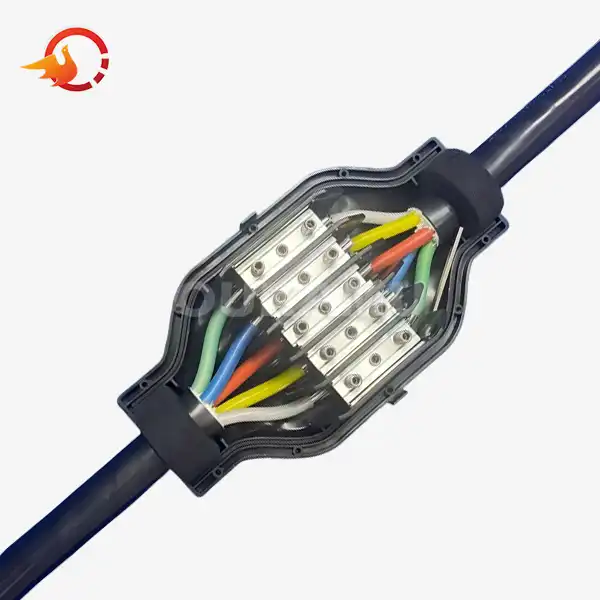
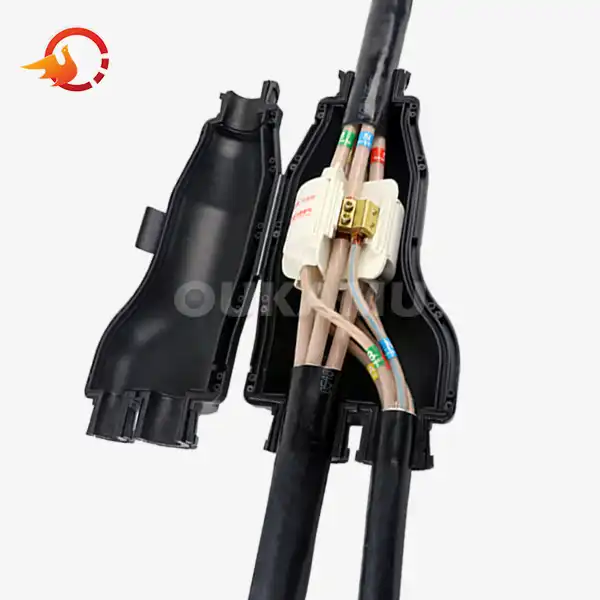
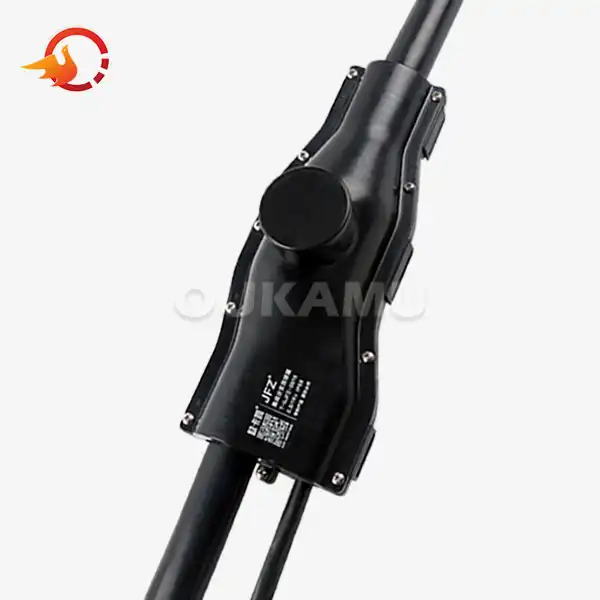
Branch Cable Joint systems are a big step forward from the old ways of connecting cables together. In traditional joints, main cables have to be cut, but branch connectors can connect to trunk lines without cutting the conductor. This method doesn't damage the main wire and keeps its original electrical and closing properties. This technology is shown by the Oukamu ZR-JFZ-120/35 type, which can handle main cables from 50mm to 120mm and branch cables from 2.5mm to 35mm, all at a rated voltage of 0.6/1kV.
Table 1: Technical Comparison of Cable Joint Methods
| Feature | Traditional Splice | Heat Shrink Joint | Branch Cable Joint (ZR-JFZ-120/35) |
|---|---|---|---|
| Main Cable Required to Be Cut | Yes | Yes | No |
| Time for Installation | 2 to 4 hours | 1 to 2 hours | 30 to 45 minutes |
| Using Again | No | No | Yes |
| Cable Waste | 2 to 3 meters | 1 to 2 meters | None |
| Specialized Tools Needed | Several | Heat Source | Not much |
| Flexibility in Branch Positions | Only planned ahead of time | Only planned ahead of time | Easily changed on-site |
Material Selection: Silicone vs. Epoxy Systems
Silicone-based joints work well in hot places and stay flexible even when the temperature changes, which makes them good for outdoor setups where the weather can change quickly. Epoxy resin systems are very strong and don't react badly with chemicals, which makes them perfect for projects that will be buried where groundwater pollution is a risk. Modern branch connectors often use both materials in a smart way, with epoxy being used for the structural parts and silicone being used for the flexible sealing parts.
Advanced T-connector systems meet many material needs at the same time because they are designed to work together. Multi-layer insulation keeps electrical dangers away, even in high-risk workplace settings, as part of improved safety features. Construction that can handle temperature ranges from -40°C to +90°C, moisture, dust, and corrosive substances makes something reliable in harsh conditions. Because of this, the same line of products can be used for mineral-insulated, flame-retardant, and fire-resistant wire systems, so there is no need to keep separate stock.
How to Install and Maintain Cable Joints for Industrial Systems
Step-by-Step Installation Process for Branch Connectors
Installing branch Cable Joints is very different from traditional splicing, and it has big benefits for real-world projects. The first step is to find the best place for each branch point right there on the job site. This is something that can't be done with pre-fabricated branch cables because the connection points are fixed during manufacturing. Technicians measure and mark where the trunk cable is without cutting through the conductor. They then clean the surface of the cable to get it ready for the connection.
The body of the connector opens up to accept the main wire. Inside, there are piercing contacts that go through the insulation to make an electrical connection while leaving the conductor alone. When branch wires are plugged into their specific ports, they make safe connections with similar contact mechanisms. When all the cables are in the right place, the housing locks and closes, starting the built-in sealing system. The whole assembly can be done without using heat or special bonding tools, and each connection point is usually finished in 30 to 45 minutes.
This method of installing things quickly and correctly paid off during the JinRenTong Highway project, which connected Zunyi City and Bijie City as part of China's plan to improve its transportation systems. Nearly 20,000 branch Cable Joints were provided by Oukamu for the highway's electrical equipment. Installation flexibility was very important.
Because the branch positions could be changed on-site, design changes could be made during construction without having to wait for custom pre-branched cables. The project showed how modern jointing technology cuts down on installation time and material costs while still meeting the high standards of stability needed for important infrastructure.
Maintenance Protocols and Testing Procedures
Standard installations should be inspected once a year, and installations in harsh environments should be inspected more often. A visual inspection looks for cracks in the housing, signs of moisture that the seal is broken, and discoloration that the device is getting too hot. Thermal imaging cameras pick up on temperature spikes that don't seem normal. This could mean that connections are loose or insulation is wearing down. When planned maintenance windows are used for partial discharge tests, insulation flaws are found before they lead to failures.
Advanced branch connections are easier to maintain than fixed splice methods because they can be used more than once. If changes need to be made to the circuit, technicians can open the housing of the connector and move branch cables or add more branches without having to replace the whole joint. Because it can be changed easily, the electricity distribution system lasts longer and costs less to maintain over time.
Safety Precautions During Installation and Service
Electrical safety rules are still very important, no matter what Cable Joint technology is used. Before you start any repair or maintenance work, make sure that all wires are off and that there is no voltage. Put on the right safety gear for you, like padded gloves and safety glasses. When working with bigger cable sizes, like the 95mm to 240mm main cables that are supported by higher-capacity models, strain injuries can be avoided by using mechanical handling equipment to position the cables.
Procurement Guide: How to Source Quality Cable Joints for Industrial Use
Evaluating Supplier Credentials and Product Certifications
When choosing Cable Joint providers for manufacturing projects, procurement officers have to make very important choices. In addition to competitive prices, when evaluating suppliers, makers who have a track record of being good at electrical connection methods should be given more weight.
With 20 years of experience in branch Cable Joint development, Xi'an Oukamu Electric Co., Ltd. is a prime example of the level of technical expertise needed to produce solid goods. The company's creation of its own branch joint technologies and adherence to GB/T 14048.7-2016 standards guarantee the safety and quality of its products.
International approvals can be checked to get objective proof of how well a product works. Request test reports that show how well the product resists flames, how well it resists fire, how well it resists water intrusion (IP ratings), and how well it works electrically when it's loaded. Suppliers should make clear records of the materials they use, how they are made, and the quality control steps they take. Manufacturers who offer warranties that are longer than the norm show they are confident in the durability of their products.
Cost Analysis: Understanding Total Ownership Economics
The initial purchase price is only one part of the economics of Cable Joints. A full cost analysis must take into account the time and money needed for installation, the savings on cable materials, the cost of upkeep, and the possible costs of downtime due to joint failures. Branch connector systems often have a lower total cost of ownership than basic splice kits, even though they may cost more per unit.
Table 2: Total Cost Comparison for 100 Branch Connections
| Type of Cost | The Old-Fashioned Way | System of Branch Joints (Oukamu) |
|---|---|---|
| Product Cost | $3,500 | $6,500 |
| Cable Waste ($15/m for 2m per joint) | $3,000 | $0 |
| Installation Work (2 hours vs. 0.75 hours @ $65/hr) | $13,000 | $4,875 |
| Costs of Future Changes | $8,000 (replacement) | $1,200 (reuse) |
| Total Project Cost | $27,500 | $12,575 |
| Savings on Costs | — | 54% less waste |
This study shows that advanced jointing technology saves a lot of money, even though the products cost more at first. Getting rid of two to three meters of extra main wire for each link and cutting down on work hours immediately make money. The reusability factor adds to the long-term value when changes need to be made to the circuit.
Customization Capabilities for Specialized Applications
In industrial projects, there are often special needs that go beyond the normal product specs. Cable Joint designs can be changed by suppliers who offer customization services to fit specific voltage levels, conductor shapes, or weather conditions. Custom solutions could include higher temperature values for harsh locations, special housing materials for places where things are likely to rust, or built-in features for smart tracking systems.
When looking at customization choices, you should think about how well the seller can help with engineering. Technical teams that can look over project requirements and suggest the best ways to solve problems add a lot of value beyond just providing products. Oukamu's work on construction, municipal infrastructure, railroad, and highway projects shows that they know a lot about a lot of different types of applications, which is important for successful customization.
Streamlining Procurement for Multi-Channel Distribution
Distributors and sellers that have both online and brick-and-mortar stores need suppliers that can fulfill orders in a variety of ways. Small to medium-sized batch purchasing options make it easier to manage inventory without having to spend a lot of money. Stable supply lines with clear wait times make it possible for products to be readily available during sales and changes in seasonal demand.
Supply chain management is easier when you build relationships with manufacturers that support both domestic and international channels. Unified buying for sales both online and offline at the same time makes things simpler while keeping the same product across all channels. Formatted technical documentation, product images, and specification sheets for e-commerce platforms make it easy to quickly list products and start selling them.
Advantages and Future Trends of Advanced Cable Joint Solutions
Operational Benefits of Modern Jointing Systems
Modern branch Cable Joint technology has many benefits that directly address the problems that procurement managers and project engineers have pointed out. By not cutting the main cable, the original factory sealing and electrical properties are kept, which lowers the number of possible failure points. On-site branch position adjustability solves problems that come up during installation, like when planned connection points don't match up with where the equipment is actually located or when there are building restrictions.
Savings on materials and labor add up over the course of a big job. When you use non-cutting branch joints instead of the old way of doing things, you save 1,000 to 1,500 meters of main cable for a typical infrastructure installation with 500 branch connections. This conservation of materials means lower shipping costs, easier cable handling, and less space needed for storage. Cutting the time it takes to install each joint from two hours to less than an hour speeds up projects and lowers work costs in the same way.
Products like Oukamu's T-connector systems are made with a combined design philosophy that combines many safety features into small units. The qualities of insulation, flame retardancy, fire protection, waterproofing, and anti-corrosion are all combined in one unit, which makes it easier to specify and install. This combination lowers the chance of installation mistakes that happen when putting together a lot of different parts.
Emerging Innovations in Cable Connection Technology
Cable Joint systems are continuing to improve their intelligence and tracking skills. Sensors built into smart connector ideas constantly check the temperature of the connection, the resistance of the contacts, and the integrity of the insulation. These systems send information about their status to building management systems or SCADA networks. This lets maintenance teams fix problems before they become major problems.
Researchers in the field of material science are making polymer compounds that work better. New insulation materials keep their electrical properties over a wider range of temperatures and don't break down when exposed to UV light, ozone, or chemical contaminants. Self-healing polymers that automatically fill in small holes or cracks are a new technology that could make joints last a lot longer in harsh environments.
Through design improvement, installation methods keep getting easier. Tool-free connection systems with color-coded assembly tips make installation easier for people who aren't very good at it, which helps many markets deal with the lack of expert workers. Quick-connect devices that let you feel and see that the seat is in the right place reduce installation mistakes and speed up deployment.
Sustainability Considerations in Product Selection
As companies commit to sustainability goals, environmental responsibility plays a bigger role in their buying decisions. Through a variety of channels, Cable Joint selection provides chances to support these goals. Products made from reusable materials and meant to be taken apart make recycling easier instead of throwing them away in a dump. Because advanced branch connectors can be used more than once, the products last longer and require less material to replace them.
Cable Joints are also affected by energy efficiency concerns because they cause system losses. Good links with low contact resistance keep energy from being lost as heat as much as possible, which lowers costs and protects the environment over many years of use. The durability that keeps parts from breaking down too soon saves money and time by not having to make and ship replacements and avoids the waste that comes from throwing away broken parts.
Conclusion
To choose the best Cable Joint options for commercial electrical systems, you have to find a balance between technical performance, ease of installation, and total cost of ownership. Modern branch connection technologies are much better than old-fashioned joining methods, especially for projects that need to be flexible during installation and adaptable in the long term.
Cutting main cables is no longer necessary, and the system can be used again and again and is easy to set up. This has clear financial and practical benefits. Instead of just looking at how much a product costs, procurement professionals should judge suppliers based on their technical knowledge, certifications, and ability to provide full support. As industrial systems become smarter and more environmentally friendly, wire link technologies will keep getting better to meet the needs of these new systems.
FAQ
What factors should determine cable joint selection for my project?
Cable Joint selection is based on voltage rating, conductor size compatibility, environmental conditions, and limitations of the installation method. Match the rated voltage of the joint to the needs of your system, leaving enough room for error. Make sure that the sizes of both the main wire and the branch cables are within the range given by the product. Think about things in the environment like extreme temperatures, exposure to water, chemical contaminants, and mechanical stress.
The way the cables are installed is very important. For projects that will need to change the circuits in the future, reusable branch joints work best, while traditional splice methods can be used for permanent installations. Total ownership costs, not just the starting product price, should be included in budget research.
How often should cable joints undergo inspection and testing?
Standard industrial installations need to be inspected visually once a year to look for damage, signs of moisture, and changes in color. Every two years, thermal imaging surveys find connection problems before they become major. Testing for partial release during planned maintenance windows gives a thorough picture of the state of the insulation. Inspections should be done every six months in harsh settings with high temperatures, chemical contact, or vibration.
Every three months, you should check on critical equipment that supports safety systems or important operations. Keep thorough check records that list what was found and what was done to fix it. This will help you find performance trends and figure out when maintenance is needed.
Can branch cable joints accommodate custom installation requirements?
Good makers offer customization services that let you change standard goods to fit the needs of your project. Changes to the voltage grade, unique combinations of conductor sizes, and improvements to environmental safety are all common ways to make something unique. Installations in harsh climates can use extended temperature ratings, and certain chemicals can't damage certain types of housing materials. Talk about the project details with the engineering teams of your suppliers early on in the planning phase to find the best solutions and determine how long the lead time needs to be for custom goods.
Partner with Oukamu for Reliable Cable Joint Solutions
Industrial electrical systems need connecting options that are reliable over the long term without slowing down installation or going over budget. Oukamu is an expert in branch Cable Joint technology, with 20 years of experience in research, development, and real-world use in infrastructure, city, railroad, and industry projects. Our ZR-JFZ-120/35 model and wider range of products give wholesalers, retailers, and project workers who want to gain a competitive edge through new technology a number of options.
When you buy Cable Joint products from Oukamu, you get full technical support, clear certification paperwork, and the ability to choose from a range of order sizes, so you can test them in small groups or buy enough for a big project. Our reliable supply chain and easy-to-use inventory management systems help online stores that sell electronics keep products in stock and keep costs down by reducing the need for new equipment.
Email our team at info@okmbranchcable.com to talk about your particular needs, get full product specs, or set up a free evaluation. Visit okmbranchcable.com to see all of our products and learn how modern Cable Joint technology from a specialized maker can lower your project costs and make your system more reliable.
References
1. Smith, J. & Anderson, R. (2022). Industrial Electrical Connection Systems: Design, Installation, and Maintenance. Technical Publishing International.
2. National Electrical Manufacturers Association (2021). Standards for Cable Joints and Splices in Industrial Applications. NEMA Standards Publication WC 68.
3. Williams, T. (2023). "Comparative Analysis of Cable Jointing Technologies in Infrastructure Projects," Journal of Electrical Engineering and Technology, Vol. 18, No. 3, pp. 445-462.
4. International Electrotechnical Commission (2020). IEC 60502: Power Cables with Extruded Insulation and Their Accessories. IEC Central Office, Geneva.
5. Chen, L. & Peterson, M. (2022). "Economic Evaluation of Cable Connection Methods in Large-Scale Distribution Systems," IEEE Transactions on Power Delivery, Vol. 37, No. 4, pp. 2891-2903.
6. Rodriguez, E. (2023). Modern Cable Management Solutions for Industrial and Commercial Facilities. Electrical Contractors Association Press.