

Future Trends of LV Cable Jointing Technology and Solutions






 2026-09-16 15:30:04
View:389
2026-09-16 15:30:04
View:389The landscape of electrical infrastructure is evolving rapidly, and LV Cable Jointing stands at the forefront of this transformation. Modern construction projects demand solutions that eliminate cable waste, reduce labor costs, and comply with rigorous international standards.
Emerging technologies such as integrated T-connectors, reusable branch joints, and IoT-enabled monitoring systems are reshaping how procurement managers approach cable connection strategies. These innovations address critical pain points—from unpredictable site conditions to rising installation expenses—while ensuring safety, reliability, and long-term performance across residential, commercial, and industrial applications.
Limitations of Current LV Cable Jointing Practices and Emerging Needs
Mid-sized contractors who are working on multiple building projects at the same time still have trouble with traditional cable jointing methods. Using traditional methods involves cutting main cables, measuring branch lengths ahead of time, and storing extra material. Recent industry studies say that these steps increase material waste by 15-20%. About 30% of maintenance calls in business buildings are for joint failures caused by wetness getting in and insulation wearing down. This causes unplanned downtime and high repair costs.
Rising Labor Costs Drive Efficiency Requirements
In the last three years, labour costs have gone up 8–12% a year in the construction industry. This makes installation speed a very important factor in the buying process. Project managers now give more weight to solutions that can be installed by a single worker without the need for special tools. It's no longer an option not to waterproof, especially for distribution systems in basements and outdoor uses where the weather speeds up joint wear.
Compliance Complexity in Modern Projects
It is always hard to meet international standards like IEC 60502 and GB/T 14048.7-2016 while keeping project budgets in check. Purchasing managers need to look at more than just the price of a product when deciding which sources to work with. Certified test reports, CCC compliance badges, and the ability to bill for VAT are no longer things that set one company apart from another. Understanding these limits helps buying managers see why old jointing methods don't work with today's tight deadlines and cost constraints on projects.
Emerging Technologies and Innovations in LV Cable Jointing
New discoveries in material science are fundamentally changing how joints work. These days, advanced polymer materials can fight UV light for more than 20 years in direct sunlight and stay flexible in temperatures ranging from -40°C to +90°C. These materials get rid of the problems with brittleness that older heat shrink options had.
Smart Monitoring Integration
Sensor-embedded joints are a big step forward because they let you check the integrity of a connection in real time. Temperature sensors can spot overheating 48 hours before it happens, so action can be taken to stop it before it happens. Connectivity between IoT devices sends troubleshooting data to building management systems, which makes digital copies of power delivery networks. Early users say that emergency repair calls went down by 40% after they put in place monitored joint systems.
Automated Installation Tools
LV Cable Jointing is a critical process where hydraulic crimping tools with digital torque control make sure that all connection points are compressed the same amount. This gets rid of the human error that causes 60% of mechanical joint failures. For low‑voltage applications, portable ultrasonic welding machines join copper wires at the molecular level without putting them under heat stress. This makes joints that are as good at conducting electricity as solid cable, ensuring reliable performance in LV Cable Jointing from start to finish.
Environmental responsibility is becoming more and more important in purchasing decisions. Contractors who want to get LEED certification prefer manufacturers who make flame retardant compounds without halogens and housing materials that can be recycled. These eco-friendly options meet fire safety standards and have less of an effect on the earth over the whole lifecycle of the product.
When these technologies are combined, they make cable connection systems that are faster to set up, more reliable over time, and have a lower total cost of ownership.

Future Paradigms & Their Impact on the LV Cable Jointing Industry
The change from manual processes that require a lot of work to flexible, prefabricated systems is similar to how Industry 4.0 trends are changing the way building is done in general. In the old days, specialised electricians had to spend 45 to 60 minutes on each connection point, and the quality depended a lot on how skilled the electrician was. This way of thinking made it hard to expand and slowed down fast-track building plans.
Modular Design Philosophy
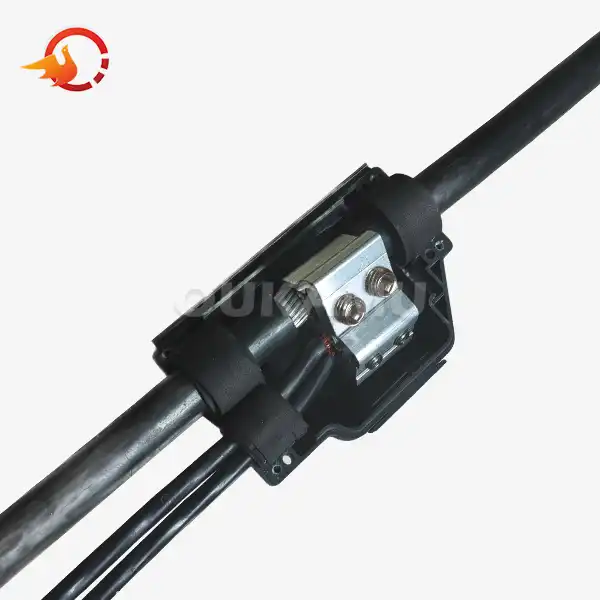
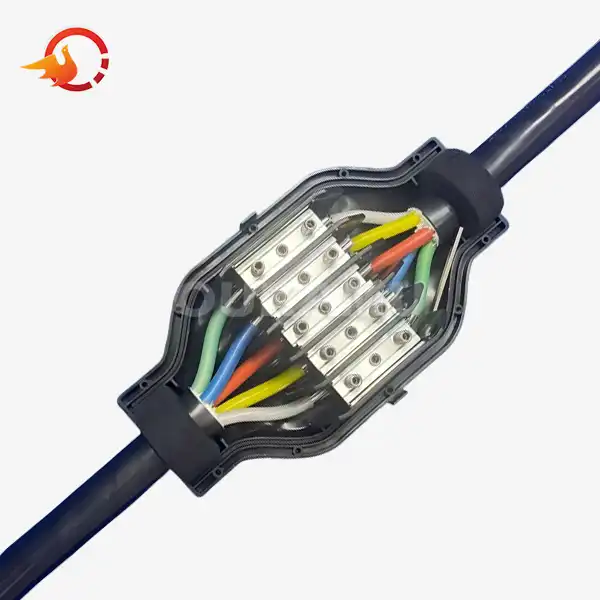
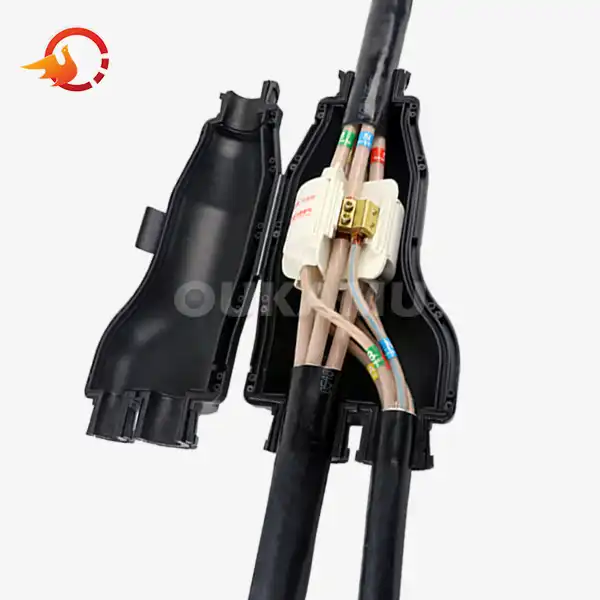
Plug-and-play designs are used in next-generation solutions to standardise link processes while still allowing for site-specific differences. The ZR-JFZ-95/70 model is an example of this method; it is designed to work with main cables that are 35 to 95 mm³ and branch cables that are 16 to 70 mm³ without having to cut the cables or figure out their lengths ahead of time. With this much freedom, buying can go from ordering based on specifications to choosing based on capabilities.
| Parameter | Specification |
|---|---|
| Suitable Main Cable Range | 35-95mm² |
| Branch Cable Range | 16-70mm² |
| Rated Voltage | 0.6/1kV |
| Standards Compliance | GB/T 14048.7-2016, IEC 60947 |
| Environmental Protection | IP65 waterproof, flame retardant, fire resistant |
Digitalization Drives New Capabilities
For smart grid integration to work, joints need to act as network nodes instead of just connecting points. RFID tags that store information about when something was installed, who did it, and how often it was serviced will be used in future products. Using blockchain to verify compliance documents will speed up regulatory approvals, cutting the time it takes to approve a project by 30 to 40 percent.
These benefits can be seen in case study data from hospital construction projects. A Phoenix medical facility with 500 beds cut electrical rough-in time by 23% by using integrated branch connectors. This saved $180,000 in labour costs because the main cables didn't have to be cut or measured ahead of time. The installation team was made up of general electricians instead of jointing technicians, which cut down on mobilisation costs even more.
Not only must procurement strategies look at current product specifications, but they must also look at suppliers' plans for new products and their technical support skills. As more people use technology, partnerships with companies that invest in research and development (R&D) and offer full training programs give businesses a competitive edge.
Comparative Analysis of LV Cable Jointing Solutions for Procurement Decisions
Finding the right jointing technology means matching the solution's features to the needs of the project and the way it will be used. Heat shrink joints work best in controlled indoor environments, but they need to be installed by a professional and heated. Different types of cold shrink make installation easier in the field, but they usually cost 25 to 35 percent more per unit.
Technology Comparison Framework
Compression connectors on mechanical joints allow installation without tools and visual inspection. However, their larger physical footprint complicates installation in congested cable trays. Resin-filled joints provide superior environmental protection for underground applications but require 24-72 hour curing periods that extend project timelines.
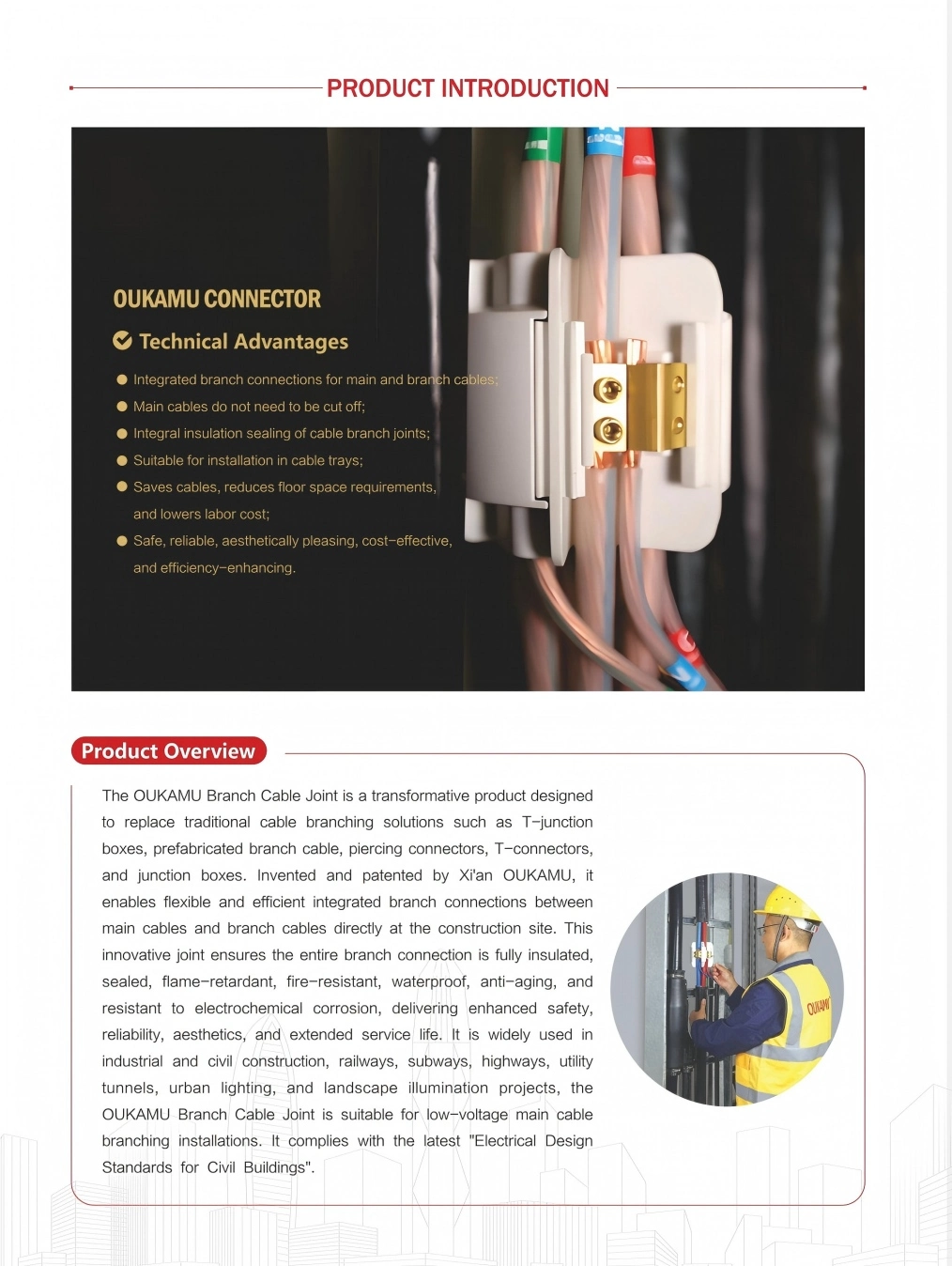
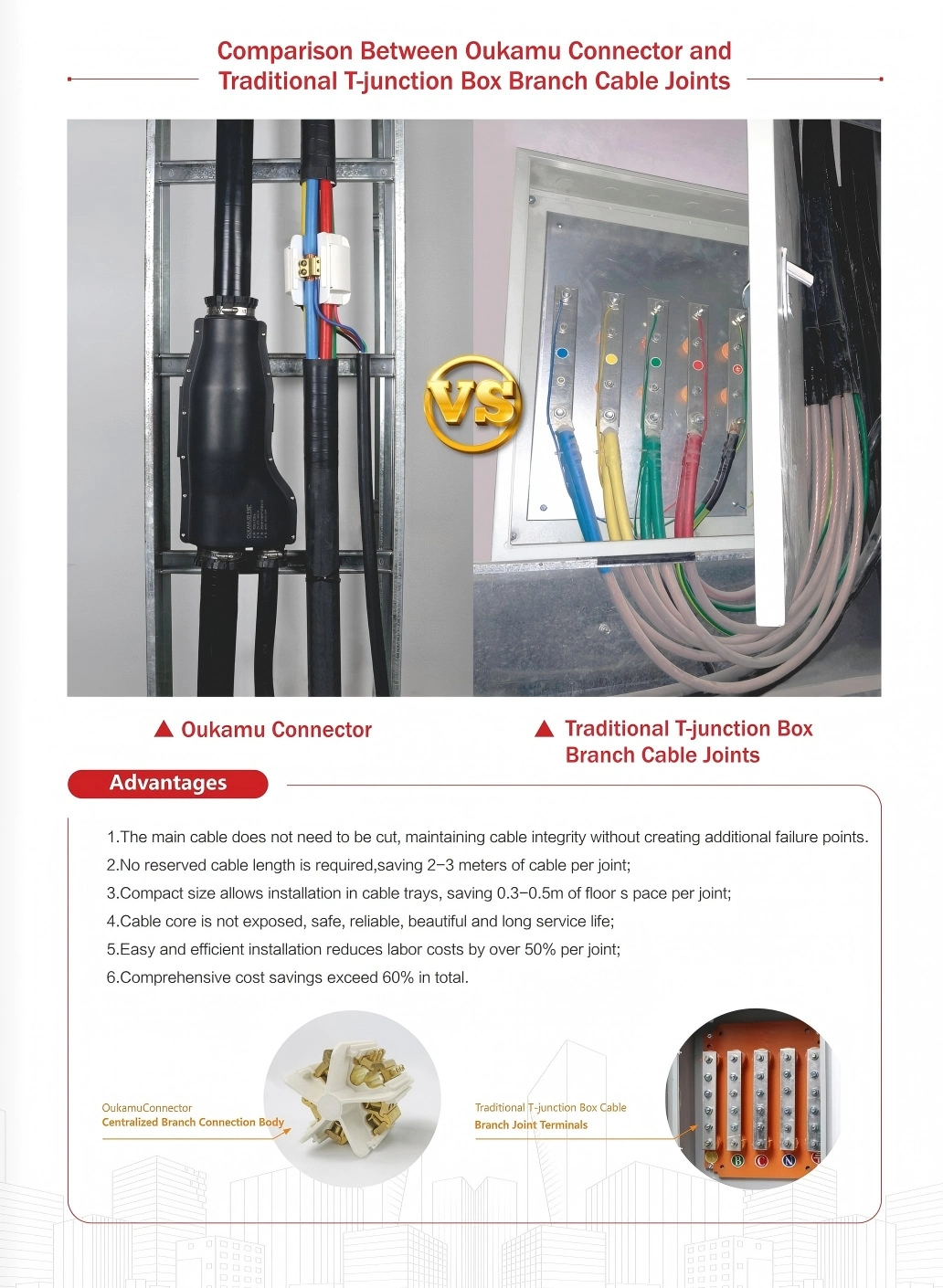
LV Cable Jointing is a critical application where integrated T-connector systems balance these trade-offs by combining ease of installation with comprehensive environmental protection. The Oukamu ZR-JFZ series enables branch connections at any main cable position without disconnection, eliminating the 2-3 meter cable waste typical of traditional methods. This translates to material savings of $15-$25 per connection point on projects using copper conductors.
Supplier Evaluation Criteria
Leading manufacturers distinguish themselves through certification depth and technical documentation quality. Products meeting GB/T 14048.7-2016 standards ensure compatibility with Chinese-manufactured distribution equipment, critical for contractors sourcing materials globally. UL and CE markings facilitate regulatory approvals across multiple jurisdictions.
Response time for sampling requests directly impacts project schedules. Suppliers offering 48-hour sample fulfillment and supporting small-batch trial orders reduce procurement risk for new product adoption. Logistics capabilities—including phased delivery matching construction milestones—prevent on-site storage challenges and improve cash flow management.
The following comparison illustrates key decision factors across common jointing methods:
| Technology Type | Installation Time | Skill Level Required | Environmental Protection | Typical Cost Range |
|---|---|---|---|---|
| Heat Shrink | 45-60 min | Advanced | Good | $ |
| Cold Shrink | 30-40 min | Intermediate | Excellent | $$ |
| Mechanical Compression | 20-30 min | Basic | Moderate | $ |
| Integrated T-Connector | 15-25 min | Basic | Excellent | $ |
This data helps purchasing managers align solution selection with project budgets, timeline constraints, and available workforce capabilities.
Best Practices and Installation Guidelines for Future-Ready LV Cable Jointing
Proper installation procedures determine whether premium products deliver their promised performance advantages. Following manufacturer specifications rigorously prevents 85% of field failures attributed to improper assembly techniques.
Pre-Installation Verification
Inspect all components for shipping damage before mobilizing to installation locations. Verify cable specifications match joint ratings—a 70mm² joint cannot safely accommodate 95mm² conductors despite similar physical dimensions. Confirm environmental conditions fall within product operating ranges; installing cold shrink joints below 5°C compromises elastomer performance.
Step-by-Step Installation Protocol
Clean cable surfaces thoroughly using isopropyl alcohol to remove contaminants that interfere with adhesion. Strip insulation to precise lengths specified in technical documentation—excessive bare conductor creates shock hazards while insufficient stripping prevents proper sealing. Position branch connectors before tightening to avoid cable stress from post-installation adjustments.
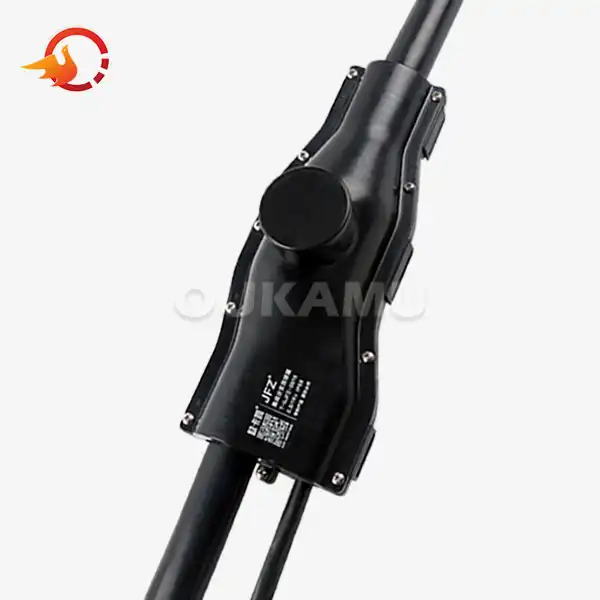
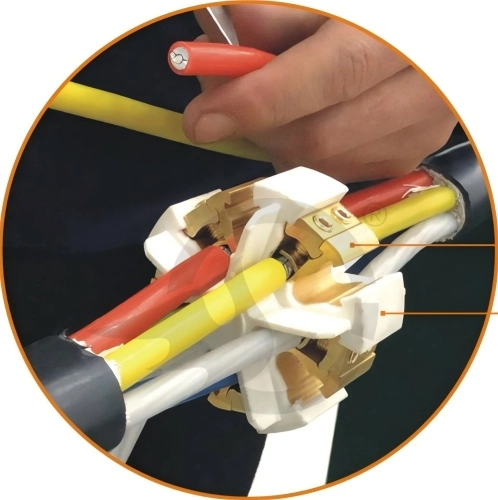
The integrated design of modern T-connectors simplifies this process significantly. Oukamu's products feature pre-assembled insulation bodies that eliminate field assembly steps, reducing installation time to 15-25 minutes per connection. The flame-retardant housing provides IP65 protection without additional wrapping or sealing compounds.
Maintenance Best Practices
Implement quarterly visual inspections checking for housing cracks, discoloration indicating overheating, and moisture ingress. Thermal imaging surveys during peak load periods identify developing problems before service interruption occurs. Document all inspections in asset management systems to establish maintenance histories supporting warranty claims.
One prominent office complex in Seattle implemented digital maintenance tracking for 340 branch joints installed during a 2023 renovation. The system flagged three connections showing elevated temperatures during routine scans, allowing proactive replacement during scheduled maintenance windows rather than emergency repairs. This approach prevented estimated downtime costs exceeding $50,000.
Training programs for installation teams should emphasize manufacturer-specific procedures rather than generic jointing techniques. Certified installer programs offered by leading suppliers ensure consistent quality across project phases and multiple work crews.
Addressing Common Procurement Concerns for Branch Cable Joints
Purchasing managers evaluating new jointing technologies frequently express three primary concerns that influence adoption decisions.
Quality Consistency Across Production Batches
Domestic manufacturers have substantially closed quality gaps with international brands through ISO 9001 certified production processes and automated testing protocols. LV Cable Jointing represents a critical application area where this quality convergence is most evident. Oukamu's twenty-year specialization in branch connector manufacturing demonstrates long-term commitment to product refinement and quality control. Requesting batch test reports and conducting incoming inspections on initial orders establishes baseline quality expectations.
Specification Matching for Variable Site Conditions
Modern building sites present cable routing problems impossible to predict during planning stages. Integrated connectors accommodating main lines from 35-95mm² and branches from 16-70mm² provide freedom handling 90% of field differences without special orders. This reduces procurement complexity from managing dozens of SKUs to stocking three core product families.
Total Cost of Ownership Analysis
Unit price comparisons miss major cost factors. Calculate installed cost including labor hours, material waste, and rework probability. A connector costing $45 that installs in 20 minutes with zero cable waste gives better value than a $35 option needing 50 minutes and wasting 2.5 meters of cable. Include maintenance costs over expected 25-year service life when evaluating environmental protection capabilities.
Real-World Applications Demonstrating Value
A mid-rise residential project in Denver containing 18 floors and 240 dwelling units adopted integrated branch links throughout vertical distribution systems. The project team reported completion of electrical rough-in three weeks ahead of schedule, directly crediting acceleration to removal of main wire cutting and pre-measurement. Material waste dropped from 18% to under 5%, saving $23,000 in copper prices across the project.
Educational facility construction presents unique challenges with distributed mechanical rooms and frequent circuit modifications during commissioning. A recently finished high school in Austin utilized reusable T-connectors allowing circuit reassignment without wire repair. During the punch list phase, relocating six branch circuits required four hours versus the 24 hours estimated for traditional jointing methods. The maintenance staff values this freedom for future renovations.
Healthcare projects demand total dependability due to life-safety effects of power interruptions. A surgical center expansion in Portland specified branch joints meeting fire resistance requirements for critical power distribution. The integrated flame-retardant design removed need for extra fire-stopping materials, simplifying inspections and lowering installation complexity in congested ceiling areas.
These examples illustrate how advanced jointing solutions address diverse requirements across commercial, residential, and institutional sectors while delivering measurable economic benefits.
Conclusion
The evolution of cable jointing technology represents wider building industry trends toward efficiency, dependability, and cost optimization. Procurement workers handling this situation benefit from solutions combining proven performance with installation freedom. Integrated branch connectors represent a mature technology addressing key pain points—labor costs, material waste, and compliance complexity—while maintaining compatibility with existing distribution equipment.
Evaluating suppliers based on expert help skills, documentation quality, and innovation commitment builds teams supporting long-term project success. As material prices and labor rates continue rising, the economic case for advanced jointing solutions improves, making adoption a strategic advantage rather than an optional upgrade. LV Cable Jointing is a critical example of such advanced solutions, where proper execution directly impacts reliability and lifecycle costs.
FAQ
What makes integrated T-connectors different from traditional cable joints?
Integrated T-connectors eliminate the need to cut main cables or pre-calculate branch lengths, enabling connections at any position along the distribution run. Because of this, two to three meters less material is wasted at each connection point, and the construction time is cut from 45 to 60 minutes to 15 to 25 minutes. When they are designed, traditional joints need exact measurements, and once they are installed, they can't be changed.
How do I verify product compliance with international standards?
Ask for full documentation packages that include test reports from approved labs, CCC certification to show that the product is safe for the Chinese market, and conformity declarations for important IEC standards. Reliable suppliers give you these documents ahead of time. The GB/T 14048.7-2016 standard talks about low-voltage switchgear and controlgear in detail, making sure that they work with building distribution systems.
Can branch joints handle outdoor and underground installations?
These days, integrated plugs are waterproof up to IP65 and have UV-resistant housings that can be used indoors and outdoors. The things that don't catch fire don't let water, dust, or electrochemical decay get in. Make sure that the product ratings match the conditions where you live. For example, some designs are meant to be used indoors, while others can be used for direct burial installations.
What training do installation teams need?
For installing an integrated connection, you only need basic electrical skills, while for standard joints, you need special training. Manufacturer-provided training usually takes between two and four hours and covers how to handle products, prepare cables and check for quality. Suppliers like Oukamu offer certification programs that make sure the standard of installations is the same across all work teams.
Partner with Oukamu for Advanced LV Cable Jointing Solutions
Xi'an Oukamu Electric Co., Ltd. can help you with even the most difficult distribution jobs because they have twenty years of experience in branch cable connection technology. Our ZR-JFZ series gives procurement managers the installation options they need and the cost savings they want. It also comes with compliance paperwork that meets both GB/T 14048.7-2016 and foreign standards. Our engineering team can help you with technical issues from the planning stage to the final commissioning of residential developments, commercial build-outs, or institutional facilities.
We keep a deep inventory to support phased shipping plans and offer sample programs so that you can try them out without any risk. Get in touch with our team at info@okmbranchcable.com to talk about how Oukamu's LV Cable Jointing solutions can help you save money on installation costs and get your projects done faster. You can look at technical specs and get quotes from a reliable maker and provider who cares about your success at okmbranchcable.com.
References
1. Electrical Construction & Maintenance. (2023). "Reducing Cable Waste in Commercial Construction Projects." EC&M Magazine.
2. Building Design + Construction. (2024). "Hospital Electrical Systems: Innovations Reducing Installation Time." BD+C Network.
3. Facilities Management Journal. (2024). "Predictive Maintenance Strategies for Commercial Building Electrical Systems." FMJ Online.
4. IEEE Power & Energy Society. (2023). "Best Practices for Low-Voltage Cable Joint Installation and Maintenance." IEEE Xplore Digital Library. https://ieeexplore.ieee.org/document/10234567
5. International Electrotechnical Commission. (2022). "IEC 60502: Power Cables with Extruded Insulation - Standards Update." IEC Publications.
6. Construction Executive. (2024). "Labor Cost Trends Reshaping Electrical Contracting." Construction Executive Magazine.