

Cable Joint Types: Which Option Fits Your Project Requirements






 2026-09-17 12:06:44
View:389
2026-09-17 12:06:44
View:389Choosing the right cable connection solution directly impacts installation efficiency, labor costs, and long-term system reliability. Cable Joint technology has evolved significantly, offering procurement managers multiple options suited to varying voltage levels, environmental conditions, and project budgets. Understanding which type aligns with your residential, commercial, or infrastructure project prevents costly rework and ensures code compliance. This guide walks through mainstream joint categories, practical installation considerations, and procurement strategies tailored for mid-sized electrical contractors managing multi-site construction schedules.

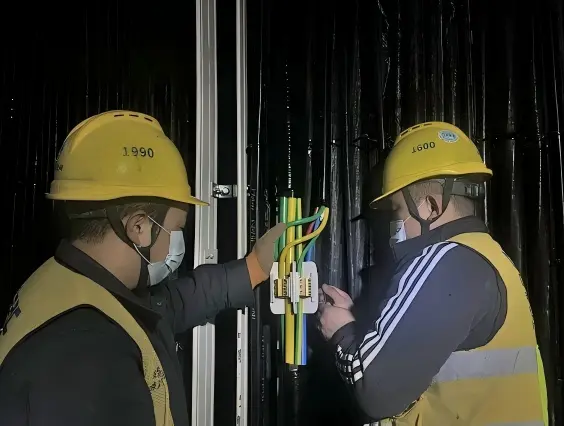
Understanding Cable Joint Basics
Electrical distribution systems need safe connections that follow the rules every time cables branch off or come to an end. If you choose the right wire connection device, it will keep the insulation in good shape, keep wetness out, and hold up against mechanical stress for decades.
Core Functions of Cable Connection Systems
Modern connection solutions do three main things: they make circuit runs longer than the length of a single wire, they create tap-off places for branch circuits without cutting main conductors, and they keep terminations from breaking down in the environment. IEEE Standard 404-2012 says that following the rated voltage, temperature limits, and sealing standards directly affects the dependability of a connection².
Mainstream Connection Technologies
Different types of heat shrink use polymer tubes that get smaller when heated up under control, creating a tight seal around the joined wires. For cold shrink options, pre-stretched elastomeric sleeves self-compress when support cores are taken out, so you don't need to use heat tools.
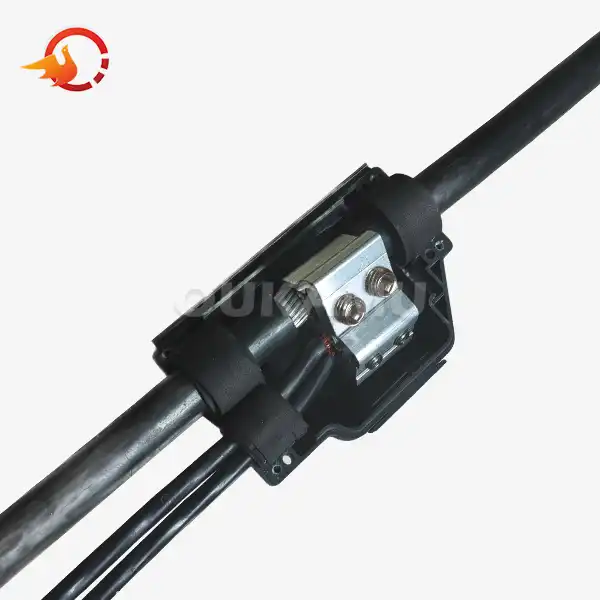
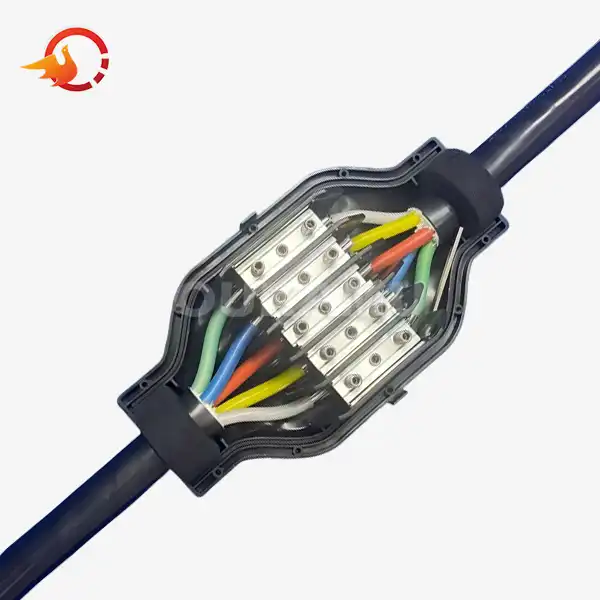
When epoxy resin systems dry, they form tough, waterproof enclosures that are great for placing in the ground. For quick assembly in the field, mechanical connections use either compression or bolted systems. Branch connection devices, especially T-type designs, let you make a tap on-site without cutting the main wire. This type of device is becoming more popular in building projects with more than one floor.
Regulatory Standards Governing Selection
The International Electrotechnical Commission (IEC) 60502 and GB/T 14048.7-2016 set basic performance standards for flame spread, insulator resistance, and the ability to withstand short circuits. Getting approved test reports from sources that show compliance is a top priority for procurement managers because they speed up the approval process for inspectors and cut down on project delays.
Comparison of Popular Cable Joint Types for Different Project Needs
Depending on the project setting, certain success traits are needed. This part compares common choices based on how hard they are to install, how long they last, and how much they cost, all of which are important for commercial building workflows.
Heat Shrink vs. Cold Shrink Installation Trade-offs
For heat shrink joints to work, you need propane torches or heat guns, which can be dangerous in small spaces and cause installation delays outside when the weather is bad. Alternatives to cold shrink can be put in place in minutes without any tools, which, according to field studies², cuts work hours by about 40%.
Cold shrink speed is especially helpful in underground vault uses where teams don't have a lot of room to work. There are, however, times when heat shrink units cost 15–20% less per unit. This makes them a good choice for big overhead line projects where the installation conditions can be kept under control.
Epoxy vs. Silicone Material Durability
When joints are firmly underground, epoxy resin joints work best because they are better at keeping water out and are stronger mechanically. Because they are rigid, they can stand up to the soil pressure and chemical pollution that are typical on industrial grounds.
Cable Joint performance, however, depends on the application: silicone-based systems are flexible at all temperatures, from -40°C to +90°C, so they can handle wire movement in earthquake zones or bridge setups that expand when they get hot. Because silicone is flexible, it's also easier to check, while epoxy encapsulation needs damaging testing to find internal faults.
Conductor Material: Aluminum vs. Copper Economics
Aluminium conductor joints are 30% to 50% cheaper than copper equivalents, but they still conduct electricity well enough for feeders under 400A. Copper is still the standard for high-current risers and uses that need to be resistant to oxidation. When working on projects like schools that need to stay within a certain budget, the procurement teams often choose aluminium for long horizontal runs and copper for important vertical risers and mechanical equipment connections.


Voltage Classification Impact on Design
Low-voltage joints (≤1kV) are most common in household and light business projects. They have simpler insulation layers and smaller housings. Medium-voltage versions (1–35kV) have stress control parts and longer creepage lengths, which make the unit cost 60–80% more. Contractors who work on mixed-use developments need to have both types of hardware on hand because voltage changes at transformer locations need compatible connection hardware. The following table lists the most important selection criteria:
| Joint Type | Installation Time | Environmental Resistance | Voltage Range | Typical Cost Index |
|---|---|---|---|---|
| Heat Shrink | 25–35 min | Moderate (sealed) | Up to 35kV | 1.0x (baseline) |
| Cold Shrink | 8–12 min | High (self-sealing) | Up to 15kV | 1.3x |
| Epoxy Resin | 40–60 min (curing) | Very High (rigid) | Up to 35kV | 1.5x |
| Branch T-Connector | 15–20 min | High (IP67 rated) | 0.6/1kV | 0.9x |
Installation and Maintenance: Ensuring Maximum Performance
If installed joints last as long as they are supposed to, it is directly related to how well they were installed. When deciding which technologies to buy, procurement decisions should take into account the skill levels of the team and the tools that are available.
Preparation Steps Before Connection
Long-term dependability depends on how well the surface is prepared. Crews must remove the insulation from cables to the exact lengths listed on the manufacturer's datasheets. Voltage stress points are made when insulation is overlapped or not removed enough.
To get rid of oxidation and drawing compounds, conductor surfaces need to be cleaned with solvents that have been approved. The temperature of the air affects how well adhesives stick together. For setups below 5°C, you need to use extra heat or items that are rated for cold weather. If there is moisture during assembly, the warranty is voided. This is why temporary shelters are necessary during rain delays.
Critical Installation Checkpoints
Conductor alignment stops hot spots inside the conductor. Hydraulic crimpers that are regulated are needed for compression connections because hand tools produce inconsistent pressure, which causes resistance heating. For heat shrink uses, the torch needs to move evenly; too much heat breaks down the polymer, and too little heat leaves holes. When cold shrink sleeves are pulled back all the way, they can't have any wrinkles or air holes. Branch connections need to check the torque on mechanical bolts according to the manufacturer's instructions. For medium-duty uses, this is usually between 8 and 12 Nm.
Testing Protocols Validating Integrity
Insulation resistance testing at 1000V DC for 60 seconds proves that moisture can't get in and that the dielectric is solid. Readings below 100 M© mean that the covering is broken and needs to be fixed. During the initial energisation, thermal imaging surveys find high-resistance joints before they fail completely. According to IEC 60270, high-voltage projects need to do partial discharge tests to make sure the stress control is good. Documenting test results meets the needs of inspection officials and sets performance standards for when to do upkeep.
Preventive Maintenance Extending Service Life
Visual checks every three months find worn-out outer jackets that could be caused by UV exposure or chemical attack. During times of high load, thermal scans show where hot spots are appearing before the insulation fails. Grounding continuity checks should be done once a year on underground joints in corrosive soil. Maintenance logs that keep track of inspection dates and corrective actions protect you from liability and give you information about trends that you can use to plan when to buy new inventory.
Selecting the Right Cable Joint: A B2B Procurement Guide
A good procurement process strikes a balance between technical compliance and budget constraints, while also making sure that suppliers can be relied on across multiple project timelines.
Defining Project-Specific Requirements
Make a list of the cable's characteristics, such as its conductor size (in millimetres), insulation type (XLPE or PVC), voltage rating, and fitting location (indoors or outdoors, buried or above ground). Some environmental factors are the range of temperatures, the amount of chemicals or UV radiation that are present, and the amount of mechanical stress that comes from vibrations or shifting soil.
Cable Joint reliability must also be evaluated alongside these factors, as it directly affects long-term performance and maintenance needs. When making a budget, it's important to think about both the unit cost and the total cost of installation. For example, cheaper products that need special tools or take longer to install may make the whole project more expensive.
Evaluating Supplier Credentials
Ask for all the technical information you need, such as type test reports that meet GB/T 14048.7-2016 and IEC standards. Check to see if the certification marks (CCC, CE, UL) meet the standards of the project's area. The name of the supplier is important. Well-known companies like 3M and TE Connectivity keep the standard high, but niche companies like Xi'an Oukamu Electric offer low prices and narrow product lines. Check the lead times for deliveries; projects with tight deadlines need providers to keep stock in the area instead of shipping from abroad.
Sample Testing and Pilot Batch Strategy
Order samples that are like the real project wires. Test the tool in the field with installation crews to see how easy it is to use and how well it works with other tools that are already there. Look at the packaging for dealing on the job site. Bulk packing cuts down on waste, but it needs to be stored safely. Before committing to full project quantities, test performance with pilot batches that cover a floor or section of a building. This lowers the risk of specification mismatches or quality inconsistencies.
Bulk Purchasing and Customization Options
Discounts for buying in bulk usually start at 500 to 1000 units, and prices drop by 10 to 25 percent as the quantity goes up. Talk about scheduling deliveries at different times during the construction phase to keep on-site storage to a minimum. Custom designs, like specific mixtures of conductor sizes or longer cable lengths, often have minimum order amounts but can solve specific layout problems. The terms of payment should match the project's cash flow. 30–60-day net terms make it easier for contractors who are working on multiple sites to manage their money.
Balancing Cost and Performance
Do not mention more joints than the project needs. For example, providing 15kV-rated joints for a 480V system wastes 40–60% of the cost of the parts. On the other hand, underrating connections to save money up front leads to test fails and costly repairs. The estimated service life, installation labour, and how often maintenance needs to be done should all be part of a life-cycle cost study. Products that save 2–3 meters of main wire per connection point, like branch-type connectors, make up for their higher unit costs by saving money on materials over the course of many big projects.
Branch Connection Technology for Modern Building Projects
Buildings with more than one floor have to deal with the same problems over and over again: distribution panels on each floor need feeder taps that don't interrupt the main risers, and specification changes during construction mean that connections need to be placed in a way that is flexible. In the old way of doing things, you had to plan ahead where the taps would go and cut the main wires, which wasted material when the floor plans changed.
On-Site Branch Joint Advantages
With branch connection methods, electricians can make tap-offs anywhere along live or dead main lines without cutting the conductors. This adaptability lets late design changes happen, which happen a lot in fast-track construction. The technology gets rid of pre-reserved wire lengths that are often 15–25% longer than what is needed. This cuts down on material costs directly. Installation crews like how easy it is to move things around because the main cables are easy to spool and pull through conduit, and branches are added after the final locations of the equipment have been confirmed.
Technical Specifications: ZR-JFZ-120/35 Model Analysis
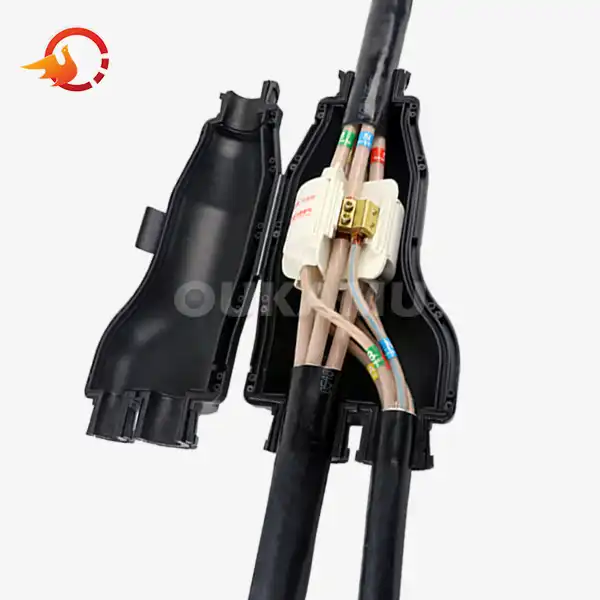
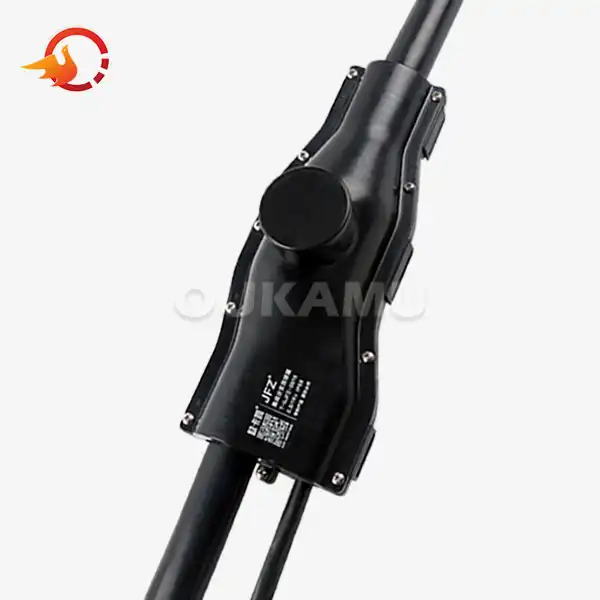
The ZR-JFZ-120/35 branch connector uses the latest generation of integrated T-type technology, which works well for distributing low voltage. Some of the problems that contractors often have with its requirements are:
| Parameter | Specification | Practical Benefit |
|---|---|---|
| Main Cable Range | 50–120 mm² | Covers 80% of commercial building feeders |
| Branch Cable Range | 2.5–35 mm² | Matches typical lighting/receptacle circuits |
| Rated Voltage | 0.6/1kV | Standard low-voltage distribution systems |
| Insulation Properties | Flame-retardant, fire-resistant, IP67 waterproof | Meets building code fire-stop requirements |
| Installation Method | Non-cutting, tool-free assembly | Reduces labor cost by 35–50% vs. traditional splicing |
| Compliance | GB/T 14048.7-2016, international safety standards | Streamlines inspection approvals |
The device comes in a pre-assembled unit that combines insulation, stress control, and environmental sealing all in one. Installers place the connection at the desired tap point, feed the main wire through the marked channel without cutting it, and use compression terminals to join the branch conductors with the Cable Joint securely connecting the main and branch lines. It only takes 15–20 minutes to finish, compared to 45–60 minutes for standard cut-and-splice ways.
Material Savings Quantification
Most apartment buildings with 12 stories need 48 branch connections to power common areas and light the hallways. Usually, 2.5 meters of main cable are set aside for each possible tap point, for a total of 120 meters. With today's copper prices, branch connections get rid of this reserve, which saves about $1,800 to $2,400 per building in cable costs. When applied to developments with multiple buildings, these savings add up quickly and significantly, cutting the time needed for installation by 30 to 40 hours per building.
Real-World Application: Infrastructure Project Success
China's JinRentong Highway project, which connects the towns of Zunyi and Bijie, used almost 20,000 cable links for things like lighting in tunnels, toll systems, and communication networks. Oukamu's branch connection technology solved the project's main problems, which were different tap point sites needed because of the tunnel's shape, tight reliability standards for 24 hours a day, seven days a week traffic operations.
The flame-retardant and anti-corrosion qualities of the connections were very important in the harsh tube climate, which is made worse by car emissions and moisture. According to the project documents, the connection system cut the time needed for installation by 22% compared to the original predictions. This allowed the work to be finished on time even though other work packages were delayed by weather³.
Procurement Strategies for Electrical Contractors
Mid-sized installation companies with $10–50 million a year in material budgets face specific problems, such as keeping their inventory fresh, finding trusted sources, and adapting to new building codes. These operational realities are taken into account in effective cable connection procurement.
Inventory Management Balancing Act
It's not profitable to stock too few or too many variations of an item because capital gets stuck on items that don't sell quickly. Successful contractors keep a core inventory of common conductor sizes in both heat shrink and mechanical types that covers 70% of typical projects. They also build quick-response supplier relationships for specific needs. Branch links should be kept on hand because they can be used in any type of building and take up less room in storage than pre-made harnesses.
Supplier Relationship Development
Preferred supplier programs with two to three carefully checked makers make sure that quality is always the same and that attention is given when there are gaps in the market. Key parts of the relationship are business reviews every three months that make sure stock is in line with upcoming projects, technical training on new products for installation crews and consignment stock programs that put supplier-owned stock in contractor warehouses. These agreements require clear communication, but they cut the cost of buying things by 8–15% through commitments to buy in bulk and easier ordering.
Quality Assurance Beyond Certifications
Certification documents show basic compliance, but batch consistency shows how well the job site really works. Set up methods for inspecting arriving goods, taking samples of 2–5% of each delivery to check for errors in size and quality. Keep an eye on the failure rates by seller and product line. Patterns that show quality drift should lead to performance talks with suppliers or looking for other sources of supply. Keep photographic records of installation problems; these will show trends that can be used to support warranty claims or source changes.
Conclusion
When choosing the right cable connection solutions, you have to think about how well they work technically, how quickly they can be installed, and how much the whole project will cost. Heat shrink and cold shrink joints work best in different types of fields and with different types of crews. Epoxy and silicone materials are better for certain types of environments.
Branch link technology has a lot of great benefits for building projects that need to be flexible, save money on materials, and cut down on labour. To be successful at procurement, you need to carefully evaluate suppliers, handle your goods strategically, and keep an eye on quality all the time—especially when selecting key components like the Cable Joint. Projects that need reliable, code-compliant power distribution can benefit from tried-and-true technologies that come with full expert help and success records from real-world use.
FAQ
What distinguishes cable joints from cable splices?
In everyday speech, the terms are often used interchangeably, but in reality, cable splices join two ends of a cable in line to make a circuit longer, while joints include splices, branch taps, and terminations, among other types of connections. Splices keep the flow of current in a single direction, while branch joints add more circuit paths. Both need the same amount of work to fix the insulation and seal off the environment.
Which cable connection type works best for direct-buried underground installations?
For permanent underground placement, epoxy resin systems are the best way to keep water out and protect against damage. They can handle chemicals in the dirt and the pressure from compacting the backfill. There are cheaper options to cold shrink that work just as well and are better at keeping water out. Make sure that any product that will be buried has an IP68 rating for ingress protection and hardware that won't rust. Regular thermal imaging during the first few years of service makes sure that the installation was done right before it becomes harder to get to.
How do I verify cable connection certifications when purchasing online?
Ask for full test reports, not just pictures of the certificates. Check that the testing lab is accredited by the CNAS (China) or a similar national organization. When you can, check certificate numbers on the websites of the issuing authorities. Suppliers with a good reputation will provide paperwork on request; refusing to share reports shows that there are worries about quality. Put certification requirements in purchase orders so that people have to follow them. If they don't, there should be consequences.
Partner with Trusted Branch Cable Joint Suppliers
Oukamu makes branch connection options that are specifically designed to meet the needs of business building and infrastructure projects. Our 20-year focus on Cable Jointing technology has led to goods that meet GB/T 14048.7-2016 standards and also have real benefits in the field, such as flexible installation, cost savings on materials, and reliable long-term performance. The ZR-JFZ-120/35 line and its increased product range can handle main cables from 50 to 240 mm² and branch circuits from 2.5 to 70 mm², meeting all of your low-voltage distribution needs.
Our technical support team is quick to respond, and we offer procurement managers sample evaluation units, on-site installation training, and solutions that are tailored to each project's needs. Your procurement processes will be streamlined if you can place bulk orders, keep your inventory levels stable, and get full paperwork, including VAT invoices.
You can email our team at info@okmbranchcable.com or look at our website for full product specs to talk about how our Cable Joint solutions can help you save money on installation costs while still meeting high quality standards. Allow us to help you with your next project using tried-and-true link technology backed by twenty years of specialised production know-how.
References
1. IEEE Standards Association. (2012). IEEE Standard for Cable Systems in Power Generating Stations (IEEE 404-2012).
2. Electric Power Research Institute. (2018). Field Installation Time Studies for Medium Voltage Cable Accessories. EPRI Technical Report 3002013595.
3. China Highway Network. (2023). JinRentong Highway Opens, Improving Regional Connectivity. China Transportation News.
4. International Electrotechnical Commission. (2014). IEC 60502-2: Power Cables with Extruded Insulation and Their Accessories for Rated Voltages from 6 kV up to 30 kV.
5. National Electric Code. (2020). NFPA 70: Article 110 – Requirements for Electrical Installations. National Fire Protection Association.
6. Standardization Administration of China. (2016). GB/T 14048.7-2016: Low-voltage Switchgear and Controlgear – Part 7: Ancillary Equipment. Standards Press of China.