

Underground Cable Jointer Applications and Installation Tips






 2026-09-15 15:57:43
View:389
2026-09-15 15:57:43
View:389Underground cable systems power critical infrastructure across utility grids, municipal networks, and industrial facilities. The success of these installations hinges on proper cable jointing techniques and reliable connection solutions. Underground Cable Jointer serves as a specialized technician responsible for splicing, terminating, and maintaining buried electrical cables, ensuring long-term system reliability while preventing costly downtime caused by moisture ingress, insulation failures, or poor installation practices.
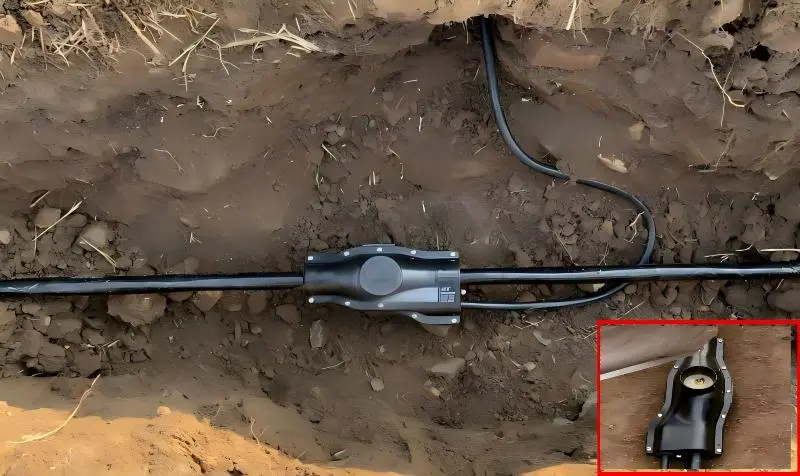
Understanding Underground Cable Jointers and Their Applications
Core Responsibilities of Cable Jointing Professionals
Cable jointing specialists are in charge of making sure that electrical connections between underground cable sections are safe. Their job is to remove the insulation from the cables, prepare the wires, put on safety materials, and test the finished joints to make sure they are solid. These technicians must show that they know how to handle both armoured and non-armored cables while following strict safety rules that keep people and infrastructure safe.
Industrial Applications Across Power Distribution Networks
For low-voltage distribution systems that serve homes and businesses, power companies depend on underground cable links a lot. Gas distribution networks, municipal water treatment plants and regional power authorities all depend on cable joints that are strong and can handle rough conditions underground.
The Institute of Electrical and Electronics Engineers (IEEE) says that when quality jointing materials are used during installation, buried cable systems have 40% fewer power blackouts than overhead lines. More and more, renewable energy projects, like wind farms and solar panels, use underground cabling to keep the grid reliable while minimising the impact on the environment.
Qualification Standards and Certification Requirements
When purchasing managers look at providers or freelancers, they should make sure that the people who do the cable jointing have the right certifications for the job. The National Joint Apprenticeship and Training Committee sets training standards that include being able to show that you know how to identify cables, follow safe work practices, and do joint testing. Contractors must show that they know how to place cables according to ANSI/IEEE standards and keep their certifications up to date in high-voltage safety and entering tight spaces.
Essential Installation Tips and Safety Procedures for Underground Cable Jointing
Site Preparation and Environmental Assessment
A careful site study is the first step to a proper installation. Before you start working, check any underground caves or ditches for standing water, contaminated dirt or unstable structures. Cable lines should stay far enough away from other utilities, and there should be clear recording of existing infrastructure to keep workers from damaging it by mistake when they dig. As of 2020, the Occupational Safety and Health Administration (OSHA) requires atmospheric testing in tight areas and enough ventilation systems to keep workers safe from dangerous gases.
Step-by-Step Cable Preparation Process
The preparation sequence has a direct effect on how long the joint lasts and how well it works. Start by carefully taking off the top wire jackets so as not to damage the insulation layers below. Using calibrated stripping tools that keep the conductor from getting nicks, remove the insulation from the conductor to the manufacturer's specifications.
For most low-voltage applications, this is 5/8 inch. Use approved solvents to clean all exposed surfaces and get rid of any oxidation, dirt, or moisture that might make electrical contact weak. Underground Cable Jointer must ensure that before making any links, testing tools are used to verify that the phase identification is correct, as improper phase matching can compromise safety and system integrity.
Advanced Jointing Techniques for Moisture Environments
Installations that are buried are constantly exposed to water, which can damage the insulation and cause ground faults. Modern gel-filled cable connectors protect connections on two levels by covering them in hydrophobic compounds that actively stop water from getting in. These systems have IP68 ratings, which means they are waterproof and will still work even if they are completely submerged. Before backfilling or closing enclosures, make sure that the gel goes all the way around all of the conductor contacts during installation by following the manufacturer's instructions for cure times and temperatures.
Critical Safety Protocols and Personal Protection
When you work with underground electrical systems, you have to be very careful to stay safe. People working on the system must wear gloves that are rated for voltage, clothes that are rated for arcs, and face shields that are rated for the system's voltage. All power sources should be cut off during lockout-tagout procedures, and qualified people should do verification testing before work starts.
Possible emergency situations that need to be covered in emergency response plans include cable flashovers, confined space rescues, and electrical shocks. The National Fire Protection Association says that everyone who works on underground systems that are either on or off must get safety training every year.
Troubleshooting Common Joint Failures
Finding joint problems early stops mistakes that spread through transportation networks. Thermal imaging studies can find hotspots that show bad electrical contact or situations of overloading. Using megohm meters to test insulation resistance shows degradation before catastrophic failures happen. Most cable problems are caused by not sealing properly against moisture, damage during installation, or using too much force on compression connections. Regular visual checks of accessible joints and electrical tests should be part of maintenance plans so that performance trends can be seen over time.


Comparing Underground Cable Jointing Tools and Methods
Manual Versus Automated Connection Systems
Hand tools, heat shrink materials, and mechanical compression joints are used for traditional manual jointing. This method allows for customisation in the field, but it also introduces variation based on the skill level of the installer and the conditions of the installation site. Automated jointing systems use crimping tools that have already been calibrated at the factory and connector assemblies that have already been designed. This makes sure that the results are the same for every installation. Which method to use depends on the size of the project, the skills of the workers, and the need for long-term dependability.
Selecting Equipment Based on Cable Specifications
Connector compatibility is the most important factor in the decision process. The most common low-voltage distribution setups can be used with branch cable connectors made for 4-16 mm main cables with 1.5-10 mm branches. The equipment has to be able to handle the voltage ratings given without downgrading, and it has to be compatible with both single-core and multi-core cables. Manufacturers like 3M and Thomas & Betts provide detailed connection charts that show how their goods work with common kinds of cables used in North American utility markets.
Evaluating Supplier Capabilities for Bulk Procurement
For big building projects to go ahead, they need suppliers who can show that their products are always available and have a good professional support system in place. When evaluating vendors, you should look at their ISO quality certifications, especially ISO 9001 for quality management and ISO 14001 for environmental compliance.
Suppliers who offer frame deals offer stable prices and guaranteed delivery times that work with the plans for multiple stages of building. Underground Cable Jointer relies on after-sales support, such as helping with field applications and responding quickly to warranty claims, which has a big effect on the total cost of ownership over 20 to 30 year project lifecycles.
Table 1: Cable Connector Performance Comparison
| Feature | Gel-Filled Connectors | Heat-Shrink Joints | Mechanical Compression |
|---|---|---|---|
| Waterproof Rating | IP68 (submersible) | IP65 (splash-resistant) | IP54 (limited protection) |
| Installation Time | 15-20 minutes | 30-45 minutes | 10-15 minutes |
| Reusability | Non-reusable | Non-reusable | Limited reuse |
| Temperature Range | -40°C to +90°C | -25°C to +75°C | -20°C to +70°C |
| Skill Level Required | Intermediate | Advanced | Basic |
| Maintenance Access | Sealed system | Sealed system | Inspection possible |
This comparison shows that gel-filled technology is the best choice for large-scale deployments where long-term dependability justifies the initial investment. It is easy to install and protects the environment better than other technologies.
Procurement Guide: Sourcing Underground Cable Jointer Tools and Materials
Establishing Supplier Qualification Criteria
The departments in charge of buying things should make thorough models for evaluating vendors that look at many aspects of their performance. Type test results that show the product meets IEEE 404 and ANSI C119.4 standards confirm how well the product works electrically when there is a problem.
Ask for proof of accelerated ageing tests that mimic a 25-year service life when exposed to moisture. The supplier's production capacity must match the project's demand curves, and there must be proof that their inventory management systems can support just-in-time delivery schedules that reduce the need for on-site storage.
Understanding Price Structures and Value Analysis
Cable connectors have a wide range of unit prices that depend on the number of orders, the environmental rating, and the size of the conductors. Standard gel-filled branch connectors for 6-16mm cables usually cost between $12 and $28 per unit when bought in bulk of 500 or more. For annual framework contracts, bulk discounts are available. An study of the total cost should include the savings in installation labour, the expected service life, and the upkeep needs. Products that don't require cutting main lines cut down on material waste by two to three meters per branch point. This saves a lot of money on projects with hundreds of distribution nodes.
Comprehensive Jointing Kit Configuration
All the tools and supplies needed for field work should be included in full installation kits. Important parts include cable strippers that are calibrated for different types of insulation, cleaning supplies for conductors, torque-controlled crimping tools, and testing equipment to make sure the connection is solid.
Suppliers who give pre-assembled tools make it easier to buy things and make sure that all of the parts work together. Training materials, like installation movies and fixing guides, are useful because they cut down on the time it takes to train new installation workers and make sure that field practices are the same across multiple job sites.
Workforce Development Through Technical Training
Putting money into thorough training programs has a direct effect on the quality of installation and the long-term dependability of the system. Structured curricula should include theory behind cables, ways to connect them, safety rules, and hands-on practice with real materials in conditions that are like those in the field.
The International Brotherhood of Electrical Workers says that people who are switching to roles in cable jointing should go through at least 40 hours of training. Underground Cable Jointer benefits significantly from procurement agreements, as suppliers who offer on-site training workshops add a lot of value by making sure that crews are proficient with certain product lines before important project milestones.
Future Trends and Performance Optimization in Underground Cable Jointing
Emerging Technologies Reshaping Cable Connections
The next step forward in grid control is smart monitoring tools built into cable joints. Embedded sensors measure electrical parameters, temperature, and moisture levels in real time and send the information to central monitoring platforms over wireless networks. With these systems, you can use proactive maintenance plans to fix problems before they cause service interruptions. Manufacturers are working on self-healing materials that can fix small holes in insulation on their own. This will increase the service life of joints in harsh settings.
Environmental Considerations Driving Material Innovation
Environmentally friendly jointing materials are becoming more popular because of government regulations and company commitments to sustainability. Bio-based insulation materials made from renewable resources work just as well as goods made from oil, but they leave smaller carbon footprints.
Concerns about how to get rid of old electronics are eased by connecting housings that can be recycled and less packaging waste. The Environmental Protection Agency predicts that by 2030, 35% of the market will be made up of sustainable electricity materials. This is because utilities will put environmental responsibility above practical needs.
Process Improvements for Installation Efficiency
Using the lean method in wire jointing processes helps find and get rid of tasks that don't add value. When compared to traditional site-built methods, prefabricating wire systems in a controlled shop setting cuts installation time in the field by 40 to 60 percent. Standardised connection points and modular vault designs make installations easier and make it easier to add on to the system in the future. Digital work order systems that can connect to mobile devices allow for real-time recording, which makes sure that quality control checks are done before teams leave a job site.
Adapting Procurement Strategies to Market Evolution
Forward-thinking procurement teams are building long-term relationships with suppliers that can keep up with changing technical needs. Multi-year contracts with price changes based on product values protect against changes in the cost of materials and make sure there is a steady supply. Collaborations in product development let utilities have a say in how connectors are made so that they solve specific practical problems. As smart grid projects grow, procurement requirements stress more and more the need to be able to integrate data and work with digital infrastructure management platforms.
Table 2: Oukamu Branch Cable Connector Technical Specifications
| Parameter | Specification | Application Benefit |
|---|---|---|
| Main Cable Range | 4-16mm² | Covers standard low-voltage distribution |
| Branch Cable Range | 1.5-10mm² | Accommodates typical service drops |
| Insulation Type | Gel-filled dual-layer | IP68 waterproof protection |
| Voltage Rating | 0.6/1kV | Suitable for utility distribution networks |
| Material Compliance | Flame-retardant, fire-resistant | Meets GB/T 14048.7-2016 standards |
| Installation Method | No main cable cutting required | Maintains circuit continuity during installation |
| Operating Temperature | -40°C to +90°C | Functions in extreme climate conditions |
| Enclosure Type | Sealed polycarbonate | Direct burial or vault installation |
These specs show how specialised goods solve the problems that utility procurement managers have pointed out, mainly when it comes to protecting against moisture and allowing for flexible installation in operational settings.
Conclusion
Underground cable jointing is still an important part of building a reliable power distribution system. It's important to be careful when choosing the materials, installing them and keeping them in good shape. Gel-filled connector technology has come a long way, making them much more resistant to moisture and making field installations easier. These improvements address the main failure modes that affect buried electrical systems.
Procurement experts can get the best results from projects by giving priority to providers who show they have technical knowledge, keep high quality standards, and offer full support throughout the lifecycle of a product. Underground Cable Jointer plays a critical role in this equation, as efforts to update the power grid speed up, and the next wave of cable connection options will need to include smart monitoring features and eco-friendly materials to meet changing performance and environmental standards.
FAQ
What certifications should underground cable jointers possess?
Cable jointing workers who are qualified usually have certifications from well-known electrical training programs, like NJATC apprenticeships, or professional skills that are the same. Specialised certifications in confined space entry, high-voltage safety, and training for specific manufacturers' products show that the person is qualified to do complicated installations. Managers in charge of buying things should make sure that contractors have up-to-date OSHA safety certifications and can show proof of training hours that meet the state's requirements for electrical work licenses.
How do you select appropriate cable jointing methods for different project types?
Best ways to join cables depend on things like the type of wire, the environment, how easy it is to install, and how often upkeep needs to be done. Gel-filled connectors work best in places that get a lot of water, like underground vaults that can flood, while heat-shrink ways work best for cable trays that need to stay dry in controlled areas. Think about how important long-term reliability is compared to how much the initial investment can afford. Keep in mind that premium connection systems often pay for themselves through lower maintenance costs and longer service life in demanding applications.
What safety measures are most critical during underground cable installations?
Safe cable jointing operations start with finding all the risks and taking steps to control them. Before work can begin, all energy sources must be cut off using lockout-tagout procedures, and verification testing must be done to make sure that the power is off. Monitoring the atmosphere in small areas finds toxic gases and low oxygen levels before people enter.
Electrical, heat, and inhalation risks can be controlled with the right PPE, such as voltage-rated gloves, arc-rated clothes, and respiratory protection. Emergency reaction plans with designated relief people and contact methods make sure that help is quickly available if something goes wrong while working underground.
Partner with Oukamu for Reliable Cable Connection Solutions
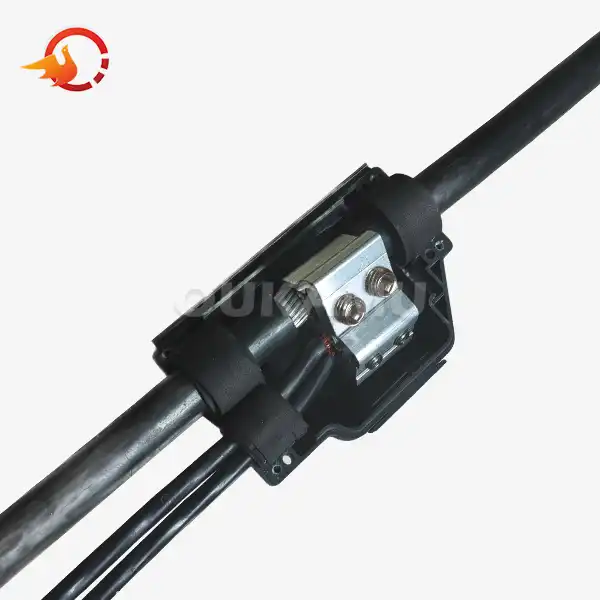
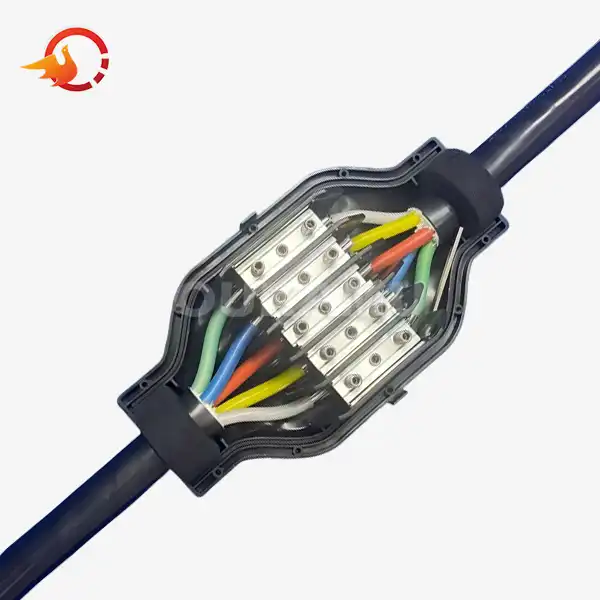
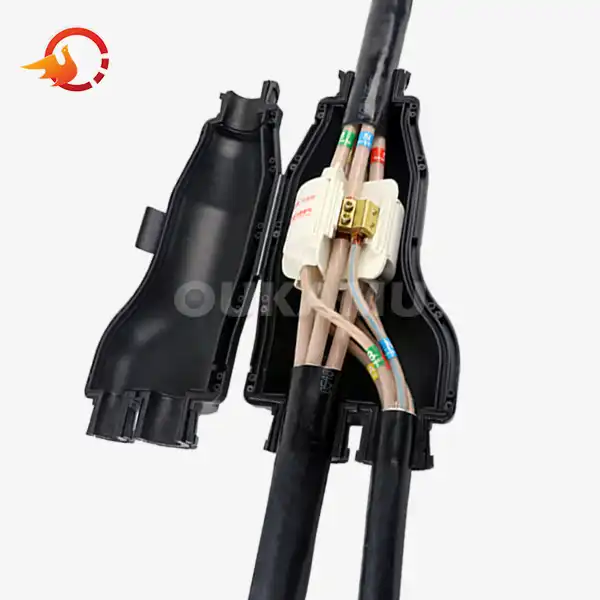
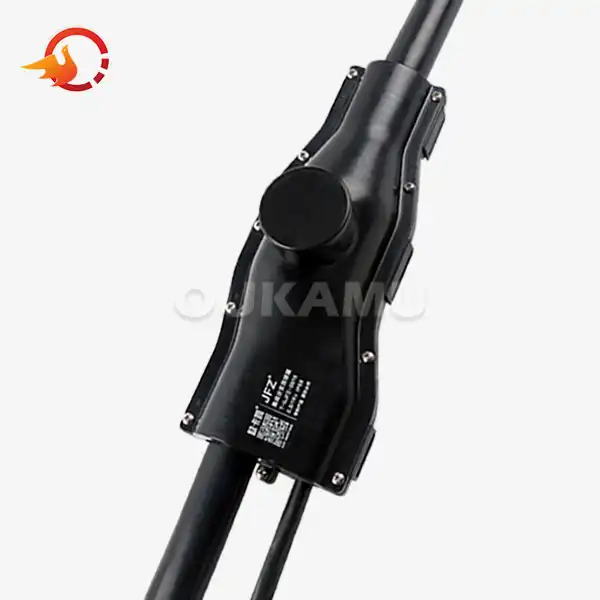
Xi'an Oukamu Electric Co., Ltd. has been making branch cable connectors for twenty years and works with utility companies and building builders all over North America. Our gel-filled cable connectors are designed to work in harsh subsurface environments that make it hard for regular connection methods to work. They are waterproof up to IP68 and don't catch fire. The integrated design means that main cables don't have to be cut. This keeps the integrity of the system and cuts down on installation time and waste.
Our wide range of products includes main cables that are 4 to 16 mm in diameter and branch connections that are 1.5 to 10 mm in diameter. These products meet the needs of low-voltage distribution networks that are run by power authorities and municipal utilities. Each connector goes through strict testing according to GB/T 14048.7-2016 standards. You can get full type test results and ISO certification paperwork to help with your purchase qualification processes. Installation freedom lets you choose between straight burial or vault mounting, so you can use it in a variety of site situations without affecting its long-term dependability.
When it comes to buying things, we know how hard it is for utility supply chain managers, especially when they need to find qualified manufacturers who can always provide products and expert help. We have been a seller of Underground Cable Jointers for a long time and have shown that we can deliver in bulk. We can make customised framework agreements that fit your yearly buying cycles and budget needs. To make sure your field crews get the best results from our products, our engineering team offers on-site installation training and application support.
Find out how Oukamu's branch cable connections can make your distribution network more reliable while also lowering the overall cost of the project. Email our technical sales team at info@okmbranchcable.com to talk about your specific application needs and get full product specifications. You can look through our full catalogue of products and get installation guides at okmbranchcable.com. These will help you finish your job successfully from planning to commissioning.
References
1. Environmental Protection Agency (EPA). (2023). Sustainable Materials Management in Electrical Infrastructure. EPA Publication 530-R-23-002.
2. Institute of Electrical and Electronics Engineers (IEEE). (2021). IEEE Standard 404: Cable Joints for Use with Extruded Dielectric Cable Rated 5-46 kV. IEEE Standards Association.
3. International Brotherhood of Electrical Workers (IBEW). (2021). Cable Splicer Training Standards and Curriculum Guidelines. IBEW Education Department.
4. National Fire Protection Association (NFPA). (2022). NFPA 70E: Standard for Electrical Safety in the Workplace. NFPA Publications.
5. National Joint Apprenticeship and Training Committee (NJATC). (2022). Inside Electrician Apprenticeship Standards. NJATC Training Guidelines.
6. Occupational Safety and Health Administration (OSHA). (2020). 1926 Subpart V: Power Transmission and Distribution - Underground Installations. OSHA Regulations.