

_1790150425011.webp)
Are Y-branch cable joints suitable for outdoor applications?






 2026-10-12 10:58:15
View:389
2026-10-12 10:58:15
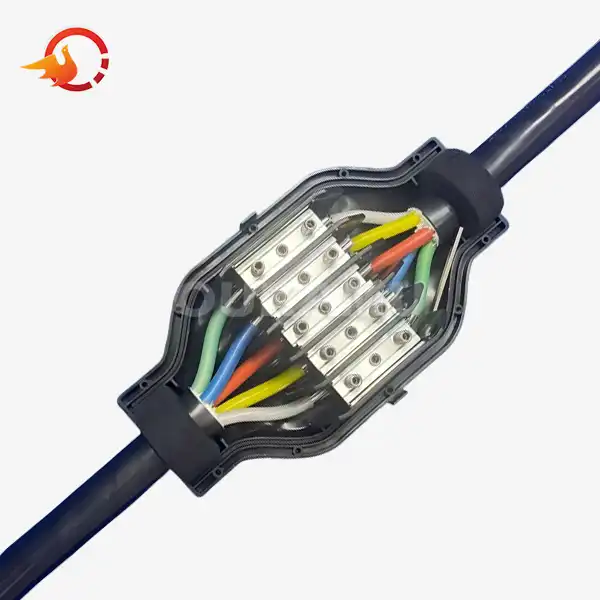
View:389Yes — a properly rated Y-branch cable joint is absolutely suitable for outdoor applications, provided it meets the right ingress protection and insulation standards. At Oukamu, our model L-GJFZ-35/16 carries an IP68 rating, meaning it withstands continuous submersion and heavy moisture exposure. Its gel-filled insulation creates a sealed barrier against water, dust, and electrochemical corrosion. Whether installed in underground cable wells, direct-buried soil, or exposed outdoor distribution points, this branch connector maintains electrical integrity without cutting the main cable or pre-reserving extra length.
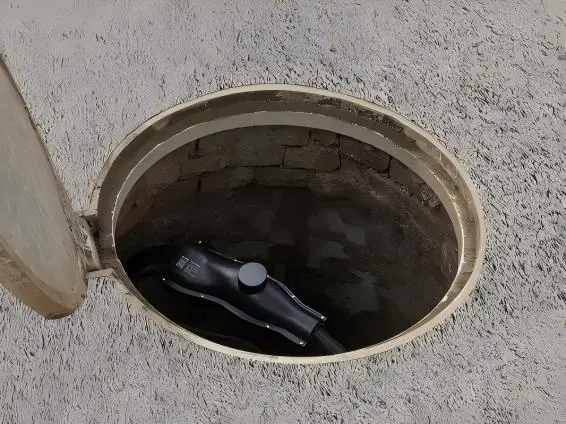
Understanding Y-Branch Cable Joints and Their Outdoor Application Potential
What Is a Y-Branch Cable Joint?
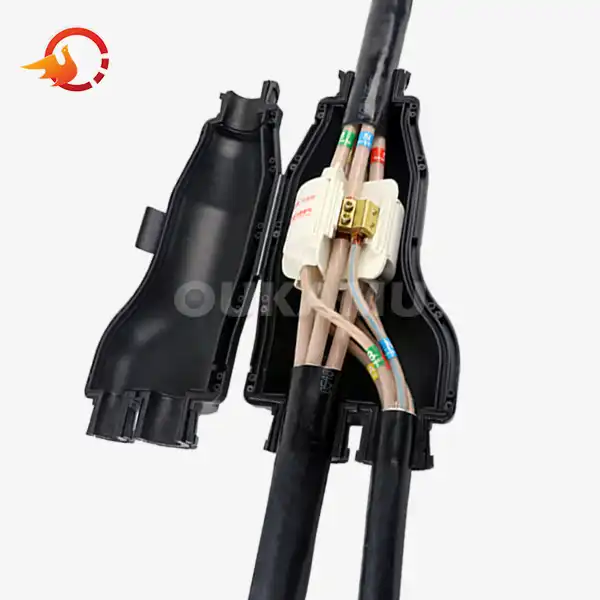
A Y-branch cable joint is a small electrical connector that adds a branch circuit to a main cable that is still running. It does this without breaking the main cable run. Insulation, sealing, and clamping of the conductor are all built into the connection body as a single unit. This design gets rid of the need to cut, splice, and re-terminate wires at every branch point, which used to take a lot of time and increase the chance that something would go wrong with outdoor distribution networks.
How These Joints Perform Outdoors
When electrical links are outside, they are vulnerable to damage from water, UV light, changes in temperature, and motor vibration. In this case, a normal indoor connector would break very quickly. Outdoor-rated branch connectors have gel-filled or resin-injected holes that keep water out of the conductor interface.
This is where most cable systems fail, whether they are buried or exposed. IEC 60529 says that an IP68-rated device can withstand being submerged in water deeper than 1 meter for long periods of time. This is a standard that applies directly to installations that are buried or below ground.
Cable Types and Voltage Compatibility
The L-GJFZ-35/16 model can handle main wires from 10 to 35mm² and branch cables from 2.5 to 16mm², so it can be used in a lot of different low-voltage distribution situations. It works with flame-retardant, fire-resistant, and mineral-insulated fire-resistant wire types, and the conductors can be copper or aluminum. This wide range of compatibility makes it useful for outdoor wire plans in homes, businesses, and light factories where different cable cross-sections are used on the same project.
Key Design Features Enhancing Outdoor Suitability
IP68 Waterproofing and Gel-Filled Insulation
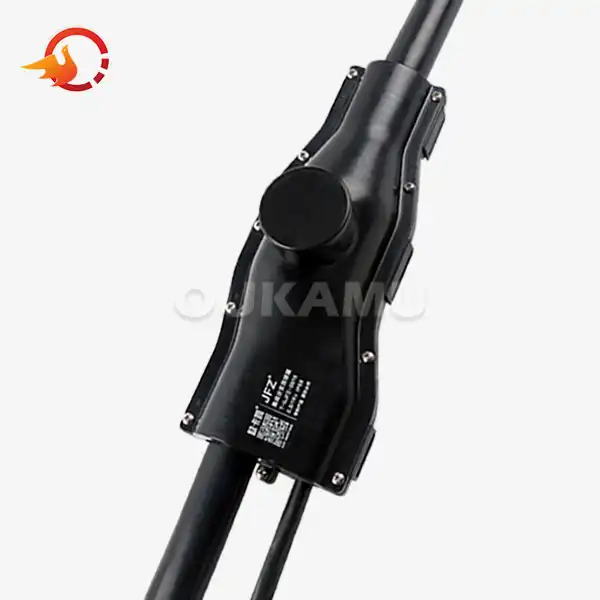
The most important thing about any outdoor cable branch connector is that it can permanently keep water out. The L-GJFZ-35/16 has two layers of protection: a sealed outer shell and gel-filled insulation inside that fills up all the empty spaces around the conductor contact points.
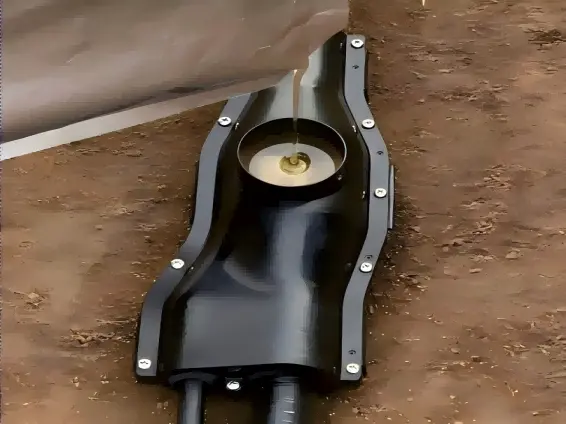
By doing it this way, Y-branch cable joint leaves no more empty spaces where water can gather and cause corrosion or tracking over time. Since the gel substance also acts as electrical insulation, both wetness protection and insulation are provided by a single material system.
Resistance to Environmental Stressors
Installing things outside has to deal with more than just rain. Here is a list of the most common things that can damage the L-GJFZ-35/16 in the outdoors:
| Environmental Factor | Protection Mechanism | Performance Level |
|---|---|---|
| Water & Moisture | Gel-filled insulation + sealed housing | IP68 (continuous submersion) |
| Dust & Particulates | Full enclosure, no exposed contacts | IP68 (total dust exclusion) |
| Electrochemical Corrosion | Anti-corrosion insulation materials | Long-term buried application rated |
| Mechanical Impact | Rigid connector body construction | Suitable for direct-buried soil |
| Temperature Variation | Flame-retardant, heat-stable materials | Low-voltage outdoor rated |
All of these safeguards work together to make the joint last much longer than a regular split or wire nut link could in the same setting.
Installation Flexibility for Outdoor Scenarios
The branch position is not fixed, which is useful for outdoor projects. Installers can cut the main cable at any place along the run that they can reach, so they can adapt to things like trench turns, duct entry points, or equipment locations on the job site without losing cable length. This flexibility on-site cuts down on wasteful use of materials and wasted time, which is important for projects where the actual trench routing doesn't always match the original design drawing.
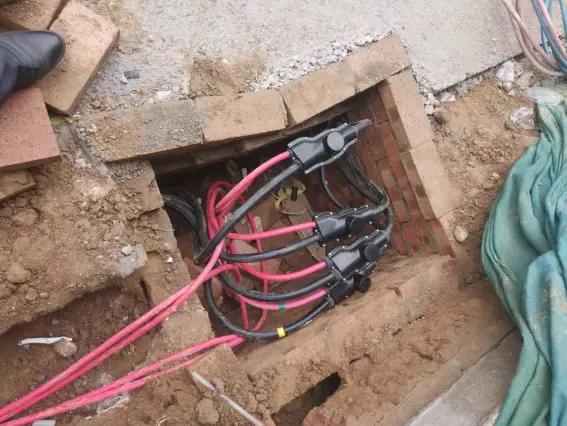
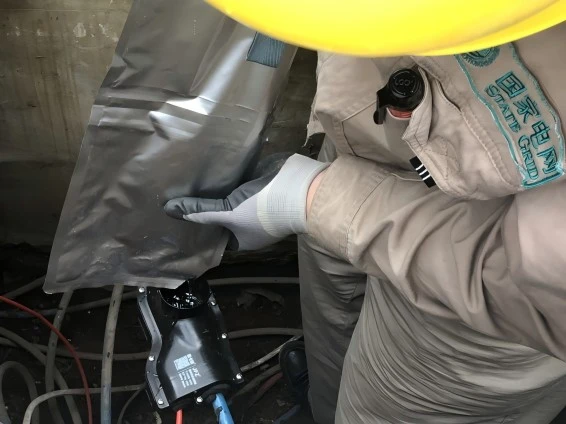
Installation and Maintenance Guide for Outdoor Y-Branch Cable Joints
Step-by-Step Installation Process
There are simple steps to take when installing the L-GJFZ-35/16 outside or underground. First, find the branch point on the main cable that is still whole. At any point, the main wire does not need to be cut. The conductor connection is made directly through the T-connector body that is built in.
This body of Y-branch cable joint clamps onto the main cable and accepts the branch cable at the same time. Once the wire connections are safe, the closing parts are put on top of the unit, and the gel fills the space inside. The joint is then ready to be buried directly or hidden in a cable well.
Maintenance Intervals and Inspection Guidelines
Because they are protected from UV light and physical contact, outdoor buried joints usually need less regular maintenance than above-ground terminations. However, inspections should still be done on a regular basis. The following checks are made at every planned project maintenance visit, which is usually once a year for business buildings and every two years for domestic infrastructure:
- Verify no ground settlement has shifted the burial depth of the joint assembly
- Inspect the cable entry points at the joint body surface for any visible cracking or displacement
- Check that branch cable routing has not been subject to tensile stress from soil movement
The vast majority of joint failures in direct-buried outdoor situations can be avoided by finding mechanical movement early on.
Case Study: Hospital Campus Distribution Upgrade
A medium-sized mechanical and electrical contractor in central China upgraded the distribution system across the whole grounds of a regional hospital. They did this by putting 340 Oukamu branch connectors on underground cable runs that serve different building areas. The idea called for branch connections that happened at random intervals determined by the size of the building, not at normal intervals.
The team didn't have to order any fixed-length prefabricated cable assemblies ahead of time because they used on-site branch joints. The project passed its final electrical inspection on the first try, and the installation team said it took 30% less time to work on the cables than when they used junction boxes and traditional splices.
Comparing Y-Branch Cable Joints for Outdoor Applications
Y-Branch vs. T-Branch: Structural Differences
Y-branch and T-branch connectors both tap a branch from a continuous main wire, which is the same electrical job. However, their shapes are different. A T-branch connector comes out perpendicular to the main cable line. This is useful for setups where the branch cable has to come out at a 90-degree angle but there isn't much room for it.
A Y-branch cable joint lets the branch cable come out at an angle, which lowers the stress on the branch conductor where it comes out. When cables are underground or installed outside at different angles, the Y-branch shape usually puts less stress on the insulation of the conductor at the joining point.
Flexible vs. Rigid Connector Bodies
The table below shows how the two main types of outdoor branch connectors are made:
| Feature | Rigid Connector Body | Flexible Connector Body |
|---|---|---|
| Best Application | Direct buried, static installations | Above-ground, vibration-prone environments |
| Mechanical Impact Resistance | High | Moderate |
| Installation Speed | Fast — fixed geometry | Moderate — requires alignment adjustment |
| Sealing Integrity | Consistent, predictable | Dependent on installation technique |
| Typical IP Rating | IP67–IP68 | IP65–IP67 |
For outdoor uses that need to be covered or hidden, rigid connection bodies like the ones in the L-GJFZ-35/16 offer better sealing and higher ingress protection ratings.
Procurement Criteria for Outdoor-Rated Branch Connectors
When procurement managers look at suppliers, they should focus on three things: the supplier's ability to quickly fill partial orders, the supplier's compliance with GB/T standards, and the supplier's verified IP rating documentation. For 17 years,
Oukamu has only sold cable branch connection goods. With every order, they include test results and compliance papers as standard. The L-GJFZ-35/16 model is ready to be sent out right away, which supports the 1–4 week procurement cycles that are common in phased construction projects.
Conclusion
For outdoor electrical distribution to work, the cable connection products need to be able to handle moisture, soil pressure, changes in temperature, and the fact that site conditions are always changing. Oukamu's L-GJFZ-35/16 Y-branch cable joint meets all of these needs directly.
It is waterproof up to IP68, has gel-filled insulation, and can be installed without cutting the cable, which saves both material and time for Y-branch cable joint. When procurement teams look at branch connector providers, they must look at confirmed compliance documents and quick order completion. Oukamu has both, and has been developing products in this area for 20 years.
FAQ
Can Y-branch cable joints be installed underground without a junction box?
Yes. The L-GJFZ-35/16 is designed specifically for concealed installation in cable wells or direct-buried soil. Its IP68 rating and gel-filled sealing eliminate the need for a separate junction box enclosure in most low-voltage buried distribution applications.
What cable sizes does the L-GJFZ-35/16 accommodate?
This model accepts main cables from 10 to 35mm² and branch cables from 2.5 to 16mm², covering most low-voltage residential and commercial distribution cable cross-sections.
Does installation require cutting the main cable?
No. The main cable remains completely intact throughout the installation process. The branch connection is made by clamping directly onto the main cable conductor without any cuts or pre-reserved cable length.
How do I confirm the product meets project compliance requirements?
Oukamu supplies test reports and GB/T compliance documentation with all product orders. These documents are available for review prior to placing a purchase order and are accepted by most general contractors and inspection authorities.
What is the lead time for sample orders?
Sample requests are typically processed and dispatched within 3–5 business days, supporting the standard 1–4 week procurement and confirmation cycle for construction project purchases.
Get a Quote from Oukamu — Your Trusted Y-Branch Cable Joint Manufacturer
The L-GJFZ-35/16 from Oukamu is made to work well outside and make purchasing easier. Within 24 hours, our team answers to both sample requests and bulk questions, giving you full compliance papers, VAT invoices, and the ability to change the amount of your order to fit your project's timeline. You can email our team at info@okmbranchcable.com or go to okmbranchcable.com to get pricing information, specifications, or a sample order for your next project.
References
1. International Electrotechnical Commission. IEC 60529: Degrees of Protection Provided by Enclosures (IP Code). IEC, 2013.
2. National Standards of China. GB/T 14048.7: Low-Voltage Switchgear and Controlgear — Part 7: Ancillary Equipment. Standardization Administration of China, 2016.
3. Prysmian Group. Cable Systems Installation and Jointing Manual. Prysmian Technical Publications, 2020.
4. Institution of Engineering and Technology. IET Wiring Regulations (BS 7671): Requirements for Electrical Installations. IET Publishing, 2018.
5. TE Connectivity. Environmental Sealing Solutions for Power Cable Accessories. TE Connectivity Technical Library, 2021.
6. Energy Networks Association. Engineering Recommendation C55: Joints and Terminations for Distribution Cables. ENA, 2019.