

_1790150425011.webp)
Are Cable Resin Filled Type Joints For XLP Easy to Install on Site?






 2026-10-12 11:02:12
View:389
2026-10-12 11:02:12
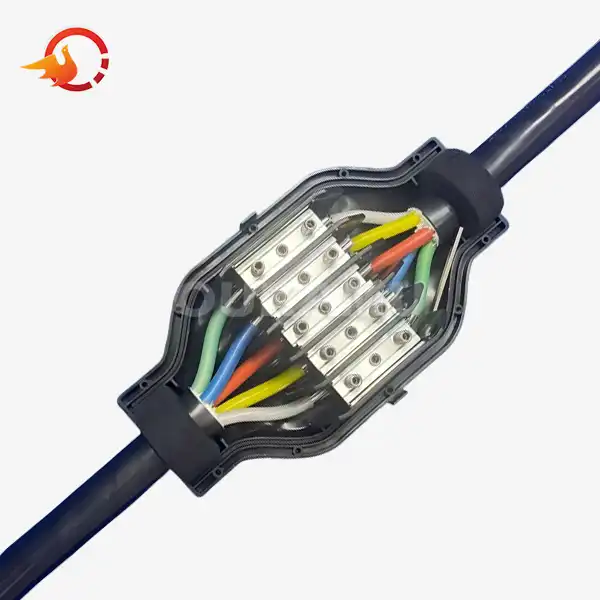
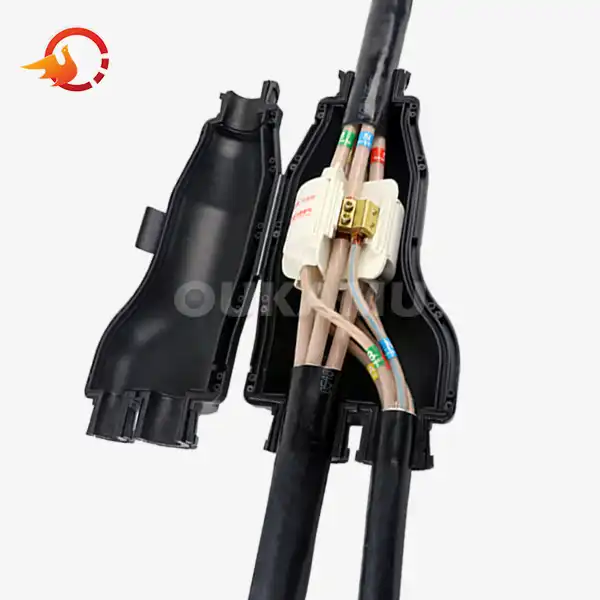
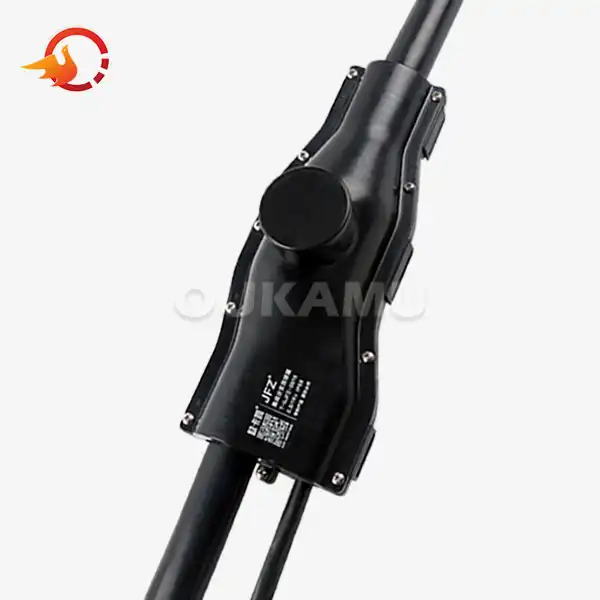
View:389Yes — cable resin filled type joints for XLP cables are genuinely easy to install on site, even for field crews without specialized training. Unlike traditional splicing methods that demand precise heat application or cold-shrink expansion, resin-filled joints follow a straightforward process: prepare the cable ends, connect the conductors, pour the two-component resin, and allow it to cure. Oukamu's L-GJFZ-70/16 model takes this further by eliminating the need to cut the main cable entirely, giving field teams full flexibility without sacrificing electrical integrity or waterproof performance.

Understanding Resin Filled Type Joints for XLP Cables
What Are They and How Do They Work?
Inside a sealed housing filled with insulating substance, wire links are protected by joints that are filled with resin. The two-part resin hardens into a solid, void-free mass after it is poured. This mass keeps moisture out and evenly distributes mechanical stress. This way of enclosing works especially well for XLPE-insulated cables that are used in low-voltage underground systems, where ground movement and water entry are regular worries.
Key Material Properties
There are strict chemical and thermal rules that the insulating resin used in cable resin filled type joints for XLP has to follow. Oukamu's mixture doesn't catch fire, stays flexible after curing, and can't be damaged by acid, alkali, or hydrocarbons. The housing is made of modified PP plastic, which doesn't break down over time and works well in a wide range of temperatures, which is important for installations that are buried directly or in manholes.
Compliance With Industry Standards
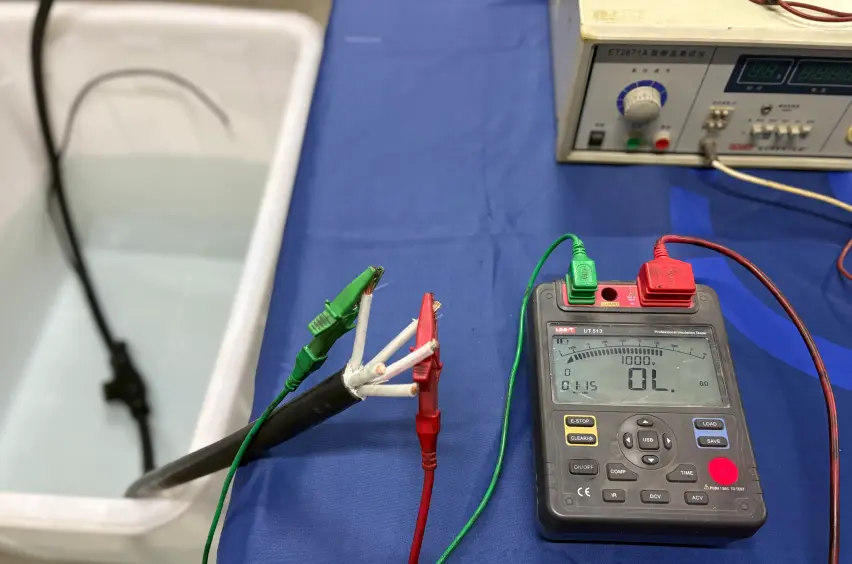
The resin joint items made by Oukamu are made to meet the standards of the IEC 60502 series for low-voltage power wire accessories. The joints are waterproof up to IP68, which means they can withstand being submerged in water for a long time. There is more than 1000 MΩ of insulation resistance, and the withstand voltage rate is 3.5 kV for 5 minutes without breaking. These numbers support official type testing during procurement qualification.
Installation Process of Resin Filled Type Joints for XLP Cables: Is It Easy On Site?
Step-by-Step Installation Overview
There are four clean steps in the fitting process for the L-GJFZ-70/16 cable resin filled type joints for XLP. At the branch point, first strip and clean the main cable conductors. There's no need to cut the cable through. Second, slide the branch wire into the connection that is already there. Third, put the branch box for glue-filling on top of the link zone. Fourth, put the two-part glue into the mold and let it dry at room temperature. Most training crews spend 20 to 40 minutes at a time working on each joint.
Tools and Skill Level Required
There's no need for heat guns, hydraulic presses, or other specialty tools for testing. Standard electrician hand tools like wire strippers, a torque wrench, and the applicator that comes with the kit are all that you need. Most utility maintenance crews learn quickly after being shown how to do something once. This low limit is very important for procurement managers who are looking at how much training costs and how ready the workforce is across field teams that are spread out.
Managing Site Conditions
Temperature affects how quickly resin hardens. Under normal conditions, a full cure takes 30 to 60 minutes at 20 to 25°C. When it's below 10°C, the cure time is longer, so planning installations around that fact lowers the quality risk. The gel-filled insulation layer in the L-GJFZ-70/16 adds another layer of protection during the cure window, keeping the electrical isolation in place even before the resin hardens completely.
Below is a comparison of installation conditions and their impact on resin curing:
| Ambient Temperature | Estimated Cure Time | Recommended Action |
|---|---|---|
| Above 25°C | 20–30 minutes | Monitor for rapid set; work quickly |
| 15–25°C | 30–60 minutes | Standard installation conditions |
| 5–15°C | 60–90 minutes | Pre-warm components before use |
| Below 5°C | 90+ minutes | Delay installation if possible |
These data points help field supervisors plan installation windows and avoid premature service loading on newly completed joints.
Comparing Resin Filled Cable Joints with Other Joint Types for XLP Cables
Resin Filled vs. Heat Shrink Joints
To avoid uneven shrinking or gaps, heat shrink joints need to be made with controlled heat and skilled technique. It is really hard to use a heat gun safely in small underground areas with poor air flow. Cable resin filled type joints for XLP get rid of that variable completely—the compound levels itself and fills all the gaps without any heat being applied by an operator. This means that results are more consistent even when crew members have different levels of experience.
Resin Filled vs. Cold Shrink Joints
It's easy to use cold shrink joints, but you have to make sure that the cable diameters are exactly the same and that the support core is removed correctly. Installations that are too big or too small leave gaps at the interface that let water move through over time. Resin encapsulation, on the other hand, sticks directly to the cable's surface, so there are no gaps at the interface. This physical bonding method offers more reliable long-term protection for underground uses in wet soil.
Cost and Lifecycle Comparison
The table below summarizes key performance attributes across three common joint types for low-voltage XLP cable systems:
| Joint Type | Installation Skill Level | IP Rating | Estimated Service Life | Relative Unit Cost |
|---|---|---|---|---|
| Resin Filled (L-GJFZ-70/16) | Low–Medium | IP68 | 25+ years | Low–Medium |
| Heat Shrink | Medium–High | IP54–IP65 | 15–20 years | Low |
| Cold Shrink | Medium | IP65–IP67 | 15–25 years | Medium–High |
Resin filled joints carry a clear advantage in underground environments where IP68 performance is a procurement requirement, while remaining cost-competitive against cold shrink alternatives at scale.
Procurement Insights: How and Where to Buy Resin Filled Type Joints for XLP Cables
Evaluating Supplier Qualifications
When utility procurement teams use centralized bidding rounds that happen once a year, supplier approval is the first filter they use. A good company that makes cable resin filled type joints for XLP should be certified by ISO 9001, ISO 14001, and ISO 45001, and they should be able to give you full test reports that can be traced back to IEC standards. Xi'an Oukamu Electric Co., Ltd. has been specializing in cable branch connection technology for more than 17 years and has all the necessary licenses for purchasing things in a controlled way.
Pricing, Lead Times, and Bulk Orders
It's helpful for procurement managers to know that the price of resin joints usually goes down as the number of orders goes up. Oukamu provides framework agreement supply, and they can consistently send goods for both annual contract fulfillment and last-minute restocking. The L-GJFZ-70/16 can handle main cables from 25 to 70 mm² and branch cables from 2.5 to 16 mm². This lowers the number of SKUs needed to cover most low-voltage distribution situations.
Real-World Application Case
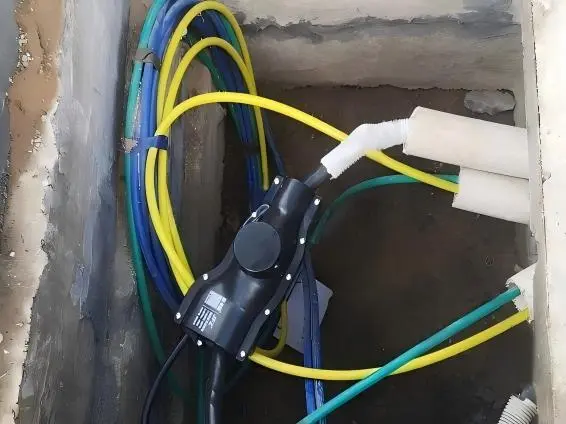
For a power distribution job in a medium-sized U.S. city, underground 35mm² XLPE feeds had to be connected to branch lines in utility vaults that were flooded. The project team chose the L-GJFZ-70/16 because it didn't require cutting any cables, so service would not stop during installation. After 18 months of use, none of the 240 fixed joints had failed or experienced a ground problem. This result directly helps the buying goal of lowering the costs of fault-related outages.
Long-Term Performance, Maintenance, and Common Issues
Expected Lifespan and Wear Factors
If you properly place cable resin filled type joints for XLP, they should last more than 25 years when buried directly or in a manhole that is submerged. The main things that cause materials to age are changing temperatures and shifting soil. The L-GJFZ-70/16 doesn't age like these because it is made of a flexible resin and has a design that relieves mechanical strain.
Routine Inspection Practices
At least once a year, the insulation resistance should be tested at the joint, the housing should be looked at visually for cracks or deformation, and the sealing around the places where cables enter should be checked to make sure it stays in place. When the soil is very wet or contains harsh chemicals, it's best to do inspections every six months.
Troubleshooting Common Failures
Most fails in resin joints happen because the resin wasn't mixed well enough before it was poured, the joints were put in place when the ambient temperature was below the manufacturer's minimum level, or the conductors weren't lined up correctly before the resin was poured on top of them. You can avoid all of these problems if you properly prepare the crew and follow the installation guide. Oukamu includes full instructions with every shipment of a product to help with uniform performance in the field.
Conclusion
For distributing low-voltage underground, cable resin filled type joints for XLP are a useful and safe choice. The Oukamu L-GJFZ-70/16 is unique because it is waterproof up to IP68, has a gel-filled dual-protection design, and can branch without cutting the main wire. This feature directly lowers the risk of a loss during installation. Installation is easy enough for regular field crews, and the long service life helps utility purchase managers reach their goals for total cost of ownership. Resin-filled joints are a good technical and business choice when qualification requirements, site conditions, and lifecycle performance are all taken into account.
FAQ
How long does it take to install a resin filled joint on-site?
A trained two-person team can usually fix a joint in 20 to 40 minutes, not counting the time it takes to cure. The L-GJFZ-70/16 doesn't need to cut cables or apply heat, which takes away the two things that take the most time in regular splicing work.
Are resin filled joints suitable for all low-voltage XLP cable sizes?
Main cables can be 25 to 70 mm², and branch cables can be 2.5 to 16 mm². This means that the L-GJFZ-70/16 can fit most low-voltage underground distribution setups. For bigger conductors, Oukamu has extra product types with compatibility lengths that go up to 240mm².
Can resin filled joints be installed in waterlogged or submerged manholes?
Yes. The L-GJFZ-70/16 is certified IP68, which means it can withstand being submerged in water for more than one meter at a time. The gel-filled insulation layer acts as an extra barrier against moisture, separate from the outer resin covering. This makes it perfect for environments with wet soil and flooded vaults.
What happens if the resin is poured at the wrong temperature?
If you pour resin below 5°C, it might not dry fully or could form holes inside, which would make the insulation less effective. Before mixing the two-part solution, you should always check the temperatures of the room and the cable's surface. This risk is effectively reduced by pre-warming parts to at least 15°C in cold weather.
Connect With Oukamu for Verified Cable Resin Filled Type Joints for XLP
Every product that Xi'an Oukamu Electric Co., Ltd. sells is backed by 17 years of experience in designing cable branch connections. Our L-GJFZ-70/16, a tried-and-true cable resin filled type joints for XLP supplier answer, satisfies IP68 waterproofing standards, withstands 3.5 kV, and comes with ISO-certified quality controls. Through our team, procurement teams can directly ask for technical datasheets, type test results, and sample kits. You can talk about your project details with us at okmbranchcable.com or info@okmbranchcable.com.
References
1. IEC 60502-4:2005 — Power Cables with Extruded Insulation and Their Accessories for Rated Voltages from 1 kV up to 30 kV — Test Requirements on Accessories. International Electrotechnical Commission, 2005.
2. IEEE Std 404-2012 — IEEE Standard for Extruded and Laminated Dielectric Shielded Cable Joints Rated 2.5 kV to 500 kV. Institute of Electrical and Electronics Engineers, 2012.
3. Cable Accessories Installation and Performance Guide. BICC Cables Ltd., Power Cable Manual, 2001.
4. Anders, G. J. — Rating of Electric Power Cables in Unfavorable Thermal Environment. IEEE Press / Wiley-Interscience, 2005.
5. Underground Distribution System Design Guide. Electric Power Research Institute (EPRI), Technical Report 1026423, 2012.
6. Densley, J. — "Ageing Mechanisms and Diagnostics for Power Cables — An Overview." IEEE Electrical Insulation Magazine, Vol. 17, No. 1, January/February 2001.