

_1790150425011.webp)
Cable Resin Filled Type Joints for XLP vs Heat Shrink Kits Compared






 2026-09-28 11:42:03
View:389
2026-09-28 11:42:03
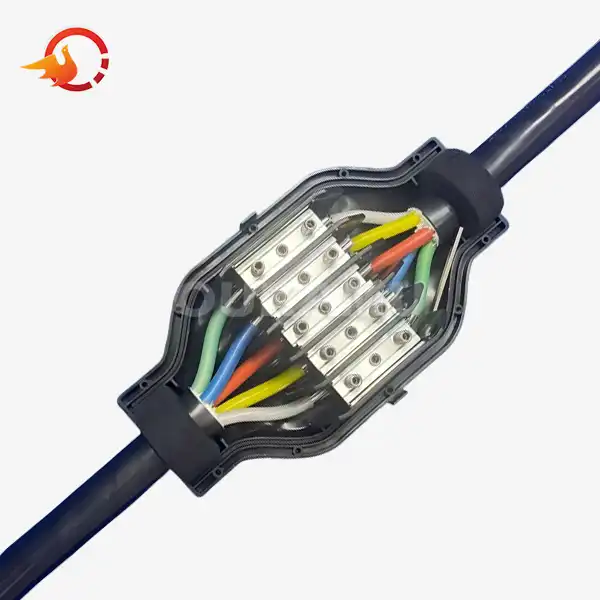
View:389In subterranean low-voltage distribution systems, choosing between cable resin filled type joints for xlp and heat shrink kits has practical ramifications. Resin-filled connections provide IP68 waterproofing and insulation resistance above 1000MΩ, whereas heat shrink kits employ thermally activated polymer sleeves to seal the splice. All methods fit diverse site circumstances, budgets, and maintenance needs. This comparison helps procurement engineers and utility managers choose based on data before the next yearly tender.
Understanding Resin Filled Type Joints for XLP Cables
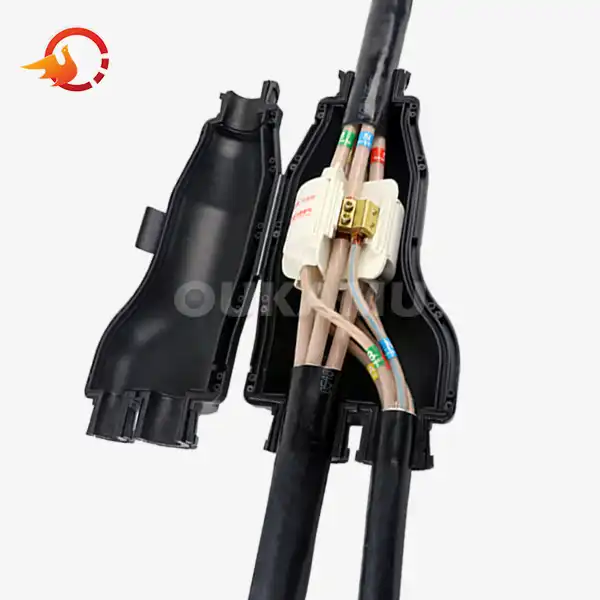
To make a resin-filled cable joint, the conductor splice is put inside a molded housing and a two-part insulating compound is injected. The compound cures into a solid, void-free mass. As a result, the joint will last a long time and not let water or mechanical stress through it.
How the Resin System Works
The conductors are held in place by the joint housing while the resin is poured or injected. Nothing is left empty because the compound fills all the gaps. There are no air holes that could become paths for partial release. Once it's hard, the resin sticks to the cable insulation and the wall of the housing, creating a single structure that can withstand 3.5 kV for five minutes without breaking.
Key Technical Parameters
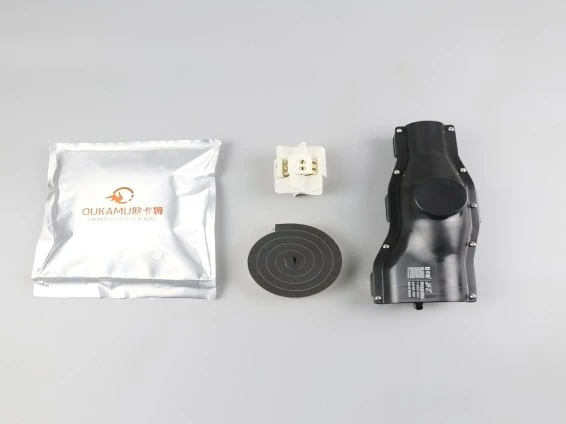
The following table shows the tested technical specs for Oukamu's Model L-GJFZ-70/16 resin-filled branch joint, which is made for low-voltage XLPE and PVC cable systems that run underground:
| Parameter | Specification |
|---|---|
| Insulation Resistance | > 1000 MΩ |
| Withstand Voltage | 3.5 kV, 5 min, no breakdown |
| Voltage Drop | < 3.2 mV |
| Waterproof Rating | IP68 |
| Main Cable Range | 25–70 mm² |
| Branch Cable Range | 2.5–16 mm² |
| Rated Voltage | 0.6 / 1 kV |
These numbers are in line with what IEC 60529 says about underground equipment, so the joint can be installed directly in the ground or in a manhole.
Compliance and Standards Alignment
The resin-filled joints made by Oukamu meet the standards of GB/T 14048.7-2016 and the ISO three-system certification that utility procurement offices usually need during the pre-qualification stage of annual tenders. There are two layers of sealing in the gel-filled insulation: one from the resin solution and one from the waterproof glue that is built in. This is a clear benefit when checking goods for network access approval.

Heat Shrink Cable Joints: Overview and Key Features
Cross-linked polyolefin tubing is used in heat shrink joints. When heat is applied, the tubing contracts tightly around the joint. Compared with cable resin filled type joints for xlp, this method has been used for a long time for both indoor and outdoor uses, and it's still popular for quick repairs.
Materials and Installation Process
The installer splices the wires together by sliding pre-cut sections of tubing over them. They then use a heat gun to shrink the layers one by one. The main moisture shield is made of mastic sealant pieces. Resin filling takes longer to do the whole process. A trained technician can usually finish the process in 30 to 60 minutes per joint.
Performance Boundaries
When the climate is dry or partly open, heat shrink joints work well. Their dielectric performance meets standard requirements for low voltage, and they can handle changes in temperature well. But how well they seal depends a lot on how well the surface is prepared and how skilled the worker is. The adhesive-backed closing layer can let water in over time in places with wet dirt or flooded manholes, which is common in city distribution networks.
Cost Profile
The cost of the material per part is less than that of resin substitutes. But the difference in work time isn't that big when technician skill is taken into account. Also, if a heat shrink joint fails in a direct-buried run, it has to be dug up to be fixed, so there are no upfront saves.
Resin Filled vs Heat Shrink Cable Joints for XLP Cables: Comparative Analysis
Both tools are useful in some ways. The right choice will depend on the installation environment, the budget for fault tolerance, and the operating organization's procurement lifecycle.
Here is an organized side-by-side comparison of the two ways based on the most important factors for people who buy utilities:
| Comparison Factor | Resin Filled Joint | Heat Shrink Kit |
|---|---|---|
| Waterproof Rating | IP68 (verified) | IP55–IP67 (varies by brand) |
| Installation Time | 60–90 min | 30–60 min |
| Mechanical Protection | High (rigid cured compound) | Moderate (flexible sleeve) |
| Chemical Resistance | High | Moderate |
| Suitability for Direct Burial | Yes | Conditional |
| Service Life Expectation | 25+ years | 10–15 years |
| Fault Traceability | High (traceable batch records) | Moderate |
| Unit Cost | Moderate–High | Low–Moderate |
Brands like 3M, TE Connectivity, and ABB all make heat shrink kits that meet voltage class and sealing performance standards around the world. In tough underground utility applications, however, procurement managers in China and Southeast Asia have found that heat shrink joints installed in flooded cable trenches have a higher rate of repeat faults than cable resin filled type joints for xlp in the same run.
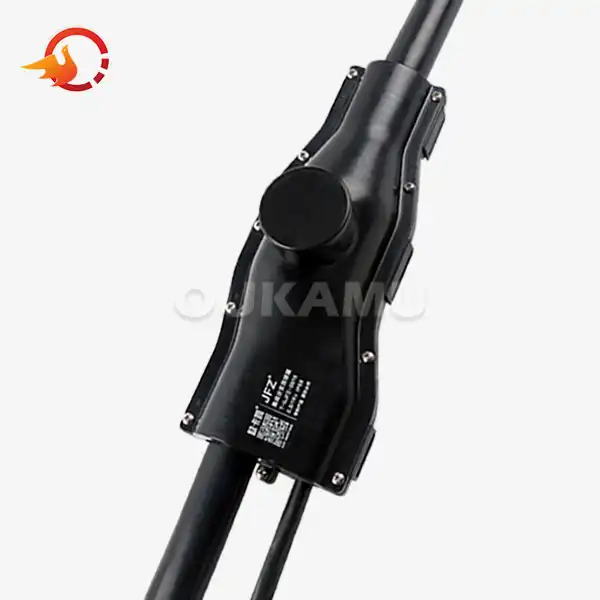
The gel-filled resin joint from Oukamu has a modified PP housing that is resistant to aging and temperature cycles. It also has an integrated branch connection that can accept terminations from copper to copper, aluminum to aluminum, and copper to aluminum without the need for extra adapters. This makes it easier to make a bill of materials for buying in bulk and lowers the chance that the wrong parts will be installed together.
How to Choose the Right Cable Joint Type for Your XLP Cable Projects
There are four practical things that determine which joint type is best: the burial environment, the operations team's ability to respond to faults, the total cost of ownership over the asset's lifecycle, and the supplier's ability to meet yearly framework agreement amounts.
Before putting the finishing touches on a specification, procurement engineers should look at these main selection criteria:
- Burial environment: Installations in direct-buried dirt or submerged manholes need to have a minimum IP68 grade. By design, resin-filled parts fulfill this level. Heat shrink joints might be eligible depending on the brand and configuration, but they need to be checked at the product level before the tender is sent in.
- Voltage class and fault consequence: Both types of joints can be used for 0.6/1 kV underground distribution, which is the most common type for municipal supply companies. A fault in a direct-buried run, on the other hand, needs to be dug up. Over a 25-year period, resin joints lower the chance of a fault happening, which lowers the cost of lifecycle maintenance.
- Installation team capability: Using a heat gun consistently is needed to apply heat shrink. For resin filling, the mixing amounts must be right. Both depend on your skills. The L-GJFZ-70/16 from Oukamu is made to be installed in the field without cutting the main cable. This keeps inexperienced crews from making mistakes and speeds up the installation process for complicated multi-branch runs.
- Procurement qualification requirements: When provincial grid companies hold unified bids once a year, providers must provide type test results, network access certificates, and ISO certification. The fact that Oukamu has the right licenses supports a clean pre-qualification application.
A real-life example: In the northwest of China, a local water utility put in cable resin filled type joints for xlp, the Oukamu L-GJFZ-70/16 joints, on 1.2 km of direct-buried low-voltage distribution wire that fed pump stations. The installation worked for three years in high-moisture clay soil and had no water-ingress faults. The operations team said that the no-cut installation method cut the time it took to install branches by about 40% compared to their old heat shrink workflow, which needed main cable sections to be reserved and pre-stripped.
These benefits fix some problems that utility buying teams have in basement areas with a lot of moisture, especially when it comes to figuring out who is at fault during yearly performance reviews.
Conclusion
Cable resin filled type joints for xlp and heat shrink kits have different uses for attaching XLPE cables. Heat shrink kits are cheaper and ideal for short-term repairs in dry, accessible areas. For installations immediately underground or in utility distribution network manholes, where moisture is constantly present and construction expenses are high, resin-filled joints are more dependable, fault records may be located, and the total cost of ownership is cheaper. Oukamu's Model L-GJFZ-70/16 meets subterranean low-voltage system demands. It's IP68, has proven electrical characteristics, and doesn't need main wire cutting.
FAQ
How long do resin-filled cable joints last in underground installations?
As long as they are put properly, resin-filled joints should last at least 25 years when they are buried directly. The hardened substance stops water from getting in and doesn't react with chemicals in the soil, which are the two main ways that buried joints age.
Are heat shrink joints approved for direct-buried XLPE cable systems?
Some heat shrink kits can be buried directly up to IP67. However, not all heat shrink goods come with IP68 certification, which is needed for situations where they will be submerged in water for a long time. Before specifying that a product is for underground use, you should always check the IP rating given in the type test report.
What standards apply to cable joints in utility procurement tenders?
For environmental reasons, GB/T 14048.7-2016 and IEC 60529 must usually be followed when buying things for Chinese utility networks. Type test results, network access certificates, and ISO quality management certifications are all common types of pre-qualification papers.
Can resin-filled joints accommodate mixed conductor materials?
Yes. With Oukamu's integrated branch connector, you can make links between copper and copper, aluminum and aluminum, and copper and aluminum all in one joint assembly. This means you don't need to buy different bimetallic transition sleeves.
What is the main cost advantage of resin-filled joints over heat shrink kits?
Resin-filled joints cost more per unit up front. Their longer service life and lower failure rate in underground settings, on the other hand, lower the total cost of ownership, especially when digging and repair work are taken into account.
Get the Right Joint Solution from Oukamu — Trusted Cable Resin Filled Type Joints for XLP Supplier
Xi'an Oukamu Electric Co., Ltd. has been an expert in branch connection technology for more than 20 years. Our L-GJFZ-70/16 resin-filled joint has been tested in both direct-buried and submerged utility uses. It offers IP68 waterproofing, proven insulation strength above 1000 MΩ, and a no-cut fitting design that saves time and money for the crew. Get in touch with our team at info@okmbranchcable.com or visit okmbranchcable.com to request a bulk quote or type test documentation for cable resin filled type joints for XLP manufacturers for annual framework procurement or technical support for a new project specification.
References
1. International Electrotechnical Commission. IEC 60529: Degrees of Protection Provided by Enclosures (IP Code). IEC, 2013.
2. IEEE Power Engineering Society. IEEE Std 404: Standard for Extruded and Laminated Dielectric Shielded Cable Joints Rated 2.5 kV to 500 kV. IEEE, 2012.
3. National Standards of China. GB/T 14048.7-2016: Low-voltage Switchgear and Controlgear — Cable Junction Devices. Standardization Administration of China, 2016.
4. Anders, G. J. Rating of Electric Power Cables in Unfavorable Thermal Environments. IEEE Press / Wiley, 2005.
5. Ealing, C. & Stannett, A. "Moisture Ingress and Its Effect on Underground Cable Joint Performance." IEEE Transactions on Dielectrics and Electrical Insulation, Vol. 9, No. 5, 2002.
6. CIGRÉ Working Group B1.21. Diagnostic Methods for HV and MV Cable Systems — Technical Brochure 728. CIGRÉ, 2018.