

_1790150425011.webp)
Why Fire-Resistant Cable Joints Matter for Emergency Circuit Integrity






 2026-10-15 15:02:49
View:389
2026-10-15 15:02:49
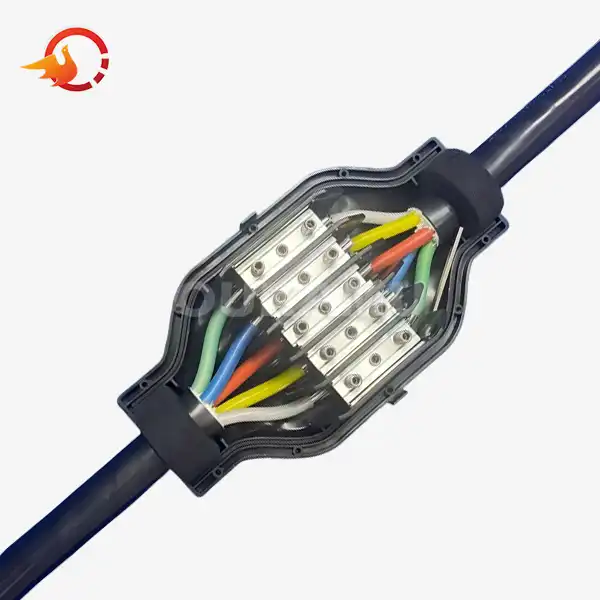
View:389When a fire breaks out in a hospital, high-rise building, or subway station, every second of continuous power to emergency systems counts. Fire resistant cable joints are the often-overlooked components that determine whether smoke detectors, sprinkler controls, emergency lighting, and evacuation alarms keep functioning when circuits are under thermal stress. A standard joint will fail within minutes of flame exposure, severing the very circuits that protect lives. Choosing properly rated, tested branch cable joints is not a design preference — it is a life-safety requirement backed by code.
Understanding Fire-Resistant Cable Joints and Their Role in Emergency Circuits
What Makes a Joint "Fire-Resistant"
Fire resistance is a material or assembly's ability to stop or slow the movement of too much heat, flames, or hot gasses under certain conditions (NYCBC, 2008). For a cable joint, this means that the connection must stay electrically connected for a certain amount of time, usually 30, 60, or 120 minutes, even though it may be exposed to temperatures above 750°C.
A joint that only slows the spread of a flame is called flame retardant. A joint that keeps the circuit alive when it gets hot is called fire resistant. You should never think of these two properties as being the same because they deal with different types of failure.
Materials and Construction
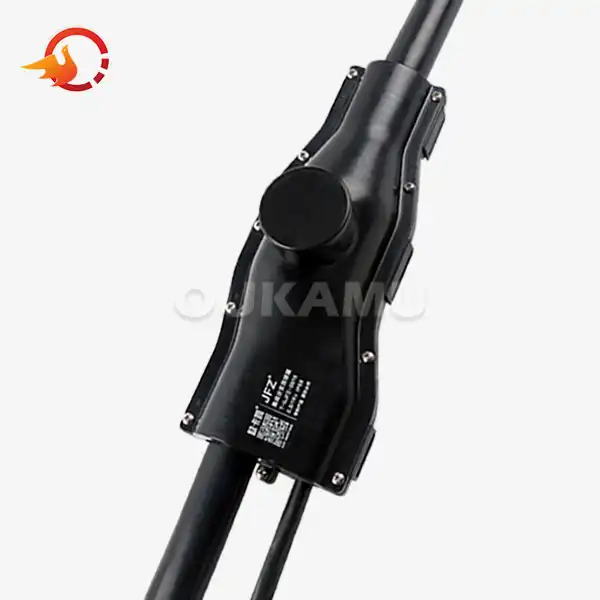
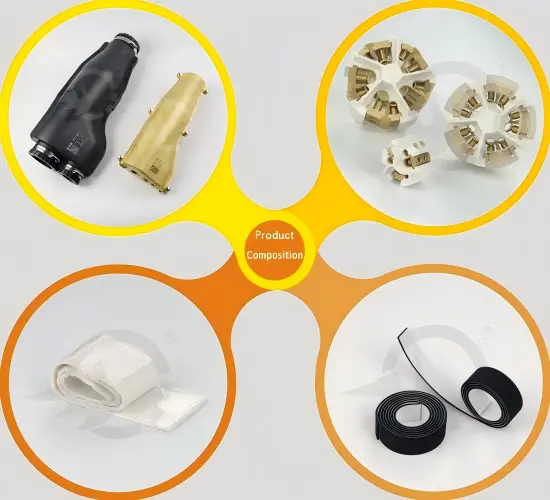
The material stack of a fire-rated branch joint directly affects how well it protects. The NH-JFZ-50/35 model from Oukamu has high-conductivity copper or aluminum conductors, flame-retardant, fire-resistant insulation that doesn't age, and a protective layer that doesn't rust or break down in heat. The outer layer keeps its dielectric strength high enough to keep a 3.5 kV withstand voltage even as temperatures rise above 1000°C. This mix of materials is what makes an emergency-circuit joint different from a general-purpose connector.
How They Compare to Standard Joints
A standard T-connector and a fire-rated branch joint are not different in how they look. Standard joints use thermoplastic insulation, which gets soft and loses its ability to conduct electricity above about 90°C. Fire-resistant joints, on the other hand, use mineral-based or cross-linked substances that burn instead of melting, so the insulation shield stays in place. For example, if a standard joint is exposed to direct flame for two to three minutes, it may break the circuit. But a compliant fire-resistant joint will keep sending power for the full rated period, which is exactly what window evacuation systems need.
Why Fire-Resistant Cable Joints Are Critical for Emergency Circuit Integrity
The Cost of a Non-Rated Joint
While the project is being tested for acceptance, inspectors find that fire resistant cable joints are missing and a non-fire-rated part is used on a safety-critical circuit. The project is stopped. Every meter of wire that goes from that joint to the end device needs to be checked again, and the system often needs to be taken apart to make room for the new one. When the cost of the electrical materials is between $500,000 and $5,000,000, a single repair event can take weeks to complete and cost five figures in labor. It also delays occupancy certificates and puts the contractor at risk of being sued.
Compliance Standards That Matter
The main performance standards that procurement teams should check are IEC 60331 (circuit stability in fire situations) and BS 8434 (multicore cables tested with a mechanical shock component). UL 2196 includes wires and the fittings that go with them for circuit integrity in the U.S. market.
To be considered a good source, a supplier must be able to show external test reports from a recognized fire building materials quality inspection center, not just internal datasheets. Oukamu has inspection records that can be checked and are in line with GB/T standards and their foreign equivalents.
A Real Project Scenario
During the planning phase, a contractor working on a 24-story hospital tower asked for standard branch connectors to be used at the T-junction of fire alarm feed cables. Three joints failed the thermal continuity test during the pre-acceptance fire-resistance spot check. To replace those junctions, finished ceiling assemblies had to be opened up on two floors. This took an extra eleven days and cost around $38,000 in direct rework costs. The acceptance audit was completed without any problems after the NH-JFZ-50/35 fire-rated joints were switched to the remaining floors.
How to Choose the Right Fire-Resistant Cable Joints for Your Project
Match the Joint to the Cable Type
It is imperative that the joint and the cable it ends up connecting are compatible. For most 0.6/1 kV fire alarm and emergency power distribution circuits in hospitals, metro stations, and high-rise commercial buildings, the NH-JFZ-50/35 can handle main cables from 16 mm² to 50 mm² and branch cables from 2.5 mm² to 35 mm². Before you sign off on a specification, make sure that the joint's wire range matches the mineral-insulated or fire-resistant cable that has already been chosen for the project.
To help you compare specifications, the table below lists the NH-JFZ-50/35's most important technical specs:
| Parameter | NH-JFZ-50/35 Value |
|---|---|
| Fire-resistant Temperature | 750 ~ 1000 °C |
| Rated Voltage | 0.6 / 1 kV |
| Withstand Voltage | 3.5 kV |
| Voltage Drop | < 3.2 mV |
| Insulation Resistance | > 500 MΩ |
| Main Cable Range | 16 ~ 50 mm² |
| Branch Cable Range | 2.5 ~ 35 mm² |
These parameters of fire resistant cable joints are the same as the requirements for circuit integrity in IEC 60331 and similar national standards. This gives procurement teams a clear measure to use when reviewing specifications.
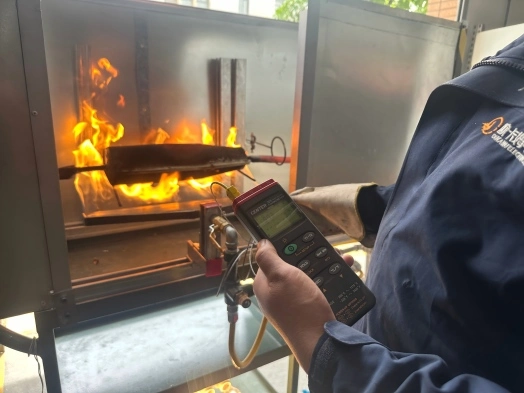
●Product Performance
Fire Resistance Performance:
•Circuit Integrity C: After being subjected to fire (950°C–1000°C) for 180 minutes, the circuit remains intact.
•Circuit Integrity W: After being subjected to fire (650°C–700°C) for 15 minutes, followed by water spray and continued fire exposure for another 15 minutes, the circuit remains intact.
•Circuit Integrity Z: After being subjected to fire (950°C–1000°C) and mechanical vibration for 15 minutes, the circuit remains intact.
•Protection Rating: IP65 (prevents ingress of foreign objects, dust, rain, and jet water; suitable for non-immersion applications).
•Insulation Resistance: At 90% humidity, test voltage 1kV, phase-to-phase insulation resistance > 10,000MΩ.
•Withstand Voltage: At 90% humidity, applied voltage 3.5kV for 5 minutes, no phase-to-phase breakdown.
Complies with the requirements of BS6387:2013 "Test method for resistance to fire of cables required to maintain circuit integrity under fire conditions" and Q/OKM01-2018 "Integrated branch devices with rated voltage 0.6/1kV" for circuit integrity, conductor continuity, thermal cycling tests, and other standard requirements.
Certified and tested qualified by the National Engineering Laboratory for High-Speed Railway Construction Technology, the National Center for Quality Supervision and Testing of Fire Building Materials, the National Quality Supervision and Testing Center for Wire and Cable, and Oukamu Electric Co., Ltd.
Silicone vs. Epoxy-Based Protection
Silicone-compound joints are very flexible and can handle a wide range of temperatures. This makes them useful for setups where the wire route bends after the joint body. Epoxy-filled systems make the container stronger and more resistant to impact, making them good for places where they will be exposed to mechanical forces. The NH-JFZ-50/35 uses a special fire-resistant insulation material that works well for both thermal and dielectric performance without needing to be cured after installation. This cuts down on the time it takes to set up and eliminates the risk of curing failure.
Evaluating Supplier Documentation
A supplier of fire-resistant cable joints that follows the rules should give you these types of documents without any doubt:
- Third-party fire test report from a nationally recognized inspection center, showing real measured endurance time and temperature curve.
- Certificate of compliance to the relevant standard (IEC 60331, UL 2196, or national equivalent).
- Product datasheet with conductor size compatibility, rated voltage, and dimensional drawings for BIM coordination.
- Batch traceability records so that any sample pulled during acceptance inspection can be matched to a specific production lot.
Installation and Maintenance Guide for Fire-Resistant Cable Joints
Step-by-Step Installation
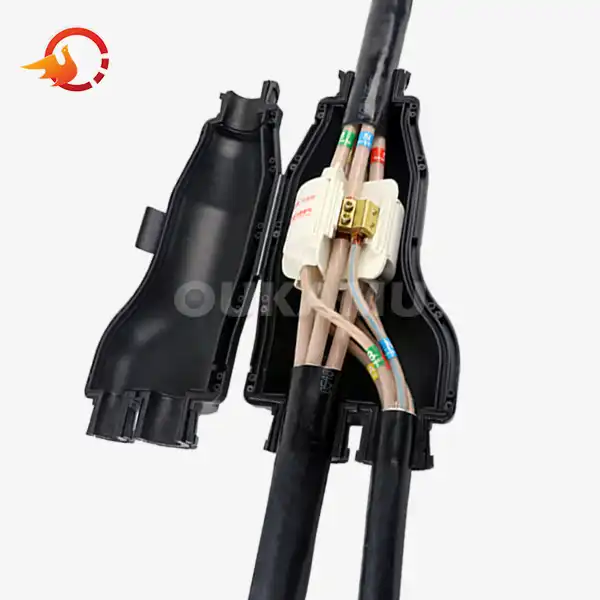
The NH-JFZ-50/35 has a built-in T-connector, so the main cable doesn't need to be cut. To install it, you need to cut the branch cable to the right length, then put both wires into the connection body, tighten the clamping mechanism to the right level, and check the insulation resistance before closing the protective housing.
The fire resistant cable joints allow the branch position on the main wire to be set at any point along the run. This means that fixed branch spacings don't have to be planned ahead of time during planning. This saves two to three meters of main cable per junction, which is a big deal for runs that go up and down multiple floors.
The software factors and their real-world effects are shown in the table below:
| Installation Factor | Practical Impact |
|---|---|
| No main cable cut required | Preserves conductor continuity; no splice resistance increase |
| Adjustable branch position | Eliminates pre-measured branch spacing errors on site |
| Cable saving per junction | 2 – 3 m of main cable, reducing material and labor cost |
| Reusable connector body | Supports repositioning if layout changes mid-project |
| Sealed insulation housing | Protects against dust and moisture ingress after installation |
Post-Installation Testing
Technicians should test the insulation resistance between the phase conductors and between each conductor and the protected cover once the whole thing is put together. Under normal circumstances, the NH-JFZ-50/35 keeps its insulation resistance above 500 M©. If the reading is below this level before the circuit is turned on, it means there is a problem with the assembly that needs to be fixed before the acceptance inspection.
Routine Inspection Practice
In fixed installations, fire-rated joints should be visually checked on the same schedule as the wires they connect: once a year, or after any event that puts mechanical stress on the circuit, like building work, an earthquake, or a flood. Check to see if the case has changed color, the cable entry has become deformed, or the clamping torque sign has become loose. If you notice a worn-out part early on, you can replace it on schedule instead of having to do emergency repairs at the worst possible time.
Procurement Insights: Buying Fire-Resistant Cable Joints for B2B Clients
Timing Your Order to the Project Schedule
When it comes to fire-rated branch joints, the buying window usually starts during the detailed design phase and ends before the cable installation crew gets to the right floors or zones. A lead time of one to three months is reasonable for products that have been checked out and documented. It is always better to order earlier than needed than to wait for compliant joints and then install the cables.
Volume Pricing and Customization
For big B2B sales, Oukamu offers both regular models and options that are made just for the project. When a contractor is in charge of 10 floors or more of a high-rise building or multiple metro stations, they can work out delivery schedules that work with the construction phase's milestones. With enough wait time, you can get custom conductor range pairs or housing colors for circuit labeling. Early on in the project, email the technical team at info@okmbranchcable.com to make sure that the materials you need are available and that you can get a good deal on them.
What After-Sales Support Looks Like
Oukamu offers technical help that goes beyond shipping. The company gives instructions on how to install the products, pre-acceptance documentation packages, and extra test reports when local inspection authorities ask for them. This amount of involvement after the sale is what makes a long-term supply relationship different from a one-time buy. This is especially important for projects where acceptance risk can't be taken on.
Conclusion
A fire-resistant cable joint is not an extra; it is an important part of any electrical circuit for life safety. The two most common reasons why acceptance checks fail are thermal failure at the junction and gaps in the documentation. To avoid these problems, choose a joint that can maintain circuit integrity from 750°C to 1000°C, comes with full third-party test documentation, and can be installed without cutting the main wire.
The NH-JFZ-50/35 from Oukamu takes care of both requirements for fire resistant cable joints. The best way for procurement teams in charge of hospital, high-rise, or transit projects to protect the project schedule and the people the building is meant to serve is to choose the right joint during the design phase.
FAQ
Are fire-resistant and flame-retardant joints the same thing?
No. Flame-retardant joints resist the spread of fire from one area to another but do not guarantee that the circuit remains live under prolonged heat exposure. Fire-resistant joints are specifically tested to maintain electrical continuity for a defined period under a standard fire temperature curve — a requirement that flame retardancy alone does not satisfy.
What certifications should I verify before purchasing?
At minimum, request a third-party test report referencing IEC 60331, UL 2196, or the applicable national standard. The report should state the actual endurance time, the temperature curve used, and the testing laboratory's accreditation. Oukamu provides these documents as part of the standard supply package.
Is the NH-JFZ-50/35 compatible with mineral-insulated cable?
Yes. The connector body accommodates stripped conductors from mineral-insulated and standard fire-resistant cables within the 16–50 mm² main cable and 2.5–35 mm² branch cable ranges. Always verify the stripped conductor diameter against the connector's acceptance range before ordering.
How long does a fire-resistant cable joint last in normal service?
Under normal operating conditions — dry, stable temperature, no mechanical disturbance — a properly installed fire-rated joint will remain serviceable for the lifetime of the cable installation, typically 20 to 30 years. Annual visual inspection is the standard maintenance practice.
Can I order NH-JFZ-50/35 joints for a mixed-conductor project?
Yes. Oukamu accepts project-specific orders where a single bill of materials includes multiple conductor size combinations. Contact info@okmbranchcable.comwith your cable schedule and the technical team will confirm the correct model codes for each junction type.
Get Fire-Resistant Cable Joints That Pass Inspection — Contact Oukamu
For your next fire safety job, you should work with a branch cable joint provider that has been in the business for 20 years. The NH-JFZ-50/35 fire resistant cable joints from Oukamu come with paperwork backed by the maker, test data that has been checked, and flexible B2B supply terms. We provide full documentation packages and technical help from design to acceptance, whether you are looking for a hospital, a metro stop, or a high-rise office building. You can get samples, datasheets, or a project quote by emailing info@okmbranchcable.com or going to okmbranchcable.com.
References
1. National Electrical Code (NFPA 70), National Fire Protection Association, 2023.
2. IEC 60331-1: Tests for Electric Cables Under Fire Conditions — Circuit Integrity, International Electrotechnical Commission, 2018.
3. BS 8434-2: Methods of Test for Assessment of the Performance of Cables Under Fire Conditions, British Standards Institution, 2003.
4. UL 2196: Standard for Tests for Fire Resistive Cables, Underwriters Laboratories, 2012.
5. GB/T 14048.7: Low-Voltage Switchgear and Controlgear — Part 7: Ancillary Equipment, Standardization Administration of China, 2016.
6. Fire Resistance: Design of Structures, Institution of Structural Engineers, 2003.