

_1790150425011.webp)
How to Choose Fire-Resistant Cable Joints for Tunnel Wiring Projects






 2026-10-15 15:21:06
View:389
2026-10-15 15:21:06
View:389Choosing the right fire resistant cable joints for tunnel wiring projects starts with understanding what these components actually do. During a fire, standard cable joints fail quickly—cutting power to emergency systems at the worst possible moment. Fire resistant joints are engineered to maintain circuit continuity under extreme heat, typically rated between 750°C and 1000°C. For tunnel projects in hospitals, subway systems, and high-rise buildings, selecting joints with verified fire ratings, compatible cable cross-sections, and complete certification documentation is not optional—it is a baseline requirement for passing inspection and protecting lives.
Understanding Fire-Resistant Cable Joints and Their Role in Tunnel Wiring
What Makes a Joint "Fire Resistant"
Fire resistance is a material's ability to keep out flames or too much heat for a certain amount of time while being tested. What makes a fire resistant cable joint different from a normal or flame-retardant joint is that it keeps the electrical connection intact even when it is exposed to high temperatures. Flame-retardant joints stop fires from spreading, but they don't always work. A truly fire-resistant connection is the only one that meets code in tunnels, where emergency lights and evacuation devices must always be on.
Applicable Standards You Should Know
IEC 60331 (circuit integrity under fire), BS 6387 (British standard for cable performance), and UL 2196 (U.S. standard for fire-resistive cable systems) are the three main standards used to test the fire performance of cable links in the U.S. and around the world. Before accepting a joint for use in a tunnel, procurement teams should ask for test results from a third party that compare it to these standards. In the U.S., projects like train lines and hospital power feeds often need to follow both NFPA 130 and NFPA 99.
Joint Types Suited for Tunnel Conditions
Some of the things that can happen in a tunnel are wetness, changes in temperature, and limited room. Heat shrink, cold shrink, resin mold, and mechanical T-branch connectors are the main types of joints. When it comes to tunnel uses, resin mold and mechanical T-branch joints work best because they completely seal, keep water out, and keep the structure stable. Heat shrink types might work for lighter branch connections, but they need to be applied carefully to make sure they seal well.
Key Criteria for Selecting Fire-Resistant Cable Joints for Tunnel Projects
Fire Rating and Certification Documentation
A confirmed fire rating backed by a known test report is the most important thing to look for in fire resistant cable joints. A joint that claims to be fire resistant from 750°C to 1000°C must have this confirmed by a third-party lab that has been approved by the government.
For projects in the United States, look for UL listings or reports from NRTLs, which stand for nationally recognized testing laboratories. The National Fixed Fire Extinguishing and Flame-Retardant Systems and Fire-Retardant Components Quality Supervision and Testing Center report is very important when it comes to China-made goods that are used in foreign projects.
Cable Compatibility and Cross-Section Range
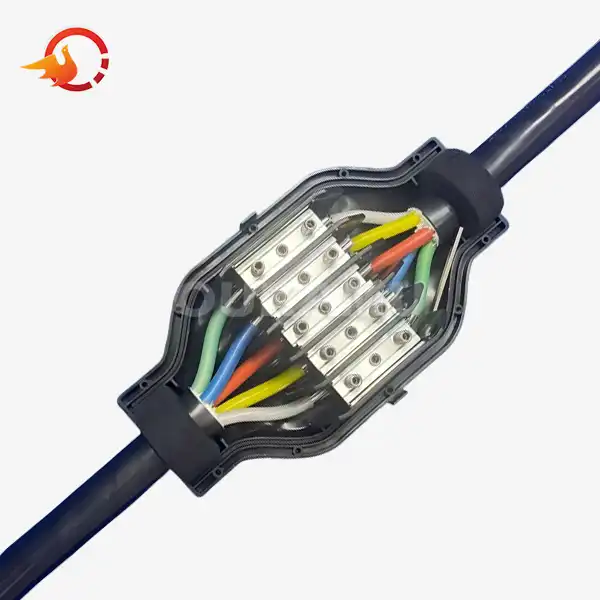
It's not possible for all joints to work with all cables. For example, the Oukamu NH-JFZ-50/35 type can hold main wires that are 16mm to 50mm in diameter and branch cables that are 2.5mm to 35mm in diameter. It is rated at 0.6/1kV. Make sure that the cross-section range covers both your main trunk cable and all branch circuits before you choose a joint. When sizes don't match, resistance points and heat build up, which can lead to major failures during a fire.
Here is a list of the most important technical details about the NH-JFZ-50/35:
| Technical Parameter | Specification |
|---|---|
| Fire-Resistant Temperature | 750 ~ 1000°C |
| Withstand Voltage | 3.5 kV |
| Voltage Drop | < 3.2 mV |
| Insulation Resistance | > 500 MΩ |
| Rated Voltage | 0.6 / 1 kV |
| Main Cable Range | 16 ~ 50 mm² |
| Branch Cable Range | 2.5 ~ 35 mm² |
Fire Resistance Performance:
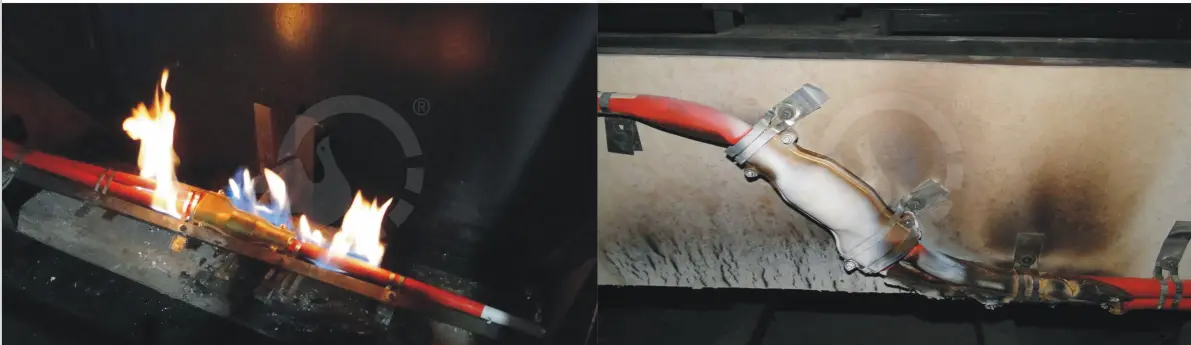
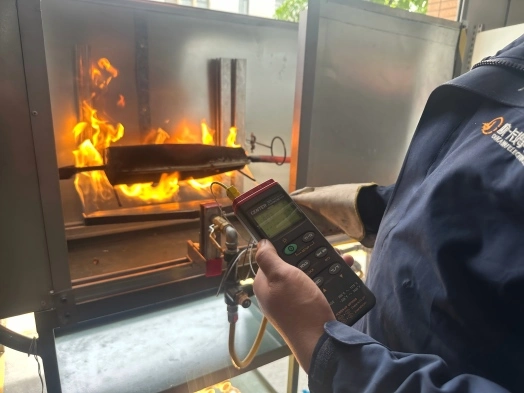
•Circuit Integrity C: After being subjected to fire (950°C–1000°C) for 180 minutes, the circuit remains intact.
•Circuit Integrity W: After being subjected to fire (650°C–700°C) for 15 minutes, followed by water spray and continued fire exposure for another 15 minutes, the circuit remains intact.
•Circuit Integrity Z: After being subjected to fire (950°C–1000°C) and mechanical vibration for 15 minutes, the circuit remains intact.
•Protection Rating: IP65 (prevents ingress of foreign objects, dust, rain, and jet water; suitable for non-immersion applications).
•Insulation Resistance: At 90% humidity, test voltage 1kV, phase-to-phase insulation resistance > 10,000MΩ.
•Withstand Voltage: At 90% humidity, applied voltage 3.5kV for 5 minutes, no phase-to-phase breakdown.
Complies with the requirements of BS6387:2013 "Test method for resistance to fire of cables required to maintain circuit integrity under fire conditions" and Q/OKM01-2018 "Integrated branch devices with rated voltage 0.6/1kV" for circuit integrity, conductor continuity, thermal cycling tests, and other standard requirements.
Certified and tested qualified by the National Engineering Laboratory for High-Speed Railway Construction Technology, the National Center for Quality Supervision and Testing of Fire Building Materials, the National Quality Supervision and Testing Center for Wire and Cable, and Oukamu Electric Co., Ltd.
Long-Term Cost and Procurement Logic
When buying electrical materials for business projects with funds between $500k and $5m, the price per unit of a wire joint isn't usually the most important thing. What's more important is the cost of rework and inspection failure. One failed joint during fire acceptance testing can cause weeks of extra time to be needed to hand over the job. If you choose a joint like the NH-JFZ-50/35 that saves 2 to 3 meters of main cable per branch connection, you'll also save money and time on labor across a multi-floor or multi-zone tunnel layout.
Comparing Leading Fire-Resistant Cable Joint Solutions in the Market
Fire-Resistant vs. Fireproof: Clearing Up the Confusion
You can't use these two words in place of each other. "Fireproof" means complete safety with no damage, so no electrical product meets this standard. ""Fire resistant" means that the joint will keep working for a certain amount of time under certain fire conditions.
When looking at providers, don't buy anything that says it's "fireproof" but doesn't have a time-based test grade. Genuine companies that make fire resistant cable joints will always say how long they were tried for (for example, 90 minutes at 750°C) instead of making claims that can't be questioned.
How the NH-JFZ-50/35 Stands in the Market
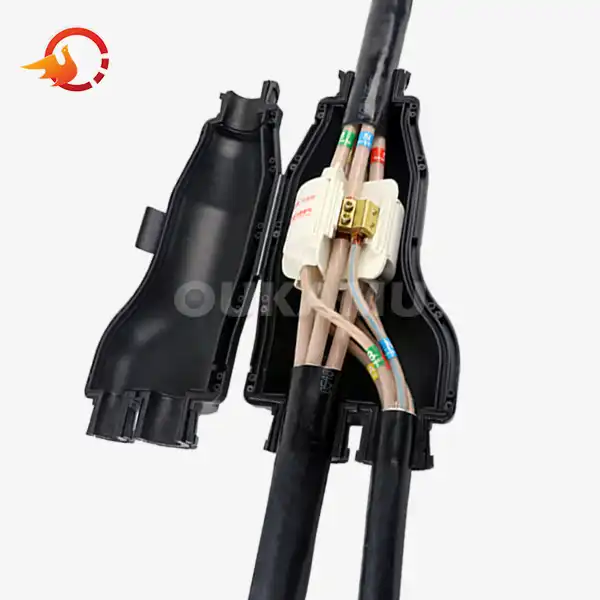
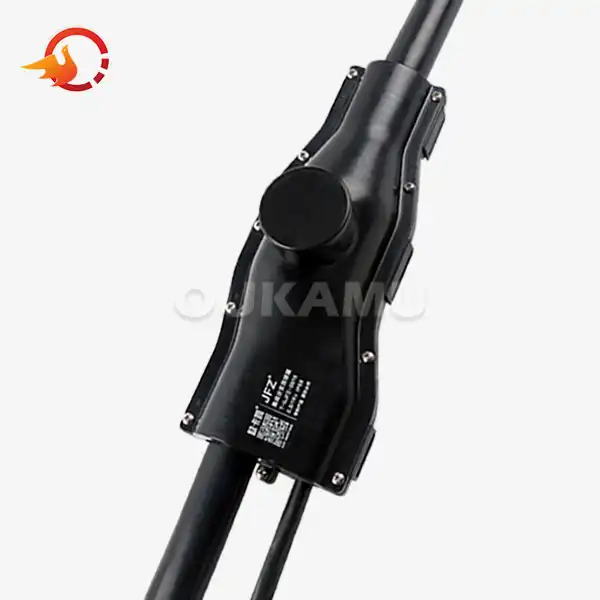
The branch cable joint technology at Xi'an Oukamu Electric has been their main focus for more than 20 years. Copper or aluminum conductors with a compound insulation layer that doesn't melt or wear down are used to make the NH-JFZ-50/35. The built-in T-connector design lets you connect branch cables without cutting the main cable. This is what makes it different from many competitors, whose designs require cutting the main cable. This keeps the trunk wire in good shape and lowers the number of places where the wiring system could go wrong.
Here's a look at how key product application factors compare:
| Feature | NH-JFZ-50/35 (Oukamu) | Typical Standard Joint |
|---|---|---|
| Main Cable Cut Required | No | Yes |
| Waterproof Rating | Yes | Varies |
| Flame-Retardant Material | Yes | Sometimes |
| Fire-Resistant Rating | 750 ~ 1000°C | Not rated |
| On-Site Flexibility | Full positional adjustment | Fixed point only |
| Reusable Design | No | No |
Real Project Application: Hospital Electrical Fit-Out
The fire protection contractor working on a new hospital complex in the western U.S. had a usual issue: the branch link points for emergency lighting circuits were set during design, but three times on-site routing had to be changed because of changes to the building. The electrical team changed the positions of the branches on-site using Oukamu NH-JFZ-50/35 joints, so they didn't have to reorder cables or wait for pre-branched units to arrive from the plant. The project skipped about two weeks of delays because it passed the fire acceptance testing on the first review run.
Installation and Maintenance Best Practices for Tunnel Wiring Projects
Step-by-Step Installation for Tunnel Environments
Check the tunnel segment to the branch point for debris and dryness. The main wire insulation should be trimmed to the window length, but not the conductor. Insert the branch cable conductors into the T-connector body, tighten each terminal to the manufacturer's recommendation, and seal the connection housing. Install the outer fire-resistant sleeve and seal both cable entrance ports. NH-JFZ-50/35 doesn't require a heat gun, plastic mixer, or other equipment other than torque wrenches.
Common Mistakes That Cause Inspection Failures
These are the construction mistakes that are most likely to lead to rejection during fire acceptance testing:
- Under-torqued terminals: Loose connections increase resistance, generate heat, and reduce contact reliability under thermal stress. Always use a calibrated torque wrench.
- Incorrect cable stripping length: Too short leaves insufficient conductor engagement; too long exposes bare conductor outside the insulation zone.
- Missing or incomplete documentation on-site: Inspectors will request the test report and product specification sheet at the time of inspection. Keep copies in the project file.
- Using joints rated for a lower voltage class: Always verify that the joint's rated voltage matches or exceeds the circuit's operating voltage.
These mistakes are easy to avoid if installation teams get the right training and product documentation ahead of time.
Testing and Ongoing Inspection Protocols
Once everything is set up, test each branch circuit's insulation resistance for fire resistant cable joints. The NH-JFZ-50/35 standard says that a healthy joint should have an insulation resistance of more than 500 MΩ. As part of regular upkeep, look at joint housings visually once a year for signs of discoloration, physical warping, or water getting in. Increase the number of inspections to every six months in tunnel parts with a lot of humidity. Take pictures of each inspection and keep the records with the project's fire safety file.
Procurement Tips and How to Choose the Right Supplier for Your Tunnel Project
What to Look for in a Supplier
A good fire resistant cable joint provider should have at least a valid fire resistance test result from a third party, a product specification sheet with all the electrical details, and references from similar tunnel or fire protection projects. When plans are based on inspections, lead time is very important. Oukamu keeps standard stock of the NH-JFZ-50/35 and can handle large orders quickly, which is helpful when project deadlines are getting close to the fire acceptance date.
Procurement Process Aligned to Tunnel Project Schedules
Getting electrical materials for fire safety usually takes between one and three months, from confirming the design to getting approval and delivery. Teams in charge of buying things should start qualifying suppliers during the detailed planning phase, not after the building starts. Before you buy a lot of the goods, you should get approval from the design engineer and fire authority on the test report. This keeps you from having to make last-minute changes and pay extra to fix things that didn't work right during inspection day.
Documentation Checklist Before Final Order
Before sending out a purchase order, make sure of the following:
- Third-party fire resistance test report (laboratory name, test date, result)
- Product datasheet with full electrical and mechanical specifications
- Compliance statement referencing applicable standards (IEC 60331, UL, or local equivalent)
- Supplier's authorized distributor certificate or manufacturer's direct confirmation
- Project-specific technical support contact
Conclusion
For an underground wiring job, choosing the right fire resistant cable joints has an impact on both safety and testing results. The NH-JFZ-50/35 from Oukamu solves the main problems that procurement teams have: it has been tested to be fire resistant up to 1000°C, the main cable doesn't need to be cut, the branch positions can be changed, and full documentation support is provided.
Oukamu has been making branch cable joints for over 20 years and makes goods that meet the technical needs of fire safety systems in hospitals, subways, and high-rise buildings. Start the selection process early, make sure all certifications are valid, and work with a provider whose paperwork can stand up to close examination.
FAQ
How do fire resistant cable joints keep tunnel emergency systems running during a fire?
Even when the temperature around them gets to 750°C or higher, these joints keep the insulation and conductors connected. Life-safety risks in tunnel fires are mostly caused by the loss of power to emergency lights and air. The branch connection point doesn't become the weak link in the chain when there is a fire-rated joint.
Can the NH-JFZ-50/35 be installed after the main cable is already in place?
Yes. For the NH-JFZ-50/35, you don't have to cut the main wire. Without cutting the trunk conductor, the installer opens a window in the main cable insulation, connects the connection body, and locks down the branch cable. This is very helpful for tunnel projects where main cables need to be run through conduit before the exact locations of the branches are known.
What certifications should I request before approving a fire resistant cable joint for a tunnel project?
Ask for the fire resistance test report (IEC 60331 or UL 2196 similar), the electrical specification sheet for the product, and any national quality center inspection certificates that are needed. For work in the United States, check with the relevant body to see if a UL listing or a NRTL test report is needed.
How does fire resistant differ from flame retardant in cable joints?
Flame retardant means that the material puts out fires on its own and doesn't let them spread. Fire-resistant means that the part will still work electrically for a certain amount of time after being exposed to fire. For emergency power circuits in tunnels, flame retardant joints are not enough; they must also be fire resistant.
Connect With Oukamu for Fire Resistant Cable Joint Solutions
For more than 20 years, Oukamu has given fire protection vendors hospital, subway, and high-rise projects fire-resistant cable joints made by the maker. There is full certification paperwork, flexible on-site installation, and direct expert help for the NH-JFZ-50/35. You can look at the whole line of products at okmbranchcable.com or email the team at info@okmbranchcable.com for bulk pricing, help matching specs, and project-specific advice.
References
1. International Electrotechnical Commission. IEC 60331: Tests for Electric Cables Under Fire Conditions – Circuit Integrity. IEC, 2018.
2. National Fire Protection Association. NFPA 130: Standard for Fixed Guideway Transit and Passenger Rail Systems. NFPA, 2023.
3. National Fire Protection Association. NFPA 70: National Electrical Code. NFPA, 2023.
4. Underwriters Laboratories. UL 2196: Standard for Tests for Fire Resistive Cables. UL, 2012.
5. Borg, R. P., Rossignolo, J. A., & Buhagiar, V. Fire Resistance of Construction Materials and Assemblies. Elsevier Building and Construction Materials, 2020.
6. CIGRE Working Group B1.43. Cable Systems in Multi-Purpose Tunnels. CIGRE Technical Brochure No. 773, 2019.