

_1790150425011.webp)
Why Fire Resistant Cable Joints Matter in Critical Infrastructure






 2026-10-14 15:46:12
View:389
2026-10-14 15:46:12
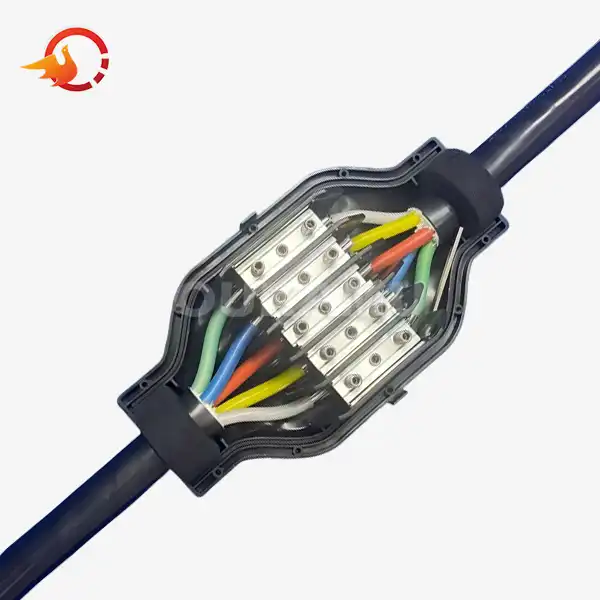
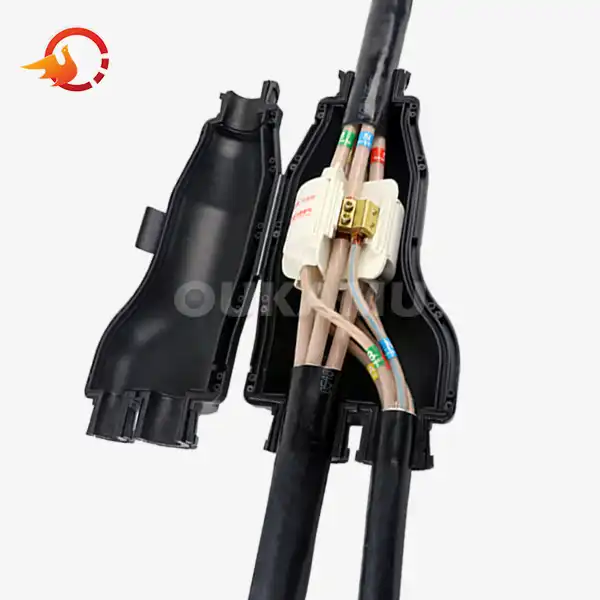
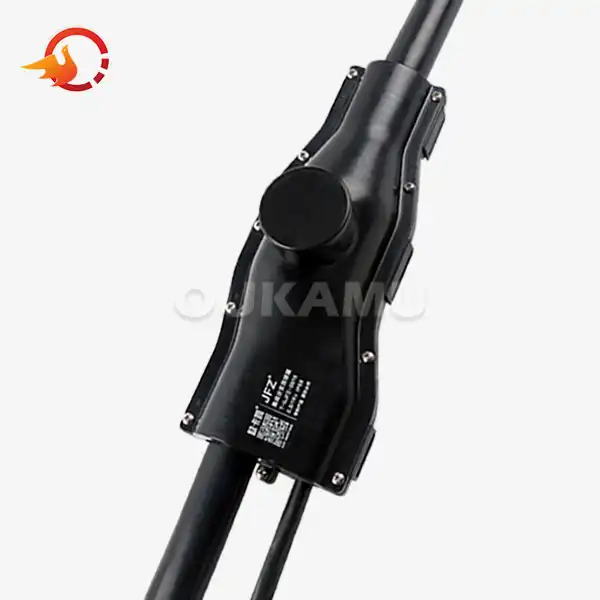
View:389When a fire breaks out in a hospital, subway station, or high-rise building, every second counts. Fire resistant cable joints are the often-overlooked components that keep emergency lighting, alarm systems, and fire suppression equipment powered during those critical moments. Without proper fireproof branch connectors at circuit junctions, even a well-designed electrical system can fail completely under thermal stress. This article explains why these connectors matter, what to look for when selecting them, and how Oukamu's NH-JFZ-50/35 addresses the specific demands of code-compliant critical infrastructure projects.
Understanding Fire Resistant Cable Joints in Critical Infrastructure
What Fire Resistance Actually Means
Fire resistance is a material's ability to stop or slow the movement of flames, excessive heat, or hot gasses for a set amount of time under standard test conditions. In electrical systems, this means circuit integrity, which means that a wired link should be able to keep sending power even if it is on fire. The National Electrical Code (NFPA 70) says that circuits that serve emergency systems must stay on for as long as it takes to ensure safe escape and put out fires.
Fire Resistant vs. Flame Retardant: A Key Distinction
People often use these two words interchangeably, but they mean very different things. Materials that are flame safe have been chemically treated to put out fires on their own and stop them from spreading. Materials that are fire proof can naturally keep their structure and electrical function even when they are directly exposed to flames. For branch connection points in fire warning systems, emergency exit lighting, or smoke control systems, it is important to specify fire resistant performance, not just flame retardancy.
Common Joint Types and Applicable Standards
There are three main types of joint constructions in critical infrastructure, which are:
- Resin-based T-branch connectors are the most widely used for low-voltage branch circuits in buildings. They fill air gaps completely, preventing arc tracking.
- Heat shrink joints apply controlled thermal forming to create tight insulation layers, suitable for moderate-temperature zones.
- Cold shrink joints expand over conductors without heat, useful where open flame tools are restricted on-site.
The standards that Oukamu's fire resistant cable joints are made to meet are IEC 60332 (flame propagation), IEC 60331 (circuit integrity under fire), UL 2196 (fire-rated cable systems), and China's GB/T 14048.7-2016 for low-voltage branch connectors.
The Critical Benefits of Fire Resistant Cable Joints
Maintaining Circuit Integrity When It Matters Most
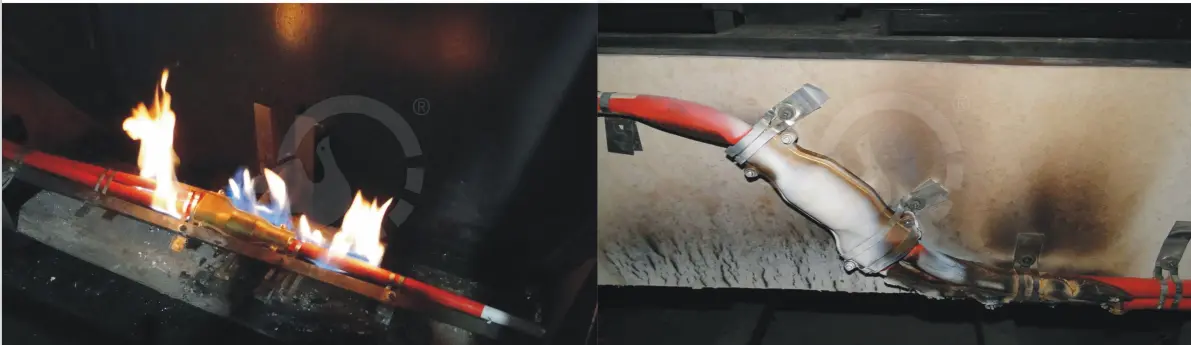
During a structure fire, temperatures at wire routes can quickly rise above 750°C. At those temperatures, standard plastic-insulated connections quickly break, cutting power to systems that control sprinklers, light up stairwells, and call for help in elevators. Branch joints that can withstand temperatures between 750°C and 1000°C keep those circuits alive long enough for people to leave and firefighters to arrive.
Long-Term Cost Advantages Over Conventional Joints
An inspection failure due to connectors that don't meet standards costs a lot of money. It can cost tens of thousands of dollars just for the labor to redo work on a 200-bed hospital project or a subway station fit-out. That's not even counting delays in the schedule.
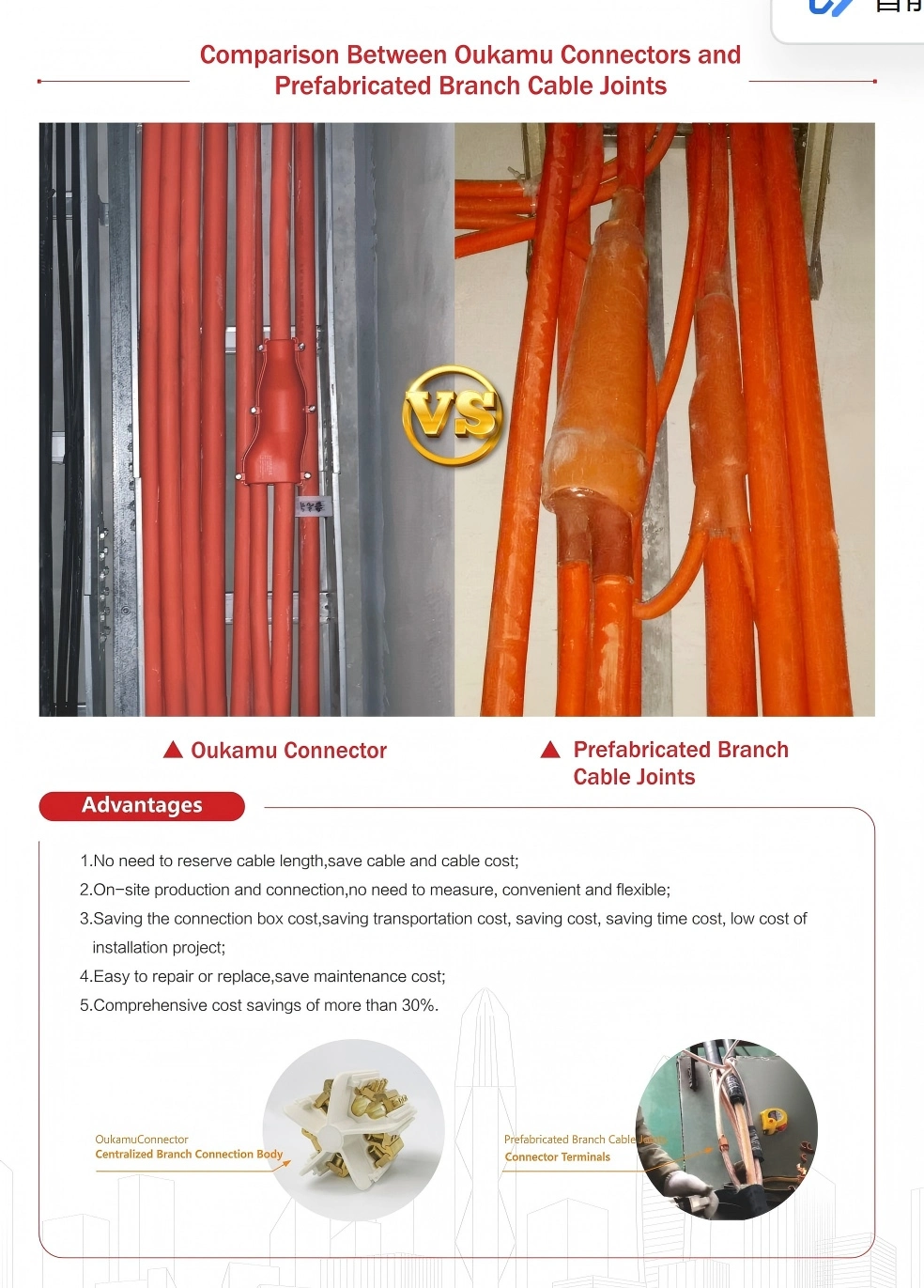
That chance is taken away by specifying certified fireproof connections from the beginning of the planning process. The NH-JFZ-50/35 from Oukamu doesn't need any main cable cutting or reserved cable lengths. This means that it saves 2–3 meters of cable per branch point, which adds up to a real savings on big projects with a lot of tap-off points.

Real Project Impact: Hospital Electrical System Upgrade
A local hospital that was updating its fire safety system needed to make sure that all seven floors of its emergency lighting and alarm circuits had compliant branch connections. The project team chose fireproof T-branch connectors that can be used with 35mm² mineral-insulated cable runs that are already in place.
Because trunk wires didn't have to be cut or respliced, installation time per floor went down by a lot for fire resistant cable joints, and all branch points passed the local fire authority's inspection on the first try. If the right connection specifications are in place from the start, this kind of result will happen again and again.
How to Choose the Best Fire Resistant Cable Joints for Your Needs
Performance Metrics to Evaluate Before Purchase
The main basic specs of the Oukamu NH-JFZ-50/35 are shown in the table below, which can be used as a standard for evaluating bids:
| Parameter | NH-JFZ-50/35 Specification |
|---|---|
| Fire-Resistant Temperature | 750–1000°C |
| Withstand Voltage | 3.5 kV |
| Voltage Drop | < 3.2 mV |
| Insulation Resistance | > 500 MΩ |
| Rated Voltage | 0.6/1 kV |
| Main Cable Cross-Section | 16–50 mm² |
| Branch Cable Cross-Section | 2.5–35 mm² |
These numbers are not marketing claims; they are real numbers that can be tested. When you get a price from a company that makes fire-resistant cable joints, make sure you get test reports from a well-known national fire materials laboratory before you decide to buy.
Compatibility With Existing Cable Systems
Not every type of fireproof connection can connect to every kind of wire. It is important to note that mineral-insulated cables (MICC), cross-linked polyethylene (XLPE) fire-rated cables, and low-smoke zero-halogen (LSZH) cables all have different wire configurations and outer sheath sizes. The NH-JFZ-50/35 can handle main cables from 16 to 50 mm² and branch cables from 2.5 to 35 mm². This means it can handle most low-voltage distribution branch situations in metro systems, hospitals, and high-rise apartment buildings.
Documentation Requirements for Code Compliance
When projects have to be inspected by the fire department, the paperwork package is just as important as the product itself. The most important things that purchasing teams should ask any provider of fire-resistant wire joints for are the following:
- National fire materials quality inspection center test report, including circuit integrity duration data
- Flame retardant and fire resistance classification certificates aligned with IEC 60331 or equivalent national standards
- Product conformity declaration referencing GB/T 14048.7-2016 or UL listing where applicable
- Technical datasheet with dimensional drawings for as-built documentation
No matter how well the product works in the field, suppliers who can't provide this full set of documents make it harder to verify them during the review stage.
Installation, Maintenance, and Safety Best Practices
Step-by-Step Installation Protocol
The fire resistant cable joints model NH-JFZ-50/35 is made to be installed on-site without the need for special tools. It's not cut by the installer where the branch point is. Instead, the connector's built-in copper cutting mechanism contacts through the insulation with controlled tightening force. The fire-resistant T-body then surrounds the whole assembly. This method keeps the insulation on the trunk cable intact and cuts down on the number of exposed conductor surfaces that could become ignition points.
Quality Control Checkpoints During Installation
Three checks are done after assembly to make sure the installation is solid:
- Torque verification: Confirm that clamping screws have been tightened to the manufacturer's specified torque value to ensure full conductor contact.
- Insulation resistance test: Measure resistance across each branch point before energizing; the reading should exceed 500 MΩ.
- Physical seal inspection: Confirm that the fire-resistant enclosure body is fully closed with no visible gaps that would compromise the rated fire protection envelope.
Post-Installation Monitoring and Inspection Intervals
As part of regular upkeep, electrical systems that are part of critical infrastructure should check the state of branch connectors. It is recommended that parts in high-humidity areas, like basement plant rooms or tube sections, be looked at visually once a year. Before the next fire system service cycle, any connectors that have surface carbonization, physical deformation, or insulation discoloration should be replaced.
Future Trends in Fireproof Electrical Connection Technology
Advanced Materials Replacing Conventional Polymers
Material science research is raising the ratings for fire resistance while lowering the weight of connectors. Newer intumescent ceramic compounds now make it possible for connections to be rated above 1000°C for 120 minutes. This level of performance was only possible with mineral-insulated wire systems before. These materials are now low-voltage branch connectors, which means that goods used in healthcare facilities and public transportation will have to meet higher standards.
Evolving Regulatory Pressure on Circuit Continuity
The 2023 revision cycle for IEC 60364 (low-voltage electrical installations) includes new rules for documenting the integrity of emergency circuits. If these changes are made, places that need them will need not only product certifications but also installation records that show every branch junction in an emergency circuit uses a verified fire-rated connector. This moves the responsibility for compliance upstream to the procurement stage. This means that choosing certified products early on is no longer just a technical decision, but also a project risk management one.
Integration With Building Electrical Monitoring Systems
Building automation platforms are starting to include impedance monitoring of branch circuits, which can find worn-out connectors before they break. Standard branch connections are inactive parts, but connector makers are working on different versions with built-in thermal indicators that show when temperatures rise too quickly at junction places. This will help facilities management teams find problems quickly.
The following table lists common use cases and the factors used to choose the right connector:
It depends on the use, the key requirement, and the relevant standard. For example, IEC 60331 and GB/T 19216 cover hospital emergency circuits with a 90-minute circuit integrity. IEC 60332 and IEC 60331 cover high-rise fire alarm systems with flame non-propagation and integrity. EN 45545 and local code cover smoke density and circuit continuity. GB/T 14048.7-2016 covers industrial fire suppression with a high withstand voltage and a sealed body.
| Application | Key Requirement | Relevant Standard |
|---|---|---|
| Hospital emergency circuits | 90-min circuit integrity | IEC 60331 / GB/T 19216 |
| High-rise fire alarm system | Flame non-propagation + integrity | IEC 60332 + IEC 60331 |
| Metro tunnel lighting | Smoke density + circuit continuity | EN 45545 / local code |
| Industrial fire suppression | High withstand voltage, sealed body | GB/T 14048.7-2016 |
Conclusion
Electrical problems at branch junction points are one of the easiest ways to keep fire systems from not working right. Any important infrastructure project can avoid a big safety and compliance risk by choosing fire resistant cable joints that are properly certified and match the cable type, project voltage needs, and local inspection standards.
The Oukamu NH-JFZ-50/35 directly meets these needs: it has been tested for fire protection from 750°C to 1000°C, doesn't require cutting the trunk cable, comes with full paperwork support, and works with the cable cross-sections most often used in hospital, transit, and high-rise settings. It is much less expensive to fix this standard during the planning phase than to do so after an inspection has failed.
FAQ
Are fire resistant cable joints suitable for both hospitals and subway systems?
Yes. Both environments require circuit integrity under fire conditions, but they may reference different standards. Hospital installations in the U.S. typically follow NFPA 70 and NFPA 99, while transit projects may reference EN 45545 or local transit authority codes. The NH-JFZ-50/35 is rated at 0.6/1 kV and tested to withstand 750–1000°C, making it technically suitable for both application types. Always confirm local inspection authority requirements at the design stage.
How often should branch connectors in fire circuits be inspected?
For connectors installed in conditioned indoor spaces, a visual and insulation resistance check every 24 months is generally adequate. In high-humidity, corrosive, or high-vibration environments — such as underground tunnels or rooftop plant rooms — annual inspection is advisable. Replace any connector showing physical deformation or insulation discoloration immediately.
What is the functional difference between a fire resistant joint and a flame retardant joint?
A flame retardant joint resists ignition and limits fire spread along the cable route, but it does not guarantee that the electrical circuit remains functional during active burning. A fire resistant joint maintains circuit continuity for a specified period under direct flame exposure. For emergency power and alarm circuits, fire resistant performance is the correct requirement.
Partner With Oukamu for Certified Fire Resistant Cable Joint Solutions
For more than 20 years, Oukamu has been an expert in branch cable connection technology. Our NH-JFZ-50/35 is designed for important building projects that can't afford inspection problems or extra work in the field. We are a reliable supplier of fire-resistant cable joints, and we work directly with project engineers and procurement managers from the time they choose a design until it is delivered. We also offer flexible lead times and full documentation support. You can email our technical team at info@okmbranchcable.com or go to okmbranchcable.com to get specs, test reports, and suggestions that are unique to your project.
References
1. National Fire Protection Association. NFPA 70: National Electrical Code. 2023 Edition.
2. International Electrotechnical Commission. IEC 60331: Tests for Electric Cables Under Fire Conditions — Circuit Integrity. 2009.
3. International Electrotechnical Commission. IEC 60332-1: Tests on Electric and Optical Fibre Cables Under Fire Conditions. 2004.
4. British Standards Institution. BS 6387: Test Method for Resistance to Fire of Cables Required to Maintain Circuit Integrity Under Fire Conditions. 2013.
5. Underwriters Laboratories. UL 2196: Standard for Tests for Fire Resistive Cables. 2017.
6. Standards Administration of China. GB/T 14048.7: Low-Voltage Switchgear and Controlgear — Part 7: Ancillary Equipment. 2016.