

Why Branch Cable Reduces Installation Time and Costs






 2026-08-03 11:07:45
View:389
2026-08-03 11:07:45
View:389Branch cable connectors have transformed electrical distribution systems by addressing one of the most persistent challenges in modern construction: how to deliver power efficiently without excessive material waste or labor-intensive processes. When installation teams adopt advanced branch connection solutions, they immediately notice reductions in both project timelines and overall expenditures.
These savings stem from eliminating the need to cut main cables, minimizing prefabrication errors, and enabling on-site adjustments that align perfectly with actual building layouts. The flexibility inherent in modern branch cable technology allows project managers to adapt quickly to design changes while maintaining strict compliance with safety standards, making these connectors indispensable for contractors focused on profitability and performance.

Understanding Branch Cables and Their Role in Electrical Systems
What Distinguishes Branch Cables from Traditional Wiring
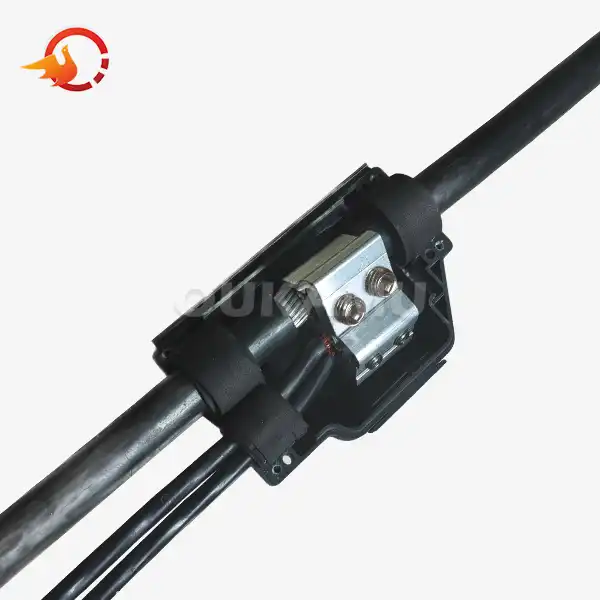
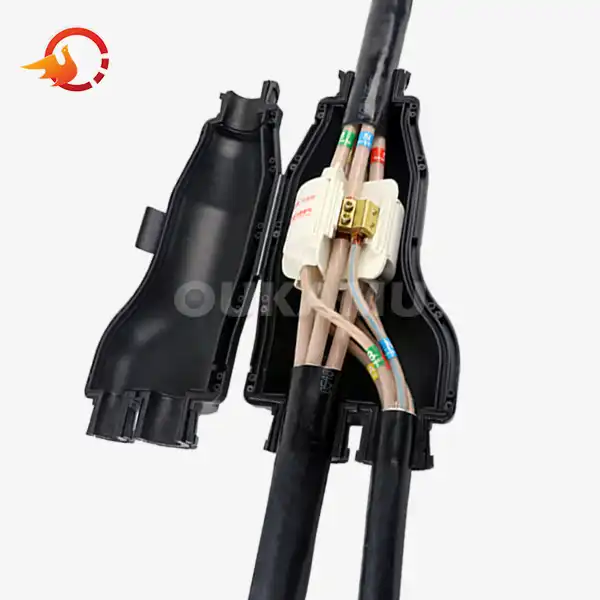
Branch Cable connectors are special places where main power lines meet with equipment or circuits. They do this without cutting off the main power source. In traditional wiring, wires have to be cut and spliced, which can lead to installation mistakes and safety risks. Branch Cable connectors, on the other hand, make secure T-connections straight onto live conductors. This method keeps the integrity of the cables while sending power to multiple ends. Because of this, they are necessary for business buildings, industrial facilities, and infrastructure projects that can't risk losing their trustworthiness.
Copper or aluminium conductors are usually used in the design, and flame-retardant insulation is wrapped around them. The insulation type is chosen based on the ampacity needs and the environment. Teams in charge of procurement must check that the conductor sizes they use are compatible. For example, the ZR-JFZ-185/35 can handle main cables from 70mm to 185mm and Branch Cables from 2.5mm to 35mm. This adaptability makes sure that the load is spread out evenly in a wide range of situations, from lighting circuits to connections for heavy machinery.
Compliance Standards That Matter to B2B Buyers
International safety approvals give buyers the quality guarantee they need to make choices about what to buy. Products that meet the requirements of GB/T 14048.7-2016 go through strict tests to make sure they are resistant to insulation, heat, and mechanical damage. These certifications lower the risk of being sued and make sure that installations meet the rules for electricity in different areas. Buyers looking for products for e-commerce sites or wholesaler networks can benefit from verified compliance paperwork that makes it easier to add products and speeds up the sales cycle.
How Branch Cables Streamline Installation Compared to Traditional Wiring
Eliminating Cable Cutting and Pre-Routing Complexity
When planning traditional wiring, it's important to get exact measurements, and electricians often have to cut main cables at set branch points. This method has several flaws: wrong measurements waste materials, cut cables can't be used again if plans change, and each splice adds a possible failure point. These problems are completely gone with modern Branch Cable connections. Installers put connectors anywhere along the main cable route without cutting the wires. They do this by using drilling technology, which keeps the electricity flowing while making branch connections.
This feature comes in handy when upgrading infrastructure because old wire paths might not line up with where new equipment is going to be placed. When building managers had to add 12 more power outlets across three floors as part of a recent commercial renovation project, these benefits were clear. If they had used the old way, they would have had to replace whole wire runs, which would have cost a lot of money in materials and labour. Instead, the team installed branch connectors in the best places along existing cables. This allowed the upgrade to be finished in two days instead of the two weeks that had been planned, saving over 60% of the material that would have been needed.
Adaptable Installation Techniques for Complex Environments
One of the most frustrating parts of electrical work is figuring out how to match up design drawings with the way the building is actually set up. On-site fabrication takes care of this problem. A lot of the time, prefabricated cables with fixed branch points can't handle unexpected obstacles like HVAC ducts, structural beams, or conduit pathways that aren't lined up right. Branch connections that are made to be installed in the field give you the freedom to deal with these problems without putting the job behind schedule.
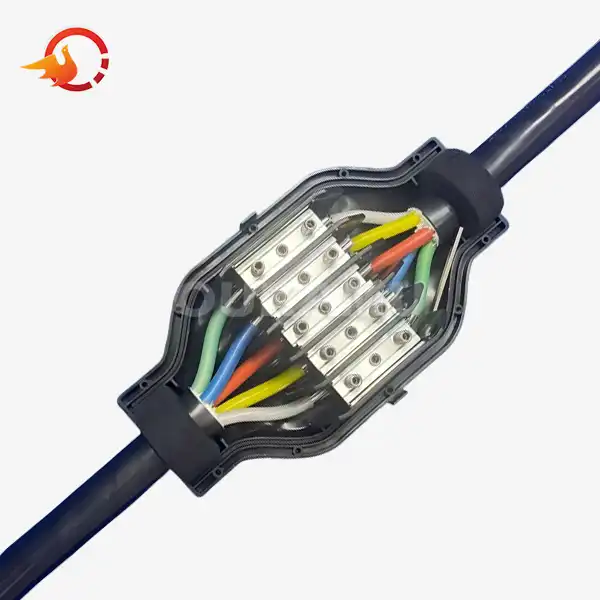
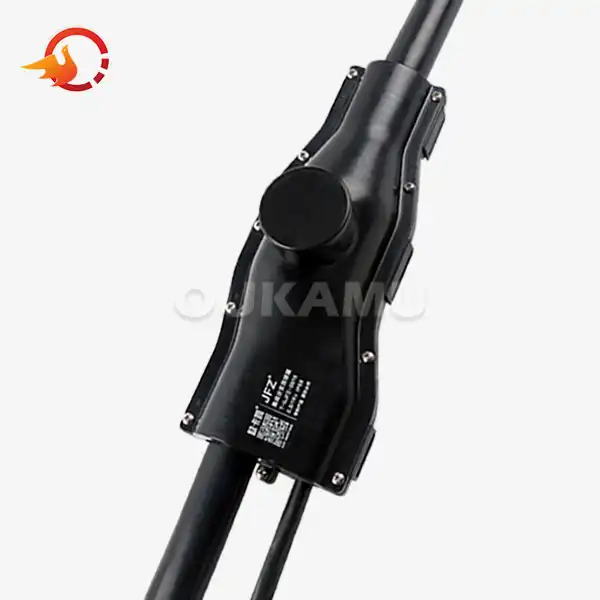
The ZR-JFZ-185/35 model is a good example of this because it has a small design that works well for both open installs and tight areas inside cable bridges. Electricians can move branches around on the fly by running main wires first and then adding connections once the final locations of equipment are set. This process makes it easier to work together with other trades that are working on the same job site at the same time and lowers the connection resistance in pipe systems.
| Installation Parameter | Traditional Splicing | Branch Cable Connector |
|---|---|---|
| Main Cable Continuity | Requires cutting | Stays together |
| Installation Time (per link) | 45-60 minutes | 15-20 minutes |
| Material Waste | 2-3 meters per branch | Zero waste |
| Reusability | Not reusable | Fully reusable |
| Certification Required | Splice certification | Connect and plug in |
Cost Efficiency of Branch Cable: Analysis and Comparison
Material Savings Through Intelligent Design
When traditional methods are used to connect two branches, they require longer cables because the wires have to meet and fit into splice casings. According to data from the industry, regular T-splices need an extra 2 to 3 meters of cable for each connection to make sure that the conductors overlap and there is enough strain relief. For projects with 30 to 50 branch points, which is common for medium-sized business buildings, this waste adds up to 60 to 150 meters of cable that doesn't need to be bought. This waste saves thousands of dollars in material costs that could have been avoided.
Branch Cable links get rid of this waste by making connections without needing extra cable length. Products like the ZR-JFZ-185/35 have an integrated design that puts all the connection parts inside a small, flame-resistant housing that doesn't need any extra space. This efficiency is appreciated by project managers because it directly affects the bottom line and reduces the need for real storage for cable supplies on building sites.
Labor Cost Analysis: Time Equals Money
One of the biggest costs that can be controlled in building budgets is electrical labour. Cutting down on the time it takes to make each connection saves money on the whole job. To do a traditional splice installation, you have to carefully prepare the ends of the conductors, remove the insulation, put on heat-shrink tubing, and wait for the adhesives to cure. When quality control checks are taken into account, this process usually takes 45 to 60 minutes per link.
These steps can be cut down to 15 to 20 minutes with modern branch connectors, which make installation easier. Electricians put the connector in place, slide the wires into terminals that have already been set up, and apply mechanical pressure to make an electrical connection. They don't need any special tools, wait for the connection to harden, or guess what to do. When the labour savings are added up over dozens of connections, they can cut the costs of electrical subcontractors by 20% to 35%. This gives contractors bidding on price-sensitive projects an edge.
Maintenance Cost Reductions Over Product Lifecycle
A city's building project makes these factors very clear. The installation team had to set up 42 branch connections all over the new transit center. Based on union electricity rates, the projected cost of labour for the old way of doing things was $12,600. By choosing Branch Cable plugs, the total cost of labour was cut by $7,800, which includes $4,800 saved on just electrical work. The buying group was persuaded by these numbers to standardise branch connector requirements for all future projects.
Branch Cable connectors save money on installation costs and continue to save money over time by reducing the need for maintenance. The insulated and sealed design keeps connections safe from things like moisture getting in, dust building up, and electrochemical corrosion that can damage regular splices. These safety features make the service life much longer, and good connections can keep their electrical integrity for decades without any maintenance.
Selecting the Best Branch Cable for Your Project Needs
Matching Technical Specifications to Application Requirements
To pick the right Branch Cable solutions, you need to carefully look at the electricity load factors and the surroundings. The rated voltage of 0.6/1kV works well for most low-voltage distribution tasks, like connecting equipment, lighting networks, and building power systems. But buyers need to make sure that the ampacity ratings of the connectors are higher than the highest loads that can be predicted while still leaving enough safety margin, which is usually 125% of the constant working current.
Environmental factors have a big effect on the choice of goods. Connectors with better waterproof seals are good for projects in places with a lot of humidity, while materials that can handle acidic atmospheres are needed for installations in chemical processing plants. Flame-retardant and fire-resistant properties are important for occupied buildings because they make sure that connections don't help fires spread, which is an important safety factor for following building codes.
| Technical Specification | ZR-JFZ-185/35 | Application Suitability |
|---|---|---|
| Main Cable Range | 70-185mm | Medium to large distribution systems |
| Branch Cable Range | 2.5-35mm | Lighting, outlets, equipment circuits |
| Rated Voltage | 0.6/1kV | Standard commercial/industrial |
| Insulation Type | Flame-retardant, fire-resistant | High-safety requirement environments |
| Temperature Rating | -40°C to +90°C | Indoor and outdoor installations |
| Reusability | Fully reusable | Facilities requiring frequent modifications |
Evaluating Manufacturer Credentials and Support Capabilities
Branch Cable connectors are only as reliable as the design of the product, the quality of the production, and the system for supporting the provider. Buyers should give more weight to companies that have a history of being experts in cable connection technology. For example, Oukamu has been a leader in Branch Cable solutions for 20 years, which shows that they have the knowledge to make reliable products.
Documentation for certification shows that quality standards have been met. Products made to international standards are put through a lot of tests to make sure they work well with electricity, are strong, and can stand up to the elements. When suppliers offer detailed technical paperwork like installation guides and upkeep routines, they help procurement teams make smart choices and give installation workers useful tools.
Strategic Sourcing Considerations for B2B Procurement
Reliability in lead times is very important for planning projects. Distributors who keep enough inventory on hand keep building projects from being held up by missing parts, and makers who let you choose your own order numbers can handle both big projects and smaller maintenance needs. It's helpful for wholesalers who are trying to keep track of inventory costs across various product lines to be able to buy small to medium batches without having to pay more.
After-sales service is what sets great providers apart from just-good ones. The total cost of ownership includes things like technical support during installation, warranty coverage for broken parts, and helpful customer service. When procurement teams are building long-term relationships with suppliers, they should look at these support skills just as carefully as they look at product specs and prices.
Best Practices for Branch Cable Maintenance and Safety
Routine Inspection Protocols to Ensure Long-Term Reliability
Even the strongest Branch Cable connectors should be checked every so often to make sure they keep working well. Regular inspections should be set up by maintenance teams—usually once a year in normal conditions and every three months in harsh ones—so that problems can be found before they cause the system to fail. Visual inspections look for damage, signs of corrosion, and worn-out insulation. Thermal imaging, on the other hand, finds unusual heat production that could mean connections are loose or the system is overloaded.
Keeping records of what was found during inspections makes maintenance accounts that are useful for planning preventative maintenance. Keeping track of connection temperatures, visual condition ratings, and any repairs that were made builds a knowledge base that helps facilities managers figure out the best times to check things and when to replace parts. This proactive method cuts down on unexpected downtime and makes the system last longer overall.
Safety Compliance During Installation and Operation
Following electricity safety rules saves both the people doing the work and the people who live or work in the building. When lockout/tagout procedures are followed correctly, the power is turned off during connector installation. This stops arc flashes that can seriously hurt people. Modern branch connectors let you connect things without cutting the main wires, but sensible workers always make sure there is no power before they start working.
The right personal protective equipment to use depends on the voltage and the conditions of the job. When working near live wires, electricians should at least wear insulated gloves, safety glasses, and clothing that can withstand arcs. When installing something, it's important to follow the manufacturer's instructions to the letter. If you don't, changing the pressure values or ways of preparing the conductors can damage the link and pose safety risks.
Real-World Performance Data from Industrial Applications
A project to put solar panels shows how reliable good Branch Cable connections are over time. The facility set up 87 branch connections across its 2.5-megawatt array. These connectors were exposed to UV light, extreme temperature changes, and mechanical vibrations from running equipment. After five years of constant service, thermal imaging surveys showed that all connections kept their stable working temperatures within 2°C of neighbouring cable sections. This showed that the electrical integrity did not change over time.
In the same way, an auto factory that used branch connectors for robotic welding equipment had no connection failures over three years, even though the factory had a harsh electromagnetic environment and the production line was reconfigured a lot. Maintenance records showed that reused connectors were moved around four times on average during this time. This proved that adaptable connection technology saves money in industry settings that are always changing.
Conclusion
Branch Cable connectors are a big step forward in electrical distribution technology. They meet the two important needs of saving time and money that are essential for successful construction projects. Not having to cut cables, along with the ability to place it in different ways on-site and a design that can be used again and again, saves money on materials, labour, and project timelines.
These benefits are especially helpful for business-to-business buyers who have to handle complicated purchasing needs across many projects or lines of delivery. As productivity and sustainability continue to be emphasised in the construction industry, Branch Cable solutions such as the ZR-JFZ-185/35 offer tested performance that keeps up with changing market needs while meeting the safety standards and dependability needs of procurement professionals.
FAQ
What distinguishes branch cables from feeder cables in distribution systems?
Feeder cables bring power from main distribution panels to sub-panels or junction points in between. They can usually handle higher current loads over longer distances. Branch Cables, which can handle lighter loads over shorter distances, connect these distribution spots to final ends like equipment or plugs. Branch Cable Connectors allow these endpoint connections to happen without stopping the main distribution lines. This gives installers more options than with regular feeder cable routing.
How do branch cable connectors enable faster installations?
It saves time because there is no need to cut cables, less work needs to be done to prepare splices, and placement can be changed on-site. Using the old ways means getting exact measurements, stripping the conductors, putting together the splices, and waiting for them to cure, which usually takes 45 to 60 minutes per connection. Branch connections use piercing or mechanical ends to make electrical contact in 15 to 20 minutes without the need for special tools or long wait times. This speeds up the job and lowers the cost of labour.
Where can procurement teams source certified branch cable connector suppliers?
The most safe places to get supplies are from well-known companies that specialise in cable link technology. Companies like Oukamu, which has been making Branch Cable connectors for 20 years, offer goods that meet international safety standards and offer professional support to help with choosing the right specifications and installation. Before starting to do business with a seller, distributors and e-commerce sites should check their certifications and ask for proof that they meet GB/T 14048.7-2016 or similar regional standards.
Partner with Oukamu for Superior Branch Cable Solutions
Oukamu Electric has everything that electrical distributors and project procurement officers need in a reliable Branch Cable manufacturer. Our 20-year focus on cable connection technology has led to the creation of the ZR-JFZ-185/35 and similar models that constantly meet the needs of B2B buyers for faster installations and lower costs. These connectors are fully compliant with GB/T 14048.7-2016 safety standards and can accommodate main cables from 70 mm to 185 mm and Branch Cables from 2.5 mm to 35 mm.
Flame-resistant design that can be used more than once saves 2 to 3 meters of wire per link and cuts installation time by 60% compared to old ways of doing things. Get in touch with our purchasing experts at info@okmbranchcable.com to talk about bulk prices, technical requirements, or unique solutions for your network. You can look at our whole product line at okmbranchcable.com and learn how working with a skilled Branch Cable provider can help you compete in today's tough electrical market.
References
1. National Electrical Manufacturers Association. (2021). Standards for Low-Voltage Distribution Equipment: Branch Circuit Components. NEMA Publications.
2. Institute of Electrical and Electronics Engineers. (2020). IEEE Guide for Field Testing and Evaluation of the Insulation of Low-Voltage Cable Connections. IEEE Standards Association.
3. Chen, L., & Rodriguez, M. (2022). "Cost-Benefit Analysis of Advanced Cable Connection Technologies in Commercial Construction." Journal of Construction Engineering and Management, 148(7), 04022045.
4. International Electrotechnical Commission. (2019). IEC 61238-1: Compression and Mechanical Connectors for Power Cables – Part 1: Test Methods and Requirements. IEC Central Office.
5. Building Services Research and Information Association. (2023). Best Practice Guide: Electrical Distribution Systems in Modern Commercial Buildings. BSRIA Technical Reports.
6. American Society of Safety Professionals. (2021). Electrical Safety Handbook: Installation and Maintenance of Power Distribution Systems. ASSP Educational Publications.