

Best cable joint connectors for outdoor use






 2026-07-30 15:21:17
View:389
2026-07-30 15:21:17
View:389Professionals need to find the best cable joint connectors for outdoor use that can handle the hard conditions of the climate while still providing reliable electrical performance. Cable Jointing Cable Joint Connector systems are important parts of outdoor electrical setups because they make branch connections safe without affecting the integrity of the cables. Modern branch cable joints have come a long way. They now come in waterproof and flame-resistant styles that remove the need to cut main wires. These new connectors allow for flexible installation placement, cut down on material waste by 2 to 3 meters per connection point, and meet international safety standards such as GB/T 14048.7-2016. This makes them essential for utility, telecom, and industrial projects that need long-lasting outdoor cable management solutions.

Understanding Outdoor Cable Joint Connectors
Water, changes in weather, UV light, and mechanical stress are all problems that outdoor wire connections have to deal with all the time. When procurement workers know the basic differences between connector types, they can make choices that protect the investments they've made in electrical infrastructure.
What Makes Outdoor Cable Connectors Different
Outdoor Cable Jointing Cable Joint Connector plugs are very different from easy methods of joining cables together. Splicing is the direct joining of wires by mechanical compression or fusion. Cable joint connectors, on the other hand, protect the connection point from the outside world. These special parts combine insulation layers, sealing materials, and pressure release systems into cohesive units that are made to be left outside for a long time.
This difference is important because outdoor settings have factors that indoor settings never have to deal with. Electrical shorts can happen when rain gets into them, UV rays damage materials that aren't protected, and changes in temperature throughout the year cause parts that aren't properly protected to come loose. These problems can be solved by high-quality outdoor plugs that have multiple layers of safety.
Core Types of Outdoor Cable Joint Systems at Their Core
There are a number of different connection technologies on the market, and each one is best for a certain type of application. Heat shrink connections use tubes made of thermoplastic that get smaller when heated. This makes a tight seal around the wire joints. It works especially well when there isn't much room, but you need to use heat application tools and be careful when installing them.
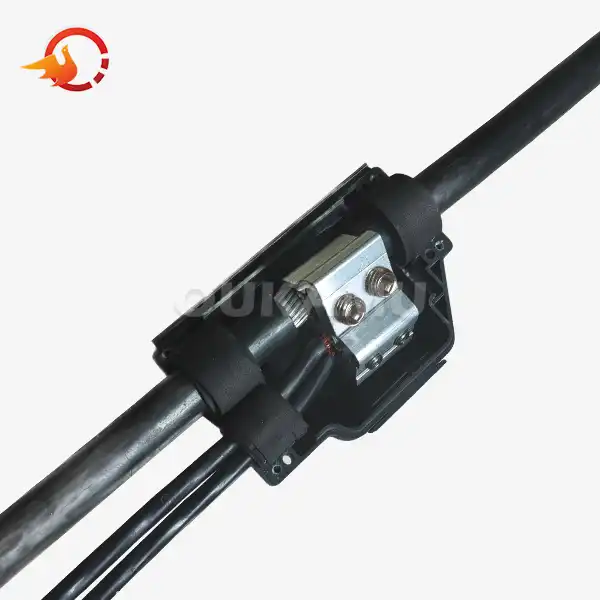
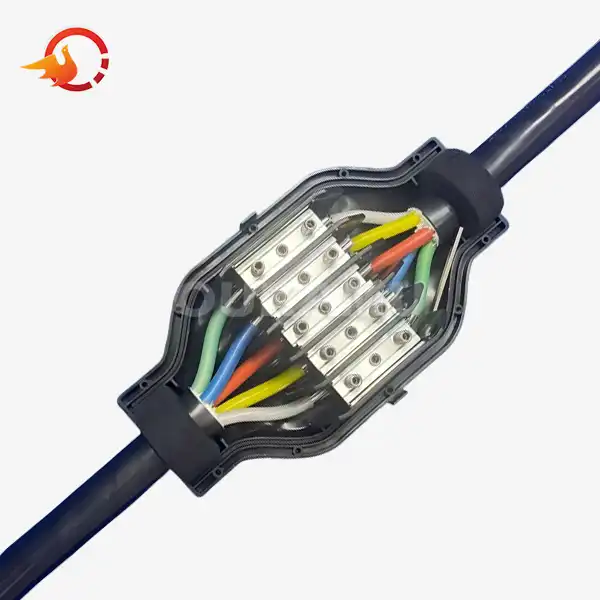
As an option to cold shrink, pre-expanded elastomeric covers are attached to cores that can be taken out. Installers don't need any tools or heat sources to get the sleeve to shrink around the wire link; they just take out the core. This method works great in dangerous places where an open flame or electricity warmth could be dangerous.Branch cable joints are a special type of connector that can be used to make connections along major cable runs without cutting the primary wire. This method is shown by Xi'an Oukamu's integrated T-connector technology, which lets techs set up branch lines anywhere along the main cable route. Since presenting this new idea in 2015, Oukamu has worked on improving the technology by focusing on branch cable connectivity options for 20 years.
Essential Protection Features
Outdoor connections that work well must be resistant to all kinds of weather. Waterproofing is the most important thing that needs to be done. This is usually done with multiple covering layers that keep water out even when submerged for a long time. Good plugs keep their IP67 or IP68 grades, which means they are safe from short-term immersion.
Resistance to flames and fire keeps fires from starting by mistake and from spreading along cable lines. Materials that meet UL94 V-0 standards quickly put out fires on their own, which limits harm during electrical problems. Anti-aging chemicals stop UV damage, and anti-electrochemical rust solutions stop galvanic reactions between metals that are not the same when they are wet.Temperature stability makes sure that links stay solid at very high and very low temperatures. Industrial-grade plugs usually work well from -40°C to +90°C, so they can be used in both cold places like the Arctic and hot places like the desert without breaking down or losing their seals.
How to Select the Best Cable Joint Connector for Outdoor Applications
To pick the right outdoor wire connectors, you need to carefully compare the technical specs to the project needs. Choosing what to buy affects not only the costs of installation, but also the costs of dependability and upkeep in the long run.
Evaluating Technical Specifications
The voltage level is what determines which connection to use. The ZR-JFZ-70/35 model is a good example of how to match specifications correctly. Its 0.6/1kV grade makes it ideal for low-voltage distribution tasks. When you match the voltage capacity of the connection to the rating of the wire and leave enough room for error, you keep the insulation from breaking down under regular conditions and short-term overvoltages.Cable size compatibility decides how well it fits and how much power it can carry.
The ZR-JFZ-70/35 can hold main wires with a diameter of 25 mm to 70 mm and branch cables with a diameter of 2.5 mm to 35 mm. This range includes normal distribution situations in factories, business buildings, and public buildings. Checking for dimensional fit stops installation problems and makes sure that low-resistance links have the right amount of contact pressure.Current capacity is directly related to the size of the conductor, but it also relies on the temperature of the environment, how the conductor is installed, and how well it dissipates heat. Good makers give derating curves that show how ambient temps change the loads that are allowed. This lets you figure out the exact capacity for outdoor setups where sun heating can make the temperatures much higher.
Certification and Compliance Requirements
International standards set concrete standards for the safety and efficiency of connectors. IEC 61238 sets standards for checking compression and mechanical connectors on power lines. These standards include requirements for contact resistance, temperature rise, and mechanical strength. Products that meet these guidelines can be used in skilled electrical setups.In China, the GB/T 14048.7-2016 standard sets the rules for low-voltage switchgear and control gear devices. It also specifies the requirements for branch circuit connections.
By following this standard, Oukamu proves that their goods not only meet strict domestic standards but also often go above and beyond foreign standards. UL listing adds to the credibility of goods coming into North American markets, but buying professionals should check the region's unique standards.In addition to basic safety certifications, environmental certifications like RoHS compliance show that dangerous chemicals are limited, which is becoming more and more important as environmental laws around the world become stricter. Products that meet these standards make it easier for dealers and end users in many areas to follow the rules.
Cost Analysis Beyond Purchase Price
The total cost of ownership is much higher than the price of the connectors themselves. The cost of installation work is often the biggest part of cable jointing jobs. Labor costs are much higher for connectors that need special tools, a lot of surface preparation, or long drying times than for systems that can be installed quickly and without tools. The Oukamu branch connection method is an example of design that minimizes costs. These connectors save 2-3 meters of expensive wire per connecting point because they don't need to be cut. For jobs with hundreds of branch links, saving money on materials can cover the higher cost of connectors.
The reusable design also lets you move or rearrange the cables without having to replace the connections. This gives you more options than premade cable assemblies.Long-term prices are greatly affected by the need for maintenance. Connectors that let water in need to be inspected and possibly replaced on a regular basis, which costs money over time. If you install quality outdoor connections correctly, they should not need much upkeep over many years of use, which lowers the overall cost of ownership even if the initial investment is higher.
Step-by-Step Guide to the Outdoor Cable Jointing Process
Whether outdoor cable joints work as well as they were meant to depends on how they were installed. Knowing the right steps to take helps both the installation workers and the buying professionals who are figuring out how hard the installation is.
Pre-Installation Preparation
Before touching any cables, safety measures must be taken. Electrical shock risks can be avoided by turning off circuits and making sure there is no power by testing them correctly. Voltages caused by parallel circuits can be dangerous, even in brand-new setups. Insulated gloves, safety glasses, and arc-rated clothes are all important pieces of personal protective equipment that you should always have on hand in case of an unexpected energization or arc flash event.
The environmental evaluation finds things that might affect the success of the installation. High humidity or rain means that the joints need to be protected from the weather so that they don't get contaminated with wetness. Extreme temperatures may mean that materials need to be heated or cooled to within certain installation temperature ranges. Wind can make it harder to move light parts, and direct sunshine can heat-shrink materials too much before they can be put in the right place.
As part of getting cables ready for use, the insulation surfaces need to be cleaned to get rid of dirt, oils, and rust that could damage the seals or electrical contact. To get to the clean conductor surfaces, the semiconductor layers must be carefully removed without damaging the insulation below. Precision in preparation is directly linked to joint reliability, which makes this step important even though it seems simple.
Installation Techniques for Different Connector Types
To install heat shrink, you need to place the heat-shrink tube over the part that has already been prepared and then use a gas torch or electric heat gun to apply even heat. Technicians need to be careful not to overheat, which can damage materials, or underheat, which can cause seal gaps. When done right, the coverage is smooth and wrinkle-free, and there is some mastic sealant bleed-out at the tube ends to show that a full seal was formed.
Care must be taken when removing the core from a cold shrink device. Installers put the pre-expanded sleeve in place and then slowly pull back on the support core while making sure the sleeve shrinks evenly around the joint. If you jerk quickly, the rubber can tear, but if you hesitate, it may only partially shrink, which can leave holes. When the fitting goes well, there is close touch across the whole joint area and no air pockets are left behind.
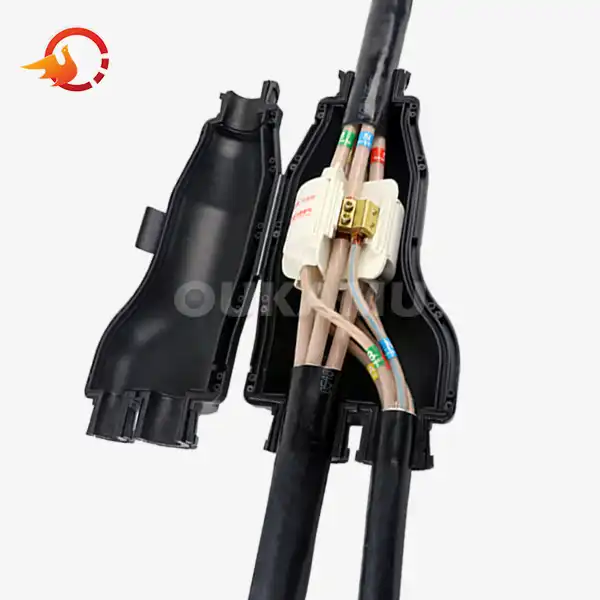
The process of installing branch connectors is made a lot easier by Oukamu's integrated T-connector design. The system lets you join at any main cable point, without having to cut or do anything else besides clean. Installers only need to put the connector body in place, lock the ends of the branch cables, and use the built-in sealing device. This method cuts down on installation time and gets rid of common mistakes that happen when main wires are cut and reconnected.
Troubleshooting and Quality Verification
Post-installation testing makes sure the joints are solid before they are turned on. A visual review makes sure that the seal covers the whole area, that the parts are lined up correctly, and that there are no damage or contamination. Mechanical testing proves that the connection is safe and can withstand vibrations and pulling forces. During electrical testing, contact resistance is measured. This value should stay below certain limits so that the component doesn't get too hot when it's under load.Using thermal imaging during the initial energization process can find problems that can't be seen with normal tests.
Hot spots show links with a lot of resistance that need instant attention before they fail completely. With this non-invasive method, you can quickly check a lot of joints and focus on areas that look fishy.Some common ways things fail are letting water in because the seal isn't completely sealed, burning because the contact pressure isn't high enough, and mechanical damage because there isn't enough strain relief. When techs know these trends, they can spot warning signs during installation and take steps to fix problems before they get too bad. Statistical quality control is helpful for projects with a lot of joints because it keeps track of defect rates and failure types to find widespread problems that need process changes.
Comparative Overview of Top Cable Jointing Kits and Connectors on the Market
There are many different Cable Jointing Cable Joint Connector options on the global market. Each one has its own features that make it better for certain uses and buying tactics.
Global Brand Analysis
Well-known foreign brands like 3M, ABB, and Siemens have wide ranges of products backed by a lot of study and global networks for distributing them. These companies make products that can be used to connect cables in almost any situation, from low-voltage branch connections to high-voltage transmission joints. Their goods usually cost a lot, but they are reliable and come with a lot of technical help.Regional experts like Oukamu focus on certain types of products and come up with more advanced solutions that often beat out basic options in those areas. Because Oukamu has been making branch cable connections for 20 years, they have come up with new ideas like the combined T-connector, which set new standards for how on-site cable branching can work.
This skill was shown on a large scale in the JinRentong highway project, where nearly 20,000 Oukamu cable joints made sure that the important traffic route between Zunyi and Bijie was always connected.Procurement professionals must weigh breadth versus depth when selecting suppliers. Single-source buying through thorough providers may be helpful for projects that need a variety of connector types across a range of voltages. Installations that focus on certain uses may get better results from specialized sellers who offer better solutions and more application knowledge.
Performance Differentiation
The speed of installation changes a lot between types of connectors. Cold-shrink systems can be used instead of traditional heat-shrink systems, which take 15 to 30 minutes per joint. Oukamu's branch connectors cut down on wait times even more by not requiring main cables to be cut or prepared. This means that links can be made in as little as 3–5 minutes. When working on projects with hundreds of joints, these differences in time mean big differences in the cost of labor.
For decent outdoor connectors that are placed correctly, you should expect them to last 20 to 30 years. Accelerated aging tests mimic years of contact to the world and show how things might break down. Products that meet IP68 grades and show stable performance through temperature cycling, UV exposure, and salt spray tests are good for tough outdoor settings.
Customization options are important, especially for setups that aren't used very often. Standard catalog items work well for most uses, but designs may need to be changed if there are special wire types, strange weather conditions, or technical limitations. Suppliers who can help with engineering and make things to order give you a lot of options, but they usually have minimum order amounts and long wait times.
Pricing Considerations for Bulk Orders
When you buy in bulk, you save a lot of money, but the exact discount structures change from seller to provider. For orders of 100 units or more, international names usually offer tiered prices, with further discounts at 500 and 1,000 units or more. Regional producers may be able to get more open terms, especially for distributors who want to build long-term ties.Procurement workers should look at more than just unit prices. They should also look at payment terms, shipping costs, and inventory risk.
Vendor-managed inventory programs or consignment agreements can lower the amount of operating capital needed while still making sure that products are available. But these setups often have higher costs per unit, so the total cost needs to be carefully looked at.Total purchase costs are affected by warranty claims and mistakes in the field, which happen when quality isn't consistent across production runs. Suppliers with strong quality management systems and statistical process controls give more uniform products, which cuts down on costs like sorting and field replacement that eat away at the savings that seemed to come from low prices at first.
Ensuring Long-Term Reliability: Installation Best Practices and Safety Tips
To get the most out of outdoor Cable Jointing Cable Joint Connector installations, you need to pay attention to protecting the environment and installing them in a way that goes beyond what the maker says.
Environmental Protection Strategies
Over time, UV light breaks down many of the polymers and elastomers that are used in wire connections. If you put connectors in direct sunlight, you should use extra UV-protective overwraps or place them in cases that are shaded. Even materials that are immune to UV light break down over time when exposed to it over and over again; extra protection greatly increases their useful life.
Moisture is still the biggest natural threat to cable joints outside. Quality joints close well at first, but over time mechanical shocks, thermal cycles, and material aging can weaken seals. When you can, install joints with holes that face downwards to keep water from building up. Adding extra weather screens gives extra protection against moisture in places where dependability is important.
When temperatures change, stress cycles happen that cause things to expand and contract. Over time, these stress cycles can break hard seals and loosen mechanical connections. Allowing a little mechanical freedom during installation keeps stress from building up, and retorquing mechanical connections as part of regular maintenance fixes any problems that arise.
Safety Protocols During Installation
Electrical safety goes beyond the initial lockout-tagout steps. Accidents can be avoided during joint assembly by keeping a safe distance from live wires, using shielded tools, and setting up a buddy system for supervision. Arc flash hazard analysis figures out the right amount of personal protective equipment to use, especially when working on live circuits during repair tasks.Cleaning fluids, glue, and curing agents that are used to put joints together can be dangerous because they contain chemicals.
Solvent vapors don't build up when there is enough air, and skin protection keeps reacting compounds from making skin sensitive or burning it. Material Safety Data Sheets give detailed instructions on how to handle materials, which installation teams should read over before they start working.Some mechanical risks are working above elevated cable routes, putting cables under stress during installation, and entering a tight area to make joints underground. When rigging is done right, cables don't move, which could hurt workers or break equipment. Fall safety and limited space permits make it safe to get to hard-to-reach work areas.
Selecting Appropriate Insulation Methods
There are different ways to insulate that work best in different environments and for different performance needs. Heat-shrink systems are great for setups with a lot of stuff because they don't absorb water well and have small end sizes. The need for heat application means it can't be used in places where there is a risk of explosion or where an open flame could start a fire. Alternatives to cold shrink get rid of sources of fire while still closing as well. The pre-expanded design makes it bigger at first, which could make fitting harder in small areas. These methods work great in chemical plants, factories, and other places where getting a permit to do hot work is hard.For important uses, resin-filled systems offer the best electrical insulation and mechanical security.
Because it cures for a while, installation takes longer, and because it's solid, it can't be taken apart for inspection or change. These traits work well for permanent sites where the highest level of stability justifies less adaptability.Branch connecting systems, like Oukamu's combined design, keep a lot of things in check. The small shape fits normal wire trays and conduit, and the fact that it doesn't need any tools to be installed takes away any worries about hot work. Reusability gives systems that need to be reconfigured often or where initial layouts may need to be changed during commissioning a level of freedom that has never been seen before.
Conclusion
To choose the best outdoor cable joint connectors, you need to weigh the technical performance, the ease of installation, and the total cost of ownership. Quality fittings that are waterproof, resistant to weather damage, and have a long service life protect infrastructure investments and make upkeep easier. Modern branch cable joint technology, especially combined T-connector designs, changes the economics of installation by getting rid of the need to cut main cables, cutting down on waste, and letting workers move cables around more easily on-site.
When a product meets foreign standards like GB/T 14048.7-2016, you can be sure that it is safe and will work well. It is more important for procurement professionals to look at a supplier's application knowledge, quality stability, and support skills than just the price they offer at the start. This is because the success of a project depends on its lifecycle costs.
FAQ
What differentiates cable jointing from cable splicing?
Cable splicing is the process of joining conductors directly together using mechanical connections or fusion methods. This creates electrical continuity without protecting the conductors from the environment. Cable Jointing Cable Joint Connector is the whole process of connecting conductors and providing full insulation, sealing, and mechanical safety that is ideal for long-term installations. Outdoor wire joints need to be waterproof, resistant to UV light, and long-lasting, which can't be done with easy splicing.
Can wire connections that are made for indoor use be used outside?
Indoor links don't have the weather protection needed for stability outside. When placed outside, moisture, UV rays, and extreme temperatures quickly damage goods that are meant to be used indoors. Use outside, even for a short time, can cause it to fail early. Always make sure that the plugs you buy are specifically rated for use outside and have the right IP rating, usually IP67 or IP68 for harsh settings.
How long does typical cable joint installation require?
Installation time depends on the type of connection and the size of the wire. Cold-shrink joints can be made in 5 to 10 minutes, compared to 15 to 30 minutes for traditional heat-shrink joints. Modern branch connectors, such as Oukamu's integrated T-connector system, make links in three to five minutes by not requiring the main wire to be prepared first. When planning project timelines, it's important to think about how the weather and crew experience might affect how much work gets done in the field.
Partner with Oukamu for Superior Cable Jointing Solutions
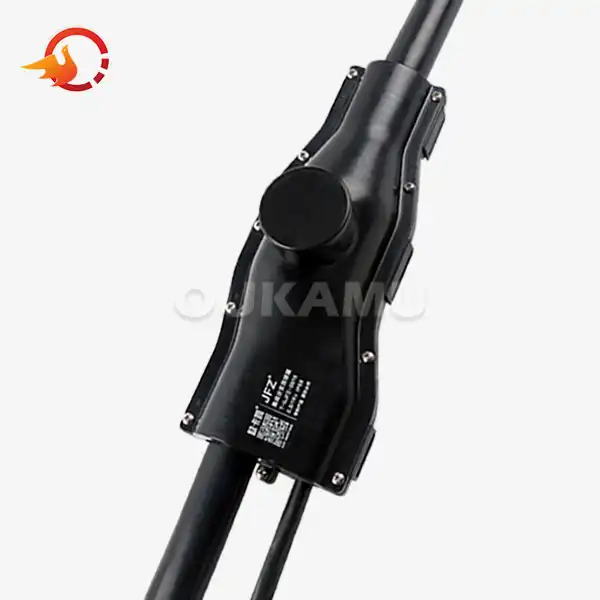
Xi'an Oukamu Electric Co., Ltd. delivers innovative Cable Jointing Cable Joint Connector technology refined through 20 years of specialized focus on branch cable connections. Our ZR-JFZ-70/35 model exemplifies engineering excellence, accommodating main cables 25-70mm and branch cables 2.5-35mm with 0.6/1kV rating, complete insulation, flame retardancy, and waterproof protection. The integrated T-connector design eliminates main cable cutting, saves 2-3 meters per connection, and enables flexible positioning anywhere along cable routes.
Compliance with GB/T 14048.7-2016 confirms rigorous safety standards, while reusable construction reduces lifecycle costs. Whether you're an electrical product distributor, project procurement officer, or e-commerce manager seeking reliable cable branch connector suppliers, Oukamu provides the technical expertise and product quality your projects demand. Contact our team at info@okmbranchcable.com to discuss your specific requirements and discover how our solutions optimize your cable infrastructure investments.
References
1. International Electrotechnical Commission. (2018). Compression and Mechanical Connectors for Power Cable Conductors - IEC 61238 Series Standards. Geneva: IEC Publications.
2. National Standardization Administration of China. (2016). Low-voltage Switchgear and Controlgear - Part 7: Ancillary Equipment - GB/T 14048.7-2016. Beijing: Standards Press of China.
3. Thue, W.A. (2011). Electrical Power Cable Engineering (3rd ed.). Boca Raton: CRC Press.
4. Electric Power Research Institute. (2019). Underground Transmission Systems Reference Book. Palo Alto: EPRI.
5. Hernández-Guiteras, J., et al. (2020). "Environmental Aging Effects on Polymeric Insulation Materials in Outdoor Cable Accessories." IEEE Transactions on Dielectrics and Electrical Insulation, 27(3), 892-899.
6. Association of Edison Illuminating Companies. (2017). Guide for Field Testing of Shielded Power Cable Systems Using Very Low Frequency (VLF). Birmingham: AEIC.