

Where to Buy D-JFZ-300/50 Single-Core Cable Splitters from a Supplier






 2026-11-25 11:55:49
View:389
The single-core cable splitter – D-JFZ-300/50 can be purchased directly from the manufacturer or from a reputable retailer who offers a datasheet, a dimensional drawing, and written confirmation that it will work with your cable. I think you should start with the manufacturer. This model joins 6–50 mm² branch cables to 240–300 mm³ main cables at 0.6/1 kV, and the wrong size can't be fixed on the spot. A company called Xi'an Oukamu Electric Co., Ltd. designs, makes, and sells cable branch connectors. First check the documents, then look at the prices and lead times. I'll talk about what to check, how to compare suppliers, and what to put in a request for a quote below.
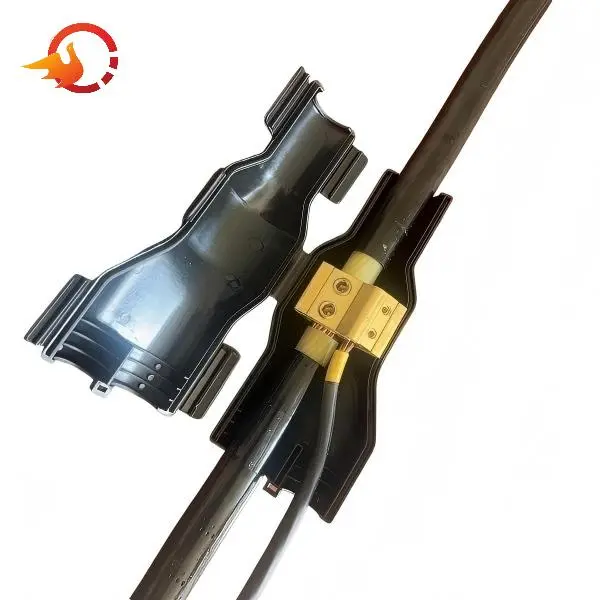
D-JFZ-300/50 Specifications and Where It Fits
What a Single-Core Cable Splitter Does?
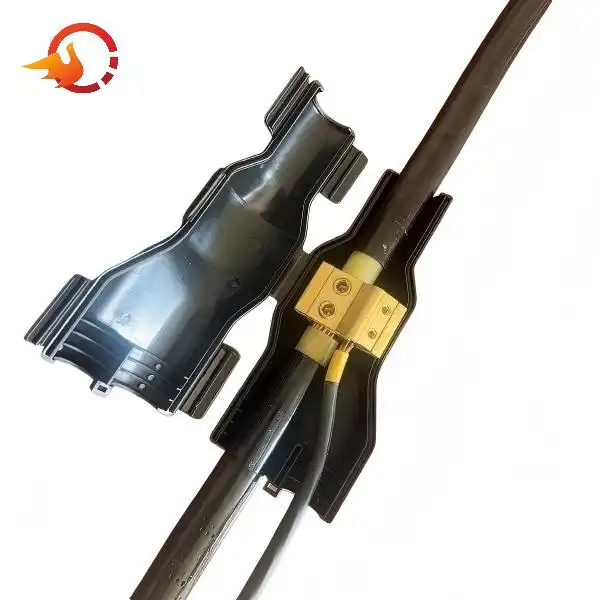
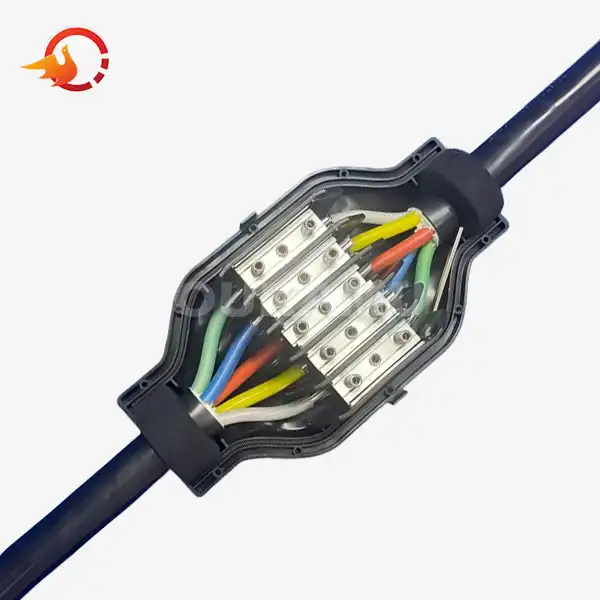
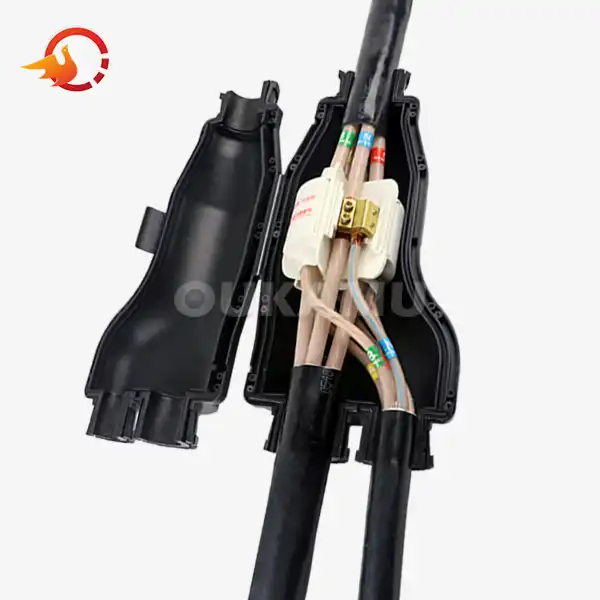
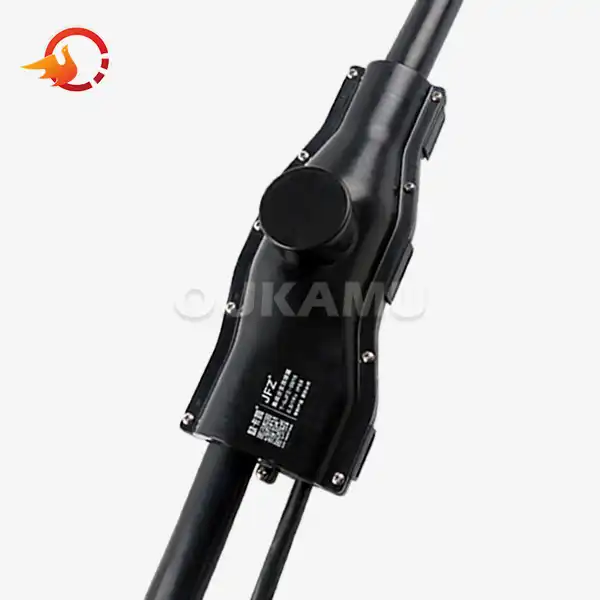
The main cable doesn't get cut when a single-core cable splitter makes a branch from it. In a normal setup, an electrician cuts the main run, adds a junction box, and sets aside extra cable length to connect the two ends. The main conductor is not cut when a branch connector is used, so the line stays electrically connected. The D-JFZ-300/50 has both a connection and insulation built into one body, so I don't have to use separate insulation pieces at the branch point. When you connect two ends of a cable, that's all a straight joint does. This thing does something else. You can stop a continuous run with a tap from anywhere on the site. Still, project owners may ask for test evidence, which is something I'll talk about next.
Core Specifications of the D-JFZ-300/50
Now let me show you the checked parameters I use to check this model. The D-JFZ-300/50 is part of the D-JFZ series, which has 17 models that cover main cables 10–630 mm² and branch cables 6–400 mm². It works with the 240–300 mm² main cable group and has branches from 6 to 50 mm². In the table, you can see the numbers from the product data.
| Parameter | Specification |
|---|---|
| Model | D-JFZ-300/50 |
| Main cable | 240–300 mm² |
| Branch cable | 6–50 mm² |
| Rated voltage | 0.6/1 kV |
| Standard | GB/T 14048.7-2016 |
| Structure | Integrated connection and insulation |
| Protection | Insulated, flame retardant, fire resistant, waterproof, dustproof, anti-aging |
| Operating temperature | -40 to 85 °C |
| Design life | 30+ years |
| Main cable saved | 2–3 m per connection |
Still, I think you should ask for the test record for each figure before giving your approval. This device is also rated at 0.6/1 kV, which means it works with low voltage and not medium or high voltage.
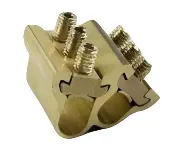
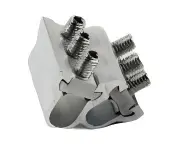
Typical Applications and US Sizing Notes
Factory power trunk lines, data center power feeders, high-rise riser shafts, and general building and infrastructure distribution are all common uses. The main cables are all very long and have a lot of branch points. There isn't much room in the cable trays for these cables for single-core cable splitter – D-JFZ-300/50. In the US, conductors are usually shown in AWG or kcmil, but this model shows them in square millimeters. An 1/0 AWG wire is about 53.5 mm², which is just above the 50 mm² branch limit. A 500 kcmil wire is about 253 mm². First screening is the only thing those conversions help with. It depends on the type of conductor, the thickness of the insulation, and the outer diameter. That's why I ask suppliers to confirm compatibility in writing by comparing the actual cable datasheet.
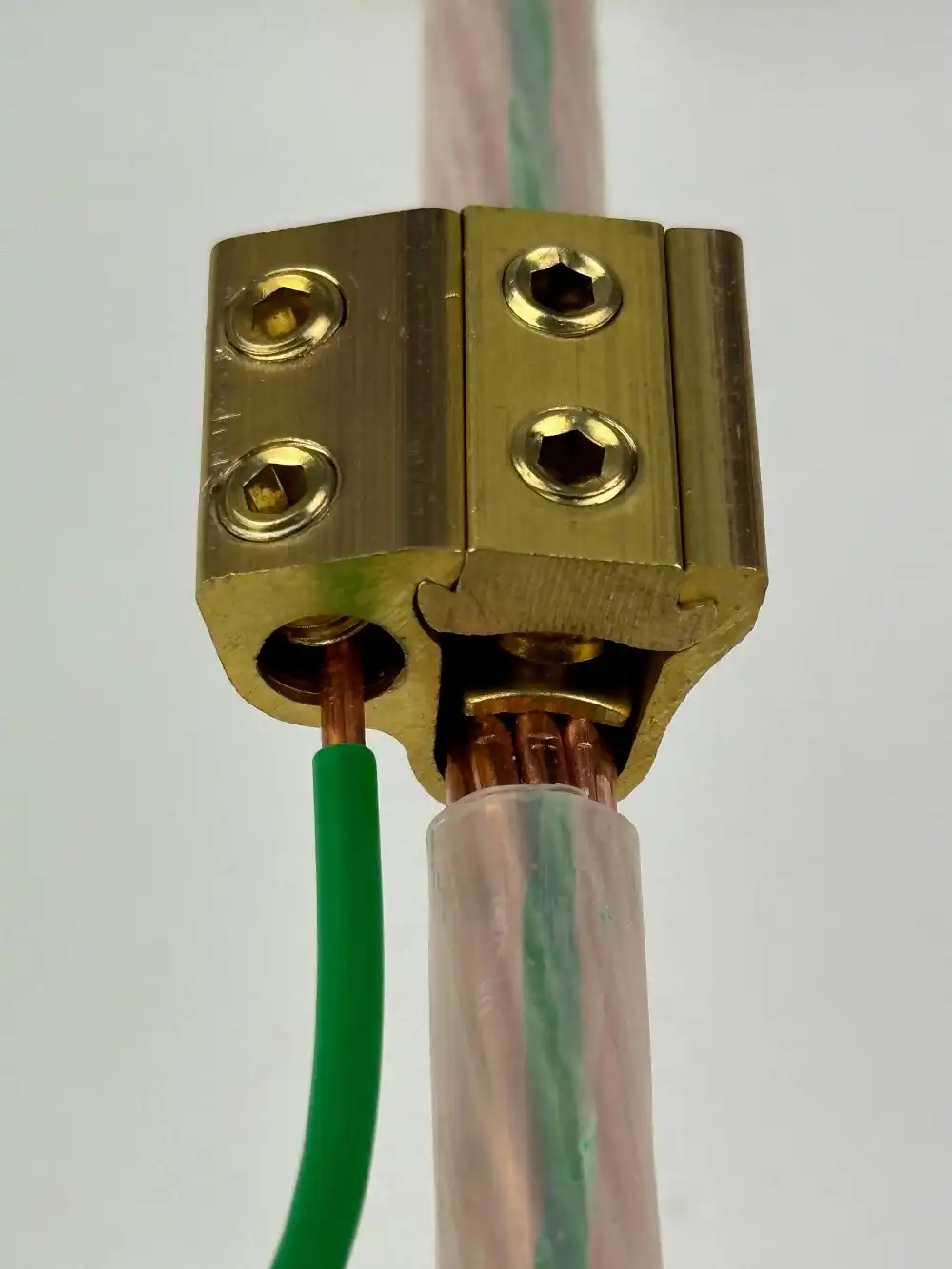

How to Select the Right Single-Core Cable Splitter
Match Cable Size and Laying Method
Do not start with the catalog, but with the cables. Write down the outer diameter, the conductor material, the insulation type, the main cable cross-section, and the branch cable cross-section. The D-JFZ-300/50 can handle mains that are 240 to 300 mm² and branches that are 6 to 50 mm². This means that a 185 mm² main is not in its range. Next, write down whether the single-core cables are laid flat or in a trefoil shape, which is made up of three triangles. The body of the connector has to fit snugly against that set-up inside the tray. Ask for a drawing with measurements, and check the space between the phases and the tray wall. For three-phase feeders, each branch point should have one splitter for each phase.
Compare Installation Time, Cable Use, and Space
Using data from suppliers, the table below shows how this branch connector stacks up against the old cut-and-box method.
| Item | Traditional method | D-JFZ-300/50 |
|---|---|---|
| Main cable cutting | Required | Not required |
| Reserved cable length | Needed | Not needed |
| Main cable per branch point | Extra length used | Saves 2–3 m |
| Installation time per point | 2–3 hours | Within 30 minutes |
This is not a field report, just a simple calculation. 200–300 m of main cable are saved for every 100 branch points, which is 2–3 m per point. Installation work goes down from 200 to 300 hours to about 50 hours at the times given. Not using the junction box also makes room for the tray and shaft, which is important in risers that are already full.
Check Documents and Certification
People who own projects often wonder if a main cable that hasn't been cut will still be strong and able to carry current. A datasheet by itself doesn't usually answer that question. To get third-party mechanical and temperature-rise reports that cover your conductor sizes and expected load, ask the supplier for them. The D-JFZ-300/50 is said to meet GB/T 14048.7-2016 standards, and the supplier's paperwork should include the tests that back up that claim. When building in the US, projects must also follow the National Electrical Code, which is enforced by the local government, and some requirements require UL listing. Ahead of time, let people know if your project needs CE or CB marks. Those need their own certification. Before you order, make sure you have a written copy of every certificate your project needs.
Installation, Safety, and Maintenance Requirements
Pre-Installation Checks and Installation Flow
The model label, the cable sizes, and the packaging should all be checked for damage before the work starts. Once you're sure that the cables match the ranges on the datasheet, you can lay out the parts at the branch position. The supplier's instructions sheet has the exact steps, so use that instead of any other guide. In general, the steps include getting the cable ready, cleaning it, putting together the connector body, tightening it to the right torque, sealing it, and doing a final visual check. When cross-sections are big, controlling torque is important. Use a calibrated torque wrench because under-tightening makes contact resistance go up and over-tightening can damage parts. According to the product data, one installation point can be reached in 30 minutes, while the old way took two to three hours. Stick to the limits set by the cable maker for the single-core bending radius.
Safety and Testing Before Energizing
To set up or test this device, only trained and authorized electricians should do so. To be safe around electricity at work in the US, this means following OSHA lockout/tagout rules and NFPA 70E, which includes wearing the right PPE. When outage windows are tight, skipping the main cable cut cuts down on the work. I still base my plans for every job on a verified state of being off-grid, unless the site safety program and the supplier's instructions tell me otherwise. Check the alignment, torque marks, and sealing before turning it on. Then do the test for insulation resistance that your project calls for. Write down the outcomes for every branch point so that the commissioning file can always be found.
Routine Maintenance and Service Life
The body of the splitter is insulated, flame retardant, fire resistant, waterproof, dustproof, and doesn't break down over time. It can work in temperatures between -40 and 85 °C and is made to last 30 years or more. These qualities make maintenance easier, but they don't take the place of inspection. NFPA 70B talks about maintenance programs for electrical equipment, and I think branch points should be added to the regular inspection round for single-core cable splitter – D-JFZ-300/50. Watch out for discoloration, cracks, wet spots, and supports that aren't attached properly. Under load, infrared scanning can find a hot connection before it breaks. If there is a problem, the body is damaged, or the layout has changed, you should call the supplier before you do any repairs. The maker's instructions tell you what to do.
Where to Buy and How to Evaluate a Supplier?
Manufacturer, Distributor, or Marketplace
Different things can be done with each channel. For custom combinations of main and branch sizes, drawings, and batch consistency on large or repeat orders, a direct manufacturer is the best way to get in touch with an engineer. It's possible for an authorized distributor to have stock in-house and deliver faster, but make sure that they can provide the same datasheet and test reports. An export supplier can take care of shipping documents and customs paperwork. You can find names and compare prices easily in online marketplaces. Since this is a technical item, I would never buy it based on pictures or a short description. Send the same request to two or three sources, look over their paperwork, and test a sample or pilot order before committing to a large order.
Supplier Evaluation and Common Risks
Use evidence to judge a supplier. Ask for up-to-date test reports, selection tables, datasheets, and dimensional drawings. Also, find out how fast engineers can answer questions about single-line drawings. A company called Xi'an Oukamu Electric Co., Ltd. designs, makes, and sells products that connect cables, mainly branch cable connectors. There are 17 models in the D-JFZ series, so if your cable sizes change, the team can talk about other options. Keep an eye out for three risks. The first is thinking that the name of the model means it will fit. The second way is to choose based on the unit price, while testing, accessories, or freight are not included in the quote. There are no clear dates for production, inspection, or shipping, and the lead times are also not clear. Ask about export packaging, being able to track batches, warranty terms, and OEM options like private labeling if you plan to sell the product again.
RFQ, Pricing, and Bulk Order Checklist
A full request gets a quote that can be used. Include the model, quantity, main and branch cable sizes, installation environment, required certificates, target delivery date, Incoterms, laying method, and how often you expect to place orders. I only compare quotes when all of them price the same scope. This is because prices change based on configuration, testing, documents, packaging, freight, taxes, and payment terms. Freight, inspection, and paperwork fees should not be added to the cost of the goods. For large orders, make sure you know the minimum order quantity, batch size, pre-shipment approval, number of spare units, and production schedule with dates. For a big project, staged shipments that are matched to installation zones may also help, which cuts down on storage on-site.
Conclusion
If you want to buy the single-core cable splitter – D-JFZ-300/50, you should start with facts instead of a model name. The unit is a low-voltage branch connector for 0.6/1 kV main cables that are 240–300 mm² and branches that are 6–50 mm². It has an insulated body built in, so you don't have to cut the main cable. This saves 2–3 m of cable per connection. Matching cable sizes and laying methods, comparing installation time and space, and checking test reports and certificates against project and code needs are what determine the choice.
When installing something, you need to control the torque, have trained workers, follow safe work practices, and check it regularly. Manufacturers are better for getting in touch with engineers, distributors may have stock in their own areas, and marketplaces are good for early screening. The main risks can be cut down with a consistent request, proof of compatibility, and a sample or pilot order. These are the wrong size, price-only choices, and unclear lead times.
FAQ
What should I confirm before ordering?
Check the 0.6/1 kV rating, the main range of 240–300 mm³ and the branch range of 6–50 mm³. Also check the cable's outer diameter, how it should be laid, and the GB/T 14048.7-2016 standard. Get the drawing and data sheet in writing.
Is this model suitable for medium or high voltage?
Not at all. The voltage rating is 0.6/1 kV, which is very low. You should only use it within that rating.
Should I buy from a manufacturer or a distributor?
Pick the maker if you need custom size combinations, drawings, or a lot of items. When nearby stock and faster delivery are more important, choose an authorized distributor. Ask for the same documents either way.
What should my quotation request include?
You need to send the model, quantity, cable sizes, environment, certificates, destination, Incoterms, and date of delivery. Ask about prices per unit and in bulk, as well as lead time, warranty terms, and test reports.
Request a Quote for the Single-Core Cable Splitter – D-JFZ-300/50 from Oukamu
Oukamu can help you make sure the single-core cable splitter – D-JFZ-300/50 you're looking at fits before you order it. We design and make branch cable connectors that are insulated, don't catch fire, and are waterproof. Email info@okmbranchcable.com with the sizes, quantities, laying method, delivery target, and where you want the cables to go. Then, ask for the datasheet, drawing, and a project quote.
References
1. GB/T 14048.7-2016, Low-voltage switchgear and controlgear – Part 7-1: Ancillary equipment – Terminal blocks for copper conductors, 2016
2. IEC 60947-7-1, Low-voltage switchgear and controlgear – Part 7-1: Ancillary equipment – Terminal blocks for copper conductors, 2009
3. IEC 60228, Conductors of insulated cables, 2004
4. NFPA 70, National Electrical Code, 2023
5. NFPA 70E, Standard for Electrical Safety in the Workplace, 2024
6. NFPA 70B, Standard for Electrical Equipment Maintenance, 2023