

What materials are used in waterproof cable connectors?






 2026-09-07 11:27:36
View:389
2026-09-07 11:27:36
View:389Waterproof cable connectors are important parts of modern infrastructure and industrial systems that need to make sure electrical links work even in tough conditions. It is important to know what materials are used in these connections to make sure they last, work well, and follow the rules. The purpose of this guide is to help purchasing managers, engineers, and dealers make smart decisions by explaining what each material does. By learning about the properties of materials and how they affect their waterproofing, B2B clients can choose connections that meet strict standards and practical needs, lowering risks and costs in the long run.
When choosing waterproof cable connectors for places like Vietnam, Thailand, or Indonesia that are hot and humid, the material choice is even more important. When you combine strong UV rays, high humidity, and heavy rain, you need materials that can keep their sealing and electrical insulation properties for a long time. We've seen procurement teams have trouble with premature connector failures because they didn't fully understand how the composition of materials affects performance in the field under these tough conditions.

Understanding Waterproof Cable Connectors: Materials and Their Functions
Waterproof cable connectors use special materials like gasket compression, sealing rings, and conformal coatings to make a shield that water can't get through. Most sealing works by pressing flexible materials together between two surfaces that don't want water to get through. Industry standards say that to get an IP68 or IP69K grade, you need to carefully choose a material that is the right mix of chemical protection, flexibility, and long-term stability under mechanical stress.
The materials used for the housing, which are usually engineered plastics or metal alloys, support the structure and don't break down easily in the environment. On the other hand, silicone rubber or EPDM elastomer-based internal closing parts keep their compressive qualities over a wide temperature range. This two-layer protection keeps the enclosure and the cable entry points closed, even if they are submerged for a short time or hit with pressurised water jets.
Primary Waterproofing Mechanisms
Material science is at the heart of three main ways that cable connectors keep water out. When you use compression sealing, elastomeric gaskets that change shape under mechanical pressure to fill in tiny surface flaws are used. Adhesive sealing uses special chemicals that stick to cable jackets and connector bodies chemically, making a barrier against moisture that lasts. Environmental sealing combines these methods with protection housings that keep water and dirt from getting to connection points that are easily damaged.
IP Rating Requirements and Material Selection
For each IP grade, the material must meet certain performance requirements. Connectors with an IP65 rating usually have standard PVC or polyurethane gaskets that can handle dust and low-pressure water jets. For IP68 uses, you need silicone or fluorosilicone seals that keep their compression set resistance even after being submerged for a long time. For the best security, IP69K for high-pressure, high-temperature washdown conditions, you need fluoropolymer seals and housings made of stainless steel that can handle 1450 psi water pressure at 80°C without breaking down.
Material Interaction and System Performance
Long-term dependability is directly related to how well the different materials in a connector system work together. When silicone gaskets are used with some plastics, plasticisers can move around and cause the seal to harden and eventually fail. When metal housings are used with metals that are not the same, galvanic corrosion must be stopped by coats that are resistant to rust. Knowing how these materials interact with each other helps engineers avoid early mistakes that aren't caused by weak parts on their own but by pairs of materials that don't work well together in the assembly.
Core Material Types in Waterproof Cable Connectors and Their Properties
There are four different types of materials that are used to make waterproof cable connectors. Each type has a specific purpose. Plastics and plastics make up the insulating bodies, elastomers make flexible seals, metals keep the structure together, and protective coats make the products last longer. When choosing a material in each area, you have to think about its mechanical features, how well it resists the environment, how much it costs, and how easy it is to make.
Plastics and Polymers for Connector Bodies
Polyamide (nylon) is still the most popular material for connecting housings because it is very strong, doesn't react badly with chemicals, and doesn't break down much when exposed to UV light. The tensile strength of PA6 and PA66 grades is more than 80 MPa, and they stay flexible at temperatures ranging from -40°C to 120°C. Polyvinyl chloride (PVC) is a cheaper option for less demanding uses, but it doesn't stand up to UV light as well and can't handle as wide of a temperature range. Polycarbonate is good at resisting impacts and being clear to the eye, so it can be used for connectors that need to be seen to check the connection status.
Glass-reinforced polymers make things more stable in size and stronger without making them much heavier. When 30% glass fibre is added to polyamide, the tensile strength goes up by about 100%, and the thermal expansion coefficients go down. This strengthening is especially helpful in places where there are big changes in temperature or mechanical vibrations, because physical stability affects how well the seal compresses and keeps water out.
Elastomers and Sealing Materials
Silicone rubber is the most common material used for high-performance insulation because it stays flexible at temperatures ranging from -60°C to 200°C and doesn't break down when exposed to UV light or ozone. Its low compression set—usually less than 15% after 1000 hours at 150°C—makes sure that seals keep their contact pressure for the whole time they are in use. Medical-grade silicones are more pure and can be used in critical situations. Conductive silicones protect against electromagnetic interference (EMI) and block against the environment.
EPDM (ethylene propylene diene monomer) rubber works great in places where it will be exposed to water, steam, and polar substances. It is cheaper than rubber and can stand up to bad weather, which makes it a good choice for outdoor electrical systems. However, when designing a waterproof cable connector for such environments, it is important to note that EPDM isn't very resistant to oils and hydrocarbon solvents, which means it can't be used in industrial settings where cable connections might come into touch with cleaners or lubricants.
Chemically, fluoroelastomers like Viton are very resistant to a wide range of harsh substances, such as fuels, acids, and hydraulic fluids. Their service temperature range goes up to 200°C, and some grades are rated up to 230°C. The biggest problem with them is that they are more expensive (usually three to five times as much as silicone) and don't bend as much at low temperatures. For example, standard materials become brittle around -20°C.
Metals and Alloys for Structural Components
Brass connectors are very good at conducting electricity and are also resistant to corrosion and easy to machine. Brass that has been nickel-plated is better protected in coastal settings, but dezincification can happen in rough water. Stainless steel types, especially 316L, are better at resisting corrosion in a wide range of settings, from coastal sites to chemical processing plants. The longer durability and low maintenance needs of the material more than make up for its higher cost and more difficult machining characteristics.
When the weight of a connector affects installation or structural loads, aluminium metals are the best choice because they are the right mix of weight, cost, and corrosion protection. Anodised aluminium surfaces form protective oxide layers that keep the metal from rusting in the air and can also be used as a base for other protective coats. Zinc die-cast housings are the cheapest to make, but they need strong surface treatments to protect them from corrosion when they are used outside.
Protective Coatings and Surface Treatments
Adding nickel to surfaces protects them from rust and makes the surfaces more stable when they touch. Electroless nickel coats cover complicated shapes evenly and can include phosphorus to make them more resistant to corrosion. Tin and silver plating lower contact resistance in power applications. However, silver needs extra care to keep it from tarnishing in environments with sulphur.
Conformal coatings, which are usually made of acrylic, urethane, or silicone, keep assembled circuit parts inside connectors dry and free of dirt and moisture. When these layers dry, they make thin, clear films that keep their dielectric qualities and let you see what they're made of. Parylene layers put on using vapour deposition make walls without holes that are very resistant to chemicals and have high dielectric strength. However, because they are more expensive to apply, they can only be used in important situations.

How Material Choices Affect Waterproof Connector Performance
The choice of material directly affects a connector's ability to reach and keep certain IP grades over its entire useful life. When housing materials, seal compounds, and protective coatings work together, they make the system perform better than any of its parts could on their own. This synergistic effect is what makes it possible for connectors that look very similar to have very different field reliability, even if they were made to the same original specs.
Environmental Durability in Tropical Climates
The problems that come up in tropical areas are special. UV light, changing temperatures, and organic growth all work together to break down materials faster. In direct sunlight, polyamide housings with UV stabilisers keep their mechanical properties for more than ten years, while materials that haven't been treated can become brittle in just two years. Silicone seals are better at stopping fungus growth than natural rubber compounds, so biological contamination is less likely to break down the seal.
We recently checked how well connectors worked in a Southeast Asian wastewater treatment plant where the temperature regularly reached 45°C and the relative humidity always stayed above 90%. Connectors with standard EPDM seals started to break down after eighteen months, but units sealed with silicone stayed fully IP68 compliant for more than five years. This real-life comparison showed how the choice of material has a direct effect on lifetime costs by lowering the number of times that repair and replacement are needed.
Impact on Total Cost of Ownership
Higher-quality materials cost more, but they're worth it because they last longer and need less upkeep. It's possible for a connection with fluorosilicone seals and stainless steel parts to cost 40% more than one made of brass with EPDM seals, but it would last more than twice as long. When you consider the cost of labour for replacement, the time the system is down, and the water damage that could happen from broken connections, the higher initial investment usually pays for itself within three years.
Choosing the right material also affects the cost of installation labour by affecting things like the weight of the connectors, how hard they are to put together, and how much force is needed. When compared to metal options, lightweight polymer connections cut down on fitting time and the need for structural support. Connectors with built-in seals get rid of the need for separate gaskets. This cuts down on the number of steps needed to put the connectors together and the chance of making mistakes that could damage their waterproof integrity.
Case Study: Municipal Infrastructure Application
For a city lighting project along the coast, 2,400 cable branch connections were needed for street lighting circuits. The original specification called for brass cable glands with standard rubber seals. These would have had to be replaced completely every three to four years because saltwater would have corroded them.
The project team increased the expected service life to twelve years by choosing stainless steel connections with fluorosilicone seals, and by integrating a waterproof cable connector at each critical junction to prevent moisture ingress. This also cut down on the number of repair visits by 65%. The change in materials raised the price of each unit by $8 per connection, but it also got rid of the need for upkeep costs that were expected to be over $85,000 over the system's design life.
Another important benefit of the project was that it got rid of the need to precisely measure cable lengths during installation. This was made possible by branch connectors that let connection points be changed in the field. Installers could make connections along trunk cables in the best places without having to cut the main conductors. This saved about 2.5 meters of cable per branch point. This adaptability came in handy when the underground conduit routing didn't match up with the design drawings. It let the crews make changes without wasting materials or delaying the installation.
Comparing Waterproof Cable Connector Materials: Benefits & Trade-offs
To choose the best materials, you have to balance a lot of performance factors with budget limits and application needs. Because one combination of materials doesn't work for all uses, it's important to do an informed trade-off analysis before making a procurement decision. When engineering teams know about these trade-offs, they can choose connections that meet speed needs without adding too many expensive features that aren't needed in some situations.
This study looks at some of the most important material trade-offs in typical connector uses:
The most basic trade-off is between the cost of materials and their performance over time. Silicone seals are 50–80% more expensive than regular EPDM seals, but they last two to three times longer outside. Stainless steel housings cost 100 to 150 percent more than aluminium ones, but they don't rust and don't break down in sea settings. Teams in charge of buying things have to decide if the use of more expensive materials is worth it because they last longer or if budget constraints mean that cheaper parts have to be replaced more often.
Weight vs. mechanical strength is very important when the weight of the link affects how it is installed or how much weight it can hold. Aluminium connectors are about one-third the weight of similar metal designs, but they offer enough mechanical support for most uses. But because aluminium has a lower tensile strength, it is not as good for systems that will be under a lot of mechanical stress or shaking. Even though they are heavier, brass or steel connections are often needed for heavy equipment and industrial machinery setups.
When it comes to elastomers, chemical resistance and temperature range rarely line up perfectly. Silicone works really well at high temperatures, but it doesn't stand up well to oil. Fluoroelastomers are chemically compatible with many things, but they lose their flexibility at low temperatures. In mild temperature ranges, EPDM is a good choice because it is cheap and resistant to water and weather. When you match the elastomer you choose to the real weather exposures, you avoid over-specification while still making sure you get enough protection.
Emerging Sustainable Material Options
As companies try to reach their sustainability goals, environmental concerns become more important in the materials they choose. Bio-based polyamides made from castor oil have the same mechanical properties as petroleum-based alternatives, but they leave behind up to 40% less carbon dioxide. Recycling polymer compounds keeps plastic waste out of landfills while still providing good performance for less demanding applications. These materials do cost a little more than regular ones right now, but as they become more popular and easier to make on a large scale, the price difference between them and regular ones is quickly closing.
Recycling options for materials at the end of their useful life are also taken into account by companies that keep track of the environmental effects of products throughout their lifecycle. Thermoplastic connections can be reground and used again, but thermoset materials need to be thrown away. Metal parts can still be recycled no matter what state they are in, which could help cover the higher starting costs through scrap value recovery. These points of view are in line with the growing focus on circular economy principles in industrial purchasing.
Best Practices for Selecting Waterproof Cable Connector Materials in Procurement
Technical evaluation and supplier evaluation are both important parts of good buying strategies because they make sure that the material specs match both the needs of the application and the business's goals. The first step is to carefully look at the surroundings, performance needs, and costs over the whole life of the product. This base allows smart material choice that strikes a mix between short-term cost concerns and long-term value delivery.
Defining Application Parameters
Start by writing down information about the working environment, such as temperature ranges, chemical exposures, UV strength, and the chance of water getting in. Find out how much mechanical stress is caused by vibration, cable movement, and handling the installation. Find out what the electrical needs are, such as voltage, current, and any EMI/RFI shielding that is needed. This detailed environmental profile helps choose materials by weeding out choices that won't work in the given conditions and showing important performance needs.
When choosing materials, think about how the application will change in the future. During their useful life, electrical systems often get bigger or their surroundings change. By choosing materials with performance gaps above and beyond what is needed right now, you can make changes in the future without having to replace the whole connection. This forward-looking method keeps things from becoming obsolete too soon and helps achieve long-term asset management goals.
Verification of Compliance and Certification
Demand that providers show proof that they meet the requirements for IP ratings and industry certificates. For every waterproof cable connector supplied, standardised submersion and pressure testing methods should be used by accredited labs to confirm IP68 or IP69K ratings in test results. Certifications for materials should check for RoHS compliance, flame rating classifications, and any industry-specific requirements, like UL, CSA, or CE marks that are important to the markets they are aimed at.
Ask for disclosures of the material's composition to make sure it meets the needs of the application and to find out about any possible long-term degradation risks. Suppliers who are open about where they get their materials, how they make things, and how they check for quality show they are committed to consistent performance. Established makers usually provide detailed technical paperwork, while suppliers who don't want to share material specs may be worried about quality or have trouble finding consistent sources of materials.
| Specification Parameter | Requirement for Tropical Climate | Testing Standard |
|---|---|---|
| Housing Material | UV-Stabilized PA66 (30% Glass Fiber) | GB/T 14048.7-2016 |
| Seal Material | Silicone (Shore A 60-70) | IP68 Submersion Test |
| Temperature Range | -40°C to +120°C Continuous | IEC 60529 |
| Corrosion Resistance | 1000-hour Salt Spray Test | ASTM B117 |
| Flame Rating | V-0 Classification | UL 94 |
Strategic Supplier Relationships
Work with suppliers who can show they have the technical know-how, consistency in production, and the ability to provide quick support. Leading connector makers keep technical tools that can help with choosing the right material, making the best use of it, and fixing problems. This professional relationship is especially helpful when dealing with specific application problems or figuring out how to make custom solutions work in tough settings.
Check to see how flexible the seller is with minimum order quantities, pricing, and shipping times. When bringing new goods to Southeast Asian markets, distributors often need smaller orders at first. When suppliers offer tiered pricing based on volume agreements, it helps wholesalers keep track of their inventory costs and make sure they can keep competitive prices as sales volumes rise. When a market is still being developed, financial risk is lower when payment terms are flexible and shipping plans are reliable.
Quality assurance processes are another important factor that is used for evaluation. Suppliers who use statistical process control, inspect incoming materials, and test finished products show that they are dedicated to consistently delivering high quality work. Ask for the right to audit the facility or inspection reports from a third party to make sure that the quality management systems meet the requirements that were set. These checks make it less likely that distributors will get bad goods, which could hurt their names or cause expensive problems in the field.
Optimizing Cable Connection Systems for Tropical Installations
Aside from choosing the right material for each connection, system-level design factors have a big effect on how quickly and reliably it is installed in tough settings. Branch cable link technology is especially useful for building projects in tropical areas that need to be flexible, easy to maintain, and cost-effective. These systems fix common problems in regional electrical installations by combining high-tech materials with new ways of making machines.
On-Site Branch Connection Advantages
In tropical construction sites, traditional prefabricated cable assemblies with fixed branch positions make things a lot harder to move. When there are design changes, underground obstacles, or variations from the original plans that happen during construction, prefabricated lengths are often not useful. This wastes materials and causes projects to be delayed. On-site branch connection systems get rid of these problems by letting installers put branch points exactly where they are needed based on real-world conditions instead of design assumptions.
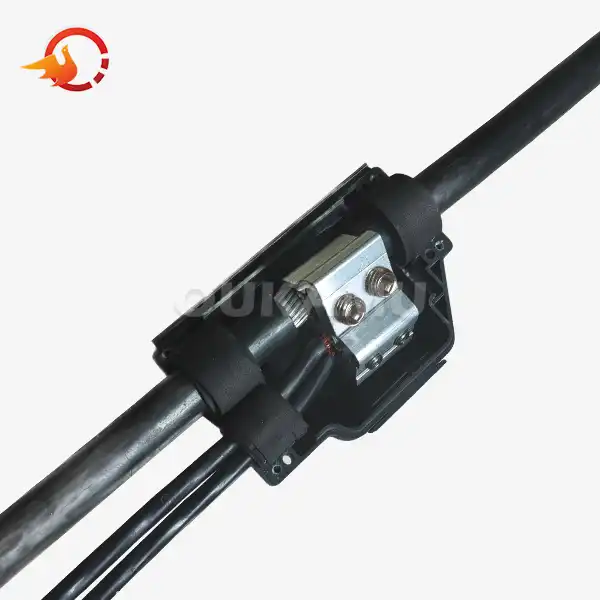
Our branch cable connector technology lets you connect any point along trunk cables that are 95 mm³ to 240 mm³ long, and it works with branch cables that are 6 mm³ to 70 mm³ long. In complex setups, like industrial facilities, where equipment layouts change a lot during building or when working changes need more circuit branches, this flexibility is very helpful. Instead of ordering custom cables ahead of time and dealing with the coordination issues and lead times that come with it, installation crews adapt standard cable stocks to meet specific needs on-site.
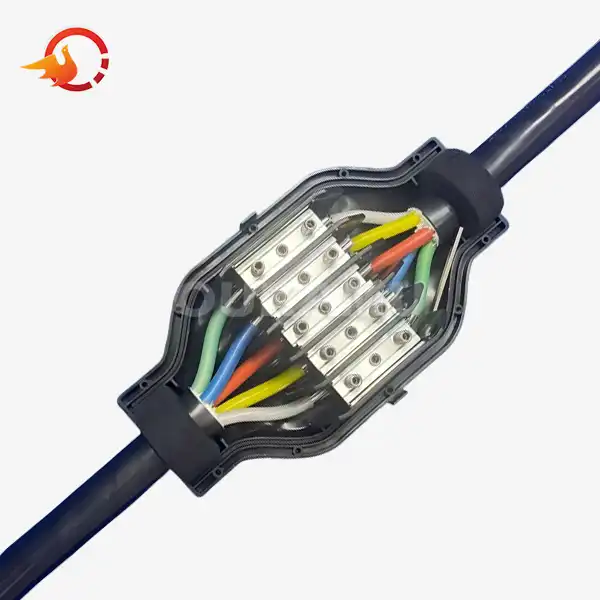
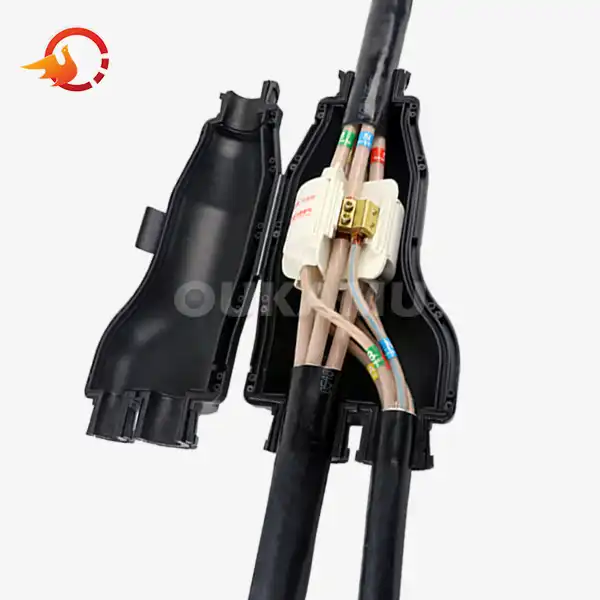
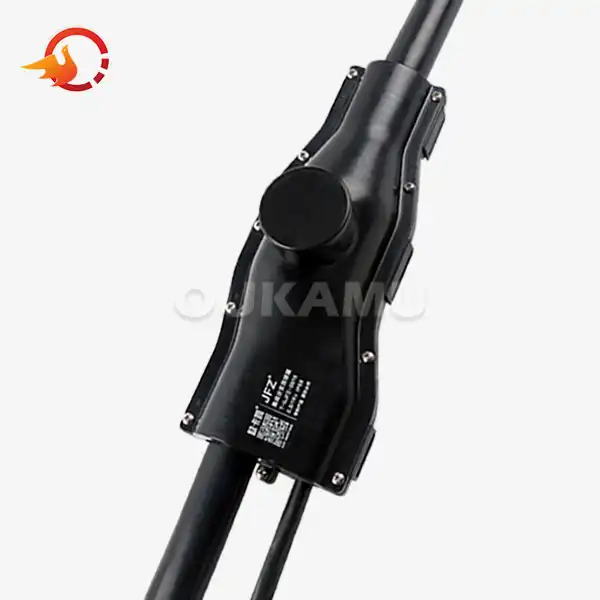
The integrated design includes all the necessary sealing, insulation, and mechanical support parts in a small package that keeps IP68 protection without the need for special tools or long installation processes. This efficient method cuts down on labour costs and the chances of making mistakes during installation that could damage the waterproofing. The body of the connection is made of flame-resistant and UV-resistant materials that will last twenty years in tropical environments if they are placed correctly.
Material Performance in Branch Connector Applications
Branch link housings are made of flame-resistant polyamide compounds that don't break down in UV light, so they keep their mechanical qualities even after decades of being outside. Multiple stages of silicone compression are used in internal sealing systems to make water barriers around the entry points for both trunk and branch cables. In standard junction boxes, each wire needs its own gland. This integrated method cuts down on possible leak paths and makes installation easier.
The connector bodies are still small enough to be installed in cable bridges and other tight areas that are common in tropical building. This saves a lot of room and is especially helpful for retrofits and building upgrades where the existing infrastructure limits the installation choices. The weather-resistant design of the housing makes it perfect for outdoor installations because you don't have to worry about water buildup or corrosion that can happen with regular junction enclosures in damp places.
| Performance Parameter | Specification | Advantage |
|---|---|---|
| Rated Voltage | 0.6/1kV | Suitable for standard distribution circuits |
| Main Cable Range | 95-240mm² | Accommodates common trunk cable sizes |
| Branch Cable Range | 6-70mm² | Supports diverse load requirements |
| Installation Time | 15-20 minutes per branch | Reduces labor costs by 60% vs. traditional methods |
| Cable Savings | 2-3 meters per branch point | Lower material costs and reduced waste |
Real-World Installation Efficiency
As a manufacturing facility in Thailand grew, 32 new electrical branch circuits had to be added to the distribution cables that were already there. In the past, either all trunk cables would have had to be replaced with pre-made branch units or junction boxes with multiple cable ports would have had to be installed at each branch point. The first choice had high material costs and system downtime, while the second choice made maintenance harder and added more places where things could go wrong.
With just two people, construction teams were able to make all 32 connections in four working days using branch connectors that were brought to the site. By not cutting the main cables, the integrity of the system was maintained, and branch places could be changed based on where the equipment was located, not on rough plans. The total cost of materials was 35% less than the premade wire option, and the time it took to install was 40% less than what would have been needed for junction box methods.
The system is installed in a place where the daily temperature is over 32°C, the humidity is over 85%, and it rains during the monsoon season. After three years of use, a check showed that the connector housings or sealing performance had not changed. This proved that the choice of materials and design approach were good for dealing with the environmental problems in the area.
Conclusion
The choice of material affects the performance of a waterproof cable connector, including its IP grades, how long it lasts in different environments, and how much it costs over its entire life. Strong housings are made of plastics like UV-stabilized polyamide, and silicone and fluoroelastomer seals stay compressed even when exposed to chemicals and high temperatures. Metal parts make things stronger and less likely to rust, and the choice of which materials to use affects long-term dependability just as much as the quality of each part.
When procurement professionals understand how these materials interact, they can choose connectors that are best for specific uses instead of generic ones that might not work well in harsh tropical environments. Choosing the right materials strategically can lower the total cost of ownership by increasing the product's useful life, making maintenance easier, and making it more reliable in a wide range of industrial settings.
FAQ
What distinguishes waterproof from water-resistant cable connectors?
When installed and maintained correctly, waterproof connectors completely block water entry, usually with an IP67 or IP68 rating thanks to continuous gasket seals and sealed cable entries. Some plugs are water-resistant, but not completely. They protect against splashing or short contact to water, but not from being submerged in water for a long time. This difference is important in purchasing because waterproof specs cost more but provide the needed safety for things like outdoor electrical systems or equipment that will be washed.
How can buyers verify material authenticity in supplied connectors?
Ask producers for certifications and test records on the materials to show that they meet the requirements. A close look can reveal clear problems—good rubber feels smooth and doesn't tear easily, while bad materials might feel sticky or have visible flaws. Third-party laboratory testing provides clear proof, but it comes with extra costs that are only really worth it for big purchases or important tasks where mistakes have big effects.
Which materials work best for marine environments in Southeast Asia?
Materials used in marine applications need to be able to withstand corrosion from salt water, UV light, and biological growth. Even though they cost more at first, stainless steel 316L housings with fluorosilicone or Viton seals last the longest. UV-stabilized polyamide is a cheap alternative to metal for uses that don't need its mechanical strength, as long as the designs include enough wall thickness and reinforcement to keep the structure strong in tough conditions.
Contact Oukamu for Premium Waterproof Cable Connector Solutions
Xi'an Oukamu Electric Co., Ltd. is an expert in high-tech wire connection systems that are made to work in tough tropical settings. The waterproof cable connector systems we make are made from carefully chosen materials that work well in the climates of Southeast Asia and give wholesalers the fitting options they need to meet the needs of a wide range of projects. We've been developing branch cable connectors for seventeen years, so we know what the specific needs of regional electrical infrastructure are and what successful distributors look for in a supplier.
Our line of products solves common problems, like making installation more flexible, making inventory management more efficient, and lowering the total cost of ownership over a product's lifetime. Unlike rigid premade cable assemblies, our waterproof cable connectors for sale allow branch placement on-site, which can adapt to changes in the field without wasting materials or delaying the project. This flexibility is especially helpful for distributors who have to meet the needs of a wide range of customers without keeping a large inventory of custom cables.
We help regional distributors by offering reasonable bulk prices, flexible minimum order amounts, and full English technical documentation that makes it easier for them to evaluate our products and help with sales afterward. Our engineering team helps distributors build a market footprint and technical reputation with local contractors and industry customers by giving them advice on how to use our products and fixing problems. As a well-known company that makes waterproof cable connectors, we keep the quality of our products high by carefully monitoring the manufacturing process and checking the materials we use. This makes sure that our products work well in the field.
Get in touch with us at info@okmbranchcable.com to talk about how our waterproof cable connectors can help your business. Visit okmbranchcable.com to see our full selection of cable connection products and get access to technical specifications, installation guides, and certification paperwork that will help you make smart buying decisions.
References
1. IEEE Transactions on Components and Packaging Technologies (2020). "Material Selection Criteria for Environmental Sealing in Electrical Connectors."
2. Journal of Electrical Engineering & Technology (2021). "Performance Evaluation of Sealing Materials in Waterproof Cable Connectors Under IP68 Conditions."
3. Electrical Construction & Maintenance Magazine (2022). "Understanding IP Ratings and Material Requirements for Industrial Connectors."
4. International Electrotechnical Commission (2019). IEC 60529: Degrees of Protection Provided by Enclosures (IP Code).
5. GB/T 14048.7-2016 (2016). "Low-voltage switchgear and controlgear - Part 7: Ancillary equipment - Terminal blocks for copper conductors." Standards Press of China.
6. ASTM International (2021). ASTM B117-19: Standard Practice for Operating Salt Spray (Fog) Apparatus.