
What is Underground Cable Jointing?






 2026-08-06 11:27:30
View:389
2026-08-06 11:27:30
View:389When electrical systems extend below ground level, reliable connections become mission-critical. Underground cable jointing refers to the specialized process of connecting and sealing cable ends beneath the surface to maintain uninterrupted power and data transmission. This technique ensures that electrical networks remain protected from moisture, soil pressure, and environmental stresses while delivering consistent performance across residential, commercial, and industrial applications. Proper jointing safeguards infrastructure integrity and minimizes costly downtime.

Understanding Underground Cable Jointing: Definition and Process
What Makes Cable Jointing Essential?
Cable jointing is the most important part of distributing electricity underground. This process needs to be done carefully and according to quality standards, whether it's connecting power cables in cities or fibre optic lines in phone networks. The goal is simple: make a link that is safe, waterproof, and works as well as the wire itself.
Step-by-Step Overview of the Jointing Process
The process of jointing is done in a methodical order. Technicians start by getting the wire ready by carefully peeling back the covering to reveal the conductors without damaging them. The next step is cleaning, which gets rid of any debris that could damage the link. Then, the conductors are joined using the right techniques. Finally, the insulation is fixed so that it matches or beats the dielectric strength of the original wire. Before the final closing with protected materials, testing is done to make sure that the electrical connection and insulation resistance are correct.
Types of Cable Joints
Different project needs call for different types of joints:
- Heat Shrink Joints: Insulation and moisture shields are tightened around the link in heat-shrink joints, which use sleeves that contract when heated. Perfect for places where stability over time is important.
- Cold Shrink Joints: Rubber sleeves that have already been stretched slide into place and shrink on their own, so you don't have to use heat. This method works well when open flames could be dangerous or when fitting needs to be done quickly.
- Resin Joints: For resin joints, epoxy or polyurethane resins cover the links and make them very strong and resistant to chemicals. When it's rough underground, these work well.
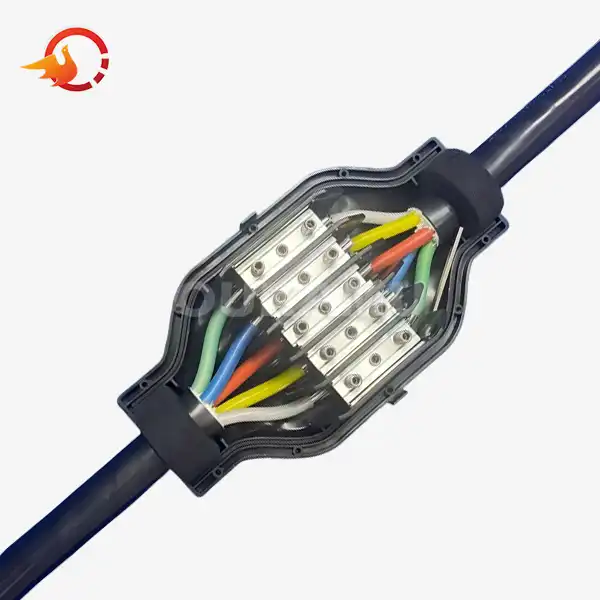
- Mechanical Joints: Connector blocks made of brass or copper physically clamp conductors together, making them easy to put together and reusable in some situations.
Each method deals with different problems in the environment and installation limitations, so engineers can choose the best solution for the project.
Methods and Techniques of Underground Cable Jointing
Comparing Heat Shrink and Cold Shrink Methods
People still like heat shrink technology because it seals well and has been used for a long time. Adhesives inside the sleeve are activated by the heat, making a lasting bind. But this method needs special tools, like heat guns, and careful temperature control.
Cold shrink parts get rid of the need for special tools. Technicians just take out a supporting core, which lets the pre-expanded sleeve automatically grip the wire. Even though they are usually more expensive, cold shrink joints speed up the fitting process and cut down on mistakes, which are useful when working underground or on a short project schedule.
Mechanical Versus Resin-Based Joints
Mechanical joints are easy to use and can be adjusted in the field. Installers can take wires apart and put them back together again if changes need to be made. There are some downsides to this flexibility: mechanical parts may need to be inspected more often and don't completely seal off the surroundings like resin does.
Resin-based joints are better at keeping out water and last longer mechanically. Once it's dry, the glue makes a shield that water can't get through and supports the structure. When wires are buried directly in the ground, they are constantly exposed to earth moisture and pressure. These joints work great in those situations. The downside is that it is permanent, and to fix it, you have to cut out the whole joint section.
Best Practices Aligned with International Standards
Following IEC and IEEE guidelines makes sure that safety and efficiency are always the same. These rules explain how to test, what materials are needed, and how to install them. Purchasing managers should make sure that the products their sellers offer meet the necessary standards. This lowers their risk of liability and makes sure that products used on foreign projects will work together.
Not only do products need to be checked for quality, but construction teams also need to be properly trained. When installed wrong, even high-end jointing kits don't work as well as they should. Following the manufacturer's instructions and keeping records of tests and documentation are important for both the short-term success of a project and its long-term dependability.
Essential Tools and Materials
For professional-level jointing, you need certain tools:
- Insulation removing tools that are set up to meet wire requirements
- Tools for cutting and joining cables
- Testers for continuity and meters for insulation resistance
- For use with heat shrink, heat guns that can control the temperature
- Cleaning solvents and abrasives to get the surface ready
- High-quality jointing kits that match the voltage and type of wire
The quality of the materials directly affects how long a joint lasts. Insulation materials that aren't up to par break down too quickly, which can damage whole wire runs. Underground Cable Jointing is a critical process where material quality becomes even more decisive, because any weakness here is buried and hard to inspect. Buying approved parts from well-known companies pays off in the long run by lowering upkeep costs and increasing service life.
Comparing Underground Cable Jointing Solutions for Procurement
Evaluation Framework for Cable Jointing Solutions
When procurement professionals choose jointing solutions, structured assessment criteria help them make better decisions. Take a look at these parameters:
Environmental Conditions: Will the joints be exposed to constant wetness, corrosive soils, or big changes in temperature? These stresses need to be met by solutions.
Cable Specifications: Voltage levels, conductor sizes, and cable structure (armored vs. non-armored) decide the types of joints that can be used.
Maintenance Access: Places that are hard to get to prefer long-lasting, low-maintenance solutions, even if they cost more up front.
Project Timeline: Quick assembly methods, such as cold shrink joints, may make the job go faster, but they may cost more per unit.
Regulatory Requirements: Certain jointing methods or materials may be required by local electricity rules and utility standards.
Market Overview of Leading Manufacturers
The world market has products from reliable companies. Companies like 3M offer complete heat shrink systems that have been shown to work well in a wide range of situations. The Prysmian Group is an expert in high-voltage jointing for large-scale power work. ABB offers solutions that combine joints with technology for monitoring. Nexans specialises in hard-to-reach systems and other specialised tasks.
When it comes to specific branch wire connections, makers that offer designs with integrated T-connectors are clearly better. These systems don't require cutting the main cables and let you move the branches around easily, which is helpful for both new construction projects and infrastructure that is changing over time.
| Feature | Heat Shrink Joints | Cold Shrink Joints | Resin Joints | Mechanical Joints |
|---|---|---|---|---|
| Installation Speed | Moderate | Quickly | Slow (time to cure) | Quickly |
| Equipment Needed | Heat gun | Not at all | Tools for mixing | Simple hand tools |
| Moisture Protection | Very good | Very good | The Best | good |
| Reusability | No | No | No | Yes |
| Cost per Unit | Moderate | Better | Moderate to High | Lessen |
| Best Application | The main goal | Quick fixes | Bad places to live | Temporary or adaptable |
This comparison helps buyers find the best balance between performance needs, project deadlines, and budgets.
Cost Analysis and ROI Considerations
The initial buying price is only one part of the total costs of owning a home. Good jointing solutions lower the number of failures, which means fewer emergency fixes and the costs that come with them, like calling in extra workers, renting tools, and stopping service. A joint failure in a critical distribution circuit can cause thousands of dollars in lost time, which is a lot more than the savings you would get from using cheaper parts.
The estimated service life, maintenance intervals, and likelihood of replacement should all be taken into account in a lifecycle study. High-quality joints from well-known brands usually last 30 years with little maintenance, while cheaper ones might need to be replaced every 10 to 15 years. When you add up the cost of the labour to install the new joints, the bigger original investment usually ends up being cheaper.
Troubleshooting and Maintenance of Underground Cable Joints
Identifying Common Issues
Cable joint failures usually show up as certain symptoms. As insulation wears down, it lets more current leak out and eventually breaks. When moisture gets in, it causes rust and tracks electrical problems. Soil settlement or digging activities can cause mechanical damage that weakens the structure.
Detection methods include periodic insulation resistance tests, thermal imaging to find hot spots that show bad connections, and visual checking of joints when they can be reached are all ways to find problems. Setting baseline measures during installation gives you a way to compare test results when it's time for upkeep.
Repair and Maintenance Guidelines
Systematic troubleshooting finds the root causes of problems when they happen. Before digging starts, testing should be done to find the broken joint section. Digging that isn't needed costs more and interrupts service.
Repair procedures depend on joint type. Most of the time, heat shrink and resin joints need to be completely replaced. This means that techs have to cut out the broken part and put in a new joint. Underground Cable Jointing requires particular care at the initial installation stage, because the replacement process essentially repeats that same joining work under more difficult field conditions. This shows how important it is to have a good beginning operation. If the damage is limited to the connector block, mechanical joints may let the parts be taken apart for inspection and then put back together again.
Documentation proves invaluable during repairs. Technicians can quickly find problems and figure out if they are isolated events or widespread failures that need wider fixes by looking at maintenance records that list joint sites, installation dates, and test histories.
Preventive Maintenance Strategies
Active programs make joints last longer and stop them from breaking down without warning. Testing at regular times, based on what the manufacturer says and what the conditions are like in your area, finds problems early on, before they cause power outages. For important connections, testing the insulation resistance once a year lets you know when it's starting to break down.
Monitoring the environment helps figure out when the risk to joints is highest. Long-term contact to groundwater or changes in the makeup of the soil may speed up ageing. Changing how often inspections happen based on environmental factors makes the best use of maintenance resources.
Safety Protocols During Maintenance
When working with underground electricity lines, you have to be very careful. De-energising circuits and making sure there is no voltage keeps people from getting electrocuted. Cable damage during entry can be avoided by following the right steps for drilling. When joints are in vaults or tunnels, confined space protocols must be followed.
Required personal safety equipment includes insulated gloves rated for system voltage, arc-rated clothes for work that must be done near electricity, and respiratory protection in small areas. It is imperative that all OSHA standards and utility safety rules are followed.
Procurement Tips and How to Source Quality Underground Cable Jointing Kits
Reliable Sourcing Strategies
It's hard for procurement managers to find a good balance between quality, cost, and availability. Having ties with more than one provider guarantees continuity when demand goes up or there are problems in the supply chain. Distributor networks let you access local inventory, which cuts down on wait times compared to buying directly from the maker.
Digital platforms and business-to-business (B2B) markets make it easier to find suppliers, but they need to be carefully screened. When doing business with people you don't know, check their certifications, read customer reviews, and ask for samples of their products. Watch out for fake items sold under well-known brand names—authentication methods like direct maker verification protect you from low-quality materials.
Wholesale purchasing arrangements deliver cost savings on high-volume projects. Negotiating framework agreements with preferred suppliers lock in pricing while still allowing for changes based on the needs of the project.
Selecting Reputable Service Providers
Quality of the product doesn't mean much if it isn't installed correctly. Contractor selection criteria should include:
- Certifications that matter (like an electrician's licence or a manufacturer's training badge)
- Shown skill with projects of the same size and level of difficulty
- References from recent buyers who have used similar tools
- Record of safety and insurance coverage
- Quality assurance procedures and testing protocols
Request detailed proposals specifying materials, methods, and testing procedures. Underground Cable Jointing demands special attention in these proposals, as its long-term reliability hinges on the quality of both the specified materials and the verification tests. Low-bidder builders who skimp on supplies or skip important testing steps end up costing a lot more in the long run than they saved in the short term.
Introducing Advanced Branch Cable Solutions
Xi'an Oukamu Electric Co., Ltd. is an expert in new cable connection technology and can help you with common problems in the buying process. We've been making systems that change underground distribution projects for 20 years thanks to our experience with branch cable connectors.
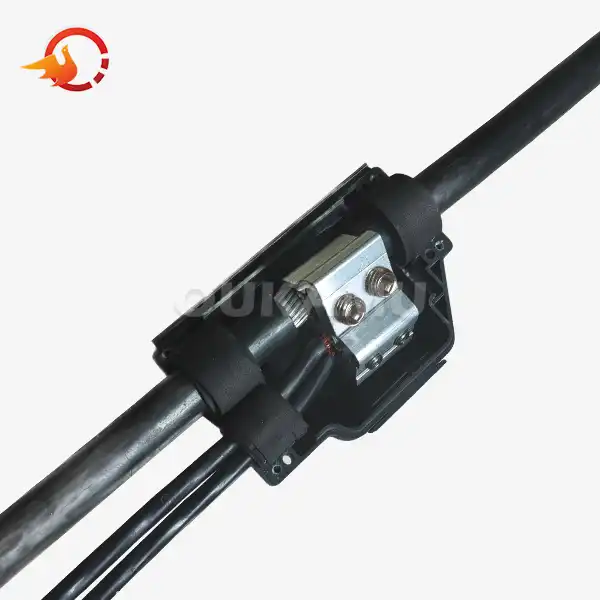
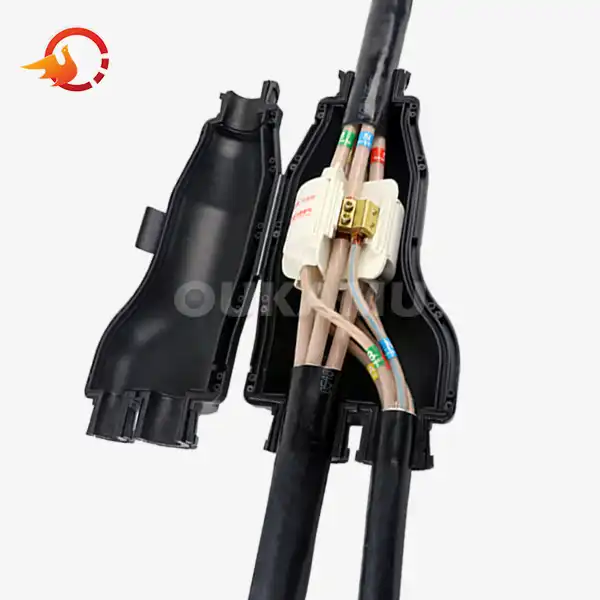
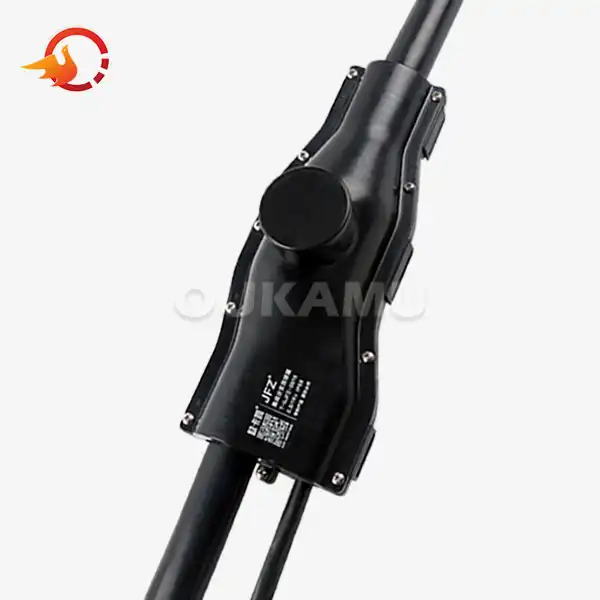
Our T-GJFZ-35/16 model exemplifies practical engineering. This branch connector with an IP68 rating can fit main cables from 10 to 35 mm and branch cables from 2.5 to 16 mm without having to cut the main cable—a significant advantage when adding circuits to infrastructure that is already in place. Gel-filled insulation has two layers of waterproofing that work well in both direct burial and vault installations.
The integrated T-connector design eliminates traditional junction boxes, reducing installation footprint and costs. Branch position flexibility allows on-site adjustment to match actual conditions rather than relying on prefabricated cable assemblies with fixed branch locations. This adaptability proves particularly valuable in retrofit projects where existing conduit paths constrain cable routing.
Case Example: A regional distribution company wanted to improve service to an industrial park that was growing, but it was hard to connect branch circuits without messing up the main lines that were already in place. With the old ways, the main wire would have had to be replaced, which would have been expensive and taken a lot of time. Technicians added eight new branch circuits in two days using Oukamu's branch connectors. They did this without turning off the main feeder. Compared to traditional methods, the project saved about 40 meters of primary wire and 60% of the work that was needed to place it.
| Parameter | Specification |
|---|---|
| Model | T-GJFZ-35/16 |
| Waterproof Rating | IP68 |
| Main Cable Range | 10-35mm |
| Branch Cable Range | 2.5-16mm |
| Rated Voltage | 0.6/1kV |
| Insulation Type | Gel-filled, double protection |
| Installation Method | Concealed (vault/direct burial) |
| Main Cable Treatment | No cutting required |
| Material | Flame-retardant, fire-resistant |
| Compliance | GB/T 14048.7-2016 |
These capabilities translate to measurable procurement advantages: reduced material costs through cable savings, faster project completion, and simplified inventory management since standard cables replace custom pre-branched assemblies.
Beyond product features, comprehensive support matters. Technical advice helps match solutions to the needs of a particular project. Large-scale utility projects and smaller contractor needs can both be met by flexible ordering. Quality assurance processes make sure that all production batches perform the same way.
Case Example: A municipal infrastructure contractor was in charge of several subdivision developments and needed reliable branch connection solutions that installation crews could use quickly. They chose Oukamu T-series plugs after looking at a number of other choices. Because of this choice, the cost of each link went down by 25%, and the average work time went down from 90 minutes to 35 minutes. During a busy building season, this increase in speed helped the builder finish three more subdivisions with the same number of workers.
Conclusion
Effective procurement of cable jointing solutions balances technical requirements, cost considerations, and supplier reliability. Underground Cable Jointing sits at the core of this procurement process, because the chosen jointing method directly influences material selection, installation complexity, and long-term performance. Understanding the various jointing methods—heat shrink, cold shrink, resin, and mechanical—enables informed selection matching project conditions.
Quality materials and proper installation prove far more economical than budget alternatives that fail prematurely. Maintenance planning and safety protocols protect infrastructure investments while ensuring personnel protection. Sourcing strategies that emphasize supplier verification, contractor credentials, and product certifications mitigate risks. Advanced solutions like integrated branch connectors deliver operational advantages through installation flexibility and reduced material requirements, directly addressing procurement priorities around cost control and project efficiency.
FAQ
Why Choose Underground Cable Jointing Over Overhead Lines?
Underground installation eliminates visual impact, reduces weather-related outages from wind and ice, and avoids clearance issues with vegetation and structures. While installation costs run higher initially, underground systems typically deliver lower lifecycle costs through reduced maintenance and longer service life. Urban and suburban developments increasingly mandate underground utilities for aesthetic and safety reasons.
What Criteria Determine the Appropriate Joint Type for My Project?
Match joint selection to cable specifications, voltage rating, environmental conditions, and accessibility. High-moisture environments demand superior sealing—resin or premium heat shrink joints. Projects requiring future modifications benefit from mechanical joints. Budget-conscious applications with moderate environmental stress may use standard heat shrink solutions. When uncertainty exists, consult with technical specialists who can evaluate specific project parameters.
What Safety Precautions Are Critical During Jointing Operations?
Always verify de-energization and test for absence of voltage before beginning work. Use voltage-rated PPE appropriate to system levels. Follow confined space entry protocols for vault work. Maintain proper excavation safety including shoring and atmospheric monitoring. Never bypass manufacturer installation instructions—shortcuts compromise both safety and joint performance.
Partner with Oukamu for Reliable Underground Cable Jointing Solutions
Xi'an Oukamu Electric Co., Ltd. has been a specialist in wire connections for 20 years and can help you with your problems. As a dedicated Underground Cable Jointing supplier, we know what buyers want: competitive prices with low markups, quality that is backed by thorough testing, the ability to change order quantities from small samples to large production runs, and technical support that helps buyers find the best solutions.
Our T-series branch connectors have been used successfully in construction, industrial infrastructure, and power distribution. We invite you to explore our catalog and discuss your specific requirements. Contact our team at info@okmbranchcable.com or visit okmbranchcable.com to request technical specifications, pricing quotations, and application guidance tailored to your needs.
References
1. International Electrotechnical Commission. IEC 60502-2:2014 - Power cables with extruded insulation and their accessories for rated voltages from 6 kV to 30 kV - Part 2: Cables for rated voltages from 6 kV to 30 kV. Geneva: IEC, 2014.
2. Institute of Electrical and Electronics Engineers. IEEE Std 404-2012 - IEEE Standard for Extruded and Laminated Dielectric Shielded Cable Joints Rated 2.5 kV to 500 kV. New York: IEEE, 2012.
3. Peschke, E. and von Olshausen, R. Cable Systems for High and Extra-High Voltage: Development, Manufacture, Testing, Installation and Operation of Cables and Their Accessories. Berlin: Publicis Publishing, 2008.
4. Thue, W.A. Electrical Power Cable Engineering, Third Edition. Boca Raton: CRC Press, 2011.
5. National Electric Code Committee. NFPA 70: National Electrical Code 2023 Edition. Quincy: National Fire Protection Association, 2022.
6. Marzinotto, M. and Mazzanti, G. "The Statistical Enlargement Law for HVDC Cable Lines: Estimation of the Discharge Cumulative Probability from PD Measurements." IEEE Transactions on Dielectrics and Electrical Insulation 22, no. 1 (2015): 192-203.