

Branch Cable vs Traditional Wiring: Which Option Fits Your Project?






 2026-08-06 11:23:12
View:389
2026-08-06 11:23:12
View:389When weighing Branch Cable against traditional wiring, the optimal choice hinges on your project's complexity, timeline, and budget constraints. Branch cable systems deliver remarkable flexibility through on-site installation, eliminating pre-planning guesswork and reducing material waste. Traditional wiring methods, while familiar, demand extensive labor and precise advance measurements. For procurement managers seeking cost-efficient, code-compliant solutions in commercial and industrial settings, branch cable technology often emerges as the superior alternative—offering faster deployment, enhanced safety features, and significant long-term savings.

Introduction
Choosing the right wiring infrastructure will determine whether your electrical project meets its performance goals or turns into a maintenance nightmare that costs a lot of money. Reliability and following the rules are important in B2B buying and engineering—they're the basis of every good installation. This talk looks at two common ways of wiring: standard wiring methods and Branch Cable systems.
Branch Cable technology is a new way to distribute power that lets you make flexible links that can be changed to fit the needs of any place. On the other hand, traditional wiring uses separate parts and manual terminations that have been used for decades. When procurement teams, project engineers, and facility managers understand these basic differences, they can match technical requirements with operational priorities. This way, installations can meet safety standards while keeping costs low.
Electrical product wholesalers, hardware stores, and engineering material providers that work with industrial construction markets have the most at stake. E-commerce managers need products that are both marketable and have real technical benefits, while project procurement officers need wiring solutions that balance up-front costs against long-term value. This study gives you the information you need to make smart choices about where to source things.
Understanding Branch Cable and Traditional Wiring
What Are Branch Cables?
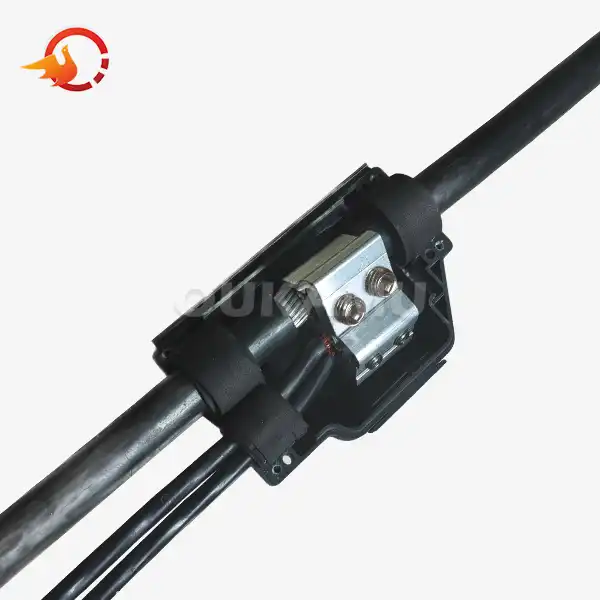
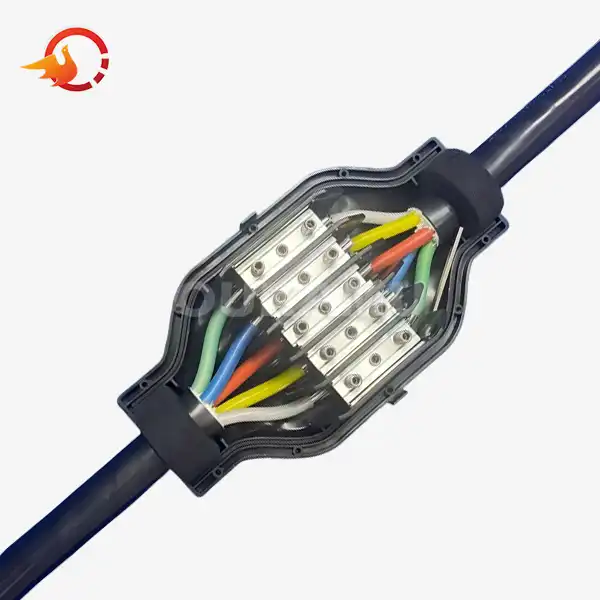
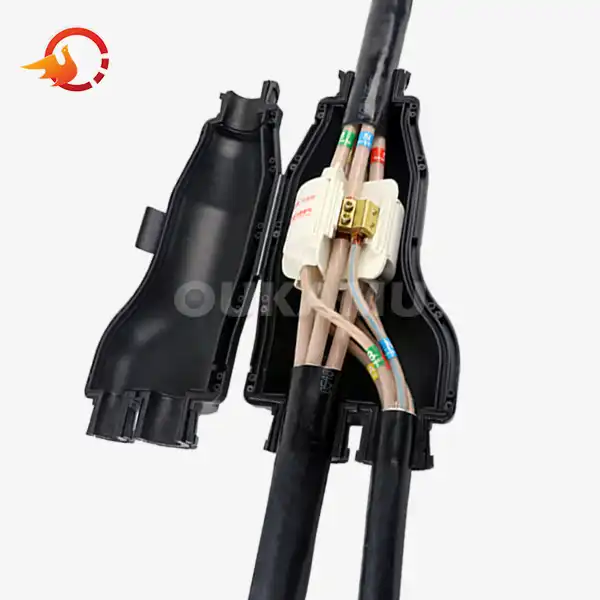
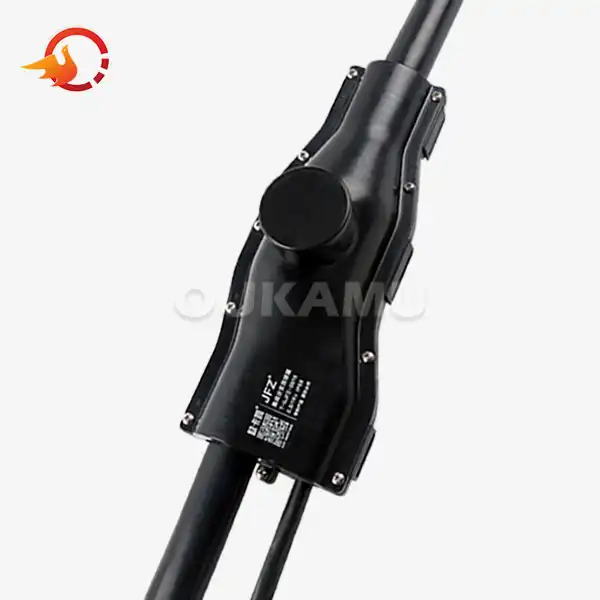
Branch Cables are a special kind of electrical distribution system made for delivering power in modular ways in business and industry settings. These systems are different from pre-made kits because they use connection technology that lets electricians make branch points right where they are being installed. The main innovation is in joint designs that are integrated and keep the integrity of the main cable while making secure connections to branch circuits.
Modern Branch Cable options, like the ZR-JFZ-185/35 model, can handle main lines from 70 mm to 185 mm and branch links from 2.5 mm to 35 mm. These systems are rated for 0.6/1kV uses and have flame-retardant and fire-resistant insulation that meets GB/T 14048.7-2016 standards and other international safety standards. With this technology, you don't have to cut the primary cables, which keeps the conductors connected and lowers the number of failure points.
Traditional Wiring Fundamentals
Individual conductor runs are terminated at junction boxes, distribution panels and connection points all over a building using traditional wiring methods. Electricians follow circuit models made during the planning phase to measure, cut, strip, and terminate each wire. With this method, you need to carefully plan ahead because you need to know where the branches will go and how long the cables will be before you buy the materials.
A lot of work needs to be put into the process. At each connecting point, work has to be done by hand, including removing insulation, crimping ends, securing wire nuts, and checking for continuity. This method is completely compatible with current infrastructure, but it has a lot of possible failure points and takes a lot longer to install than more modern options.
Key Structural Differences
The main difference is in how the connections are made. Cutting and splicing are used in traditional systems, which makes joints that can't be moved without replacing cable segments. Branch Cable connectors, on the other hand, clamp onto main conductors without cutting them. They make electrical contact with precision-engineered contact elements that are sealed inside insulated housings.
This advantage in structure has real-world benefits. If a project's plan changes during building, the branch positions can be changed without wasting any materials. Installing retrofits in buildings that are already occupied goes faster and causes less trouble. Integrated design in high-quality Branch Cable products combines what older methods do with many parts (like junction boxes, wire nuts, tape, and safe casings) into a single, factory-tested unit.
Technical Comparison: Branch Cable vs Traditional Wiring
Installation Efficiency and Labor Requirements
Through streamlined processes, Branch Cable systems significantly cut down on installation time. Electricians put connections in the right places, clamp them to main wires using the clamping devices built into the connectors, and finish branch terminations without stopping the main power distribution routes. Field tests show that this method saves two to three meters of main wire per branch point and cuts construction time by about forty percent compared to the old way of using junction boxes.
In traditional wiring installations, each termination has to be carefully measured, inspected, and tested many times between the distribution panels and the endpoints. Each junction box needs to be mounted, wires must be routed, and connections must be checked individually. Branch Cable insertion, however, introduces a shared trunk that feeds multiple outlets, reducing the need for repeated individual tests at every split point. When there are dozens or hundreds of branch points in a project, the effect builds up and has a big effect on both direct labour costs and project timelines.
| Installation Factor | Branch Cable Systems | Traditional Wiring |
|---|---|---|
| Main Cable Cutting | Not required | Required at each branch |
| Branch Position Flexibility | Adjustable on-site | Fixed during planning |
| Average Labor Time per Branch | 15-20 minutes | 45-60 minutes |
| Cable Waste per Connection | Minimal (< 0.5m) | 2-3 meters typical |
| Rework Complexity | Simple repositioning | Complete replacement |
Safety Compliance and Performance Standards
Modern Branch Cable goods that are made to GB/T 14048.7-2016 standards have more than one safety layer. Flame-resistant outer jackets stop the fire from spreading, and internal insulators keep the rated voltage stable when there is a fault. Quality connectors have built-in sealing that protects against moisture and particle ingress, which is very important in industrial settings where there is dust, humidity, or corrosive air.
The safety of traditional wire depends on how well it is installed. When wire nuts are the wrong size, insulation isn't properly removed, or terminal screws aren't tight enough, they can cause problems that might not show up until the system goes through thermal cycling or mechanical stress. Because junction boxes need to be properly sealed and have the right enclosure ratings, they are more complicated and can fail in more ways. Because advanced Branch Cable connectors can be used more than once, they also support maintenance protocols. For example, electricians can disconnect and reconnect circuits to test them without affecting the integrity of the connection.
Cost Analysis and Budget Considerations
Branch Cable parts usually cost 20–30% more than traditional wiring supplies when you buy them all at once. Costs of the whole project, on the other hand, tell a different story. Less work hours, less cable waste, and shorter finishing times all change the economic edge in a big way. A medium-sized business installation with fifty branch points could see extra material costs of $3,000 to $5,000, but labour savings of $8,000 to $12,000 would more than make up for it.
Branch Cable technology is also better because it has long-term worth factors. Because good connections can be used again and again, changes in the future don't have to mean replacing the whole thing. Fewer connection points mean fewer upkeep tasks and easier debugging. When electrical product sellers and distributors show solutions to project leaders who are interested in total cost of ownership rather than just original purchase price, these lifecycle benefits create strong value propositions.
When to Choose Branch Cable Over Traditional Wiring
Ideal Project Scenarios for Branch Cable Systems
Branch Cable technology works best in projects that are retrofitted or renovated. When upgrading electrical systems in hospitals, business buildings, or factories that are already filled, it is very important to have as little downtime as possible. Setting up new branch circuits without having to repair a lot of main cables cuts down on downtime and speeds up the project's finish. Building managers like setups that don't bother tenants too much and are done quietly.
The fundamental freedom of modular building settings is helpful for situations where electrical layouts may change during the build-out phases. As operations grow, a distribution warehouse might add more conveyor loops. Similarly, a business kitchen might change the structure of its equipment based on the needs of its end tenant. Branch Cable systems can handle these changes in the real world without the waste of materials and delays that come with standard cable changes.
Branch Cable methods are also helpful for projects that have a lot of complicated route problems. Commercial buildings with multiple floors and vertical cable risers that serve those floors can make branch connections right where they're needed instead of having to pull individual conductors through crowded areas. Cable bridges and containment systems can easily fit small branch connectors instead of bulky junction boxes, which makes the installation look better and use space more efficiently.
Real-World Application Case Study
A project to expand a community hospital in the southeast of the United States shows that it works in the real world. To support the new medical imaging equipment, nurse stations and patient monitoring systems, the building had to add 38 branch circuits spread out over three floors. The original plans called for installing switch boxes in the usual way, which would take 240 hours of work and cost $18,000.
After finding that the existing cable trays made it hard to route cables, the electrical contractor suggested using ZR-JFZ series Branch Cable connectors instead. The different method cut the time needed for installation to 145 hours and saved about 90 meters of wire. The $2,800 price increase for Branch Cable components was balanced out by the $7,200 saved on labour. The project was finished six days faster than planned, which let the hospital start installing tools earlier than planned.
After the work was finished, tests showed that all links met the performance requirements. Thermographic tests showed that the heat was evenly distributed across all branch points, proving that the contact resistance was correct. The facility maintenance staff liked how the system documentation was made easier because branch locations could be photographed and mapped directly, instead of needing detailed as-built drawings of where the junction boxes were hidden.
Limitations of Traditional Wiring in Modern Projects
The fast iteration loops common in modern building make traditional wiring methods less useful. In design-build projects, where the architectural and electrical plans are made together, it is common for branch locations to change after the initial rough-in phases, which can lead to expensive change orders. Each change means getting new materials, hiring more people, and making changes to the plan, all of which affect the overall project timeline.
Traditional junction boxes are fixed, which makes it harder to make changes in the future. When facility managers take over buildings with complex hardwired distribution systems, they have to pay a lot of money to rearrange rooms or add circuits. Getting to hidden junction boxes to fix problems can stop operations and may need damaging investigation methods. Over the lifetime of a building, these hidden costs add up and slowly eat away at the savings that were thought to be made from lower original material costs.
Procurement Guide: Buying Branch Cable for Your Project
Evaluating Supplier Credentials and Product Quality
Verification of the manufacturer is the first step in a successful procurement. Established suppliers should have a lot of experience with Branch Cable technology. For example, Oukamu has been a specialist in cable joint development for 20 years, so you can be sure they know what they're doing. Ask for proof that the product meets the necessary standards. For Chinese markets, ask for GB/T 14048.7-2016 certifications; for North American projects, ask for UL or CSA certifications; and for European installations, ask for CE markings.
Product specs need to be looked over very carefully. Check the rated voltage ranges, conductor compatibility (both main and Branch Cable sizes), and environmental ratings. Quality Branch Cable links list exact pressure requirements, temperature values, and the amount of damage they can take from a short circuit. When suppliers give detailed technical data sheets and installation guides, it shows that they care about the right way to use their products. On the other hand, vague specs can mean that the products were made more for price competition than for performance.
Sample testing before placing big orders keeps you safe from getting low-quality goods. Reliable suppliers offer evaluation units that can be tested in the field under real project conditions. Managers in charge of buying things should check the quality of the physical build by looking at the insulating materials, contact parts and the stability of the mechanical fasteners. Reports from a third-party lab that test for flame resistance, insulation resistance, and mechanical strength give you more confidence than what the supplier says.
Order Quantity Planning and Inventory Management
Inventory strategies that work well balance the needs of the project with extra stock in case something goes wrong. To figure out how much you need, count the planned branch points and then add 10 to 15 percent for design changes and testing. Because unused connections in Branch Cable systems can be reused in future projects, unlike traditional wiring that has been cut and ended, this reserve allocation is partially offset.
Distributors of electrical goods who work with many contractors can save money by keeping core product lines in standard configurations. The ZR-JFZ-185/35 model is good for most business uses because it has main lines that are between 70 mm and 185 mm in length, which is about 75% of all low-voltage distribution needs. Keeping these in stock with sizes that go well with them lets you fill orders quickly without having to spend a lot of money on inventory that doesn't move quickly.
| Product Specification | ZR-JFZ-185/35 |
|---|---|
| Main Cable Range | 70mm - 185mm |
| Branch Cable Range | 2.5mm - 35mm |
| Rated Voltage | 0.6/1kV |
| Insulation Type | Flame-retardant, fire-resistant |
| Reusability | Yes - multiple cycles |
| Installation Time | 15-20 minutes typical |
| Cable Savings | 2-3 meters per connection |
| Compliance Standards | GB/T 14048.7-2016, International safety codes |
Logistics Coordination and Delivery Timing
Plan delivery times around project milestones to keep on-site storage needs to a minimum and make sure materials are available when installation crews need them. Branch Cable connectors come in smaller packages than similar standard wiring supplies. This means that less warehouse space is needed, which is helpful when there aren't many safe places to store things on-site.
When buying things internationally, there are extra things to think about. Check that the shipping terms make it clear who is responsible for clearing customs, paying duties, and transporting the goods within the country. Reliable Branch Cable suppliers who have experience with export markets provide all the paperwork needed for a smooth customs process. Because lead times for speciality configurations can be up to four to six weeks, procurement officers should place orders during the design development phase instead of waiting until construction starts.
Value-Added Services and Technical Support
Distinguished providers have more than just business ties. Look for companies that give application engineering help, which means they can help you choose the right connector types for your project. Installation training programs make sure that electrical contractors know the right way to do things, which lowers the number of warranty claims caused by bad installation. Some providers offer on-site commissioning help for big projects, checking the quality of the installation and keeping records of how well the system is working.
The quality of the service provided after the sale is what sets premium suppliers apart from commodity vendors. Technical help that responds quickly to questions from the field keeps installation from being held up. A full guarantee that lasts for 5 to 10 years on good Branch Cable products shows that the company is confident in their products and keeps project budgets safe from the costs of replacing broken parts. These support elements make small price increases reasonable and help build long-term relationships that are useful for distributors who deal with repeat customers.
Conclusion
The flexibility, safety, and efficiency of connector-based distribution are increasingly valued in modern electrical installations. Branch Cable systems and traditional wiring each serve different project needs. The technical benefits—faster installation, less waste, better safety compliance, and greater adaptability—lead immediately to better project costs and lifecycle value. Traditional methods are still useful in some situations, like when you need to make sure they work with existing infrastructure or when you don't have a lot of money to spend on materials. But even those situations should be looked at again now that the costs of Branch Cable technology are going down and the product lines are growing.
Partnering with experienced makers who have both proven technical skills and a responsive support system is key to successful procurement. Investing in high-quality Branch Cable parts pays off in the form of lower labour costs, faster schedules, and easier changes in the future. When distributors, retailers, and engineering suppliers learn this technology, they become valuable consultants instead of just selling products. This gives them a competitive edge in markets that need complex electrical solutions.
FAQ
What distinguishes branch cables from feeder cables in distribution systems?
While feeder cables bring power from major sources (transformers, panels) to distribution points, Branch Cables connect main distribution lines to specific circuits or pieces of equipment. Branch Cable connectors allow these extra connections without breaking the continuity of the main conductor. In contrast, feeder setups usually have dedicated terminations at both ends.
Are branch cable installations as safe as traditional junction box methods?
When compared to older ways, quality Branch Cable goods that meet international safety standards offer the same level of safety or more. The integrated design gets rid of multiple connection places that could fail in standard setups because of bad terminations. Connectors that are checked in the factory have uniform contact resistance and insulation integrity. Field-assembled junction boxes, on the other hand, depend on the work of each individual electrician. Modern Branch Cables are made with fire-resistant and flame-retardant materials that protect better against heat events.
Can branch cable systems accommodate custom project specifications?
Manufacturers with a good reputation offer customisation options for unique uses. Standard product lines meet most commercial and industrial needs, while custom configurations are made to fit specific conductor sizes, voltage ratings, or environmental conditions. Custom specifications have longer lead times for getting products than stock items, so working with suppliers early on in the design process makes sure that products are available on time.
Partner with Oukamu for Superior Branch Cable Solutions
Every project that Oukamu works on is backed by his 20 years of experience in Branch Cable joint technology. Our tech team came up with new ideas that set the bar for safety, dependability, and how quickly and easily they could be installed. No matter if you're an electrical product distributor building inventory for picky commercial clients, a project procurement officer in charge of complicated installations, or a contractor looking for ways to improve performance, our wide range of products gives you measurable value.
Our ZR-JFZ series Branch Cable connectors are made with high-tech materials and go through strict quality control to make sure that every unit meets GB/T 14048.7-2016 standards and safety standards around the world. We help distributors and branch cable suppliers by giving them a variety of ways to place orders, quick technical support, and full project documentation. Email our team at info@okmbranchcable.com to talk about your particular needs, get full technical specs, or set up product samples for you to try. Visit okmbranchcable.com to explore our full catalog and discover how Oukamu's tried-and-true solutions improve project results while keeping costs low.
References
1. Institute of Electrical and Electronics Engineers (IEEE). Standard for Low-Voltage AC Power Circuit Breakers Used in Enclosures. IEEE Standards Association, 2019.
2. National Fire Protection Association (NFPA). National Electrical Code: Article 300 - Wiring Methods. NFPA Publications, 2020.
3. International Electrotechnical Commission (IEC). Low-Voltage Switchgear and Controlgear Assemblies: Part 7 - Cable Distribution Systems. IEC Central Office, 2018.
4. Building Services Research and Information Association (BSRIA). Electrical Distribution Systems: Design and Installation Best Practices. BSRIA Technical Publications, 2021.
5. American Society of Testing and Materials (ASTM). Standard Specification for Insulated Wire and Cable for the Transmission of Electrical Energy. ASTM International, 2022.
6. China National Institute of Standardization (CNIS). Guidelines for Implementation of GB/T 14048.7 - Low-Voltage Switchgear Connector Systems. Standards Press of China, 2017.