

What is the difference between cable joints and connectors?






 2026-10-28 15:23:24
View:389
Every electrical distributor I talk to faces the same challenge: explaining to contractors why certain cable connection products work better for specific applications. The core distinction comes down to purpose and permanence. Cable joints create permanent, sealed connections between cable ends—extending circuits or repairing damaged sections—while cable joint connectors enable branch connections or temporary links without severing the main conductor. Understanding this difference directly impacts your inventory strategy, customer satisfaction, and profit margins on electrical connection products.
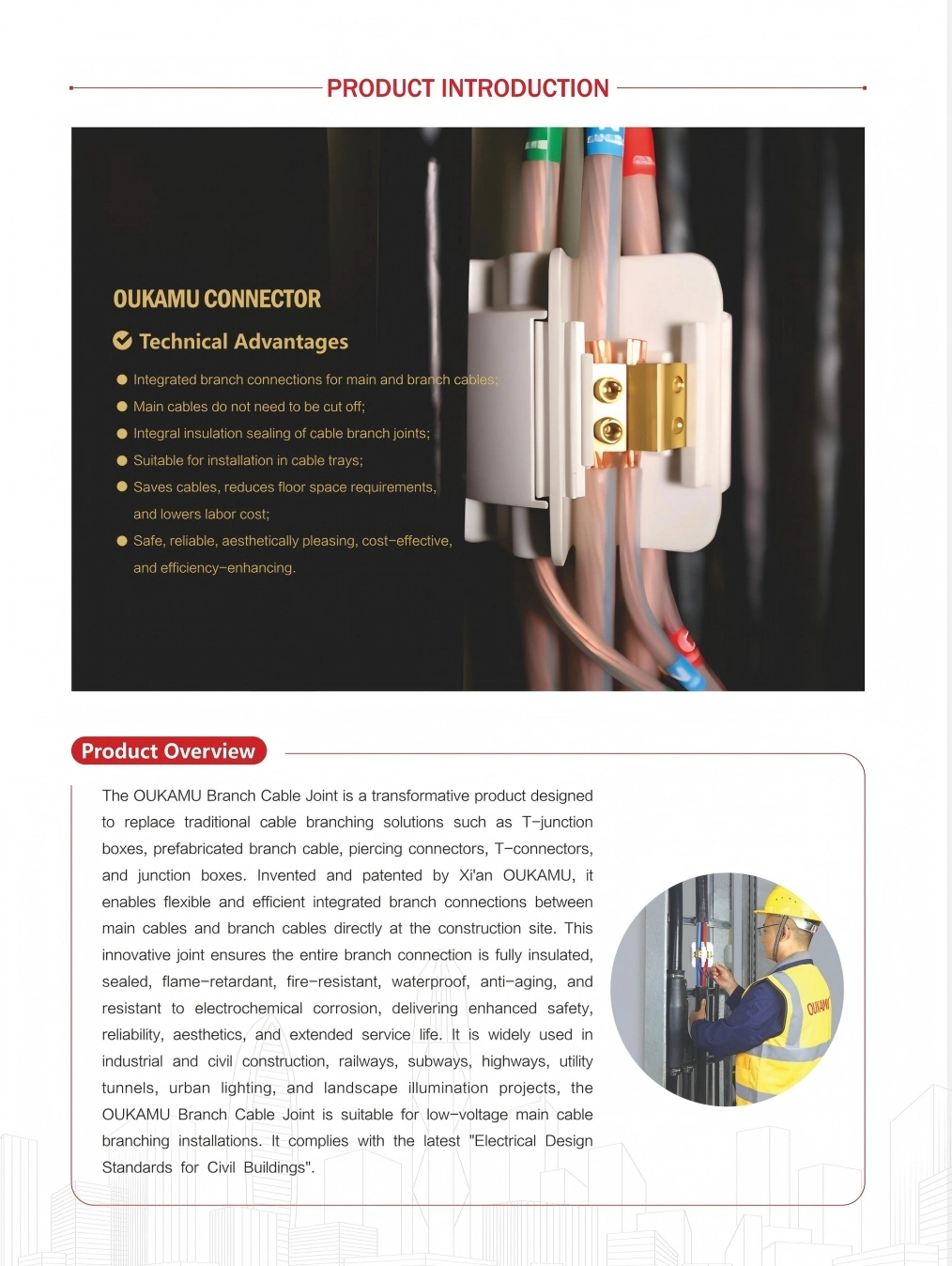
Understanding Cable Joints and Connectors: Definitions and Functions
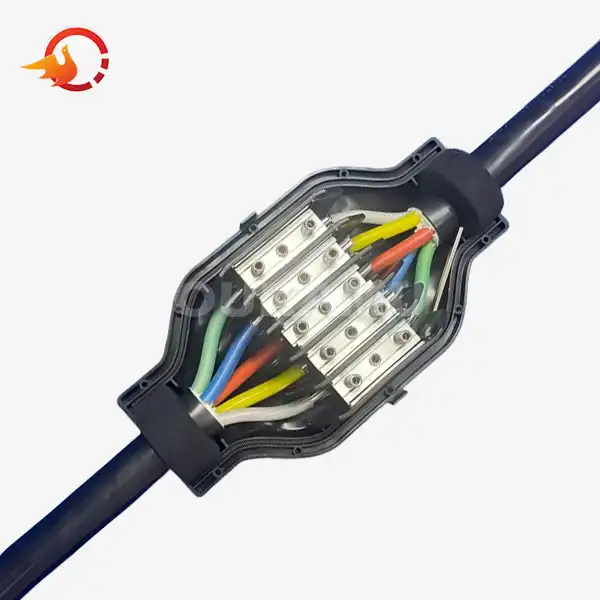
In the 20 years I've worked in electrical wholesale, distributors have lost thousands of dollars in returned goods because of confusion between these two types of products. Cable joints permanently join two ends of a cable together. They are usually used to extend power lines or fix broken parts. To install something, you have to take off the insulation, connect the wires, and put on protective materials like heat shrink sleeves or resin-filled casings.
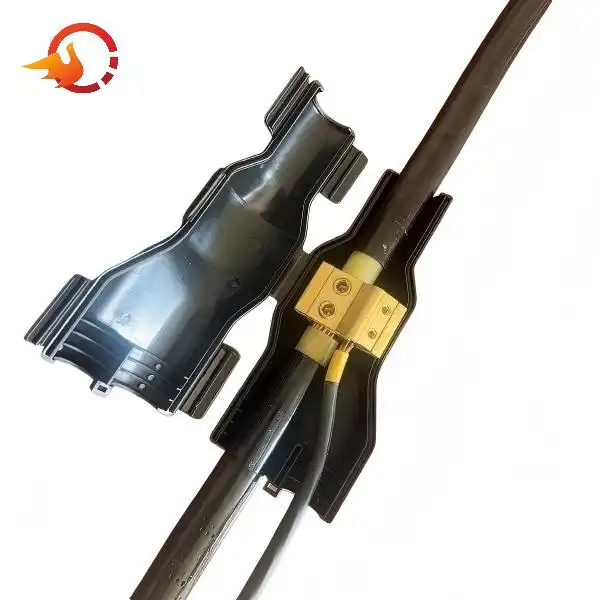
Connectors for cables are used for something completely different. Without cutting the main wire, these devices make electrical paths from a main line to branch circuits. Modern branch connectors can connect to existing cables by piercing them or compressing them. This makes them very useful for upgrades and additions. NEMA says that branch connection technology has cut installation time by about 40% compared to the old way of using junction boxes.
Heat Shrink Joints in Industrial Applications
When protecting against wetness is important, heat shrink joints are used a lot in underground utility installs. These joints use cross-linked polyolefin tubes that get smaller when heated. This makes a waterproof seal around the wires that are joined together. These are required for lines rated 1kV or higher by utilities and big building projects, especially in places with a lot of moisture or where direct burial is needed.
Terminal Connectors for Panel Integration
Terminal connectors are most often found in machine hookups and control screens. Ring terminals, spade lugs, and barrier strips are some of the mechanical tools that electricians use to separate and rejoin circuits during repair. These are often used in factories to wire machines where the equipment moves around or needs to be checked on a regular basis.
Branch Cable Technology for Distribution Systems
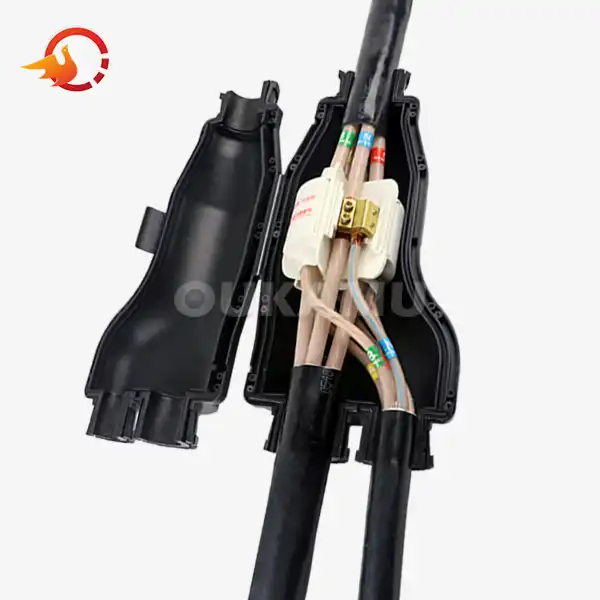
The built-in T-connector is a big step forward for electrical wholesalers who want to offer unique goods. These devices clamp onto main conductors and provide insulated branch takeoffs, unlike traditional joints that need cable cuts. In 2015, Xi'an Oukamu was the first company to use this technology to solve a problem that installation contractors often had when they worked in buildings that were already occupied.
Key Differences Between Cable Joints and Connectors
The main change can be seen in the way it is built. Joints completely surround spliced wires in insulating materials, making a single cable piece that can't be told apart from the original run. Connectors keep the main cable's structure while adding points of link by making mechanical or cutting contact.
There are big differences in how well electricity works. When joints are placed correctly, they have contact resistance below 0.5 milliohms, which is very close to the cable's natural conductivity. Because of the contact interface, branch connectors usually have a little higher resistance (about 1-2 milliohms), but this isn't important for most uses below 100 amps.
Durability and Environmental Protection
Joints work great in rough situations. Resin-filled repair kits can last for decades without being maintained even when they are buried directly, placed underground, or in a corrosive industrial environment. The one-piece design doesn't let water or other toxins in.
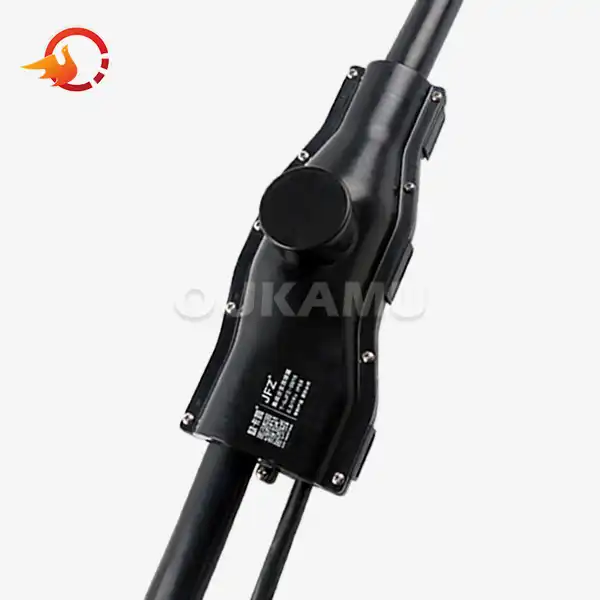
Branch links put ease of entry ahead of complete sealing. Models like Oukamu's ZR-JFZ series have flame-resistant and waterproof (IP65) housings, but they're made for places where they can still be inspected on a regular basis. Facilities that change the layout of circuits seasonally or when production changes like that they can be used again and again.
Application Scenarios and Selection Criteria
Joints are the only way to connect underground service lines. Accessible splice points aren't allowed in buried conduit because of rules, so connections must be permanent and sealed. Once the installation is complete, the wire is hidden and left to work for as long as it lasts. A cable joint connector is precisely the component used in such permanent underground splices, as it ensures a robust, watertight, and code-compliant connection that does not require future accessibility.
Branch connectors are better for building distribution systems. Commercial buildings, factories, and infrastructure projects need to be able to adapt to changing renter needs or equipment moves. Over the life of the building, a connector put on the 12th floor riser can serve different branch circuits without having to dig through walls or ceilings.
Detailed Dimension Analysis: Types, Materials, and Installation
These days, branch cable solutions are more complex than just wire nuts and split bolts. Precision-engineered devices that match joint-level performance while keeping main cable continuity are now part of the technology.
Reusable versus Permanent Installation Methods
With traditional joints, the installation is permanent. To get rid of a heat shrink tube or resin that has set, you have to cut out the whole joint section and start over. This permanence works well for the first building but causes problems when it's time to renovate.
This problem is solved by Oukamu's integrated T-connector design. The bolted compression mechanism makes it possible to install, remove, and reinstall the cable without damaging the insulation on the main cable. During the fit-out phase of a recent high-rise project in Seattle, contractors moved three branch connections, which is not possible with standard joints. This saved the developer about $8,000 in rewiring costs.
Material Compatibility Across Voltage Classes
The operating voltage and cable specifications must be taken into account when choosing a product. The table below shows common combinations of materials:
| Cable Type | Voltage Rating | Recommended Insulation Material | Typical Application |
|---|---|---|---|
| XLPE Power Cable | 0.6/1kV | Flame-retardant polymer | Commercial buildings, light industrial |
| EPR Utility Cable | 15kV | Silicone rubber with stress control | Utility substations, primary distribution |
| PVC Building Wire | 600V | PVC or polyolefin | Residential, small commercial |
The ZR-JFZ-95/70 model specifically targets the 0.6/1kV building distribution market, accommodating main cables from 35mm² to 95mm² and branch cables from 16mm² to 70mm². This range covers approximately 80% of commercial building branch circuit requirements, according to installation data from the International Association of Electrical Inspectors.
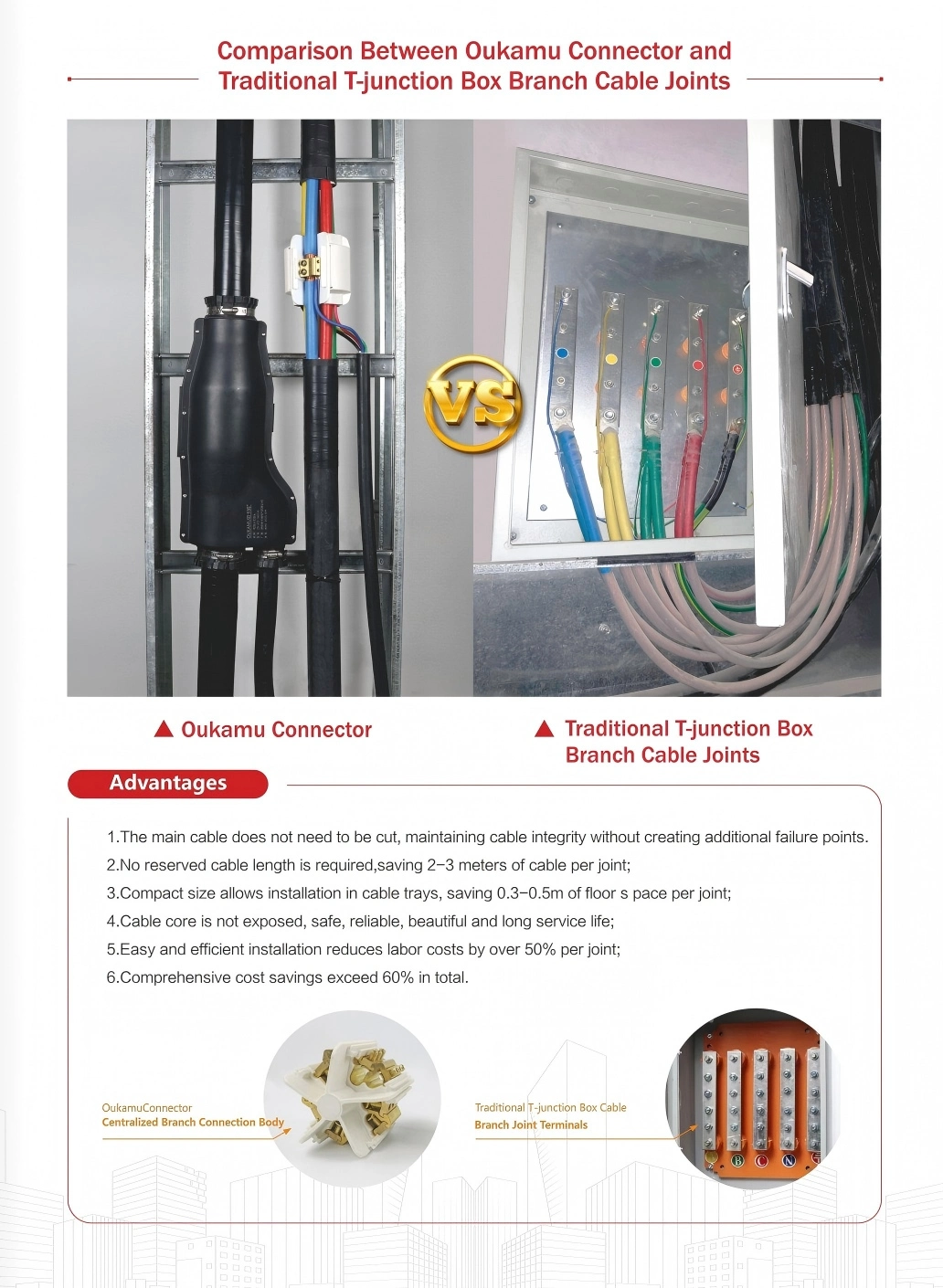
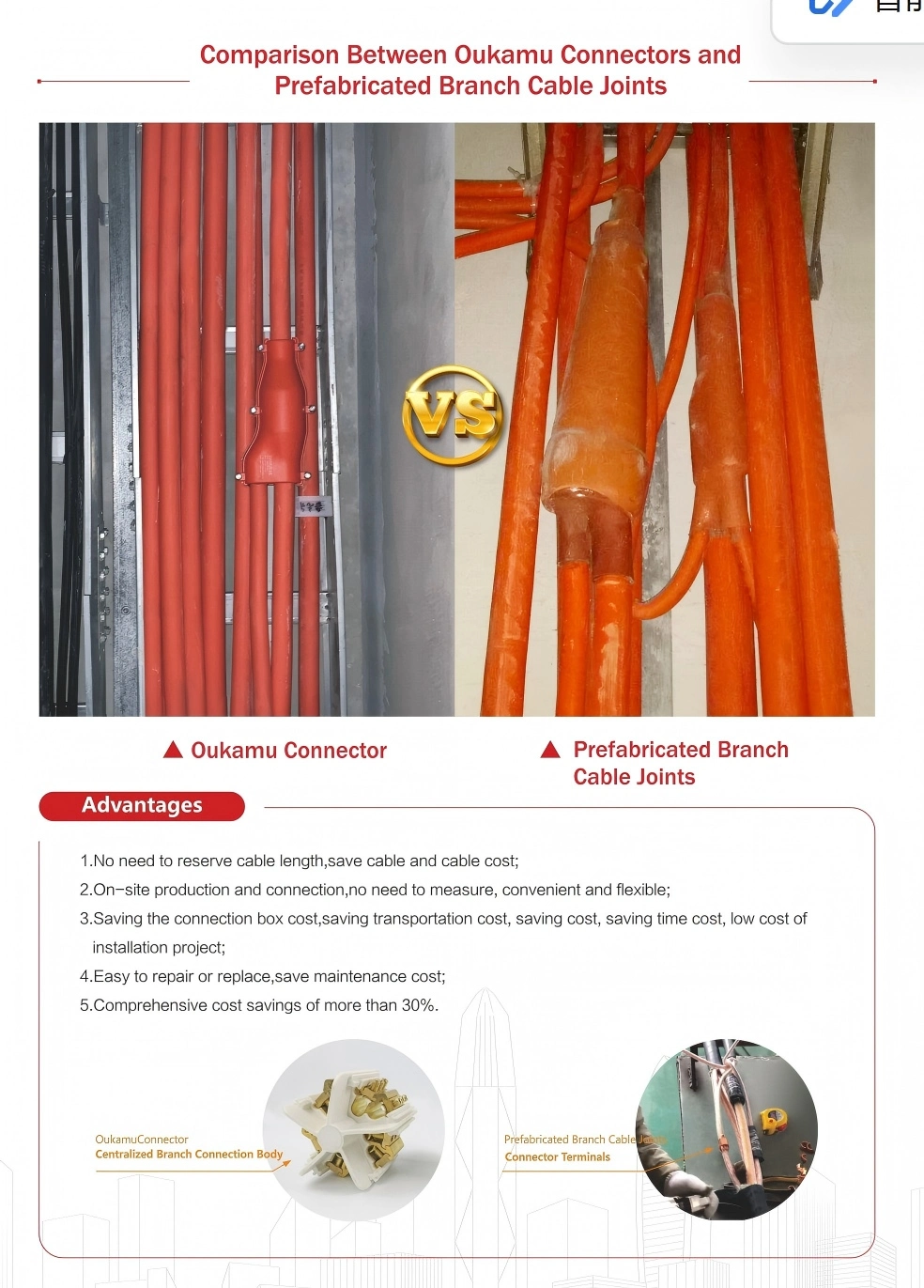
Installation Best Practices for Branch Connections
Proper installation determines long-term reliability. Begin by verifying the main cable's current capacity supports the additional branch load. Overcurrent protection must coordinate between the main feeder and branch circuit breakers to ensure selective tripping during fault conditions.
The physical installation process for integrated T-connectors differs markedly from joint splicing. No cable cutting occurs—the installer simply positions the connector body at the desired branch point, routes the branch cable through the device, then tightens the compression mechanism per torque specifications. The entire process takes approximately 15 minutes compared to 45-60 minutes for equivalent junction box wiring.
Safety protocols remain paramount. De-energize circuits before installation whenever possible. When working on energized systems—permitted only for qualified personnel under specific conditions—use insulated tools rated for the system voltage and wear appropriate arc-rated PPE.
The National Fire Protection Association's NFPA 70E standard provides detailed guidance on electrical safe work practices. For cable joint connector installations, these safety measures are especially critical, as the splicing process often requires handling exposed conductors in confined spaces, where any lapse in procedure can lead to serious arc flash hazards.
Procurement and Buying Guide for Cable Joints and Connectors
Selecting the right supplier involves more than comparing unit prices. Your customers—installation contractors and facility managers—judge your value based on product availability, technical support, and problem-solving capability when field issues arise.
Performance specifications provide the foundation. Verify that products carry certifications matching your market's requirements: UL listing for North American projects, CE marking for European equipment, and CCC certification when supplying projects with Chinese-manufactured gear. The GB/T 14048.7-2016 standard specifically addresses low-voltage switchgear and controlgear connection assemblies, providing assurance for projects requiring Chinese compliance.
Evaluating Brand Reputation and Technical Support
Established manufacturers invest heavily in application engineering. When contractors encounter unusual installation scenarios—limited space, extreme temperatures, or compatibility questions with exotic cable types—responsive technical support becomes invaluable. This capability differentiates premium suppliers from commodity vendors.
Xi'an Oukamu Electric Co., Ltd. built its reputation specifically on branch connection technology. The company's 20-year focus on this niche created deep expertise that generic electrical manufacturers cannot match. Their engineering team assists with custom solutions for projects requiring non-standard cable sizes or unusual environmental conditions.
Procurement Logistics and Inventory Strategy
Bulk purchasing economics favor products with broad application ranges. The following comparison shows how comprehensive sizing reduces SKU counts:
| Product Model | Main Cable Range | Branch Cable Range | Voltage Rating | Effective SKU Consolidation |
|---|---|---|---|---|
| ZR-JFZ-95/70 | 35-95mm² | 16-70mm² | 0.6/1kV | Replaces 6-8 traditional junction box configurations |
| Traditional Junction Box | Fixed knockout sizes | Fixed knockout sizes | 600V | Requires multiple sizes for equivalent coverage |
Carrying the ZR-JFZ series lets you serve most commercial branch circuit needs with a single product line. The modular design accommodates various cable combinations within the specified range, reducing inventory investment while improving stock turnover.
Lead times matter during project critical paths. Domestic suppliers typically ship within 48 hours for standard items, while international manufacturers may require 6-8 weeks for container shipments. Balancing immediate availability for rush orders against the cost savings of direct imports requires analyzing your customer base's typical procurement patterns.
Top Market Solutions and Best Practices in 2026
The branch connection market evolved significantly as building codes tightened fire safety requirements and sustainability initiatives pushed for installation efficiency. Products meeting these dual standards acquire premium placement. cable joint connector systems, in particular, have become critical in this evolution, as they must simultaneously ensure reliable electrical continuity and comply with stringent fire-rated enclosure mandates—making them a prime example of how component-level innovation supports both safety and rapid onsite assembly.
Waterproofing and Environmental Resilience
Modern business buildings incorporate more outdoor electrical equipment—rooftop HVAC systems, façade lighting, parking structure power distribution—exposing links to weather extremes. Waterproof ratings now appear as standard specifications rather than premium upgrades.
Integrated T-connectors with IP65 ratings seal against dust and water jets from any direction. The housing design incorporates drainage paths for any moisture entering through conduit systems, preventing water accumulation around terminals. This safety suits both fully outdoor setups and indoor settings with wash-down needs like food processing facilities.
Case Study: Municipal Infrastructure Upgrade
A recent subway station makeover in the northeastern United States shows real branch connection benefits. The job needed adding 23 new branch circuits to existing 120-meter wire runs serving station lighting and HVAC controls. Traditional methods would have meant installing junction boxes, splicing wire pieces, and making multiple possible failure spots.
The engineering team instead specified Oukamu ZR-JFZ connectors installed directly on the existing main cables. The method eliminated junction box procurement and cut installation work by approximately 60 hours across the project. More importantly, the transit authority's repair team can now relocate or add circuits during future station changes without major cable replacement.
Emerging Trends in Installation Methods
The building worker shortage pushes demand toward installation methods needing less specialized skill. Traditional cable jointing demands considerable training—achieving proper insulation overlap, controlling heat application, ensuring complete moisture sealing. Mistakes create hidden failure points discovered only after energization or during the first rainfall.
When using mechanical compression connectors, the level of skill needed goes down. If an apprentice electrician follows basic torque guidelines and visual inspection rules, they can do a good job of installing something. This ease expands the contractor base capable of handling branch circuit work, possibly growing your customer pool beyond traditional electrical specialists into general building firms and facility care departments.
Conclusion
The difference between wire joints and connections affects how you handle customer service and what you keep in stock. Joints are used for fixed installations where sealed, maintenance-free links are worth the extra money for better materials and skilled installation work. Branch connections meet the changing needs of modern buildings where buying choices are based on circuit flexibility, installation speed, and the ability to change in the future. Products from Oukamu like the ZR-JFZ series are the result of 20 years of specialised engineering work that has been done to solve problems with branch connections.
A cable joint connector, by contrast, serves as a permanent, protected splice point that bridges the gap between fixed joints and modular branch systems, offering a middle-ground option for scenarios where reliability and moderate reconfigurability are both required. If you know about these differences, you can suggest the right solutions, cut down on customer returns, and make money on products that really make installation easier.
FAQ
Can cable joints and connectors be used interchangeably?
These items are used for different things and usually can't be switched out for each other. Joints make permanent connections between cable ends, which means that the conductors have to be fully exposed. This makes a sealed, continuous cable section.
Connectors let you branch off of current wires without cutting the main wire. If you use a joint where a connector should be, you have to cut wires that don't need to be. If you use a connector for a true splice application, you might be breaking the rules that say fixed connections have to be made in places that can't be reached. Always make sure that the type of product you choose fits the fitting situation and the electrical rules that apply.
What safety certifications should I verify before stocking cable connection products?
For North American markets, UL listing is still necessary. This includes tests for construction, electrical performance, and fire safety. International projects might need a CE mark to show that they follow the European Low Voltage Directive. In Chinese standards, the GB/T 14048.7-2016 standard talks about link units for low-voltage switchgear in detail.
Products used in utility applications might need extra approvals from groups like CSA or proof that their designs follow IEEE rules. Before you buy a lot of inventory, make sure you get certification paperwork from suppliers and check the listings in the certifying body's online database.
How do I ensure compatibility between connectors and my customers' existing cable systems?
Check three important specs: the range of wire sizes that work, the voltage ratings that match, and the shielding materials that work. The connector has to be able to physically fit both main and branch wire widths within the range of sizes it can compress. With enough room for error, voltage estimates should match or go above the system's working voltage.
The temperature ratings for the insulation materials must be the same as those for the cable insulation. When builders come up with strange mixtures, like connecting aluminium to copper or mixing different types of insulation, they should check with the manufacturer's application engineering team to make sure the parts will work together and find out if any special steps need to be taken.
Partner with Oukamu for Advanced Cable Connection Solutions
Distributors of electrical materials all over North America trust Oukamu to provide them with cable joint connectors that work well in real installations. Our ZR-JFZ series gives your contractor customers the freedom they need—branch connections can be made anywhere without cutting main cables—as well as the flame-resistant construction that meets strict building codes and the cost-effectiveness that saves projects money by cutting down on cable waste by two to three meters per connection point.
Your image depends on the quality of this product, which meets foreign standards (GB/T 14048.7-2016) and can be used more than once.We understand that distributors are worried about the cost of stocking their shelves and getting customers to accept new technologies. So, we help our partners by giving them detailed technical documentation, materials for training contractors on how to install our products, and quick engineering support for any special needs the project may have.
Get in touch with our team at info@okmbranchcable.com to talk about regional marketing options, bulk prices for cable joint connector makers, and how our 20 years of experience specialising in branch connections can help your product stand out. You can look at our full product specs and request samples for customers to test at okmbranchcable.com.
References
1. IEEE Standards Association. (2022). IEEE 404-2022 - Standard for Cable Joints for Use in Systems Rated 2.5 kV through 765 kV. IEEE.
2. International Association of Electrical Inspectors. (2023). Analysis of Branch Circuit Installation Methods in Commercial Construction. IAEI Magazine, 95(3), 45-52.
3. National Electrical Manufacturers Association. (2023). Electrical Connection Technology: Performance and Application Guide. NEMA Standards Publication.
4. National Fire Protection Association. (2024). NFPA 70E: Standard for Electrical Safety in the Workplace, 2024 Edition. NFPA.
5. Standardization Administration of China. (2016). GB/T 14048.7-2016: Low-voltage Switchgear and Controlgear - Part 7: Connection Assemblies. SAC.
6. Underwriters Laboratories. (2023). UL 486A-486B: Wire Connectors and Splicing Devices. UL Standards.