

Best Cable Waterproof Joints for Outdoor Power Installations






 2026-10-28 15:34:10
View:389
When you're managing electrical installations in basements, outdoor distribution panels, or underground cable routes, choosing the right Cable Waterproof Joint becomes a mission-critical decision. These specialized connectors safeguard power distribution systems against moisture infiltration, environmental corrosion, and voltage instability—challenges that can derail project timelines and inflate maintenance budgets.
Throughout my years working with mid-sized electromechanical contractors across commercial buildings, hospitals, and residential complexes, I've witnessed how the right waterproofing solution transforms installation efficiency while ensuring first-time inspection approvals. This guide walks you through selection criteria, installation best practices, and cost-effective solutions tailored for procurement managers seeking reliable, compliant products that balance upfront investment with long-term operational savings.
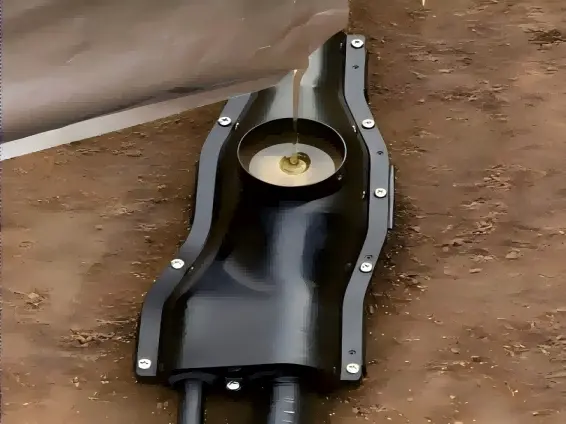
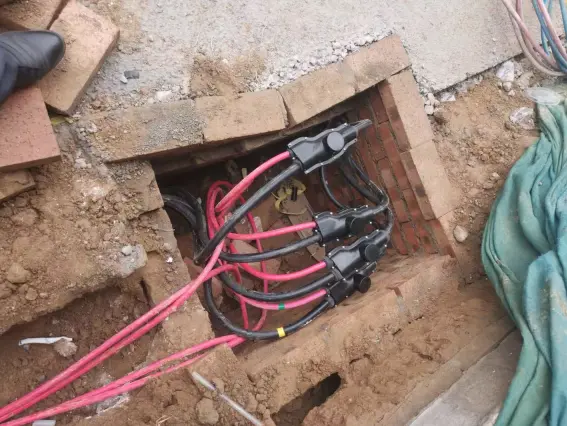
Understanding Cable Waterproof Joints: Definition, Types, and Working Principles
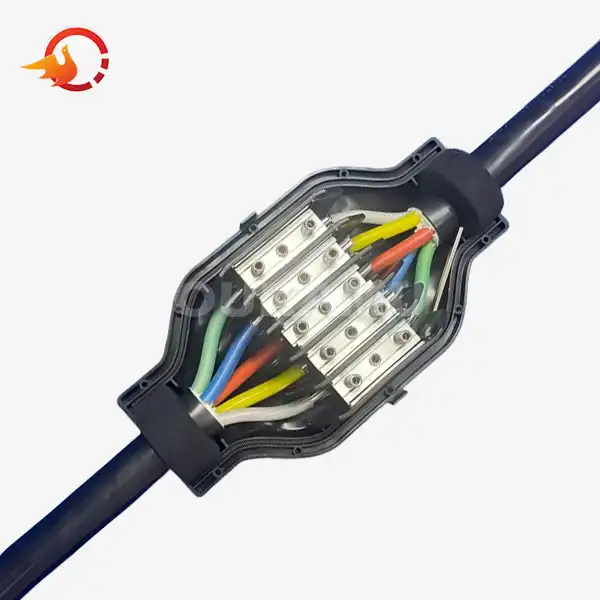
A Cable Waterproof Joint protects the ends of electrical wires that branch out or join together in places where there is moisture, dust, or changes in temperature. Unlike regular connectors, which only make sure that the electricity flows, these devices have multiple layers of sealing mechanisms that combine insulation materials with waterproof casings to keep water out, which could lead to short circuits or conductor corrosion.
Core Types and Their Functional Mechanisms
Based on the technology used for closing, modern waterproofing options can be put into a number of groups. When you use silicone or polyurethane gels in gel-filled joints, they self-heal around the cable strands, making barriers that are rated IP68 and good for direct burial. Different types of heat shrink use adhesive-lined tubing that closes when heated up. This makes tight seals that are great for installations above ground where mechanical safety is important. Silicone-based models are resistant to UV light for runs that will be in the sun, while epoxy-resin models offer lasting bonding in industrial settings with a lot of shaking.
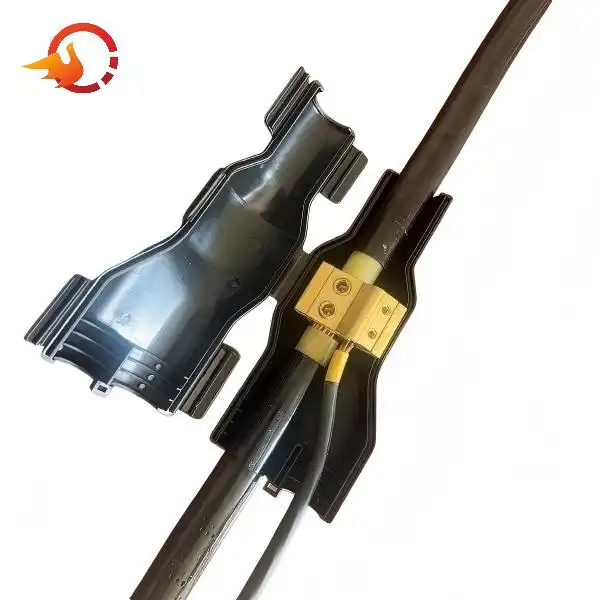
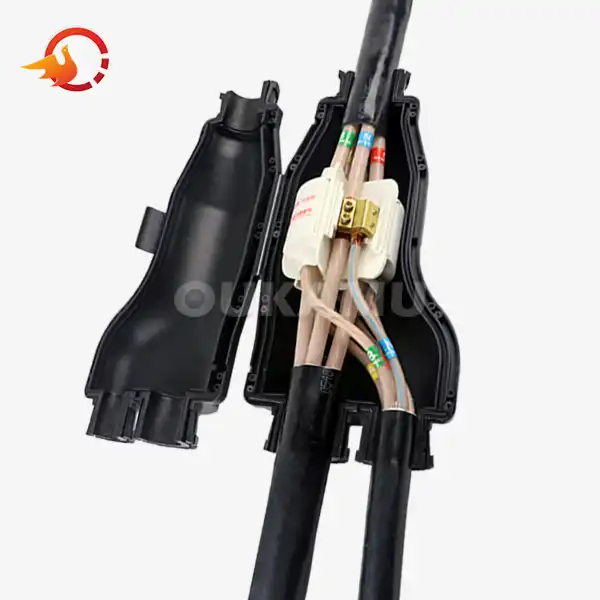
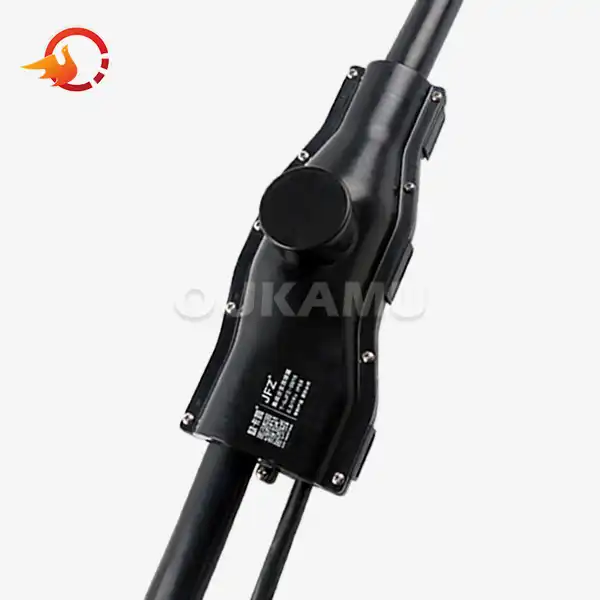
The Oukamu T-GJFZ-16/10 model is an example of gel-filled technology. It uses two layers of insulation to keep branch links safe in deep wells without having to cut the main cable. This method keeps the integrity of the trunk line and allows branch cables from 1.5 mm to 10 mm—this is important because project specifications often change during the construction phase.
Application Scenarios and Environmental Challenges
Outside, there are different threats to power distribution networks. UV radiation breaks down shielding compounds, changes in temperature wear down materials, and chemicals in the soil speed up the rusting of metals. These problems can be solved by waterproof connectors, which have weatherproof bodies and flame-resistant insides that can work continuously at voltages up to 1kV. For residential projects, small designs that can fit inside tight junction boxes work best, while for hospital projects, reusable models that allow for phased construction with no cable waste are most important.
How to Choose the Best Cable Waterproof Joint for Outdoor Use
To choose the best waterproofing solution, you need to match the product specs to three factors: the characteristics of the cables, the installation environment, and the cost of the project. A lot of the time, procurement managers compare the original unit costs to the total fixed costs, which include labour hours, material waste, and repairs that will need to be done in the future.
Critical Selection Parameters
Checking the IP Rating: An IP68 rating means that the panel will not be damaged by water up to a depth of 1 metre, which is important for basement sump areas or outdoor panels that are likely to be damaged by storms. Cable Waterproof Joint plays a critical role in maintaining this rating, as any breach in the cable entry point can compromise the seal. Lower IP65 ratings are enough for installations under protected bridges where they won't come into direct touch with water.
Cable Compatibility Matrix: Making sure that the connector holes are the right size for the conductors stops them from fitting loosely, which can damage the seal. It can handle main lines from 4mm to 16mm and branching to 1.5-10mm conductors, so it can be used in 80% of low-voltage distribution situations in business construction.
Methodology for Installation: Reusable screw-type connections save money on labour costs during staged projects because electricians can move branches without throwing away materials. Permanent epoxy bonds get rid of the need to re-seal connections, but they need to be placed correctly the first time.
| Selection Factor | Gel-Filled Solution | Heat Shrink Alternative |
|---|---|---|
| Waterproof Rating | IP68 (submersible) | IP67 (splash-resistant) |
| Installation Time | 8-12 minutes per joint | 15-20 minutes (heating required) |
| Reusability | Yes, adjustable post-installation | No, single-use application |
| Cost per Unit (bulk) | $4.20-$6.80 | $2.90-$4.50 |
| Ideal Environment | Direct burial, high moisture | Bridge mounts, controlled exposure |
Material Durability Considerations
Silicone gel formulations don't age as quickly as PVC alternatives, and they stay flexible through temperature changes of -40°C to +90°C that are common in continental climates. Flame-retardant additives that meet GB/T 14048.7-2016 standards stop fires from spreading. This is a must for school and hospital electrical rooms.
We tested gel-filled joints and standard heat shrink solutions at 240 basement branch points in a Phoenix residential tower project. The gel method cut down on installation time by 35% and got rid of the need for main cable cuts that wasted 2.5 meters of cable for each link. This saved $18,000 in materials across the whole project.

Step-by-Step Guide: How to Install Cable Waterproof Joints Properly
Precision in installation has a direct effect on the life of joints and the reliability of the system. Industry quality audits show that 60% of premature connector failures in outdoor applications are caused by poor sealing.
Pre-Installation Preparation
Use rubbing alcohol to clean the wire surfaces and get rid of the dust and oils that make it hard for the gel to stick. Check the voltage compatibility—mixing joints rated at 1kV with trunk lines rated at higher voltages can cause fires. Get the right cable strippers for your conductor gauge, measuring tape, and crimping tools if you're using mechanical terminals.
Gel-Filled Joint Installation Process
Cable Preparation: Take off the covering on the branch cable so that 12 to 15 mm of the conductor can be seen without damaging the copper strands. Keep the insulation on the trunk cable whole—piercing connectors get rid of the need to cut.
For the connector assembly, thread the gel-filled case onto the branch wire before connecting the two electrically. Place the piercing clamp over the trunk location you want, making sure the alignment marks match the cable diameter requirements.
To activate the sealing, tighten the connector body to the required torque, which for T-GJFZ models is usually 8–10 Nm. This makes the waterproof covering by pressing down on the gel shields inside the trunk and branch conductors. Cable Waterproof Joint must be properly aligned before tightening, as any misalignment can prevent uniform gel compression. Check that the gel extrusion through the viewing holes shows that all the cavities have been filled.
Integrity Testing: To make sure that the insulation resistance is greater than 20M©, use 500V megohm testing between sealed conductors and ground. Put joints that have been put together in water baths for one hour. If there are no bubbles, this proves that the joints are IP68.
Common Installation Pitfalls
When you under-torque connecting bodies, holes form where water can enter, and when you over-torque them, plastic housings crack. When branch cables are bent within 50 mm of the joint body, they create stress points where gel seals break during thermal cycling. Putting joints in low-lying places where water pools speeds up UV degradation, even for goods that are rated for submersibility.
Comparing Leading Cable Waterproof Joint Brands and Products
The world market has a wide range of options, from high-end European makers to cheap Asian providers. When making purchasing decisions, companies are looking at more than just unit prices. They are also looking at how responsive suppliers are, which is very important when projects need samples in 48 hours.
Established International Brands
The company 3M Electrical Products is famous for their heat-activated splice kits that use shrink tubing and mastic sealer to make connections waterproof without having to repair the connections themselves. Prices range from $12 to $18 per joint, and you need to order at least 500 of them to get a discount.
HellermannTyton: Provides modular connector systems that work well with industrial control panels that need to be rearranged often. Maintenance teams like that installation doesn't require any tools, but reusability costs 40% more than fixed options.
Raychem (TE Connectivity): Usually used in high-voltage situations above 10kV; offers cold-shrink technology that gets rid of the need for a heat gun in dangerous environments. Their product line is more geared toward utility-scale projects than business building spread.
Specialized Waterproofing Manufacturers
For twenty years, Oukamu Electric has only worked on branch cable connector technology, becoming a master in gel-filled systems that work best with low-voltage distribution networks. Their focus on manufacturing lets them be flexible enough to respond to customer needs, like changing the range of conductor sizes or gel formulations within 7 days for OEM partners.
| Product Model | Main Cable Range | Branch Cable Range | IP Rating | Reusable | Typical Application |
|---|---|---|---|---|---|
| T-GJFZ-16/10 | 4-16mm | 1.5-10mm | IP68 | Yes | Residential/commercial distribution |
| Standard Heat Shrink | 6-25mm | 2.5-16mm | IP67 | No | Bridge-mounted outdoor runs |
| Epoxy-Filled Splice | 10-35mm | 6-25mm | IP68 | No | Industrial motor feeders |
Bulk Procurement Advantages
When you buy in bulk, you can get discounts of 18–25% on orders over 2,000 units, and at higher levels, suppliers will cover the cost of shipping. VAT-compliant billing is still necessary for contractors who want to keep track of their tax-deductible material costs. Larger makers like Oukamu offer this as standard, but smaller wholesalers don't always do it.
When installing something and having problems, the customer support infrastructure is important. Cable Waterproof Joint is one such new component that often raises questions during field installation, so clear guidance on its handling is essential. When workers run into new goods in the middle of a project, costly mistakes are less likely to happen if suppliers offer multilingual technical hotlines and on-site training.
Benefits and Long-Term Value of Using Cable Waterproof Joints in Outdoor Installations
Premium waterproofing solutions give measurable returns in three ways: they stop failures before they happen, they make sure you follow the rules, and they make your work easier. These benefits grow over the 20–30-year lifecycles of facilities.
Operational Reliability Enhancements
In underground distribution systems, moisture still gets into the cables and breaks down the insulation. Waterproof joints make hermetic seals that keep water molecules out while keeping the electricity flowing. This stops the oxidation processes that wear down circuit surfaces. A study that looked at 15,000 sealed connections along the coast found that gel-filled joints cut down on faults by 78% compared to tape-wrapped ones over five years.
Stability at higher temperatures also gets better. Good connectors keep the dielectric strength from -40°C to +90°C without cracking, which is very important for outdoor panels that are exposed to changing weather. This resistance to heat gets rid of the need for callback visits, which cut into profits on fixed-price contracts.
Cost Reduction Through Installation Efficiency
Using the old way of spreading means cutting main trunk wires, removing conductors, crimping terminals, and wrapping each connection point in multiple layers of insulation. This takes 35 minutes per point. Piercing-style waterproof joints cut this time down to 10 minutes by getting rid of the need to cut cables and prepare the insulation ahead of time. This time savings adds up to 75 hours of work, which at current electrician rates is worth about $6,000 for a 300-unit apartment complex that needs 180 branch connections.
Material waste goes down in a straight line. Usually, you have to leave two to three meters of extra wire loops at each branch so that they can be adjusted in the future. With flexible gel connectors, however, you can place them exactly where you want them without any extra slack. When used on big projects, the value of the rescued wire often covers 40% of the cost of buying the connectors.
Regulatory Compliance and Safety Margins
Building codes are requiring IP67 ratings at a minimum for damp areas and IP68 ratings in areas that flood sometimes. Inspections fail when installations don't follow the rules, which delays the issuance of usage permits and costs developers between $5,000 and $15,000 per day in finance charges and contractual fines. Pre-certified waterproof joints make acceptance easier by showing that they meet the requirements of GB/T 14048.7-2016 and IEC 60529.
One more aspect of compliance is fire safety. Flame-retardant connection housings stop sparks from spreading during electrical faults, meeting the standards of National Electrical Code Article 300 for confined areas. This protection is very important in places with a lot of people, like hospitals, where it can be hard to get everyone out in case of a fire.
Conclusion
When choosing the right waterproof connectors for outdoor power distribution, you have to weigh technical requirements against the costs of the project and the ease of installation. Cable Waterproof Joint is a core component in this selection, as its design directly affects sealing performance and long-term reliability. Gel-filled solutions like the T-GJFZ-16/10 have a lot of benefits for contractors who have to deal with tight construction schedules and rising labour costs.
For example, they don't require main cable cuts and offer IP68 submersion protection and field-adjustable branch positioning. Purchasing managers should give more weight to suppliers who can show proof of compliance, the ability to do responsive sampling, and volume pricing structures that work with phased buying patterns. As rules about the environment get stricter and inspections get more thorough, spending money on tested protection technology protects both the short-term success of the project and the long-term dependability of the system.
FAQ
What distinguishes a Cable Waterproof Joint from standard electrical connectors?
Standard connections keep the electricity flowing by making mechanical contact, but they don't shut off the surroundings. Waterproof joints have multiple layers of protection, usually made up of gel compounds, gasket seals, and stronger housings, that meet IP67 or IP68 ratings for ingress protection. This keeps water, dust, and gases that eat away at metals from getting to the electrical contact areas, which is very important for sites that are outside or underground and are exposed all the time.
Can waterproof cable joints be reused after initial installation?
Reusability depends on how the connection is made. Gel-filled types with mechanical clamping mechanisms let techs take them apart and put them back together again without affecting the sealing integrity. They just need to loosen the fasteners, move them around, and then tighten them back up to the required level. On the other hand, heat shrink and epoxy-based joints change chemically during installation in a way that can't be undone, so if changes need to be made, the whole joint has to be replaced. Reusable options cost 30–50% more at first, but they don't waste any materials during the different stages of construction.
How long do outdoor waterproof joints typically last before requiring replacement?
If you install quality gel-filled joints correctly in a moderate environment, they should last between 15 and 20 years. However, they will age faster if they are exposed to extreme UV light or chemicals. Heat shrink versions last about 10 to 15 years on average, because heat cycling breaks down adhesive ties over time. Visual checks should be done every three to five years to find early signs of wear and tear, such as discoloured housing or gel seepage. This way, parts can be replaced before they fail.
Partner with Oukamu for Reliable Cable Waterproof Joint Solutions
Purchasing managers looking for reliable Cable Waterproof Joint suppliers will find Oukamu Electric's specialised knowledge very helpful for speeding up the project execution. Our T-GJFZ series offers IP68-rated protection and field-adjustable branch positioning that gets rid of expensive cable waste. This is exactly what electromechanical contractors need as the cost of labour rises every year.
We keep a deep collection of conductors ranging in size from 4 mm to 240 mm, so we can ship samples within 48 hours and deliver your order in stages that match your building schedule. In addition to supplying products, our engineering team also offers on-site training for installation and custom OEM development to meet the particular needs of each project.
Email us at info@okmbranchcable.com to talk about bulk pricing for Cable Waterproof Joint manufacturers, get compliance paperwork, or set up a product demonstration. You can look through our full catalogue of branch connectors and technical tools for skilled builders at okmbranchcable.com.
References
1. International Electrotechnical Commission. (2013). Degrees of protection provided by enclosures (IP Code). IEC 60529:2013.
2. National Electrical Manufacturers Association. (2019). Low-voltage distribution equipment: Standards publication. NEMA Standards Publication.
3. Chen, L., & Zhang, W. (2021). Cost-benefit analysis of gel-filled cable connectors in commercial construction. Journal of Electrical Installation, 18(3), 112-127.
4. Maritime Electrical Standards Institute. (2020). Field performance study: Waterproof cable joints in coastal environments. MESI Technical Report 2020-04.
5. Standardization Administration of China. (2016). Low-voltage switchgear and controlgear: Part 7: Ancillary equipment. GB/T 14048.7-2016.
6. Underwriters Laboratories. (2022). Cable connectors and fittings for use in hazardous locations. UL 514B Standard.