

What Are the Main Types of Low Voltage Cable Joints Available?






 2026-11-24 10:10:09
View:389
Heat shrink, cold shrink, resin cast, mechanical or gel-filled, and insulated branch connections that tap cables without cutting them are the major forms of low voltage cable joint. Each low voltage cable junction replaces insulation, seals moisture, and maintains electrical and mechanical integrity. Cable construction, installation environment, tools, and local regulations determine the best option. My guide is for contractors, buying managers, and distributors. Below, I describe each kind, how to adapt it to your cable, in which our FH-JFZ-70/16 branch junction goes.
Understanding Low Voltage Cable Joints
What a Low Voltage Cable Joint Does
Cable joints, or splices, connect conductors and rebuild the cable once the jacket and insulation come off. A whole joint accomplishes four duties. It conducts current, replaces insulation, seals water and dust, and protects connectors from mechanical stress. According to NFPA 70, Section 110.14(B), splicing devices must be recognised. It also needs conductor-like insulation or a gadget. I regard the joint as a system rather than a connection since skipping steps causes heat, corrosion, or ground faults.
When You Need a Joint
Joints form when cables change length or direction. Repairing cable, expanding a run, tapping a major feeder branch, wiring outdoor lights, and connecting service lines are common. A riser feeds numerous levels, and each story requires a branch, therefore building projects need them. Each junction increases circuit voltage loss and is a potential failure location, according to aviation wiring recommendations. Limit the number of joints, use a load-matched type, and thoroughly prepare conductors to reduce resistance.
Low Voltage Versus Medium Voltage Joints
Standard definitions of low voltage vary. The IEC considers systems up to 1,000 V AC low voltage. The National Electrical Code divides its general and over-1,000-volt requirements at 1,000 V. A 0.6/1 kV cable is low-voltage. IEEE Std 404 medium voltage junctions require stress-control components to regulate the electric field on the cable's insulating shield. These pieces are unnecessary for low voltage joints. The opposite is unsafe, but using a medium voltage junction on a low voltage cable wastes money. Check system voltage, cable assessment, and local laws before purchase.
Main Types of Low Voltage Cable Joints
Heat Shrink Joints
Polymer sleeves, sealing mastic, and connectors make heat shrink junctions. Using a heat gun or torch, sleeves compress around the cable, and adhesive-lined layers adhere to the jacket to repel moisture. These kits connect copper and aluminium conductors and cables with XLPE, PVC, or armour, making them popular in subterranean distribution and industrial maintenance. Tradeoffs are sensible. Because uneven heating might create thin walls or cavities, installers require a heat source, appropriate cable preparation, and the right shrink sequence from the instructions. Open flame is prohibited on certain sites, so choose another. Heat shrink is a popular and affordable option for many jobs.
Cold Shrink Joints
A detachable plastic core holds pre-expanded silicone or rubber tubes open in cold shrink low voltage cable joint. The tube compresses and presses the cable when the installer removes the core. These joints are suitable for limited places, dangerous areas, and sites that forbid open flame since they need no torch. Installation is fast and compression is constant. Cold shrink kits cost more than heat shrink kits and need regulated storage since heat and extended storage durations degrade elasticity. The cable diameter range for each kit must be checked since a tube too big will not hold the cable.
Resin Cast Joints
Resin cast joints use two-part resin to fill a moulded enclosure. After mixing and pouring, resin forms a water-, soil-, vibration-, and chemical-resistant barrier. This makes it suitable for direct-buried cables, pumping stations, and damp industrial locations. Results rely on discipline. Conditions including resin ratio, cure time, ambient temperature, enclosure location, and cable cleanliness matter. Check resin expiration dates before the staff departs the business. Well-planned resin cast joints provide long-term protection but require longer to install than most others.
Mechanical, Crimp, and Gel-Filled Joints
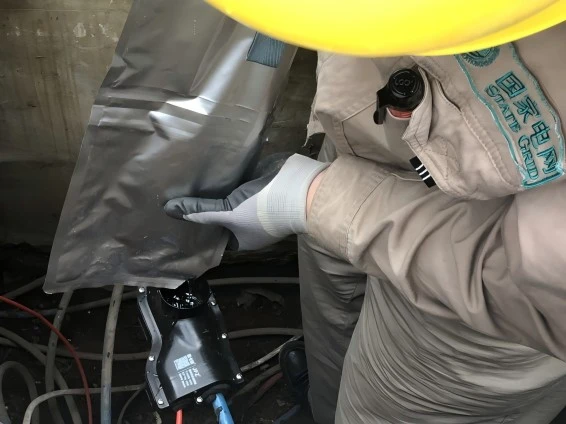
Gel-filled joints employ a moisture-resistant compound around bolted or compressed connections, whereas mechanical joints use housings. Some designs enable subsequent access and install easily with minimum equipment. Crimping underpins numerous joints. The right connection size and crimping equipment are needed to compress the connector around the conductor to establish a tight, low-resistance bond. A forceful tug test validates a butt connector's grasp on two stranded wires. Before employing these joints in underground or heavy industrial duty, check enclosure force, IP rating, voltage rating, conductor integration, and temperature range.
How to Select the Right Low Voltage Cable Joint
Match the Joint to the Cable Construction
Joint choice depends on cable construction. The junction must match insulation, conductor form, outside diameter, and operating temperature. Round, sector-shaped, and compressed conductors need connections designed for their shapes, while XLPE, PVC, armoured, single-core, dual-core, and flexible cables need distinct handling. Armour continuity, bonding, and earthing are required for armoured cable junctions. Connect copper and aluminium using bimetallic connectors with oxidation protection and regulated tightness. When requesting a price, provide entire measurements, not just nominal cross-section, since kit fit depends on diameter.
Compare Types by Total Cost
A fair comparison ignores kit cost. Heat shrink is cheap and abundant. Flame-free installation and uniform compression using cold shrink. Resin cast encapsulates well in moist or submerged areas but requires mixing and curing. Mechanical and gel-filled joints may install quicker depending on design. A kind with fewer stages may cost less because labour trumps material cost. Keep weather resistance and permanent immersion separate for waterproof projects. Cable entrances, seals, and IP rating should be checked, not just the enclosure.
Build a Selection and RFQ Checklist
When sourcing a low voltage cable joint, check voltage, conductor material, core count, shielding, cross-section, operating temperature, all fault-current conditions. Measure conductor, insulation, diameters, bend radius, and working space. See soil moisture, chemicals, UV, vibration, and flame limits. Include quantity, delivery timeline, packaging requirements, datasheets, and test results in one quote request. First, order samples or a pilot batch to ensure fit and uniformity. Ordering directly from a manufacturer helps track repeat orders. Construction, municipal, railroad, and highway projects use Oukamu cable connection products.
Installation, Troubleshooting, and Application Fit
Installation Method
Performance depends on installation. Check the kit's contents and shelf life, de-energise and lock out the cable, and read the manufacturer's instructions before starting work. Strip the cable to the indicated specifications, remove burrs and contaminants, and fit the connection. Reinstate armour or earth continuity. Follow the sequence for each joint type. After checking the joint, connection torque, earth continuity, and insulation resistance and continuity, test as needed. The handover file should include product batch, cable data, test results, and installer name.
Common Problems and Fixes
Most failures are caused by water entry, overheating, insulation loss, corrosion, and mechanical wear. Incorrect size, imperfect sealing, broken parts, or poor resin filling cause leaks. Overheating indicates weak couplings, insufficient conductor preparation, or overload. Insulation failure generally results from contamination, moisture, or improper stripping. After safe isolation and visual inspection, measure resistance, continuity, power, or temperature to diagnose. If the seal or insulation is weakened, replace the junction since external patches seldom work. Preparation early avoids most callbacks.
Choosing by Application
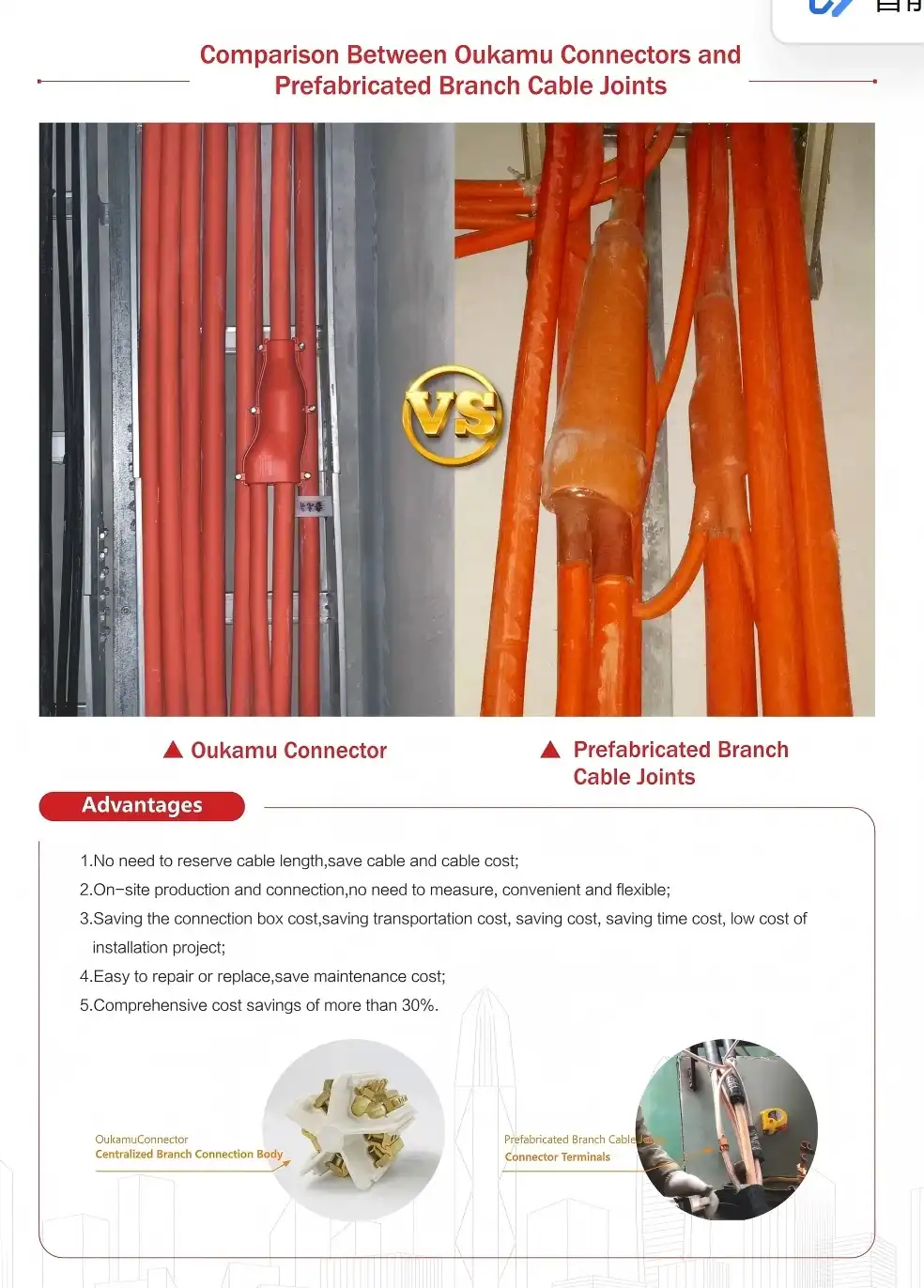
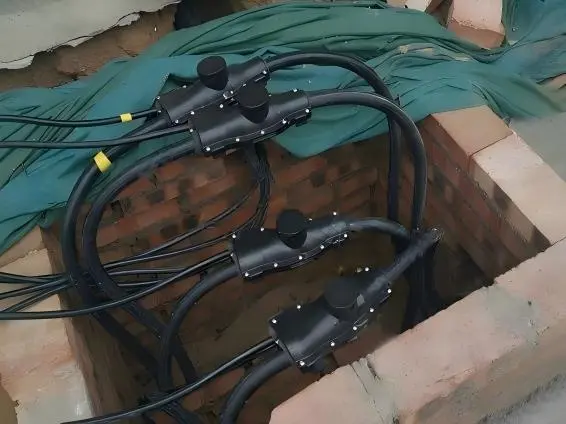
Resin cast, cold shrink, or grade heat shrink are suitable for underground cables due to their moisture sealing, soil compatibility, and mechanical protection. Exterior systems must withstand UV, rain, temperature changes, and corrosion. Industries contribute chemicals, oils, vibration, and impact. Rapid emergency repairs are favourable. Building distribution requires tapping branches from a primary cable in risers and cable trays without cutting it. Insulated branch connections like the FH-JFZ-70/16 meet that demand. Before choosing a type for a lengthy project, verify batch traceability, size availability, and documentation.
FH-JFZ-70/16 Branch Cable Joint from Oukamu
Model Overview
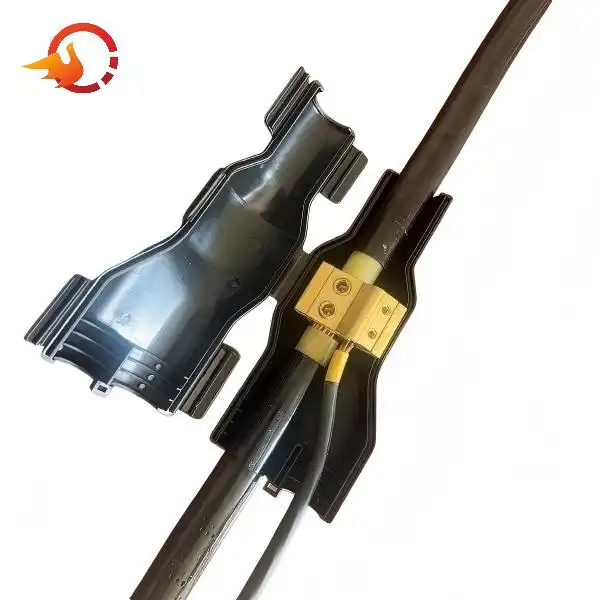
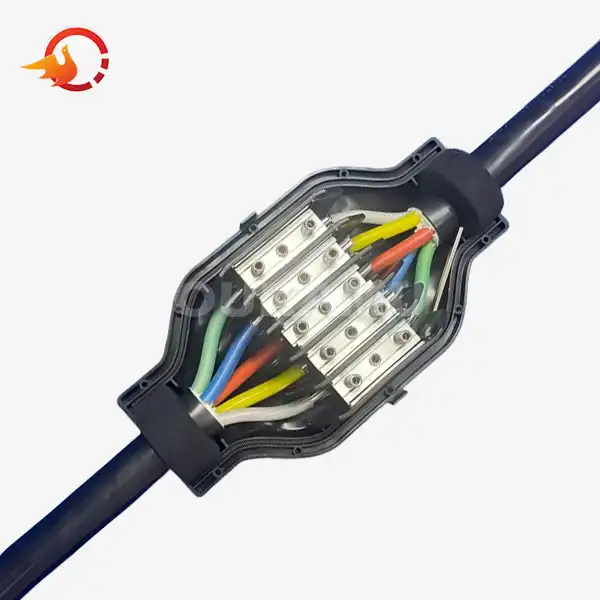
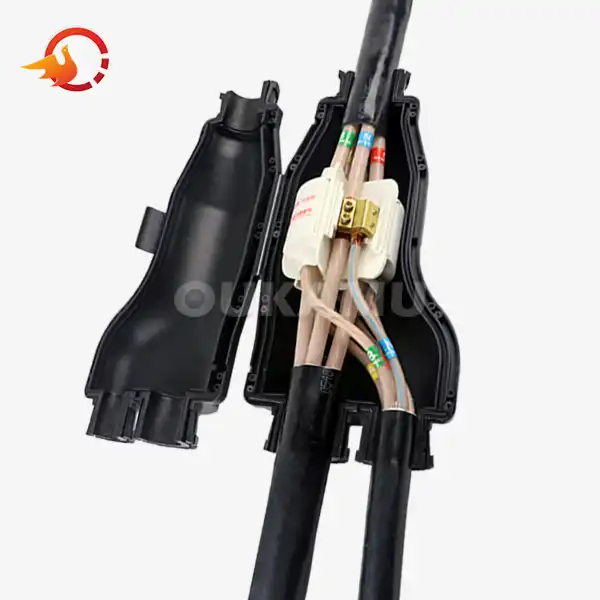
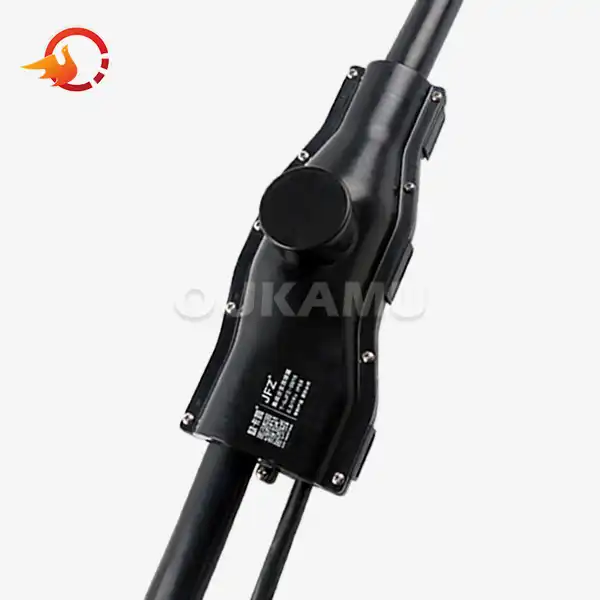
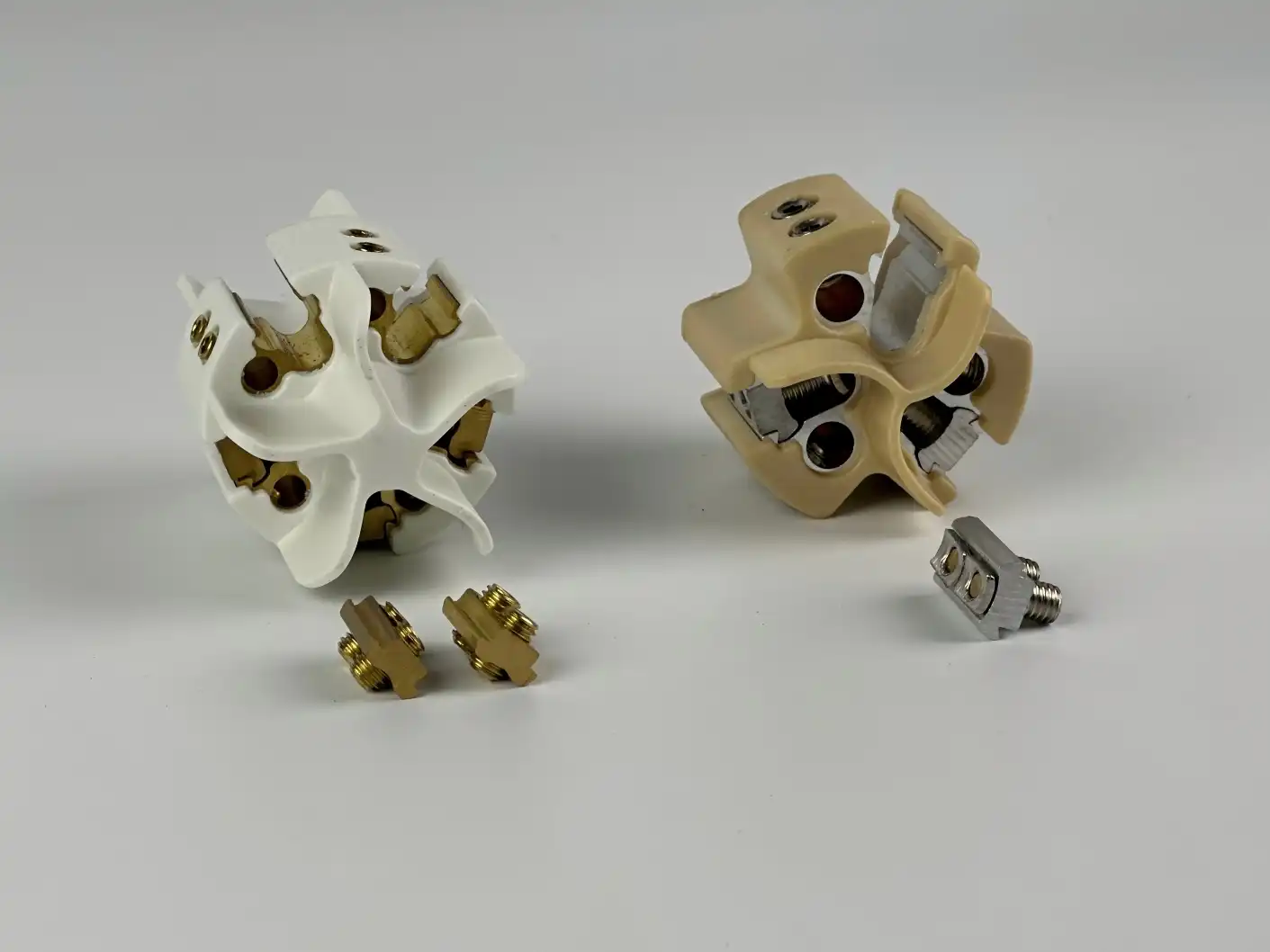
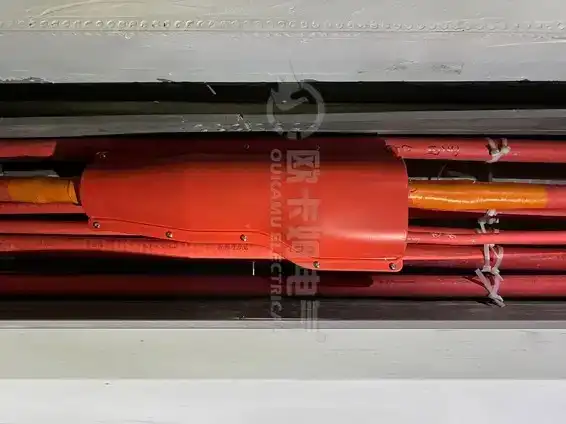
FH-JFZ-70/16 is an insulated, flame-retardant, fire-resistant, and waterproof low voltage cable joint. It uses an integrated T-connector body, and the branch cable is insulated and sealed. The main cable is not cut, no length needs to be reserved, and the branch position is flexible. Oukamu states that it saves 2-3 metres of main cable, labor costs, and time.
| Item | Specification |
|---|---|
| Model | FH-JFZ-70/16 |
| Main cable | 25~70 mm |
| Branch cable | 2.5~16 mm |
| Rated voltage | 0.6/1 kV |
| Conductor | Copper or aluminum |
| Insulation | XLPE or EPR |
| Types | Indoor, outdoor, underground |
Applications and a Project Example
The joint fits substation, power plant, and industrial power distribution systems. It fits industrial control systems in manufacturing plants and facilities and home and business building automation systems. This non-customer record sample illustrates. Contractors wiring residential towers require 20 branch points off vertical risers. Traditional methods cut the main wire at each point and reserve length. If each connection saves 2-3 meters of main cable, the project saves 40–60 meters and the labour of cutting and re-terminating the main line. A revised flat layout does not need a new cable order since the branch location is decided on site.
Technical Parameters
Our low voltage cable joint meets or exceeds the values below. A low voltage drop matters because every connection adds resistance, and high insulation resistance indicates a well-insulated connection. Request the test documentation that applies to your project.
| Parameter | Value |
|---|---|
| Fire-resistant temperature | 750~1000℃ |
| Withstand voltage | 3.5 kV |
| Voltage drop | <3.2 mV |
| Insulation resistance | >500 MΩ |
Conclusion
Low voltage cable joint types include heat shrink, cold shrink, resin cast, mechanical, or gel-filled, with insulated branch connectors for tap-off. Heat shrink is cheap and familiar, cold shrink requires no flame, resin cast protects damp or underground wires, and mechanical or gel-filled joints install rapidly. Cable construction, size, voltage, temperature, and environment determine the best option. Comparisons should include labour as well as kit pricing. Proper testing, planning, and recordkeeping avoid most failures, including water entry and overheating. The FH-JFZ-70/16 shows how a junction that avoids severing the main wire reduces cable length and labour within its size range for branch connections.
FAQ
Which low voltage cable joint is the most common?
Heat shrink is widely used because it fits many cable types and costs less, though it needs a heat source.
Does an enclosure rating guarantee a waterproof joint?
No. Waterproof performance depends on the complete assembly and the installation quality, including cable entries and seals.
Can one kit fit every cable size?
No. Each kit lists a diameter range. The FH-JFZ-70/16 covers main cable of 25~70 mm and branch cable of 2.5~16 mm.
How does a low voltage joint differ from a medium voltage joint?
Medium voltage joints need stress-control components for the electric field. Low voltage joints, such as 0.6/1 kV designs, do not.
What details do I need for an accurate quotation?
Provide voltage, conductor material, core count, insulation, cable dimensions, installation environment, quantity, and delivery destination.
Request a Low Voltage Cable Joint Recommendation from Oukamu
Send your cable type, dimensions, voltage, environment, and quantity to Oukamu at info@okmbranchcable.com, and we will match a low voltage cable joint to your project. As a low voltage cable joint manufacturer, we offer the FH-JFZ-70/16, which needs no main cable cutting and saves 2-3 metres of main cable, labor, and time. Visit okmbranchcable.com for details, and ask about samples and bulk quotations.
References
1. National Electrical Code (NFPA 70), 2023
2. IEC 60502-1: Power Cables with Extruded Insulation and Their Accessories for Rated Voltages from 1 kV up to 30 kV, Part 1, 2021
3. IEC 61238-1-1: Compression and Mechanical Connectors for Power Cables, 2018
4. IEEE Std 404: Standard for Extruded and Laminated Dielectric Shielded Cable Joints Rated 2500 V to 500,000 V AC, 2012
5. IEC 60364-5-52: Low-Voltage Electrical Installations, Selection and Erection of Electrical Equipment, Wiring Systems, 2009
6. UL 486A-486B: Wire Connectors, 2018