

What Features Matter in Single-Core Cable T-Connection Terminal Box?






 2026-11-23 11:01:52
View:389
In a single-core cable T-connection terminal box, a voltage rating that suits your system, a cable variety that covers your main & branch sizes, a closed insulated body, flame-retardant materials, and an installation technique that preserves the main cable are most important. Aluminium conductor compatibility and detailed documentation follow. I prepared this guidance for US contractors, distributors, and project managers comparing possibilities. The working example is our D-JFZ-95/50. It supports 50-95 mm² main cables, 6-50 mm² branch cables, and 0.6/1 kV rating.
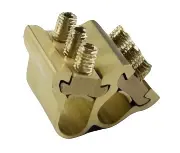
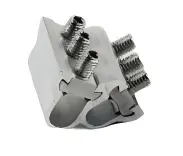
Understand the Structure and Working Principle of a Single-Core Cable T-Connection Terminal Box
What the Box Contains and Does
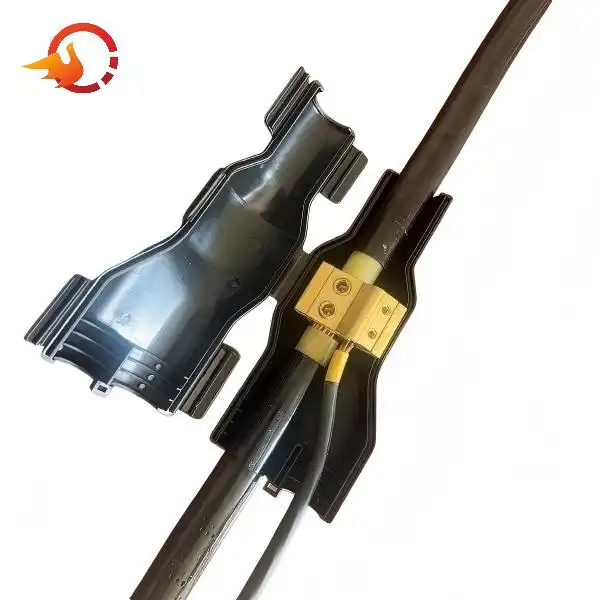
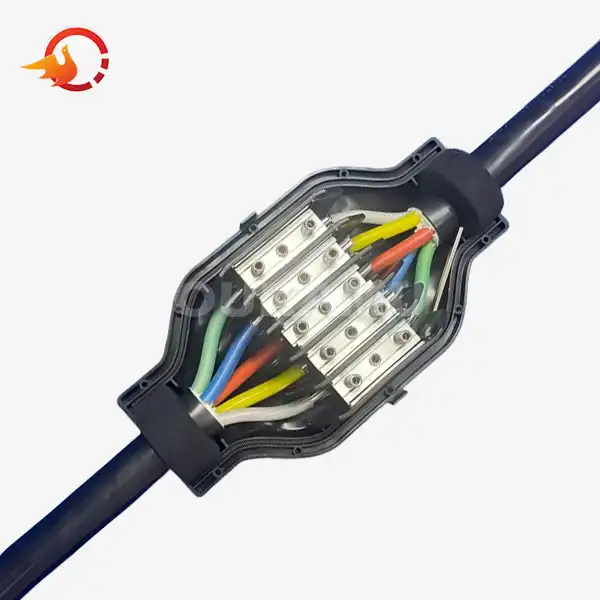
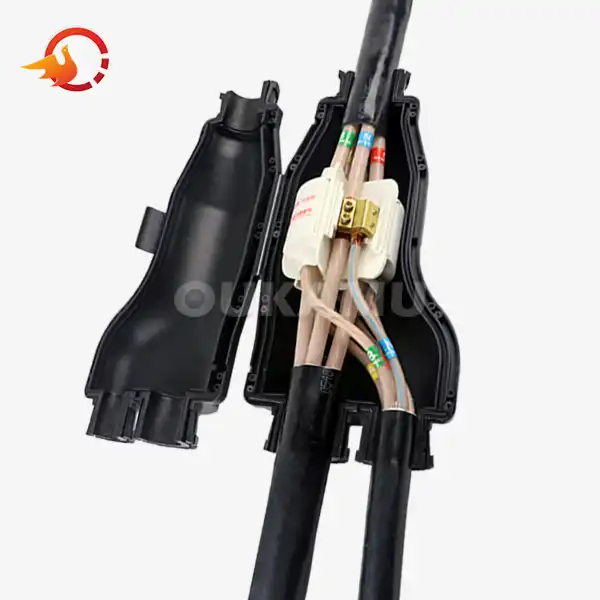
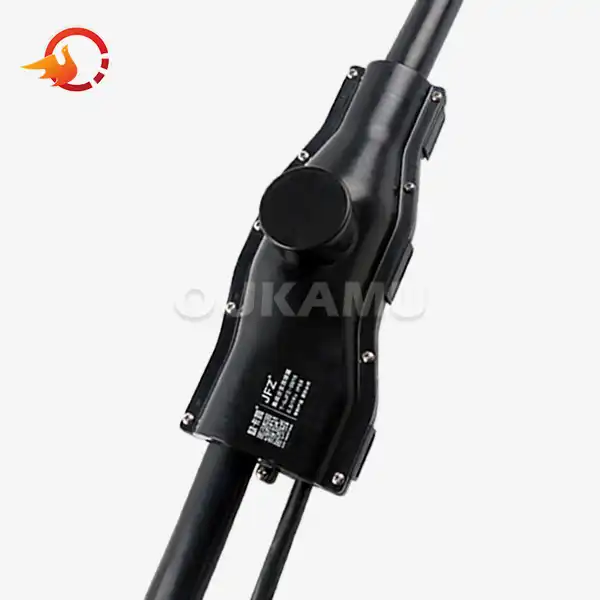
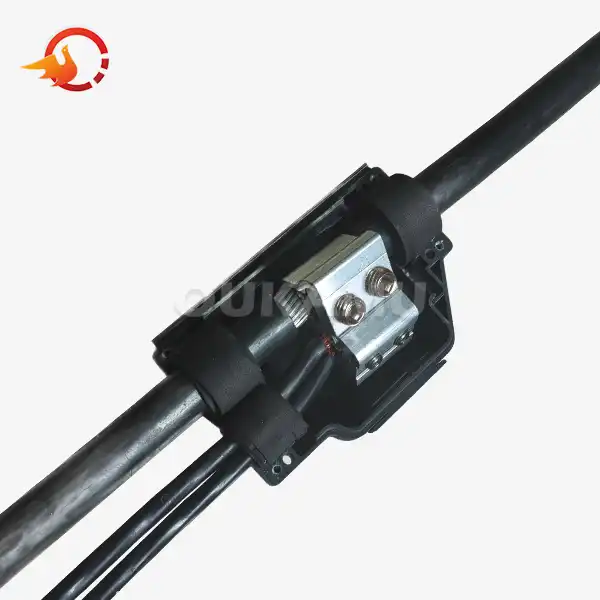
Branch feeders are tapped from main cables using T-terminal boxes. One housing contains the conductive contact, insulating body, sealing pieces, and cable entrances. Good designs reduce contact resistance, provide strong mechanical pressure, and maintain live part clearance. The D-JFZ-95/50's sealed construction combines the main cable, branch cable, and connector into one insulated body. Skip the heat-shrink tubing stage and the junction appears clean, which helps a developer's electrical lead check it. Always follow project designs and manufacturer directions while assembling.
How a No-Cut Branch Connection Works
Traditional branching splits and splices the primary wire. That creates a weak spot and requires extra wire length at every tap. D-JFZ-95/50 operates differently. Insert it where you need the branch along a cable, and the bond penetrates the insulation without cutting the conductors. The primary cable remains intact and current-carrying. You reserve no additional length, saving 2–3 meters of main wire at each branch. In a vertical riser with branches on each story, meters pile up fast.

How It Differs From a Junction Box or Straight Joint
Buyers occasionally combine three goods. Terminations in junction boxes need chopped and stripped cable ends. Straight-through joints repair or lengthen one cable, not generate branches. Branching uses a T-connection terminal box with main and branch cable paths. A floor panel 3 meters from the riser. Passing riser cables are tapped via branch joints. Junction boxes require chopped ends and extra length. Check product types against jobs before comparing pricing.
Electrical and Safety Features That Affect Performance
Voltage Rating and Cable Size Range
Start with label numbers. The single-core cable T-connection terminal box D-JFZ-95/50 is rated 0.6/1 kV, or 600 V phase-to-earth and 1000 V phase-to-phase. That complements low-voltage building distribution. The cable range includes main cables from 50 through 95 mm² and subsidiary cables from 6 to 50 mm², accommodating various apartment tower riser and feeder sizes. Compare your cable schedule to both. Since the D-JFZ series comprises 17 versions, a size outside this range may fit better.
| Parameter | Specification |
|---|---|
| Model | D-JFZ-95/50 |
| Main cable | 50–95 mm² |
| Branch cable | 6–50 mm² |
| Rated voltage | 0.6/1 kV |
| Conductors | Copper or aluminum |
| Protection | Insulated, flame retardant, fire resistant, waterproof |
| Installation | No main cable cutting, no reserved length |
| Structure | Integrated sealed design |
| Standard | GB/T 14048.7-2016 |
| Environment | Indoor or outdoor, open or concealed |
Contact Quality and Conductor Material
Slow hot connection failure. Poor contact pressure causes resistance, heat, and insulation ageing. Aluminium introduces another issue. Copper-to-aluminum contact may corrode if the connection is not intended for its oxide layer. NEC Section 110.14 requires connections that interconnect aluminium to be marked, and different metals shall not meet within a connector unless labelled. The D-JFZ-95/50 works with copper and aluminium conductors, which is important in aluminium feeder areas. Ask us for oxide treatment and dissimilar-metal instructions and follow them.
Flame Retardant and Fire Resistant Construction
Insulation and flame behaviour reduce damage in emergencies. Insulated, flame retardant, and fire-resistant D-JFZ-95/50 body. This works for risers, shafts, and cable trays with multiple circuits. Test techniques vary by standard. IEC 60332-1-2 addresses single-cable flame propagation, while UL 94 assesses plastic part flammability. Because brochure claims are not test proof, get test results for the model you purchase. Our product meets GB/T 14048.7-2016 and international safety requirements.
Mechanical and Environmental Protection Features
Sealing and Waterproof Performance
Water promotes corrosion and leaks at the contact site, therefore seal carefully. The D-JFZ-95/50 is waterproof and sealed. IEC 60529 gives IP codes. The first number indicates dust protection and the second water protection. IP65 is dust-tight and water-jet-resistant, while IPX7 handles transient immersion. Data indicates the product is waterproof. Before ordering, get the tested IP rating for basement shafts or parking constructions.
Indoor, Outdoor, Open, and Concealed Installation
This single-core cable T-connection terminal box avoids the limitation that one-setting boxes restrict stock. The D-JFZ-95/50 operates inside and outdoors, open and hidden. Small body accommodates cable bridges, assists in cramped shafts. Instead of predetermining branch spacing, you may adjust it on site to meet equipment placement. That eliminates conduit and tray resistance and cable waste from design mistakes. Verify clearance and bending radius along the actual route.
Aging, Dust, and Corrosion Resistance
Years of heat, sunshine, dust, and chemicals degrade insulation. We make anti-aging, dustproof, and anti-electrochemical-corrosion branch connections for construction, municipal, railroad, and highway operations. However, spec sheets are only the beginning. Check the connection after a sample installation and ask about material data. For wet or dusty projects, a sample test under your site circumstances tells you more than one catalogue line.
Installation, Maintenance, and Serviceability Features
Simplified On-Site Work
Large works have higher labour costs than unit prices, thus installation speed matters. The D-JFZ-95/50 requires no main cable cutting, reserved length, or heat-shrink tubing. We designed the installation to be minutes rather than hours and need less specialised equipment. One model covers many cable sizes, so you store fewer SKUs. The circuit should be de-energised, the cable identified, and the instructions in hand before a professional electrician connects. Time a crew member on a sample before ordering.
Common Installation Mistakes to Avoid
Installation, not product, causes most field failures. Choosing the incorrect size model, combining copper and aluminium improperly, missing tightening, breaking the seal, bending the cord too tightly, and leaving apertures unsealed are common problems. Few behaviours avoid these issues. Read the cable range on the label, clean the sealing area, bend cable to manufacturer's radius, and check the final job before energising. For an initial order, have your foreman install five units and document issues. The team uses such remarks as a project checklist.
Troubleshooting and Maintenance
See heat and dampness as warnings. If a connection warms, verify contact tightness, conductor loading, and branch size against the model range. If water comes, check seal, cable entrance, and body for cracks. Lock off the circuit, test insulation resistance and continuity, clean up contaminants, and record the reason before re-energising. Thermal scans during normal rounds may detect heated connections. Readable labels let the next technician find each branch easily.
How to Choose and Buy the Right T-Connection Terminal Box
A Step-by-Step Selection Process
Work from the site to the single-core cable T-connection terminal box product. First, note the environment: indoor or outdoor, damp or dry, open or concealed. Second, list the main cable size, branch size, and conductor metal. Third, confirm your project's voltage class. Fourth, collect documents such as the datasheet, drawing, test reports, and instructions in the language your crew reads. The table below links each feature of the D-JFZ-95/50 to the check you should run.
| Feature | D-JFZ-95/50 detail | What to verify |
|---|---|---|
| Cable range | 50–95 mm² main, 6–50 mm² branch | Your cable schedule |
| Conductor | Copper or aluminum | Oxide and dissimilar-metal instructions |
| Voltage | 0.6/1 kV | Project voltage class |
| Protection | Insulated, flame retardant, fire resistant, waterproof | Test reports, IP rating |
| Installation | No cutting, no reserved length | Crew time on a sample |
| Standard | GB/T 14048.7-2016 | Local listing needs |
Procurement Factors for US Buyers
Unit pricing important, but installation cost matters more. A basic example. One branch point each level saves 60–90 meters of main cable at 2–3 meters per point in a 30-story structure. Projects with 5,000 sets save 10,000–15,000 meters. It's simple maths from the per-point save, and your layout determines the value. You save labour time, which further tilts the comparison. Request samples, minimum order quantity, lead time, export packing, and guarantee. Since our claimed compliance is GB/T 14048.7-2016, enquire early whether the local authorities demands UL listing for US projects.
Supplier Support and Customization
Suppliers should do more than send boxes. Branch cable joints have been Oukamu's speciality for 20 years, and we have over 150 national innovation patents. The 17-model D-JFZ series offers conventional models with OEM extras including private branding, colour packaging, and multilingual instructions for wholesale customers. We can help distributors reduce wrong-size orders with clear model tables and installation instructions. From inquiry to sample trial, initial batch, and project reorders is logical. Pick the two or three types you use most, stock them initially, then add more as tasks need.
Conclusion
A single-core cable T-connection terminal box belongs when its characteristics fit the location. The D-JFZ-95/50's 0.6/1 kV rating, 50-95 mm² main range, and 6-50 mm² branch range align with the cable schedule. Supporting copper and aluminium with proper oxide and dissimilar-metal management maintains contact quality. No-cut installation saves 2–3 meters of main wire per point and labour time, while an insulated, flame retardant, fire-resistant, sealed body protects against moisture. Proper installation, test papers, and local listing checks avoid most field issues. Cable, labour, and documentation costs are more accurate than unit pricing.
FAQ
Can the D-JFZ-95/50 connect aluminum cable?
Yes. It works with copper and aluminum conductors. Follow the oxide treatment and dissimilar-metal instructions, and ask us for them before installation.
Do I need to cut the main cable?
No. The connection penetrates the cable insulation without severing the conductors, and you reserve no extra length. That saves 2–3 meters of main cable per branch point.
Which cable sizes does it fit?
It fits main cables from 50 to 95 mm² and branch cables from 6 to 50 mm². If your sizes fall outside those ranges, ask us about other models in the 17-model D-JFZ series.
Does it carry UL or CE marks?
The product complies with GB/T 14048.7-2016 and international safety standards. Ask us for current certification documents before you order, and confirm listing requirements with your local inspector.
Contact Oukamu for Your Single-Core Cable T-Connection Terminal Box
Oukamu is a single-core cable T-connection terminal box manufacturer with 20 years in branch cable joints. Our D-JFZ-95/50 saves 2–3 meters of main cable at each branch point. Send us your cable sizes, conductor material, quantity, and delivery destination, and we will recommend a model, with sample and OEM packaging options. Email info@okmbranchcable.com or visit okmbranchcable.com to start your inquiry.
References
1. National Fire Protection Association, NFPA 70: National Electrical Code, 2023
2. International Electrotechnical Commission, IEC 60529: Degrees of Protection Provided by Enclosures (IP Code), 2013
3. International Electrotechnical Commission, IEC 60364-5-52: Low-Voltage Electrical Installations, Wiring Systems, 2009
4. UL Standards, UL 486A-486B: Wire Connectors, 2018
5. International Electrotechnical Commission, IEC 60332-1-2: Tests on Electric and Optical Fibre Cables Under Fire Conditions, 2004
6. Standardization Administration of China, GB/T 14048.7: Low-Voltage Switchgear and Controlgear, 2016