

Types of Cable Joints Used in Low Voltage Systems






 2026-11-10 16:03:48
View:389
LV cable jointing covers Straight-through, branch (T), and multi-core cable joints used in low voltage systems. Based on cable size, location, and water exposure, installers may use mechanical, resin-filled, heat-shrink, or cold-shrink techniques to connect LV cables. Same-length wires are joined via a straight-through connection. Branch joints link main cables to supplementary circuits for electricity. Transition joints connect wires of different types. I prepared this guide to assist purchasers and contractors pick the proper joint, obey the regulations, and speed up the process.
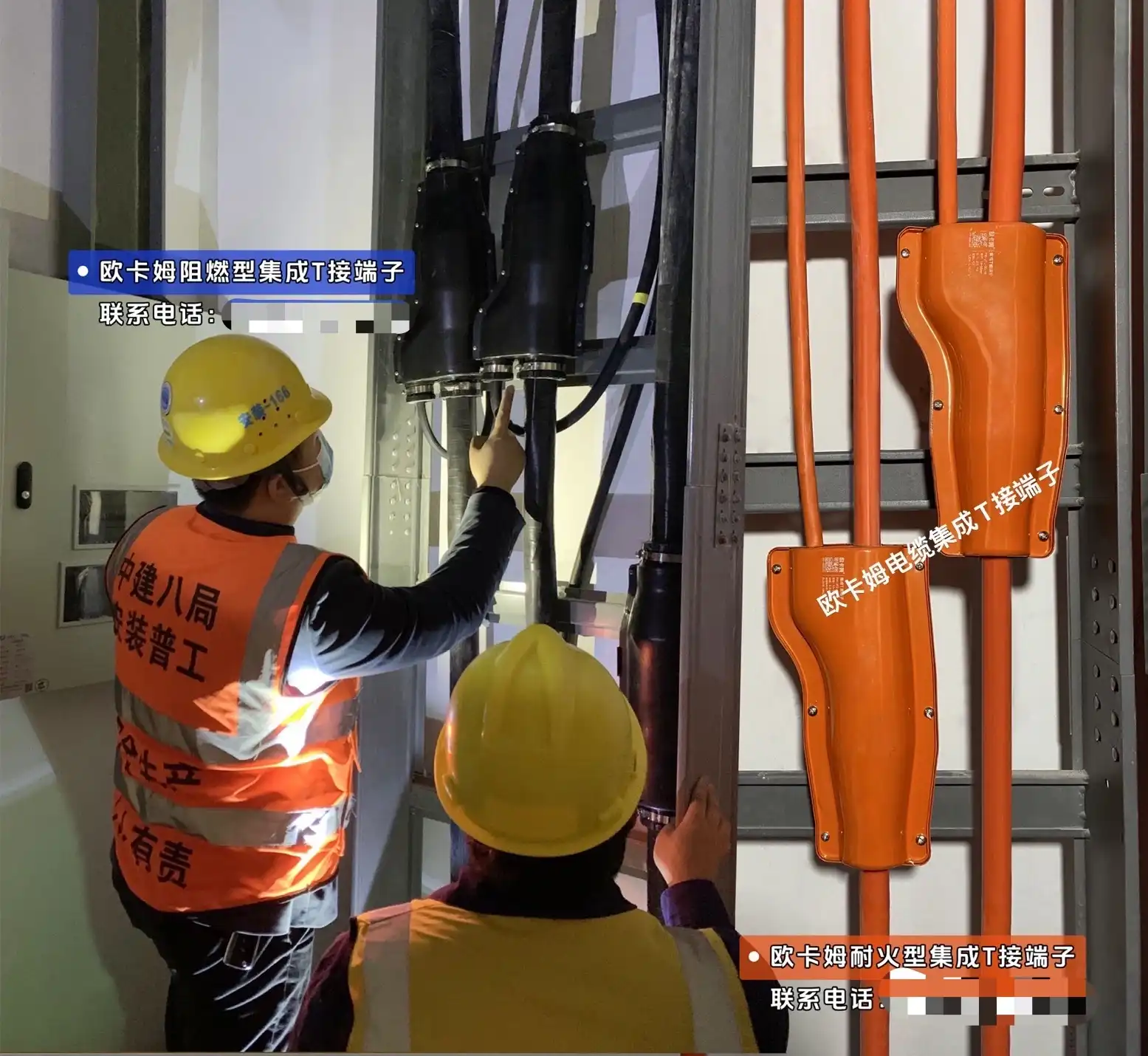
Main Types of Cable Joints Used in Low Voltage Systems
You should know what each type of joint does and how it looks before you compare them.
What LV Cable Jointing Means
LV cable jointing can be used to connect two or more cables together. This restores electrical continuity, insulation, mechanical strength, and protection against moisture. An end or repair is not the same as a joint. A repair fixes a broken section of a cable, while a termination ends the cable at the equipment. If you follow the rules, "low voltage" can mean different things.
IEC 60038 says that low voltage is up to 1,000 V AC. The ZR-JFZ-95/70 can handle 0.6/1kV. EVs can be charged in places like factories, buildings, power grids, solar panels, and joints. The connector is important, but the cables must also work well together, be well sealed, and be tested.
Straight-Through, Transition, and Multi-Core Joints
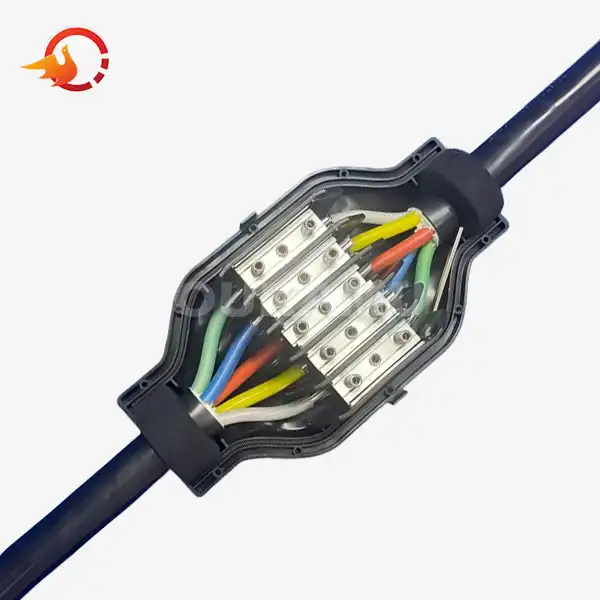
Two cables with the same conductors and insulation can be joined together with a straight-through joint. This is how you fix a run or make it longer most of the time. Check out the datasheets for both sides of the transition joint before you place your order. This will help you understand how it works with various types of insulation, conductor sizes, and cable builds. This is the cable with many cores.
Before you can hook anything up to it, you need to find the phase, neutral, and protective coils. It depends on how many cores there are, what the conductors are made of, their cross-sectional area, their armor, their outer diameter, where they will be installed, and how much water, chemicals, UV light, or mechanical stress they will be exposed to. A site needs a different level of sealing where it goes from inside to outside or from below ground to above ground.
Branch and T-Joints for Power Distribution
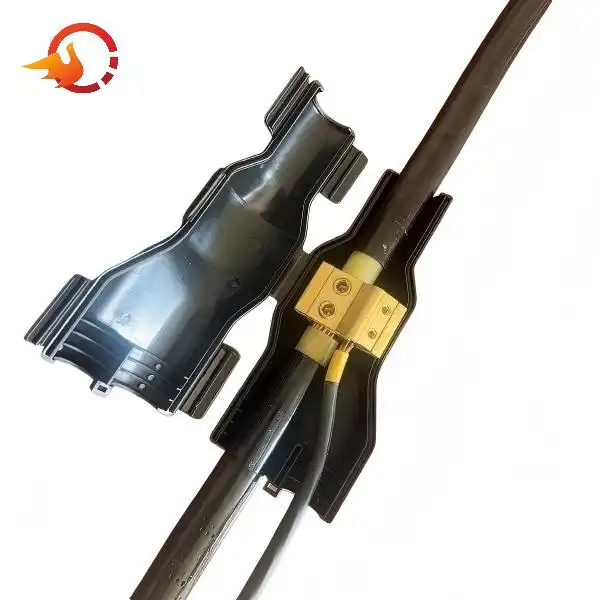
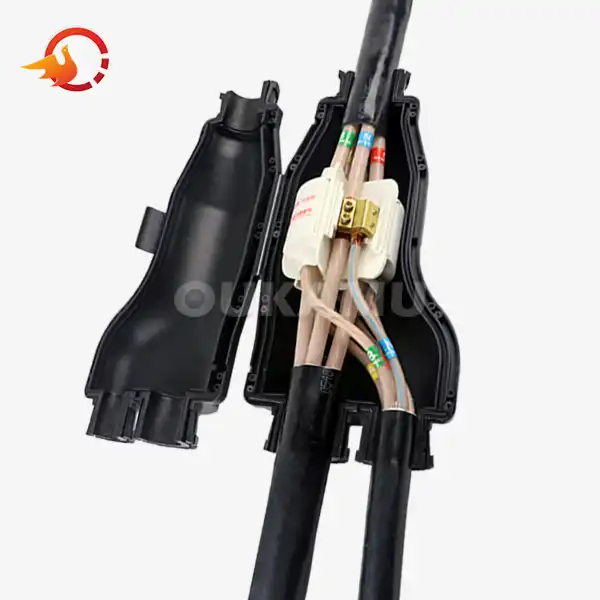
A T-joint, or branch junction, supplies electricity to a secondary circuit. Previously, the primary cable was severed, three ends linked, and some length left. Oukamu's built-in T-connector enables you connect the main cable and branch cables directly to an insulated, flame-resistant (and fire-resistant) body without cutting it. You may move branches to fit the installation route after you branch on-site. This avoids wasting cable due to poor planning. It works well with non-straight or multi-branch configurations, unlike factory-pre-branched cables. Don't build a new cable if anything changes mid-project.
LV Cable Jointing Methods: Mechanical, Resin, Heat Shrink, and Cold Shrink
Each way of jointing gives up speed, sealing, and tools in a different way.
Mechanical and Resin-Filled Joints
Because they don't need to cure, mechanical joints can be put together quickly with few tools. They work well for quick work in the field, but in wet areas you should check the level of sealing. Poured-in joints filled with resin cover the connection. Cable jointing resin works well underground and in wet places because it fills in the spaces between the wires. It costs time. You need to carefully pour the two parts together and mix them before you load the circuit. Then you need to wait the time given in the datasheet. If it's cold or wet, that cure time might change, so make sure you stick to what the manufacturer says.
Heat-Shrink and Cold-Shrink Joints
Many installers already know how to use heat-shrink sleeves because they're small. The heat source is a problem in small rooms or places that don't allow open flames. In cold-shrink joints, a tube that has already been stretched is added to a core that can be taken out. Pulling the core out of the tube makes it shrink and seal the cable without a flame. Cold shrink is good for quick fixes and places that are tight. Within LV cable jointing, both types of joints need clean cable surfaces and the right size. A sleeve won't seal properly if it's used on a cable that is too small or too large.
Matching the Method to Site Conditions
This table makes it easy to quickly compare things. Check the datasheet that came with the kit every time you get information.
| Method | Heat source | Best fit | Watch point |
|---|---|---|---|
| Mechanical | None | Fast field work | Check sealing for wet sites |
| Resin-filled | None | Underground, damp sites | Mixing and cure time |
| Heat shrink | Torch or heat gun | Compact joints in open areas | Open-flame limits |
| Cold shrink | None | Tight or no-flame areas | Correct size range |
At first glance, the kit's price doesn't tell the whole story. To find out how much it cost to install, add up the time, tools, training, look over, and the ability to make repairs.
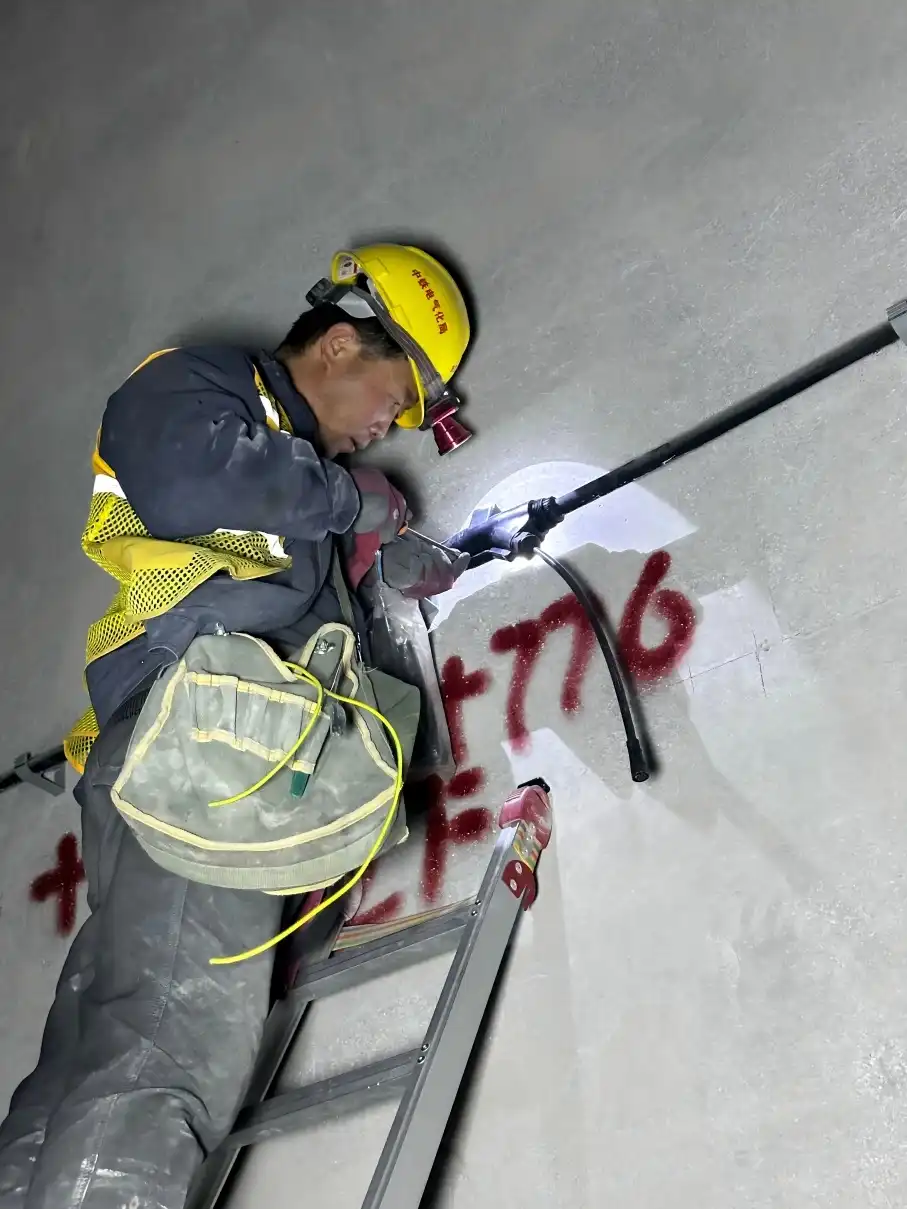

LV Cable Jointing Procedure, Tools, and Safety
I always do things in the same order because the way I do them is just as important as the joint itself.
Standard LV Cable Jointing Procedure
Start with the proper voltage, cores, conductor, cable size, outside diameter, and joint arrangement. Next, turn off the circuit and disassemble it using lockout/tagout. Pull separate the cable to the packaging sizes after cutting it. Right-connect the wires, then apply strain relief, insulation, and sealant. Last, look. Next, verify continuity, polarity, insulating resistance, and ground continuity. Record each exam. The maker wrote how to measure and put them up. If your habits say otherwise, don't. Just follow the instructions.
Tools and Installation Materials
Most problematic joints may be avoided with the appropriate instruments. Cable knives, sheath strippers, cutters, measuring tape, and cleaning tools are typical. Crimping requires the proper crimper and certified dies, while tightening bolted connections requires a torque tool. Heat shrink kits and mixing equipment are needed to mix resin. Bring a voltage detector and insulation resistance tester to test. Add rain covers, PPE, cold-resistant tools, and inspection forms. Check the package for connections, sealants, and other pieces before buying. You may need additional tools.
Safety Precautions and Common Failure Risks
Until tested and separated, assume all wires are active. Electricity safety in the workplace is covered by NFPA 70E. Within LV cable jointing, joints fail due to poor crimping, torque, insulation, connections, moisture, and sealing. Environmental stressors include chemicals, insufficient backfill, rain, dust, and dampness. Trained installers, inspection hold points, pictures, batch traceability, and documented test findings before powering on are quality processes that may be repeated.
LV Cable Jointing Standards, Testing, and Compliance
These rules and forms will help you decide if a joint kit is best for your project.
Standards Buyers Often Check
Every project and nation has its own regulations. IEC 60502-1 is used by cable buyers. Power wires between 1 and 3 kV are discussed. EN 50393 specifies testing 0.6/1.0 (1.2) kV distribution cables. IEC 60364 covers low-voltage installations. Section 110.14(B) of the US National Electrical Code requires labelled tools for splices, while UL 486 discusses wire connections. Since needs change, check the latest copy. The manufacturer claims the ZR-JFZ-95/70 satisfies GB/T 14048.7-2016 and international safety requirements.
Documents to Request Before You Buy
Work is an important part of making a good product. You should ask the supplier for test reports, declarations of conformity, technical datasheets, installation instructions, safety tips, and records of how each batch was tracked. This will help you pass the first time because the inspector will be able to see what the kit was tested for and how to put it together. Get the paperwork that comes with the exact model and range of cables you want to buy and print it out. The person in charge decides which approvals to accept in the US, so I suggest that you ask the inspector early on instead of during the final walkthrough.
Tests That Confirm a Good Joint
On the job site, check the torque, earth bonding, continuity, and insulation resistance of bolted-together parts. Parts that go through type-testing programs like those in EN 50393 are often checked for water, electricity, heat, and mechanical damage. Look at the test report to see what conditions were used, then think about where you are in relation to those conditions—are you outside, underground, or under a car bridge? Write down what you see and how much each joint hurts. These records show that the installer did everything that was asked of them, which speeds up the approval process for commissioning.
Choosing the Right LV Cable Joint Kit and Buying with Confidence
You can now get a quote and find a kit that works for your project.
How to Choose by Site Conditions and Total Cost
It costs money to hire people, train them, buy tools, test them, deal with downtime, ship your goods, and make sure you have enough stock. When you connect a lot of branches, the work can pile up quickly. Within LV cable jointing, to save money, connect the branches so that they don't cut the main cable and leave extra length. For branch work, an integrated T-connector works best, while mechanical or cold-shrink kits work best for quick fixes.
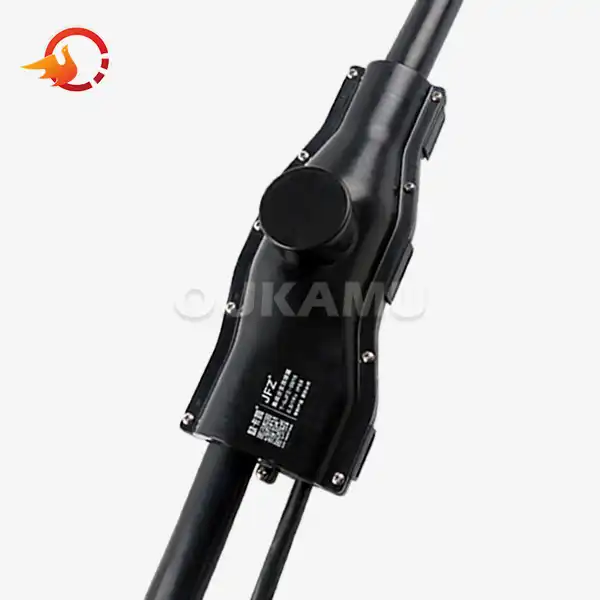
ZR-JFZ-95/70 Branch Cable Joint at a Glance
The ZR-JFZ-95/70 has these main features. Oukamu has learned a lot about branch cable joints over the last 20 years.
| Item | Specification |
|---|---|
| Model | ZR-JFZ-95/70 |
| Main cable | 35~95mm |
| Branch cable | 16~70mm |
| Rated voltage | 0.6/1kV |
| Protection | Insulated, flame retardant, fire resistant, waterproof, dustproof, anti-aging |
| Installation | No main cable cutting, no reserved length, flexible position |
| Saving | 2-3 meters of main cable, plus labor and time |
| Standard | GB/T 14048.7-2016 |
Because it's small, it can be used for open installations and cable bridges. It also doesn't rust when it comes in contact with chemicals or electricity, and the branch cable is fully insulated and sealed. Iron-insulated fire-resistant, flame-retardant, and fire-resistant cables work well with it in business, infrastructure, and industrial projects. These features lower the costs of labor, space, and cables.
Application Examples and RFQ Checklist
To understand what I mean, look at this case. An electric wire runs along the length of a cable bridge in a business building. There needs to be a branch in the middle of a floor panel. The crew cuts the feeder and uses a cut-in joint to save extra length. It is said that the ZR-JFZ-95/70 lets the crew connect where they need to and saves two to three meters of main cable for cables that are 35 to 95 mm in diameter and 16 to 70 mm in diameter.
It makes sense that the branch position changes on the job site when the layout changes in the middle of an industrial plant. Name the type of cable, the material of the conductor, the voltage, the number of cores, the size, the outer diameter, the environment, the standards, the amount, the place where it needs to go, and the date it needs to be delivered.
Conclusion
In low voltage systems, different kinds of cable joints are used. LV cable jointing starts with reviewing the site and the cable. Things can be joined together with four different kinds of joints. There are four types: branch, transition, multi-core, and straight-through. There are four different types of heat-shrink methods. Each one needs a different amount of heat, takes a different amount of time to install, and costs a different amount of money.
When you use the right tools, follow a clean procedure, and record your tests, you can avoid most failures. Standards such as IEC 60502-1, EN 50393, and NEC Section 110.14(B), along with test reports and datasheets, make it clear if a kit will work for the job. With the ZR-JFZ-95/70, you can connect two cables together without cutting the main cable. About two to three meters of main cable are saved within its ranges. This saves time and money.
FAQ
What is the difference between a cable joint and a termination?
A joint is what holds two or more cables together and makes sure they are sealed and insulated. A cable ends at a termination when it gets to a piece of equipment or a black box.
Do I need to cut the main cable to make a branch connection?
Not with the ZR-JFZ-95/70. There is a T-connector built into the insulated body that links the main cable to the branch cable. The branch cable is 16 to 70 mm long and the main cable is 35 to 95 mm long. A cut-in joint needs to be cut in order for it to work.
What information do I need for an accurate quote?
Send information about the type of cable, the conductor material, the voltage, the number of cores, the cross-section, the outer diameter, the environment, the standards, the quantity, and the delivery. It is helpful to have a cable datasheet or picture.
Which documents should I ask a supplier for?
You should ask for test reports, declarations of conformity, datasheets, installation guides, and records of the steps that were taken to make the product. Then have your inspector look at them.
Request LV Cable Jointing Support from Oukamu
Send us some information about your cables, and we'll get back to you with a price quote and a valid LV cable jointing solution. For 20 years, Oukamu has been the only LV cable jointing company that does only branch cable joints. It saves time, work, and main cable with the ZR-JFZ-95/70. Send an email to info@okmbranchcable.com with the information sheets, how many cables you need, and when you need them delivered. You can also visit okmbranchcable.com to learn more.
References
1. NFPA 70: National Electrical Code, 2023
2. NFPA 70E: Standard for Electrical Safety in the Workplace, 2024
3. IEC 60502-1: Power Cables with Extruded Insulation and Their Accessories for Rated Voltages from 1 kV up to 30 kV – Part 1, 2021
4. EN 50393: Test Methods and Requirements for Accessories for Use on Distribution Cables of Rated Voltage 0.6/1.0 (1.2) kV, 2017
5. IEC 60364-1: Low-Voltage Electrical Installations – Part 1, 2005
6. IEC 60038: IEC Standard Voltages, 2009