

Best Straight-Through Cable Joint With Connectors for Projects






 2026-11-10 15:51:02
View:389
The right straight-through cable joint for a job depends on the size of the cable, the voltage rating, and the conditions of the job site. It also saves time and money by reducing waste. When there are straight-through cable joints with connectors, the main cable can run without stopping while a branch cable connects exactly where the installer wants it to. For 0.6/1kV low-voltage systems, Oukamu's model ZR-JFZ-16/10 uses this method. From 4 to 16 mm for the main cable and 1.5 to 10 mm for the branch cables. The main cable doesn't need to be cut for it to work. I show you how to pick the right joints, put them together, and buy them with confidence in this guide.
What Are Straight-Through Cable Joints With Connectors, and Why Do They Matter?
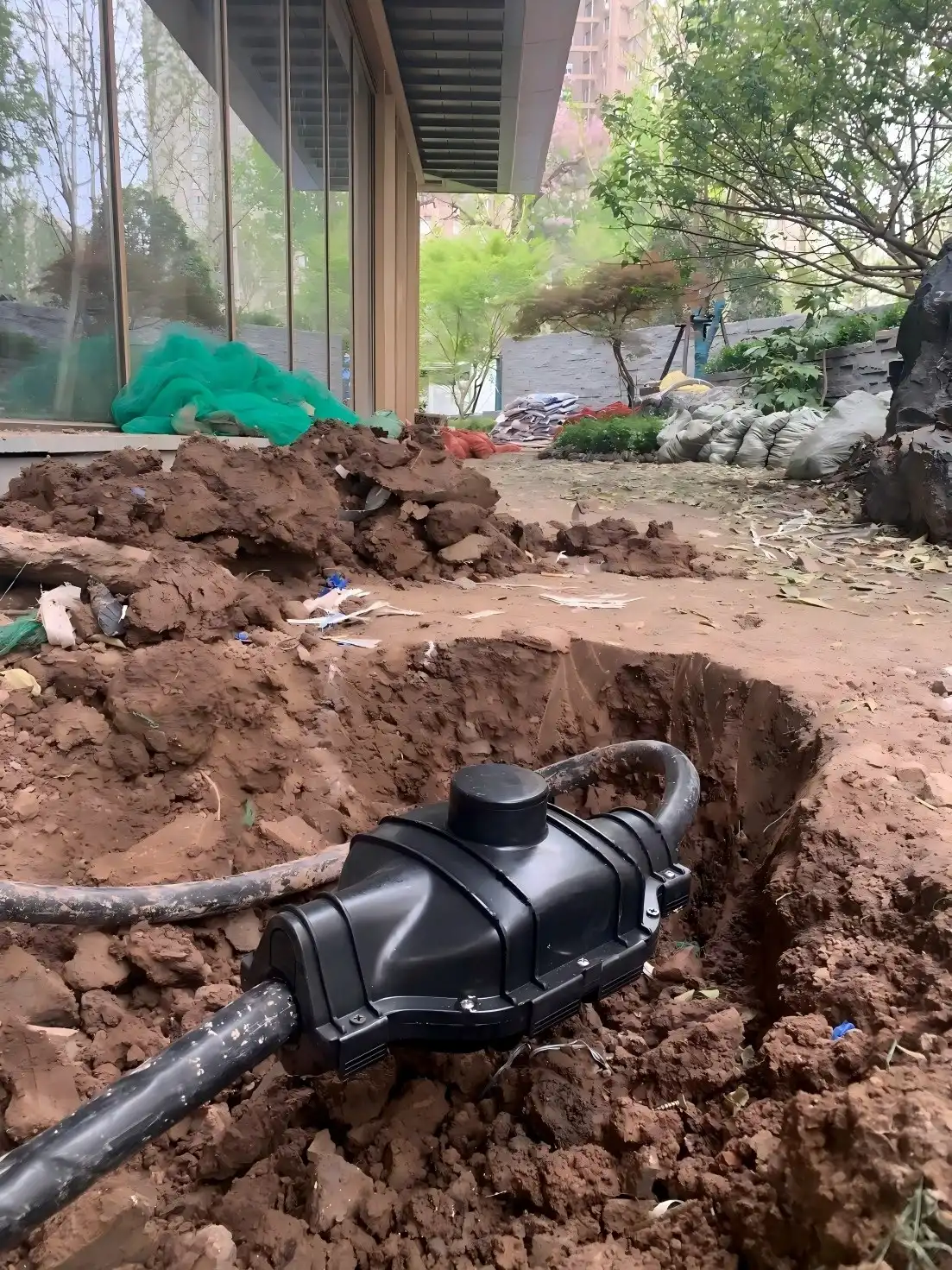
How a Straight-Through Joint Works on a Project
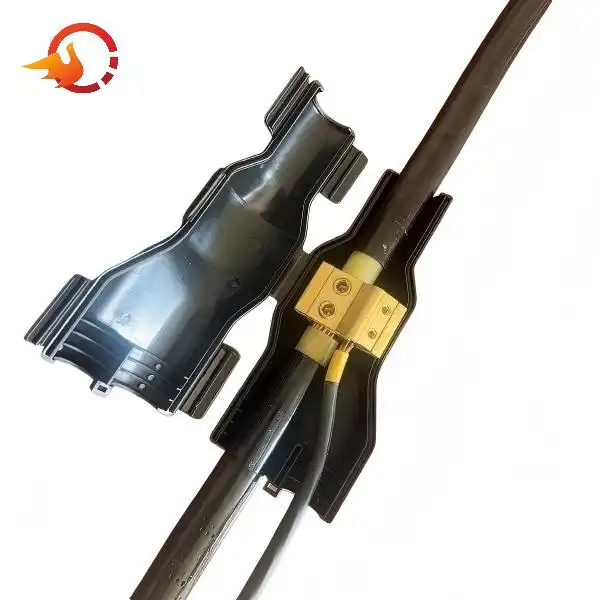
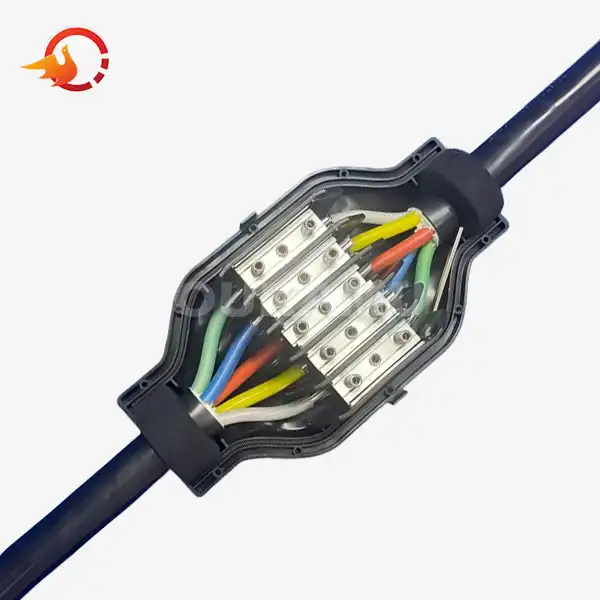
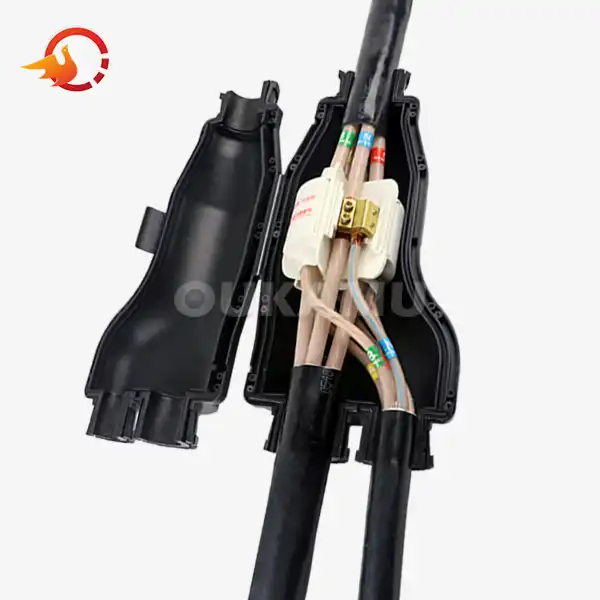
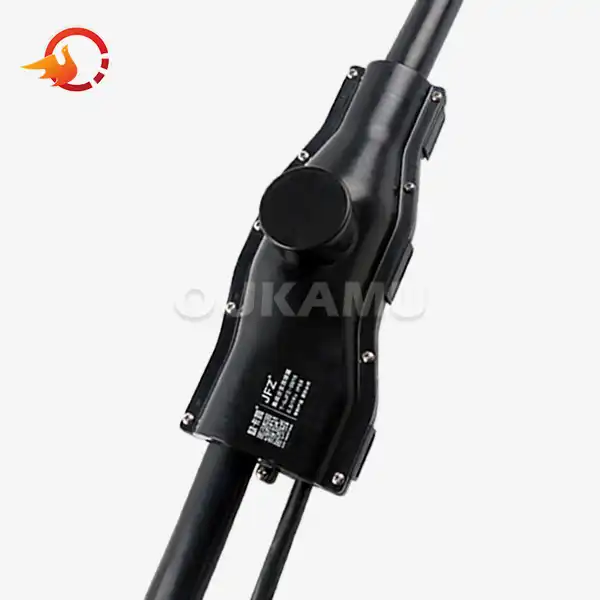
Two lengths of cable are joined together at a straight joint. When branch circuits are used, Oukamu's straight-through cable joints with connectors work differently. The main cable stays whole, and the branch cable can connect at any point. Our product information says that the main and branch cables connect on a flame-resistant, fire-resistant insulated body, and that the whole branch cable is insulated and sealed. This style is part of our integrated T-connector line, and it works with multi-core cables. Installers don't cut the main cable, so they don't save extra length for a splice. This is where a lot of the money is saved.
Where These Joints Fit: Buildings, Municipal, Rail and Highway Work
Xi'an Oukamu Electric Co., Ltd. designs, makes, and sells products that connect cables for use in building, city, railroad, and highway projects. Branch power distribution is common in buildings. For example, a vertical trunk cable often powers equipment on many floors of apartment buildings, offices, hospitals, and schools. The ZR-JFZ-16/10 is designed for low-voltage cables that are flame-retardant, fire-resistant, and mineral-insulated and have a rating of 0.6/1kV.
The information about our product says that it is insulated, flame retardant, fire resistant, and waterproof. Because it is small, it can be installed in open or inside cable bridges, which is helpful in shafts with a lot of people. Before buying, I tell people to make sure they know what kind of cable they have because this joint only works with certain low-voltage cables on a site.
Why Matching the Joint to the Cable Matters
Joints protect insulation, keep water out, and stabilise connections. Splices are covered in NFPA 70, 2023, 110.14(B). Installers must use specialised equipment and insulate joints like conductors. Section 110.3(B) requires specified or labelled equipment to be installed properly. Crews must improvise when a joint's range doesn't match the cable, which increases inspection rework costs. Before ordering for a US project, ask the authorities whether listings apply and examine the joint's range and directions.
How to Choose the Best Cable Joint for Your Project
Start With Voltage, Cable Size and Cable Type
First, determine the system voltage, conductor size, and cable assembly. The ZR-JFZ-16/10 should only be used in low-voltage circuits due to its 0.6/1kV rating. Work with 6kV or 11kV medium voltage requires a particular product that can take stress and protect it. Next, compare your conductors to the 4–16 mm main cable and 1.5–10 mm branch cable ranges. Note whether the cable is mineral-insulated, flame-resistant, or multi-core. Include the exterior diameter. They must be supplied with every quotation request since they can't correct an out-of-range joint.
Compare Branch Joints With Cut-and-Splice Methods
Factory-set branch spacing for pre-branched cable. On-site branches may be moved to match the route by the installation. This prevents design errors from resulting in wasted cable. Ship the trunk and branch cables separately. This saves space and protects branch points during transportation. No one purchases a special cable again if the project changes midway. Cut-and-splice procedures work, but they need additional time and length. Straight-through cable junctions with connectors save 2-3 meters (6.6 to 9.8 feet) of main cable, labour, and time since the cable remains complete.
Meet Model ZR-JFZ-16/10
Our branch joint range has a small size, the ZR-JFZ-16/10 model. Oukamu also has a bigger selection of main cables that are 95–240 mm long and branch cables that are 6–70 mm long. All of these cables have the same 0.6/1kV rating, alongside straight-through cable joints with connectors. You can see the information I give to contractors in the table below, which you can then use to compare it to your cable schedule.
| Item | Specification |
|---|---|
| Model | ZR-JFZ-16/10 |
| Main cable | 4~16 mm |
| Branch cable | 1.5~10 mm |
| Rated voltage | 0.6/1kV |
| Cable types | Low-voltage flame-retardant, fire-resistant, mineral-insulated multi-core cables |
| Main cable cutting | Not required; no reserved length |
| Material saving | 2-3 meters of main cable, plus labor and time |
| Standards | International safety standards; GB/T 14048.7-2016 |
These rules are mentioned in the product data. Before you place an order for a project, make sure you get the matching test reports and check with your inspector about any other U.S. listing needs.
Installation and Cost Savings on Site
Preparing the Cables and Work Area
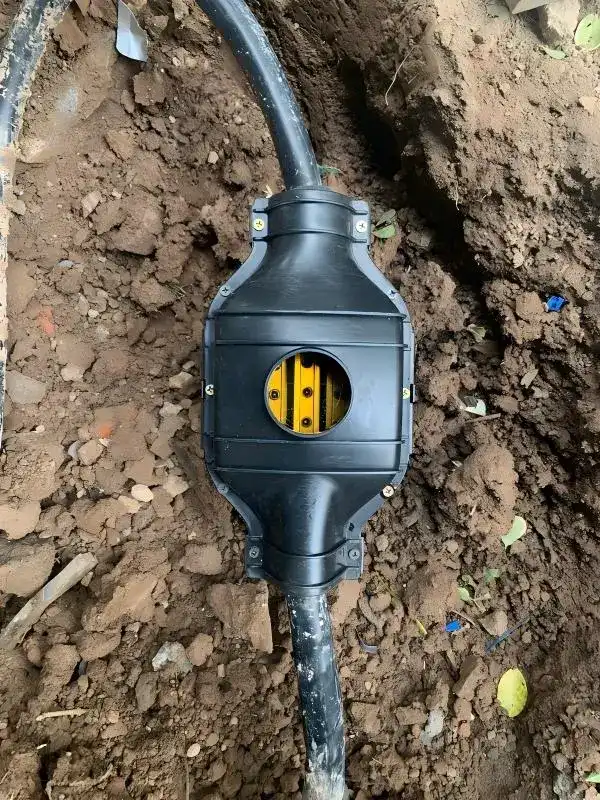
Being ready prevents most field issues. ANSI/NECA 1-2015 specifies electrical contractors' job, which I utilise for quality control. Before operating, verify the model number, cable diameters, voltage rating, and packing condition. Mark where the branch will join the main wire. The primary wire remains complete, so it may be moved to match the equipment. This aids narrow shafts and curves. Install the joint according its directions. This involves branch cable preparation. Before turning on the power, check continuity and insulation to suit your specification after closing the joint.
Example: A Riser With Branches on Several Floors
Imagine a mid-rise office block. A 16 mm trunk cable links each floor's distribution box via a riser shaft. Cut-and-splice crews cut the trunk at each story, allowing room for splices. One box moves after a time. The team sets the trunk down and uses straight-through cable junctions with connectors to connect 6 mm branch cables at the final box placements. An example situation from the product lines, not a project outcome. Each branch prevents the main wire from being severed, and our data indicates two to three meters were preserved.
What the Product Features Mean on Site
People who buy things care about waste and delivery, while crews care about speed and clean connections. Each feature is broken down into daily site work in the column on the right.
| Feature | Product data | Site meaning |
|---|---|---|
| Insulated body | Main and branch cables connect on one insulated body | Connection sits on an insulated base |
| Flame retardant, fire resistant | Listed properties | Matches flame-retardant cable systems |
| Waterproof, dustproof, anti-aging | Listed properties | Suits damp or dusty conditions |
| Compact structure | Open or cable-bridge installation | Saves space |
| Flexible position | Branch at any position | Adapts to the real layout |
| Sealed branch | Entire branch cable insulated and sealed | Protects the branch from outside elements |
All of these features cut down on cable waste and the number of steps needed to finish a branch after laying the trunk. Along with that, they give the team a sealed, insulated connection that they can show off at inspection, different from straight-through cable joints with connectors. Crews learn how to do something once and then do it again, so a consistent process helps when a project is ordered by floor or section.
How to Evaluate Quality, Pricing, and Suppliers
Ask for Test Evidence, Not Claims
If "waterproof" or "flame retardant" claims are real, request test results including the model and standard. The report should note that IEC 60332-1-2 is a standard flame test for wires. IEEE Std 404-2012 covers just medium-voltage cable joints, not 0.6/1kV branch joints. Request GB/T 14048.7-2016 and international safety standard documentation in ZR-JFZ-16/10 product info. Ask extra enquiries if a report doesn't contain the model number. You should also monitor batches to ensure a second delivery matches the first.
Compare Total Installed Cost, Not Unit Price
Low unit prices may conceal large project costs. Record the number of hours the staff spent on each connection and how often they had to correct items after inspections failed. Installation costs include the electrician's time, and the BLS reports earnings in its Occupational Outlook Handbook. The ZR-JFZ-16/10's value is in the line items that mention main cable length, labour, and time savings, not the price. It doesn't need cutting the main wire. Create a simple sheet that compares unit cost, cable saved, and labour hours for each option.
Choose a Supplier That Supports Samples and Repeat Orders
Buyers require a consistent supply and standards whether reordering by floor or building segment. Ask all your suppliers, including us, to show the ISO 9001:2015 manufacturing certificate. ISO 9001 specifies quality management system criteria, and system records may aid tracking. Xi'an Oukamu Electric Co., Ltd. designs, manufactures, and sells branch cable connection products, so ask them technical questions. Request samples and a small test batch before ordering. Give the team cable data and an actual branch to test fit. Next, confirm lead time, export packing, and warranty conditions in writing.
Project Checklist, Decision Guide, and Common Mistakes
Pre-Order Checklist
I rapidly doubt myself upon reading an order. Is the system voltage 0.6 VA or 1 kV? Main and branch cables' scope? Is it 4-16 mm? Does the cable have several cores? Does it not burn, withstand fires, or contain minerals? Will the junction be within or outside a cross-beam? You should have received test results, installation instructions, and a site-approved sample for both branch joints and straight-through cable joints with connectors. Last but not least, know the warranty conditions, delivery date, and number of items per floor or sector. If any are no, cancel the order and send the cable data to the supplier to test it.
Decision Guide for Different Project Types
Buy project-appropriate items. Riser branches are more popular in business and residential buildings, therefore saving money on main cables and moving branches are most vital. Hospitals and schools value record keeping, so request test results and installation papers immediately. Road, rail, and city activity often dampens or dusts the air. Look into your site's sealing and dust resistance. Contractors and distributors should consider batch consistency and delivery when reordering. Choose a different product class than the ZR-JFZ-16/10 for medium-voltage cables. Use it exclusively on 0.6/1kV circuits within its limits.
Mistakes to Avoid
Five mistakes cause the most trouble. First, buyers only look at voltage and don't care about the size of the conductor. Second, they think that low-voltage and medium-voltage joints are the same thing. Third, they don't do a test sample and only find a problem when the whole shipment gets there. Fourth, they take a low unit price without taking into account labor hours, cut cable, and reserved length.
Fifth, they don't care about local laws. Check with your inspector to see what listings and approvals are needed in your area, since the product data refers to GB/T 14048.7-2016 and international safety standards. All of these mistakes can be avoided with a written compatibility check and the above list.
Conclusion
For the optimum straight-through cable junction, keep voltage, conductor size, and cable type within the joint's range. Straight-through cable joints with connectors link branches to the project site without joining the main line, unlike a splice. According to its data sheet, Oukamu's ZR-JFZ-16/10 uses 0.6/1kV low-voltage cables with 4–16 mm main and 1.5–10 mm branch cables. It saves two to three meters of main wire, time, and effort. The guidance also indicated that test findings, meticulous planning, and installation costs are as significant as unit pricing. It also proved that low- and medium-voltage joints cannot swap.
FAQ
What is a straight-through cable joint with connectors?
The main cable stays connected because it is an in-line connection, not a standard splice, which joins two cable ends. In Oukamu's plan, the branch cable connects to the main cable that hasn't been cut on an insulated, sealed body. This means that installers don't have to cut the main cable or add the extra length that it needs.
Which cables suit model ZR-JFZ-16/10?
There are two types of cables that can be used with it: 0.6/1kV low-voltage multi-core cables and branch cables. The main cable is between 4 mm and 16 mm in diameter, and the branch cable is between 1.5 mm and 10 mm. Before you order, check out both sizes.
Can I use it on medium-voltage cable?
No, the model has a rating of 0.6/1kV. For 6kV or 11kV medium-voltage cable, the joint needs to be made for that voltage and have stress control and shielding. It's not safe to use a low-voltage joint there.
What should I send with a quote request?
Please send the voltage, conductor sizes, cable type, installation environment, quantity, destination, schedule, and any documents that are needed. Full information lets the team make sure it works before you approve a sample or an order.
Request Oukamu Straight-Through Cable Joints With Connectors for Your Next Project
Oukamu wants to know about your cable data, quantity, and delivery schedule. We make straight-through cable joints with connectors and offer model ZR-JFZ-16/10. This model doesn't need the main cable to be cut, which saves 2-3 meters of main cable, labor, and time. Our team will look over the information you gave us about the cable and make sure we have the right model. You can get samples, specifications, or a quote by emailing info@okmbranchcable.com. For more information about the products, go to okmbranchcable.com.
References
1. NFPA 70: National Electrical Code, National Fire Protection Association, 2023
2. ANSI/NECA 1: Standard for Good Workmanship in Electrical Construction, National Electrical Contractors Association, 2015
3. ISO 9001: Quality Management Systems – Requirements, International Organization for Standardization, 2015
4. IEEE Std 404: Standard for Extruded and Laminated Dielectric Shielded Cable Joints Rated 2500 V to 500 000 V, IEEE, 2012
5. IEC 60332-1-2: Tests on Electric and Optical Fibre Cables Under Fire Conditions, International Electrotechnical Commission, 2004
6. Occupational Outlook Handbook: Electricians, U.S. Bureau of Labor Statistics, 2024