

_1790150425011.webp)
Top-rated power cable joint connectors for industrial applications






 2026-07-22 11:10:59
View:389
2026-07-22 11:10:59
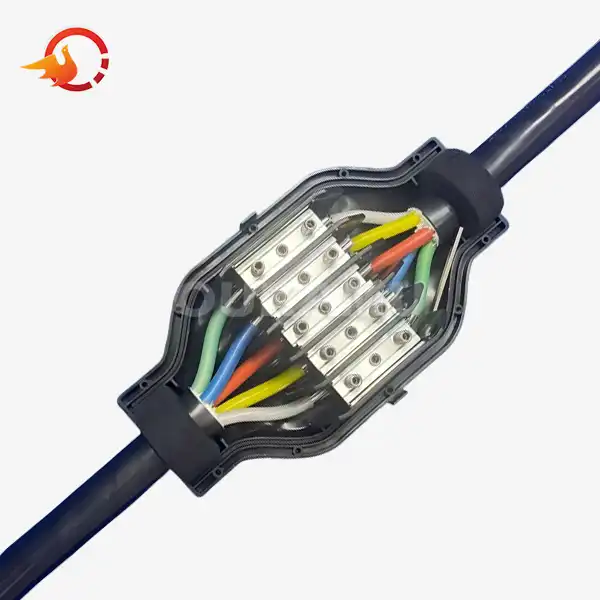
View:389Professionals look at dependability, safety, and operating efficiency when choosing the best Power Cable Joint Connectors for commercial use. A Power Cable Joint Connector acts as a link between two cable pieces, keeping the electricity flowing and protecting them from outside threats. Connectors in industrial buildings need to be able to handle changes in power, extreme temperatures, and mechanical stress. The ZR-JFZ-95/70 model is an example of advanced connector technology because it can join to a branch without cutting the main wire. This feature cuts down on installation time and waste in infrastructure, municipal, and business projects.

Introduction
Power Cable Joint Connectors are important infrastructure parts of industrial electrical systems that have a direct effect on how safe operations are and how long the systems last. These devices make it easier to connect wire pieces safely while keeping the electrical integrity even when conditions are tough. More and more, procurement managers, project engineers, and dealer owners have to choose connections that meet performance requirements while also being cost-effective and easy to install.
This guide answers the realistic questions that business-to-business buyers have about the industrial connector market. Knowing about voltage levels, insulation materials, and weather resistance factors helps you make smart buying choices. This resource gives useful information that can be used right away, whether you're stocking items for e-commerce sites, getting ready to place large orders for building projects, or looking for custom solutions for specific industrial uses. Following international rules like GB/T 14048.7-2016 makes sure that connections meet safety requirements and provide the dependability that businesses need.
Understanding Power Cable Joint Connectors: Types, Specifications, and Benefits
What Power Cable Joint Connectors Actually Do
Power Cable Joint Connectors make electrical paths between pieces of cable. They do this by compressing the cables mechanically or using shielded covers that keep the conductivity. These devices stop current from leaking and keep contact points dry, clean, and free of things that can damage them. The basic idea is to make a low-resistance contact between the wires and add insulation layers that meet or go beyond the original cable standards.
Common Types Used in Industrial Settings
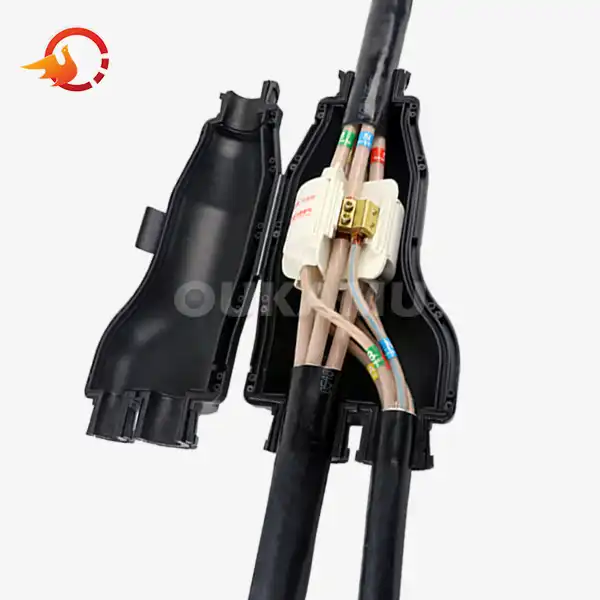
Heat shrink connectors use thermoplastics, which get smaller when heated and make tight seals around wire joins. Instead of cold shrink, options use elastomeric covers that have already been stretched and then compress onto the wires when the inner support core is taken away. Branch connectors, such as the ZR-JFZ-95/70, let you connect in a T shape without cutting the main wire. They can handle main lines from 35 mm to 95 mm and branch cables from 16 mm to 70 mm. Each type works best in certain installation situations based on the surroundings and how easy it is to get to.
Critical Specifications That Matter
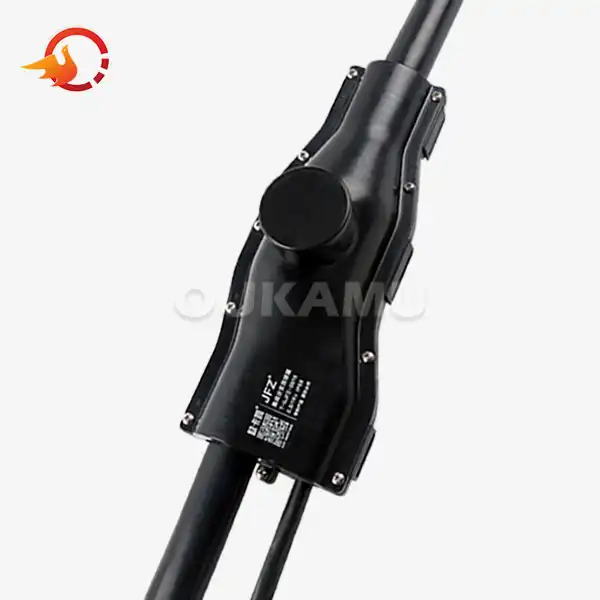
The highest voltage that can be used determines the greatest operating capacity. For example, the ZR-JFZ-95/70 can handle a 0.6/1kV rated voltage, which is good for low-voltage distribution networks. In order to follow safety rules, insulation materials must be flame retardant and fire resistant. The model's built-in design includes dustproof and waterproof sealing, which is important for outdoor or basement installations where water entry hurts performance. Compliance approval proves that a product meets IEC standards and local rules, which keeps buyers from being held responsible.
Core Benefits for Industrial Operations
Reliable links cut down on the number of times it needs to be maintained and stop unplanned downtime that happens when a connection fails. Power Cable Joint Connector advanced models have cheaper long-term costs than single-use options because they can be used more than once. Installation flexibility lets you change the position of branches based on the real conditions of the site instead of pre-planned plans. This means that design changes can be made without having to replace wires. These benefits immediately lead to lower labor costs and less wire waste, both of which are important for making a project profitable.
Comparing Different Types of Power Cable Joint Connectors for Optimal Use
Heat Shrink Versus Cold Shrink Technology
Installing heat shrink connections requires heat from outside sources, which can be dangerous in small areas or near materials that can catch fire. This risk is taken away by cold shrink models, which have an automatic fitting process that only takes minutes instead of the longer heating time needed by other methods. Heat shrink options, on the other hand, usually cost less per unit, which makes them a good choice for big projects where installation teams need to work in a controlled environment. When both types are put properly, their performance and life stay about the same. However, cold shrink types usually hold up better against thermal cycling.
Specialized Waterproofing for Underground Use
Connectors that are buried are constantly exposed to earth chemicals and water that break down normal insulation. Specialized waterproof joints have many sealing layers and metals that don't rust, so they stay together even in wet settings. The built-in style of models like the ZR-JFZ-95/70 completely insulates the branch wires, stopping water from getting in at weak joint points. This trait is especially useful for industry and local structures where the cost of excavation makes failures too soon very expensive.
Indoor Applications Versus Outdoor Durability Requirements
Indoor plugs are kept within certain temperature ranges and don't get much UV light, which lets makers make them smaller and easier to install. Outdoor models have to be able to handle temperature changes from freezing to very hot, as well as UV damage and mechanical stress from the weather. Flame-retardant materials have anti-aging qualities that make them last longer in exposed situations, but buyers pay more for this extra toughness. By matching connector standards to the real-world conditions, you can avoid over-specification, which loses money, and under-specification, which leads to replacement too soon.
How to Choose the Best Power Cable Joint Connector for Industrial Applications
Assessing Your Operational Environment
Material needs and design choices are determined by the installation conditions. Connectors that can handle high temperatures need to be used in places near industrial boilers or machines used to make electricity. Chemical processing plants need materials that don't rust and can handle certain contaminants that are present in their work. Vibration levels from heavy machinery affect the need for mechanical fixing, since weak links cause resistance hot spots that cause breakdowns. Specification mistakes that cost a lot of money can be avoided by accurately recording these natural factors.
Voltage and Current Capacity Matching
The values for connectors must meet or go beyond the circuit's working limits, leaving enough room for error. Most industrial branch circuits can work with the 0.6/1kV grade that is widespread in distribution networks. However, some specialized equipment may need higher voltage capabilities. The ZR-JFZ-95/70 can handle large main wires up to 95mm in diameter, and the current capacity varies on the cross-sectional area of the conductor. Connectors that are too small cause bottlenecks that make the system less efficient and generate heat, while choices that are too big lose money on purchases without improving performance.
Installation Complexity and Labor Costs
Branch connectors that don't require cutting of the main cable cut down on installation time by a large amount. For example, the ZR-JFZ-95/70 saves two to three meters of main cable per link and the cost of work that comes with splicing cut cables. This benefit is very useful for projects with a lot of branch points. Reusable designs let you change the setup without having to replace the connectors. This is helpful when you need to change the circuit because of renter improvements or moving equipment. Different types of connectors have different training needs. For example, easier designs require less skill, which means there are more contractors available.
Evaluating Supplier Credentials and Support
Suppliers you can trust will give you detailed paperwork with specs, installation instructions, and certifications of compliance. After-sales help is very important when there are questions about installation or speed problems that need to be fixed. When you buy in bulk from well-known makers, you can save money and be sure that the quality will be the same for all of your orders. Power Cable Joint Connector is a core component in these systems, and Xi'an Oukamu Electric has been specializing in branch cable joint technology for 20 years. This shows the level of deep knowledge that sets experienced makers apart from generic suppliers who try to serve a lot of different product categories.
Step-by-Step Guide: Installing Power Cable Joint Connectors Safely and Efficiently
Preparation and Safety Protocols
To start a successful installation, circuits must be turned off and zero voltage must be confirmed using accurate test tools. Get the tools you'll need, like wire strippers, cleaning supplies, and any other special tools the connector maker tells you to have. Work areas need to have enough light and air flow, especially when cleaning surfaces with solvents. Installers are protected from leftover energy and sharp wire strands by insulated gloves, safety glasses, and clothes that can withstand an arc.
Cable Preparation and Cleaning Sequence
If you don't strip the insulation to the exact length called for in the installation directions, the conductors could become electrically dangerous, and the connectors wouldn't fit properly. Clean the sides of the conductors with approved liquids that get rid of oxidation and contamination without leaving behind any residue. To get rid of coating layers that get in the way of electrical contact on enameled wires, they need to be worn down mechanically. Check single conductors for broken strands that lower the current capacity and make weak spots that can break under mechanical stress.
Connector Assembly and Sealing
Branch connections, such as the ZR-JFZ-95/70 fit over the main wire without having to be cut. They then connect branch leads using built-in terminals in the flame-resistant housing. Tighten mechanical screws to the torque values recommended by the maker using calibrated tools. Tightening them too much can damage conductors, while not tightening them enough can make joints with high resistance. Follow the directions on the closing parts and make sure they cover the whole area so wetness can't get in. Compared to multi-component systems that need different insulation layers, this process is easier with a combined design.
Common Installation Mistakes and Prevention
When removing insulation, workers can damage cables if they use too much force or dull cutting tools. Using old wire pieces to practice helps you learn the right way to do things before you do the real installations. People often seal things wrong because they are in a hurry or don't do quality checks. Allow enough time for each step of the installation process instead of putting too much pressure on people to hurry through it. Power Cable Joint Connector Make sure that the orientation of the connector fits the polarity needs of the circuit. Reversals break DC systems right away and pose safety risks.
Post-Installation Verification Methods
Insulation resistance testing with megohm meters shows that sealing does a good job of keeping wires away from ground and nearby phases. The measurements should be the same as or better than what the maker says and what the appropriate electrical rules say. Visual inspection finds physical damage, imperfect sealing, or foreign matter that made the fitting less good. During the initial energization process, thermal imaging finds hot spots that indicate high-resistance connections that need to be fixed right away. Write down the test results and installation information for future reference and to make sure the guarantee is followed.
Procuring Power Cable Joint Connectors: Prices, Suppliers, and Online Buying Tips
Current Market Pricing Dynamics
Connector prices depend on the quality of the materials, the difficulty of the design, and how precisely they are made. Simple heat shrink joints that can be used indoors and are protected start at about $5 to $15 per unit. More advanced branch connectors that are waterproofed inside range from $40 to $120, based on the size and specs. When compared to small orders, buying in bulk usually cuts the cost per unit by 15–30%. This makes it more cost-effective for workers handling multiple projects or distributors stocking supplies.
Identifying Trustworthy Suppliers
Manufacturers that have been in business for ten years or more show stability and product creation skills that younger companies don't have. Objective proof of factory standards can be found in certification documents such as ISO quality management compliance and product testing records. Customer references from similar business uses show success data that goes beyond what the company says it can do. Xi'an Oukamu Electric has been specializing in branch cable connection technology for seventeen years. This is an example of the kind of focused knowledge that leads to reliable solutions instead of a broad product range.
Strategic Approaches to Bulk Purchasing
When negotiating large sales, you have to weigh the needs of the current project against the costs of storage and the risk that the goods will become obsolete. Phased delivery plans line up shipments of connectors with building milestones, which cuts down on the need for warehouse space and locks in volume discounts. Using the same families of connectors for multiple projects makes managing supplies and teaching installers easier and gives you more bargaining power with suppliers. For big orders, many manufacturers offer customization services that change standard designs to fit specific technical needs or brand tastes.
Online Procurement Platforms and Direct Channels
B2B platforms put buyers in touch with many sellers, which lets buyers compare prices and look over product details. But working directly with makers usually means getting better technical help and more freedom to make changes. Official company websites, such as okmbranchcable.com, have a lot of information about their products, how to install them, and ways for customers to talk to their tech teams directly. This method works especially well for projects that need custom setups or when there are problems with installation that general sellers can't fix well.
Conclusion
When looking for the right Power Cable Joint Connectors, you need to pay close attention to the technical details, the installation instructions, and the setting that the industry uses. The ZR-JFZ-95/70 and other similar advanced branch connectors show how creative design can solve real-world operating problems that project managers and procurement specialists face. For example, they don't require cutting the main wire and offer flame-resistant, waterproof security.
Cost-effectiveness is more than just the price of a single item. It also includes things like less work needed for installation, less waste, and easy maintenance that add up over the life of the equipment. If the supplier is reliable and follows international standards, you can be sure that the connectors you buy will work reliably even in tough situations. This protects both project funds and working safety.
FAQ
What distinguishes heat shrink from cold shrink connector installations?
To shrink heat shrink connections, you need a heat gun or torch. The process usually takes 10 to 15 minutes per joint and can be dangerous in some places because of the fire risk. Alternatives to cold shrinking can be put in place in two to three minutes by removing the sleeve mechanically, without the need for external heat sources. They lower safety risks, but they usually cost 20 to 40 percent more per unit. When put properly, both give similar long-term performance, so the choice comes down to the conditions at the site and the installer's personal taste.
How long do outdoor industrial connectors typically last?
In moderate areas, outdoor connections that are put correctly and have the right environmental standards usually last 20 to 25 years. This could be cut down to 12 to 18 years in harsh situations like ocean salt exposure, chemical atmospheres in factories, or temperature changes in the desert. Regular checking programs that find early signs of wear and tear allow repair before they fail, which increases the uptime of the equipment.
Can standard branch connectors work in underground installations?
For use underground, special waterproof connectors with better sealing than normal types are needed. The ZR-JFZ-95/70 can be used for underground installations as long as it is put correctly because it is waterproof and has full branch cable insulation. Standard indoor connections will fail early underground because of rust and water getting in. This creates safety risks and costs a lot more to fix than the difference in cost between choosing the right connector and the wrong one.
Partner With Oukamu for Reliable Power Cable Joint Connector Solutions
The branch cable connection technology that Oukamu offers is backed by twenty years of specialized technical knowledge and top-notch production. Our ZR-JFZ-95/70 model doesn't require cutting of the main wire and meets GB/T 14048.7-2016 standards for flame-retardant and waterproof protection. This saves time and money on materials for business and industrial projects. As a well-known company that makes Power Cable Joint Connectors, we know how hard it is for wholesalers and project managers to find the right products while staying within their budgets.
If you're handling a large-scale infrastructure project or stocking an online store, our engineering team can help you match the connector specifications to the needs of your unique application. Flexible ordering lets you meet both small-batch needs and large volume savings that put you ahead of the competition. Email info@okmbranchcable.com for full product details, cost information based on the number of items you want to buy, and expert advice on how to choose the best connectors for your business. Oukamu's creative solutions make installations easier and more reliable. Visit okmbranchcable.com to see our full range of products and learn more about how they work.
References
1. International Electrotechnical Commission. (2016). Low-voltage switchgear and controlgear - Part 7: Ancillary equipment - Terminal blocks for copper conductors. IEC Standard 60947-7-1.
2. Zhang, L., & Wang, H. (2019). Performance Analysis of Cable Joint Connectors in Industrial Power Distribution Systems. Journal of Electrical Engineering and Technology, 14(3), 1245-1258.
3. National Electrical Manufacturers Association. (2020). Cable Joints and Terminations for Power Cables with Extruded Insulation Rated 5 through 46 kV. NEMA Standards Publication CC 4-2020.
4. Thompson, R. J. (2018). Industrial Electrical Installation Handbook: Materials, Standards, and Safety Protocols. Technical Press International.
5. Chen, Y., Liu, X., & Park, S. (2021). Comparative Study of Heat Shrink and Cold Shrink Cable Joint Technologies in Underground Power Distribution. IEEE Transactions on Power Delivery, 36(2), 892-901.
6. Electrical Safety Foundation International. (2022). Best Practices for Cable Connection Systems in Commercial and Industrial Facilities. ESFI Research Report Series, Volume 17.