

Single-Core Cable T-Connection Terminal Box vs Inline Joints






 2026-11-26 10:55:32
View:389
A single-core cable T-connection terminal box splits a main cable into two separate ones. Two cable ends are joined together in a straight line by an inline joint. This is the right box to use if your circuit needs to connect to a floor panel, a meter, or a distribution board. A run can be made longer or fixed with an inline joint. This means that price alone shouldn't be used to choose between the two products. Branch cable joints are what we've done for 20 years at Oukamu, and this guide will help you make an informed choice.
How the Two Connection Types Work
Structure of a Single-Core Cable T-Connection Terminal Box
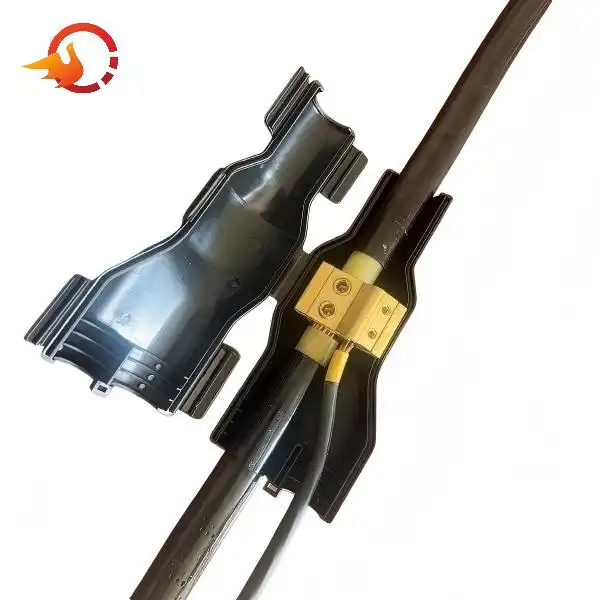
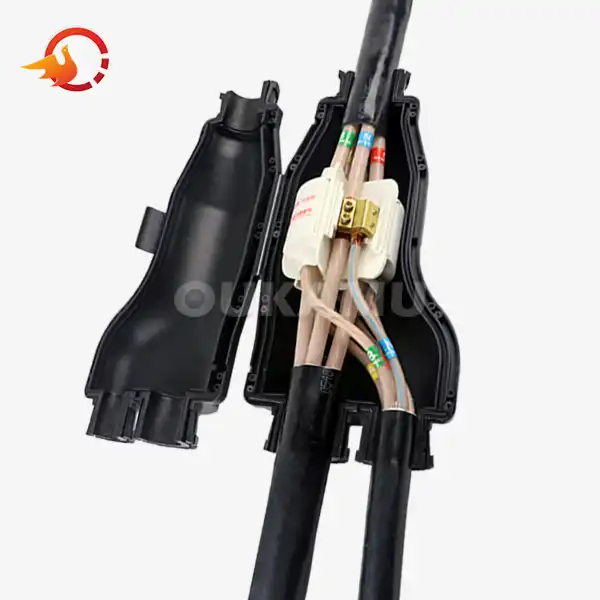
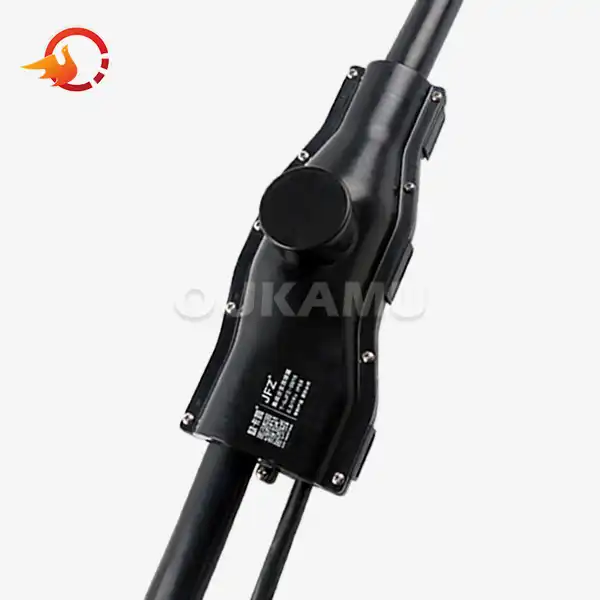
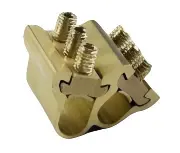
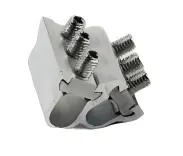
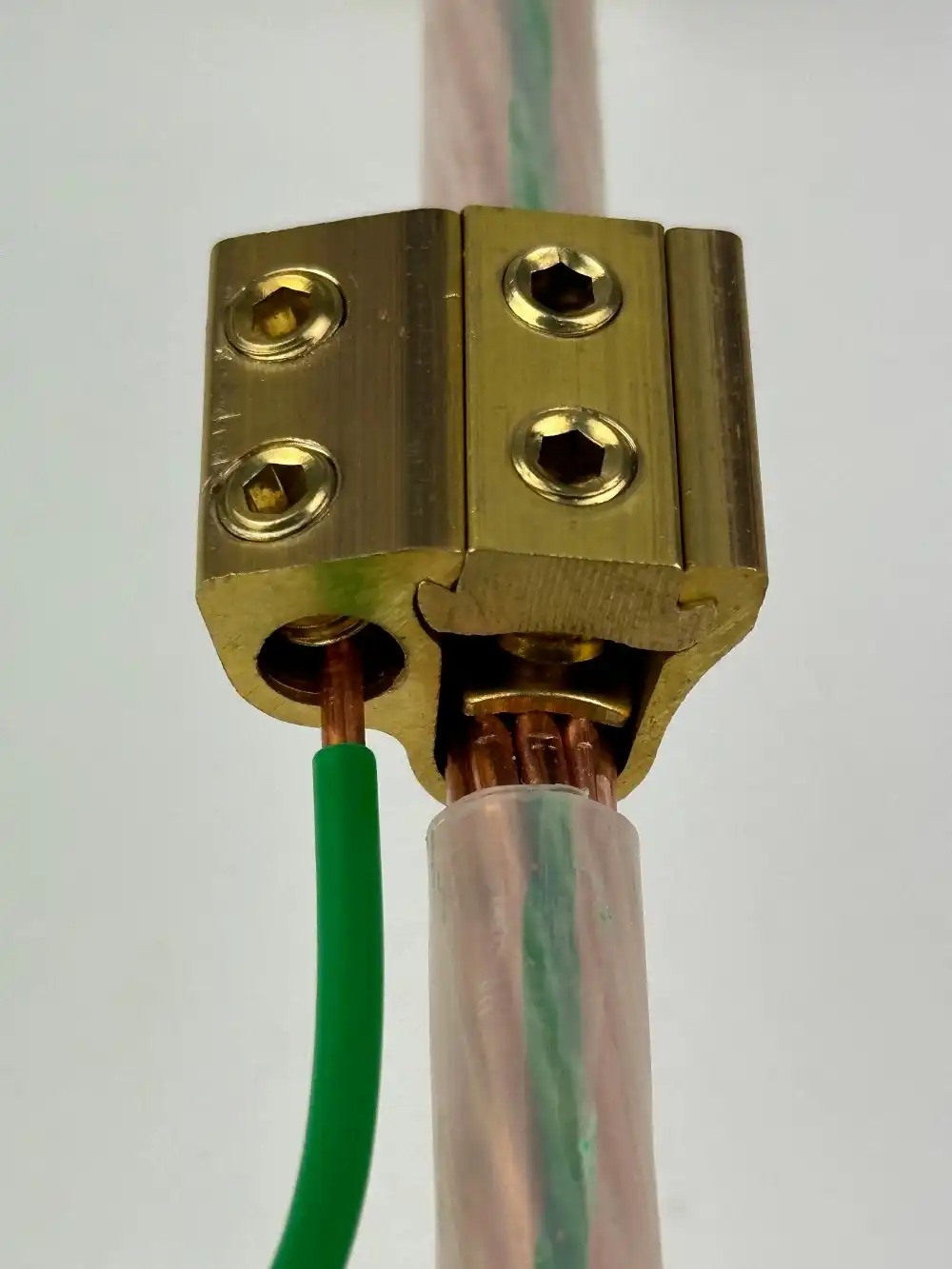
One main cable and a branch cable are joined inside one insulated body by a single-core cable T-connection terminal box. The D-JFZ-95/50 has a sealed structure that is built in. Instead of being separate parts that are put together on-site, the contact point, insulation, and enclosure are all part of the same unit. The body is insulated, doesn't catch fire, is fire resistant, and is waterproof. The connection is made to go through the main cable insulation without cutting the conductors, so the main cable stays whole. Some companies may call their similar products branch boxes, tap connectors, or branch cable joints, but those names don't always mean the same thing. Not only look at the label, but also the cable range and how it's made.

Where Inline Joints Fit?
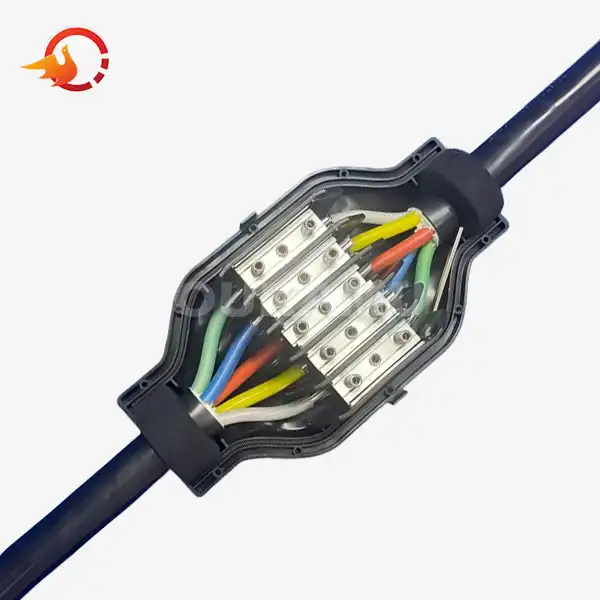
A straight-through splice, which is another name for an inline joint, joins two cable ends so the path stays in one direction. Installers use it to fix a damaged section, make a run longer that was cut short, or join lengths when a reel runs out. To do the job, the cable has to be cut, both ends have to be prepared, and the connection has to have its insulation and seal put back on. A branch is not made by an inline joint. You have to add a separate splice or tap device if you need to tap. It is best and easiest to use an inline joint for a single path that goes in one direction.
Core Differences in Circuit Function
Circuit topology is what makes them different. A straight joint has two cable ends and one path. A T-connection box adds a third path so that the main cable can connect to a branch and keep going to the next point. This changes how you plan a project. A branch point on an inline joint means cutting the main cable and leaving extra length for the splice. With a no-cut T-connection for single-core cable T-connection terminal box, you just put the branch where the gear is. Section 110.14 of the National Electrical Code says that splicing devices must be labeled for the job. Make sure that your product works with the job and meets the requirements of your inspector.
Applications and Installation Environments
Where Branch Connections Appear?
When one feeder serves more than one load, branch points show up. In apartment buildings, condos, and mixed-use buildings that are very tall, the main cable is often run up a riser and tapped at each floor. Commercial corridors, industrial plants, and the building of cities, railroads, and highways are some other examples. It can handle main cables that are 50–95 mm² and branch cables that are 6–50 mm². This size range works with a lot of floor-level distribution taps. With a rating of 0.6/1 kV, it is meant to be used in low-voltage distribution. Standards like IEEE Std. 404 say that medium-voltage joints need to have parts that control stress. This item doesn't take their place.
Indoor, Outdoor, Open and Enclosed Installation
The D-JFZ-95/50 can be used indoors or outdoors, and it can be installed in plain sight or hidden. Its small body can fit on open cable runs and in cable bridges where there isn't much room. The sealed design keeps water out, and the housing is insulated and doesn't catch fire. In addition to being resistant to dust, the Oukamu design is also resistant to aging and electrochemical corrosion. Different places put different amounts of stress on a seal, such as damp shafts, rooftop runs, and plant rooms. The product data says that it is waterproof, but it doesn't say what the ingress rating is. Before you order, please let us know if it will work in any wet or exposed area.
Conductor Compatibility: Copper and Aluminum
Conductor compatibility is important because a lot of projects use aluminum cable because it is cheap and light. Copper and aluminum conductors can be used with the D-JFZ-95/50. The Aluminum Association's conductor handbook says that when aluminum comes into contact with air, it almost immediately forms a thin oxide film. When aluminum and copper come into contact with moisture, galvanic corrosion can happen. Make plans for both. Follow the aluminum installation instructions, make sure the connections stay dry, and let us know what kind of conductor you have so we can make sure you're doing it right. Check the product data first before assuming that every connector can handle both metals.
D-JFZ-95/50 Specifications and Installation
Technical Specifications
One of 17 models in the D-JFZ series, the Single-Core Cable T-Connection Terminal Box model D-JFZ-95/50, has its verified data listed in the table.
| Parameter | Specification |
|---|---|
| Model | D-JFZ-95/50 |
| Main cable range | 50–95 mm² |
| Branch cable range | 6–50 mm² |
| Rated voltage | 0.6/1 kV |
| Conductor material | Copper or aluminum |
| Protection | Insulated, flame retardant, fire resistant, waterproof |
| Structure | Integrated sealed design |
| Installation method | No main cable cutting, no reserved length |
| Main cable saved | 2–3 m per connection point |
| Standard | GB/T 14048.7-2016 |
| Environment | Indoor/outdoor, open/concealed |
Before you order, compare the sizes of your cables to these ranges. In case your cables don't fit, another model in the same line might work.
No-Cut Installation Steps
The steps for installation are short, and the main cable is never cut. First, double-check the cable sizes, the material of the conductors, and the phase identification. Next, put the box where you want the branch to be along the main cable. Then make the branch connection, which goes through the insulation of the main cable without cutting the conductors. Put the sealed body back together and compare the result to the wiring diagram. You don't need as many special tools and don't need to use heat-shrink tubing or the reserved loop of main cable. NECA 1 tells you how to do good work in electrical construction, and it can help your crew. For custom orders, ask us for installation instructions in more than one language.
Illustrative Example: Cable Savings in a Residential Riser
Think about a calculation that shows something, not a field report. This apartment building has 24 floors, and on each floor, one riser cable is tapped. This makes 24 branch points. Most splices cut the main cable and need extra length to make the joint. The no-cut design saves 48 to 72 meters of main cable in that one riser (24 x 2 and 24 x 3). This is based on the claim that it saves 2–3 meters of main cable per point. The savings are greater for projects with more than one riser. The crew also doesn't have to cut and handle reserve loops, which saves time and work. You can turn those meters into a dollar amount by adding your own cable price and labor rate. Then you can compare quotes.
Selection, Quality Checks, and Procurement Planning
How to Choose Between the Two Connection Types
Start with what you need to do. This table shows how the two low-voltage methods compare.
| Factor | T-connection terminal box (D-JFZ-95/50) | Inline joint |
|---|---|---|
| Circuit function | Creates a branch from a continuous main cable | Connects two cable ends in a straight route |
| Main cable | Stays uncut | Is cut and rejoined |
| Reserved length | None required | Extra length usually needed for the splice |
| Best use | Floor taps and branch points along a run | Extension or repair of a run |
| Branch position | Chosen on site | Fixed at the cut location |
First, use the table to sort. Then check the site conditions, voltage, cable sizes, and types of conductors. You can choose a standard model to get it faster, or for large orders, you can ask about custom packaging and labeling.
Documents and Testing to Request
Do not just ask for a catalog page; ask any supplier for papers as well. Ask for the size chart, the steps for installation, the standard declaration (GB/T 14048.7-2016 for this model), and any test reports your project needs. People in charge in the United States usually expect equipment to be listed or labeled. The D-JFZ-95/50 data sheet says that it meets GB/T 14048.7-2016 and other international safety standards, but it doesn't say that it is UL listed. Find out from your local inspector what kind of listing your project needs, and then let us know so we can talk about paperwork before you place your order. Check to see if the supplier also makes the product. Oukamu designs and makes products that connect cables.
Cost, Lead Time, and Common Mistakes
Not just the unit price, but also the total cost of installation. The unit price changes based on the quantity, packaging, and destination. Less main cable and less work mean less costs. Please send cable sizes, conductor materials, quantities, and delivery locations so that you can get similar quotes. People often make mistakes like choosing based only on voltage rating, not paying attention to conductor material, ordering a lot before making sure it fits, and using a T-connection box instead of an inline joint. To lower the risk, check the sizes against the table of specifications and start with a small batch. Then sort them again by project. Ask us about the lead time for your quantity when you place a wholesale or custom order.
Conclusion
Both an inline joint and a single-core cable T-connection terminal box are useful, but they do different things. The inline joint only goes in one direction and can be used for repair or extension. The T-connection box splits a main cable into two branches. The D-JFZ-95/50 can handle main cables 50–95 mm² and branch cables 6–50 mm² at 0.6/1 kV. It can handle both copper and aluminum conductors and leaves the main cable uncut, which saves 2–3 meters per point. That adds up to 48–72 meters, as shown by the 24-story riser. The sound that is chosen depends on the size of the cables, the material of the conductors, the installation site, the paperwork, and what US inspectors need. Based on checked cable data, each type of connection does its job well.
FAQ
Can a single-core cable T-connection terminal box replace an inline joint?
No, an inline joint keeps one route going, while a T-connection box makes a branch. Pick out by function.
Does the D-JFZ-95/50 work with aluminum cable?
Yes, both copper and aluminum conductors can be used. To handle the oxide film and copper-aluminum contact, follow the installation instructions and let us know what kind of conductor material you have.
What cable sizes does the D-JFZ-95/50 cover?
It works with main cables that are 50–95 mm³ and branch cables that are 6–50 mm³ at 0.6/1 kV. There are different D-JFZ models for different sizes.
Does the product carry a UL listing?
The data sheet for the product only says "GB/T 14048.7-2016" and not "UL." Talk to your local inspector about what's needed.
Request a Quote for Your Single-Core Cable T-Connection Terminal Box
Email Oukamu at info@okmbranchcable.com with the main cable size, branch size, conductor material, and quantity you need. We will let you know if the D-JFZ-95/50 works for your project. We make single-core cable T-connection terminal boxes and have been making branch cable joints for 20 years. We can handle both bulk and custom orders.
References
1. National Fire Protection Association, NFPA 70: National Electrical Code, 2023.
2. National Electrical Contractors Association, NECA 1: Standard for Good Workmanship in Electrical Construction, 2015.
3. The Aluminum Association, Aluminum Electrical Conductor Handbook, 1989.
4. Institute of Electrical and Electronics Engineers, IEEE Std 404: Standard for Extruded and Laminated Dielectric Shielded Cable Joints Rated 2500 V to 500 000 V AC, 2012.
5. Standardization Administration of China, GB/T 14048.7-2016: Low-voltage Switchgear and Controlgear, Part 7-1: Ancillary Equipment, Terminal Blocks for Copper Conductors, 2016.
6. International Electrotechnical Commission, IEC 60364-5-52: Low-voltage Electrical Installations, Selection and Erection of Electrical Equipment, Wiring Systems, 2009.