
Reviews of popular underground cable jointing tools and accessories






 2026-06-18 15:35:21
View:389
2026-06-18 15:35:21
View:389Professionals always look for reliable, efficient equipment that cuts down on installation time while increasing joint integrity when they are looking at cable connection options for power distribution projects. Over the past twenty years, Underground Cable Jointing technology has advanced significantly, with specialized branch connections and cutting-edge sealing techniques tackling the main problems faced by electrical builders and procurement teams. Modern jointing tools don't need to be cut because they are waterproof, small, and can be installed in different ways depending on the situation. These improvements have a direct effect on lowering costs, freeing up workers, and making places safer in household, commercial, and public areas. Procurement managers can make decisions that are in line with project budgets and technical requirements when they know which tools and extras really improve performance.

Understanding Underground Cable Jointing Tools and Accessories
The key to installing cables correctly is picking the right tools and equipment for the job and the settings you'll be working in. Mechanical joining tools, heat application devices, cold shrink installation kits, and glue mixing systems are all types of Underground Cable Jointing equipment. Depending on the cable's voltage grade, installation depth, and expected service life, each group has its own specific use.
Essential Tool Categories for Cable Professionals
Hydraulic crimpers and compression devices are examples of mechanical jointing tools that make safe connections between wires. With these tools, you can apply pressure consistently, which has a direct effect on joint stiffness and long-term dependability. Portable heat guns and specialized torch systems that heat up thermoplastic sleeves and seal off joined wires from moisture are both types of heat shrink equipment. Cold shrink technology is an alternative method that uses pre-expanded rubber sleeves to shrink into place without heat.
This makes fitting faster in small areas. In resin-based systems, mixing tanks and injection tools are used to fill joint spaces with protective compounds that don't let water or dirt chemicals in.A very important part of quality assurance is the use of diagnostic tools. Insulation resistance tests make sure that joints are solid before turning on circuits, and wire fault locators help maintenance teams quickly find trouble spots. When providers give full tool packages instead of just individual parts, it's better for procurement teams because integrated systems make sure that all the tools work together and lower the need for training.
Accessories That Ensure Joint Integrity
Cable joint kits are the most important accessories because they come with everything you need, from copper links to closing materials, already measured out. High-quality kits come with clear directions and material safety data sheets, so techs can follow the same steps no matter where they are installing the kit. Different insulation materials are better for different situations. For example, silicone rubber works well in hot places, while gel-filled compounds work best in direct grave situations where water pressure can be a problem.
When deciding to buy something, safety tools should get the same amount of thought. Field crews are safe from electrical dangers when they wear insulated gloves rated for certain voltage levels, wire cutters with ergonomic grips, and personal protective equipment that meets industry standards. Product selection should be based on how well it meets IEC, IEEE, and CENELEC standards. This is because approved tools go through thorough testing that proves their performance claims. Suppliers who provide full certification paperwork make project checks and regulatory reviews easier.
Reviews of Top Underground Cable Jointing Tools
Underground Cable Jointing equipment is always judged by how long it lasts, how easy it is to use, and how well it works in a variety of installation circumstances. On the market, there are both well-known names and new companies that are making specialized products for specific uses. Procurement managers can find the right mix between initial investment and lifetime costs by seeing how different tools work in real-life situations.
Heat Shrink vs. Cold Shrink Tool Performance
Heat shrink systems have been the most popular way to join cables for decades because they work well and can be used in many situations. With these tools, techs have to carefully apply controlled heat around the joint sleeves to make the adhesive layers stick to the wire insulation. Quality heat guns have temperature sets that can be changed and are designed in a way that makes them easier to use for long installation sessions. Users like that they can see the shrinking happening, which lets them check the quality right away before moving on to the next joint.
Cold shrink systems are very useful in places where open flames could be dangerous or where heat sources aren't allowed by law. The systems come with rubber covers that are already stretched and attached to bases that can be taken out. The technicians only have to place the sleeve and pull the core out. This lets the elastic memory make tight seals without any energy being added. The speed advantage is especially clear on large jobs where teams finish dozens of joints every day. Most of the time, cold shrink items cost more per unit than heat shrink options. However, lower labor costs often make up for the difference in material prices.
Mechanical Jointing Devices and Resin Systems
Mechanical links are useful for situations where you need to break and reconnect things often or set up temporary connections. Compression processes in these devices make them strong and electrically connected without permanently joining. Users prefer mechanical joints for repair tasks that need to rearrange cables because of new equipment. Contractors who keep inventory for a variety of projects like that mechanical joints can be used again and again, but they usually take up more room than heat or cold shrink options.
Resin-based jointing methods protect the environment as much as possible in harsh underground circumstances. Two-part polyurethane or epoxy solutions completely fill joint housings, getting rid of any empty spaces where water could gather. The curing process makes shelters that are rigid enough to resist the shifting dirt and freeze-thaw cycles that are typical in northern climates. Skilled techs like that they can feel the plastic being mixed and injected, but these systems take longer to set up than shrinkable options. Resin joints are often required for projects that need high-voltage wires or expect them to last a long time, even though they cost more.
Diagnostic Equipment for Quality Assurance
Testing tools tell the difference between professional installs and those done by amateurs. Digital insulation tests find resistance values that show how well joints are put together and whether they are contaminated with moisture. These days, devices store test results online, making paper trails that meet the needs of energy companies and warranty terms. In crowded basements where many lines share room, cable identification tools keep mistakes from happening that cost a lot of money. These tools send out special signals that techs can accurately follow, even when the branches are set up in complicated ways.
Comparison of Popular Underground Cable Jointing Accessories
Comparing the features of accessories from different brands and product lines in a planned way can help with purchasing choices. Accessories that go around real connectors often decide how reliable a system is as a whole and how easy it is to install.
Heat Shrink vs. Cold Shrink Kit Analysis
Heat shrink kits work best when workers have the right training and the right conditions to use a heat tool. The materials don't break down easily when exposed to UV light, so they can be used in projects that will be visible during the building process before they are buried permanently. When working with current polymer-insulated wires that have lower melting points than older materials, cold shrink kits take away the worry of overheating sensitive cable insulation. How well something works in a certain environment depends on the temperature ranges that are expected. For example, silicone-based cold shrink materials stay flexible at temperatures below zero, but some heat shrink compounds become rigid in very cold temperatures.
Cost-conscious buying teams know that cold shrink accessories cut down on the number of tools they need to keep on hand because they don't need to be maintained or replaced. Heat shrink kits, on the other hand, come in a wider range of voltage ratings and are easier to find in global supply lines. Once techs get more experience, there aren't many differences in how hard each technology is to install. However, cold shrink systems tend to shorten the training times for new crew members.
Mechanical vs. Heat Shrink Joint Comparison
When techs have enough room to work and the cables are in the right place, they can use connectors quickly, mechanical joints are the best choice. Heat shrink joints need exact steps to be taken to prepare the wire, such as carefully removing the insulation and cleaning the conductors. Mechanical connectors, on the other hand, can handle these steps with more room for error. Over decades, operational efficiency has leaned toward heat shrink options that get rid of the moving parts and compression places where mechanical joints could build up resistance.
The actual size is something that needs to be thought about when designing vaults and doing upgrades. When room is limited, mechanical joints can't be used because they need bigger housing sizes. It's easier to place heat shrink profiles in tight spaces like wire trays and trenches because they stay small. As XLPE wires gain market share, it's important that the materials used are compatible with them. Heat shrink sealants that are specially made for XLPE make better bonds than mechanical joints that only use compression force.
Material Evaluation for Environmental Resistance
Soil chemicals, changes in temperature, wetness, and physical loads from backfill settling can all affect installations that are buried. Gel-filled joints are very good at keeping water out because they contain hydrophobic compounds that stay together even when water pressure is applied. These parts can be used for both direct burying and submersible settings, such as crossing cables beneath. When it comes to mechanical strength, resin joints are the best. They protect against hits from digging tools and ground movement. The stiffness keeps the wire from bending at the joints, which lowers the risk of fatigue failures in the conductors.
When it comes to sealing, cold shrink materials are flexible enough to allow for small wire moves without compromising the waterproof walls. Adding metalized layers to heat shrink parts makes them better at blocking electromagnetic fields, which is important for placements close to sensitive electronics. In order to compare accessories from different sources in an unbiased way, procurement requirements should include ASTM testing standards for mechanical stress, moisture intrusion, and changing temperatures. Product datasheets that show how tests were done and the results show that the maker cares about quality paperwork.
Best Practices and Safety Measures When Using Cable Jointing Tools
Proper tool use is more than just following the directions in the guidebook. Professionals with a lot of experience come up with organized ways to improve safety and joint quality. Setting up standard processes for all installation teams lowers the chance of mistakes and speeds up the project's finish.
Critical Safety Protocols and Protective Equipment
The first piece of personal safety equipment that is needed is gloves that are rated for the voltage levels that are present in the circuit. Insulated gloves must be worn on even de-energized wires because induced voltages and backfeed conditions can cause shocks. When cutting and pulling cables, safety glasses protect you from flying objects, and clothing that doesn't catch fire lowers your risk of getting burned when using heat tools. Instead of thinking that basic standards are enough, procurement teams should make sure that the PPE specifications match the highest voltage rates that will be met throughout the whole project.
Work area preparation is just as important. Fumes from heat shrink adhesives and resin catalysts don't build up when there is enough air flow. This is especially important in small areas like basements and manholes. Lighting levels directly affect the quality of the joint; not enough light causes parts to not line up correctly and shrinking to not finish. Because portable LED work lights use very little power, workers can keep seeing during installation processes without needing a dedicated generator.
Maintenance Tips and Tool Calibration
To make sure that the same amount of force is applied every time, hydraulic crimping tools need to have their seals, hoses, and pressure gauges checked from time to time. Crimps that don't fully squeeze the material make high-resistance joints that get too hot during use, which could cause the insulation to fail. Since built-in thermostats change over time, heat guns need to be checked for temperature with tools that have been adjusted. If the heat source doesn't provide enough heat, the adhesive layers won't fully react, and if it does, too much heat will damage the wire insulation. Setting up timing plans based on hours of use instead of dates works better with how things actually wear down.
Cable cutters and removing tools need to have their blades kept sharp. When cutting edges are dull, they tear insulation and crush wire strands instead of making clean cuts, which makes the next steps in the building process more difficult. Simple polishing steps greatly increase the life of tools and make joints better. How you store things is also important. Tools that are exposed to extremes of temperature and wetness wear out faster than tools that are kept in climate-controlled areas between uses.
Operator Training and Certification Requirements
Full training programs teach both the theory behind the different joining methods and how to use real parts in practice. Technicians who understand why certain steps are important are more consistent than those who just do what they're told. As part of techs' training, troubleshooting situations should be used to help them find and fix common installation mistakes. Industry groups offer certification programs that prove a person's level of skill and give hiring managers concrete ways to judge a candidate's qualifications.
How to Choose the Right Underground Cable Jointing Kit and Accessories for Your Project
To choose the right Underground Cable Jointing options, you have to look at a lot of technical and practical factors at the same time. A organized decision framework helps procurement workers quickly find the right products for their needs, without making costly mistakes when matching tools to applications.
Technical Selection Criteria
The first step is to identify the type of cable. Aluminum wires vs. copper, voltage levels, insulation materials, and armoring configurations all affect how well accessories work with the cable. Joint kits list the sizes of cables that can be used together, and these sizes must include project wires with enough room to spare. The sealing technology needed is based on factors like the depth of the placement, the type of dirt, and the presence of groundwater. Direct burial joints need stronger security against water than those that are put in dry vaults or ducts.
Voltage rating sets clear limits on which accessories can be used, since parts that aren't rated correctly could fail catastrophically and pose safety risks. Instead of talking about normal working levels, procurement specs should say what the highest expected system voltage is, including short-term overvoltage events. Temperature rates take into account both the outside temperature and how hot the wire gets when it's under the most stress. Accessories that can handle constant high temperatures cost a little more, but they keep highly loaded circuits from breaking down too soon.
Operational Decision Factors
How easy something is to install has a big impact on project plans and worker budgets. Accessories that need special tools or a lot of time to prepare may be cost-effective for long-term setups but not for quick deployments. Purchasing teams that are in charge of emergency repair stocks give priority to kits that help crews finish joints quickly even when conditions are bad. The chance of making a mistake is related to the number of steps needed to install something. Simplifier methods require less training and work better for technicians of all skill levels.
The image of a supplier should be carefully looked into in addition to reading product information. Companies that have been in the market for decades usually have better quality control than new companies that offer lower prices. When installation teams run into strange problems or need help with an application, having access to technical support becomes very important. For risk-averse buying strategies, suppliers who offer quick engineering help and detailed paperwork add value that supports higher prices.
Supplier Landscape and Support Services
For high-voltage and key infrastructure projects where track records are more important than cost, global makers like 3M, Raychem, and Parker are the ones that get the most orders. These businesses provide a lot of testing data, global distribution networks, and tech advice services that help with large-scale deployments. Middle-tier providers, such as DNB, offer cheap options that balance quality and price for projects with limited funds. Regional providers are sometimes better at fast delivery and customization for non-standard uses than global makers, who have to go through long design processes.
When normal catalog items don't meet the needs of a specific job, the ability to customize them is important. Procurement teams can better control their inventory when suppliers offer different cable size ranges, special environmental sealing, or custom package setups. After-sales support, such as installation training, guarantee management, and help with fixing problems in the field, is what sets good providers apart from average ones.
Innovative Products and Future Trends
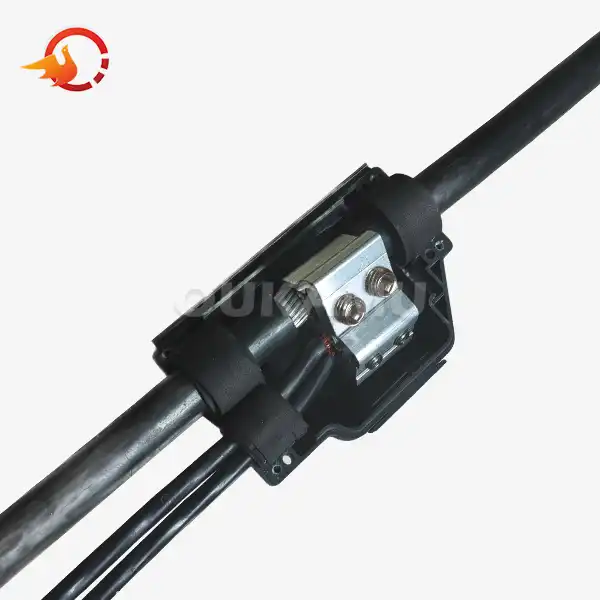
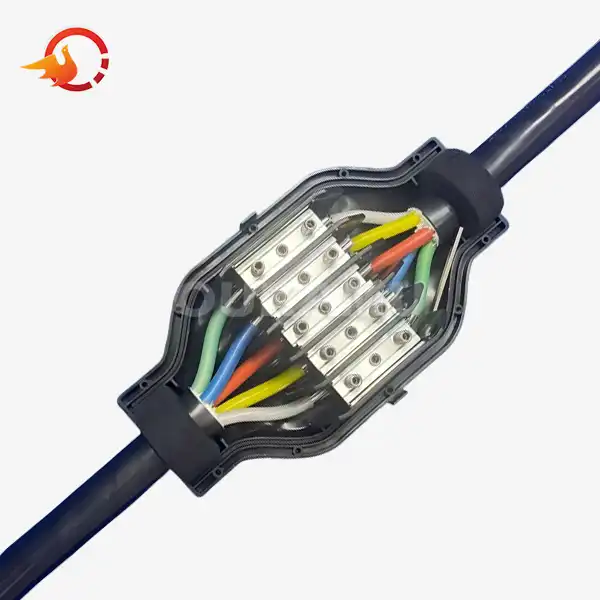
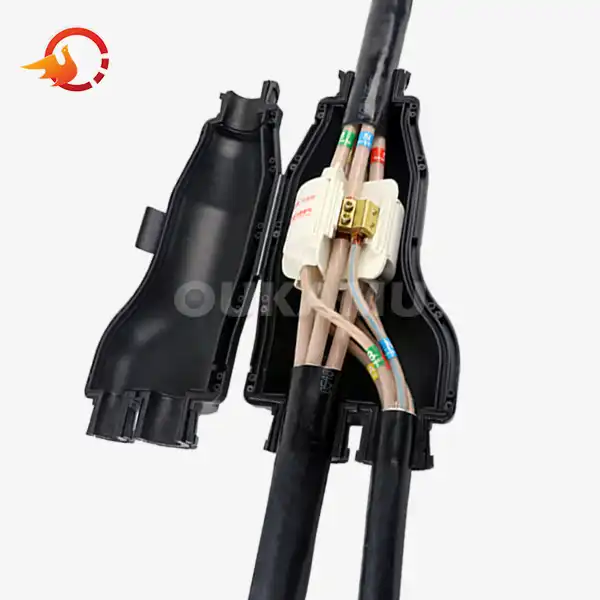
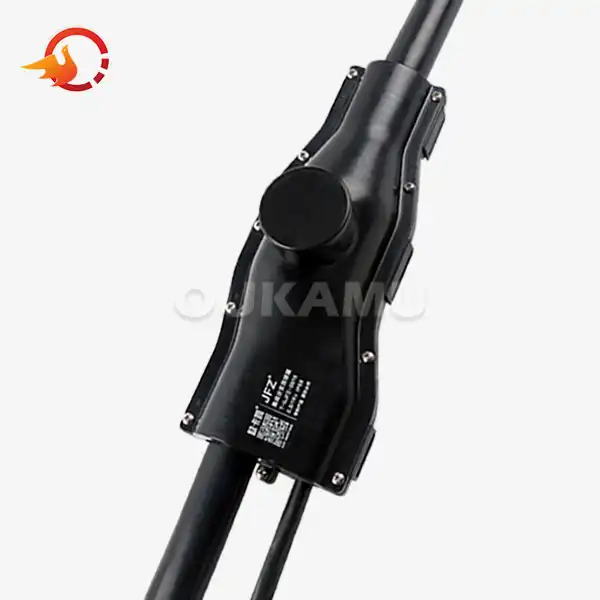
For 20 years, Xi'an Oukamu Electric has been a leader in branch cable connector innovation, coming up with answers to long-standing problems in the business. The Model T-GJFZ-35/16 is an example of cutting-edge branch jointing technology because it has IP68 waterproofing and gel-filled insulation. It can fit main lines from 10 mm to 35 mm and branch cables from 2.5 mm to 16 mm, so it can be used in a wide range of low-voltage situations. The design gets rid of the need to cut major cables, which keeps the integrity of the cables and lets installers move branches around easily in the field.
The built-in T-connector body makes connections that are safe and can't be changed. These connections can be buried directly or installed inaccess vaults without being seen. Environmental problems that make traditional jointing methods less reliable are solved by double safety protection using gel insulation and waterproof seals. Procurement teams like the cost-performance balance—they save money on materials because they don't have to throw away as much wire, and they also save money on labor costs and installation time. These benefits are especially helpful for workers who are working on multiple projects at once and know that crew efficiency directly affects profits.
New trends point to smart jointing devices with sensors that check the state of the joint. Temperature, moisture entry, and partial discharge activity are all measured by these devices, which send data wirelessly to central tracking systems. Predictive maintenance programs find problems before they break down, which cuts down on unexpected downtime and the cost of emergency repairs. More environmental rules are changing choices about buying infrastructure. To meet these rules, sustainable materials like bio-based insulation compounds and recyclable housing parts are used.
Conclusion
Modern Underground Cable Jointing technology is reliable and efficient because the tools and equipment are well-designed to deal with problems that come up during installation. Heat shrink, cold shrink, and gel-filled options all have their own benefits that depend on the surroundings, the limitations of the placement, and the needs of the operation. Instead of just looking at the original buy price, it's better for procurement choices to carefully consider technical specs, the supplier's abilities, and the costs that will come up over time.
Safety rules, proper training, and quality testing make sure that joints work effectively for decades. Focused engineering can solve long-lasting problems in an industry by making new goods like Oukamu's specialized branch joints, which have no-cut designs and built-in waterproofing. Electrical contractors and wholesalers can be successful even as project needs change if they choose partners who are committed to technical help and ongoing growth.
FAQ
What makes heat shrink cable joints different from cold shrink cable joints?
Heat shrink joints use controlled heating to soften thermoplastic materials and make tight rings around wire connections. They can handle a range of voltages and have been shown to be reliable for a long time. Cold shrink systems use rubber bands that have already been stretched out and can be pushed back into place without using heat. This makes installation faster in tight areas and eliminates the risk of open flames. When put correctly, both technologies effectively seal against moisture, but cold shrink accessories tend to cost more per unit while lowering the number of tools that need to be kept on hand.
How often should the joints between underground cables be checked?
How often you need to do inspections depends on how bad the environment is and how important the lines you serve are. Directly underground joints in acidic soils should be checked every two years for mechanical damage and water entry. Joints placed in vaults in controlled settings may allow inspections to happen every five years instead of every three. No matter how it was installed, critical infrastructure that supports hospitals, data centers, or industry processes should be checked every year. Thermal image scans find hot spots before they cause insulation to fail, which allows for preventative maintenance.
Do resin joints work with all cable types?
When builders choose compatible formulations, resin jointing systems can be used with most wire designs, such as those with XLPE, PVC, and EPR insulation. Specialized resins can work with certain insulator materials because they have the right chemical protection and thermal expansion qualities. Manufacturers of cables provide compatibility rules that list the allowed materials for joining cables together. Resin joints work great in harsh settings and high-voltage situations where extra fitting work is necessary for best safety.
Partner With a Trusted Underground Cable Jointing Supplier
Electrical workers and wholesalers looking for reliable ways to connect cables can get a lot of help from specialized makers that offer tried-and-true Underground Cable Jointing technology. Oukamu has 20 years of engineering experience specializing in branch cable connectors, making goods that remove the need to cut cables and guarantee IP68 waterproof performance. Because it has gel-filled insulation and can be installed in a variety of ways, our Model T-GJFZ-35/16 is a cost-effective choice for low-voltage distribution jobs. We know that inventory management, technical compatibility, and price limits can make it hard to buy things that are needed for a project. Email our team at info@okmbranchcable.com for full product details, reasonable prices, and application help that is suited to your needs. Working with an experienced manufacturer makes it easier to get the parts you need for upcoming projects or to add to your current product line. They will also make sure you have access to new solutions and full expert support.
References
1. International Electrotechnical Commission. (2022). IEC 60502-4: Power cables with extruded insulation and their accessories for rated voltages from 6 kV to 30 kV - Test requirements on accessories.
2. Smith, J. & Anderson, K. (2021). Underground Power Cable Installation: A Comprehensive Guide for Electrical Contractors. Technical Publishing House.
3. Chen, L. (2023). Advances in Cable Jointing Technology for Low-Voltage Distribution Networks. Journal of Electrical Engineering and Technology, 18(3), 445-462.
4. National Electric Code. (2020). Article 300: Wiring Methods and Materials - Underground Installations. National Fire Protection Association.
5. Williams, R. (2022). Comparative Analysis of Heat Shrink and Cold Shrink Cable Joint Performance in Underground Applications. Power Distribution Technology Review, 14(2), 78-95.
6. Zhang, W. & Liu, H. (2023). Environmental Durability Testing of Cable Joint Materials Under Simulated Burial Conditions. Materials Science and Electrical Engineering Quarterly, 29(1), 112-128.