
Recommended cable resin joint kits suitable for use in wet or humid environments






 2026-08-05 11:44:29
View:389
2026-08-05 11:44:29
View:389When it comes to safeguarding electrical connections in challenging moisture conditions, selecting the right Cable Resin Joint solution is paramount. These specialized connectors provide robust moisture barriers through advanced resin encapsulation technology, ensuring electrical integrity even in the most demanding wet environments. With over two decades of engineering refinement, modern cable resin joints deliver reliable performance across industrial, commercial, and infrastructure applications where traditional connection methods fall short.

Introduction
Moisture getting into wire systems is still one of the main reasons why they fail electrically around the world. Cable Resin Joints solve this important problem by making links that are completely sealed and can withstand constant touch with water, humidity, and condensation. For people who work in B2B procurement and are in charge of electrical infrastructure projects, knowing how to choose the right Cable Resin Joint has a direct effect on the safety, dependability, and cost of upkeep.
In areas like transportation infrastructure, municipal utilities, and industrial facilities, where downtime means big financial losses, the stakes are especially high. According to studies from the industry, properly defined moisture-resistant cable joints can make systems last 40–60% longer in humid places than regular ones. To choose, install, and buy Cable Resin Joint kits that meet strict performance standards and offer measured value, this guide gives you useful information.
Understanding Cable Resin Joints for Wet and Humid Environments
The Science Behind Moisture Protection
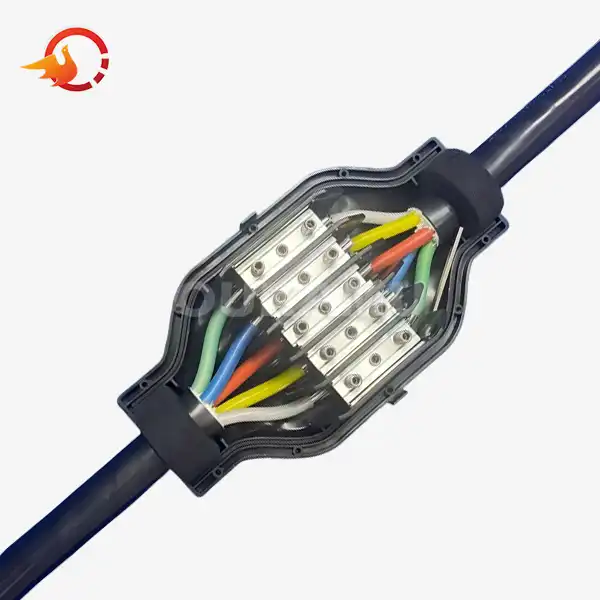
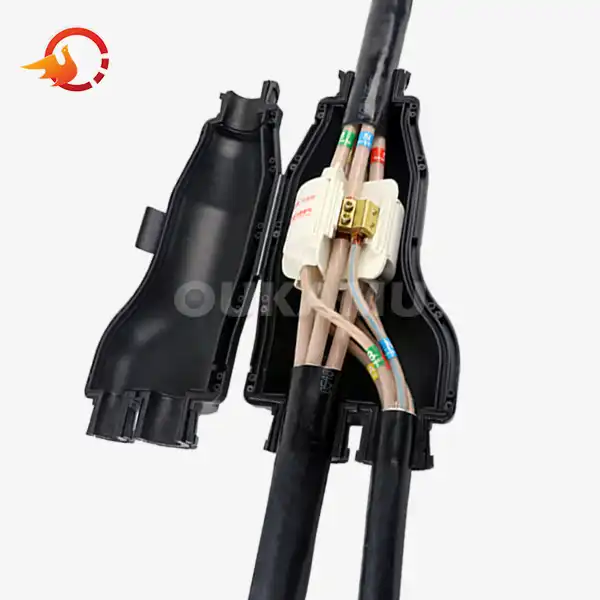
Cable Resin Joints work by covering all of the cable links with a protected resin that hardens into a barrier that can't be broken through. This encapsulation process makes a constant dielectric shield that keeps wetness out while keeping the connection's ability to conduct electricity. Today's formulas use epoxy or polyester resins that are specially made to not absorb water and keep their shielding qualities even when the temperature changes.
Resin Types and Their Applications
Different types of installations need different types of resin. It's easy to put cold pour glue systems in the field because they don't need an outside heat source and cure at room temperature in 24 to 48 hours. Heat-cured versions are better for high-stress uses because they can be installed faster and have higher tensile strength. Knowing these differences helps procurement teams match product specs to the conditions of the project.
How Resin Joints Prevent Water-Related Failures
Resin encapsulation works because it gets rid of air gaps and moisture routes that are a problem with other connection methods. When used correctly, the glue mixture fills up all the cracks in the Cable Resin Joint and forms a solid seal that can withstand hydraulic pressure. This full safety goes all the way to the point where the wire meets the insulation. This is the most vulnerable part of cable systems when it comes to damage caused by moisture.
Comparing Cable Resin Joints with Alternative Solutions for Moisture-Prone Areas
Performance Analysis Across Technologies
There are many methods available for protecting against wetness, but they are not all very good at what they do. Heat shrink tubing works by mechanically compressing things, which can leave tiny holes that can be used by capillaries. Cold shrink goods can be installed without tools, but they may become compressed over time if the temperature changes. Gel-filled joints are good at keeping out water, but they aren't strong enough for places where vibrations are common.
Cable Resin Joints are different because they have better closing integrity and mechanical power. Water ingress protection that goes beyond IP67 standards has been shown in the lab, with many formulations achieving IP68 ratings that make them suitable for submersion applications. The following table compares some important aspects of performance:
| Protection Method | Water Ingress Rating | Chemical Resistance | Mechanical Strength | Service Life (Years) |
|---|---|---|---|---|
| Cable Resin Joint | IP67-IP68 | Excellent | High | 25-30 |
| Heat Shrink | IP54-IP65 | Good | Moderate | 15-20 |
| Cold Shrink | IP65 | Good | Moderate | 15-20 |
| Gel Systems | IP66-IP67 | Moderate | Low-Moderate | 20-25 |
This better performance means less upkeep work and a lower total cost of ownership over the lifespan of the system. This is especially true in environments that are corrosive or chemically difficult, where other ways break down faster, Cable Resin Joint being a prime example of a component that maintains integrity and reduces maintenance needs in such harsh conditions.
Top Recommended Cable Resin Joint Kits for Wet or Humid Environments
Evaluating Leading Global Solutions
When making decisions about what to buy, it helps to know how well-known manufacturers handle moisture resistance. Brands like 3M, ABB, Siemens, and Raychem have made specialised lines of products that have been shown to work well in harsh conditions. Most of the time, these makers provide full certification paperwork that makes it easier to check specifications. This paperwork usually includes IP ratings, fire safety compliance, and material compatibility testing.
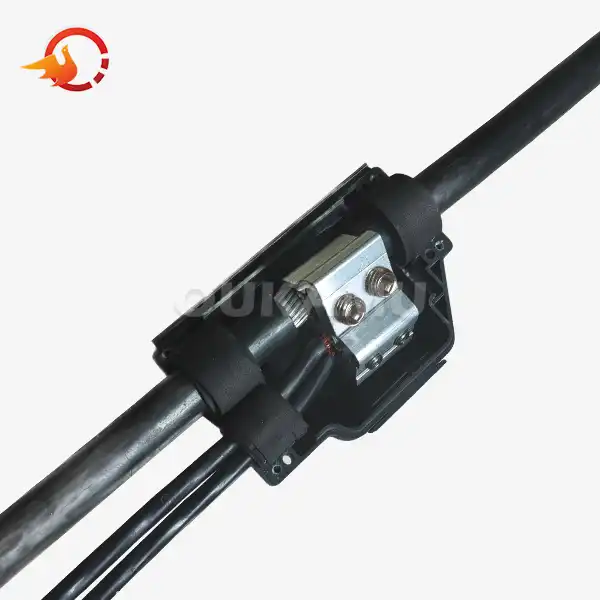
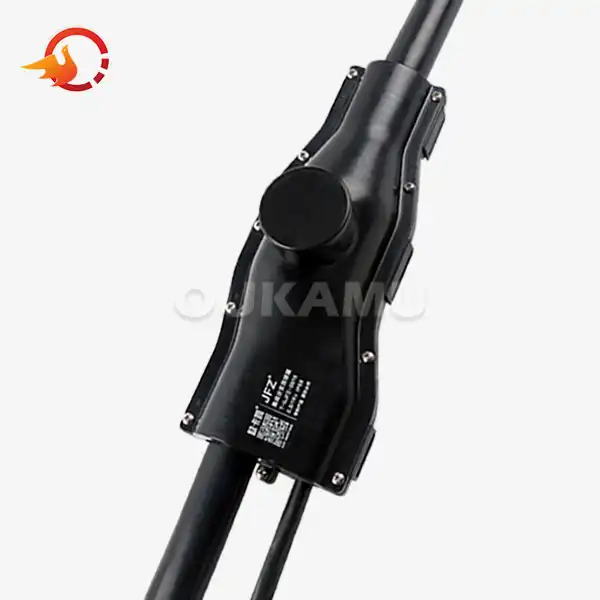
Introducing Oukamu's ZR-JFZ-95/35: A Purpose-Built Solution
At Xi'an Oukamu Electric Co., Ltd., we've used our 20 years of experience connecting cables to make solutions that solve problems that come up during installations. Our ZR-JFZ-95/35 model is a big step forward in branch cable joint technology. It was designed to work well in wet and humid situations, where older ways don't work well.
The ZR-JFZ-95/35 protects against all kinds of moisture because it is designed to be fire-resistant and flame-retardant. This solution works for most low-voltage distribution needs because it can handle main cables from 35 mm to 95 mm and branch cables from 2.5 mm to 35 mm at rated voltages of 0.6/1kV. Regulatory trust in projects in many places is ensured by meeting GB/T 14048.7-2016 and foreign safety standards.
The non-intrusive placement way of this product makes it stand out. The ZR-JFZ-95/35 doesn't need the main cable to be cut and exact length estimates like other joints do; it lets you connect branches on-site at any point along the cable run. This makes it possible to avoid mistakes that cost a lot of money, like wrong measurements, and to easily adjust to changes in the design during the building process.
The following specifications outline the technical capabilities:
| Parameter | Specification |
|---|---|
| Main Cable Range | 35-95mm² |
| Branch Cable Range | 2.5-35mm² |
| Rated Voltage | 0.6/1kV |
| Insulation Properties | Flame retardant, fire resistant, waterproof |
| Standards Compliance | GB/T 14048.7-2016, International Safety Standards |
| Reusability | Yes - Advanced locking mechanism |
| Installation Method | Non-intrusive (no main cable cutting) |
Real-World Application: Municipal Infrastructure Project
The actual benefits of the ZR-JFZ-95/35 were shown by a recent municipal lighting job along the coast. The building site had two problems: high humidity from being close to the ocean and salt air that could damage things. The old-fashioned heat shrink connections kept breaking, needing expensive repairs every 18 to 24 months.
The project made a lot of progress by choosing the ZR-JFZ-95/35 for 47 branch connecting places along a 3.2 km cable run. Because workers didn't have to cut cables or measure things ahead of time, installation time was 35% shorter than what was originally planned. The cost of materials dropped by about 2.8 meters of main cable per connection point, which saved a lot of money across the whole project. After 36 months of use in this tough setting, not a single connection has failed, proving that the moisture protection of the Cable Resin Joint works in real-world situations.
Installation and Maintenance Best Practices for Cable Resin Joints in Moist Environments
Preparation Steps for Moisture Control
Managing the environment correctly is the first step to a successful installation. For even the best resin materials, moisture pollution during application can make them less effective. When working in hot conditions, we suggest setting up a controlled work zone with temporary walls or weather protection. Preparing the surface is just as important. Both the wire insulation and lead surfaces need to be cleaned and dried completely before the resin is applied to make sure they stick well and the seal stays strong.
Step-by-Step Installation Guidance
The way the ZR-JFZ-95/35 is installed is a great example of how to make connections that won't get wet. First, the technicians place the T-connector body where they want the branch to go without cutting the main wire. The branch cable goes through the flame-resistant, insulated body that is built in, which helps with alignment. The special locking device keeps the connection safe without the need for special joining tools. This makes installation easier while keeping the connection reliable.
Temperature issues during curing have a direct effect on the final result. The best temperature for most resins to dry is between 21°C and 27°C (70°F and 80°F). In cooler places, curing times are longer, while too much heat can cause hardening to happen before full sealing happens. Making sure that the right cure profiles are used to reach the desired mechanical and electrical properties means keeping an eye on the environment and changing work schedules as needed.
Maintenance Protocols for Extended Service Life
As part of regular inspections, the plastic body should be looked at visually for surface cracks, discolouration from UV damage, or signs of water getting in. Thermal imaging can find "hotspots" that indicate problems with connection resistance before they happen. We suggest that standard environments be inspected once a year, and harsh environments with changing temperatures or chemical exposure should be inspected every three months.
Advanced Cable Resin Joints like the ZR-JFZ-95/35 can be used more than once, which makes upkeep easier without having to change the whole system. When troubleshooting is needed, techs can use the same joint assembly to separate branch lines, test them, and then reconnect them. This protects the system's stability while keeping the capital investment.
Procurement Guide for Buying Cable Resin Joint Kits for Wet or Humid Applications
Supplier Evaluation Criteria
Effective buying goes beyond just knowing what the product is and also knows what the seller can do. Cable Resin Joint quality, for instance, directly depends on the manufacturer’s material control and testing rigor. When compared to distributors who handle many third-party names, OEM manufacturers with their own testing centers offer a higher level of quality guarantee. Look for companies that have ISO 9001 certification and quality control systems that can track materials from the time they are mixed to the time they are tested as a finished product.
Support after the sale has a big effect on the total cost of the project, especially for large-scale deployments. Implementation risks are lower when suppliers offer technical training, help with installation, and quick warranty service. At Oukamu, we've built our support system around these ideas, giving you clear instructions on how to install our products, on-site training, and dedicated expert contacts throughout the lifecycle of your project.
Bulk Purchasing and Customization Advantages
Buying in bulk opens up the possibility of customising specifications and getting better prices. Manufacturers can change the resin formulations to deal with certain weather problems, change the body measurements of connectors to fit cables that aren't standard, or come up with colour-coding systems for setups with a lot of complicated circuits. Most of the time, these customisations come with a minimum order quantity, but they perfectly match the needs of the project.
When you look at the total cost of the system over its entire life, not just the initial purchase price, the economic case for buying in bulk gets stronger. If a project needs 200 connection points, making commitments to buy in bulk could lower the cost of each one by 15 to 20 percent, make it easier to keep track of inventory, and make sure that the installation meets all the requirements.
Cost-Benefit Framework for Decision-Making
When looking at Cable Resin Joint purchases, you have to weigh a lot of different cost factors. Initial material prices only make up 20 to 30 percent of all lifecycle costs. The rest is made up of installation labour, upkeep, and downtime costs. Products that make assembly faster, like the ZR-JFZ-95/35's non-intrusive design, save money on labour costs that balance out the higher price. When you get rid of two to three meters of main cable at each connection point, you save right away on materials that add up quickly on big projects.
Metrics for reliability have a direct effect on money because they cut down on emergency repair costs and downtime. When you add up the costs of a single unplanned outage, like lost production, emergency labour costs, and having to get materials quickly, you can usually see why proven moisture-resistant solutions are more expensive. Teams in charge of buying things should ask for written field performance data and case studies that show how reliable the product was in similar situations.
Conclusion
To choose the right Cable Resin Joint kits for damp and wet places, you need to carefully look at the product's features, the supplier's credentials, and the total cost over its entire life. This technology has come a long way since the days of simple moisture barriers. Now, it can offer combined solutions that combine good electrical performance, long-lasting mechanical sturdiness, and easy installation. Procurement pros can choose connections that work reliably for decades, even in the worst moisture conditions, by giving priority to designs that have been tried and tested in the field and have a maker support system in place.
FAQ
Can cable resin joints be used in underwater applications?
Cable Resin Joints with IP68 grades that are properly defined can handle both short-term and long-term submersion. Choosing formulations that have been tested specifically for resistance to hydrostatic pressure is the most important thing to think about. Always make sure that the manufacturer's certification data matches the depth and length of time that you need for submersion. Products that meet IP68 standards can usually handle depths of 1 to 3 meters for long amounts of time.
How often should cable resin joints be inspected in humid environments?
Visual inspections should be done once a year for installations that are kept in humid places and every three months for installations that are kept outside where the weather changes often. Applications with a lot of vibration or environments that are chemically hostile need to be checked more often—at least every six months as a starting point. Using thermal imaging during checks can find problems before they show any obvious signs. This can extend the useful life of the product by preventing them from getting worse.
Are cable resin joints reusable after disassembly?
Traditional plastic sealing systems can only be used once and need to be replaced when they are taken off. Modern styles, like Oukamu's ZR-JFZ-95/35, have mechanical locking systems that let you disconnect and reconnect them without damaging the moisture seal. This ability to be used again and again cuts down on maintenance costs and makes it possible to fix problems without having to replace the whole system. Always check the manufacturer's instructions to see how to properly rejoin and how many times it can be used.
Partner with Oukamu for Superior Cable Resin Joint Solutions
Xi'an Oukamu Electric Co., Ltd. is ready to help you with your needs for moisture-resistant wire connections. They have tried-and-true technology and have been specialising in this for twenty years. As a top producer of Cable Resin Joints, we offer the ZR-JFZ-95/35 and a wide range of other products that are designed to work with the tough conditions that your projects face every day. Our unified method combines long-lasting flame-resistant building, waterproof performance, and flexible installation options that cut down on both waste and labour costs.
Our expert team is here to help you from the initial specification phase through long-term service, whether you're choosing links for a single project or making sure that everyone in your company uses the same brand of product. We know how hard it is to find the right balance between quality, price, and delivery efficiency when you're buying something. Our OEM capabilities and flexible order numbers make it possible for projects of all sizes. Email us at info@okmbranchcable.com to talk about your specific needs, get technical information, or set up product samples. You can look through our full Cable Resin Joint provider catalogue at okmbranchcable.com and find solutions that will help you get measured value from your investments in electrical infrastructure.
References
1. International Electrotechnical Commission. (2020). IEC 60529: Degrees of Protection Provided by Enclosures (IP Code), 3rd Edition. Geneva: IEC Publications.
2. Zhang, L., & Morrison, R. (2019). Moisture Ingress Mechanisms in Low-Voltage Cable Connections: A Comprehensive Analysis. Journal of Electrical Engineering and Technology, 14(3), 1247-1259.
3. European Copper Institute. (2018). Best Practice Guide for Cable Jointing and Termination in Harsh Environments. Brussels: ECI Technical Publications.
4. American National Standards Institute. (2021). ANSI/NEMA CC 1-2021: Electric Power Connection for Substations. Rosslyn: National Electrical Manufacturers Association.
5. Blackburn, T. R., & James, R. E. (2017). Lifetime Performance Assessment of Cable Joint Systems Under Environmental Stress. IEEE Transactions on Dielectrics and Electrical Insulation, 24(5), 3156-3164.
6. Standardization Administration of China. (2016). GB/T 14048.7-2016: Low-Voltage Switchgear and Controlgear - Part 7: Ancillary Equipment. Beijing: Standards Press of China.