

_1790150425011.webp)
Power cable joint connectors certified for industrial safety standards






 2026-07-27 11:15:24
View:389
2026-07-27 11:15:24
View:389It's just as important the quality of your connections as the wires themselves when you're in charge of electrical setups in factories. A Power Cable Joint Connector that is certified to meet industrial safety standards is the perfect way to meet compliance requirements and make sure that the system works reliably. These parts make sure that electrical paths are safe and that they meet strict rules like GB/T 14048.7-2016, IEC standards, and UL certifications. Distributors, contractors, and procurement teams across the United States can cut down on downtime, avoid dangerous failures, and lower long-term running costs by choosing connections that meet both safety standards and realistic installation needs.

Understanding Power Cable Joint Connectors and Industrial Safety Standards
What Are Power Cable Joint Connectors?
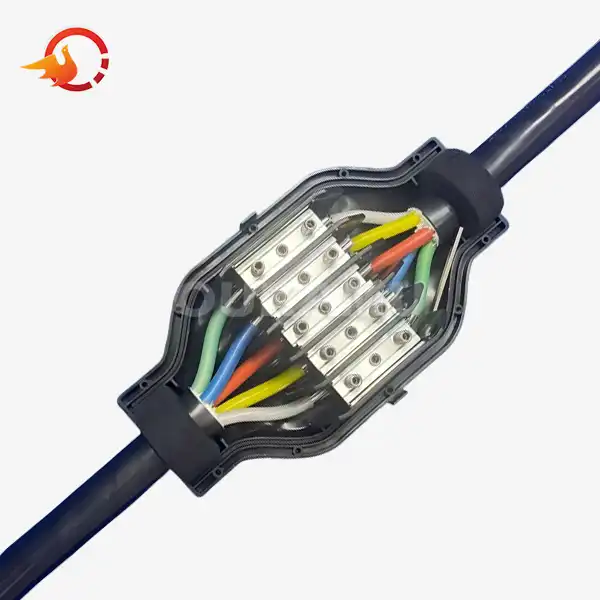
Power Cable Joint Connectors keep the electricity flowing between cable segments without affecting the integrity of the insulation. Unlike splice connectors, which permanently join conductors together, joint connectors often allow repositioning or future changes, which makes them useful for changing industrial layouts. These devices keep the current flowing while providing mechanical security and environmental sealing. This stops water from getting in, dust from building up, and rust damage.
Key Industrial Safety Standards
Safety standards that are known to be effective protect both people and things. The GB/T 14048.7-2016 standard lists the performance requirements for low-voltage switchgear and controlgear assemblies, as well as the parts that are used to connect them. Ingress Protection (IP) grades, like IP67 and IP68, show how resistant something is to dust and water. They are set by IEC 60529. UL approval makes sure that goods meet safety standards in North America, while EN standards meet the rules in the European Union. Products with these certificates go through strict tests to make sure they are stable at high temperatures, have high dielectric strengths, and last a long time. This makes sure they work well under heavy industry stress.
Materials and Electrical Ratings
Flame-retardant polymers and silicone gel compounds are used in modern connectors to make them more resistant to fire and keep the insulation in place even in extreme temperatures. To keep galvanic corrosion from happening and make sure connections have low resistance, copper and aluminium contact surfaces need to be made of the right material. The rated voltage, which can be 0.6/1kV, tells you the highest power that the connector can safely take. Current rates are related to the cross-sectional areas of the conductors. Industrial connectors can usually handle ranges from 16mm² to 240mm² to meet a variety of power distribution needs.
Types of Power Cable Joint Connectors and Their Application Scenarios
Waterproof Connectors: IP67 vs. IP68
Choosing the right IP rating depends on where the installation will be done. IP67-rated connectors can handle being submerged up to one metre for thirty minutes. This means they can be used in indoor settings where they might get wet sometimes. IP68-rated types can be submerged continuously in water up to one metre deep. This makes them perfect for outdoor substations, underground vaults or facilities near the coast where salt spray and humidity could damage the link. All of these rates have an effect on the total cost of ownership by affecting how often upkeep needs to be done and what the warranty covers.
Copper and Aluminum Cable Compatibility
Copper cables are better at conducting electricity and resisting rust, but aluminium cables are cheaper and lighter for long-distance runs. Power Cable Joint Connectors need to be able to work with both materials without making galvanic cells, which speed up the breakdown process. To stop electrochemical processes, bimetallic connections have barrier layers or transition chemicals built in. Different materials have different ways of being installed. For example, copper connections usually need less torque and smaller connecting bodies than aluminium ones that can handle the same amount of power.
Flame-Retardant and High-Voltage Solutions
Connectors that don't catch fire and stop flames from spreading are needed in industrial settings. Flame-retardant housings meet UL94 V-0 standards and put out the fire themselves within seconds of removing the source of burning. To stop arcing, high-voltage connectors rated above 1kV have thicker insulation and longer creepage distances. These unique products are used in heavy manufacturing plants, petrochemical plants, and mines where fire risks and electrical loads are higher than normal commercial ratings.
Certified Power Cable Joint Connector Installation Guide
Pre-Installation Safety and Preparation
The right way to put something starts with turning off the power to the circuits and using calibrated test tools to make sure there is no voltage. Check the manufacturer's datasheets to make sure that the cable size works with the environment and that it is safe to use. Get the tools you'll need, like cable strippers, crimping tools that are set to the right pressure levels, heat guns for shrink tubing, and tests for insulation resistance. Check the Power Cable Joint Connectors for damage from shipping and make sure the certification markings can still be read.
Step-by-Step Assembly Process
To prepare a cable, the outer jackets must be taken off to reveal the conductors without damaging the insulation. Cut the ends of the conductors to the lengths given in the installation directions. Depending on the type of connection, these lengths are usually between 10 mm and 25 mm. Before tightening the fasteners to the manufacturer's recommended torque values, make sure the conductors are fully seated in the terminal chambers. Follow the cure times for sealing parts like heat-shrink sleeves or silicone gel packs to get the rated IP protection. Before re-energising, test the insulation resistance at least 500V DC to make sure it was put together correctly.
Common Installation Pitfalls
When you undertorque terminal nuts, you make links with a lot of resistance, which leads to too much heat and failure before its time. When you overtorque something, you damage the wire strands and threads, which lowers its mechanical strength. If there isn't enough insulation overlap, water and direct touch can get to live conductors. By not testing for insulation resistance, bad assemblies can be put into use, which can damage equipment and hurt people. These risks can be reduced by training workers and following written procedures.
Maintenance Best Practices
Inspections that happen every six to twelve months find problems before they break down. Check for discolouration that could mean the device is overheated, look for cracks or wear in the seals, and make sure the fixing hardware is still in place. Thermographic surveys find changes in temperature that aren't normal and are usually caused by internal corrosion or loose connections. Keep service records and write down what was found during inspections to help with warranty claims and regulatory compliance audits.
How to Choose the Best Certified Power Cable Joint Connector for Your Business?
Critical Procurement Criteria
The most important decision factor is the legitimacy of the certification. Check to see if the products have real certification marks and look at the manufacturer's paperwork to make sure they meet the standards. Voltage and current limits must be higher than what is needed for operation, with safety margins of at least 125% of the maximum predicted loads. Some of the things that are used to judge mechanical durability are resistance to vibration, tolerance for impact, and cable pull-out strength. Environmental suitability includes a range of temperatures, resistance to chemicals, and UV stability for installations outside.
Evaluating Product Differentiators
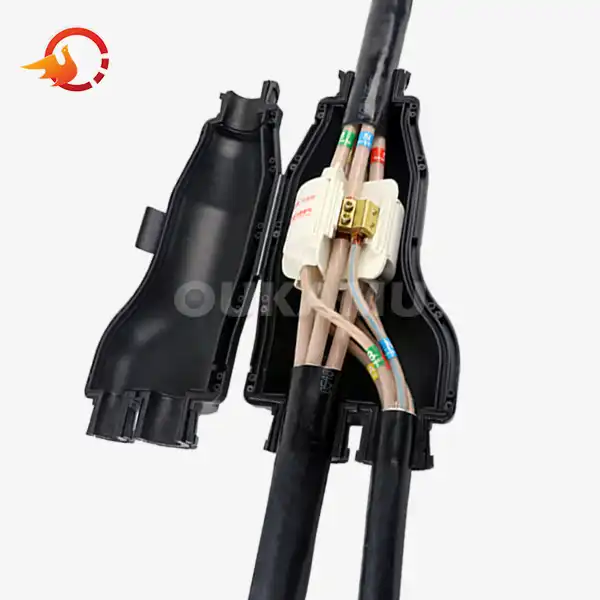
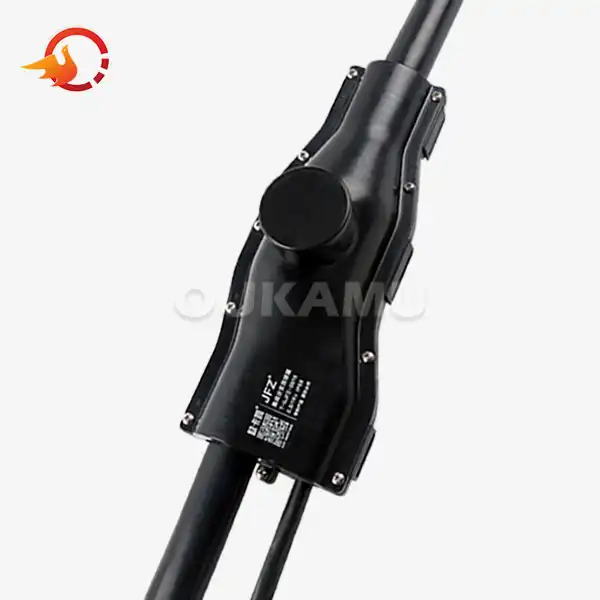
The ZR-JFZ-95/70 model from Oukamu is an example of a high-tech Power Cable Joint Connector. It can handle main cables from 35mm² to 95mm² and branch cables from 16mm² to 70mm². With this branch cable joint technology, you don't have to cut the main wires, so the integrity of the cable is kept and there are movable connection points along the distribution runs. The combined T-connector design has flame-retardant and fire-resistant insulation layers that completely seal off the branch points. This product is different from others on the market because it can be used more than once. Connections can be moved or rearranged without having to replace the connector, which means that distributors with changing project portfolios don't have to keep as much inventory on hand.
Comparing well-known brands, you can see that they offer different benefits. Well-known companies like 3M and nVent Raychem have a wide range of products that have been tested and proven to work in the field for decades. TE Connectivity focuses on modular designs that make it easier for wholesalers to keep track of their supplies. Panduit focuses on integrating cable management, which makes it appealing to contractors who want to set up systems that work well together. With tool-free designs, Hellermann Tyton makes sure that their products are easy to install, which cuts down on labour costs. Oukamu stands out because it has specialised knowledge in branch connection technology that it has developed over twenty years. It offers solutions that solve specific problems related to maintaining main cables and allowing for flexible installation.
Long-Term Value and ROI
Certified Power Cable Joint Connectors cost more than uncertified ones, but they pay for themselves in the long run by having lower failure rates and longer service lives. Often, the extra cost of a whole project is worth it to avoid a single major failure that stops output. Oukamu's method saves two to three meters of main wire per branch point, which lowers material costs and makes it easier for wholesalers to handle changes in seasonal inventory. These saves are increased by more efficient use of labour. For example, getting rid of wire cutting and length reservation speeds up the installation process, cutting down on project timelines and giving crews more time to work on other tasks.
Purchasing Certified Power Cable Joint Connectors: Best Practices for B2B Buyers
Sourcing Channels and Supplier Evaluation
Direct relationships with manufacturers have benefits, such as technical support, the ability to make changes, and better prices for large orders. Authorised distributors offer local stock, shorter lead times, and combined shipping for orders of more than one product. Custom makers can meet specific needs, like making cables in a certain way or using their own colour code system. Assess suppliers by looking at how clear their certification paperwork is, how many samples they offer, how quickly they respond to technical questions, and how many references they have from similar projects.
Import Compliance and Logistics Strategies
When you buy things from other countries, you need to pay attention to customs classifications, duty rates, and country-of-origin paperwork. Make sure that suppliers give you the commercial invoices, packing lists, and certificates of conformity that customs officials need. Harmonised System (HS) codes are used to figure out duties. Misclassification causes costs to go up and clearance times to lengthen. When you combine packages, you save money on freight costs per unit, but you need to weigh the savings in shipping costs against the costs of keeping inventory. Incoterms like FOB, CIF, and DDP make it clear who is responsible for the costs and risks of shipping.
Negotiation and Pre-Qualification
Before placing a big order, ask for samples of the Power Cable Joint Connector to test internally. A physical inspection shows how well the product was made, how easy it is to install, and how well it works with other systems. Negotiating bulk purchases can help you get tiered discounts, longer payment terms, or free freight. Set up quality agreements that spell out the criteria for acceptance, the steps for checking, and what will happen if a shipment doesn't meet the standards. When distributors are planning promotional inventory or seasonal stock changes, they should talk to suppliers about flexible delivery schedules that match the arrival of inventory with predicted demand. This will cut down on storage costs and the risk of items going out of style.
Conclusion
In conclusion, when choosing approved Power Cable Joint Connectors, you have to think about how to meet regulations, protect the environment, and keep costs low. Standards like GB/T 14048.7-2016 make sure that products work as promised in industrial settings, protecting infrastructure investments and worker safety. Modern designs, such as Oukamu's branch connection technology, solve problems with procurement by saving materials, allowing for flexible installation, and being able to be used again and again. People who work in procurement for North American markets should work with suppliers who have a lot of certifications, technical know-how, and quick customer service. Distributors and contractors can deliver reliable electrical systems that meet customer expectations by carefully comparing connector specifications to application needs and carefully checking out potential suppliers.
FAQ
What certifications should I prioritize when sourcing power cable joint connectors?
Pay attention to GB/T 14048.7-2016 for Chinese manufacturing, UL certification for US markets, and IEC standards for global projects. IP ratings (IP67 or IP68) show how well the environment is protected. To make sure the Power Cable Joint Connector is real, ask for copies of the certifications and check their authenticity through the databases of the issuing bodies.
Can I connect copper and aluminum cables using the same connector?
There are special bimetallic connectors that can fit both materials and have barrier compounds that stop galvanic corrosion. Standard connectors that are only made for copper or aluminium should not be switched between the two materials. Always check the manufacturer's instructions, and if two metals don't fit together well, you might want to use transition connectors to keep the connection strong.
How do safety standards influence connector lifespan and maintenance?
Certified links go through tests that speed up the ageing process and predict how their performance will decline over time. Standards set minimum lifespans for certain operating conditions, which help determine when to do maintenance. Products that meet strict standards usually need to be inspected and replaced less often, which lowers the total cost of ownership compared to options that aren't approved and may break down early.
Partner with Oukamu for Industrial-Grade Power Cable Joint Connector Solutions
Oukamu has 20 years of experience in branch cable connection technology and can help procurement professionals find reliable, certified electrical parts. Our ZR-JFZ-95/70 model and wider range of products meet GB/T 14048.7-2016 and other international safety standards. They are flame-resistant and waterproof, making them perfect for tough industrial uses. Since we only make Power Cable Joint Connectors, we know how hard it is for distributors to keep their inventory flexible, keep prices low, and get technical help when they need it.
Our team helps you choose products that meet your specific needs for voltage, cable size, and environmental conditions. Email info@okmbranchcable.com to get samples, talk about bulk pricing for your upcoming projects, or look into OEM customisation options.
References
1. International Electrotechnical Commission. (2020). IEC 60529: Degrees of Protection Provided by Enclosures (IP Code). Geneva: IEC Publications.
2. National Electrical Manufacturers Association. (2019). NEMA Standards Publication 250: Enclosures for Electrical Equipment. Rosslyn: NEMA.
3. Zhang, L., & Wang, H. (2021). Advances in Flame-Retardant Materials for Low-Voltage Electrical Connectors. Journal of Industrial Safety Engineering, 18(3), 145-162.
4. Underwriters Laboratories. (2018). UL 486A-486B: Wire Connectors and Soldering Lugs for Use with Copper Conductors. Northbrook: UL Standards.
5. Chen, Q., Liu, S., & Rodriguez, M. (2022). Comparative Analysis of Cable Joint Technologies in Modern Electrical Distribution Systems. IEEE Transactions on Power Delivery, 37(2), 892-904.
6. Standardization Administration of China. (2016). GB/T 14048.7: Low-Voltage Switchgear and Controlgear Assemblies—Part 7: Ancillary Equipment. Beijing: Standards Press of China.