

_1790150425011.webp)
Guide to selecting cable resin joint kits compatible with different cable insulation types






 2026-07-28 12:26:48
View:389
2026-07-28 12:26:48
View:389To pick the right Cable Resin Joint kit, you need to know how the insulation on your cable works with the jointing system. The Cable Resin Joint is a special kind of connector that is made to make safe, long-lasting connections between different kinds of insulation, like PVC, XLPE, and EPR. It protects the electrical integrity while also being mechanically sound. When choosing joint kits for your projects, you should think about how well they work with the materials you already have, how much power they can handle, the surroundings, and how easily they can be installed. This will help you make sure that your electrical infrastructure lasts for a long time and is safe.

Understanding Cable Resin Joints and Their Compatibility with Cable Insulation TypesWhat Makes Cable Resin Joints Essential for Electrical Connections?
Cable joints are very important parts of electrical distribution networks because they keep the electricity flowing and protect the insulation. These parts have a small size but do a lot of different things: they seal against moisture, keep the dielectric strength, and provide mechanical support. When making branch connections or fixing things, the joint has to fit in perfectly with the cable insulation and not leave any weak spots that could cause problems.
The hard part is making sure that the properties of the joint material and the cable insulation are the same. Changing temperatures, chemical exposure, and mechanical stress all affect different types of insulation in different ways. When you choose the right joint, the cable's performance stays the same over its entire useful life. This keeps it from breaking down too soon, which could affect the stability of the system.
Common Cable Insulation Materials and Their Properties
In low-voltage applications, PVC insulation is still widely used because it is cheap and works well in most situations. At room temperature, this material is flexible, but it can break easily in cold places and become soft in hot places. Usually, PVC cables work well up to 70°C and are resistant to water and many chemicals, so they can be used in both indoor and outdoor settings that are kept safe.
XLPE insulation is a big step forward in cable technology; it has better thermal performance and can handle temperatures up to 90°C in normal situations. This cross-linked polyethylene structure has great electrical qualities, doesn't crack easily when exposed to external stress, and gets better with age. When longevity and dependability are very important, like in industrial buildings, utility distribution networks, and underground installations, XLPE cables are the best choice for medium-voltage uses.
Extreme temperatures, from -50°C to 105°C, don't affect the performance of EPR insulation. It is very flexible. This mix of synthetic rubber is very resistant to ozone, weathering, and a lot of industrial chemicals. Mining operations, industrial plants with high ambient temperatures, and sites that move or vibrate a lot are all places where EPR wires are used.
Chemical and Thermal Compatibility Principles
To choose compatible joint systems, you need to know how materials work together in real life. Chemical compatibility makes sure that the joint compound doesn't react badly with the cable insulation, which could lead to it breaking down, softening, or hardening over time. The material for the joint should be able to handle the same or higher temperatures as the insulation for the cable. This will keep the temperatures from being too different, which can cause stress concentrations.
Mechanical compatibility is about how the joint handles cable movement and outside forces without affecting the seal or the way the electricity works. The Cable Resin Joints have to stay strong even when they go through thermal cycling, which makes them expand and contract, while also being flexible enough to handle vibrations and small changes in the structure. When installations are subject to changing weather conditions or mechanical stress, these factors become even more important.
Key Criteria for Selecting Cable Resin Joint Kits for Different Cable Insulations
Voltage Rating and Application Environment Requirements
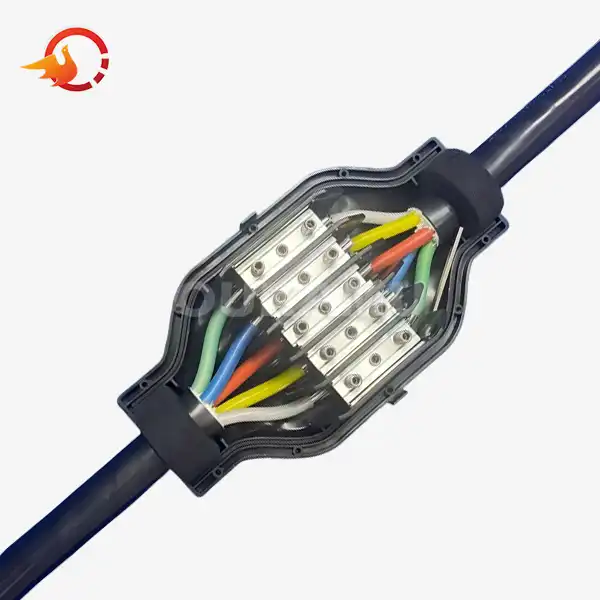
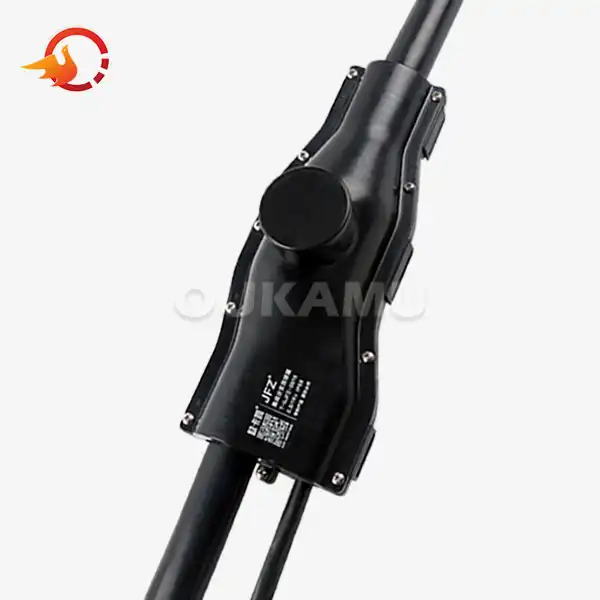
The most important thing to look for in a joint is that its voltage level matches the requirements of your wire. For 0.6/1kV low-voltage applications, the insulation thickness and dielectric strength need to be different from those for medium-voltage systems. The ZR-JFZ-95/35 model from Oukamu works at 0.6/1kV, which makes it perfect for home, business, and light industry distribution networks with main wires that are 35mm to 95mm and branch cables that are 2.5mm to 35mm.
Environmental conditions significantly influence joint performance and longevity. Indoor installations in controlled environments face different challenges compared to outdoor or underground applications exposed to moisture, temperature extremes, and potential contamination. Waterproofing becomes essential in underground or outdoor settings, where moisture ingress can compromise electrical integrity. Flame retardant and fire-resistant properties protect against fire propagation in high-density installations such as commercial buildings and industrial facilities.
Material Properties and Curing Characteristics
How the joint cement cures affects both how easy it is to install and how reliable it is in the long run. Some types of resin cure quickly, which can be helpful when time is limited for a job but may make it harder to work on pieces that are more complicated. The speed of curing depends on the temperature. Temperatures between 21°C and 27°C usually speed up the process, while temperatures below 21°C slow hardening and may make project timelines longer.
Applying thin, controlled layers instead of trying to fill big holes in one pour makes the curing more even and lowers the risk of air bubbles or incomplete hardening. The joint compound shouldn't shrink too much while it cures so that it stays in contact with the cable surfaces and works properly electrically and mechanically. Advanced formulations find a good mix between being easy to work with and lasting a long time. This lets you put it properly and get it to full strength in a fair amount of time.
Compliance Standards and Safety Certifications
International safety standards set standards for how well and how reliably a joint should work. Products that follow GB/T 14048.7-2016 and other similar international standards are guaranteed to meet minimum standards for electrical safety, mechanical strength, and resistance to the environment. These certifications show that the company that made the product put it through strict tests that checked for dielectric strength, resistance to moisture, thermal cycling, and mechanical stress.
When looking at possible providers, make sure that the paperwork clearly lists the standards that apply and includes test reports that show compliance. This check protects your company from legal problems and makes sure that installations meet government standards. Products with recognised certifications make it easier to get permission from building inspectors and utility companies. This cuts down on project delays and administrative work.
Comparing Joint Technologies for Different Scenarios
In some situations, heat shrink joints are useful because they provide reliable insulation through thermally triggered polymers that cling tightly to wire surfaces. These systems work well for straight-through joints and repairs, but they aren't great for branch connections where it's important to keep the main cable's continuity. For installation, you need special heating tools and to carefully watch the temperature so that the cable insulation doesn't get damaged.
Using pre-expanded rubber tubes held in tension on detachable cores, cold shrink technology gets rid of the need to use heat. By taking out the core, the tube can shrink onto the wire, making a tight seal that doesn't need any tools or heat. This method works well for installations in the field where it's hard to get hot work permits or where flame or high-temperature equipment can't be used because of explosive atmospheres.
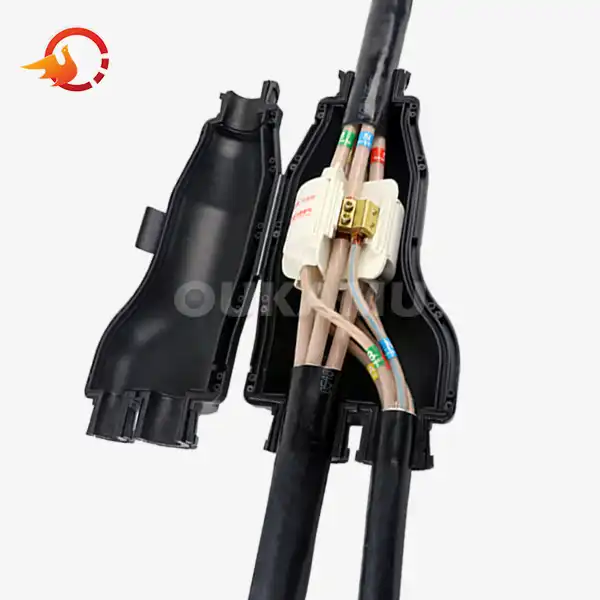
Using Cable Resin Joint insulation technology in branch cable links makes it easier to make T-connections without cutting the main wire. The built-in design lets you install the mechanical connection, full insulation, and sealing all at the same time. This technology saves money on materials because it doesn't need to cut and reconnect main wires. This saves two to three meters per branch point and makes the work easier and faster. Because the installation position is flexible, contractors can change where the branches are placed based on the conditions of the site, not on factory specifications.
Installation Process and Safety Precautions for Cable Resin Joints
Surface Preparation and Cable Positioning
The basis for effective joint performance is set by proper planning. Thoroughly clean the cable surfaces to get rid of any dirt, moisture, oxidation, or other impurities that might stop the insulation from sticking or leave holes in it. Use cleaning solvents that are approved for the type of cable insulation you have, and let the surfaces dry completely before you start installing.
Place the wires according to the manufacturer's instructions, making sure there is enough room for the joint body and that the leads are lined up correctly. The ZR-JFZ-95/35 design lets you connect a branch at any point along the main cable without cutting or stripping the primary conductor. This makes installation a lot easier and lowers the chance of making a mistake. Keep the wires in place so they don't move around during installation and curing, which could leave gaps or make the link weaker.
Resin Mixing and Application Techniques
For the right curing and final properties, it's important to use the right mixing ratios. Follow the manufacturer's exact instructions for the right amount of glue to hardener. Mix the mixture well to make sure it's evenly distributed without adding too many air bubbles. Mix only as much as you can use in the working time, because as soon as the parts are mixed together, the glue starts to harden.
Slowly pour resin into the Cable Resin Joint space, starting at the bottom to let air escape naturally. Don't pour too quickly because it can trap air pockets that can weaken the dielectric and lead to failure points. For bigger joints, filling in steps with short breaks between each one lets air rise and escape before adding the next layer. Keep an eye on the fill level to make sure that all wire surfaces and connection points inside the joint body are fully covered.
Safety Equipment and Ventilation Requirements
Installers wear personal protective equipment to keep them safe from chemical and mechanical hazards. Wear gloves that can withstand chemicals to keep your skin from coming into touch with uncured resins, which could irritate or make your skin more sensitive. When mixing or pouring, safety glasses protect the eyes from splashes. Respiratory protection keeps you from breathing in volatile chemicals that are released during mixing and drying in small spaces or places with poor air flow.
Good ventilation gets rid of airborne contaminants and speeds up the evaporation of moisture, which helps the curing process. Use fans or natural air flow to create cross-ventilation in enclosed work spaces. Don't make it so that fumes build up near the work surface, and never work in a room that is completely sealed off without proper respiratory protection and monitoring of the air quality.
Maintenance Intervals and Troubleshooting Common Issues
Setting up regular inspection times helps find problems early on, before they become major problems. Visual checks should look for physical damage, signs of water getting in, discolouration that means the item is too hot, or the breakdown of external parts. Thermal imaging scans can find hot spots that mean links with high resistance or not enough heat dissipation, so problems can be fixed before they break.
Common problems include not fixing properly because of wrong mixing ratios or bad weather conditions, electrical tracking caused by moisture getting into the system during installation, and mechanical damage from too much wire movement or not enough support. Taking care of these issues right away stops the system from breaking down over time and increases its lifespan. When you're troubleshooting, you should figure out if the problem is caused by how the system was installed, the choice of materials, or operational conditions that are outside of what was planned.
Performance Comparison and Advantages of Cable Resin Joints Over Other Joint Types
Chemical Resilience and Environmental Resistance
When it comes to chemical protection, Cable Resin Joint systems are better than many other methods. When the resin matrix hardens, it forms a barrier that keeps out water, oils, chemicals, and many other harmful substances that are common in industrial settings. This chemical stability keeps the electrical and mechanical properties even in tough conditions that break down other materials.
When organic materials are used outside, biological factors like fungus growth and insect damage can affect their resistance to the environment. The sealed design stops wetness from building up, which helps microorganisms grow. This keeps the system clean and stops the breakdown processes that happen during biological activity. Photodegradation, which happens when materials are exposed to direct sunlight, is stopped by UV resistance in formulations made for outdoor use.
Mechanical Properties and How Hard It Is to Install
The mechanical strength of finished resin joints protects well against forces like impact, wear, and compression that could damage less durable options. Because of its strength, this feature is especially useful in places where people walk or drive, or where regular maintenance tasks put stress on the system. Instead of putting stress in a few places, the integrated design spreads forces across the whole joint structure.
Different joint technologies have very different levels of installation difficulty. Traditional methods, which involve cutting and reconnecting the main cable, need accurate measurements, more connection points that could go wrong, and more materials. These problems are solved by the non-intrusive connection method used in advanced branch cable joints. This lets installers make branches quickly with few tools and training. This makes things easier, which cuts down on installation mistakes and speeds up the project's finish.
Cost Analysis and Long-Term Value
The initial cost of materials is only one part of the total costs of ownership. Labour costs make up a big part of installation costs, so technologies that cut down on installation time are very useful, even if they may cost more per unit. Being able to change the positions of branches on-site cuts down on waste caused by wrong prefabricated standards. This saves money on new materials and keeps the project on schedule.
Long-term value is greatly affected by ongoing maintenance costs and how often things need to be replaced. Joints that are strong and don't break down when exposed to the elements or put under a lot of stress during use reduce the need for inspections and increase the time between replacements. Some advanced designs can be used again and again, so changes can be made to branch configurations without throwing away the whole joint assembly. This gives you flexibility for your changing electrical distribution needs while reducing material waste.
Real-World Applications Demonstrating Performance Benefits
In high-temperature settings, where traditional joints wear out faster, industrial facilities that use resin joint technology for motor branch circuits have reported better reliability. When flame resistant qualities are combined with fire resistance, they provide very important safety in chemical processing plants where sources of ignition must be kept to a minimum. Maintenance teams like the small size, which lets it be installed in equipment rooms that are already crowded and don't have a lot of room for other choices.
Commercial building projects that have used these systems have saved a lot of money because they use fewer cables and install them faster than traditional branching methods. Last-minute tenant changes can be made without a lot of work having to be redone because final decisions about branch placement can be made during installation rather than the design phase. Electrical workers have found that cutting and re-connecting main wires for each branch link saves 30 to 40 percent of the work that needs to be done.
Underground distribution networks are good because they are waterproof and don't get damaged by soil chemicals that can damage less durable materials over time. Less joint failures have been reported by utilities in buried applications, which lowers the cost of emergency repairs and raises system reliability metrics. The dust-proof and anti-aging features keep the performance in harsh underground settings where changing temperatures and exposure to wetness can shorten the life of parts.
Procurement Guide: How to Buy the Right Cable Resin Joint Kits?
Evaluating Supplier Reliability and Technical Support
Picking a supplier is more than just choosing a product. It also involves technical know-how, customer service, and making sure the business will be stable in the long run. Manufacturers that have been specialising in one area for decades show that they are dedicated to their technology and gain useful application experience. Oukamu has been focusing on branch cable joints for twenty years, which shows that they really understand what their customers want and are always improving their products based on feedback from people using them in the field.
Technical support helps answer questions about the application and fix problems that come up during installation or use. Manufacturers who are responsive give detailed installation instructions, information on how materials work together, and help with understanding technical specs. When working with unusual installation situations or adding goods to a current infrastructure that has its own needs, this help comes in very handy.
Pricing Structures and Bulk Purchase Advantages
Knowing the different parts of a price helps you negotiate better terms and find ways to cut costs. Base prices for goods show how much it costs to make them, but savings for buying in bulk, payment terms, and freight plans have a big effect on the total cost of buying something. Building relationships with suppliers who offer flexible pricing for repeat customers or large orders makes budgeting easier and saves money.
By making production more efficient and combining shipping, buying in bulk lowers the cost per unit. Coordinating purchases to reach volume discount thresholds is the best way to save the most money when planning multiple projects or keeping inventory for ongoing operations. If you talk to suppliers about how much you think you will use each year, they may be able to offer you better prices or custom deals that are good for both of you because they keep demand stable and lower transaction costs.
Customization Options and Lead Time Considerations
Standard products work well for most uses, but unique products can be made to fit specific needs. Manufacturers like Oukamu offer OEM services to meet specific needs like cable sizes, voltage ratings, or environmental conditions that aren't met by catalogue products. Requests for customisation should be made early on in the planning process so that there is enough time for engineering review, sample testing, and setting production.
Delivery times depend on the type of product, the number of orders, and the factory's capacity. Standard items that are kept in stock usually ship within days, but items that are made to order may take weeks to make. Critical path delays can be avoided by including these dates in project plans. Setting up standing orders for things that are used often makes sure that they are available when they are needed and helps makers make the most of their production efficiency.
Certification Verification and Technical Documentation
Asking for copies of certification documents proves that the products meet the standards and requirements that were said they would. In test reports, specific performance parameters should be listed, such as the dielectric strength, temperature ratings, mechanical properties, and resistance to the environment. By matching these numbers with the needs of your application, you can be sure of enough performance margins and long-term dependability.
Important information about installation and specs can be found on technical data sheets. These documents should make it clear what kinds of cables work with each other, what sizes they come in, how to install them, and what conditions they can't be used in. Lack of clarity or missing information in the documentation suggests that the product wasn't properly developed or tested, which raises concerns about its actual performance. When manufacturers are sure of their goods, they provide full, clear paperwork that helps people make smart decisions and use the Cable Resin Joint correctly.
Conclusion
Choosing the right cable joint systems that work with the insulation types you have will ensure stable electricity distribution and low long-term costs. You can make smart purchasing choices if you know how joint materials and cable insulation affect each other, look at environmental requirements, and compare different technologies. New types of branch cable connectors don't require cutting the main cable, use less material, speed up installation, and let you change where the branches go based on the conditions at the site.
Following international standards, using the right installation methods, and choosing experienced suppliers all lead to systems that meet working needs while lowering total ownership costs by reducing the need for upkeep and increasing the service life. For applications requiring superior moisture protection and long-term durability, the Cable Resin Joint offers a proven solution, as its resin-filled design provides excellent insulation and environmental sealing that extends the operational life of the entire cable system.
FAQ
What distinguishes resin joints from heat shrink cable joints?
Resin joints let you connect branches to the main cable without cutting it. They do this by using a cavity that is filled with insulation and mechanical protection all in one piece. Heat shrink joints use thermally activated polymer tubes that mould to the surfaces of cables. To install them, the main cable usually has to be cut and special heating equipment has to be used. For T-connections and situations where the branch placement needs to be flexible, Cable Resin Joint technology is better, while heat shrink systems are better for straight-through joints and repair jobs that need small profiles.
Which cable insulation types work with resin joint systems?
PVC, XLPE, and EPR insulation materials are often used in low- and medium-voltage uses, and resin joints can handle them. To be compatible, the temperature grade and chemical make-up of the joint must match the properties of the wire insulation. Standard glue formulations work well with PVC wires, but XLPE and EPR may need compounds that were specially made to handle their higher temperature ranges and chemical properties. Before installing something, you should always check the manufacturer's compatibility data.
How long does resin curing typically require?
How long something takes to cure depends on the temperature, humidity, thickness of the resin, and the chemistry of the formulation. The best temperature range for many resin systems is between 21°C and 27°C. They reach full mechanical properties within seven days and handling strength within 24 hours. When temperatures are lower, curing takes longer, but when temps are higher, stiffening happens faster. Planning setups so that they have enough time to cure before turning on the circuits stops early loads that could damage the joint.
Partner with Oukamu for Expert Cable Resin Joint Solutions
Oukamu offers tried-and-true cable connection technology that is backed by 20 years of branch joint specialisation and constant innovation. Our ZR-JFZ-95/35 Cable Resin Joint supplier gives your projects the dependability, safety, and affordability they need by combining insulation, flame retardance, fire resistance, and waterproofing into one design that cuts down on materials, labour, and installation time. Our technical team knows how hard it is for electrical contractors, distributors, and project managers to meet performance standards while staying within their budgets. You can email us at info@okmbranchcable.com to talk about your specific cable insulation compatibility needs, ask for custom solutions for specific applications, or get bulk order quotes that will save you money on purchases and make sure you always have product on hand for your ongoing projects.
References
1. Chen, W., & Liu, X. (2021). Cable Joint Technology and Application in Modern Power Distribution Systems. Electric Power Press.
2. International Electrotechnical Commission. (2018). IEC 60502-4: Power cables with extruded insulation and their accessories for rated voltages from 6 kV to 30 kV - Part 4: Test requirements on accessories for cables with rated voltages from 6 kV to 30 kV. IEC Publications.
3. Johnson, R. T. (2020). Material Compatibility in Electrical Cable Accessories: A Comprehensive Guide. Technical Publishing International.
4. National Electrical Manufacturers Association. (2019). NEMA Standards Publication CC 4: Splicing and Jointing Cable Systems Rated 600 V Through 35 kV. NEMA.
5. Thompson, A. B., & Davies, M. K. (2022). Practical Cable Installation Methods for Industrial and Commercial Applications. Electrical Engineering Institute Press.
6. Zhang, H., Wang, S., & Li, M. (2020). Performance Analysis of Branch Cable Connector Technologies in Low-Voltage Distribution Networks. Journal of Electrical Engineering Technology, 15(3), 1247-1258.