

_1790150425011.webp)
Durability comparison of different cable joint connectors






 2026-07-27 11:13:00
View:389
2026-07-27 11:13:00
View:389When procurement workers and project managers look at wire connection options, longevity is the most important thing to them. A strong Cable Jointing Cable Joint Connector affects not only how well electrical systems work right now, but also how much they cost to maintain in the long run and how safe they are to use. There are many types of connection technologies, such as heat shrink, cold shrink, mechanical, and resin-filled types.
Each type has a different level of protection to environmental stresses, mechanical loads, and the aging process. When wholesalers, retailers, and project workers know about these differences in durability, they can choose connectors that meet the needs of each application. This ensures that setups in construction, government, and industry get the most out of their investments over time and have less downtime.
Understanding Cable Joint Connectors and Their Durability
Cable joint connectors are important parts that keep the electricity flowing between cable pieces and protect them from damage from the environment and mechanical stress. Their resilience depends on a number of linked factors that have a direct effect on how long they last and how reliable they are.
Material Quality and Construction Standards
The choice of material is the first step in making sure that a connection will last. High-quality plastics don't break down when heated and stay flexible at all temperatures, and metals that don't rust keep their electrical conductivity fixed for decades. Insulation materials have to be able to handle both electrical stress and chemical contact from their surroundings. Premium connectors have multi-layer sealing systems that keep water out, which is a major reason why basement and outdoor installs fail too soon.
Environmental Resistance Factors
Connectors that are used in harsh settings are constantly being attacked by chemicals, UV rays, water, and changing temperatures. Ratings for waterproofness show how well something works in wet conditions, and materials that are UV-stabilized keep them from breaking down in open placements. Thermal cycle, or repeated expansion and contraction, checks how well seals and insulation layers work mechanically. Connectors that don't have strong environmental protection age faster, which can cause shielding to break down and systems to fail within years instead of the expected several decades.
Installation Precision and Long-Term Performance
Even the best connectors can break early if they are put wrong. Preparing the surface correctly, using the right pressing pressure, and putting on the closing parts correctly all have a direct effect on how long they last. Professional construction techniques make sure that mechanical links have the best possible contact resistance, and sealing systems keep the outside world out completely. This fact makes it clear that when making purchases, people should think about more than just the product's specs. They should also think about how easy it is to install and whether the seller offers technical help.
Types of Cable Joint Connectors and Their Durability Profiles
The market for electrical connections has a lot of different adapter technologies, and each one has its own durable features that make it better for certain uses. When procurement teams know these types, they can better match the skills of products with the needs of projects.
Heat Shrink Cable Joint Connectors
Through thermally triggered polymer sleeves that fit tightly around the shape of the wire, heat shrink technology seals the surroundings very well. Cable Jointing Cable Joint Connector These plugs are great for underground power lines and harsh industrial areas because they are very resistant to moisture and damage from mechanical forces. The heat activation process makes a molecular bond that doesn't break down over time.
High-quality goods can last for 30 years or more without losing their purity. However, installation needs special tools for applying heat and skilled workers, which could make the initial cost of labor higher. Heat shrink connections are a tried-and-true option backed by decades of field performance data for procurement managers who want permanent setups to last as long as possible.
Cold Shrink Connector Solutions
Cold shrink connectors are easy to install because they have elastomeric covers that are already stretched and can shrink around wires without using heat. This design gets rid of fire risks during installation and speeds up the deployment process, which are both very important in repair projects or small areas. Modern cold shrink materials have UV protectors and are resistant to ozone, so they last as long as heat shrink options in many situations.
Quality cold shrink products have an elastic memory that keeps the sealing pressure constant over the life of the product, so they can handle small wire moves without losing their integrity. The ability to reuse and install these links in different ways is helpful for procurement teams that are in charge of projects that need to be changed often.
Mechanical and Resin-Based Joint Technologies
Mechanical connections make electrical contact with bolted or compression joints, which makes them easy to use and repair in the field. Modern mechanical designs use spring-loaded contacts and better sealing systems that make them last a lot longer, but they aren't as popular in fixed installations because they could come loose over time. These connectors work well for short-term installs or situations where they need to be easily disconnected for repair.
Resin-filled joints are the most durable choice because they cover the links in a solid insulating substance that keeps wetness out and protects against damage better than any other type. The resin hardening process makes a solid structure that can withstand chemical attacks, vibrations, and changes in temperature. Even though they are more expensive and last longer, resin joints are worth the extra money for important infrastructure where failure would have serious effects.
Durability Comparison: Key Performance Metrics and Testing
To figure out how long a connection will last, you have to look at certain performance metrics that measure how well it handles real-world working stresses. Instead of depending only on marketing claims, people in charge of buying things should give more weight to goods that have test results that can be proven.
Environmental Stress Testing
A thorough evaluation of lifespan includes fast-aging tests that mimic years of exposure to the environment. Immersion testing in water checks the strength of the seal, and UV exposure rooms check the stability of the polymer. Connectors are put through multiple temperature changes in thermal cycle rooms, which shows where material interfaces and sealing systems are weak.
Manufacturers of good products give thorough test results that show how well their products work in situations that are more stressful than normal in the field. Products that meet international standards like IEC 60502 and IEEE 404 have been tested in a standard way to make sure they meet minimum durability standards. This gives buying teams faith in the products' long-term dependability.
Mechanical Reliability Metrics
Connectors must be able to handle mechanical forces that happen during installation and use, as well as resistance from the surroundings. Tensile strength testing checks how well connections hold up against pulling forces that can happen when cables are being installed or when they are settling. Vibration endurance testing mimics the conditions in which transportation systems and industry machinery are put in place.
Compression resistance makes sure that connectors stay together even when they are hidden under heavy dirt or put in cable trays that are already full. Products such as the Cable Jointing Cable Joint Connector that do well in these mechanical tests show that they can keep their electrical and physical health over many years of use, which lowers the need for upkeep and the costs that come with it.
Compliance and Certification Standards
Certification from well-known testing labs is an independent way to check that promises about reliability are true. IEC certifications show that a product meets foreign safety standards, while UL labels show that a product meets North American safety standards. Teams in charge of buying things should make sure that plugs have the right certifications for the jobs they're used for and the power levels they can handle. If a supplier can't provide specific approval paperwork, it raises concerns about the quality of the product and its long-term dependability. This could put projects at risk of safety issues and require expensive replacements too soon.
Introducing Oukamu's ZR-JFZ-70/35: Innovation in Branch Cable Connectivity
While well-known names have ruled the connector market, new companies are coming out with technologies that question the way things have always been done. For 20 years, Xi'an Oukamu Electric Co., Ltd. has been a leader in cable connection solutions. They have now created branch cable joint technology that solves common problems that procurement workers have with cost and durability.
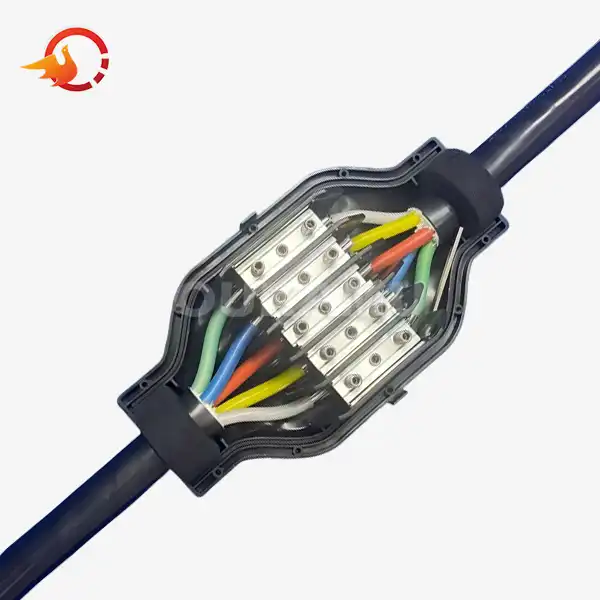
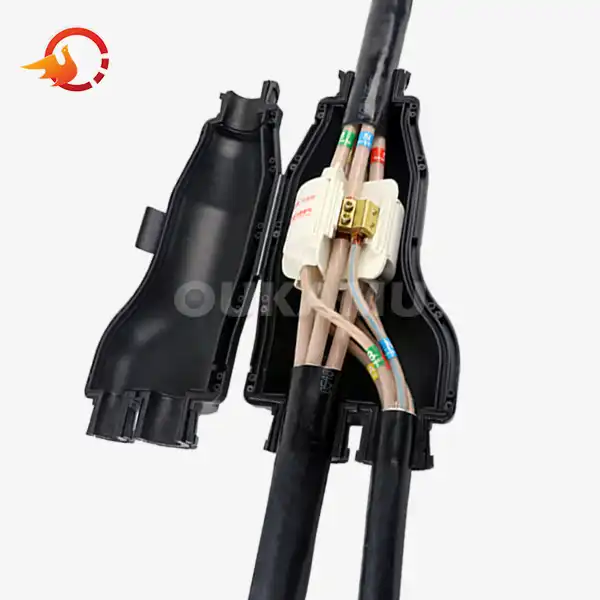
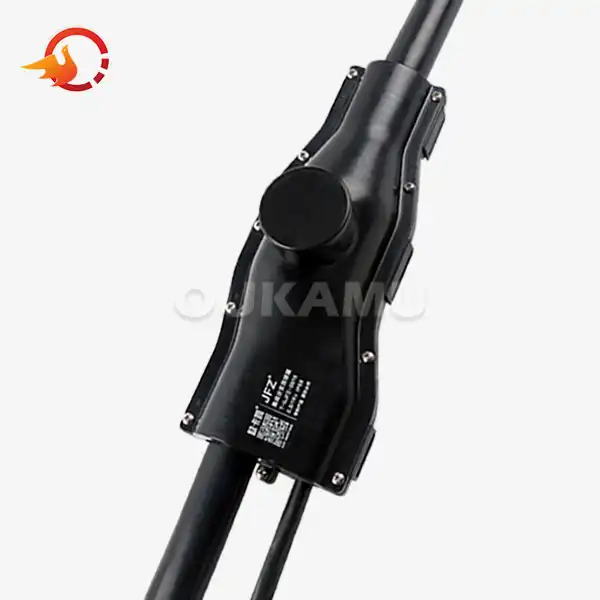
This new technology is shown by the ZR-JFZ-70/35 type, which can handle main cables from 25 mm to 70 mm and branch cables from 2.5 mm to 35 mm at rated voltages of 0.6/1kV. Unlike other jointing methods that need to cut the main wire and reserve its length, Oukamu's integrated T-connector design lets branch connections be made on-site at any location. This speeds up installation while still providing strong environmental protection.
What makes this method different? The connector is small and can be used more than once. It has insulation, flame retardancy, fire protection, and waterproof qualities. Meeting foreign safety standards is guaranteed by following the GB/T 14048.7-2016 standards. The practical benefits directly affect the procurement value: each connection uses two to three meters less main cable, installation is easier and costs less, and waste is eliminated from branch places that were planned ahead of time but don't work with the real site conditions.
During the JinRentong Highway project, nearly 20,000 Oukamu cable joints were put in place along this important transportation route that connects Zunyi and Bijie towns. This proved that the technology would last in the real world. The project's smooth finish and continued reliable operation show that new branch link technology can last in the real world, even in environments with tough infrastructure requirements. When purchasing managers look at different connectors, they should think about how freedom and reusability on-site affect the total cost of ownership, which goes beyond the price of each unit.
How to Choose Durable Cable Joint Connectors for Your Procurement Needs
When choosing the right cable joint connectors, you have to balance the need for high professional performance with the need to make money. A methodical evaluation process makes sure that choices about procurement meet both the current needs of the project and the long-term costs of running it.
Assessing Environmental and Mechanical Requirements
Start by making a list of all the different situations that connections will be in during their working life. For systems that go underground, the dirt needs to be able to handle the most water and chemicals. When locations are outside, UV stability and thermal cycling efficiency are given the most attention.
Connectors that have been tested in similar situations must be used in industrial settings where there is shaking, chemical contact, or high temperatures. The conductor size, insulation type, and voltage grade of the cable must match the powers of the connection. For a Cable Jointing Cable Joint Connector, making a detailed requirements grid lets you directly compare product specs to project needs, which helps you get rid of options that aren't a good fit early on in the selection process.
Lifecycle Cost Analysis
When buying something, deciding based only on the original purchase price is often a waste of time and money. Full lifetime cost analysis takes into account the work needed for installation, the expected service life, the upkeep that needs to be done, and the effects of failure. A quality connection that costs 40% more but lasts twice as long and only takes half as long to install is a better deal.
Find out what the real economic performance is by figuring out the total cost of installation per year of working life. Think about the costs of failures as well, like downtime, emergency fixes, and damage to your image in important applications. When suppliers offer longer guarantees, it means they are confident in the stability of their products, which takes the risk off of buyers.
Supplier Evaluation and Partnership Potential
The quality of the product is only one part of the value of buying something. Check to see if suppliers can provide expert help, have enough inventory, be flexible with orders, and provide quick after-sales service. Can the provider help with application engineering for setups that are complicated? Do they keep enough in stock to deliver quickly, or do long lead times threaten to throw off project schedules?
Being willing to take small to medium-sized orders helps inventory management work better. Long-term supply of parts for upkeep and growth phases is more likely with suppliers that have been around for a long time and have a large share of the market. Building partnerships with companies like Oukamu, which invests in new ideas while keeping prices low, allows wholesalers and builders to give their own customers unique value.
Conclusion
When you compare the durability of different cable joint connectors, you can see that they work very differently depending on the technology and maker. Heat shrink and cold shrink fittings have been shown to be reliable, but they have different installation requirements. For a Cable Jointing Cable Joint Connector, mechanical and resin choices are better for certain situations. Products that really last a long time are distinguished from those that make false promises by rigorous testing against environmental and mechanical stress standards.
New ideas like Oukamu's branch link technology show that rethinking old ways of doing things can lead to better durability and practical benefits. A good procurement process combines technical performance standards with a lifecycle cost analysis and a seller capability review. This makes sure that there are cable connection options that protect both the short-term success of the project and its long-term dependability.
FAQ
How long do quality cable joint connectors typically last in harsh outdoor conditions?
Premium cable joint connections made to international standards usually last 25 to 30 years in harsh outdoor settings if they are put correctly. Durability rests on the quality of the materials, how well they protect the surroundings, and how well they were installed. Products that have been tested and shown to be resistant to UV light, water, and temperatures above and below 68 degrees Celsius are the most likely to last in tough circumstances.
What durability advantages do cold shrink connectors offer compared to heat shrink models?
Cold shrink connections get rid of the need for heat during installation, which lowers the risk of fire and speeds up the process. Modern elastomeric materials are just as resistant to UV light and ozone as heat shrink options, and they keep their closing pressure the same over time. The main trade-off when it comes to resilience is the cost of the materials. For extreme temperature cycling uses, expensive cold shrink compounds are needed to match the life of heat shrink.
Does professional installation significantly impact connector durability?
Professional fitting makes a huge difference in how long something lasts. If connectors last as long as they're supposed to, it depends on how well the surface is prepared, how much binding pressure is used, and how precisely the closing component is applied. Studies show that over 60% of early connection problems are caused by mistakes during installation. To get the most out of longevity, procurement standards should include requirements for qualified installers and expert help from the seller.
Partner with Oukamu: Your Trusted Cable Joint Connector Manufacturer
Oukamu's specialized branch connection technology is a good choice for project procurement officers and distributors who want reliable Cable Jointing Cable Joint Connector solutions that have been tested and shown to work in the field. As a company that has been making cable joint connectors for 20 years and has focused on innovation, we make products that meet international safety standards, are cost-effective, and can be installed in a variety of ways. These products directly solve the problems that electrical product stores and engineering material suppliers face.
Our ZR-JFZ-70/35 model and wide range of products give you the competitive edge your customers want—the ability to be changed on-site, the ability to be used again and again, and proven reliability shown in large infrastructure projects. Oukamu gives you the stable supply, flexible order amounts, and technical support your business needs to grow, whether you're getting ready for seasonal sales, meeting custom specification orders, or setting up unified buying for multi-channel distribution.
Visit okmbranchcable.com or email info@okmbranchcable.com to talk about how our cable joint connector solutions can help you offer more products and become a more reputable Cable Jointing Cable Joint Connector provider.
References
1. International Electrotechnical Commission. "Power Cables with Extruded Insulation and Their Accessories for Rated Voltages from 1 kV up to 30 kV - Part 4: Test Requirements on Accessories," IEC 60502-4:2010.
2. Institute of Electrical and Electronics Engineers. "IEEE Standard for Cable Systems in Power Generating Stations," IEEE Std 842-2019.
3. Chen, Michael and Richards, Patricia. "Long-Term Performance Analysis of Cable Joint Technologies in Underground Distribution Networks," Journal of Electrical Infrastructure Engineering, Vol. 18, No. 3, 2022, pp. 145-167.
4. National Electrical Manufacturers Association. "Cable Accessories for Power Distribution Systems: Performance Requirements and Test Methods," NEMA CC 4-2021.
5. Thompson, Robert J. "Environmental Durability of Polymeric Cable Insulation Systems," Cambridge University Press, 2021.
6. Zhou, Wei and Kumar, Ashok. "Comparative Study of Heat Shrink and Cold Shrink Cable Joint Reliability in Coastal Environments," International Conference on Power System Technology Proceedings, 2023, pp. 892-899.