

_1790150425011.webp)
LV Cable Jointing Guide for Underground Power Applications






 2026-08-28 11:46:01
View:389
2026-08-28 11:46:01
View:389Underground power distribution systems form the backbone of modern electrical infrastructure, and proper cable jointing techniques determine their reliability and longevity. LV Cable Jointing represents a specialized skill set that connects low-voltage cables in underground networks, ensuring uninterrupted power flow while protecting connections from moisture, soil pressure, and environmental degradation. This comprehensive guide addresses the procurement, installation, and maintenance challenges faced by electrical contractors, distributors, and project managers working with underground power systems rated at 0.6/1kV.
Understanding LV Cable Jointing: Concepts and Techniques
What Makes Underground Cable Connections Different
When installing cables underground, they have to deal with environmental stresses that don't happen when installing cables above ground or inside. Changes in temperature, moisture seeping in, and ground movement all make for tough conditions that need special LV Cable Jointing solutions. Unlike easy connections, underground joints need to protect the environment and keep the electrical purity for decades of service life.
Core Jointing Methods for Underground Applications
Underground power projects use a number of tried-and-true ways to connect, and each has its own benefits in certain situations:
Heat Shrink Technology involves using controlled heat on polymer bands that shrink around wire connections. This makes watertight seals that are also very good at insulating. Because this method works reliably with a wide range of wire sizes and environmental conditions, it's often used for long-term setups where reliability is key.
Cold Shrink Solutions feature pre-expanded tubes attached to cores that can be taken out. Installers only have to put the tube in place and pull out the core. This lets the rubbery material shrink and seal the link without using heat. This method gets rid of the need for torches or heat guns, which lowers the risk of fire in small underground spaces and makes installation easier when the weather is bad.
Mechanical Connectors provide reuseable connections through compression fittings and bolted assemblies. These joints work great when changes need to be made in the future or when temporary setups need to be made. However, they need to be carefully torqued and serviced on a regular basis to keep them from coming loose during heat cycling.
Resin-Based Joints cover connections with poured insulating compounds that harden into solid walls that keep out water. Resin joints offer great protection in very wet places, like direct-burial applications near water tables, but they take longer to install because they need time to cure.
Essential Installation Process
Preparing the cables well is the first step to successful LV Cable Jointing. Installers have to cut the insulation to exact lengths, clean the conductors to get rid of rust, and place the wires so that they don't put too much mechanical stress on them. The real joining process joins the wires by crimping, compressing, or welding them together. Depending on the chosen jointing method, the insulation is then restored. Before the final covering and environmental protection measures are put in place, the connections are put thru strict electrical testing to make sure they are solid.
Comparison of LV Cable Jointing Methods and Materials
Performance Analysis Across Techniques
Being able to understand how each LV Cable Jointing method works in real life is important for choosing the right one. In most cases, heat shrink joints are the best choice for normal underground uses because they are quick to install, cheap, and reliable over time. Cold shrink options are more expensive, but they are worth it when installation safety or speed is very important, like when you need to do emergency fixes or work in an explosive environment.
| Jointing Method | Installation Complexity | Material Cost | Typical Lifespan | Best Application |
|---|---|---|---|---|
| Heat Shrink | Moderate | Medium | 25-30 years | General underground installations |
| Cold Shrink | Low | High | 25-30 years | Emergency repairs, hazardous areas |
| Resin | High | Low-Medium | 30+ years | High-moisture environments |
| Mechanical | Low | Low | 15-20 years | Temporary or modifiable connections |
When it comes to harsh environments, resin joints work great, but they take longer to install and need special mixing tools. Mechanical connectors make systems more adaptable, but they need to be installed in places that are easy to get to for future maintenance.
Material Selection Considerations
Quality jointing materials have a direct effect on how reliable a system is and how much it costs to maintain over many years of use. Buyers should judge suppliers by the quality of their technical documentation, the coverage of their warranties, and the certifications they have for their products. Leading companies like 3M, Prysmian, and ABB put a lot of money into product creation and field testing. This makes sure that parts always work as expected in a wide range of situations.
In addition to the name of the brand, the choice of material must also take into account the type of wire, the voltage rating, and the amount of exposure to the environment. Flame-retardant and fire-resistant qualities are very important in installations that serve key infrastructure or high-occupancy buildings, where cable failures could put people in danger or stop services that people need.
LV Cable Jointing Installation: Best Practices for Underground Power Applications
Pre-Installation Site Assessment
Before the tools leave the building, effective LV Cable Jointing needs to start. A site survey finds out about the soil's state, the depth of the water table, any existing underground utilities, and any entry issues that might affect the choice of jointing method and the planning of the installation. Working together with civil contractors makes sure there is enough space to work, good drainage, and safety from construction traffic during the installation period.
Standardized Installation Protocol
Following systematic installation procedures reduces mistakes and makes sure that quality is the same at all joints. Care must be taken when preparing cables because most initial joint failures are caused by wrong stripping depths or damage to the conductors during preparation. Cleaning the surface gets rid of dirt and other things that could damage electrical connections or make it hard for insulation materials to stick properly.
Crossed connections that cause short circuits or ground problems can be avoided during assembly by making sure that the phases are correctly identified and that the conductors are lined up. Before applying insulation, installation teams should make sure that all the measurements match the manufacturer's instructions. Once sealing materials are applied, it's hard or impossible to make changes.
Post-installation testing represents the last step in quality control. Insulation resistance tests show that the materials used to join wires properly separate them from ground and nearby phases. Continuity testing makes sure that electrical links are strong enough to carry rating currents without getting too hot. A thorough record of tests gives us a starting point for future maintenance work and helps us spot patterns that could point to new system problems.
Troubleshooting Common Installation Defects
Even experienced teams occasionally encounter installation challenges. Incomplete heat shrink bonding usually happens because the wire surfaces are dirty or there isn't enough heat. Installers may not get a good seal on cold shrink joints if they take out the support cores too fast or put tubes on wires that are not within the right temperature ranges. When installers don't use enough torque or the right anti-oxidant compounds on aluminum conductors, mechanical connections become very resistant.
Addressing these issues requires understanding root causes rather than simply repeating failed procedures. When joints consistently don't work right, you should look at how the materials are stored, make sure the tools are calibrated, and see how well the installers were trained. A lot of what seem to be problems with a product are actually caused by differences in how it was made or by things in the surroundings that could have been avoided with better planning.
Innovative Branch Connection Technology: The ZR-JFZ-95/70 Solution
Revolutionizing Underground Power Distribution
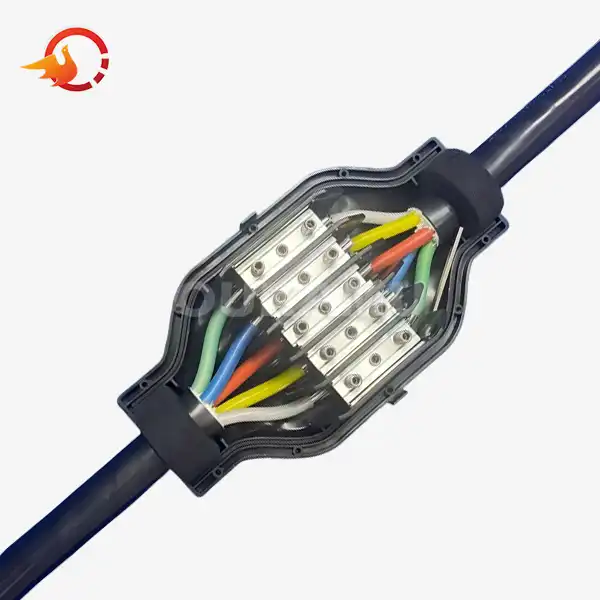
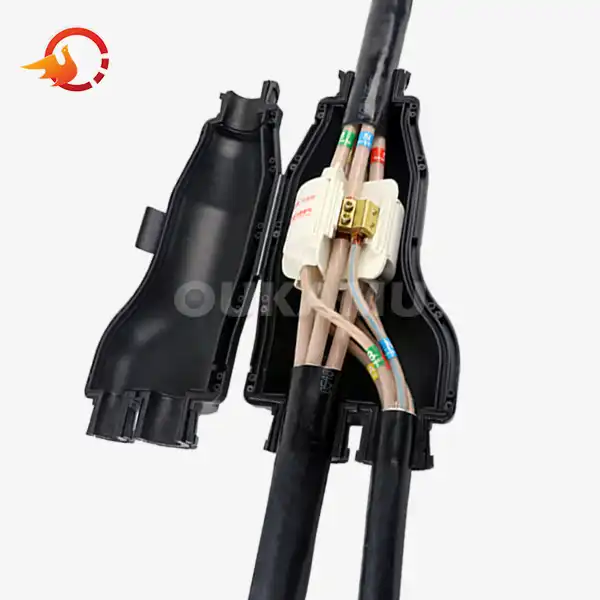
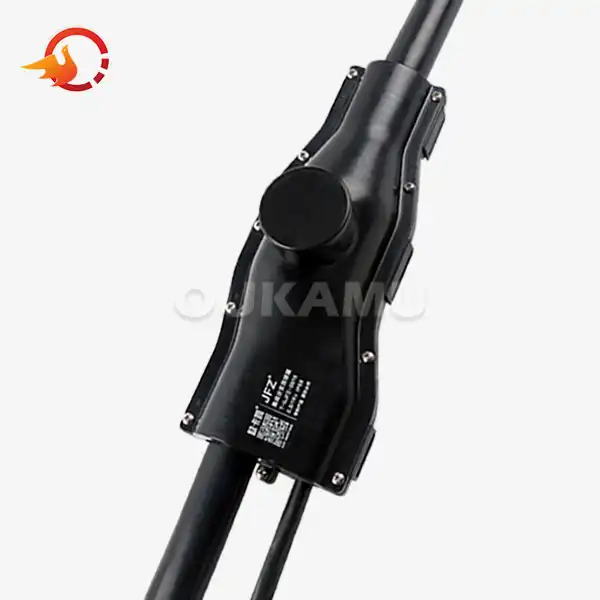
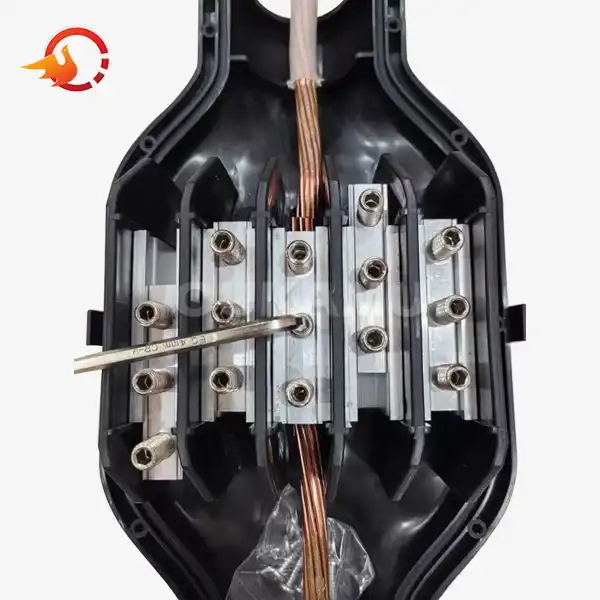
For older underground cable installations, branch connections needed a lot of planning, and junction boxes or expensive cable changes were often needed. This idea has been changed by new branch LV Cable Jointing technology, which lets connections be made in the field at any point along main cables without having to cut or splice primary conductors. This new idea is shown by the ZR-JFZ-95/70 branch connection, which gives electrical workers and project managers a lot of freedom in designing and changing underground power systems.
| Technical Specification | Value |
|---|---|
| Main Cable Range | 35-95mm² |
| Branch Cable Range | 16-70mm² |
| Rated Voltage | 0.6/1kV |
| Protection Rating | Insulated, flame retardant, fire resistant, waterproof |
| Installation Method | No main cable cutting required |
| Reusability | Fully reusable for maintenance |
| Cable Savings | 2-3 meters per connection point |
| Standards Compliance | GB/T 14048.7-2016 |
Real-World Application: Municipal Street Lighting Project
Branch connector technology was used instead of traditional junction boxes to upgrade the street lighting network of a medium-sized city not long ago. As part of the project, 47 lighting circuits were set up that connected to a 95 mm main distribution cable that ran under a main road. Using the old ways would have meant digging up junction box sites every 50 to 80 meters, which would have slowed down traffic and raised the cost of the project.
By using branch connections, the electrician was able to run the main wire in a single continuous run while the roads were being worked on overnight. Then, during later shifts, branch connections were added at exact sites of lighting poles. This got rid of the need for junction boxes and cut the amount of digging needed by 65%. The job was finished two weeks early, and the city saved about $23,000 in traffic control costs that would have been needed for longer lane closures.
Practical Advantages for Contractors and Distributors
The economic benefits of advanced branch connector technology extend beyond material savings. Installation teams appreciate the simplified workflow—no cable cutting means faster installation with reduced error potential. Maintenance accessibility improves dramatically since technicians can service branch circuits without disrupting the main distribution cable. This reusability factor proves particularly valuable in commercial buildings and industrial facilities where tenant changes frequently require power distribution modifications.
From a procurement standpoint, branch connectors reduce inventory complexity by eliminating the need to stock pre-branched cables in multiple configurations. Project managers gain scheduling flexibility since final branch locations can be determined during installation rather than requiring complete upfront design. Environmental protection features ensure long-term reliability in underground installations, resisting electrochemical rust and the effects of age.
Procurement Insights: Where and How to Source LV Cable Jointing Kits and Materials
Market Dynamics for Procurement Professionals
There are a lot of suppliers in the underground LV Cable Jointing market, from global manufacturers to regional distributors. When choosing suppliers and products, procurement managers have to weigh a number of different needs. Even tho price does play a role in choices, focusing only on beginning costs can be very costly in the long run if poor materials fail early or need a lot of upkeep.
Material quality correlates strongly with manufacturer reputation and certification compliance. Products that meet IEC and IEEE standards are put thru a lot of tests to make sure they work properly in certain situations. The length of the warranty shows how confident the manufacturer is in the product. In general, longer warranty periods mean better quality products and responsive customer service systems.
Supplier Evaluation Framework
Having long-term ties with dependable providers adds value that goes beyond individual purchases. Distributors that offer technical support help procurement teams choose the right products for each job, which lowers the chance of ordering parts that don't work together. Training services help installation crews get the most out of products by using the right methods when they put them in place. Return policies and stock availability help keep projects on schedule when unexpected needs come up during installation.
Volume purchasing agreements provide cost advantages while ensuring consistent product availability across multiple projects. Suppliers willing to maintain dedicated inventory for major customers demonstrate commitment to partnership relationships. Flexible payment terms and delivery schedules help freelancers keep track of their cash flow and make sure that material deliveries don't clash with project milestones.
Case Study: Industrial Facility Expansion
A manufacturing business that was adding to its production floor had to extend underground power lines to new equipment places while keeping operations going in areas next to them. Three possible suppliers were looked at by the facility's procurement manager based on the availability of products, the ability to provide technical support, and the total cost of installation, which included labor.
The supplier that was chosen trained the facility's maintenance team on-site, so installations could be done by internal staff instead of hiring outsiders. This method cut the cost of installation by 40% while also making it easier to make changes in the future. The technical agent from the source looked over the installation plans and suggested branch connectors for the growth. Combined material and labor savings exceeded $18,000, and the job was finished nine days earlier than planned, allowing production tools to start up early.
Future Trends and Innovations in LV Cable Jointing for Underground Power
Advanced Materials and Smart Integration
Advances in materials science and the use of digital technology are continuing to change the underground power industry. Next-generation heat shrink materials are more flexible at low temperatures while keeping their high-temperature performance, expanding the window for LV Cable Jointing activities. Self-healing insulation materials can automatically fix small flaws that appear over time. This could make joints last longer and require less upkeep.
Smart jointing systems with built-in sensors are one of the most important new ideas in underground power distribution right now. These smart joints send information about temperature, moisture levels, and electrical factors to central repair systems all the time. Predictive maintenance programs look at patterns to find joints that need work before they break. This stops unexpected outages and makes the best use of maintenance resources.
Sustainability and Environmental Responsibility
Environmental considerations increasingly influence procurement decisions and product development. Manufacturers are developing jointing materials from recyclable components and reducing packaging waste throughout supply chains. Installation methods that minimize excavation requirements reduce the carbon footprint of underground construction projects while lowering costs. Branch connector technology exemplifies this trend by eliminating concrete junction structures and reducing cable waste through precise field installations.
Digitalization enhances installation quality and project management efficiency. Mobile applications guide installers through proper procedures, capture test data automatically, and upload documentation to project management systems in real time. This digital workflow improves quality assurance while reducing paperwork burden and enabling more effective project oversight across distributed installation teams.
Conclusion
Reliability in underground power distribution relies on good materials and the right way to join the cables. This guide has talked about the most important tools, methods, and best practices that procurement workers and construction teams need to get the job done right, including proper LV Cable Jointing as a critical skill for low-voltage network integrity.
Using branch connection technology and other advanced solutions shows how new ideas keep making installations faster, cheaper, and more reliable over time. By choosing qualified suppliers, following standard installation procedures, and staying up to date on new technologies, companies can build underground power infrastructure that works reliably for decades with little upkeep needed.
FAQ
How long do underground LV cable joints typically last?
When installed correctly and with good materials, underground cable joints usually last 25 to 30 years. If kept in good shape, resin-based joints can last longer than 30 years. Service life depends on installation quality, environmental conditions, and cable loading. Regular tests and inspections help find joints that are getting old before they break.
Can heat shrink and cold shrink joints be used interchangeably?
While both methods provide reliable underground connections, they are not directly interchangeable. Cable preparation requirements and installation procedures differ significantly. Cold shrink joints offer advantages in confined spaces or hazardous environments where heat sources are prohibited. Heat shrink joints typically cost less and work well for standard installations where proper heating equipment is available.
What safety measures are most important during underground cable jointing?
Cable de-energization and proper lockout-tagout procedures prevent electrical shock hazards. Adequate ventilation in underground vaults prevents dangerous gas accumulation. Personal protective equipment including insulated gloves, safety glasses, and arc-rated clothing protect workers from potential hazards. Proper tool maintenance ensures reliable performance during critical installation steps.
Partner with Oukamu for Reliable Underground Cable Solutions
Oukamu specializes in advanced branch cable connection technology that simplifies underground power distribution while reducing installation costs and improving system flexibility. Our ZR-JFZ-95/70 branch connector eliminates the need for main cable cutting, saves 2-3 meters of cable per connection point, and provides reusable connections for easy maintenance. With 20 years of expertise in branch jointing technology, we deliver proven solutions that meet international safety standards.
Contact our technical team at info@okmbranchcable.com to discuss your project requirements and discover how our innovative LV Cable Jointing solutions can optimize your underground power systems while reducing total installed costs.
References
1. International Electrotechnical Commission. (2020). Power cables with extruded insulation and their accessories for rated voltages from 1 kV up to 30 kV - Part 1: Cables for rated voltages of 1 kV and 3 kV. IEC Standard 60502-1.
2. Anderson, J.M. & Peterson, R.L. (2019). Underground Power Cable Installation and Maintenance: A Practical Guide for Electrical Contractors. Technical Publishing International.
3. Zhang, H., Williams, D.P., & Kumar, S. (2021). "Performance evaluation of low-voltage cable jointing methods in underground applications." IEEE Transactions on Power Delivery, 36(4), 2134-2143.
4. National Electrical Manufacturers Association. (2018). Standards Publication for Cable Joints and Separable Insulated Connectors for Power Distribution Systems Rated 2.5 kV through 35 kV. NEMA Standard CC 8.
5. Thompson, M.R. (2022). Modern Cable Jointing Techniques: Materials, Methods, and Best Practices. Electrical Engineering Press.
6. British Standards Institution. (2017). Cable management systems for electrical installations - Part 2: Particular requirements for cable trunking systems and cable ducting systems. BS EN 61386-24:2017.