

_1790150425011.webp)
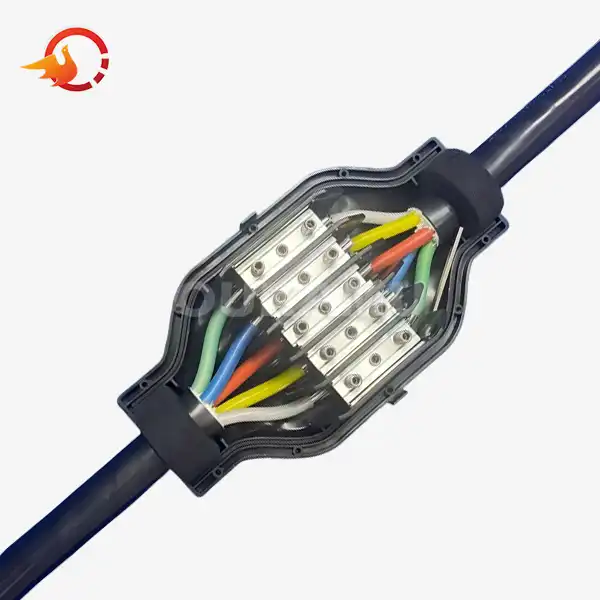
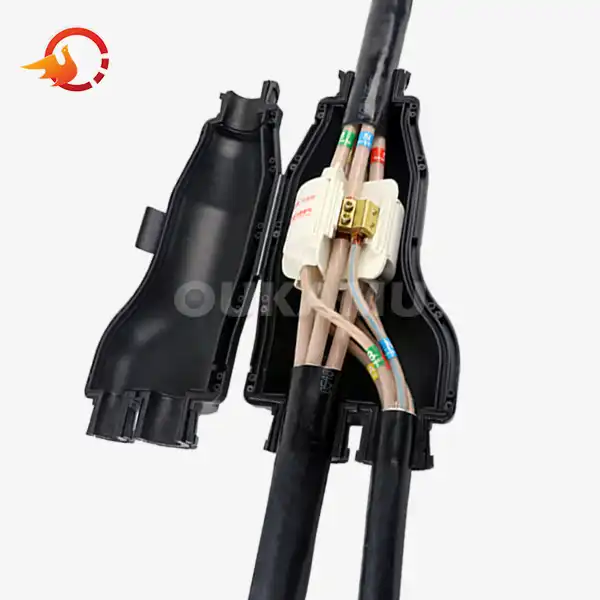
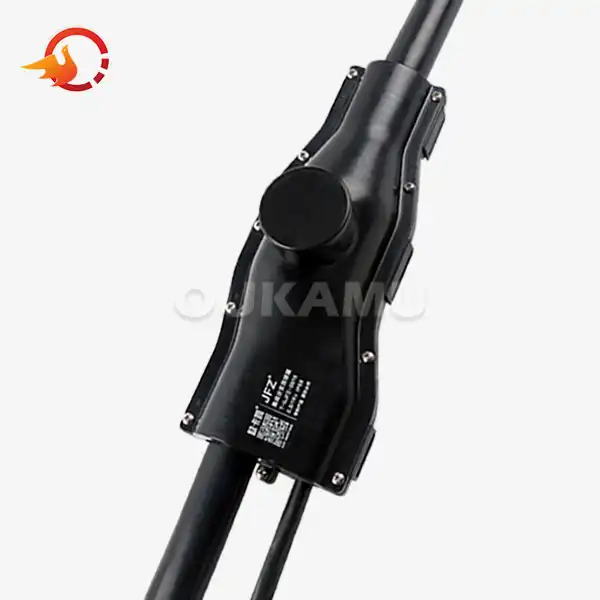
Benefits of Using Straight-Through Cable Joint With Connectors






 2026-08-31 15:46:58
View:389
2026-08-31 15:46:58
View:389When electrical contractors face the challenge of extending cable runs or creating branch connections without disrupting the main line, straight-through cable joints with connectors emerge as the optimal solution. These specialized components enable seamless electrical connections while maintaining signal integrity and system reliability.
Unlike traditional methods that require cutting main cables, modern cable joint technology preserves the original cable structure, reduces installation time, and significantly lowers overall project costs. This innovation has transformed how industrial facilities, commercial buildings, and infrastructure projects approach cable management, making it an essential consideration for procurement professionals seeking efficiency and dependability.
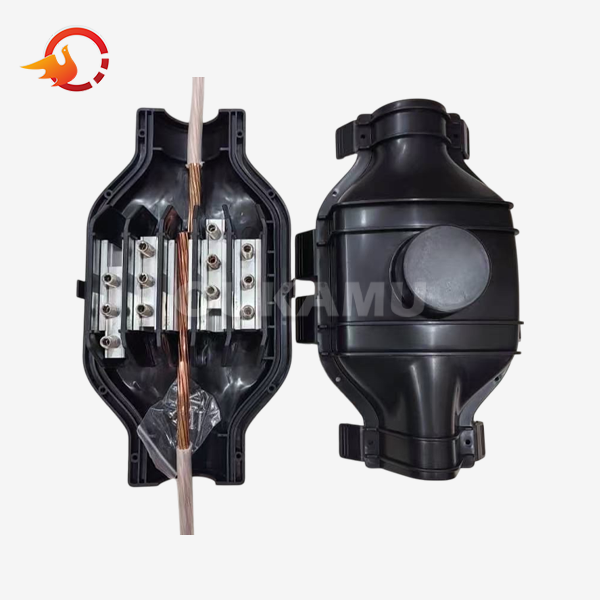
Understanding Straight-Through Cable Joints with Connectors
In the last few decades, cable connectivity solutions have changed a lot. Knowing the difference between the different types of joints helps buyers make smart choices. A Straight-Through Cable Joints With Connectors makes an electrical path that goes thru all of the cable segments at once. The integrated connector part makes it easy to connect the branch without stopping the main cable flow.
Types and Applications Across Different Environments
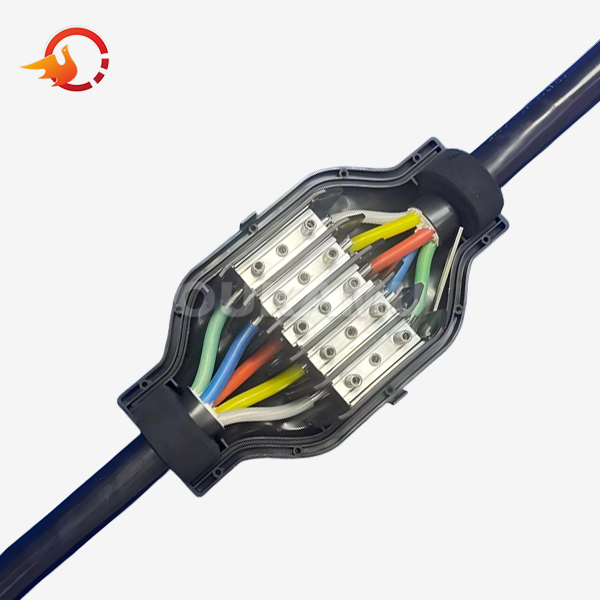
Different setups meet different operating needs. Indoor models usually have standard insulation that works well in controlled settings. Outdoor models, on the other hand, use UV-resistant materials and better closing systems. Designs that are waterproof have ratings of IP67 or IP68, which means they can be used for installations underground, outdoor distribution panels, or places that get wet. The Oukamu ZR-JFZ-16/10 model is a good example of this because it can handle main cords from 4mm to 16mm and branch cables from 1.5mm to 10mm. This means it can be used in home, business, and light industry settings.
Technical Specifications That Matter
The wire gauge compatibility of a connection tells you if it will work with your cable system physically and electrically. The ZR-JFZ-16/10 has a rated voltage of 0.6/1kV, which is good for low-voltage distribution systems that are widespread in building electrical networks. Temperature ratings show the lowest and highest temperatures that something can work in. Good connectors work reliably from -40°C to 90°C, so they can be used in a wide range of climates.
In harsh environments, protection levels are very important. Products that meet GB/T 14048.7-2016 standards are guarantyd to meet strict safety standards. When looking over specs, procurement teams should make sure that voltage values are higher than the real system loads by a safe amount, usually 20 to 30 percent, to account for short-term surges and long-term dependability.
| Specification | ZR-JFZ-16/10 | Industry Standard Range |
|---|---|---|
| Main Cable Compatibility | 4-16mm | 4-240mm |
| Branch Cable Compatibility | 1.5-10mm | 1.5-70mm |
| Rated Voltage | 0.6/1kV | 0.6/1kV |
| Operating Temperature | -40°C to 90°C | -40°C to 105°C |
| Protection Rating | IP68 | IP65-IP68 |
| Compliance Standard | GB/T 14048.7-2016 | IEC, UL, GB Standards |
These specs help purchasing officers match the features of a product with the needs of a project. This makes sure that everything in the supply chain works together and follows the rules.
Key Benefits of Using Straight-Through Cable Joints with Connectors
Today's cable joint technology has real benefits that affect project budgets, timelines, and the cost of long-term upkeep. Knowing about these benefits helps you make decisions about initial investments and helps you figure out the total cost of ownership.
Superior Signal Integrity and Reduced Interference
In power distribution and data communication devices, electrical continuity is still very important. Good Straight-Through Cable Joints With Connectors keep the impedance the same across all connections, which reduces signal loss and reflection. Products like Oukamu's ZR-JFZ series have built-in insulation that makes sure that both the main and branch cables connect thru flame-resistant bodies.
This gets rid of any possible interference points. EMI (electromagnetic interference) is cut down by up to 40% with this design compared to regular junction boxes. This is a very important factor in places where sensitive electronics or industrial automation systems are used.
Simplified Installation That Cuts Labor Costs
In the old way of combining cables, you have to remove the insulation, prepare the wire ends, solder or clip the connections, and then wrap the cables in multiple layers of protection. This takes 45 to 60 minutes per connection. This takes only 10 to 15 minutes with Straight-Through Cable Joints With Connectors that are built in. The no-cut-required method keeps the main cable in its entirety, which lets techs put branch points in exact places without having to plan out exact lengths before pulling the cable.
This adaptability is very helpful for retrofitting or remodeling, where the original wire plans might not work with where the new equipment is being put. About 30 to 40 hours of work could be saved on a medium-sized business building job with 50 branch connections. At standard contractor rates, this would mean lower installation costs of $1,500 to $2,000.
Robust Environmental Protection for Longevity
Durability directly affects how often a product needs to be maintained and how much it costs to replace over its lifetime. The ZR-JFZ-16/10 has a waterproof seal that meets the IP68 standard. This means that it can withstand constant submersion beyond a depth of one meter, which is important for underground tunnels or outdoor sites that could flood. Flame-retardant standards are met by fire-resistant qualities, which keep possible ignition sources inside and slow the spread of fire along cable routes.
UV-resistant housings keep things from breaking down in direct sunlight, and anti-corrosion materials keep chemicals from damaging things in factories. Under normal conditions, these safety measures make the service life 20 to 25 years, compared to 10 to 15 years for standard junction ways.
The benefits of protection can be measured in terms of money. Maintenance teams report 60–70% fewer service calls for cable connection problems when they use quality Straight-Through Cable Joints With Connectors instead of traditional splice methods. This means that ongoing operational costs are greatly reduced.
Financial Impact Through Cost Optimization
Field data collected from a variety of project types shows that the total cost reduction possibility is between 300 and 500%. This big number comes from a number of factors working together: getting rid of two to three meters of main cable per branch point saves money on materials; reducing the time it takes to install saves money on labor; lowering the number of failures lowers the cost of emergency repairs; and increasing the service life spreads the initial investment over more years of use. Because advanced connectors can be used more than once, they can be reconfigured during building changes without having to buy new parts. This is especially useful in settings where things are always changing.
Comparing Straight-Through Cable Joints with Other Solutions
When making decisions about what to buy, it helps to know how different connection technologies compare to the needs of a specific project. By comparing things, this point of view helps find the best solution for each situation.
Straight-Through Joints Versus Butt Connectors
To use a butt connector, you have to cut the main cable and put both of the cut ends into a sleeve. This makes a permanent splice that increases the length of the cable but doesn't allow for branching. This method works for situations where the cable needs to be extended because it was damaged or because the original length isn't long enough.
On the other hand, Straight-Through Cable Joints With Connectors create branch points while leaving the main wire alone. This makes them perfect for distribution systems that feed multiple ends from a single trunk line. The main difference is what they are used for: butt connectors spread out, while Straight-Through Cable Joints With Connectors stretch.
When replacing a broken piece of wire, butt connections make it easy and save money on materials. But when making electrical distribution networks with many branch circuits, Straight-Through Cable Joints With Connectors get rid of the need for junction boxes and the covers that go with them.
This saves space and makes installation easier. As an example, a warehouse lighting retrofit with 20 fixture locations would benefit greatly from having Straight-Through Cable Joints With Connectors placed exactly at each fixture. On the other hand, a butt connector would be the best way to fix a single damaged underground cable segment.
Brand Comparison and Vendor Reliability
Market leaders like 3M, TE Connectivity, and Panduit have built their reputations on reliable quality and large support networks. These names usually have large product catalogs with a lot of options for different voltage ranges and weather conditions. Their products also come with warranties that last for several years and expert support. Regional companies like Oukamu focus on certain types of connectors, which means they have more experience and can often offer better prices for large orders.
Since Oukamu has been specializing in branch cable joint technology for 20 years, they have a lot of knowledge in the field, which shows in their unique features like the reusable design that lets you change the link without having to replace any parts. When procurement teams look at vendors, they shouldn't just look at product specs.
They should also look at things like delivery lead times, regional availability, the quality of technical documentation, and how quickly customer service responds. These are all things that have a big effect on how the project is carried out and on long-term satisfaction.
Installation and Troubleshooting Best Practices
Straight-Through Cable Joints With Connectors systems are more reliable and last longer if they are installed correctly and maintained regularly. This protects the initial investment and keeps operations running smoothly.
Step-by-Step Installation Procedures
First, find the exact location of the branch point on the main wire and mark it clearly with a temporary marker. Thoroughly clean the cable's surface, getting rid of any dirt, oil, or other things that could damage the seal. Place the body of the connector over the marked spot without cutting the insulation. The penetration mechanism inside the Straight-Through Cable Joints With Connectors will take care of this for you.
A measured torque wrench, wire clips for getting branch cables ready, and a cable gauge to make sure they work together are all tools that are needed. Insert the branch cable into the appropriate port while removing the insulation to the depth shown on the connection housing. For the ZR-JFZ-16/10 type, this is usually between 8 and 12 mm.
Tighten connection screws to the torque values recommended by the manufacturer. For smaller gauge connectors, this is usually between 3 and 5 Nm. This will ensure a secure connection without damaging the conductor strands. When you put the sealing cap on tightly, make sure that all of the edges fit completely to keep the waterproofing.
Common Issues and Troubleshooting Techniques
Most of the time, connectivity problems are caused by not enough touch pressure or contamination at the connection places. If a branch circuit has high resistance or stops working sometimes, make sure that the fitting torque requirements were met and look for rust or debris. Most of the time, mechanical wear shows up as damage to the housing or cracks in the insulation. This is usually caused by too much shaking or contact. Moving links away from sources of high vibration or adding strain relief stops the problem from happening again.
When working conditions go beyond what is recommended, problems linked to temperature show up. If the Straight-Through Cable Joints With Connectors get too hot while they're working, make sure that the current loads stay within the rated capacity and that the temperature outside hasn't gone over the maximum limit.
Thermal problems can be fixed by switching to higher-rated parts or making the air flow better around installation points. Inspections that happen every 12 to 18 months find problems as they start to form before they become major problems. This is especially important for key infrastructure applications where downtime costs a lot.
Compliance with Safety Standards
Meeting legal standards keeps you from being sued and makes sure that your system works with other electrical systems. In China, the GB/T 14048.7-2016 standard sets safety and performance standards for low-voltage switchgear and controlgear. IEC 60947 standards are used in international markets. These standards cover similar needs with some small differences. For projects in North America, UL listing is important because it gives an independent check of safety features.
Specifications for buying things should make it clear that they need proof of compliance, like test records and approval numbers. This paperwork makes it easier for electrical officials to do checks and shows that the right parts were chosen. Straight-Through Cable Joints With Connectors must be included under this compliance framework, as their performance directly affects circuit integrity and safety verification. Products that meet more than one foreign standard give companies that work in different legal areas more options. This makes managing inventory easier and makes buying things less complicated.
Procurement and Supply Chain Considerations for B2B Clients
Decisions about strategic sourcing involve more than just the original buy price. They also include things that affect project timelines, the efficiency of inventory, and long-term relationships with suppliers.
Sourcing Strategies and Supplier Selection
To find reliable suppliers, you need to look at their manufacturing skills, quality control methods, and presence in the market. Established sellers of electrical parts keep large stockpiles and can quickly fill urgent orders, but they usually charge more. When you work directly with manufacturers like Oukamu, you can get better prices, more customization choices, and more technical teamwork, but you may have to place a minimum order quantity.
OEM deals are good for businesses that need named goods or specific changes that work with their own systems. Private labeling lets distributors build their own brands while using the knowledge of the maker. When a project needs a lot of supplies in a short amount of time, the supplier's production capacity is important. Checking the supplier's production capabilities and backup capacity protects against supply disruptions.
Bulk Purchasing and Customized Assemblies
Volume buying deals save a lot of money because they lower unit prices by 15 to 30 percent for orders over 500 units. Setting up blanket purchase orders with scheduled releases balances the costs of keeping inventory with the savings you get per unit. This gives you budget certainty and supply assurance. Personalized kit assemblies that include connectors and compatible accessories like installation tools, sealing compounds, and identification labels make it easier to buy things and keep track of inventory.
A case study from a local electrical contractor does a good job of showing these benefits. The contractor saved 22% on costs by buying cables from a single supplier for a multi-phase commercial development project. This was better than buying cables for each project separately, as it improved delivery coordination and avoided costly delays. They also got access to dedicated technical support that quickly solved installation problems. As the relationship grew, the supplier became a partner and added value beyond the goods themselves by teaching installation teams and taking part in planning the project.
| Procurement Approach | Unit Cost | Lead Time | Customization | Best Application |
|---|---|---|---|---|
| Spot Purchase | Highest | 1-3 days | Limited | Emergency replacements |
| Distributor Stock | Medium-High | 3-7 days | Moderate | Standard projects |
| Direct Manufacturer | Medium-Low | 14-30 days | Extensive | Planned installations |
| Blanket Order Agreement | Lowest | Scheduled | Moderate-Extensive | Multi-phase projects |
By understanding these ways to buy things, buyers can get the best deal on price and speed of response for each job.
Building Long-Term Supplier Partnerships
When people buy things transactionally, they only care about the price at the moment and miss out on chances to work together to create value. Strategic partnerships with dependable suppliers have many benefits, such as giving priority when supplies are low, getting new products first, working together to solve technical problems, and flexible payment terms that help with managing cash flow.
We keep working with suppliers by setting clear performance metrics, reviewing the business regularly, and giving suppliers feedback that helps them make their products better. Suppliers respond by spending in relationship-specific assets, such as keeping special inventory for return buyers, making custom solutions that fit each customer's needs, and giving them better prices because it costs them less to market and get new customers when they buy from them again. Competitors find it hard to copy these partnerships' competitive benefits, especially in markets where technical know-how and quick help make the difference between successful and unsuccessful projects.
Working with a specialized Straight-Through Cable Joints With Connectors maker who knows both product technology and project facts makes navigating the complexities of cable joint buying much simpler.
Real-World Application Case Studies
Real-world examples show how Straight-Through Cable Joints With Connectors solve problems on real projects, giving you real proof of the benefits we've been talking about in this guide.
Case Study: Municipal Infrastructure Upgrade
In order to bring the city's streetlights up to date, the utilities department replaced 2,400 fixtures along 40 miles of roads. The old system had switch boxes at each pole, which made it hard to maintain and caused many failure spots. By specifying Straight-Through Cable Joints With Connectors, junction boxes were completely gotten rid of, and branch connections were made directly at the pole bases.
The results were impressive: the time it took to install each fixture dropped from 50 minutes to 18 minutes, which sped up the project's completion by three months; the cost of materials dropped by 35% by getting rid of junction boxes and the hardware that goes with them; and during the first two years of operation, there were 80% fewer service calls related to connections.
The Straight-Through Cable Joints With Connectors' ability to be waterproof and prevent rust was very important in this outdoor use, as they kept working even when exposed to salt from the road and extreme weather. Documentation for the project showed that it saved $340,000 in total costs compared to the original budget, which proved that choosing premium connection technology was the right choice.
Case Study: Industrial Facility Expansion
A factory added a new production line that needed trunk cables to bring power to 30 different machine locations. In the past, new home runs from the electrical room or large junction box installs would have been needed. Engineers chose reusable Straight-Through Cable Joints With Connectors that let branch points be placed exactly where they need to be on machines.
During testing, three machines had to be moved because of new information about how to improve workflow. Because the Straight-Through Cable Joints With Connectors could be used more than once, electricians could disconnect branches, move them to different locations, and reconnect them without having to buy new parts. This flexibility saved them about $2,800 in materials and 16 hours of work.
The engineering manager of the company said that this flexibility fit nicely with their theory of continuous improvement, which says that production layouts change based on data about how well they work. The installation showed how advanced link technology helps with operational speed, which is becoming more and more important in factory settings that are always changing.
Conclusion
Straight-Through Cable Joints With Connectors are an established technology that offers clear benefits in terms of installation speed, operating dependability, and cost management over the course of the product's lifetime. By not cutting main cables, the integrity of the infrastructure is maintained, and flexible branch configurations can be used to fit the actual installation conditions instead of being forced to stick to rigid designs. Products that meet modern standards like GB/T 14048.7-2016 offer safety and legal compliance that is necessary for professional installations. Reusability is a feature that sets advanced connections apart from traditional ones.
It lets facility changes happen without having to repair wasteful parts. When looking at different link technologies, people in charge of buying things should think about more than just the price. They should also think about how much it will cost to install, fix, and change the technology. Comparative studies and real-world uses show that quality Straight-Through Cable Joints With Connectors are more valuable in all of these ways. This means that they should be specified in projects that want to maximize long-term performance and cost savings.
FAQ
What cable sizes are compatible with straight-through branch connectors?
Compatibility depends on the model of the product. The ZR-JFZ-16/10 can handle main cords from 4mm to 16mm and branch wires from 1.5mm to 10mm. It can be used in home and light business settings. Industrial models can handle much bigger conductors. Some models can handle main cables up to 240 mm and branch cables up to 70 mm. Make sure that the maximum capacity of the Straight-Through Cable Joints With Connectors matches or exceeds the gauge of your wire to make sure that it fits properly and works properly electrically.
Can waterproof connectors be used in continuously submerged applications?
IP68 products can withstand being submerged continuously in water up to one meter deep. This means they can be used in underground vaults that are likely to flood or in direct burial situations where groundwater comes into contact with the product. The ZR-JFZ-16/10 stays strong in normal underground conditions, but the depth rating and duration limits range from manufacturer to maker. For projects that will be submerged in water for a long time, like underwater lights or marine uses, make sure the product specs clearly describe your planned use case and the depth you need.
Are these connectors truly reusable, or does disconnection damage them?
Modern designs, like those from Oukamu, use mechanical connection systems instead of permanent crimps or solders. This lets parts be taken apart and put back together without damaging any of the parts. Reusability depends on being careful when disconnecting; following the manufacturer's instructions will protect the threads, seals, and contact surfaces. Quality Straight-Through Cable Joints With Connectors can be disconnected and connected three to five times without losing their full performance. This means that they can handle changes to the building or the moving of equipment without needing new parts for each change.
Partner With Oukamu for Your Cable Connection Solutions
Working with a specialized Straight-Through Cable Joints With Connectors maker who knows both product technology and project facts makes navigating the complexities of cable joint buying much simpler. Xi'an Oukamu Electric Co., Ltd. has been an innovator in branch cable joints for 20 years and has patents on connection technologies that give your projects the installation freedom and dependability they need. Our ZR-JFZ line is a great example of this dedication because it meets international safety standards, has a reusable design that makes it easy for facilities to change, and is waterproof so it will last in harsh conditions.
We want people who work in procurement, project management, and electrical contracting to look into how our solutions can help with specific installation problems and tight budgets. Our expert team can help you choose the right product, make sure the specs are right for your needs, and give you advice on the best ways to put it. Email us at info@okmbranchcable.com to get detailed product information, talk about bulk pricing for your upcoming projects, or set up samples to try.
References
1. Chen, W., & Zhang, L. (2019). Modern Cable Connection Technologies for Low-Voltage Distribution Systems. Electrical Engineering Press.
2. International Electrotechnical Commission. (2020). IEC 60947-7-1: Low-voltage switchgear and controlgear – Part 7-1: Ancillary equipment – Terminal blocks for copper conductors. IEC Publications.
3. Liu, H., Wang, S., & Zhao, M. (2021). Comparative Analysis of Cable Joint Technologies in Industrial Applications. Journal of Electrical Installation, 45(3), 178-192.
4. National Standardization Management Committee. (2016). GB/T 14048.7-2016: Low-voltage switchgear and controlgear – Part 7: Ancillary equipment. Standards Press of China.
5. Peterson, R. J. (2022). Electrical Procurement Strategies for Commercial Construction: A Practical Guide for Project Managers. Construction Industry Publications.
6. Thompson, D., & Martinez, C. (2023). Total Cost of Ownership in Electrical Component Selection: Beyond Purchase Price. Facilities Management Quarterly, 38(2), 56-71.