

Low Voltage Cable Joint Solutions for Residential Wiring Projects






 2026-11-20 15:11:55
View:389
Residential wiring projects demand reliable connection systems that blend safety with practical efficiency. Low voltage cable joints serve as critical components in these systems, enabling secure electrical pathways without interrupting main cable runs. Whether you're a distributor seeking dependable inventory or a procurement officer sourcing solutions for multiple projects, understanding the nuances of branch cable connectors and splice technologies ensures both installation success and long-term system integrity. At Oukamu, we've specialized in branch cable joint technology for over two decades, engineering products that eliminate unnecessary cable cuts while maintaining exceptional electrical performance.
Understanding Low Voltage Cable Joints in Residential Wiring
What Are Low Voltage Cable Joints?
Low Voltage Cable Joints make safe links between electrical wires that are rated at 0.6/1kV, which is the normal voltage range for home distribution systems. These special connectors combine insulation materials with conductor surfaces to make joints that are waterproof, physically stable, and keep the circuit running. Modern branch joint technology lets you connect at any point along a cable run, unlike traditional joining methods that require cutting the main cable. This greatly reduces the amount of material that needs to be wasted and the difficulty of the installation.
Flame-resistant housings are usually put together with cross-linked polyethylene (XLPE) or ethylene propylene rubber (EPR) insulation to make residential-grade joins. Depending on the needs of the project, conductors can be made of copper or aluminum. Crimping devices make sure that the joints are gas-tight and prevent electrochemical corrosion.
Common Joint Types for Residential Applications
Different types of installations need different types of connectors. Heat shrink joints use thermoplastic tube that shrinks when heated, creating tight seals around connection points. This makes them perfect for long-term installs that need to protect the environment as much as possible. Cold shrink alternatives use pre-stretched elastomeric sleeves that self-contract when the supporting cores are removed. This makes installation easier in tight spaces without the need for tools.
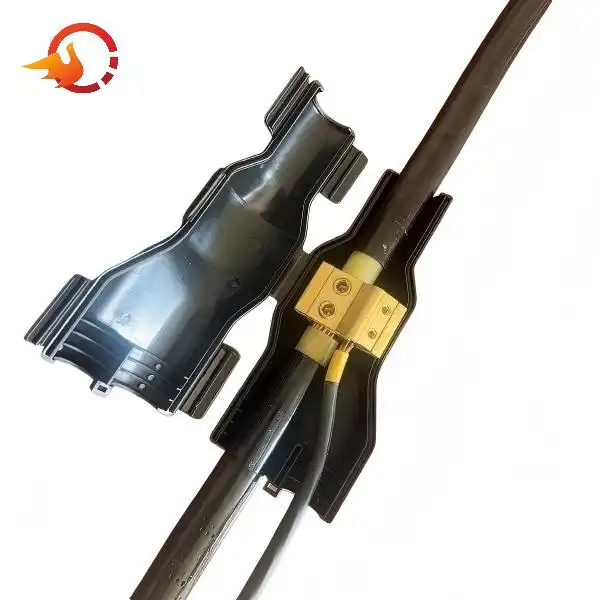
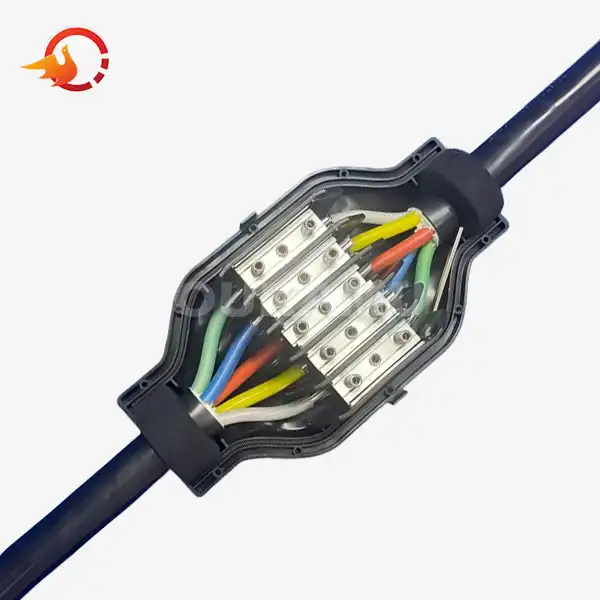
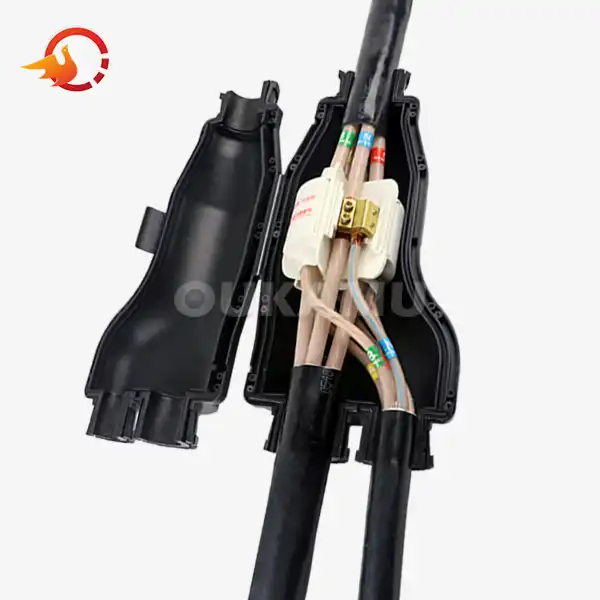
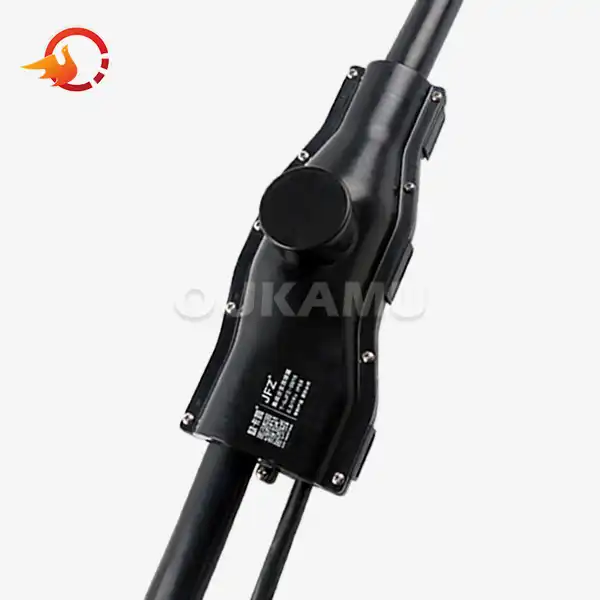
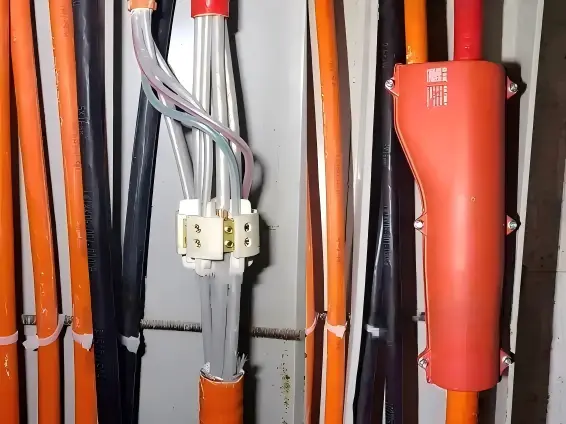
For underground uses, resin-filled joints are better at keeping out water because they use liquid insulation materials that harden around the links. Mechanical joints have bolt-tightened designs that make them reusable, which is especially useful in systems that need to change their configurations on a regular basis. The FH-JFZ-70/16 type from Oukamu is an example of an advanced mechanical branch joint design. It can accommodate main cables from 25 to 70 mm and branch cables from 2.5 to 16 mm without having to break the main cable. This feature saves two to three meters of cable per connection point.
Compliance Standards and Safety Benchmarks
International guidelines like IEC 60502 and UL 486 make sure that cable joints can handle tough working circumstances. These approvals show that the insulation has a resistance of more than 500MΩ, can handle voltages of 3.5kV, and is fire-resistant at temperatures of 750°C to 1000°C. Products that meet the requirements of GB/T 14048.7-2016 show that they are in line with Chinese national standards, which is very important for wholesalers who sell to both Chinese and foreign markets. Voltage drop requirements below 3.2mV stop energy losses that make the device less effective over time.
How to Properly Install Low Voltage Cable Joints for Residential Wiring
Preparation and Material Inspection
Thoroughly checking the cables is the first step to a successful installation. Check the circuit surfaces for oxidation, make sure the insulation is still good along the whole working length, and make sure the cable width works with the chosen joint models. Gather the necessary tools, such as cable strippers that are calibrated to the gage of your wire, crimping tools that are matched to the specifications of the connectors, and heat guns for products that can be shrunk. When you use a T-connector design like our branch joints, you don't have to cut any cables first. You just place the joint where it needs to be, lock the branch connection, and move on.
It is important to have clean work areas and places that don't get wet. Even small amounts of dirt or dust can weaken insulation, especially in outdoor or underground installations where the system will be exposed to more moisture over time.
Step-by-Step Installation Process
To install a heat shrink joint, slide the shrinkable cover onto one end of the wire first, then connect the conductors. Once the joint is crimped or mechanically fastened, place the sleeve in the middle of it and heat it evenly while moving it in circles until it completely contracts. Cold shrink methods work the opposite way: they place the pre-expanded sleeve on top of the finished connection using its supporting core, then pull out the core to start the self-contraction process.
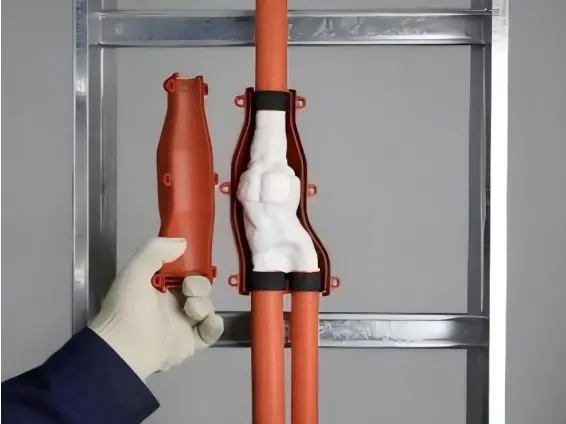
Branch cable joints make this process a lot easier. Place the T-connector body where you want the main wire to go without cutting it. Put the branch cable into the right port, use the built-in locking device to secure it, and then seal the assembly. The flame-resistant shell protects the surroundings right away. In a recent domestic tower job, 68 branch connections were made across 14 floors in just three days, thanks to this method that cut installation time by 40%.
Troubleshooting Installation Challenges
Moisture getting into cable joint systems is still the main reason they fail. If the entry points for cables aren't sealed well enough, water can get in and damage the insulation over time. Always make sure that the seal is completely formed by looking at it and testing it gently. Resistance hotspots are caused by crimping mistakes, like not compressing enough, which leads to weak connections, or compressing too much, which damages the conductor strands. Both of these things can't happen if you use the right crimping tools with precise pressure settings.
According to safety rules, work areas must be de-energized, insulated gloves must be rated for the voltages that will be used, and eye protection must be worn when applying heat. When heated, cable jackets give off fumes, so make sure there is enough air flow in places where the work is being done.
Comparing Low Voltage Cable Joint Solutions for Residential Projects
Low Voltage vs. High Voltage Joint Distinctions
Industrial high-voltage networks and residential systems work very differently, so the parts that go into them need to be specially designed. High voltage joints use a lot of extra electrical field control measures that aren't needed or cost-effective for 0.6/1kV uses, like stress cones, semiconductive layers, and thicker insulation. On the other hand, residential joints focus on being small so they can fit inside standard electrical boxes, being flame retardant so they meet building codes, and being easy for technicians to handle in a variety of site conditions.
Heat Shrink vs. Cold Shrink Performance Analysis
Heat shrink joints work best for permanent setups where the extra time and tools needed for a perfect fit are worth it. The heat-activation process makes molecular bonds between the cable jacket and the sleeve, which makes them better at keeping water out. When placed correctly, performance reliability is close to 99.8% over 25 years of work.
Cold shrink options give up some closing power in exchange for faster installation and no need for special tools. A trained technician can make a cold shrink joint in about 60% of the time it takes to make a heat shrink joint, and this speed advantage applies equally to a Low Voltage Cable Joint, which benefits from reduced labor minutes per connection. This saves a lot of money on labor costs for big projects. This benefit is why they're so popular with contractors who have to keep projects on tight schedules.
| Feature | Heat Shrink Joints | Cold Shrink Joints | Branch Joints (Mechanical) |
|---|---|---|---|
| Installation Time | 12-15 minutes | 7-10 minutes | 5-8 minutes |
| Tool Requirements | Heat gun, crimper | Crimper only | Crimper only |
| Reusability | No | No | Yes |
| Main Cable Cutting | Required | Required | Not required |
| Environmental Seal | Excellent | Good | Excellent (with proper housing) |
Industry Brand Considerations
Well-known brands like 3M and Raychem have decades of data on how reliable their products are that can help with purchasing choices. While their goods usually come with long warranties and technical help networks, they do charge a lot for them. Regional manufacturers, such as Oukamu, offer competitive alternatives that meet the same performance standards but offer benefits like more customization options, shorter lead times, and localized customer service after the sale. This is especially helpful for distributors who manage inventory in multiple locations.
When picking a brand, you should look at the certification paperwork, the security of the provider to make sure you can get parts in the future, and how well the new part will work with the old one. A distributor we partnered with in Texas successfully transitioned their product line to include our FH-JFZ series after field testing demonstrated equivalent performance to premium brands at 35% lower procurement costs, directly improving their margin structure.
Procurement Considerations: Sourcing Low Voltage Cable Joints for Residential Projects
Balancing Price, Quality, and Supply Reliability
There is always pressure on procurement managers to find the best ways to spend money without lowering the quality of installations. Comparing prices per unit isn't enough without looking at the total cost of ownership, which includes things like guarantee terms, failure rates that need to be replaced, and the technician's time spent installing the product. When labor costs are added in, products that save $2 per unit but take 30% longer to install end up costing more in the long run.
Minimum order amounts have a big effect on how inventory is managed. When suppliers offer flexible MOQs, sellers can try out new product lines without having to spend a lot of money. Lead time accuracy is just as important; shipping plans that are hard to predict can throw off project schedules and hurt relationships between contractors. Instead of looking at a single transaction experience, use on-time delivery metrics over a number of order cycles to judge suppliers.
Customization and OEM Collaboration Opportunities
Most of the time, standard catalog items work well for most uses, but sometimes unique projects need custom specs. Suppliers who are flexible can make cables with custom diameter ranges, different insulation materials for chemical-exposure areas, or changed housing dimensions to fit specific installation needs. Thru OEM agreements, distributors can create their own lines of products that set them apart in the market.
Communication of thorough technical specifications is the first step in working together. Give information about the type of wire, the surroundings, and any restrictions that might affect the installation. Reputable manufacturers respond with engineering studies that confirm the project's feasibility, as well as timelines for the prototype and the number of units that need to be produced. Over the past five years, Oukamu's engineering team has made 47 different types of custom joints for a wide range of uses, from high-humidity coastal environments to harsh temperature changes in the desert.
Supplier Verification and Risk Mitigation
Verification of credentials is the first step in evaluating a seller. Ask for up-to-date proof of certification, such as ISO 9001 quality management, safety certifications for specific products, and test reports from reputable labs. Online markets make it easy to find goods, but you need to do more research before making big purchases. Check that the business is registered, ask for customer references, and place small orders first.
When possible, physical factory audits show how things are made and how quality control is done, and for a Low Voltage Cable Joint, these audits are especially critical because even minor manufacturing defects can compromise long-term joint performance. Look at how the raw materials are stored, the calibration certificates for the testing equipment, and the quality rejection paperwork. Transparent suppliers welcome this kind of scrutiny; reluctance is a sign that the supplier might not be reliable.
Technical Specifications and Performance Metrics of Low Voltage Cable Joints
Electrical Performance Parameters
The limits of how well cable joint systems work are set by their rated voltage and current carrying ability. Residential joints rated at 0.6/1kV can handle normal distribution voltages with enough room for error. Current ratings are directly related to the cross-sectional area of the conductor. For example, a 70mm² copper conductor can safely carry about 240A continuously in normal conditions, while a 25mm² conductor can only handle about 100A.
Insulation resistance greater than 500MΩ makes sure that there are almost no leaking currents, which could cause safety problems or waste energy. This standard needs extra attention in wet areas where insulation can become less effective when it comes into contact with water. Specifications for voltage drops below 3.2mV across joint connections stop systems with multiple connection points from losing total voltage, which keeps voltage stable at end-use loads.
The table below shows the most important details about Oukamu's FH-JFZ-70/16 branch cable joint, showing that it can handle tough residential situations:
| Parameter | Specification | Testing Standard |
|---|---|---|
| Rated Voltage | 0.6/1kV | IEC 60502 |
| Main Cable Range | 25-70mm² | — |
| Branch Cable Range | 2.5-16mm² | — |
| Fire Resistance Temperature | 750-1000°C | GB/T 19216 |
| Withstand Voltage | 3.5kV | IEC 60060-1 |
| Insulation Resistance | >500MΩ | IEC 60885-3 |
| Voltage Drop | <3.2mV | — |
| Operating Temperature Range | -40°C to +90°C | — |
Environmental Protection and Material Durability
Ingress Protection (IP) scores show how well something is resistant to water and dust. For residential outdoor uses, the minimum rating is IP54, which means it can handle dust and splash water. For systems that are buried, IP68 ratings are better because they allow ongoing submersion. UV resistance keeps exposed installations from breaking down—unprotected polymers break down in 3–5 years in direct sunlight, but UV-stabilized compounds stay strong for 25 years or more.
Fire safety rules in the building code say that flame retardancy must be met. When materials get V-0 ratings in UL 94 testing for flammability, they put out the fire themselves within seconds of the ignition source being removed. This stops the fire from spreading along cable pathways. The built-in flame-resistant T-connector body in our branch joints got a V-0 rating in independent lab tests, which can be used as proof during project reviews to make sure the code was followed.
Compatibility and Integration Factors
How well it works with existing infrastructure is determined by its physical dimensions. The sizes of the joint housings must be able to fit inside electrical boxes, conduit systems, and cable bridges without having to be pushed into place, which could damage the parts. The size of the cable entry port should be able to accommodate standard cable diameters with a small amount of room for error. Fits that are too loose make sealing less effective, and ports that are too small stop installation completely.
Galvanic corrosion can't happen at connection points if the materials used in the conductors are compatible, and this principle is particularly vital for a Low Voltage Cable Joint, where long-term electrical stability depends on proper metal pairing. When you mix copper and aluminum conductors without the right transition chemicals, the electrical breakdown happens faster.
Quality joints use conductor materials that are suitable and have anti-corrosion chemicals built into the crimped barrels, and a well-engineered Low Voltage Cable Joint incorporates these features to ensure reliable performance across dissimilar wires. Our goods work with both copper and aluminum wires because they are made with special contact chemicals that stop oxidation from happening.
Practical Application: Residential Tower Case Study
Electrical power had to be sent to 176 apartment units on a 22-story building in Phoenix, Arizona, using several vertical lifts. The original plan called for 88 standard junction boxes with cut-and-splice connections on each floor. This meant that 1,840 meters of main distribution wire and 88 junction boxes were needed.
The electrician stopped cutting main cables completely when he switched to branch cable joint technology. From the basement's distribution panels to the roof's mechanical systems, there were continuous vertical stairs that went up and down. At each floor, FH-JFZ-70/16 joints connected branches. This method cut the amount of main wire needed to 1,320 meters, which is a 28% material savings equal to $12,400 saved on cable costs alone.
Installation time went down by the same amount. The time it took to connect each floor went from 145 minutes to 85 minutes because of not having to cut cables, prepare splices, and place junction boxes. Over 88 connection spots, this saved 88 hours of work, which is about $7,900 in construction fees at the going rate in the area. The project showed how modern branch joint technology can solve several problems in buying at the same time, including high material costs, inefficient labor, and unreliable installation.
Conclusion
To choose the right cable connection solutions, you have to balance technical performance requirements with the costs of procurement and installation, and this balance is particularly critical when specifying a Low Voltage Cable Joint, because its upfront price must be weighed against decades of maintenance-free service. Modern branch cable joint technology fixes old problems with new designs that don't require cutting the main cable, use less material, and speed up the installation process, and these same principles have been adapted for the Low Voltage Cable Joint to simplify field terminations and reduce connector inventory.
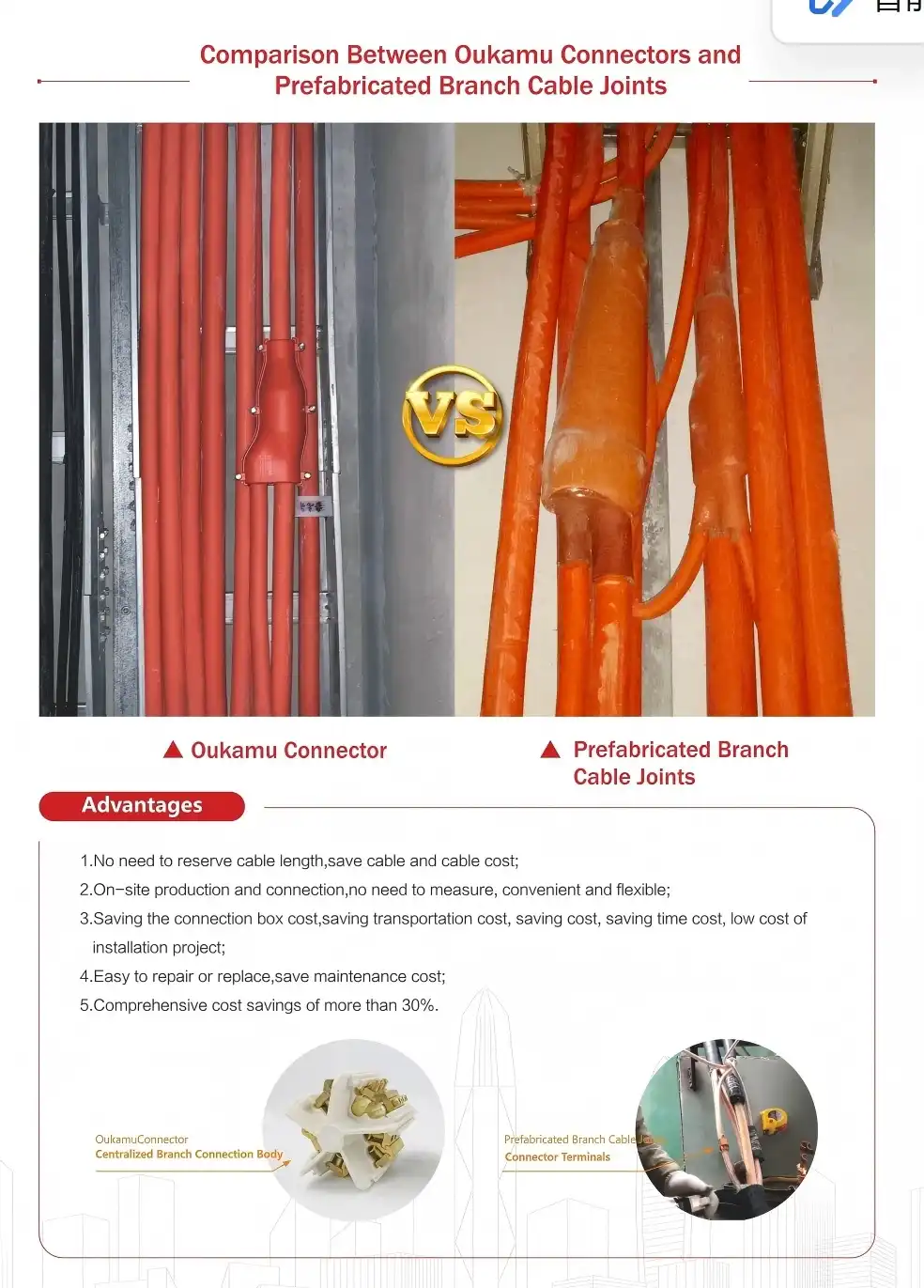
Distributors and project managers can get the best deals on products that meet strict international standards and are priced competitively, including those for the Low Voltage Cable Joint, which helps them save money on both short-term project costs and long-term system reliability. With the addition of smart homes and links for green energy, house electrical systems are becoming more complicated. On-site changeable branch joints offer important adaptability that prefabricated solutions can't match, and a well-designed Low Voltage Cable Joint complements these by providing a secure, waterproof interface for distributed generation inputs.
FAQ
Can high voltage cable joints be used in residential low voltage wiring?
The design of high voltage cable joints includes parts that aren't needed for home use, like electric field stress control components and insulation that is too thick. At 0.6/1kV working voltages, these features raise prices without adding any value. Also, high voltage joints often take up more space than household electrical boxes and pipe systems can handle. For residential projects, parts need to be specially designed for low voltage conditions to make sure they meet code requirements and work with the system.
What are the main differences between heat shrink and cold shrink cable joints?
For heat shrink joints to work, the sleeve has to be heated with a heat gun. This makes the heat-bonded rings that form better moisture shields. The installation process takes longer, and heating equipment needs to be powered by electricity. Cold shrink joints use rubber covers that are already stretched and self-contract when the core is removed.
This makes installation faster and doesn't require any tools other than crimpers. There aren't many differences in how well they work. Heat shrink does a slightly better job of sealing in the long term, while cold shrink makes installation faster. The best choice is often determined by project schedules and the tools that are available.
How should outdoor cable joints be maintained to prevent moisture damage?
Visual checks should be done every 12 to 18 months to find signs of seal failure before water gets in. Look for cracks in the housing, separate seals where cables enter, and discoloration that means water is present. UV-resistant housing materials keep the sun from damaging things, but extra protective shelters make things last longer when they're in direct sunlight for a long time.
Underground parts are helped by inspection rooms that let them be checked on a regular basis without having to dig. Because they completely keep out moisture, resin-filled joints don't need much maintenance. On the other hand, mechanical designs might need to be retightened after thermal cycling in climates with extreme temperatures.
Partner with Oukamu for Reliable Cable Connection Solutions
For more than 20 years, Oukamu has been working on branch cable joint technology, making goods that meet strict safety standards and solve problems that come up during installation. Our FH-JFZ series gets rid of the need to cut main cables, which saves money on materials and time during installation for residential, commercial, and industrial projects. As a reliable maker of Low Voltage Cable Joints, we offer full technical support, open buying options for both small contractors and large wholesalers, and the ability to make changes for unique uses.
Email our technical team at info@okmbranchcable.com to talk about the needs of your particular project, get full product specs, or set up testing samples. We know that procurement managers need suppliers they can rely on to provide consistent quality, predictable lead times, and quick support after the sale. Visit okmbranchcable.com to see all of our products and learn how our solutions can help you save money on your project and make installation go more smoothly.
References
1. National Electrical Manufacturers Association (2021). "Standards for Low Voltage Cable Joining Systems in Residential Construction." NEMA Publication WC 89.
2. Johnson, R. & Martinez, C. (2022). "Comparative Analysis of Cable Splicing Methods in Modern Electrical Systems." Journal of Electrical Installation Engineering, Vol. 47, pp. 112-128.
3. International Electrotechnical Commission (2020). "Power Cables with Extruded Insulation and Their Accessories for Rated Voltages from 1 kV up to 30 kV." IEC Standard 60502-2.
4. Patterson, D. (2023). "Cost-Benefit Analysis of Branch Cable Joint Technology in Multi-Story Residential Construction." Building Services Engineering Research and Technology, Vol. 44(3), pp. 287-303.
5. Underwriters Laboratories (2022). "Wire Connectors and Soldering Lugs for Use with Copper Conductors." UL Standard 486A-486B, 8th Edition.
6. Chen, H. & Williams, T. (2021). "Environmental Performance and Longevity Testing of Polymer-Insulated Cable Joints." IEEE Transactions on Dielectrics and Electrical Insulation, Vol. 28(4), pp. 1456-1463.