

_1790150425011.webp)
IP68 Cable Joint vs Standard Joints: Key Differences Explained






 2026-08-18 15:56:05
View:389
2026-08-18 15:56:05
View:389When selecting cable connection solutions for demanding environments, understanding protection ratings becomes essential. IP68 cable joints represent the highest standard of ingress protection, offering complete dust sealing and continuous immersion resistance beyond one meter depth. Unlike standard joints rated IP65 or IP67, these waterproof cable connectors deliver uncompromising performance in marine installations, underground infrastructure, and industrial facilities where moisture and contaminants threaten electrical integrity. The primary distinction lies in sealing technology—IP68 joints employ multi-layer gasket systems and premium polymer housings that maintain protection under sustained pressure, making them indispensable for critical applications demanding long-term reliability.

Understanding IP68 Cable Joints: Specifications and Functionality
Decoding the IP68 Rating System
The Ingress Protection rating system gives a consistent way to rate how well enclosures keep out outside elements. The number "6" means that there is complete safety against dust particles—nothing gets in during eight hours of exposure. The "8" means that the device can be submerged continuously for more than one meter, with the maker setting the maximum depth and time. This rating makes sure that cable connections stay electrically sound even when they are submerged in water for a long time. This is necessary for equipment that works underwater, wastewater treatment plants, and outdoor lighting systems.
Advanced Sealing Mechanisms
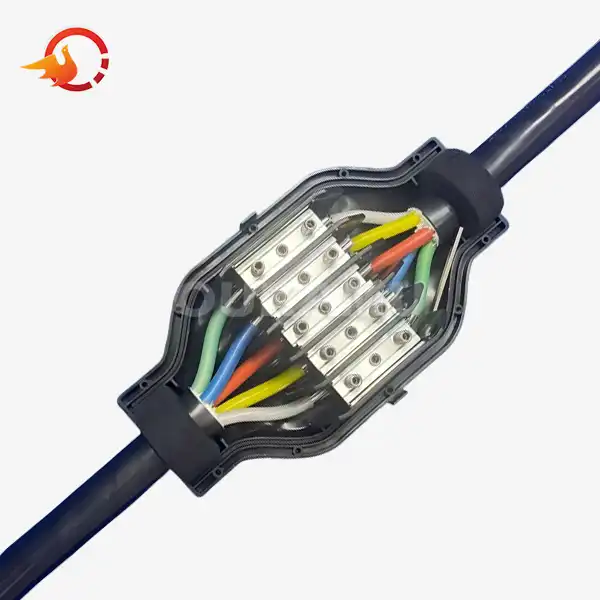
IP68 Cable Joints use advanced closing technologies that are better than the old ways of doing things. Around cable entry points, silicone and EPDM rubber gaskets make compression seals, and built-in strain relief systems stop any movement that could weaken the barrier.
Most of the time, the body is made of fiberglass-reinforced nylon or stainless steel, which doesn't rust or break easily. Internal potting solutions cover connections, getting rid of any empty spaces where humidity could grow. This multiple barrier approach explains why these joints work reliably in temperatures ranging from -40°C to 120°C, allowing for thermal expansion without causing the seal to break down.
Technical Specifications That Matter
International standards like IEC 60529 and NEMA grades are met by high-quality waterproof cable connections. Electrical specs include voltage ranges from 0.6/1kV to higher industrial voltages, and the amount of current that can flow is matched to the size of the wire conductors.
Certifications like UL, CE, and RoHS compliance show that safety and environmental rules are being followed. Chemical exposure tolerance, UV resistance, and vibration resistance are some of the mechanical longevity tests that are used to see if joints can withstand difficult working conditions for 20 to 30 years.
Comparing IP68 Cable Joints with Standard Cable Joints
Protection Level Differences Across IP Ratings
Most standard wire joints have grades of IP65 or IP67, which are very different from IP68 Cable Joint performance. IP65 joints can handle water jets coming from any direction, but they can't handle being submerged. IP67 joints can handle being submerged up to one meter for 30 minutes. This is enough for splashed environments but not for continuous underwater use. The performance gap is very important in places like underground cable vaults that can flood during storms or marine sites that are constantly exposed to saltwater. Picking the wrong grade can cause things to break down early, need upkeep that wasn't planned, and pose safety risks.
Mechanical and Electrical Resilience Comparison
In addition to being waterproof, IP68 Cable Joints are also very strong mechanically. The strong housing design can handle bumps and cable pull forces that would damage less durable connectors. The properties of electrical insulation stay the same over a bigger range of temperatures.
This keeps tracking and arc-over from happening in damp circumstances. Testing results show that IP68 Cable Joints keep their dielectric strength above 2500V even after being submerged for a long time, while standard joints may lose some of their strength. This means that it is less likely to break down in places where the temperature changes, chemicals are present, or there is mechanical stress.
Total Cost Analysis: Investment vs. Operational Savings
Lifecycle economics can explain why IP68 Cable Joints are more expensive at first—usually 30 to 50 percent more than normal options. The people who work in procurement should look at the failure rates, substitute prices, and costs for downtime. Using IP68-rated connections in a city lighting project could remove 80% of moisture-related failures compared to IP67 options. This would cut down on emergency service calls and make upkeep less frequent, from once a year to every three to five years. When it comes to warranties, this difference in dependability is often reflected. Taking into account the cost of labor to get to installations that are underground or high up, the break-even point usually happens during the first service cycle.
| Protection Rating | Dust Resistance | Water Resistance | Typical Applications | Estimated Lifespan |
|---|---|---|---|---|
| IP65 | Complete dust seal | Jet spray protection | Indoor industrial panels | 5-10 years |
| IP67 | Complete dust seal | Temporary immersion (1m/30min) | Outdoor equipment boxes | 8-15 years |
| IP68 | Complete dust seal | Continuous immersion (depth specified) | Subsea, underground infrastructure | 20-30 years |
Installation and Maintenance Guide for IP68 Cable Joints
Step-by-Step Installation Protocol
If IP68 Cable Joints work as well as they're supposed to, it depends on how well they were installed. Start by choosing the right joint size that matches the outer diameter of the cable. Joints that are too big can make it harder to compress the seal. Follow the manufacturer's instructions when stripping wire insulation, and be careful not to make any nicks that could cause stress points.
Clean the conductor's surface with isopropyl alcohol to get rid of the oils that keep binding materials from sticking properly. When you put the wires in, make sure the seals are flush with the cable jackets and there are no gaps or twists. Use measured tools to tighten gland nuts to the required torque values. Before the final assembly, make sure that the electrical connections meet the resistance requirements.
Common Installation Mistakes to Avoid
IP68 Cable Joint reliability is hurt by a number of problems. When you use wire types that aren't suitable, like metric cords with imperial joints, seal gaps appear. Not getting rid of the sharp burrs on the ends of the cut cables can cause gaskets to puncture when they are inserted. When you bend the wire too far near the joint, you put stress on the seals and conductors. Failure spots are made by environmental toxins like dirt or moisture that get stuck during assembly. Manufacturers recommend that you lubricate the gasket before tightening it. If you skip this step, friction builds up and tears the seals during tightening.
Maintenance Strategies for Extended Service Life
Every six months in harsh settings and once a year in mild ones, eye checks should be made for housing cracks, corrosion, or glands that have moved out of place as part of routine inspection plans. Pressure testing or continuity tracking can be used to check the stability of a seal and find early signs of wear.
During routine wire repair, replacing gaskets and seals, even if damage can't be seen, keeps failures from happening out of the blue. By keeping track of when things were installed and when they need to be maintained, you can repair them before they break down completely. These proactive steps make the 20–30 year lifespan that good joints can have even longer if they are properly maintained.
Selecting the Right IP68 Cable Joint: Procurement Considerations for B2B Clients
Compatibility Assessment Checklist
Matching IP68 Cable Joint specs to application needs is the first step to successful procurement. Cable compatibility includes the number of conductors (single-phase 3-core, three-phase 4-core, or specialty 5-core designs), the range of conductor sizes, and the types of insulation used. Extremes of operating temperature, types of chemical exposure, levels of UV radiation, and the need for a certain depth of immersion are all examples of environmental factors. Voltage ratings, current capacities, and frequency must all be taken into account in electrical parameters. Some of the mechanical needs are wire pulling force, vibration exposure, and limited room.
Evaluating Supplier Credentials and Certifications
Distributor owners and buying officers should carefully check the qualifications of suppliers. Look for makers whose factories meet international electricity standards and have ISO 9001 quality management certification. Not just what the maker says, but also test reports from third parties that confirm IP68 Cable Joint ratings from recognized labs. Check out the technical support options, such as application engineering help and resources for troubleshooting. Check the stability of the supply chain by getting references from customers who work in similar fields. With batch numbers and production dates, products can be tracked clearly, which helps with quality control and warranty processes.
Strategic Purchasing for Bulk Orders
To optimize procurement, you have to find the right balance between inventory costs and supply security. Talk about different levels of price for large orders while still being able to make changes to the project. Specifications that can't be changed can cause problems when things change on the job site.
Set lead times that take into account the need for customization, especially for cable sizes that aren't standard or environmental ratings that need to be met in a certain way. Think about stocking deals that let deliveries happen in stages to fit project schedules. Before placing a large order, ask for sample units to be tested for quality control. Having ties with several qualified providers lets you get better prices and make sure that you have enough supplies for important projects.
| Procurement Factor | Standard Joints | IP68 Cable Joints | Impact on B2B Buyers |
|---|---|---|---|
| Unit Cost | Lower initial price | 30-50% premium | Higher upfront investment required |
| Warranty Period | 2-3 years typical | 10+ years available | Reduced long-term risk exposure |
| Customization Options | Limited flexibility | Wide range of configurations | Better project-specific matching |
| Lead Time | 2-4 weeks standard | 4-8 weeks for custom specs | Requires earlier procurement planning |
Benefits and Impact of Upgrading to IP68 Cable Joints in B2B Applications
Operational Efficiency Gains
When you upgrade to premium IP68 Cable Joints, you can see a clear improvement in how things work. Less failure means less unplanned downtime that can mess up production schedules or service delivery. When a factory switched to IP68 Cable Joints for their machine tool connections, 90% fewer electrical problems happened during equipment washdown procedures.
This meant that the factory no longer lost an average of $15,000 per event in production. Maintenance teams spend more time on preventative tasks that add value and less time on fixes that need to be done right away. The increase in dependability also lowers the need for spare parts inventory, since emergency replacement stock is no longer needed.
Compliance and Risk Mitigation
More and more, electrical safety standards require systems that are exposed to moisture to have higher levels of security. Using connections with an IP68 Cable Joint rating makes sure that you follow OSHA rules, the National Electrical Code, and rules specific to your industry in places like chemical plants, food processing plants, and marine environments.
This compliance lowers the risk of being sued for accidents at work that happen because of electrical problems. Insurance companies may lower your premiums if you show proof that you upgraded your electrical system to include IP68 protection in weak spots. Protecting important control systems from damage from the environment not only keeps people safe, but also keeps processes from getting thrown off.
Real-World Application Success
A project to improve infrastructure along the coast shows how IP68 technology can be useful. After having multiple fails during storm surges, a local government updated the beachfront lighting system from IP67 joints to IP68 Cable Joints. Over the next five years after the upgrade, the number of maintenance calls dropped from 47 per year to just 3.
The old system needed to be replaced after eight years, while the IP68 installation is expected to last for 25 years. In the third year, the project paid for itself by avoiding repair costs and cutting down on emergency service costs. Offshore wind farms, wastewater treatment plants, and underground mines are all examples of places where similar success stories can be found.
Specialized uses show how advanced cable connection technology can be used to solve specific problems. In one case, an electrification project for a railroad needed connections that could handle flooding along the track while keeping the 0.6/1kV service voltage. The engineering team chose IP68 Cable Joints with extended immersion ratings.
This made it possible to make safe branch connections at equipment points along the track without having to use waterproof enclosures, which would have made the installation more expensive. Flexible assembly positioning let connections be made exactly where they were needed along the 25-kilometer route. This ability to adapt is very helpful when the actual project conditions don't match the planned ones.
Conclusion
The main difference between IP68 Cable Joints and other options is how well they protect and how reliable they are over time. Standard joints work fine in controlled environments, but waterproof connectors are needed when electrical systems are at risk from dust, water, and submersion. The extra money spent on the investment comes off in the long run with higher reliability, lower upkeep costs, and longer service life than standard joints. When procurement experts look at these technologies, they should put lifecycle costs ahead of original pricing and make sure that the technology they choose is right for the site conditions instead of making assumptions that are too good to be true.
FAQ
How are IP68 Cable Joints different from IP67 joints?
The main difference is the depth and length of immersion resistance. IP67 joints can be submerged for up to 30 minutes in water up to one meter deep, which is fine for light splashing or flooding. IP68 Cable Joints can withstand being submerged in water for more than one meter at levels stated by the maker, which is usually between 3 and 10 meters. This means they can be used for permanent installations underwater. The ways they seal are very different, as IP68 designs have extra gasket layers and pressure-compensating features that IP67 joints don't have.
Can any kind of wire be used with IP68 wire Joints?
What makes two cables compatible is the cable's diameter, the insulation material, and the way the conductors are set up. Standard PVC, XLPE, and rubber-insulated wires of certain sizes can fit in most IP68 Cable Joints. For armored lines to work, the joints need to be made for steel wire armor (SWA) and have the right pressure relief. Make sure that the joint specs match the outer width and conductor count of your cable. If they don't, the seal consistency that provides IP68 protection is lost.
How often should you check IP68 joints?
How often you inspect relies on how bad the situation is. Checks should be done every six months for harsh situations like marine systems or chemical exposure. Moderate outdoor areas need to be inspected once a year. It doesn't take long to look visually for signs of corrosion, housing damage, and gland tightness. This avoids major breakdowns. Electrical testing during routine maintenance makes sure that the machine keeps working without having to take apart any joints.
Partner with Oukamu for Superior IP68 Cable Joint Solutions
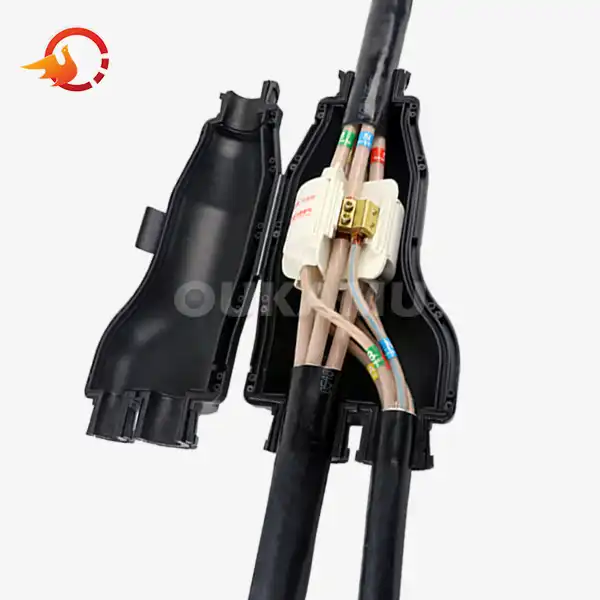
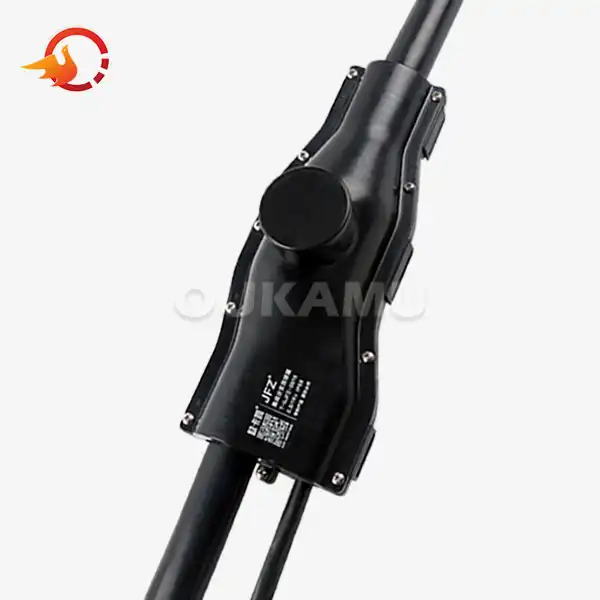
Xi'an Oukamu Electric Co., Ltd. has been a specialist in cable connection technology for 17 years and offers IP68 Cable Joint solutions that meet the strict needs of modern infrastructure projects. Our new branch cable connectors are very flexible—connections can be made anywhere along the main cable without cutting it. This means that you don't have to waste cable or deal with the hassle of installing pre-made options. This ability to change on the job site is very helpful when project conditions change or when a complicated structure needs asymmetric branch placement.
Our integrated design includes flame-resistant and waterproof materials that can be used for main wires from 95 mm to 240 mm and branch cables from 6 mm to 70 mm. It is rated for 0.6/1kV uses and meets GB/T 14048.7-2016 standards. The small structure can be put up freely or inside cable bridges, which saves building room while still providing the necessary insulation and corrosion protection for harsh environments. In addition to providing high-quality products, we also help distributors and project procurement teams by letting them order in batches, keeping supply chains stable, and providing quick technical support that makes managing inventory easier.
Contact our team at info@okmbranchcable.com to discuss your specific application needs and find out how our solutions can cut down on installation time, save you money on materials, and give your projects the long-term performance they need. Visit okmbranchcable.com to explore our complete product range and technical resources.
References
1. International Electrotechnical Commission. "IEC 60529: Degrees of Protection Provided by Enclosures (IP Code)." Edition 2.2, 2013.
2. National Electrical Manufacturers Association. "NEMA Standards Publication 250: Enclosures for Electrical Equipment (1000 Volts Maximum)." 2020 Revision.
3. Underwriters Laboratories. "UL 514B: Standard for Conduit, Tubing, and Cable Fittings." Current Edition with Revisions through 2022.
4. Institute of Electrical and Electronics Engineers. "IEEE 1680: Standard for Cable Joints Rated 1-35 kV and Cable Terminations Rated 1-46 kV." 2019 Edition.
5. British Standards Institution. "BS EN 62444: Cable Management Systems – Cable Trunking Systems and Cable Ducting Systems for Electrical Installations." 2018 Publication.
6. China National Standardization Management Committee. "GB/T 14048.7-2016: Low-Voltage Switchgear and Controlgear – Part 7: Ancillary Equipment." National Standard of the People's Republic of China.