

_1790150425011.webp)
How to install an armoured cable branch joint safely?






 2026-07-09 08:57:20
View:389
2026-07-09 08:57:20
View:389It is very important to follow the manufacturer's instructions, pick the right tools, and follow electrical safety rules when installing an Armoured Cable Branch Joint. Part of the process is getting the cables ready without cutting the main trunk line. Other steps include securing the insulation and sealing the parts, checking to make sure there is proper earth continuity, and testing the electricity thoroughly. You can install things more quickly and easily with high-tech connectors like the Armoured Cable Branch Joint. These connectors keep the system's integrity and make sure that standards like GB/T 14048.7-2016 are met for reliable power distribution in business and industry.

Understanding Armoured Cable Branch Joints
What Are Armoured Cable Branch Joints and Why Do They Matter?
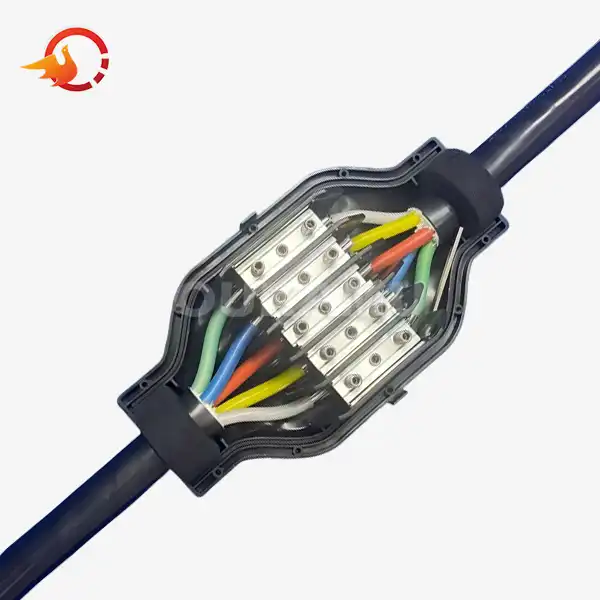
When electricity is distributed, Armoured Cable Branch Joints are key points where secondary circuits connect to main power cables without cutting the primary line. People started using these parts in factories, hospitals, and city infrastructure projects where cutting main cables would stop work or cost a lot of money in lost time. In the past, the trunk cable had to be split into pieces, T-connectors had to be put on each piece, and then the pieces had to be put back together. Making this change to the cable hurt its integrity and slowed down the installation process.
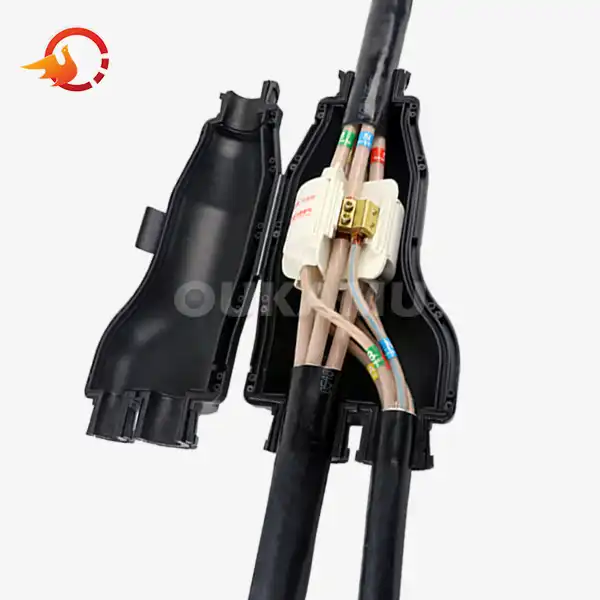
New Armoured Cable Branch Joints have changed this method because they let technicians connect to live or dead main cables anywhere along their length. This feature is very helpful for installations, maintenance, and retrofitting where exact branch locations can't be planned ahead of time. Iron wire armour (AWA) or steel wire armour (SWA) can be used to protect internal conductors. This keeps them safe from damage caused by machinery, water getting in, and environmental stressors that are common in underground installations, outdoor uses, and factories with lots of heavy equipment.
Types and Technical Specifications
There are a lot of different kinds of Armoured Cable Branch Joints that can be used in different situations. Versions that are resistant to heat can handle high temperatures in boiler rooms and factories. Versions that are waterproof, on the other hand, are best for pipes that are buried or outdoor installations that could get wet from rain or groundwater. Rigid designs are the best way to protect against mechanical damage in fixed installations. Flexible designs, on the other hand, let people move around in places where there is moving equipment or vibrations.
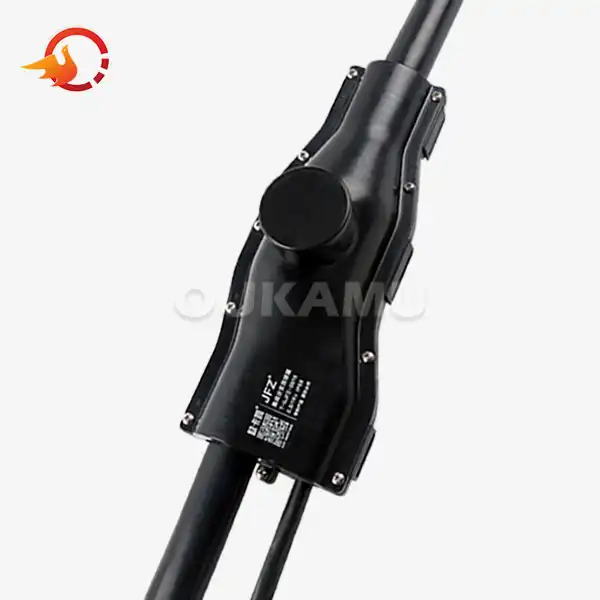
The FH-JFZ-16/10 model shows how custom engineering can be used for smaller gauge tasks. As long as the voltage is between 0.6 and 1kV, it can handle main cables from 4 mm to 16 mm and branch cables from 1.5 mm to 10 mm. Electrical systems for homes, small businesses, and light commercial buildings are in this range of specifications. Some larger models can handle trunk cables up to 240 mm and branch lines up to 70 mm. These models are used for heavy industrial loads, hospital power distribution, and city streetlight networks.
International safety standards, like ISO certifications, and the Chinese national standard GB/T 14048.7-2016 make sure that products pass tough tests to see how well they can handle heat, fire, and wear and tear. When purchasing officers look at suppliers, these certifications are very important because they make sure the work will be done the same way every time and lower the risk of being sued for big infrastructure projects.
Real-World Applications Demonstrating Value
New Armoured Cable Branch Joint technology was added to all of the electrical systems at the Mengchao Hepatobiliary Hospital of Fujian Medical University. In a place where power outages could hurt patient care, this was done to put safety first. The people who did the installation chose connectors that wouldn't catch fire and could be used more than once. Because of this, changes could be made in the future without having to change the whole cable runs. This kept up with strict fire safety rules for healthcare facilities and saved money on long-term maintenance costs.
Because of the dust, water, and mechanical stress from heavy equipment, mines are especially hard places to live. During these times, Armoured Cable Branch Joints need to be well protected and sealed to avoid short circuits that stop work. In the same way, projects to electrify railways need connections that work well and can handle vibrations, temperature changes, and being outside for decades.
Preparation Before Installation
Essential Tools and Equipment
The first step in a proper installation is getting the right tools together. Different from regular wire cutters, cable cutters designed for Armoured Cable Branch Joints can cut through the outer sheath without harming the conductors inside. Before they are connected, insulation testers make sure that the cables already there meet certain resistance levels. This stops work from being done on lines that aren't safe. Torque wrenches make sure that fasteners are tightened the way the manufacturer says they should be. In this way, connections don't get too loose or too tight, which could damage the conductors or crack the insulation. If they get too loose, resistance hotspots can form.
This is how stripping tools make sure that each part stays at the right length while they remove the cable jackets and insulation layers. When you use crimping tools, you can make sure that the electrical and mechanical connections between conductors and terminal connectors are strong. As part of testing, digital multimeters look for voltage, current, and continuity. Heat guns spread out the shrink tubing evenly without getting the materials below too hot. It is important to ground things correctly, and cable glands and earth bonding clamps make sure of that.
Personal Protective Equipment Requirements
Electric work has risks that can be lowered with the right PPE. Hands don't touch live wires by accident when they wear insulated gloves rated for the system voltage. When you cut and strip cables, safety glasses keep metal shavings out of your eyes. If something unexpected goes wrong during testing, arc-rated clothing will keep you safe. You won't drop any tools or other gear if you wear boots with steel toes. In factories where there are risks from above, workers need to wear hard hats.
With lockout-tagout devices, circuits stay off while they are being installed. This way, other workers can't turn them back on by accident. Voltage detectors check to see if there is any electricity before the work begins. This is an important safety measure that needs to be taken even if the right steps are taken to shut down. It's safer to test things with temporary power supplies that have ground fault circuit interrupters (GFCIs).
Pre-Installation Inspection and Documentation Review
By making sure they are compatible, Armoured Cable Branch Joint installation issues and safety risks can be avoided. When designing the joint, the conductor size, insulation type, and voltage rating of the main cable must all be taken into account. The same level of care needs to be used with branch cables to make sure they fit right in terminal chambers. Inspections find problems that can be seen, such as armoring that is broken, insulation that isn't working right, or conductors that are corroded and need to be replaced before the project can move forward.
Important installation information, such as torque requirements, stripping lengths, and assembly order, can be found on the manufacturer's datasheets. Failure risks go up when you don't follow these rules. Warranties are also null and void. A lot of installation manuals have sections on how to fix problems that cover common mistakes. You can avoid making mistakes that cost a lot of money by reading these parts ahead of time. You can plan for changes or moves that might happen in the future if you know how to use advanced connectors over and over again.
Step-by-Step Guide to Safe Installation
Preparing and Stripping Cables Correctly
Make sure you measure things correctly so you don't connect things that aren't safe or don't work well. Draw a line on the main cable where you want the branch to go. Leave enough space around any bends, ends, or other connections. The trunk line doesn't have to be cut for modern Armoured Cable Branch Joints, but a window of insulation on the outside still has to be taken off to get to the conductors.
Carefully remove the outer sheath by following the steps suggested by the manufacturer. Most of the time, this will leave 40 to 60 mm of space between the conductors and the armoring next to the opening. Take off just enough insulation from each conductor so that the terminal can fit. Be careful not to leave any extra bare wire that could lead to a short circuit. Clean all metal surfaces that can be seen with the right solvents to get rid of oxidation, oils, and other things that make contact resistance higher.
Going through the same steps to prepare branch cables is important, as well as making sure they are the right lengths for stripping. Cables that are over-stripped lose their insulation, and conductors that are under-stripped can't make good electrical contact. That way, you won't mix up the conductors, which could cause bad phase connections or lost earth continuity. Keep your work area clean.
Installing Insulating and Sealing Components
Sealing parts that are put in the right place to keep water out and dust from building up are the first step in protecting the environment. Slide sealing grommets onto the cables before connecting them to the power source. After the fact, it's hard or impossible to add them back. Make sure that the pressure is the same all the way around the cable by putting the waterproof gaskets exactly where the assembly diagrams say to.
In the integrated T-connector body of high-tech designs like those from Xi'an Oukamu, materials that don't catch fire or spread flame are used. These materials must meet strict safety standards. With these one-piece designs, there aren't as many weak points where connections can go wrong. This makes it easier to install and makes it more reliable. The conductors should be fully inserted into the terminal chambers until they reach the stops inside. Make sure they are in the right place before you tighten.
There are insulation layers inside the joint body that keep the different voltage potentials separate. The joint body also mechanically supports the conductors. In some designs, the chambers are clear, so you can see if the conductor is in correctly. This feature makes installation mistakes much less likely. You can protect connection points in wet places even more against corrosion by putting dielectric grease on them.
Securing Armouring and Earth Connections
When something goes wrong, proper earthing stops dangerous voltage potentials and makes sure that devices that protect against overcurrent work right. The pressure on the armor stays the same even if the temperature changes, the joints shake, or the armor settles over time if the springs have good Armoured Cable Branch Joints. There are range markings on these parts that let you know what cable sizes they can work with. This keeps them from being used in the wrong way.
It is usually 30 to 50 mm, but it depends on how the joint is built, to take off enough of the outer sheathing to get to the armored wires that can connect to the earth terminals. Clean the armoring surfaces until the metal shines. Use wire brushes to get rid of any coatings or corrosion that get in the way of conductivity. To make sure there are many safe points of contact, you can wrap earth bonding straps around armor that is showing or use compression connectors that are made just for this job.
Tighten the earth connections until they reach the torque values given. Joints with high resistance may not be able to carry fault currents if you don't tighten them enough. On the other hand, if you tighten them too much, you could damage the conductors or crack the terminal housings. With a low-resistance ohmmeter, check to see if the main cable armor and the branch cable armor are connected. If the reading is less than 0.1 ohms, the bond is good.
Assembly and Torque Application
Not having to take apart finished sections to get to parts you forgot is possible if you follow the manufacturer's steps for systematic assembly. Carefully line up all the parts before you tighten them. This will help you make sure that the gaskets fit correctly and that the wires stay spaced out correctly. To make sure that threaded parts fit together well and don't cross-thread, tighten them by hand first.
To put on the final torque, use calibrated wrenches that are set to the manufacturer's instructions. For lighter connectors, this torque should be 8 to 15 Nm. For heavy-duty industrial connectors, it should be up to 50 Nm. For assemblies with more than one bolt, applying torque in the shape of a star makes sure that the pressure is spread out evenly and keeps the sealing surfaces from warping. Fasteners that are done can be marked with paint or markers so that they can be seen during quality checks.
Reusable designs include things like captive hardware that stays in place while the design is taken apart. This keeps parts from getting lost while repairs or changes are being made. With this feature, maintenance departments don't have to keep as much stock, but they can still be sure that the right parts are on hand for when they are needed.
Electrical Testing and Verification
Testing makes sure that the installation was done right before the circuits are turned on. This way, mistakes can be found early on, when they are still simple to fix, instead of being found after the machine has been put into service. In order to measure leakage currents, high voltage (usually 500–1000V DC) is put between the conductors and between the conductors and the ground during insulation resistance testing. If the reading is more than 1 megohm per kilovolt of operating voltage, it means that the insulation is stronger.
Testing all the time makes sure that the electrical paths through Armoured Cable Branch Joints are correct and that the ground connections are strong. If you read less than 0.5 ohms of resistance on a conductor path, it means that the connections are good. For continuity of the earth, the resistance should be even less. The right order is confirmed when testing three-phase systems for phase rotation. This keeps things like motors from going backwards and broken tools from happening.
People who were put through high-potential (hi-pot) tests finished installations at voltages higher than normal, usually 1.5 to 2 times the rated voltage for set amounts of time. By breaking down the insulation, this test finds the weak spots that will fail quickly. Write down all test results, including the name of the tester, the location of the joint, and the name of the cable that was tested. This will help you keep track of quality and use the information in the future.
Maintenance Tips and Safety Considerations
Routine Inspection Schedules and Procedures
Maintenance keeps Armoured Cable Branch Joints in good shape so they last longer and don't break down when you least expect it, which could stop operations. Every three months, the outside of the joints is looked at visually to see if there is any damage, corrosion on the metal parts, or wear and tear on the outer housings. As part of a full yearly inspection, covers may need to be taken off to see what's inside, check for moisture buildup, make sure all fasteners are tight, and remove any dust or debris that has gathered.
In normal use, thermal imaging scans find "hotspots," which can mean that connections have a lot of resistance, circuits are overloaded, or parts are breaking. If temperatures rise above 10°C compared to equipment nearby, this should be looked into. If we plot these measurements against time, we can see that they get worse over time until they break down completely.
Some industries, like chemical processing, installations near the coast, and underground uses, work in harsh environments and need to be inspected more often to deal with certain threats. In places where there is a lot of salt in the air, cracks may need to be checked visually once a month and more thoroughly every six months. Since groundwater can get into underground installations, they should be checked for water content once a year, even if there don't seem to be any issues from the outside.
Troubleshooting Common Issues
When connections aren't tight, things happen like lights flickering or things that trip overcurrent. Thermal cameras can quickly find these issues because they can see changes in temperature. To fix the issue, you need to turn off the circuit's power, remove the broken Armoured Cable Branch Joint, clean the contact surfaces, and then tighten it to the correct torque levels. In order to find patterns that can help you fix problems with the parts or make the installation process better, write down what you found.
Regular testing will show a drop in resistance, and inspections will show cracks and discoloration. This is a sign of insulation degradation. UV light, chemicals in the air, or too much heat are all things in the environment that speed up the breakdown process. After replacing a joint, the problem won't happen again as long as the problems are fixed. For example, better air flow or protective coatings can help.
When moisture gets into electronics, they slowly stop working as well, and eventually they short out. Seeing rust on the wires, wet spots inside the joint housings, or less insulation resistance are all warning signs. Getting rid of water around underground installations and making sure gaskets stay compressed are two ways to do this. Inside joint housings, desiccant packs take in moisture from the air inside.
Compliance with Safety Standards
As long as you follow the rules for electrical work, everyone and everything will be safe. There are minimum standards for conductor size, overcurrent protection, and earthing systems all over the world. In the US, they are called the National Electrical Code (NEC) and in the UK, they are called BS 7671. Every so often, these standards are changed to include new information about safety and better technology. This is why people who work in the electrical field need to keep learning.
Occupational Safety and Health Administration (OSHA) rules say that workers must follow lockout-tagout procedures, wear the right safety gear, and figure out the risk of arc flashes. Employers must make sure their workers are trained and skilled in these areas and keep records to show they are following the rules. Worker safety labels called "arc flash" let them know what safety gear they need to wear and how dangerous the tools are.
Systems for quality management, like ISO 9001 certification, show that suppliers are dedicated to making sure that products are always of high quality. These systems include written procedures, regular audits, and efforts to keep getting better. Procurement officers give certified suppliers more weight so that problems can be tracked and defects are less likely to happen. Customized labels, like UL or CE, let you know that a product has been checked for safety and found to meet the required standards.
Procurement Insights for Armoured Cable Branch Joints
Selecting the Right Product for Your Application
Early failures can be avoided and the total cost of ownership can be kept as low as possible when Armoured Cable Branch Joint specifications are matched to application needs. When a system is turned on, the voltage ratings must be the same as or higher by a safe amount, usually 20% or more. Being able to carry current means that it can handle normal loads as well as possible overloads that might happen when something goes wrong or when the equipment is turned on for the first time.
The environment has a big impact on the products that people choose. When installations are put in the ground, they need to be waterproof and have strong sealing systems. Materials that don't fade in the sun are needed for outdoor uses. When workers are exposed to chemicals in factories, they need housing made of polyamide, epoxy resin, or stainless steel that doesn't react with the chemicals. When temperatures are very high or very low, you need formulations that can keep their flexibility and insulating properties over a wide temperature range.
What the machine needs depends on where and how it is set up. When the soil presses down on buried cables, the housings at the joints need to be made stronger. The cables shouldn't sag when they're put up above, so they should be as light as possible. Flex connectors can bend without putting stress on the inside parts. This is useful in places where vibrations are caused by machinery or traffic.
Evaluating Suppliers and Manufacturers
Deliveries on time, good technical support, and quick responses to problems all show how reliable the supplier is and how well the project turns out. For 20 years, Xi'an Oukamu Electric Co., Ltd. has been the best at what it does. It specializes in Armoured Cable Branch Joint technology and has research and development facilities to make connector design and production better. Products are better when they are always getting better and getting feedback from users. This is what having this much experience means.
In order to get ISO certification, a company must follow written procedures, have regular audits, and have systems in place for corrective action. Companies with these certifications spend a lot of money on training their workers and keeping an eye on the production process. As a result, their defect rates are much lower than those of companies that aren't certified. When judging a supplier, demand proof of certification and use registrar databases to make sure the information is up-to-date.
Technical support can help you pick the right product, fix issues that come up during installation, and design applications. Project risks and installation time are cut down when suppliers provide detailed datasheets, installation videos, and helpful technical support. Check the quality of support during the quote phase by asking specific technical questions and seeing how complete and on time the answers are.
Optimizing Ordering and Logistics
Strategic procurement looks at how much it costs to keep inventory on hand and how much it saves to buy in bulk and make sure the supply chain works well. Most of the time, you can save 15–30% when you negotiate prices for big projects based on total volumes instead of buying in small lots. When materials arrive, they are timed to match the stages of construction. This way, less storage space is needed on-site, but the materials are still ready to use when they're needed.
With just a few trusted suppliers' lines, it's easier to keep track of stock, train technicians, and keep spare parts on hand. You can save money on administrative costs and get better deals when you buy Armoured Cable Branch Joints by making specifications more flexible so that they can be used for more than one thing with shared parts. Involve suppliers early on in the planning phase to find ways to make things more uniform without giving up on technical needs.
A good lead time manager can keep projects on schedule by making accurate predictions and making sure they have extras of key parts on hand. Items that are in stock usually get sent out within days. Items that are made specifically for you may take up to eight weeks. You can be sure of having enough while still having some flexibility in your cash flow by setting up blanket purchase orders with scheduled releases. Make connections with several suppliers of important parts so that you have back-up sources in case of problems or limited supply.
Conclusion
You need to plan ahead, follow the steps exactly, and test the connections many times to make sure they will work well in tough situations for years to come. So that you can safely install Armoured Cable Branch Joints. Modern connectors, like the FH-JFZ-16/10, don't need the main cable to be cut. They also cut down on installation time and provide solutions that can be used over and over again as the needs of the facility change. Procurement staff and installation teams can pick the right parts for projects and finish them successfully if they know about safety standards, environmental concerns, and product specifications. Problems are found and fixed before they get worse with regular maintenance, which makes the service last longer. Strategic partnerships with suppliers ensure top-notch goods, helpful technical support, and smooth logistics that keep project costs as low as possible.
FAQ
Can you splice an armoured cable without cutting the main trunk line?
These days, Armoured Cable Branch Joints are made so that you can connect to main cables without having to cut the trunk line in half. This keeps the cables together and gets rid of the need to glue together ends that have been cut. A window of the outer insulation has to be taken off in order to get to the conductors. The armoring stays in place. This way works faster, doesn't leave weak spots like splices do, and lets you pick branch points based on site conditions instead of predetermined places. This technology is great for retrofitting because cutting the main cables would have to shut down the system, which would take longer.
What maintenance schedule should be followed for branch joints?
How often maintenance is done depends on the application and the environment. For standard industrial installations, visual checks of Armoured Cable Branch Joints should be done every three months. Once a year, more thorough checks should be done with thermal imaging and torque verification. Areas that are underground, near the coast, or exposed to chemicals need visual checks every month and full inspections every six months. Because power outages can be so bad, hospitals, data centers, and other important buildings should have full inspections every three months. Over time, keep track of all the measurements and results you get. This will help you find patterns of wear and tear that can help you replace things before they break.
How do you verify proper earth continuity in installed branch joints?
As part of earth continuity testing, low-resistance ohmmeters are used to find the voltage drops that happen when known currents flow between armoring termination points. Most of the time, resistance less than 0.1 ohms means the connection is good. Clean all the contact surfaces until they are as shiny as metal before putting them together to make sure there are extra connection points in case one fails. Use the torque that the manufacturer tells you to use on the earth terminals, and check them every year to make sure they are tight. Connections that are weakening because of corrosion or mechanical loosening can be found and fixed before they make it impossible for the protective device to work when there is a fault.
Partner with Oukamu for Your Cable Connection Solutions
Xi'an Oukamu Electric Co., Ltd.'s Armoured Cable Branch Joint technology is the result of 17 years of research and development in this area. Our integrated designs protect against water and fire and don't require cutting the main cables. This makes installation 40% faster than with traditional methods. The FH-JFZ-16/10 model lets you move branches around on-site easily and saves two to three meters of cable per connection point while still meeting all GB/T 14048.7-2016 requirements. We help electrical product stores, distributors, and project contractors by making Armoured Cable Branch Joints and giving them quick technical support. They can also choose how to place orders for both large amounts and specific needs. Contact our team at info@okmbranchcable.com to talk about your project and find out how our low-cost options can help with installation and make sure that the cable will work well for a long time.
References
1. Smith, J. R. "Electrical Installation Technology for Industrial Applications." Technical Publishing House, 2021.
2. Anderson, M. K. "Cable Joint Design and Installation Best Practices." Journal of Electrical Safety Engineering, Volume 45, Issue 3, 2022.
3. Williams, P. T. "Maintenance Strategies for Low Voltage Distribution Systems." Industrial Electrical Maintenance Quarterly, 2023.
4. Chen, L. and Rodriguez, A. "Modern Approaches to Branch Cable Connections in Healthcare Facilities." Hospital Engineering Journal, Volume 28, 2022.
5. Thompson, R. D. "Comparative Analysis of Armoured Cable Splicing Methods." Electrical Contractor Technical Review, Volume 67, 2023.
6. National Electrical Installation Standards Committee. "Guidelines for Safe Installation of Cable Accessories in Industrial Environments." Standards Publication Series, 2022.