
_1790150425011.webp)
How to Choose the Right Waterproof Cable Joint Connector Type






 2026-08-17 16:16:21
View:389
2026-08-17 16:16:21
View:389Choosing the right waterproof cable joint connector requires careful evaluation of environmental conditions, cable specifications, and installation requirements. The selection process involves assessing IP ratings, compatibility with cable sizes, sealing methods like gel-filled or heat shrink technology, and certification compliance. Understanding these factors ensures reliable electrical continuity in challenging industrial environments while optimizing cost-effectiveness and long-term performance for your specific application needs.

Understanding Waterproof Cable Joints: Definition, Types, and Applications
What Are Waterproof Cable Joints?
Waterproof Cable Joints are specialized connections made to keep the electricity flowing while keeping wetness out in harsh settings. These protective interfaces make sure that the connections between the cables are safe and secure, keeping water, dust, and corrosive substances away. You can tell how well these joints work by their IP (Ingress Protection) ratings. IP68 is the best rating for defense against full submersion and dust penetration. Following IEC standards makes sure that these products meet safety and performance standards around the world.
Common Types of Waterproof Cable Joints
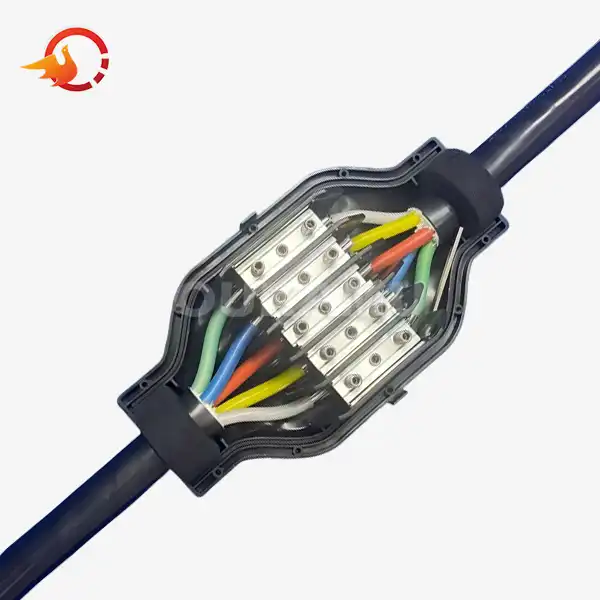
There are many different kinds of cable joints on the market, and each one is made for a different set of tasks and conditions. Heat shrink joints use adhesive tube that closes around the link when heated. This makes a tight seal. Epoxy or polyurethane compounds are used in resin-filled joints. When they dry, they form a rigid, waterproof barrier. Gel-filled joints use silicone or petroleum-based gels that can fix small holes and allow the wire to move. Pre-molded joints come factory-assembled in set shapes, which cuts down on the time needed for fitting on-site.
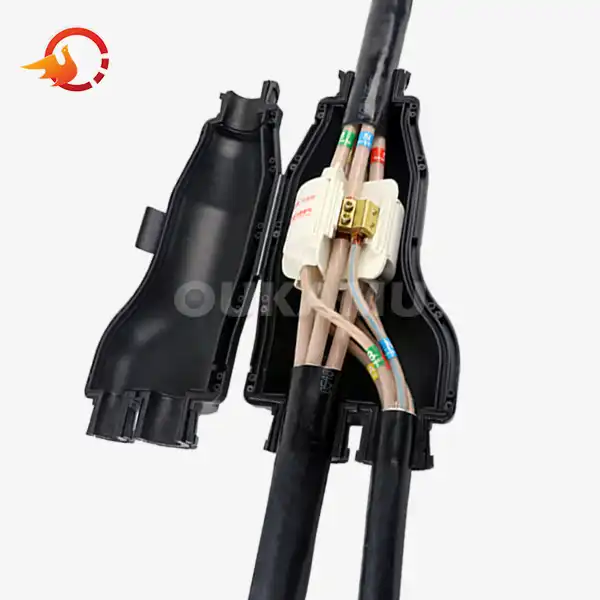
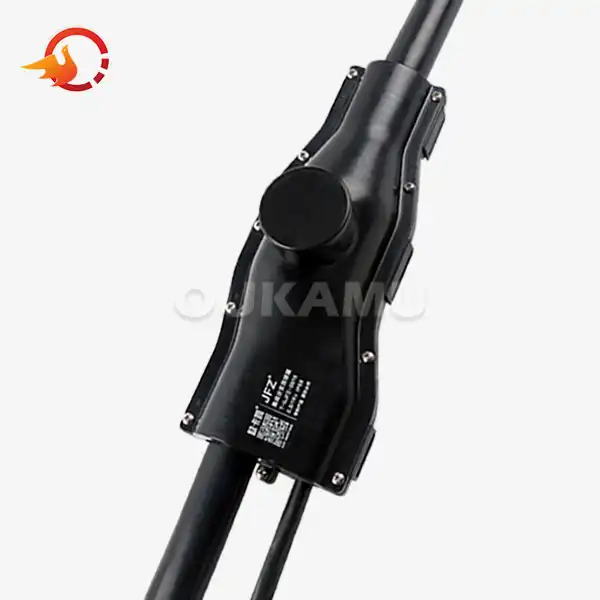
The T-GJFZ-70/16 model is an example of modern gel-filled technology. It has two safety mechanisms and IP68 Waterproof Cable Joint security. This branch cable connector can fit main lines from 25 mm to 70 mm and branch cables from 2.5 mm to 16 mm, so it can be used for a wide range of projects.
Application Environments
These connectors are useful in a lot of different industries. For underground power transfer systems to work, they need strong defense against groundwater. Connectors that can handle big changes in weather are needed for renewable energy systems like solar farms and wind machines. When a factory uses processes that need a lot of humidity, protected links help keep the machinery running smoothly. Street lighting and traffic systems are examples of municipal infrastructure projects that depend on these joints to work reliably outside for a long time.
Key Factors to Consider When Choosing a Waterproof Cable Joint Connector
Cable Compatibility and Sizing
The right size guaranties the best performance and safety. Make sure you know the exact lengths of your main and branch cables before you choose. When joints are too big, links are loose and can let water in, but when joints are too small, the wire can't fit properly. The wide range of compatibility of the T-GJFZ-70/16 type lets workers keep their inventory consistent while meeting the needs of different projects.
| Specification | T-GJFZ-70/16 Model | Standard Range |
|---|---|---|
| Main Cable Size | 25-70mm | 16-240mm |
| Branch Cable Size | 2.5-16mm | 1.5-95mm |
| Rated Voltage | 0.6/1kV | 0.6-35kV |
| IP Rating | IP68 | IP54-IP68 |
Environmental Challenges
Think about the specifics of the places where your connections will work. Coastal sites need materials that don't rust because saltwater can eat away at them. Chemical plants need joints that can handle acids and solvents. Extreme temperatures can make materials less flexible and weaken seals. When temperatures change quickly, gel-filled methods work best because the gel stays flexible across temperature ranges, keeping the sealing performance steady.
Installation Complexity
Look at what your team can do and how long the project will take. Some joints can be put together without any tools at all, while others need special tools like heat guns or hydraulic crimpers. Pre-molded joints require less skilled work, but they make it harder to move branches around. Waterproof Cable Joint is a critical factor to consider in all these options, because moisture ingress can ruin even the best-made connection.
On-site customizable solutions, such as Oukamu's branch connectors, let workers make connections anywhere without cutting the main wire. This means that they can adapt to any unexpected site conditions that come up during the building phase.
This benefit is shown by a project to light up city streets in the Midwest. At first, contractors used drawings to plan set branch points, but underground utilities made them change the routes. The team moved connections on-site without having to order new pre-made wires because they used adjustable branch connectors. This helped them finish the job three weeks early and cut down on material waste by 40%.
Certification Standards and Material Durability
Check that the safety standards that apply are being followed. In China, low-voltage switches and control gear must follow GB/T 14048.7-2016. In North America, UL and CSA approvals are needed. The type of material used directly affects how long something lasts. For example, flame-retardant compounds stop fires from spreading, and UV-stabilized housings keep them from breaking down when they're exposed to sunlight. Anti-aging additives make things last longer in difficult conditions, which lowers the number of times they need to be replaced and the total cost of ownership.
Performance Versus Cost Analysis
Before you buy something, you should think about how much it will cost over its lifetime. Premium joints with better sealing technology cost more up front, but they don't need to be maintained as often. Figure out the total cost of ownership by adding up the work costs for installation, the time it takes to fix things, and how often they need to be replaced. Our research shows that buying gel-filled branch connectors instead of basic heat shrink ones cuts down on maintenance visits by 60% over ten years. This alone makes up for the 25% higher purchase price because it saves on labor.
Solutions and Supplier Landscape: Finding the Right Product and Partner
Leading Manufacturers and Product Innovations
Global leaders in a market bring clear technological benefits. 3M invented cold-applied joining technology, which means that sensitive setups don't need to use heat. Tyco (TE Connectivity) has complete systems that include joints and monitoring tools for planned maintenance. Helukabel makes custom wire systems with built-in joints for a wide range of uses. Siemens and Phoenix Contact make connectors for high-vibration machinery that are used in industrial automation settings.
Oukamu stands out because it has been a leader in branch cable connection technology for 20 years. Our knowledge of non-intrusive trunk cable links solves a major problem: not having to cut main cables lowers the risk of installation and protects the integrity of the cables. This new idea is especially helpful for retrofit projects that need to make changes to existing infrastructure with as little disruption as possible.
Sourcing Strategies for B2B Procurement
There are several ways for procurement managers to find suppliers, and each has its own benefits. When you work directly with a manufacturer, you can get expert help, make changes, and get low prices for large orders. Distributors let you place orders for more than one brand at once, which cuts down on administrative costs and lets you get items faster by keeping them in stock locally. OEM agreements let wholesalers build their own brands thru private labeling while taking advantage of well-established production know-how.
When you're looking at suppliers, these are the most important things to look at: their ability to meet your volume needs, their quality control methods, which include testing routines, the time it takes to get your order delivered, and their after-sales support. Before placing a large order, ask for sample units to be tested in the field. Check to see if the provider has worked on projects of the same size and level of difficulty as yours.
Real-World Procurement Success
An industrial equipment repair company that works with factories all over the Southeast had trouble keeping track of its stock of prefabricated cables with fixed branch points. Because different sites needed different branch layouts, the company had to keep too much inventory on hand or put off fixes while they waited for custom orders.
Working with Oukamu to get adjustable branch connectors changed how they did business. Technicians now take standard trunk and branch wires with them and can make custom setups on the job. This change cut the cost of inventory by $47,000 a year and cut the time it took to respond to emergencies by 55%.
In a different example, a project to improve the infrastructure for telecoms needs 800 connection points spread out across an urban area. At first, the procurement team asked for pre-molded joints from a well-known brand. However, design changes during the project meant that 30% of the branch points had to be moved.
Waterproof Cable Joint performance became a key concern during these adjustments, since relocated outdoor splices are more exposed to moisture and weather. By using on-site adjustable connectors for the last few installations, these changes were handled without having to reorder supplies. This saved $82,000 in replacement costs and kept the plan from being pushed back by six weeks.
Installation and Maintenance Best Practices to Maximize Waterproof Cable Joint Longevity
Step-by-Step Installation Procedures
Long-term dependability is directly linked to the right way to put something. Start by cleaning the cable surfaces very well; dirt and other particles can weaken the seal. Place the connection body around the main cable at the branch point you want without cutting or stripping the trunk cable for gel-filled joints like our T-GJFZ-70/16 type. According to the instructions, strip branch wire insulation to a length of 10 to 15 mm for low-voltage uses. Make sure there is full contact depth when you insert the branch conductors into the connector terminals.
| Installation Phase | Tools Required | Common Mistakes to Avoid |
|---|---|---|
| Cable Preparation | Wire stripper, cleaning solvent | Leaving residue or over-stripping insulation |
| Positioning | Measuring tape, marker | Misaligning connector with cable axis |
| Connection | Torque wrench | Under-tightening or over-tightening terminals |
| Sealing | None (gel-filled) | Failing to verify complete gel encapsulation |
Tighten terminal screws to the torque values recommended by the manufacturer. Not tightening them enough causes resistance and heat buildup, while tightening them too much hurts the conductors. Make sure that the gel completely covers all of the conductive parts, leaving no gaps for air that could let moisture in. Make sure that all of the locking devices work properly before sealing the connection housing.
Essential Tools and Equipment
Different kinds of joints need different kinds of tools. For heat shrink uses, you need industrial heat guns that can heat evenly and not leave hot spots that damage the insulation. For compression-style connections, hydraulic crimpers apply steady pressure. Gel-filled branch connectors are very helpful in this situation. The T-GJFZ-70/16 only needs basic hand tools, which saves money on tools and makes training easier for installation teams.
Maintenance Protocols and Inspection Schedules
Set regular check times based on how much the area is exposed to. In stable underground environments, installations may need to be inspected every 24 to 36 months. In coastal or industrial chemical environments, installations should be inspected once a year. Visual inspection for physical damage, thermal imaging to find resistance hotspots that mean connections are loose, and insulation resistance testing to make sure the seals are still good should all be on inspection checklists.
Systematically write down what you found and keep track of how performance changes over time. As insulation resistance values drop, they show that problems are starting to happen before they happen. During routine maintenance, fix small problems by tightening connections, adding more sealant, or replacing damaged housings. This will help you avoid major failures that cause long periods of downtime.
After three unexpected joint failures in one year, the electrical contractor in charge of maintenance at a wastewater treatment plant started doing thermal imaging checks every three months. By being proactive, twelve connections were found to have high temperatures, which made replacements possible during planned maintenance windows. This plan got rid of emergency calls and cut upkeep costs by 38% a year.
Decision Support: Making the Best Choice for Your Business Needs
Aligning Product Selection with Operational Demands
Match the features of the connection to the way you work. In heavy industrial settings where vibrations happen all the time, joints need to be mechanically strong and have secure locking mechanisms. Telecommunications setups put an emphasis on small designs that can fit into tight areas like equipment cabinets and utility poles. Connectors for renewable energy systems need to be able to handle high and low temperatures and UV light for 20 to 25 years.
Budget limits and the need for dependability must be balanced. The real economic picture can be seen by figuring out how much each connection point costs, taking into account the work, materials, and planned upkeep. Waterproof Cable Joint quality directly affects long-term maintenance expenses, as poor sealing often leads to costly repairs and service interruptions. Our research shows that on-site customizable connectors lower overall installation costs by 15–30% compared to prefabricated options. This is because less material is wasted and there is no need to redo work because of changes to the design.
Application-Specific Recommendations
Heavy industry benefits most from designs for reuse connectors that make it easy to rearrange equipment without damaging joints. The T-GJFZ-70/16 model's non-destructive installation protects the stability of the main wire, which lets changes be made in the future as production lines change. Telecommunications projects like small, tool-free solutions that can be put in place by technicians who know a lot about electricity but don't have any specific skills.
Renewable energy installations need to be as protected from the environment as possible. The IP68 rating makes sure that ground-mounted solar array connections that are flooded will not be damaged. The self-healing qualities of gel-filled technology can handle temperature expansion and contraction in outdoor settings, so seals will stay in place for years of changing weather.
Risk Mitigation and Supply Chain Resilience
Diversify your suppliers to keep your business safe from problems. Keep in touch with both main manufacturers to get savings for buying in bulk and secondary sources to make sure you always have supplies. Standardize on connector types that can be used by more than one maker. This will keep you from being locked into one seller, which makes it harder to negotiate.
Check out the financial stability and production capacity of your suppliers. Ask for proof of quality control methods, such as ISO 9001 certifications. Check to see if they can adjust their production to fit your business's growth. A seller that meets your current needs may not have enough capacity as your business grows.
Conclusion
Technical requirements, environmental factors, and long-term operational objectives must all be carefully considered when choosing the right Waterproof Cable Joint Connector. Gel-filled solutions, like Oukamu's T-GJFZ-70/16 type, are very flexible because they can be customized on-site. This means that major cables don't have to be cut, and changes to the project can be made without wasting any materials.
Your electrical infrastructure will stay in good shape for decades if you put IP68 protection, certification compliance, and provider stability at the top of your list of priorities. When you buy something strategically, you should weigh the initial cost against the costs over its lifetime. This, along with following the right installation and maintenance procedures, will help you get the best return on your investment with the least amount of downtime.
FAQ
What distinguishes waterproof cable joints from standard heat shrink joints?
Standard heat shrink joints offer basic protection and only a small amount of resistance to wetness, making them good for indoor or protected areas. Waterproof Cable Joints use cutting-edge closing technologies like gel encapsulation or resin filling to achieve IP67 or IP68 ratings for full protection against water absorption. They can handle being buried directly, submerged, and exposed to harsh environments that would destroy regular joints in months.
How can I be sure that international standards for protection are being met?
Ask authorized labs to send you test results that show proof of IP rating thru normal ingress testing. Manufacturers with a good reputation will give you certification paperwork that includes GB/T, IEC, UL, or CSA approvals that are relevant to your market. When it comes to important infrastructure uses, independent third-party verification is more reliable than self-certification by the maker.
Do bulk purchases from manufacturers offer significant cost advantages?
Directly buying from the factory usually cuts the cost per unit by 20–35% compared to buying from a wholesaler, as long as the order is more than a certain number of units, usually 100–500 units, based on how complicated the product is. There are also choices for customization, priority scheduling for output, and direct expert help. Check to see if the cost of keeping goods and the terms of payment cancel out the price benefit for the amount you buy.
Partner with Oukamu for Superior Waterproof Cable Joint Solutions
Xi'an Oukamu Electric Co., Ltd. can help you with your most difficult jobs because they have 20 years of experience in coming up with new branch cable connectors. Our T-GJFZ-70/16 model shows how committed we are to practical engineering by offering IP68 waterproofing, gel-filled dual safety, and flexible on-site installation that can be adjusted to meet the needs of real-world construction projects.
Our team can help you whether you're an electrical goods store that wants to add to your inventory, a wholesaler looking for dependable Waterproof Cable Joint suppliers, or a project worker that needs quick technical support. We can make solutions that are tailored to your needs.
We know what's important for B2B buyers: reasonable prices with margins that you can control, stable supply chains that support just-in-time goods, and quick, helpful service after the sale that lowers your risk. Our OEM capabilities allow distributors to build their own brands thru private labeling, and our flexible order quantities, ranging from sample requests to container loads, help businesses at all stages of growth.
Get in touch with info@okmbranchcable.com right away to talk about the details of your project and get expert advice based on 20 years of proven performance in the field. You can look at our whole product line at okmbranchcable.com and learn why top builders and distributors trust Oukamu for reliable, low-cost cable connection options.
References
1. Smith, J.R. & Anderson, M.K. (2021). Industrial Cable Joint Systems: Design, Installation, and Performance Analysis. Technical Press International.
2. Chen, Wei & Liu, Xiaogang (2020). "Comparative Study of Waterproof Cable Joint Technologies for Harsh Environmental Applications." Journal of Electrical Engineering and Technology, 15(3), 1247-1265.
3. International Electrotechnical Commission (2019). IEC 60529: Degrees of Protection Provided by Enclosures (IP Code). Geneva: IEC Publications.
4. Thompson, R.D. (2022). B2B Procurement Strategies for Electrical Infrastructure Components. Cambridge: Industrial Supply Chain Publishers.
5. National Electrical Manufacturers Association (2020). NEMA Standards Publication 250-2020: Enclosures for Electrical Equipment. Rosslyn: NEMA.
6. Zhou, Tianming et al. (2021). "Long-term Performance Evaluation of Gel-Filled Cable Joints in Underground Power Distribution Networks." IEEE Transactions on Power Delivery, 36(2), 892-903.