

_1790150425011.webp)
How to Choose Low Voltage Branch Cable for Distribution






 2026-08-17 16:15:22
View:389
2026-08-17 16:15:22
View:389Choosing the right cable solution for power distribution systems can feel overwhelming, especially when project timelines are tight and budgets need careful management. A Low Voltage Branch Cable serves as the backbone of efficient electrical distribution, connecting main supply lines to multiple load points without requiring extensive pre-fabrication or complex planning.

These cables operate within voltage ranges up to 1,000 volts and offer flexible, on-site installation that adapts to real-world conditions. For distributors, project managers, and procurement professionals, understanding how to evaluate and select these products means balancing technical performance, cost efficiency, and supplier reliability to ensure safe, long-lasting installations that meet both regulatory standards and operational demands.
Understanding Low Voltage Branch Cables: Key Basics and Applications
Low Voltage Branch Cables are special electrical parts that are made to safely and efficiently send power from main lines to secondary load points. Unlike traditional pre-fabricated wiring systems, these cables can be changed on-site, which cuts down on waste and makes them easier to use when problems arise during installation.
What Are Low Voltage Branch Cables?
With voltages usually between 0.6 and 1kV, these wires can carry electricity. This means they can be used in a lot of different business, industrial, and household settings. Power is sent from a main trunk cable to different equipment or lighting circuits without cutting or interrupting the primary conductor. This is the main function. This design cuts down on installation time and protects the main power line, which lowers the number of places where something could go wrong and makes the system more reliable overall.
Common Application Scenarios
Low voltage distribution systems are used in a wide range of settings, each with its own specific needs. In industrial plants, these wires run machines and control systems that need to be flexible and last a long time. They are used in commercial buildings for backup power distribution, HVAC systems, lighting circuits, and places where room is limited or fire safety rules demand small, flame-resistant options. Solar farms and other renewable energy installations benefit from cable designs that are waterproof and UV-resistant so they can be used outside. Residential complexes use these cables to distribute power to multiple units. The ease of maintenance and low cost are the main reasons why these cables are bought.
Types and Specifications
Different types of branch lines have different types of shielding, conductors, and ways of connecting them. Copper conductors are great for high-performance uses that need to keep energy waste to a minimum because they are more conductive and have less resistance. Aluminum wires are a cheap, lightweight option that works well for big jobs with limited funds. Insulation materials like PVC are cheap and provide enough protection for installations inside.
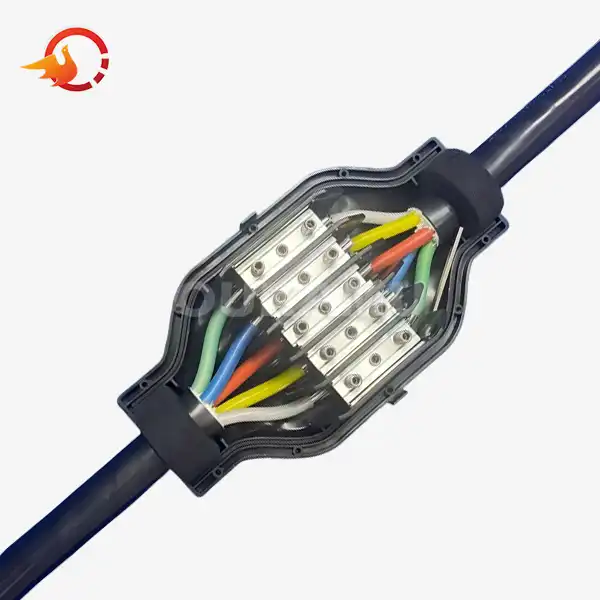
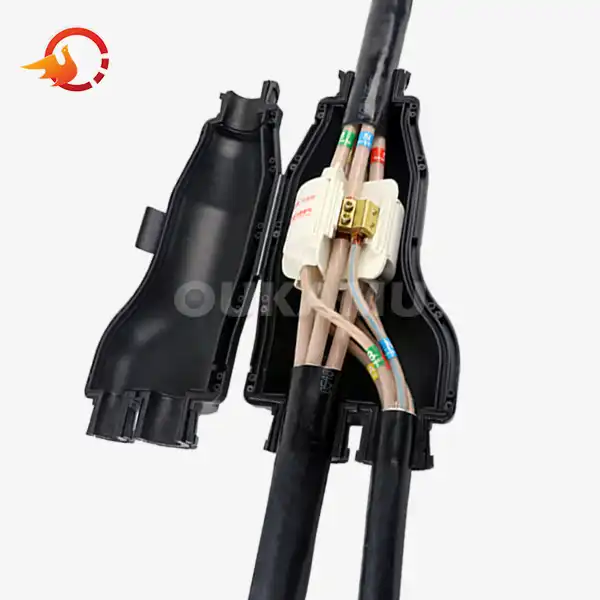
On the other hand, XLPE insulation works best outside and in hot settings because it is resistant to wetness and keeps its temperature stable. There are different ways to connect, from simple snap connections to advanced integrated T-connection terminals, which don't need to be pre-fabricated and let branch points be moved around while they're being installed.
Criteria for Choosing the Right Low Voltage Branch Cable
Choosing the right wire means looking at a lot of technical, environmental, and legal factors that have a direct effect on the safety and performance of the system.
Electrical Parameters
The most important electrical specs are the voltage grade and the current carrying ability. Most low voltage distribution needs can be met by a cable rated for 0.6/1kV. However, it is important to confirm the type of load and expected current draw to make sure the cable can handle peak demand without getting too hot. Wire gauge is very important. For example, 14- or 12-AWG wires can handle higher currents, while 18-AWG wires are better for low-power connections. Using a gauge that is too small can cause burning and power drops, which hurt the performance of the equipment and pose safety risks.
Environmental Considerations
The operating conditions have a big effect on how long and reliably a cable lasts. Extreme temperatures call for insulation materials that can stay flexible and insulating even when the temperature goes from -40°C to +90°C. High humidity or acidic environments need coats that are waterproof and resistant to chemicals to keep things from breaking down too quickly. Outdoor projects that are exposed to UV rays need UV-stabilized insulation to keep the material from breaking down over time. Cables with reinforced sheathing and a flexible construction are needed to handle mechanical stress from bending, vibration, or wear.
Material Comparisons
Copper and aluminum conductors have different pros and cons. Copper has less electrical resistance, which means it loses less energy and lets cables with smaller diameters fit in tight spaces. Aluminum is less conductive than copper, but it costs a lot less and weighs a lot less, which makes it a good choice for large projects where cost and weight are important.
Low Voltage Branch Cable is commonly used in distribution networks to connect final circuits, and its conductor material directly influences these trade-offs. The choice between PVC and XLPE insulation affects both cost and performance. PVC works best in controlled indoor settings with reasonable temperatures, while XLPE can handle rough outdoor circumstances and higher thermal loads.
Compliance and Safety Certifications
Cables must meet strict safety and performance standards set by international standards like IEC 60332, IEC 60502-1, UL, and NEC. In the US, projects must be checked for NEC compliance in order to pass inspections and avoid having to do expensive repairs. Certifications also guaranty the quality of flame retardancy, fire resistance, and soundproofing, all of which keep people and property safe. Products made in China are further verified by the Chinese standard GB/T 14048.7-2016. This gives buyers around the world even more confidence when they buy from China-based suppliers.
| Parameter | Copper Conductor | Aluminum Conductor |
|---|---|---|
| Electricity | High (not much pushback) | Moderate (has more strength) |
| How much | Stronger | Easy to carry |
| Cost | Better | Lessen |
| Best Use Case | High performance and accuracy | big and focused on budget |
| Temperature Resistance | -40°C to +90°C | -40°C to +90°C |
Installation and Testing: Ensuring Performance and Safety
If you install cables correctly and test them thoroughly, you can avoid expensive failures and make sure they work the same way for the whole time they're in use.
Handling and Laying Cables
Cables can't get damaged as long as they are handled carefully during travel and installation. Do not bend too much, as this puts stress on the conductors and makes the insulation less strong. Keep the recommended bend radii when threading wires thru ducts or bridges to keep the mechanical integrity. For branch connections on-site, make sure the main cable is not cut. Modern integrated T-connection systems let branches connect to the trunk cable at any point without cutting the primary conductor. This saves time and reduces waste.
Essential Tools and Accessories
Crimp tools and connectors of good quality make sure that joints are safe and reliable. More environmental sealing is provided by heat shrink covers, which keep links safe from wetness and other contaminants. Before turning on the circuit, insulation resistance tests make sure that the wire meets certain performance standards. With cable strippers and cutters that are made for the cable gauge, you can prepare the cable without damaging the conductors by accident.
Testing Methodologies
Once everything is set up, continuity tests should be done to make sure all the wires are properly connected and there are no breaks. A megohmmeter can be used to measure insulation resistance and find flaws or moisture that could cause short circuits. Load tests should be done in real-world situations to make sure the cable can handle the predicted currents without dropping the voltage too much or getting too hot. Keep track of all test data for maintenance purposes and for compliance checks.
Routine Maintenance and Troubleshooting
Visual checks done on a regular basis can find signs of wear, corrosion, or mechanical stress before they get worse and cause failures. Thermal imaging can find hotspots that mean links aren't working right or circuits are too busy. Replacing broken parts quickly cuts down on downtime and increases the system's general life. Keeping detailed records of maintenance helps you predict problems and plan replacements ahead of time.
Case Study: Industrial Plant Upgrade
There were frequent power outages at a factory in Ohio because the pre-fabricated branch wire systems were old and couldn't change to new equipment layouts. The facility got rid of the need for expensive planned cable runs by moving to on-site branch cable systems with built-in T-connection technology. The time it took to install went down by 40%, and being able to change where branches are placed on the fly cut cable waste by about 2 to 3 meters per connection. The project passed NEC compliance standards and made the system more reliable generally. For the next 18 months, there were no unplanned outages.
Comparing Low Voltage Branch Cables: How to Evaluate Options on the Market
To see how well different goods and providers compare, you need to look at their technical specs, past performance, and overall value.
Low Voltage vs. Medium Voltage Cables
Low voltage cables can be used for up to 1kV and are cheaper and easier to install than medium voltage cables that can handle 1kV to 35kV. Medium voltage lines can carry more power over longer distances, but they need to be installed by people who know what they're doing and follow stricter safety rules. When it comes to efficiency, cost, and ease of installation, Low Voltage Branch Cables are the best choice for most business and light industrial uses.
Lifespan and Durability Factors
Cable life rests on the quality of the materials used, how they are installed, and how they are exposed to the surroundings. XLPE and other high-quality insulation materials don't break down when they get wet or hot, so they can be used for longer than 20 years in normal circumstances. No matter how good the materials are, bad installation methods like too much bending or not enough sealing cut the lifespan by a large amount. Case studies and guarantees from suppliers can tell you a lot about how well something works in real life and how often it needs to be serviced.
Leading Manufacturers and Trusted Brands
Global suppliers like 3M, Southwire, Belden, and Helukabel are known for their wide range of products and high quality. When buyers compare these names to new Chinese makers with reasonable prices and cutting-edge technologies like integrated T-connection connections, it helps them find the best balance between price and dependability. Reputation, certifications, and customer reviews of suppliers give you important information you need to make smart buying choices.
Supply Chain Considerations
Project plans and budgets are affected by things like lead times, shipping processes, and keeping track of inventory. Suppliers with strong global distribution networks make sure that orders are delivered on time and lower the chance that a project will be delayed. Order numbers that are flexible can be used for both small pilot projects and large-scale deployments. Quick customer service helps with problems and gives expert advice throughout the buying process.
Procurement Guidance: Smart Buying Strategies for Low Voltage Branch Cable
When you do strategic procurement, you need to look at more than just prices. You need to see the total cost of ownership, the reliability of the supplier, and the long-term value.
Understanding Pricing Structures
Prices per meter depend on the type of insulator, wire material, and connection technology used. Unit costs go down a lot when you buy in bulk, but sellers have to weigh the saves they make against the costs of keeping inventory. The total cost of ownership includes the cost of installation labor, testing equipment, repairs, and any downtime that might happen because of a problem. Long-term value is often better for cables that cost more up front but last longer and are easier to install.
Evaluating Suppliers and Distributors
Third-party certifications and clear paperwork from reliable sources show that they follow international standards. Support after the sale, such as professional help and guarantee services, lowers risks and makes sure the project runs smoothly. By checking a supplier's financial security and production capacity, you can avoid problems caused by sudden outages or inconsistent quality. Low Voltage Branch Cable must also be evaluated under these same criteria, so before committing to big sales, make sure the product works by asking for samples and installing it in pilot projects.
Negotiating Terms and Managing Lead Times
Misunderstandings and delays can be avoided by being clear about project deadlines and delivery expectations. By negotiating flexible payment terms and staged deliveries, you can better manage your cash flow and make sure that procurement is in line with project milestones. When you build long-term relationships with reliable suppliers, you can often get better prices and faster access to new products or limited stock.
| Product Model | Main Cable Range | Branch Cable Range | Rated Voltage | Key Features |
|---|---|---|---|---|
| ZR-JFZ-95/70 | 35 to 95 mm | 16 to 70 mm | 0.6/1kV | insulated, flame retardant, fire-resistant, waterproof, reused, and you don't have to cut the main wire. |
Case Study: E-commerce Platform Expansion
An online store in California that sells electrical supplies wanted to expand its selection of products by adding new wire solutions that would set it apart from rivals. They worked with a manufacturer that specialized in on-site branch cable technology after looking at a number of suppliers. The supplier offered flexible cable kits with built-in T-connection terminals, which contractors looking for ways to save time on installation liked.
The retailer's sales team talked about the cost savings, like getting rid of two to three meters of main cable for each connection and cutting down on labor costs. Within three months, there were 35% more product inquiries. The supplier's small-batch buying options and reliable transportation made it easy to quickly sell off inventory, which increased profits and customer happiness.
Conclusion
To choose the best Low Voltage Branch Cable for distribution, you have to think about safety standards, technical requirements, and the needs of the environment, as well as the cost. Advanced connection technologies, flexible on-site installation, and long-lasting materials give distributors, builders, and buying workers in charge of different projects long-term value.
By looking at suppliers' certifications, support services, and how reliable their supply chain is, you can be sure of long-lasting partnerships that reduce risks and boost operational efficiency. By putting quality, flexibility, and total cost of ownership at the top of the list, buyers can be sure that the wires they choose will meet their high performance needs and help their businesses grow in a way that is sustainable and profitable.
FAQ
What is the main advantage of on-site branch cable installation?
Installing branches on-site means that wire lengths don't have to be planned ahead of time, so they can be moved around easily if the layout changes without wasting materials. Compared to traditional pre-fabricated systems, this method saves two to three meters of main cable per connection, cuts down on labor costs, and speeds up the installation process.
How do I determine the correct wire gauge for my project?
Look at the system's specs to make sure that the wire gauge matches the amount of current that is expected. For high currents, 14 or 12 AWG gauges work best, while 18 AWG is best for low-power connections. Using a gauge that is too small leads to burning and voltage drops, which hurts safety and efficiency.
Can low voltage branch cables be reused?
Integrated T-connection terminals and other new cable connection technologies make it possible to reuse Low Voltage Branch Cables by letting branch points be moved or taken out without damaging the main cable. This feature lowers long-term costs and lets technology be changed easily.
Partner with Oukamu for Reliable Low Voltage Branch Cable Solutions
Xi'an Oukamu Electric Co., Ltd. has been working in branch cable connector technology for more than 20 years and was the first company to make a combined T-connection terminal, which changed the way power is distributed on-site. As a reliable Low Voltage Branch Cable supplier, we offer products that meet the standards of IEC 60332, IEC 60502-1, and GB/T 14048.7-2016. These standards make sure that our products are safe, long-lasting, and cost-effective for use in homes, businesses, and factories.
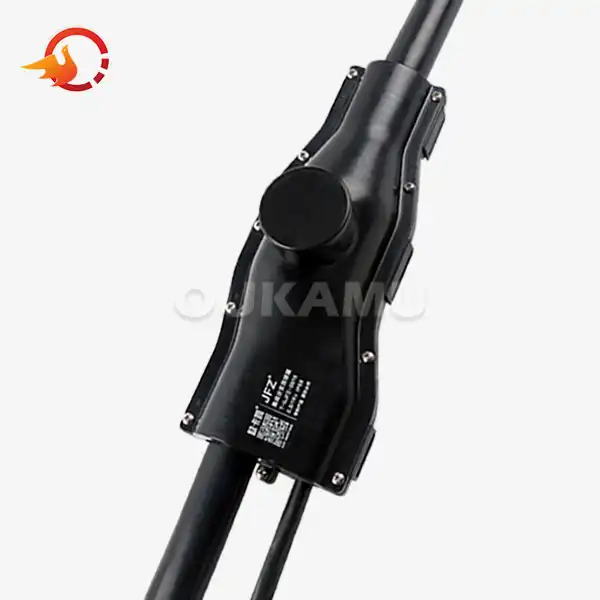
The ZR-JFZ-95/70 model can handle main wires from 35mm to 95mm and branch cables from 16mm to 70mm. It is rated at 0.6/1kV and is flame safe, fire resistant, and waterproof. We offer options that can be changed to fit your needs, flexible ordering for small to medium batches, and reliable services for shipping around the world. Contact us at info@okmbranchcable.com or go to okmbranchcable.com right now to talk about your project needs and find out how our cutting-edge products can improve your distribution systems while cutting down on installation time and cost.
References
1. National Electrical Manufacturers Association (NEMA). Standards Publication for Low Voltage Power Cables. 2021 Edition.
2. International Electrotechnical Commission (IEC). IEC 60502-1: Power Cables with Extruded Insulation and Their Accessories for Rated Voltages from 1 kV up to 30 kV. Geneva: IEC, 2018.
3. Institute of Electrical and Electronics Engineers (IEEE). IEEE Guide for the Installation of Electrical Equipment to Minimize Electrical Noise Inputs to Controllers from External Sources. IEEE Standard 518-2019.
4. National Fire Protection Association (NFPA). National Electrical Code (NEC) 2023 Edition. Quincy, MA: NFPA, 2022.
5. Standardization Administration of China (SAC). GB/T 14048.7-2016: Low-Voltage Switchgear and Controlgear - Part 7: Ancillary Equipment. Beijing: Standards Press of China, 2016.
6. Cable Joints and Terminations Research Group. Advances in On-Site Cable Connection Technology for Power Distribution Systems. Journal of Electrical Engineering and Technology, Vol. 17, No. 4, 2022, pp. 2145-2158.