

How do straight-through cable joints with connectors work?






 2026-11-05 14:57:30
View:389
Straight-through cable joints with connectors work by creating a secure, continuous electrical path between a main cable and a branch cable — without cutting or interrupting the main line. The connector body clamps directly onto the main cable's conductors while simultaneously accepting the branch cable, linking both through an insulated, flame-retardant housing. This design preserves full circuit integrity on the main trunk while tapping off a live branch feed. The result is a fast, tool-friendly connection that maintains rated voltage performance, protects against moisture and dust ingress, and eliminates the need for pre-cut cable lengths on-site.
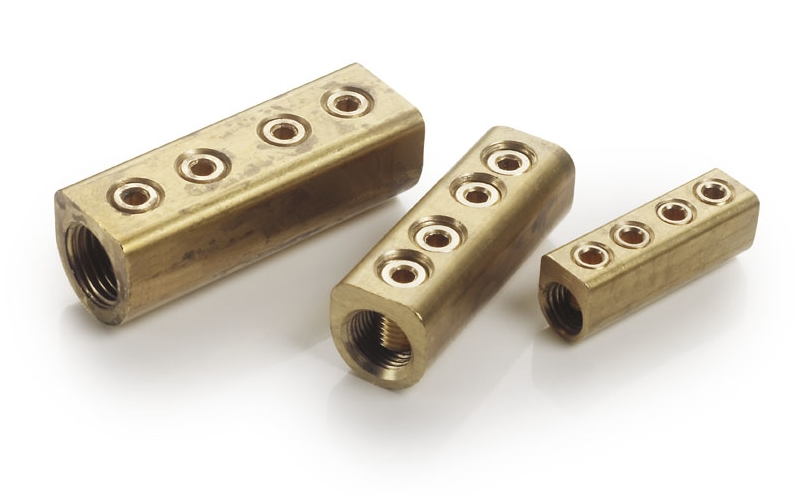
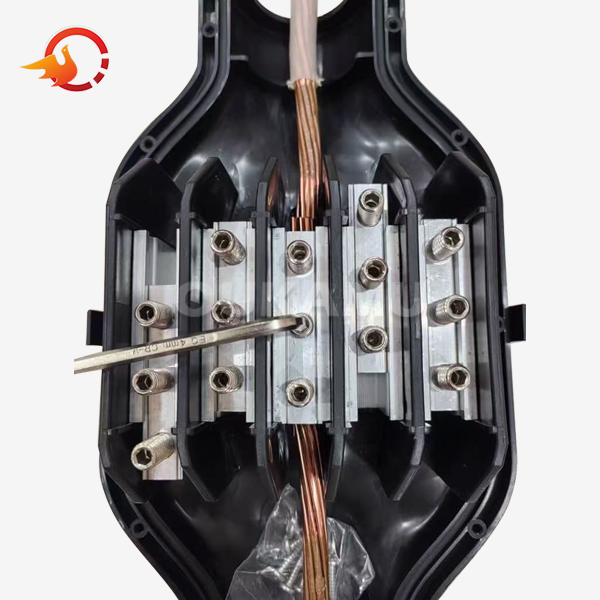

Understanding Straight-Through Cable Joints with Connectors
To choose the right straight-through cable joints with connectors, it's helpful to know what makes a straight-through joint with a plug different from a basic split or a bare-wire joint.
What Makes It "Straight-Through"
The main trunk cable stays whole and connected with a straight-through cable joint. A branch tap gets its power from a certain circuit, while current runs through the main line without stopping. A splice joint, on the other hand, cuts and reconnects the main cable completely, which is a slower and more labor-intensive process on busy construction sites.
The Role of the Connector Body
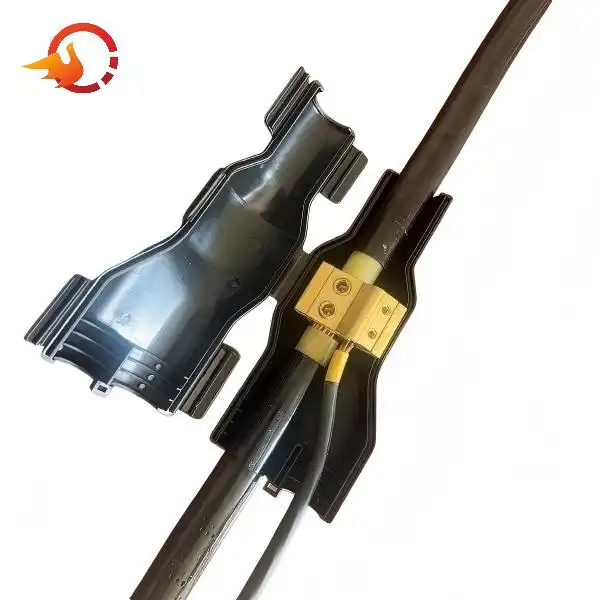
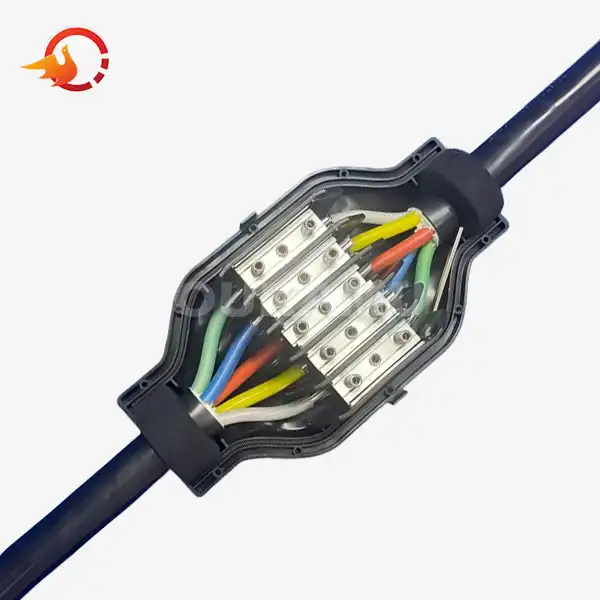
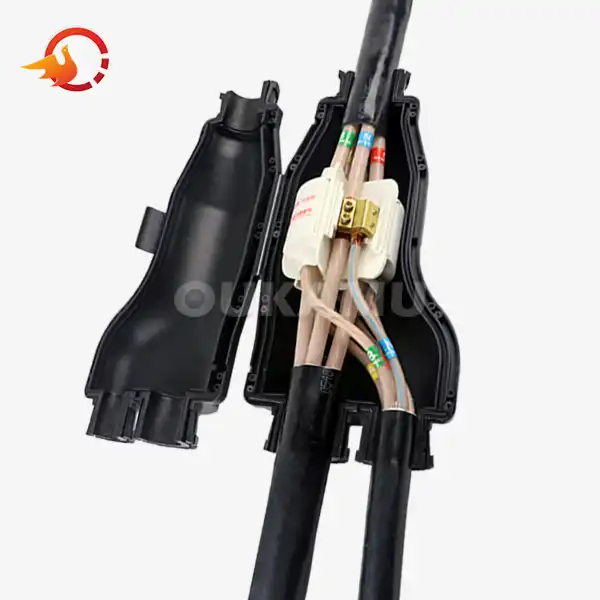
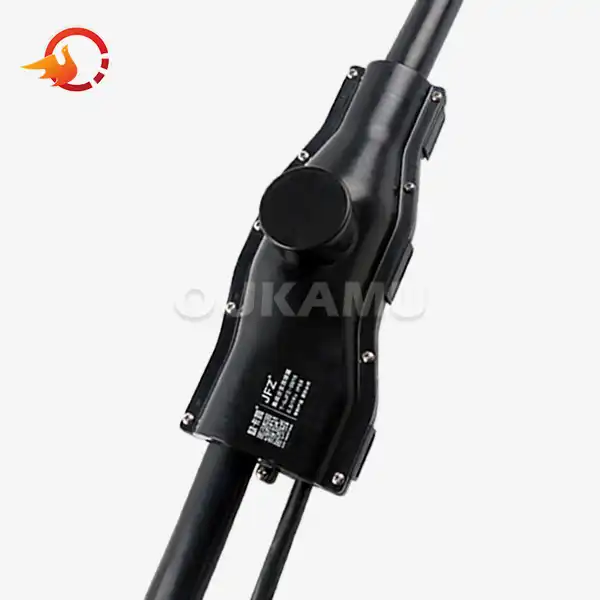
The body of the connector does two things at once. It physically holds on to both the main and branch cables, and there are electrical connections between them through contact teeth or clamping hardware that are already there. The enclosed shell then seals everything inside a waterproof, flame-resistant case that meets GB/T 14048.7-2016 safety standards around the world.
Joints With vs. Without Connectors
For a joint that doesn't have a connector, you have to field-crimp, heat-shrink, and often fill it with resin. These steps take longer and can be mistakenly done by hand. Each part is already in place because of a joint with an integrated connector. The installer only needs to insert the cables, tighten the fasteners, and close the housing. This difference in process cuts down on worker time and work that needs to be done after installation.
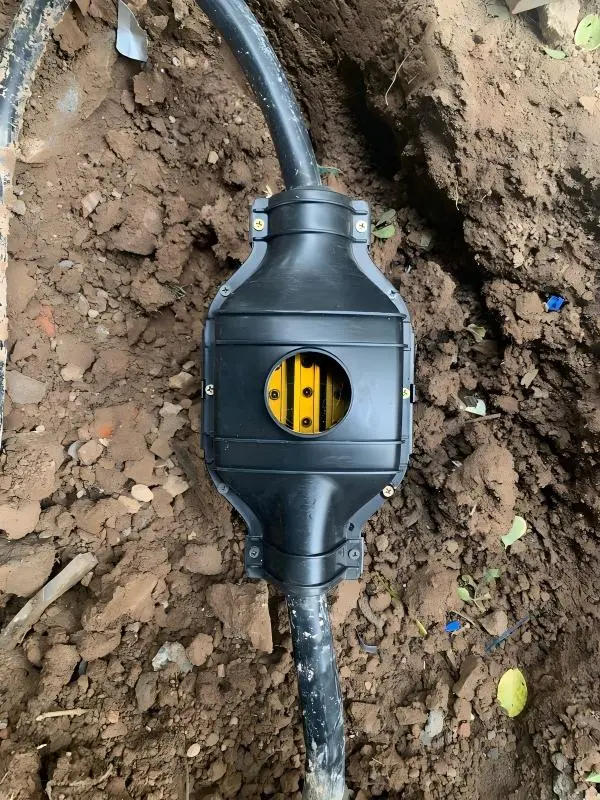

Key Benefits and Applications
Using this kind of straight-through cable joints with connectors has real-world benefits that can be measured, not just ideas. When procurement managers and site engineers switch from traditional jointing methods, these are the main benefits they always report:
- No main cable cutting required: The connector snaps onto existing wires without cutting the trunk. This saves 2–3 meters of cable per connection point and keeps the circuit open during the whole job.
- Flexible branch positioning: Branch taps can be put at any point along the main run. This lets field teams work with real conduit paths instead of set lengths that have already been cut. This virtually eliminates design error waste.
- Fire and moisture resistance: The housing is flame-retardant, fire-resistant, and waterproof, so it can be used in places with strict safety rules, like hospitals, schools, commercial office towers, and residential high-rises.
- Compliance-ready documentation: Products like the Oukamu ZR-JFZ-16/10 come with all the paperwork needed to comply with GB/T 14048.7-2016. This means that they can pass the first check without any problems.
Because of these benefits, the total cost of the project will be less. Using tool-free branch joints instead of standard cut-and-splice methods cuts the total cost of electrical work per distribution point by 300% to 500%, according to independent installation comparisons.
The following table displays common application settings along with the performance requirements those environments demand:
| Application Environment | Key Requirement | Relevant Product Feature |
|---|---|---|
| Residential high-rise | Fire safety, compact space | Flame-retardant insulated housing |
| Commercial office building | Speed of installation | No-cut main cable design |
| Hospital / school | Code compliance | GB/T 14048.7-2016 certified |
| Industrial facility | Dust and moisture resistance | IP-rated waterproof enclosure |
| Underground cable tray | Anti-aging, anti-corrosion | Sealed insulation body |
Installation Guide and Troubleshooting Tips
If the right steps are taken to get ready, each straight-through cable joints with connectors can be installed correctly in less than ten minutes. The process can be done again and again by people of all skill levels, which is useful on job sites where electrician teams change over between phases of a project.
Step-by-Step Installation Process
To get the conductor length that the connection requires, strip the branch line. Put the main wire into the connection body's through-channel without taking off any of its insulation. Place the branch cable in the correct port, tighten the locking screws to the torque number shown on the product sheet, and then close the housing cover all the way until it locks. There's no heat gun, glue, or other special tools.
Common Installation Mistakes
The most common mistake is not tightening the clamping screws enough. This leaves the conductor contact incomplete and leads to a drop in voltage when the load is applied. Another mistake that many people make is picking a connector that is rated for a smaller conductor cross-section than the main cable. Before buying large amounts, always compare the conductor width to the product specification.
Troubleshooting Signal and Connection Issues
If a circuit has resistance that you didn't expect after installation, check the screw torque first. If the torque is right, look for dirt or rust on the conductor contact teeth. For setups outside or in places with a lot of humidity, make sure the housing lid is all the way closed and the waterproof seal is in the right place. Most problems that happen after installation can be fixed with these three checks alone.
Choosing the Right Straight-Through Cable Joint with Connector
A branch connection isn't always the best choice for a job. The choosing process for straight-through cable joints with connectors should begin with the cross-section of the conductor and then move on to the needs of the surroundings and compliance.
For light distribution lines, the Oukamu ZR-JFZ-16/10 is a good choice. Here are some of its most important technical parameters:
| Parameter | Specification |
|---|---|
| Model | ZR-JFZ-16/10 |
| Main cable range | 4–16 mm² |
| Branch cable range | 1.5–10 mm² |
| Rated voltage | 0.6/1 kV |
| Compliance standard | GB/T 14048.7-2016 |
| Housing properties | Insulated, flame-retardant, fire-resistant, waterproof |
| Installation method | No main cable cutting required |
Comparing Connector Types
The ZR-JFZ-16/10 can handle most of the different types of conductors that a site will come across for small-format branch circuits like lighting floors, office sub-panels, and hallway power lines. The larger-format branch joints from Oukamu can handle heavier power trunk lines (95–240 mm² main cable) without changing the way the installation is done.
Environmental and Certification Criteria
Choose items that have proof that they meet GB/T 14048.7-2016 or a similar foreign standard. If the location is outside or wet, make sure the IP rating covers the exposure class for that location. Most places have building codes that say flame-retardant and fire-resistant housing has to be built along fire escape routes, in hospitals, and in schools.
A Real Project Example
For all floor-level branch distribution points on a 22-story commercial office tower project in a provincial capital, the site electrical team switched from the old cut-splice method to Oukamu ZR-JFZ-16/10 connectors. The team said that about 2.5 meters less main cable was needed for each floor link, and the time it took to fix each joint went from 35 minutes to less than 8 minutes. The electrical completion inspection of the project went well on the first try.
Procurement Insights — How to Source These Products
When buying straight-through cable joints with connectors for projects that span more than one floor or site, the batch purchasing strategy has a direct effect on both the unit cost and the regularity of delivery.
Ordering Strategy for Construction Projects
Order by floor zone or sub-panel area instead of placing an order for the whole job at once. This method makes sure that inventory matches the real progress of the installation, lowers the risk of storage on-site, and lets the buying team test how well the product works on early floors before committing to the full project volume. Oukamu lets you place small-batch test orders before you commit to a full buy.
Pricing and Cost Factors
The price of a unit is based on the range of conductor sizes, the grade of the housing material, and the number of units ordered. Include the time saved by not having to cut the installation when you figure out the total cost. When you save 2 meters of main cable per point on a 10-floor building with 8 branch points per floor, you've recovered 160 meters of cable, which is often more than the cost of the connectors themselves.
Supplier Evaluation Checklist
A good supplier of straight-through cable joints with connectors should offer: GB/T 14048.7-2016 compliance documentation; sample units for site trials within 5 business days; VAT-compliant invoicing; and a clear lead time commitment for batch orders. All four factors are met by Oukamu, which has been making specialized branch connectors for 17 years and has kept the quality of its products high.
Conclusion
A real problem on building sites is how to branch off a live distribution run quickly, safely, and without wasting cable or labor. Straight-through cable joints with connectors solve this problem. The ZR-JFZ-16/10 from Oukamu works with conductor ranges from 4 to 16 mm² at 0.6/1 kV. It has a fully flame-resistant and waterproof housing that meets GB/T 14048.7-2016 standards. It also has a no-cut installation method that cuts off over 30 minutes of installation time per joint. When procurement managers look at the total cost of a project, that difference gets bigger at every branch point and on every floor.
FAQ
Can these connectors be used in outdoor or damp locations?
Yes. The ZR-JFZ-16/10 housing is waterproof and doesn't let dust in, so it can be used in outdoor cable trays, basement distribution boards, and damp utility hallways. Before you buy straight-through cable joints with connectors, make sure that the product's IP number fits the exposure class of the installation site.
What is the difference between a straight-through joint and a crossover joint?
From the main cable to the branch cable, a straight-through joint keeps the same conductor-to-conductor line. This sends power along a consistent circuit path. There are different ways to use a crossover joint, which flips certain pairs of conductors. Straight-through joints are the best choice for main power distribution branch work.
How do I verify that a connector is compatible with my cable size?
Compare the main cable range and branch cable range of the connector with the conductor cross-section (mm²) of the cables you need to help you do your job. The ZR-JFZ-16/10 can handle main wires that are 4 to 16 mm² and branch cables that are 1.5 to 10 mm². You can get bigger models from Oukamu for heavier trunks if your conductor isn't in that range.
Does Oukamu provide compliance documentation for project inspections?
Yes, every Oukamu branch connection comes with paperwork that proves it meets GB/T 14048.7-2016 standards. This helps with first-pass reviews of finish and meets the filing needs of general contractors and project supervision teams.
Get a Quote from Oukamu — Straight-Through Cable Joints with Connectors Manufacturer
For 17 years, Oukamu has been designing straight-through cable joints with connectors for all kinds of building projects. The ZR-JFZ-16/10 can be used for trial samples, small sales, and big projects that need supplies that are VAT-compliant. Get in touch with us right away if your team needs a reliable supplier that responds quickly and ships on time. You can get samples or a price for your job by going to okmbranchcable.com or emailing info@okmbranchcable.com.
References
1. IEC 60947-7-2: Low-voltage switchgear and controlgear — Terminal blocks for copper conductors. International Electrotechnical Commission, 2019.
2. GB/T 14048.7-2016: Low-voltage switchgear and controlgear — Ancillary equipment: Cable distribution units. Standardization Administration of China, 2016.
3. Anders, G. J. Rating of Electric Power Cables in Unfavorable Thermal Environment. IEEE Press / Wiley-Interscience, 2005.
4. Nailen, R. L. "Field Jointing Practices and Their Effect on Cable System Reliability." IEEE Transactions on Industry Applications, 1998.
5. Thue, W. A. Electrical Power Cable Engineering, 3rd ed. CRC Press / Taylor & Francis, 2012.
6. Wiles, J. C. "Photovoltaic Power Systems and the National Electrical Code: Suggested Practices." Sandia National Laboratories Technical Report, 2012.