

Armoured vs Unarmoured Cable Joint Kits: How to Choose the Right One






 2026-11-04 15:56:54
View:389
Choosing between an armoured cable joint kit and an unarmoured one is not simply a technical preference — it directly affects system reliability, worker safety, and your facility's total operating cost. Armoured joint kits are built for harsh industrial conditions, offering mechanical protection, IP-rated sealing, and fire resistance. Unarmoured kits suit indoor or low-risk environments where physical stress is minimal. This guide walks through the key structural differences, selection criteria, performance comparisons, and procurement strategies to help electrical engineers and procurement managers make the right call the first time.

Understanding Armoured and Unarmoured Cable Joint Kits
What Is an Armoured Cable Joint Kit?
An armoured cable joint kit is made to connect cables that are made of steel wire armour (SWA) or steel tape armour (STA) in harsh conditions. The kit comes with parts that hold the armour layers together, fix the insulation, and shield against water, vibration, and contact. In places like steel, cement, petrochemical, and mining plants where cables run through areas with a lot of foot traffic or corrosion, these kits are standard.
What Is an Unarmoured Cable Joint Kit?
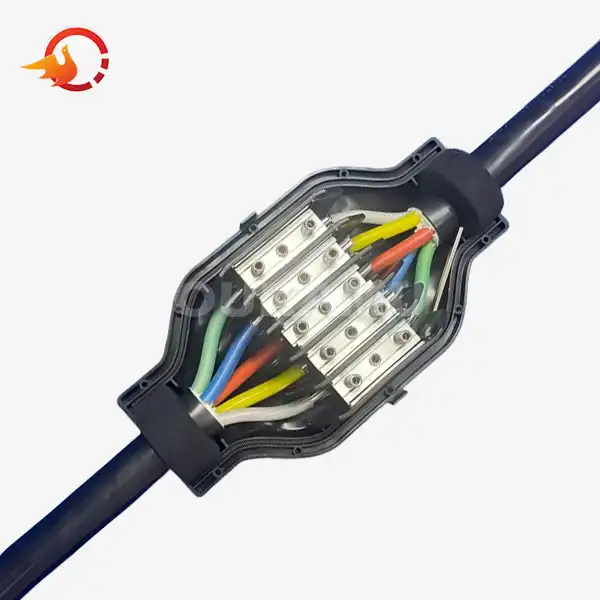
Unarmoured joint kits put PVC or XLPE wires together without a metal layer to protect them. Most of the time, they are used indoors, in places like office buildings, light business areas, or electrical rooms with no access to the outside world. These kits are easier to put together, take less time, and cost less up front, but they don't protect as well against damage from being crushed, worn down, or wet.
Key Structural Differences at a Glance
| Feature | Armoured Joint Kit | Unarmoured Joint Kit |
|---|---|---|
| Mechanical protection | Steel wire/tape layer bonded | None |
| IP rating | IP68 typical | IP54 or lower |
| Fire resistance | 750–1000°C options | Standard only |
| Typical environment | Outdoor, underground, industrial | Indoor, dry, low-risk |
| Installation complexity | Moderate to high | Low |
There is a big difference in structure between these two groups. If a kit works well in a dry distribution room, it will quickly break down in a mine tunnel with heavy equipment, constant shaking, and standing water. Most selection mistakes happen when trying to match the kit type to the real environment.
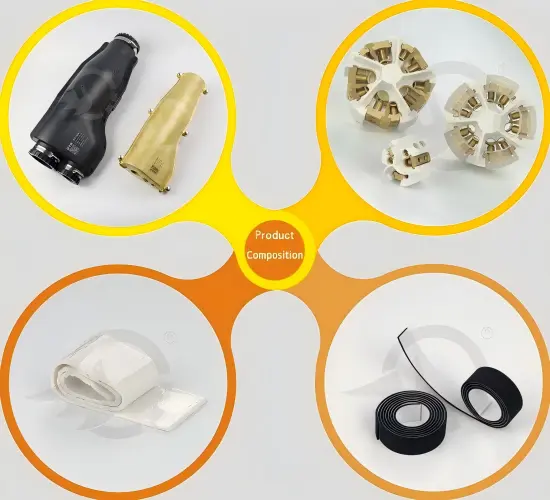

Critical Factors to Consider When Choosing Between Armoured and Unarmoured Joint Kits
Installation Environment and Exposure Risk
Everything is based on the physical environment. Direct burial in the ground, outdoor cable trays, and heavy industrial floor runs are all ways that cables can get wet, hit, or be attacked by chemicals. The British Standard BS7671 says that armoured cable joint kits should be buried at least 450 mm deep, and the joint kit must provide the same amount of security as the cable.
Compliance with International Standards
Certified goods lower risk and speed up the approval process for purchases. You should make sure that the cable joint you choose is in line with IEC 60529 (IP ratings), IEC 60702 (mineral-insulated wires), NEC Article 250 (earthing), and GB/T 14048.7-2016 for branch connections. Products with written test results for fire rating, handle voltage, and insulator resistance give purchasing teams the proof they need to get through the internal clearance process.
Cable Compatibility and Mechanical Load
Before you order, compare the cable's outside diameter to the range given by the kit. Long-term joint integrity is affected by vibration levels, the radius of bending during installation, and changes in temperature. A cable that doesn't fit tightly enough into the gland body is one of the main reasons why IP ratings don't work in industrial settings.
Comparing Performance and Benefits: Armoured vs Unarmoured Cable Joint Kits
Durability Under Industrial Conditions
In high-stress situations, armoured cable joint kits always work better than unarmoured ones. The steel wire layer can stand up to heavy loads and damage from rodents. When paired with a properly sealed T-connector body, the joint keeps the electricity flowing even when it is vibrating for a long time, which is what happens to joints that aren't armoured over time.
Fire Resistance and Electrical Safety Ratings
The temperature that fire-resistant cable joints can handle while still keeping the circuit open is what gives them their rating. For instance, the Mengchao Hepatobiliary Hospital of Fujian Medical University used branch cable joint technology to keep the power going along fire-resistant cable lines in a hospital setting. This is a known example of how the right choice of joint directly supports life-safety systems.
Cost Analysis: Upfront vs. Lifecycle
Here is a straight look at how much armoured and unarmoured cable joints cost in different types of situations:
| Cost Factor | Armoured Kit | Unarmoured Kit |
|---|---|---|
| Initial Unit Price | Higher | Lower |
| Installation Labour | Moderate | Low |
| Replacement Frequency (Harsh Environment) | Not Often | Moderate |
| Unplanned downtime risk | Low | High |
| 3-year total cost (industrial site) | Low | High |
It can cost a lot more than the price difference between kit types for heavy industry to have to stop production for no reason. When it comes to lifecycle cost, armoured solutions always win in any setting with moisture, vibration, or mechanical exposure.
Procurement Guide: How to Source the Right Cable Joint Kit for Your Needs
Evaluating Suppliers and Certifications
When looking for an armoured cable joint kit supplier, give more weight to companies that publish full test data, such as withstand voltage numbers, insulation resistance values, and fire-resistance temperature ratings. Certifications should be up-to-date and easy to track. A good way to tell the difference between verified performance and marketing claims is to ask for test reports instead of just certificates.
Oukamu FH-JFZ-35/16: A Proven Branch Joint Solution
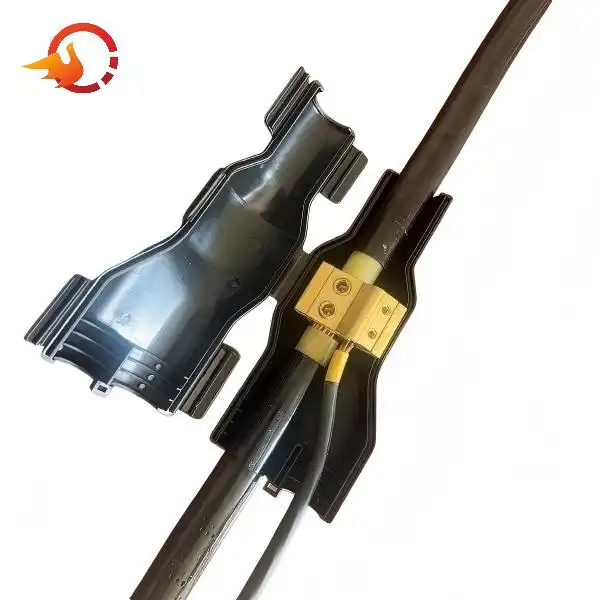
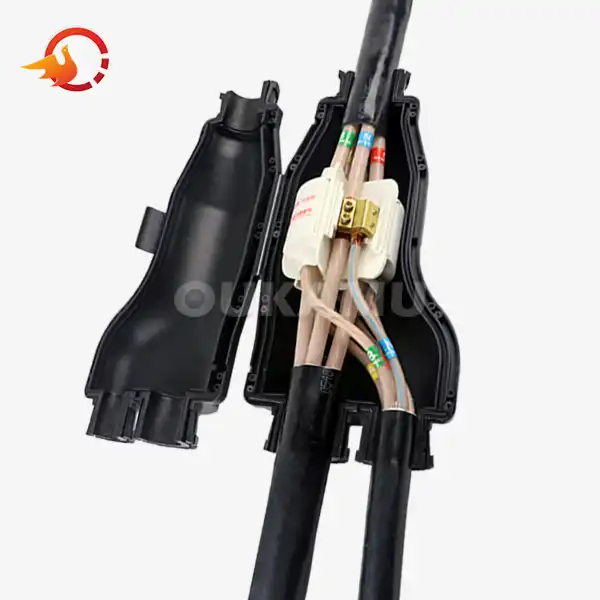
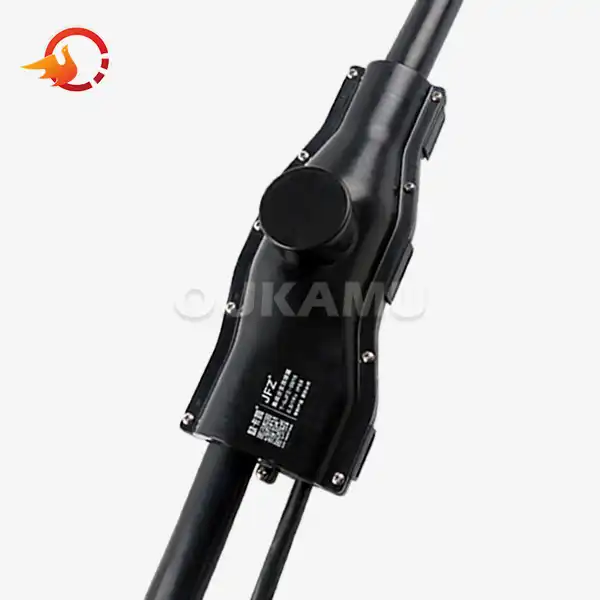
For more than 17 years, Xi'an Oukamu Electric Co., Ltd. has been an expert in cable branch joint technology. This product, the FH-JFZ-35/16, is designed to connect to branches in low-voltage industrial distribution systems. It meets the following tested functional requirements:
- Rating for voltage: 0.6/1kV
- Temperatures that won't catch fire: 750–1000°C
- Voltage that can't be broken: 3.5kV
- Insulation resistance: More than 500MΩ
- Drop in Voltage: <3.2mV
- Range of main cables: 10–35 mm²; range of branch cables: 2.5–16 mm²
- Cable Compatibility: Low-voltage flame-retardant, fire-resistant, and mineral-insulated cables are compatible.
These requirements make sure that the cables can be used in places like steel, cement, mines, and petrochemicals, where flame-resistant and flame-retardant cables are common. All of the parameters are in line with GB/T 14048.7-2016.
The main engineering benefits of the FH-JFZ-35/16 that make it different from other jointing methods are:
- Cutting the main wire is not needed: The branch wire links straight to the live main cable without cutting it. This keeps the structure continuous and gets rid of the need for reserved lengths.
- Body that is fully protected and sealed: The base of the T-connector has flame-retardant, fire-resistant insulation and a seal that keeps out dust and wetness. It is rated for use in wet and outdoor industrial settings.
- Flexible installation position: The location of the branch point can be changed on-site to match the actual cable routing. This saves 2–3 meters of main cable per connection point and cuts down on labor time by the same amount.
These benefits directly address the main reasons why industrial cable distribution installations take longer than expected and fail afterward: branches that aren't lined up correctly, too much cable waste, and poor closing. This means faster restocking, faster site installation, and lower overall project cost for centers that buy MRO every one to two weeks.
Installation and Maintenance Best Practices for Armoured Cable Joint Kits
Step-by-Step Installation Protocol
Before installing, make sure that the outer diameters of the cables are within the range given for the armoured cable joint kit you chose. Over-stripping is the main reason why insulation fails before it should. Only remove insulation to the depth stated in the product description. When you join the armour layer on SWA wires, make sure you follow the IEC and NEC rules for earthing. No matter if the armouring acts as a protective conductor or not, SWA must always be connected to earth.
Common Installation Mistakes and How to Avoid Them
The three most common mistakes on industrial sites are using the wrong gland torque, not using enough moisture sealing compound, and not testing after installation. Before turning on the cable, a qualified electrician must test the joint for insulation resistance and withstand voltage to make sure it meets the rated specifications.
Inspection and Preventive Maintenance
In places with a lot of vibration or humidity, you should plan eye checks every six months. Look for signs that the seal is breaking down, like discoloration near the joint body or the adapter box changing shape. By finding early signs of wear, problems can be fixed before they stop production.
Conclusion
To choose the right armoured cable joint kit, you need to make sure that the product specs match the conditions on the job site. When wires are in heavy industrial settings that are likely to be mechanically stressed, wet, or catch fire, armoured joint kits are the best choice. As of now, unarmoured kits can only be used for safe home tasks.
Before making a purchase, checking the IP ratings, fire-resistance temperatures, voltage ratings, and compliance with standards is important to protect both system uptime and procurement accountability. The FH-JFZ-35/16 from Oukamu is a 0.6/1kV industrial branch connection that has been tested and shown to work well. It is also easy to install.
FAQ
Can an armoured cable joint kit be used on wires that aren't armoured?
Not right away. Kits for armoured joints come with gland bodies and armour clamps that are the right size for wires that have a top layer of armour. When used on cables that aren't armoured, they leave fit gaps that let the IP seal fall apart. Always make sure that the kit's specs match the way the cable is built.
What levels of compliance should I check before I buy?
Check IEC 60529 (IP ratings), IEC 60702 (fire-resistant lines), NEC Article 250 (earthing), and GB/T 14048.7-2016 for branch connections in industrial settings in the US and around the world. Ask for the test record itself, not just the certificate number.
How does moisture change the way joints work over time?
Any amount of moisture getting into insulation makes it break down faster. If you install an IP68 joint the wrong way, it may lose its performance to IP54 within months if it gets wet or there is a lot of humidity. In wet places, you have to make sure that the right amount of force and sealant is used.
In general, how long does an industrial wire joint last?
In a normal industrial setting, an armoured joint that is put correctly and kept up should work effectively for 10 to 20 years. When installation mistakes, undersized parts, or poor sealing are present, service life is greatly reduced.
Connect with Oukamu for Armoured Cable Joint Kit Solutions
Oukamu has spent 17 years making armoured cable joint kit technology that is known in petroleum, steel, mining, and cement plants. As a company that makes straight armoured cable joint kits, we offer the FH-JFZ-35/16 and a wide variety of branch connection products that have been tested and are in line with GB/T standards. We also offer application-specific technical support. Visit okmbranchcable.com or email us at info@okmbranchcable.com to get product datasheets, bulk prices, or a technical advice for your next project.
References
1. Institution of Engineering and Technology. IET Wiring Regulations: BS 7671 Requirements for Electrical Installations. 18th Edition, 2018.
2. International Electrotechnical Commission. IEC 60529: Degrees of Protection Provided by Enclosures (IP Code). IEC, 2013.
3. International Electrotechnical Commission. IEC 60702-1: Mineral Insulated Cables and Their Terminations. IEC, 2002.
4. National Fire Protection Association. NFPA 70: National Electrical Code (NEC). NFPA, 2023.
5. Standardization Administration of China. GB/T 14048.7-2016: Low-Voltage Switchgear and Controlgear — Part 7: Ancillary Equipment. SAC, 2016.
6. Anders, G. J. Rating of Electric Power Cables in Unfavorable Thermal Environment. IEEE Press / Wiley, 2005.