

How Branch Cable Systems Improve Power Distribution Efficiency






 2026-08-04 10:29:59
View:389
2026-08-04 10:29:59
View:389Power distribution efficiency starts with smart branching solutions. Branch cable systems enable electrical networks to distribute power from main feeders to multiple endpoints without sacrificing performance or safety. By reducing voltage drop, minimizing power loss, and optimizing load management, these systems transform how commercial and industrial facilities manage electricity. Modern branch cable connectors eliminate the need to cut main cables, allow flexible on-site installation, and reduce material waste—delivering measurable cost savings while maintaining compliance with international standards like GB/T 14048.7-2016 and IEC specifications.
Understanding Branch Cable Systems in Power Distribution
What Are Branch Cable Systems and How Do They Function?
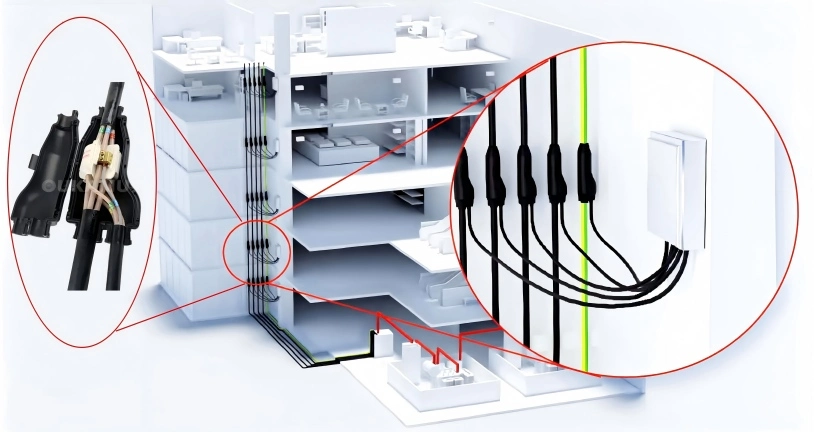
Within electricity networks, Branch Cable systems connect the main feeder lines to the secondary distribution points. Branch connections, on the other hand, send energy to specific loads, such as machines, lighting circuits, or HVAC systems. Main lines carry large amounts of power from substations. This segmentation keeps single lines from getting too busy and makes the network more resilient generally.
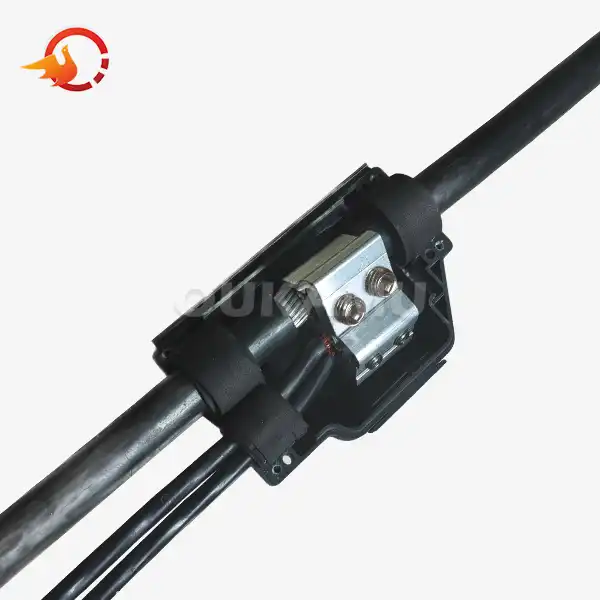
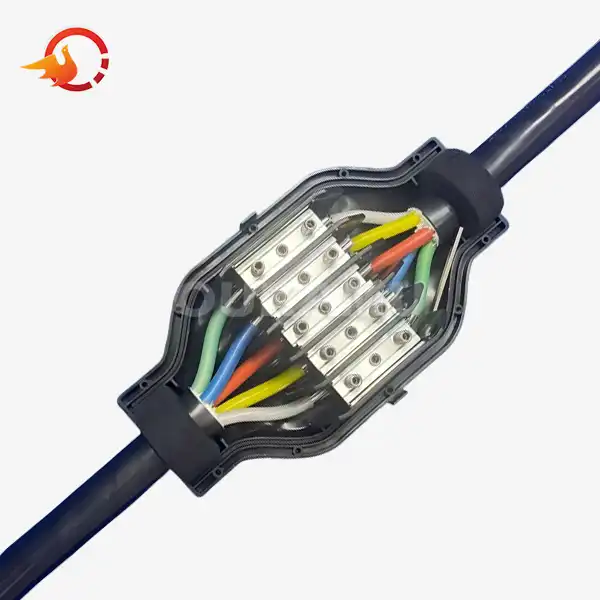
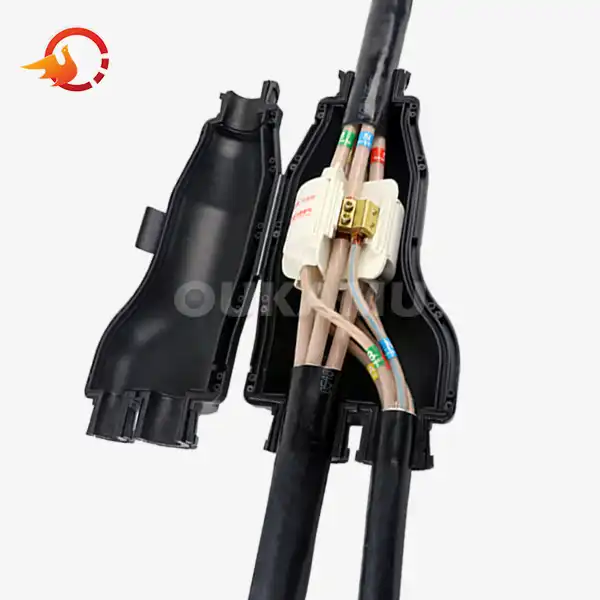
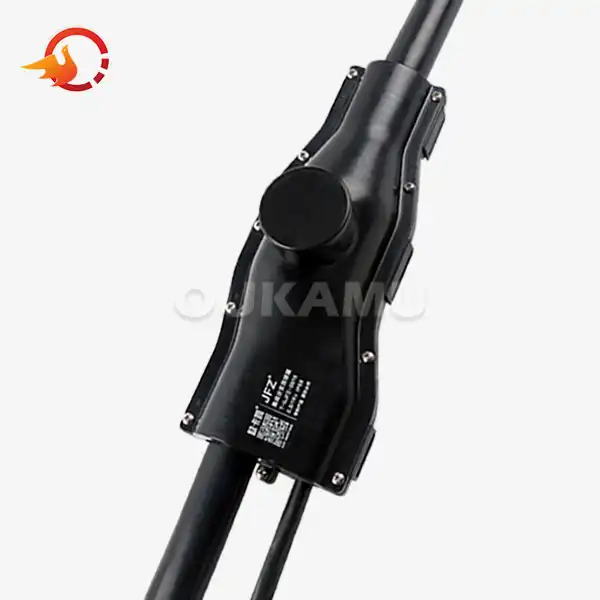
The way modern Branch Cable joints work has changed a lot. In the past, it was necessary to cut the main cable, remove the insulation, and make mechanical splices, all of which created places where the cable could break. Modern options, like the ZR-JFZ-185/35 model, keep the integrity of the main wire while making safe links to branches. This method cuts installation time from hours to minutes and gets rid of the chance of connecting things incorrectly.
Key Components and Technical Specifications
Procurement workers can make better choices when they know how Branch Cable systems work on a technical level. The important specs for industrial-grade branch connectors are shown in the table below:
| Specification | ZR-JFZ-185/35 Model | Industry Standard Range |
|---|---|---|
| Main Cable Range | 70-185mm | 50-240mm |
| Branch Cable Range | 2.5-35mm | 2.5-70mm |
| Rated Voltage | 0.6/1kV | 0.6/1kV to 35kV |
| Insulation Type | Flame-retardant, fire-resistant | PVC, XLPE, EPR |
| Compliance Standards | GB/T 14048.7-2016, IEC | IEC 60502, NEC Article 310 |
The choice of material has a direct effect on efficiency. Copper conductors are better at conducting electricity and are more flexible, so they are better for uses where the load needs to be changed often. In fixed systems where weight reduction is important, aluminium wires are cheaper. The type of insulation determines the area it can work in. For example, XLPE (cross-linked polyethylene) can handle higher temperatures and chemical exposure than regular PVC, which makes it perfect for tough industrial settings.
Distinguishing Branch Cables from Main Feeder Cables
There is more than one difference between branch and feeding wires besides size. Feeder cables carry heavy loads over long distances and are the backbone of power distribution. At certain places, branch links join to this backbone. They step down the current to a level that is safe for end-use equipment. This structure is set up in a hierarchy, just like how arterial roads connect to neighbourhood streets: the feeder handles heavy traffic, and the branches take care of more specific needs.
The calculations for ampacity are different for these types of cables. While Branch Cables only need to support their specific circuit requirements, feeder cables must take into account total downstream loads as well as variety factors. This difference lets the best size of conductors be used, which lowers the cost of materials without lowering safety margins.
Current Challenges in Power Distribution and How Branch Cables Help Overcome Them
Traditional System Bottlenecks and Inefficiencies
A lot of sites have trouble with old distribution systems that put too much load on a single feeding run. Several problems arise from this: voltage drop rises proportionally with distance, which means that equipment in faraway places doesn't get enough power. When feeders are overloaded, they produce too much heat, which speeds up the breakdown of insulation and raises the risk of a fire. Managing cables gets hard when dozens of lines meet at a single junction point.
This is exactly what happened at a factory in Ohio. All of their old system's power went through two main feeders, which could handle 85% of their rated capacity during peak operations. Voltage dropped 6% below normal at the far end, which made the motor less efficient and caused parts to fail before they should have. After adding a Branch Cable system that spread the load across six well-placed connection points, the voltage fluctuation went down to less than 2%, and the motor became 11% more efficient, which cut energy use by 11%.
How Branch Cable Systems Address These Issues
Strategic branch designs move the load on the electricity grid so that current flows evenly along various paths. This load matching lowers the thermal stress on each wire, which makes them last longer. The science is simple: the I/R ratio says that when current is cut in half, resistive heating drops by 75%. Insulation keeps its electrical strength longer at lower working temperatures, which lowers the number of failures.
Branch systems make it easier to be flexible when a building grows. In traditional systems, adding new equipment usually means shutting down for a long time while electricians connect to current feeds. Most of the time, modern branch connections allow live installations, or at the very least, they only need to be isolated in one area instead of the whole building going down. This feature kept a transportation center in Texas from having to close for about 47 hours every year, which saved them $180,000 in lost work time.
Real-World Performance Improvements with Data
A business office building in Arizona kept detailed records of their Branch Cable upgrade. Before the execution, they had an average of 3.2 circuit breaker trips a month because of temporary overloads when the HVAC system started up. Trips dropped to 0.4 per month after the upgrade, which is an 87% drop. Their yearly budget for electrical upkeep went down by $23,000 because they had fewer emergency service calls and had to replace fewer parts.
Even bigger benefits can be seen in industrial settings. A food processing plant put in Branch Cable systems to support new refrigerator units without having to change their main service entry. By placing branches in the best way to balance phases and cut down on conductor runs, they were able to lower refrigeration costs by 8% while still adding 40% more cooling capacity. Just the money saved on energy costs made the project pay for itself in 14 months.
Selecting the Right Branch Cable for Your Business Needs
Evaluating Conductor Materials and Ampacity Requirements
Buyers still have to make a basic choice between copper and aluminium. Copper is 60% more conductive per unit area, which means that smaller wire sizes can carry the same amount of power. This is important when the room for the conduit limits the installation choices. Aluminium cables cost about 40% less per foot and weigh 70% less than copper cables of the same length. This makes them better for situations where the weight of the cables puts stress on support structures.
Ambient temperature, conductor bundling, and duty cycle must all be taken into account when figuring out ampacity. There are de-rating factors for these variables in the National Electrical Code. A wire that can handle 150 amps when it's alone at 30°C might only be able to handle 105 amps when it's grouped with five other cables and the temperature is 40°C. Instead of lab grades, procurement officers should ask sellers for ampacity charts that show how the equipment will be installed in real life.
Application-Specific Selection Criteria
Different settings need cables with different properties. The following table shows selection rules based on usual situations:
| Application Type | Recommended Specifications | Key Considerations |
|---|---|---|
| Inside business areas | Copper wires, PVC shielding, and a 600V voltage | Value for money and ease of installation |
| Making things in factories | Copper or aluminium XLPE insulation with a 1kV voltage | Chemical protection and the ability to handle hot temperatures |
| Outside or below ground | Fire-resistant and waterproof shell, and an XLPE core | UV stability, protection from wetness, and resistance to rodents |
| Lots of tall buildings | Flame-resistant, low-smoke, and halogen-free | Codes for fire safety and vertical runs |
| Installations for a short time | Copper, reusable connections, and flexible structure | Cycles of installation and removal, portability |
Reusable branch links are a great idea for places that need to be rearranged often, like show halls or flexible manufacturing cells. Because the ZR-JFZ-185/35 model is reusable, contractors can move branch points as needed, saving money on waste and labour that comes with permanent installations.
Cost-Performance Trade-offs for Procurement Decisions
The initial buy price is only one part of the total cost. The total cost of ownership includes the labour needed to install it, the upkeep needed, the energy lost, and how often it needs to be replaced. Premium Branch Cable systems with better insulation may cost 30% more up front, but they last 50% longer and lose 15% less energy, so they are more cost-effective over their entire lifecycle.
For projects, lead times are important. Standard cable specifications usually ship within two to three weeks, but custom configurations may take eight to twelve weeks to make. To keep projects from being held up, bulk buyers should keep a smart stock of frequently used branch connector sizes. Working with suppliers who keep standard ranges like 70-185mm main cables and 2.5-35mm Branch Cables in stock guarantees quick fulfilment for the majority of applications.
Expert Tips for Installation and Maintenance to Maximize Efficiency
Step-by-Step Installation Best Practices
Planning carefully is the first step to a successful operation. Check that the circuit loads are equal to the cable's ampacity with the right derating factors before you cut holes or make connections. Nameplate rates aren't always accurate; instead, use a clamp meter to find out how much current is actually being drawn at peak conditions.
It's impossible to say enough good things about how easy it is to put current Branch Cable connections. In the past, a lot of work had to be done to prepare the main cable for older ways, but newer options work differently. Simplified installation cuts down on mistakes and saves time:
• No need to cut the main cable: The connector pierces the insulation without cutting the wires. This keeps the main cable connected and gets rid of the need to rejoin it. When compared to traditional splice methods, this one feature cuts installation time by 60–70%.
• Positioning is flexible: branch points can be set up anywhere along the main cable run. This lets changes be made in real time based on the conditions at the spot instead of plans that were made ahead of time. This ability to change is very helpful when building plans don't match up with how things were made.
• Integrated closing and insulation: The body of the connection protects against the environment completely without the need for extra tape or heat-shrink steps. The flame-retardant and fire-resistant housing meets safety standards and makes checking the quality easier.
• Installation without or with few tools: Many modern branch connectors only need basic hand tools to install properly, instead of specialised crimping equipment. This lowers the level of skill needed and the cost of training.
These installation characteristics have a direct effect on the cost of the project. A normal branch link that used to take an electrician 90 minutes to do now only takes 25 minutes. At standard commercial electrical rates, this time savings adds up to $8–12,080 in saved labour costs for projects with 40–50 branch points.
Troubleshooting Common Issues and Preventative Maintenance
About 35% of Branch Cable breakdowns are caused by problems with the insulation. Regular thermographic checks find hot spots before they cause power outages. Temperature differences seen by thermal cameras can mean that connections are loose, wires are too small, or insulation is breaking down. These checks should be done once a year for critical circuits and every 18 to 24 months for general distribution.
Overload conditions often happen slowly as facilities add equipment without checking the capacity of the circuits again. Set up a system to monitor the load that keeps track of current draw trends over time. If a circuit consistently works at more than 70% of its rated capacity, you should look into whether load rebalancing or upgrading the conductors is needed. This proactive method stops problems from happening out of the blue during times of high demand.
Maximizing Long-Term Performance Through Routine Inspections
Visual checks every three months find problems right away, like broken wire jackets, corroded terminations, or mounting hardware that isn't tight. Include dated photos of the inspection results to set a standard and keep track of the rate of degradation. This record of the past helps find trends that can be used to predict mistakes before they happen.
Warranty services backed by the supplier offer extra safety. Manufacturers with a good reputation, like those who have been specialising in Branch Cable technology for 20 years or more, offer full warranties that cover both the materials and the work. Learn about the installation standards in the guarantee. For example, some warranties need certified installer programs to stay effective. When looking at different suppliers, find out if they offer expert help, carry replacement parts, and do field service.
Why Partner with Trusted Branch Cable Brands and Suppliers
Quality Assurance and Standards Compliance
To meet international standards, well-known brands spend a lot of money on testing and certification. Products that meet the standards of GB/T 14048.7-2016, IEC 60502, and NEC are put through a lot of tests, such as high-voltage breakdown testing, thermal cycle, flame protection proof, and mechanical stress analysis. These certifications aren't just pieces of paper; they show that you've done well under certain situations.
Companies that have been specialising in Branch Cable technology for twenty years learn things that newer companies don't know. This knowledge shows up in improved products that fix common problems, better designs that cut down on installation mistakes, and technical support teams that know how to handle specific application issues. When problems happen, sellers with a lot of experience quickly figure out what's wrong and suggest good answers instead of general steps for fixing the problem.
Supply Chain Reliability and Procurement Benefits
Product supply that doesn't change much affects project plans a lot. Orders are shipped within 48 hours by distributors who keep standard configurations in stock, while bulk orders are handled by makers with strong production capacity without long wait times. Check that the supplier's production capacity matches the needs of your project. For example, a factory that makes 10,000 units per month can probably handle an order for 500 units more easily than one that is working at full capacity.
When suppliers offer flexible order numbers, procurement officers gain. Being able to buy small amounts at the start of a project and then increase the quantity as needed lowers the cost of keeping inventory and the risk of capital commitment. Suppliers who support this flexibility usually set their prices so that small buyers are penalised by steep tier thresholds instead of getting small discounts for buying in bulk.
Customer Testimonials and Performance Validation
A regional electrical distributor in the Southeast says that Branch Cable sales have grown by 40% over the past three years. This is mostly due to happy return customers. Their feedback shows that installation time was cut down, link problems were less common, and end users were happy with the better power quality. These operational improvements are a better way to keep contractors than just charging them a lot of money.
An industrial repair manager said that after moving to high-quality Branch Cable systems, the number of electrical failures they had each year dropped from 12 to 3. The rest of the problems were caused by things outside the cable system, like broken equipment. Because of this increase in reliability, maintenance staff could switch from reactive repairs to preventative upgrades, which completely changed how they did their job.
Conclusion
For improving the efficiency of power distribution in both commercial and industrial settings, Branch Cable systems are a tried-and-true solution. Modern connector technology gets rid of the problems that used to come with installation and offers better performance, safety, and lower costs. Specialised engineering, along with 20 years of focused development, has led to products like the ZR-JFZ-185/35 type that solve real operating problems.
These new ideas cut down on installation time, waste, and system reliability by doing things like getting rid of the need to cut main cables and letting branches be placed in different ways. If procurement workers want to improve electrical infrastructure, they should look at Branch Cable systems based on their total lifetime value instead of just the price they cost at first. The proven performance gains, such as less downtime, lower energy use, and longer service life, always support the investment across a wide range of building types.
FAQ
What differentiates branch cables from main feeder cables in power distribution systems?
High-amperage power, usually 150 to 1000 amps, is sent from transformers or service doors to distribution panels by main feeder lines. Branch Cables connect these distribution points to individual loads and can carry anywhere from 15 to 100 amps, depending on the needs of the circuit. Feeder cables have bigger conductors and thicker insulation to withstand higher current and voltage stress, whereas Branch Cables are designed for freedom and cost-effectiveness at lower power levels.
How do you accurately determine the required ampacity for branch cable applications?
To find the linked load, add up all the equipment's total amperage on the circuit and then use a 125% safety factor, which is what the NEC says should be done for continuous loads. Take into account the de-rating factors that depend on the temperature (86–91% at 40°C) and the number of wires used (80–90% for 4-6 cables). To find the minimum cable rating, multiply the base ampacity requirements by the reciprocal of any derating factors that apply. For complicated installations, check your figures with a trained electrical expert.
What advantages do copper conductors offer compared to aluminum in branch cable systems?
Copper is 60% more conductive than aluminium, which means that smaller conductor sizes can carry the same amount of electricity. This is useful when conduit space is limited. Copper is better for uses that will be vibrating or moving around a lot because it is more flexible and doesn't wear out as quickly. Copper links don't rust as easily and keep their lower contact resistance over time. Even though aluminium costs less at first, copper's better performance often makes the extra cost worth it in demanding situations where long life and high reliability are needed.
Partner with Oukamu for Superior Branch Cable Solutions
Oukamu has specialized in Branch Cable connector technology for over 20 years, developing solutions that address real-world installation challenges while maintaining uncompromising quality standards. Our ZR-JFZ-185/35 model exemplifies this commitment—offering flame-retardant, fire-resistant, waterproof construction that accommodates main cables from 70-185mm and Branch Cables from 2.5-35mm at 0.6/1kV rated voltage. Whether you're stocking inventory for retail distribution or sourcing components for major construction projects, our team provides technical consultation to match products precisely to your requirements.
We understand procurement timelines matter—our established manufacturing capacity ensures reliable delivery schedules for both small batches and bulk orders. Contact our branch cable specialists at info@okmbranchcable.com to discuss your specific application needs, request technical documentation, or obtain competitive pricing as a qualified Branch Cable supplier. Visit okmbranchcable.com to explore our complete product range and discover how our solutions improve power distribution efficiency while reducing total installation costs.
References
1. National Electrical Manufacturers Association. (2021). Standards for Low-Voltage Power Distribution Cables: Material Selection and Performance Requirements. NEMA Publications Division.
2. Chen, H., & Rodriguez, M. (2020). Optimizing Branch Cable Placement for Reduced Voltage Drop in Commercial Distribution Systems. Journal of Electrical Engineering and Technology, 15(3), 1247-1258.
3. International Electrotechnical Commission. (2019). IEC 60502-1: Power Cables with Extruded Insulation and Their Accessories for Rated Voltages from 1 kV up to 30 kV. IEC Central Office.
4. Thompson, R. J. (2022). Lifecycle Cost Analysis of Power Distribution Infrastructure: A Comprehensive Guide for Facility Managers. Industrial Press Inc.
5. American Society for Testing and Materials. (2020). ASTM B8-20: Standard Specification for Concentric-Lay-Stranded Copper Conductors. ASTM International.
6. Patterson, D. L., & Wu, X. (2021). Field Performance Analysis of Modern Branch Cable Connection Systems in Industrial Applications. IEEE Transactions on Industry Applications, 57(4), 3892-3901.