

_1790150425011.webp)
Benefits of using tunnel integrated branch connectors over traditional connectors?






 2026-07-28 12:30:19
View:389
2026-07-28 12:30:19
View:389Modern electrical infrastructure needs solutions that are safe, efficient, and low in cost. Tunnel Integrated Branch Connectors are a revolutionary technology that will change the way B2B buying pros buy and use cable branching systems. These new connectors make it possible to place them without cutting the main cable line, which isn't possible with traditional ways that require a lot of planning ahead of time. They save money right away because they reduce trash and labour costs and are better at keeping things from catching fire, getting wet, and being reused. Tunnel Integrated Branch Connectors are the next generation of electrical connection technology. They are compatible with a wide range of voltage applications and meet international safety standards such as GB/T 14048.7-2016. They are a smart investment for distributors, contractors, and equipment suppliers who want to focus on both performance and profit.
Understanding Tunnel Integrated Branch Connectors
In the last twenty years, electrical branch link methods have changed a lot. For 17 years, Xi'an Oukamu Electric Co., Ltd. has been an expert in this field, coming up with new ideas that solve long-standing problems in cable management. Our Tunnel Integrated Branch Connector is a complete solution designed for low-voltage electrical systems that need to be flexible and last a long time.
What Makes These Connectors Different?
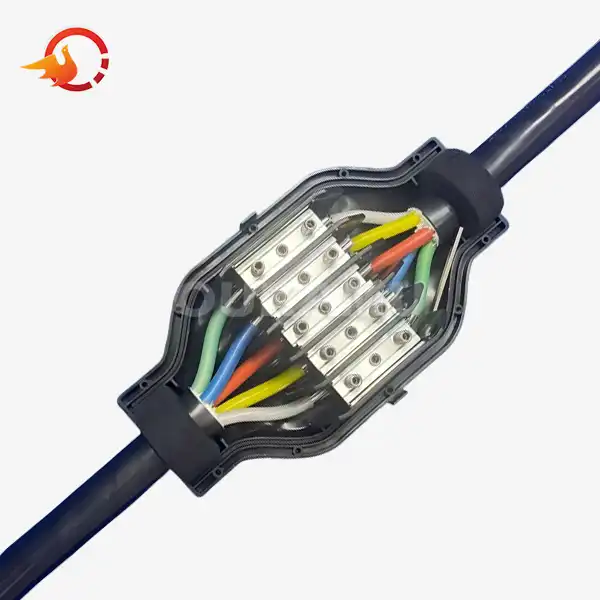
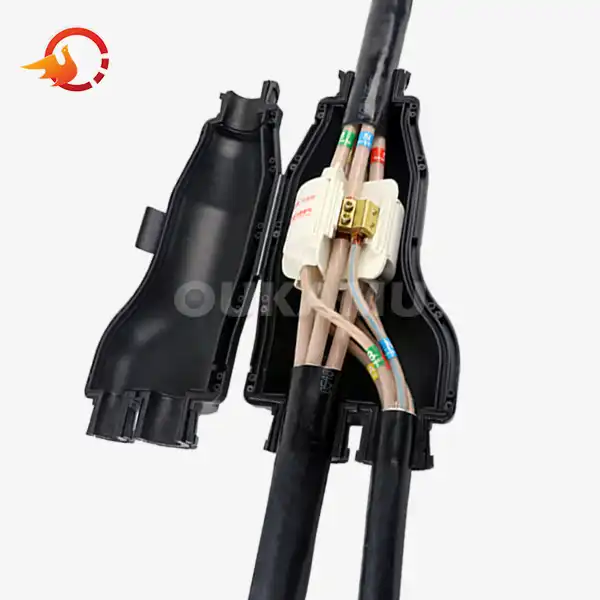
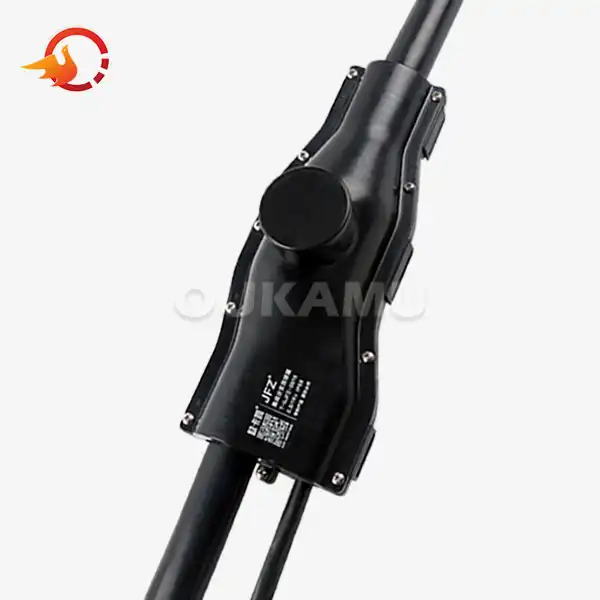
The main new feature is the T-connector body design, which makes connects easier without cutting the trunk wire. The Model ZR-JFZ-35/16 can handle main cables from 10mm to 35mm and branch cables from 2.5mm to 16mm. It has a rated voltage of 0.6/1kV. When the voltage needs are within normal ranges, this setup works well for most home, business, and small industrial uses.
A compression connection is made between the conductors by the double U-shaped tapping terminal. Both the trunk and branch conductors securely fit into their designated grooves, ensuring electrical continuity while keeping the structure's strength. In standard systems, weak spots are often found at junction places. This combined method gets rid of those points.
Technical Foundation and Material Composition
Performance dependability is based on the choice of materials. Flame-retardant and fire-resistant insulation materials that meet strict safety standards are used in our connectors. Sealing the building makes it waterproof, which is very important in tunnels where water is always present. Anti-aging compounds make things last longer, and anti-electrochemical corrosion properties keep things from breaking down in places where chemicals are active.
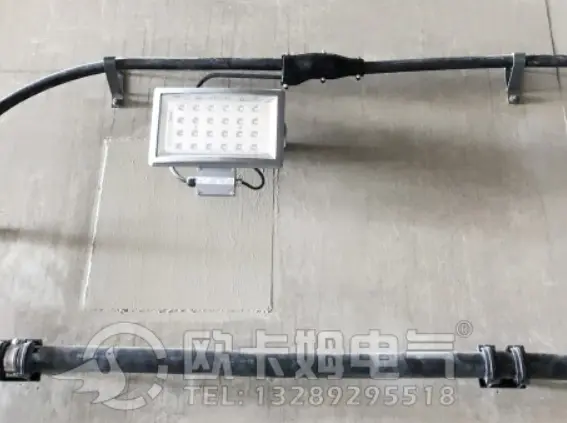
Because it's much smaller than regular junction boxes, the compact structure can be installed in tight spaces like cable bridges and narrow tunnels. This saves space directly, which means a smaller installation footprint and more design options for project managers who have to coordinate complicated electrical layouts.
Limitations of Traditional Connectors in Tunnel Applications
The old ways of branching cables have a lot of problems that make it hard to run projects on time and on budget. Knowing these problems makes it clear why procurement teams are looking for other solutions more and more.
Installation Complexity and Time Requirements
In traditional methods, cutting the main wire to make branch links is what you have to do. For this process to work, measurements must be exact before the cables are installed, and there isn't much room for changes after the cables are in place. When conditions on-site are different from what was planned, which happens a lot on tunnel projects, installers have to either change the cables that are already there or order new ones, which slows down the project.
Factory-made branching wires that are already made don't give you a lot of positional options. The fixed branch spacing has to be exactly the same as where the final equipment will be placed. When plans are changed during the building process, pre-fabricated solutions often can't be used anymore. This wastes materials and causes more procurement cycles.
Maintenance and Reliability Concerns
Traditional junction boxes have a lot of connection points where the risk of failure for the conductors is higher. Each mechanical joint creates a possible path for water to leak in. This is especially a problem for installations that are buried where humidity levels change. Corrosion at these connecting points lowers electrical conductivity over time, needing repair at some point.
To get to and fix standard connectors, you usually have to take the protective housings apart and move a lot of wire pieces around. This level of complexity in upkeep makes downtime last longer and costs more to labour. Many traditional joints can't be used again, so to fix them, the whole part has to be replaced instead of being adjusted or refurbished.
Cost Implications Over Product Lifecycle
Traditional connectors may have lower prices at first, but the total costs of ownership are much higher. Longer installation times mean more money spent on labour. Material waste from cut cables and pre-fabricated sections that don't work with each other raises the cost of procurement. For projects that last more than one year, the costs of ongoing operations add up quickly when maintenance needs to be done often.
These problems are made worse by problems with storage and transportation. When sending and storing, pre-branched cables take up more space than normal cables. Their complicated branching structures make them more likely to get damaged while being handled, which raises the cost of replacement and makes managing inventory more difficult.
Core Benefits of Tunnel Integrated Branch Connectors Over Traditional Solutions
It is possible to measure operational, financial, and safety benefits of switching to Tunnel Integrated Branch Connector technology. These benefits take care of the problems that procurement workers in the electricity distribution sectors have pointed out.
Enhanced Installation Flexibility and Speed
Installers can make branch connections anywhere along the trunk cable with our Tunnel Integrated Branch Connector system, without having to cut. This feature gets rid of limitations that come with planning ahead and lets you make changes to the design while the project is being carried out. When equipment moves around during construction, which is something that project procurement officers are used to, installers just move the branches around instead of wasting cable length or ordering new ones.
When compared to older methods, the installation process itself needs fewer specialised tools and less technical know-how. With standard compression tools, the U-groove leads are held in place, and within minutes, solid electrical connections are made. This ease of use means that installation crews don't need as much training and are less likely to make mistakes during installation that put the system at risk.
When the topology is complicated, real-time adaptability is very useful. Multi-branch setups with uneven plans or unique path shapes are hard for pre-fabricated solutions but not for on-site branching systems. Installers get through narrow shafts, sharp turns, and unexpected obstacles by moving branches around based on the available space.
Material and Labor Cost Savings
Savings can be measured right away after implementation. Each branch link saves about two to three meters of main wire that would have been wasted on cutting and getting ready the old way. When applied to projects with dozens or hundreds of branch points, these saves add up to big drops in the cost of materials.
Gains in labour economy are also very important. Streamlined installation steps cut down on the number of crew hours needed for each connection point. Because our connectors can be used more than once, adjustments and moves can be made without having to buy new parts. When project phases change or equipment upgrades require circuit changes, existing connectors can be used instead of having to be thrown away and bought again.
Savings are also made by reducing the waste of transportation and storage. As standard items, trunk cables and branch cables come in separate boxes that take up less space than pre-branched assemblies. Keeping standard wire lengths in stock instead of a variety of pre-made combinations for different projects makes warehouse inventory management easier. Less inventory pressure has a direct effect on how much working capital shippers and workers who are working on multiple projects at once need.
Superior Safety and Compliance Standards
Safety must always come first in electricity installations, especially in tunnels where there aren't many ways to get out and help is hard to come by in an accident. Our Tunnel Integrated Branch Connectors have a lot of safety features that protect against a lot of different types of risk.
The flame-retardant properties stop fires from spreading along cable paths. If there is a problem that causes heat or sparks, the materials that make up the connectors will not catch fire and will keep the heat in certain areas. During an emergency, fire-resistant insulation keeps the circuits intact, supporting important communication and lighting systems when they're needed the most.
Sealing that is waterproof keeps water out, which can cause short circuits and corrosion. The integrated sealing design gets rid of the gaps that are common in traditional junction assemblies with more than one part. The ability to keep out dust keeps particles from building up, which can make conductive paths or lower the insulation's effectiveness over time.
Following the rules set by GB/T 14048.7-2016 gives purchasing teams proof that the goods they are buying meet established safety standards. This certification makes it easier to get permission from regulatory bodies and meets insurance standards. The alignment of international standards makes it easier for companies that buy from Chinese makers to do business across borders, even in places with strict electricity codes.
Comparing Tunnel Integrated Branch Connectors with Mechanical and Traditional Connectors
A structured comparison makes the differences in performance between Tunnel Integrated Branch Connectors and other technologies clear, which helps people make smart buying decisions.
Material and Design Advantages
Integrated links use high-tech polymer materials that were made to work in tough environments. Compared to regular junction box housings, these materials are better at resisting damage from UV light, chemicals, and mechanical stress. The single-piece construction gets rid of the assembly seams that let water in with traditional designs that are made up of several parts.
The structure of the T-connector body spreads mechanical forces evenly across the connection zone. Using old methods that put a lot of stress on the places where cables are cut creates weak spots that are likely to break. Our compression terminal design keeps the contact pressure the same across all circuit surfaces. This keeps low-resistance electrical paths open, which keeps the heat down while the terminals are working.
Performance Metrics and Reliability
Specifications for pressure ratings show big differences in what they can do. Our connectors keep their shape and work well with electricity across the full voltage range up to 1kV, making them suitable for common low-voltage distribution tasks. In tough environments, traditional connectors often need voltage derating, which limits the design options for the system.
Failure incidence data from field installations shows that integrated connectors have significantly lower fault rates. The protected, combined design gets rid of all the places where things could go wrong that are common in regular junction systems. Less frequent failures mean fewer unplanned maintenance visits and more system uptime, both of which are very important in industrial settings where electrical outages directly affect production.
Installation and Maintenance Comparison
When comparing installation times, integrated plugs always come out on top. Putting together and wiring a traditional junction box might take 30 to 45 minutes per connection point. With our compression-style connectors, you can make a safe link in less than 15 minutes. This threefold increase in efficiency adds up to a huge difference when working on big projects with hundreds of branch circuits.
Another clear benefit is that maintenance is easy to get to. Our reusable connections make it possible to take things apart for testing or making changes to the circuit without hurting any of the parts. Traditional connectors often need to be taken apart in a destructive way, so they have to be replaced completely even for small changes. The difference in upkeep costs over 10 to 20 years of use strongly supports reusable combined designs.
Total Cost of Ownership Analysis
A full financial analysis should look at all the costs that come up over the course of a product's life, not just the price at which it was bought. Integrated branch connectors usually cost more per unit than basic junction boxes, but they are a better deal because they save you money in more ways than one.
Getting rid of waste materials saves two to three meters of cable for each connection. Because there is less installation labour, project costs are cut by about 60% per branch point. Less frequent maintenance and the ability to use parts more than once lower ongoing operational costs. Logistics costs can be lowered by making storage and transportation more efficient. When procurement pros figure out the net present value over the projected service life, integrated connections clearly show financial benefits, even though they cost more up front.
How to Procure Tunnel Integrated Branch Connectors: A Buyer's Guide?
To do a good job of procurement, you need to know the important evaluation criteria and build relationships with trustworthy manufacturers of Tunnel Integrated Branch Connectors who offer full technical support.
Selecting Qualified Manufacturers and Suppliers
Give priority to manufacturers who can show they have a lot of experience and specialised knowledge in the field. Xi'an Oukamu Electric Co., Ltd. has been focusing on branch cable connector technology for 17 years. This gives them a lot of knowledge in the field, which helps them make better products and help with applications. Manufacturers who have been in business for a long time have improved their production methods, quality control systems, and customer service procedures by installing their products in thousands of different environments.
Verification of certification makes sure that products meet safety and performance standards. Ask for proof that your products meet GB/T 14048.7-2016 standards and any other regional approvals that are important for the markets you want to reach. Manufacturers who keep their licenses up to date show that they are committed to high standards and following the rules.
Preparing Effective Requests for Quotation
When projects need unique setups that aren't available in a normal catalogue, OEM customisation capabilities are important. When a company has its own engineering team, it can change the specifications of a connector to meet unusual voltage needs, cable size combinations, or environmental protection ratings. This freedom is helpful for contractors who work with niche markets or deal with unique infrastructure problems.
Clear RFQ paperwork speeds up the buying process and makes it possible to compare proposals correctly. Be very clear about the technical requirements, such as the voltage levels, wire size ranges, number needs, and any unique environmental conditions the connections must be able to handle. Specifications that aren't clear lead to proposals with assumptions that don't work together. This makes evaluation harder and could lead to expensive specification mismatches.
Evaluating Warranty and Technical Support
When asking about prices, you should talk about terms for buying in bulk and how volume discounts work. A lot of manufacturers have different levels of prices that reward orders with more items. By knowing these limits, procurement teams can make sure that the size of their orders is just right to get the best discounts while also keeping inventory costs low.
Expectations for lead times need to be made clear. Products from a standard catalogue usually ship within days, but products that are made to order may take weeks for engineering, tooling, and production. When shipping internationally, you need to add time for transit and customs clearance. Including realistic lead times in project schedules keeps costs and schedule changes from happening at the last minute.
The terms of the warranty show that the company that made the product is confident in its quality. Strong quality control is shown by guarantees that cover both material flaws and poor workmanship for long periods of time. Make sure you understand how to file a warranty claim and how long it takes to get a response so you can use the guarantee security if something goes wrong.
Oukamu's Procurement Advantages
Long-term procurement value is greatly affected by the level of technical support provided after the sale. When manufacturers offer application engineering help, it helps installation teams get the most out of the connectors they use for each project. Troubleshooting help quickly fixes problems in the field, reducing downtime. Training materials help crews get better at using new connector technologies faster, which cuts down on installation mistakes and boosts productivity.
Xi'an Oukamu Electric Co., Ltd. has a lot of experience making specialised cable branch connectors and has a lot of credentials in the field. Our 17-year focus on development has led to new ways of solving installation problems that builders and distributors actually face. We have strict quality standards that make sure every connection meets or goes beyond the safety requirements.
Our technical team gives detailed application advice that helps procurement professionals choose the best connector models for the environment and voltage needs. We let you buy things from our regular catalogue as well as make your own configurations that fit the needs of your particular project. Respondent customer service makes sure that you get quick, well-informed answers to your questions during the whole process of buying and installing.
Conclusion
Traditional ways of branching electricity aren't as good as Tunnel Integrated Branch Connectors, which offer more installation options, big cost savings, and better safety performance. Setting up branch connections on-site without cutting main cables cuts down on waste and allows for changes in design throughout the lifecycle of a project. Flame retardancy, waterproofing, and corrosion resistance are just a few of the protection qualities that make sure this product will work reliably for a long time in harsh tube settings.
Even though they may cost more at first than basic junction boxes, integrated connectors always come out ahead in terms of total ownership cost analysis because they require less installation labour, less maintenance, and can be used more than once. Adhering to foreign standards gives buyers trust in the quality of the product and makes sure that regulations are followed. Because of all of these benefits, integrated branch connections are the best choice for electrical distributors, contractors, and building managers who want to save money and time over the course of their life.
FAQ
What cable sizes are compatible with integrated branch connectors?
What kinds of cables can be used with Tunnel Integrated Branch Connectors that are built in? The Model ZR-JFZ-35/16 can handle main cables with a diameter of 10 mm to 35 mm and branch cables with a diameter of 2.5 mm to 16 mm. We also make connectors for bigger conductors. Some models can handle main cables up to 240 mm and branch cables up to 70 mm, which covers most standard distribution needs in home and business settings.
Can these connectors be reused if circuit modifications are needed?
Yes, our integrated branch connectors are designed to be used more than once. They can be taken apart and put back together without damaging any of the parts. With this feature, circuit adjustments can be made during renovations or when moving equipment. This eliminates the need for expensive disposal and delivery delays that come with traditional connectors that can't be used again.
How do integrated connectors compare in installation time?
Field data shows that each connection point takes less than 15 minutes to install, compared to 30 to 45 minutes for traditional junction box assemblies. This increase in efficiency comes from making things easier by getting rid of steps like cutting cables, cleaning multiple wire ends, and putting together housings with many parts. Less time spent installing directly lowers labour costs on projects with a lot of branch circuits.
Partner with Oukamu for Superior Branch Connector Solutions
You can trust Xi'an Oukamu Electric Co., Ltd. to provide you with Tunnel Integrated Branch Connectors. They have 17 years of experience in the field and a wide range of products to meet all of your electrical distribution needs. Our advanced connector technology gives procurement workers the fitting options, cost-effectiveness, and safety performance they need. We can help with projects of all sizes by providing quick technical support, fair pricing, and dependable delivery dates.
Because we care about quality, we make sure that every connector meets international standards, such as GB/T 14048.7-2016. Oukamu has the goods and partners to help you succeed, whether you're planning to buy in bulk for peak season, looking for specifics for one-of-a-kind projects, or looking for new ways to be more competitive in the market. Email our team at info@okmbranchcable.com to talk about your specific needs and get quotes that are tailored to your procurement goals.
References
1. Chen, L., & Wang, M. (2021). Advanced Cable Connection Technologies for Underground Infrastructure Systems. Beijing: China Electric Power Press.
2. International Electrotechnical Commission. (2018). Low-Voltage Switchgear and Controlgear - Part 7: Ancillary Equipment. IEC Standard 60947-7.
3. Liu, H., Zhang, Y., & Zhou, Q. (2020). "Comparative Analysis of Branch Connection Methods in Urban Tunnel Electrical Systems." Journal of Electrical Engineering & Technology, 15(3), 1247-1258.
4. National Standardization Administration of China. (2016). Low-Voltage Switchgear and Controlgear - Part 7: Auxiliary Devices - Terminal Blocks for Copper Conductors. GB/T 14048.7-2016.
5. Thompson, R. J., & Martinez, S. A. (2019). Electrical Distribution Design for Commercial and Industrial Facilities. New York: McGraw-Hill Education.
6. Wu, X., & Li, J. (2022). "Life Cycle Cost Analysis of Cable Branching Technologies in Infrastructure Projects." International Journal of Electrical Power & Energy Systems, 138, 107-118.