

_1790150425011.webp)
Differences between gel-filled and resin branch cable joints






 2026-06-26 15:20:10
View:389
2026-06-26 15:20:10
View:389When buying things for electrical systems, people who work in procurement often have to choose between gel-filled and resin Branch Cable Joints. You should know the main differences between these technologies if you want to get the best service for the least amount of money. Gel-filled joints use flexible, soft gel compounds that keep heat in and don't soak up water. On the other hand, resin-filled joints use stiff epoxy materials that last longer and are stronger. Both technologies are important ways to connect power networks. They can be used for different things, though, because they are different. You can use this in-depth guide to help you make smart choices about procurement that fit your project's needs and the way it works.

Understanding Branch Cable Joints in Electrical Distribution
Joining cables together is a key part of making sure that the power grids in homes, businesses, and public spaces work well. When you connect several cables together, you create a single electrical path that protects the insulation and keeps it in good shape. Through Branch Cable Joints, power can be sent from the main trunk cables to the secondary circuits. These connections do not interrupt the main power flow.
Role in Modern Power Systems
Connections must work well in a range of installation situations for power distribution to work. Cable joints in both underground utility networks and factories have to work in tough conditions, like being wet, having temperatures change, being under a lot of mechanical stress, and being contaminated with chemicals. No matter how reliable the system is, how much maintenance it needs, or how much it costs over its whole life, the choice of jointing technology is very important.
Categories of Connection Technologies
A lot of different kinds of technology are used in modern cable jointing. For flexible sealing, gel-filled systems use soft compounds that can change shape to fit the movement of cables and the growth of heat. Resin-based solutions are the best way to make a rigid enclosure that is also very good at insulating. There are also cold-shrink assemblies, heat-shrink sleeves, and mechanical connectors that can be used. Each one is made for a different voltage level and set of conditions. If procurement teams know about these options, they can better match technology with the needs of an application.
Technical Differences Between Gel-Filled and Resin Branch Cable Joints
Gel-filled and resin technologies are different in two main ways: the materials they use and how they work. These differences affect how to set them up, how well they work, and how to keep them in good shape over time.
Material Composition and Curing Processes
The gels used in gel-filled Branch Cable Joints are made of polyurethane or silicone and stay flexible after they are put in place. These materials can be shaped to fit cables and fill in gaps that could let insulation down. They are great for relieving electrical stress. At different temperatures, the gel stays flexible, so it can grow or shrink without breaking through mechanical means. The steps for installation are to place the joint housing and inject or inject pre-formed gel modules. Before they can be used, the modules only need a short time to cure.
When making resin joints, epoxy or polyurethane is used. Chemical curing turns these things into hard shells that protect things. Molds for the cable connections have already been made ready for the liquid resin to be poured into them. The resin then gets harder through reactions that give off heat. This method creates a single-piece structure that is stronger and more stable in terms of its size. It can take anywhere from a few hours to a whole day for the resin to cure, so installation needs to be carefully thought out.
Electrical Performance Characteristics
Both technologies are approved by international groups to work with rated voltages of up to 1kV in power distribution. Both technologies also come in versions that are made to work with medium and high-voltage systems. Electricity stress can be kept under control with gel-filled Branch Cable Joints, as the soft material evenly spreads field concentrations across insulation interfaces. This feature makes it less likely that a partial discharge will happen in cables with complicated shapes.
Resin joints are better at dielectric strength because they completely surround the conductor. They can be used in harsh industrial settings because the rigid matrix stops moving water and dirt better than gel systems. But thermal cycling can put stress on the places where stiff and flexible materials meet, which could make them less reliable over time in places where temperatures change a lot.
Installation Methodology Comparison
There are a lot of different ways to set up these technologies. Gel Branch Cable Joints are often made up of separate pieces that can be easily put together on the job site with only a few special tools. It's faster and cheaper for technicians to do installations because they can place housings, insert gel components, and finish jobs. Since it doesn't damage anything, it could be used again in the future to check it out or change how it's set up.
To get ready for resin installations, you need to do more precise tasks, such as cleaning the surface, putting together the mold, and pouring in a controlled way. The environment must stay stable while the concrete cures so that there are no flaws. It takes longer and requires more technical knowledge to install resin joints, but once they are in place, they provide permanent encapsulation and don't need much maintenance afterward.
Practical Advantages and Limitations of Each Technology
When you weigh the pros and cons of gel-filled and resin Branch Cable Joints, you can choose the best technology for the project and the company's goals.
Gel-Filled Joint Benefits and Constraints
The fact that gel technology can be used in many places is one of its best features. The soft material can shape itself to the shape of cable surfaces that aren't perfectly flat. This lets the cable move in the future without affecting the seal's strength. The gel stays resistant to water because it doesn't like water. Because of this, these Branch Cable Joints are great for use underground or in places with a lot of moisture.
It can be used over and over, which is another great thing about it. Techs can easily make changes to the system by taking the gel joints apart, moving the connections around, and then putting the same parts back together again. This feature is helpful for installations that change over time, like when the building gets bigger or when new tools are added. Because the curing time is shorter, projects can be finished faster and systems keep running as smoothly as possible.
It's possible for the gel to break down over time, especially if it gets too hot or too cold or is exposed to chemicals. Some formulas may separate the oil or get hard after years of use, which could mean they need to be replaced. The costs are usually less at first than with resin systems, but how much they cost in total over their lifetime depends on how often they need to be fixed or replaced. Also, environmental sealing might not be as strong as rigid encapsulation in places where there is a lot of wear and tear on the mechanical parts.
Resin Joint Strengths and Challenges
Resin encapsulation is the best way to protect against damage and make something strong. Chemical plants, heavy manufacturing facilities, and transportation infrastructure are all rough places for these Branch Cable Joints to work because the rigid shell doesn't break easily when hit or crushed. A material is dimensionally stable if it doesn't flow or change shape when the temperature changes a lot.
Contamination resistance is better than gel systems because it fills in all the gaps and makes walls that keep out water, dust, and things that are bad for the environment. Resin joints can last for decades without needing to be fixed or inspected if they are put together correctly. This lowers the project's total cost over its whole life. It is very hard for electricity to leak out because of the permanent encapsulation. There is almost no chance of partial discharge or tracking failures.
What's wrong is that it's tough to set up and takes a long time to fix. If you need to finish a project quickly, the curing times of several hours or overnight might not work for you. It's important to keep the environment under control, and temporary enclosures may be needed during installation. Since the joint is permanent, it can't be taken apart again. This means that any repair or reconfiguration must involve replacing the whole Branch Cable Joint, not just parts. The cost of the materials is usually higher than those used for gel alternatives, but you may save money on upkeep over time, which could make up for the higher initial cost.
Application Suitability: Choosing the Right Joint for Your Project
There are a lot of project-specific things that need to be carefully thought through when choosing between gel-filled and resin Branch Cable Joints. Some of these are the environment, the type of cables needed, the limits of installation, and the ability to do maintenance.
Environmental and Installation Considerations
In places that get a lot of rain, gel-filled Branch Cable Joints are great for underground power lines because they keep water out better and are easier to install in tight spaces. Gel systems are good for adding to existing cable runs because they don't need a lot of preparation tools and can be used in places that are hard to get to. An important thing to keep in mind for utility maintenance work is that quick installation means less trouble for nearby power systems.
On the other hand, industrial facilities that are open to chemical vapors, mechanical vibrations, or physical impact need resin encapsulation. In factories, petrochemical complexes, and transportation hubs, Branch Cable Joints need to be able to handle rough environment without breaking. The permanent sealing keeps out dirt and other things that could slow down the electricity over time. This makes it more likely that the power will work in the long term.
Cable Characteristics and System Requirements
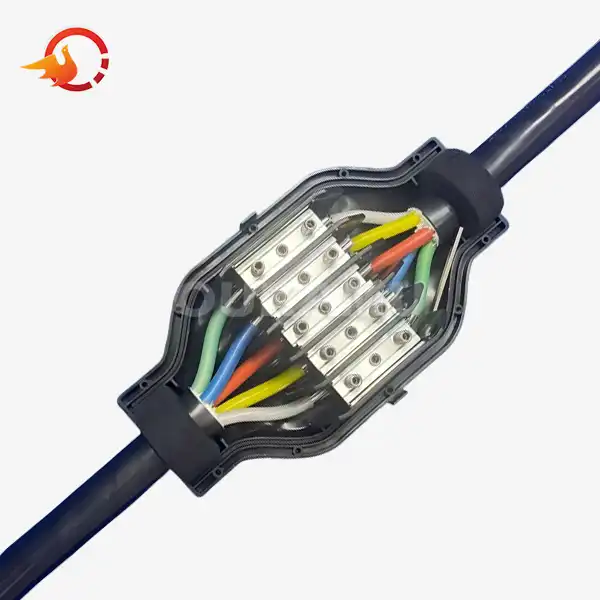
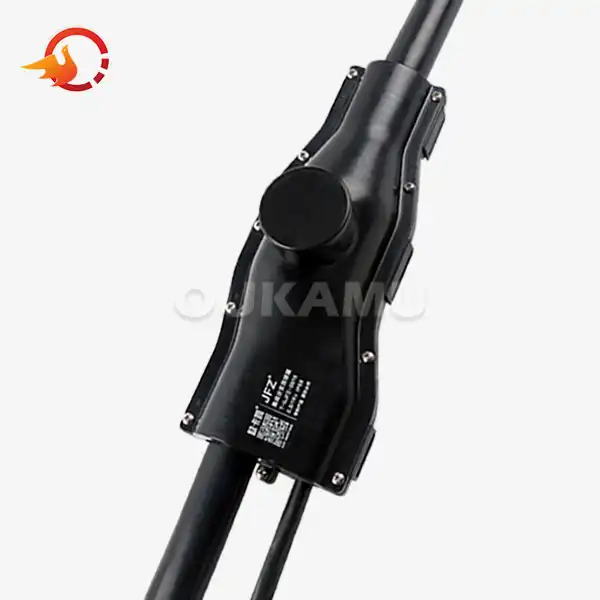
Which technology to use depends on the type of insulation and the size of the cable. The Oukamu ZR-JFZ-70/35 model has an advanced design that lets it work with main cables that are 25 mm to 70 mm and branch cables that are 2.5 mm to 35 mm. It can handle rated voltages of 0.6 kV to 1 kV. It can be changed to fit different distribution needs while still meeting GB/T 14048.7-2016 standards and international safety rules.
For Branch Cable Joints that are made to work with mineral-insulated, flame-retardant, or fire-resistant cables, you need to make sure they are compatible. Modern connectors are made with materials and methods that are compatible with many types of cables, so they can connect to a lot of different types of cables. The system specs must match the temperature ratings, current-carrying capacity, and short-circuit withstand capabilities to make sure safe and reliable operation throughout the lifecycle of the installation.
Project Timeline and Cost Optimization
Many times, the choice of technology is limited by money and time. It costs less to buy materials for gel Branch Cable Joints up front, and they can be put in faster. This lowers the initial cost of the capital and speeds up the completion of the project. These benefits come in handy for big deployments with lots of connection points or for commissioning plans that are broken up into stages.
In the long run, resin systems save money because they need less upkeep and are serviced less often. Even though it costs more at first, resin technology may be better for projects that care more about the total cost of ownership than the initial investment. The costs over a product's lifetime are lower if it doesn't need to be inspected often or replaced early. Most of the time, this is true when maintenance is hard to get to or costs a lot.
Procurement Considerations for Branch Cable Joints
To get the most out of projects and make operations run more smoothly, good procurement strategies for Branch Cable Joints keep an eye on technical performance, supplier dependability, price competitiveness, and making sure that rules are followed.
Supplier Selection and Product Sourcing
ABB, 3M, Phoenix Contact, and Siemens are just a few of the big names that make a wide range of products. These products use both gel-filled and resin technologies and come in different voltage ratings and cable specifications. It has been decades since these well-known brands have worked in the field, and they have a lot of technical support resources.
Local businesses like Xi'an Oukamu Electric Co., Ltd. have been researching and making Branch Cable Joint connections for 20 years, which they can bring to the table. They can keep prices low and find new ways to solve problems in certain situations because they have so much experience. Teams in charge of buying things should check to see what a supplier can do, like make products fit specific needs, give technical advice, and offer quick support after the sale.
One type of distribution channel is direct relationships with manufacturers. Other types are regional electrical wholesalers and online business-to-business (B2B) platforms. Most of the time, you can get better prices and more specific needs when you buy in bulk that way. When you need to work with more than one vendor, however, a distributor can help you save time and money. To help make sure that procurement times work with project schedules, you can look at lead times, minimum order quantities, and inventory levels.
Compliance Standards and Quality Assurance
IEC and IEEE quality standards, as well as regional rules, set the minimum performance standards for products that join cables. By looking at compliance certifications, you can be sure that products meet the standards for safety, dependability, and the environment set by electrical codes and project requirements. It's very important to have proof of the quality of the Branch Cable Joint when you buy it and when you put it together. This includes test reports, material certifications, and installation instructions.
The GB/T 14048.7-2016 standards make sure that products are safe, work well electrically, and last a long time. They also make sure that the products are resistant to harmful environmental conditions. This compliance lets customers know that the product can be used in tough situations and speeds up the process for regulators to give their approval.
Innovative On-Site Installation Solutions
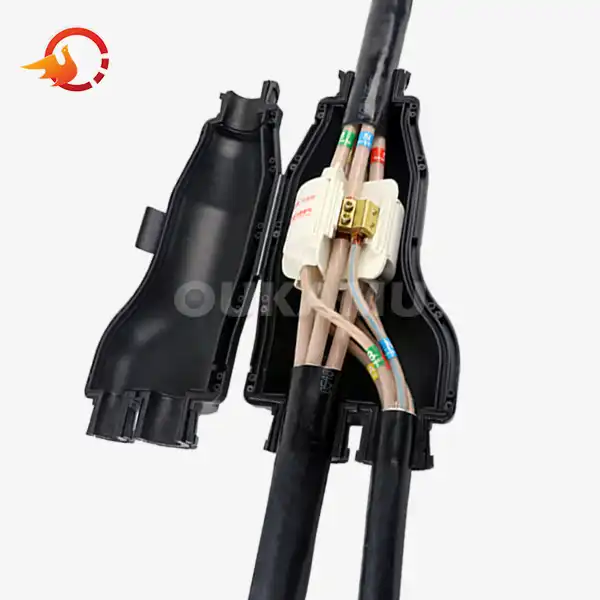
More and more, new Branch Cable Joint technologies stress the need to be adaptable during installation in the field so that problems can be solved as they arise during system deployment and maintenance. Cutting and joining cables to connect branches used to be the only way to do things. This is a big step forward. For now, you can do it anywhere on the main cable without having to cut the trunk line.
This method saves a lot of money on materials because it doesn't need an extra 2 to 3 meters of main cable for each connection point. Work gets done faster when installation steps are clearer and don't need as many specialized tools and technical know-how. Because branch positions can be changed on the fly based on real-world conditions instead of set layouts, project schedules can be sped up. This lets changes be made to the design without having to pay a lot of money for new work.
These benefits last as long as the installation does because modern designs can be used more than once. When technicians need to change the layout because of equipment moves, facility expansions, or system upgrades, they don't have to buy new Branch Cable Joints or main cables. Instead, they can just move the connections. This flexibility keeps the system open to meet changing operational needs and lowers long-term infrastructure costs.
Conclusion
If procurement professionals know the differences between gel-filled and resin Branch Cable Joints, they can make electrical distribution systems work better, be more reliable, and cost less. Gel technology has benefits like being easy to install, resistant to water, and reusable, which makes it perfect for places that need a lot of upkeep and are small. Encasing something in resin gives it better mechanical protection, protection against contamination, and long-term stability for harsh industrial settings. You can pick the best technology for your project by considering things like the environment, the cable's features, the installation process's limits, and the technology's long-term costs. When procurement teams work with experienced suppliers and ask for tested, compliant products, they can make sure that power distribution infrastructure works well for a variety of industrial, commercial, and utility purposes.
FAQ
What are the main differences between gel-filled and resin branch cable joints?
The main difference is in how the material is put down and how it works. For gel-filled Branch Cable Joints, flexible compounds are used that don't soak up water and can be used again. Resin-filled joints, on the other hand, use rigid epoxy encapsulation that is stronger and seals for good.
Which technology suits underground cable installations better?
Most of the time, gel-filled Branch Cable Joints work better underground because they don't let water in as easily and are easier to install in tight spaces. When the ground moves or the temperature changes, the flexible material can handle it without putting too much stress on the structure.
Can resin joints be reused or repaired after installation?
It's not possible to take resin joints apart or use them again after they've been put together. Any fix or change needs a new Branch Cable Joint, so they aren't as useful when the layout needs to be able to be changed in the future.
How do installation times compare between these technologies?
Most of the time, gel-filled Branch Cable Joints go in faster because they don't need to cure as long and the steps are easier. Resin systems take a long time to cure—anywhere from a few hours to a whole day. This means that projects need to be well thought out.
What factors should guide technology selection for industrial applications?
When making a choice, you should think about the environment, how much mechanical stress it will be under, how easy it is to maintain, and how much it will cost over its whole life. Resin encapsulation works best in harsh industrial settings where chemicals are present, while gel technology works better in places that need to be set up and taken down often.
Partner with Oukamu for Advanced Cable Connection Solutions
It has been 20 years of hard work by Xi'an Oukamu Electric Co., Ltd. to find new ways to connect electrical distribution systems. They are a reliable Branch Cable Joint supplier. Our ZR-JFZ-70/35 model is an example of how modern engineering can be used to allow for flexible installation on-site without having to cut the main cable. As a result, two to three meters of conductor are saved per connection point, and the project takes less time and costs less money. The combined design provides full safety through construction that is flame-resistant, fire-resistant, and waterproof. It can be used in many situations in the manufacturing, construction, and infrastructure sectors. Our connectors that can be used more than once are safe and meet GB/T 14048.7-2016 standards. They save money because they don't need as much material, are easier to install, and last a long time. You can email our technical team at info@okmbranchcable.com to talk about making solutions that are specific to your project. We can help you get the most out of your electrical distribution infrastructure by using tried-and-true tools and our many years of experience in this field.
References
1. International Electrotechnical Commission (2020). "Power Cable Accessories: Technical Requirements and Testing Standards for Low Voltage Distribution Networks." IEC Publication Series 60502.
2. Zhang, W., & Kumar, R. (2019). "Comparative Analysis of Cable Jointing Technologies in Industrial Power Distribution Systems." Journal of Electrical Engineering and Technology, 14(3), 1247-1262.
3. Electric Power Research Institute (2021). "Cable Accessories Performance Evaluation: Long-term Field Studies of Gel-filled and Resin Joint Technologies." EPRI Technical Report 3002019852.
4. American Society for Testing and Materials (2018). "Standard Specifications for Electrical Insulation Systems in Power Cable Applications." ASTM International Standard D4566-17.
5. Martinez, J., Thompson, S., & Lee, H. (2020). "Installation Methods and Lifecycle Cost Analysis for Underground Distribution Cable Joints." IEEE Transactions on Power Delivery, 35(4), 1883-1895.
6. National Electrical Manufacturers Association (2019). "Cable Splicing and Termination Systems: Installation Guidelines and Performance Criteria." NEMA Standards Publication WC 62-2019.