
_1790150425011.webp)
A Complete Guide to Underground Cable Joint Maintenance Plans






 2026-10-14 15:41:06
View:389
2026-10-14 15:41:06
View:389A well-structured underground cable joint maintenance plan is one of the most overlooked yet critical factors in keeping low-voltage distribution networks running without interruption. An underground cable joint connects two or more cable segments beneath the surface, maintaining both electrical continuity and environmental protection.
Without a scheduled maintenance approach, moisture ingress, corrosion, and mechanical stress can silently degrade these joints over years — leading to ground faults, unplanned outages, and expensive emergency repairs. This guide walks procurement managers, operations engineers, and utility planners through the core principles of maintaining buried cable joints effectively, backed by technical data and real-world application insight.
Understanding Underground Cable Joints: Types, Materials, and Standards
Joint Types and Their Distinct Applications
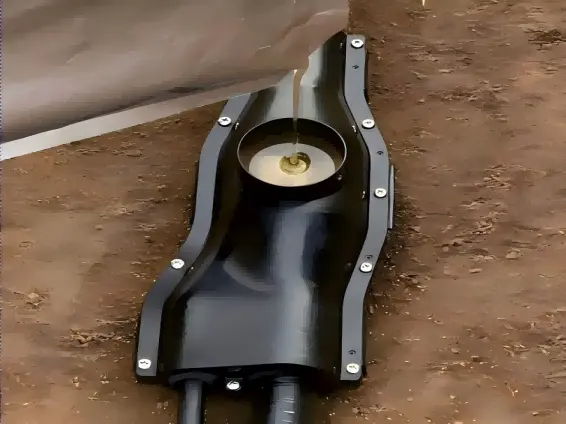
There are different types of cable joints based on how they are installed and where they are used. Heat shrink joints use heat to shrink a polymer tube around the wire, making a seal that doesn't let water in. Cold shrink joints use silicone tubing that has already been stretched out.
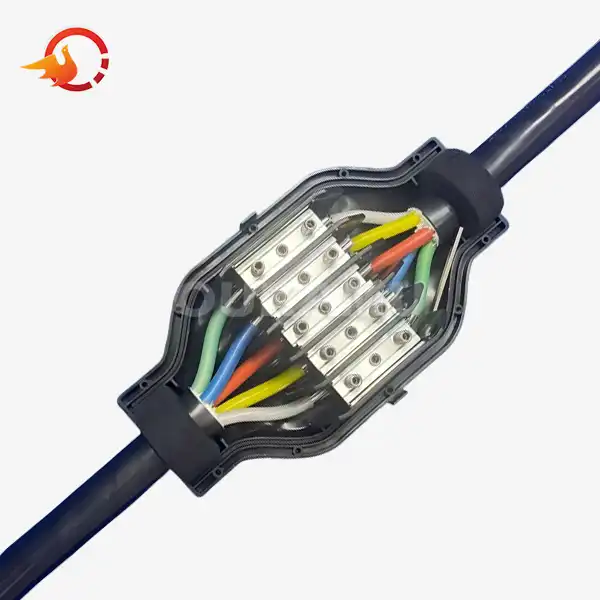
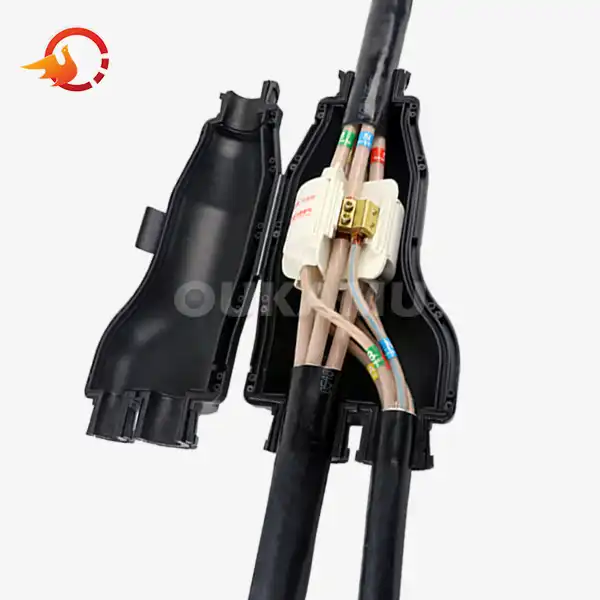
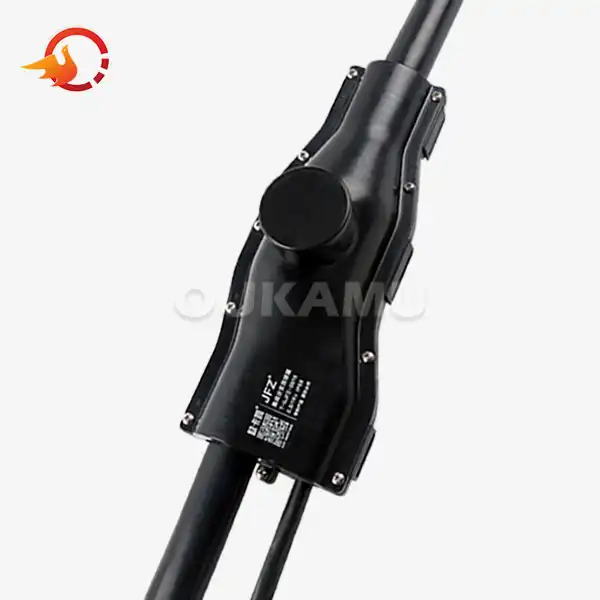
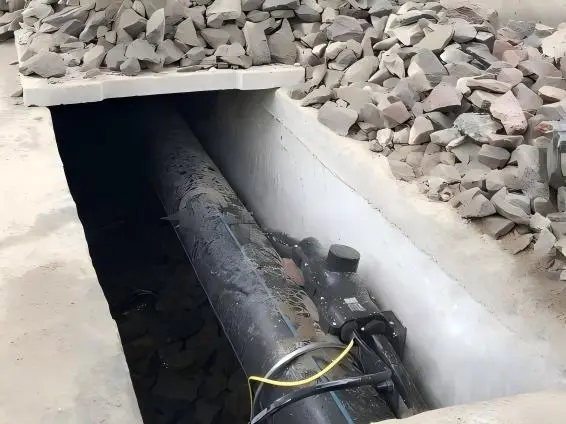
This tubing contracts without heat, which makes them easier to place in tight areas. Gel-filled branch connectors, like the Oukamu L-GJFZ-70/16, have insulating gel filled inside the connector. This gives the cable two layers of waterproof protection that can be buried directly or installed in a well.
Materials That Determine Long-Term Performance
The materials used to make a wire splice part have a lot to do with how long it lasts. Because they don't break down easily when heated, cross-linked polyethylene (XLPE) and ethylene-propylene rubber (EPR) are often used for insulation covers. Gel-filled designs, like the ones used in Oukamu's branch connector line, fill in the empty spaces inside the housing with gel. This stops the moisture condensation that usually breaks down insulation in buried areas.
Compliance Standards Procurement Teams Must Know
It is necessary to follow IEC 60529 (IP ratings), IEC 60454, and GB/T 14048.7-2016 when buying utilities. These guidelines set the levels of operating safety, waterproofing, and insulation integrity. Products that are certified under ISO 9001, ISO 14001, and ISO 45001 show that the company cares about quality management, the environment, and worker safety, which is important for passing supplier prequalification reviews.
Key Steps in a Systematic Underground Cable Joint Maintenance Plan
Inspection Techniques That Catch Problems Early
Scheduled inspections for underground cable joint should happen at least once a year, and more often in places where groundwater levels change or soil moves. Visual inspection of open junction boxes looks for changes in color, broken seals, or movement.
Thermal imaging cameras find strange patterns of heat at the joint point. These patterns often mean that the resistance has gone up because of rust or a weak connection. A megohmmeter is used to test the insulation resistance to see how well the dielectric layer between the conductors is working.
Here is a list of inspection times that can be chosen based on the placement environment:
For example, in dry, stable soil, the recommended inspection interval is once a year for mechanical aging. In high-moisture or flood-prone areas, it's every six months for moisture ingress and ground faulting. Coastal or chemically aggressive soil, it's every three to four months for electrochemical corrosion. And at urban road crossings, it's every six months for vibration and mechanical stress.
| Installation Environment | Recommended Inspection Interval | Primary Risk Factor |
|---|---|---|
| Dry, stable soil | Once per year | Mechanical aging |
| High-moisture or flood-prone areas | Every 6 months | Moisture ingress, ground fault |
| Coastal or chemically aggressive soil | Every 3–4 months | Electrochemical corrosion |
| Urban road crossings | Every 6 months | Vibration, mechanical stress |
Cleaning, Resealing, and Component Replacement Procedures
If a visual inspection shows that the seal is wearing down, the problem must be fixed by digging out to the joint, carefully removing the housing, cleaning the contact surfaces with approved solvents, and either applying new sealing compound or replacing the housing completely.
For mechanical connectors, the bolt torque should be checked against the manufacturer's instructions. Gel-filled connectors with housings that are still in good shape usually only need to be cleaned on the outside and have the stability of the housing checked, not taken apart completely.
Documentation and Monitoring as Ongoing Responsibilities
Every repair task needs to be recorded with GPS locations, date, technician ID, and what was found. Asset management software lets teams see which joints are getting close to the end of their useful life, plan replacements ahead of time, and make records that are ready for an audit to make sure they are following the rules. This documentation discipline also cuts down on the time needed to find problems during emergencies, which greatly shortens the time it takes to fix everything.
Comparing Underground Cable Joint Solutions: Choosing the Best for Your Operations
Evaluating Waterproofing and IP Rating Specifications
When it comes to direct-buried and underwater cable junctions, IP68 is the gold standard. This grade proves continued immersion protection beyond a depth of one meter, which is a realistic need for underground power lines in cities. Products with only IP65 or IP67 ratings may let water build up for long periods of time in trenches that are always wet.
The table below shows how the Oukamu L-GJFZ-70/16 branch cable connector stacks up in terms of its most important technical specs:
| Parameter | Specification |
|---|---|
| Model | L-GJFZ-70/16 |
| Waterproof Rating | IP68 |
| Main Cable Cross-Section | 25–70 mm² |
| Branch Cable Cross-Section | 2.5–16 mm² |
| Insulation Method | Gel-filled, double-layer protection |
| Installation Type | Direct buried or well concealed |
| Main Cable Treatment | No cutting required |
| Compliance Standard | GB/T 14048.7-2016 |
Oukamu L-GJFZ-70/16: A Purpose-Built Solution for Buried Distribution Networks
It has been Xi'an Oukamu Electric Co., Ltd.'s main focus for more than 20 years on cable branch link technology. The L-GJFZ-70/16 branch cable connector can connect main cables that are 25 to 70 mm³ and branch cables that are 2.5 to 16 mm³. The main cable doesn't need to be cut or reserved in advance for length. The gel-filled insulation cavity protects against dielectric loss and seals against water at the same time, eliminating the risk of a single point failure that comes with designs that only use heat-applied sleeves.
This is what the L-GJFZ-70/16 does well technically:
- No main cable cutting required: The installation process taps into the main cable without severing it, preserving overall circuit integrity and reducing the risk of induced faults during installation.
- IP68 waterproof protection: Gel-filled insulation displaces air and blocks moisture at the molecular level, maintaining sealed performance even under sustained water pressure in direct-buried conditions.
- Flexible installation positioning: Branch connections can be made at any point along the main cable run, eliminating the need to pre-plan branch spacing and reducing cable waste from over-ordering.
- Low total deployment cost: By removing the need to cut and re-terminate the main cable, installation labor time drops substantially, and no additional cable length needs to be reserved at each branch point.
These benefits directly address the most common causes of failure in city underground distribution, which are moisture intrusion and installation-induced mechanical stress. This makes the connector a good choice for utility procurement teams that are working with limited funds.
Real-World Application: Municipal Low-Voltage Network Upgrade
A provincial power supply company that was putting in low-voltage branch circuits in a new residential area chose gel-filled branch connectors for all direct-buried junction points because regular heat shrink joints kept breaking during the first part of construction.
When the project team switched to IP68-rated, gel-filled branch connectors that didn't need the main wire to be cut, installation time per joint dropped by about 40%. Over a 24-month tracking period, moisture-related faults in the second-phase network were also removed.
Troubleshooting and Common Maintenance Challenges
Identifying the Most Frequent Failure Modes
Most low-voltage underground cable joint failures in buried networks are caused by moisture getting into the system. If water gets into the joint housing through worn-out seals or bad fitting, it makes a low-resistance path between phases or to ground, which sets off safety relay trips. The second most common cause is physical damage from ground settlement or accidental mining. This is followed by galvanic corrosion at places where different metals touch.
Diagnostic Tools and Accurate Fault Isolation
Time-domain reflectometry (TDR) testing lets engineers find the exact spot on a cable where a problem is occurring without having to dig up the whole path. When teams measure the insulation resistance from both ends of the damaged segment, they can figure out if the problem is in the joint housing or along the cable insulation. This focused method cuts down on digging that isn't needed and shortens the time needed for repairs.
Repair Versus Full Replacement: Making the Right Call
Whether to fix an existing joint or replace it depends on how old the installation is, how badly the insulation is breaking down, and how easy it is to get to the site. When moisture gets into joints for a long time, carbon can start to track across the insulation surface. This is a problem that can't be fixed by just resealing the joints. In this case, replacing the whole joint with a properly rated connector will save you money in the long run.
Optimizing Maintenance Performance: Strategies to Maximize Efficiency and Reliability
Workflow Mapping to Find Process Gaps
Before making changes to a maintenance program, teams should make a flowchart of how they currently find problems and fix them. This exercise often shows that materials aren't available when they're supposed to be, technicians aren't qualified enough, or there are gaps in the paperwork. Supervisors can set measured goals for mean-time-to-repair and plan adherence once these gaps are found.
Staff Training and Competency Verification
According to data gathered by the Electric Power Research Institute, improper fitting is the main reason why joints fail too soon. Technicians who work on underground cable splices should have credentials that have been checked and proven to work with that particular joint system. Manufacturers like Oukamu help field crews get regular results on large-scale projects by giving them installation instructions and expert support.
Integrating Predictive Monitoring for Long-Term Savings
When placed at the substation level, partial discharge tracking systems can find problems in cable networks months before they fully fail. This, along with testing the insulation's resistance once a year, makes a multi-layered early warning system that changes maintenance from being reactive to planned. This lowers the cost of emergency calls and raises network availability metrics.
Conclusion
Maintaining buried underground cable joint isn't something that can be done just once. It needs an organized plan that includes regular inspections, correct records, the right products, and trained installation teams. Moisture and corrosion are still the main reasons why low-voltage underground networks fail.
The most cost-effective way to fix this is to make sure that the joints are properly specified from the start. For example, gel-filled IP68-rated branch connectors are made to work in buried environments and make long-term maintenance a lot easier. Utility teams can keep distribution networks running reliably and keep lifecycle costs low if they have the right tools, processes, and partnerships with suppliers.
FAQ
How often should buried cable joints be inspected?
Most underground distribution points should be checked at least once a year. In places with a lot of moisture, a history of flooding, or a lot of soil movement, inspections should be done every three to six months. Visual inspections, insulation resistance tests, and thermal imaging all work together to give a full picture of the state of a joint.
What does IP68 mean for a cable branch connector?
IP68 means that the device is continuously protected against water intrusion up to a depth of one meter. This grade means that the housing of direct-buried cable connections will keep its internal sealing integrity even in permanently wet soil or well settings that are submerged. This is the standard needed for long-term reliability in city underground distribution.
What is the difference between heat shrink and gel-filled cable joints?
A heated polymer sleeve forms a seal around the cable in a heat shrink joint. Gel-filled joints, on the other hand, replace the air inside with an insulating gel that stops water from getting in. Gel-filled designs are usually better for straight burial because they keep their closing ability no matter what the temperature is during installation.
Can branch connections be made without cutting the main cable?
Yes. The Oukamu L-GJFZ-70/16 branch connector is designed to connect to the main cable conductor without cutting the cable. This keeps the original circuit continuity, gets rid of the need to reserve extra cable length, and cuts installation time by a large amount compared to cut-and-splice methods.
Connect With Oukamu for Your Underground Cable Joint Supply Needs
Xi'an Oukamu Electric Co., Ltd. has spent more than 20 years making branch cable connectors that work well in difficult buried distribution environments. You can buy a lot of the L-GJFZ-70/16 underground cable joint with full technical paperwork. It has an IP68 rating, is gel-filled, and is approved to GB/T 14048.7-2016.
Oukamu is a reliable company that makes underground cable joints. They help utility procurement teams by providing product approval, type test results, and ISO-certified quality records. To get specs or a project price, email our technical team at info@okmbranchcable.com or go to okmbranchcable.com.
References
1. Electric Power Research Institute (EPRI). Underground Distribution System Design Guide. EPRI, 2016.
2. International Electrotechnical Commission. IEC 60529: Degrees of Protection Provided by Enclosures (IP Code). IEC, 2013.
3. IEEE Power and Energy Society. IEEE Guide for Bonding Shields and Sheaths of Single-Conductor Power Cables Rated 5 kV through 500 kV. IEEE Std 575, 2014.
4. National Electrical Manufacturers Association (NEMA). Underground Systems Reference Book. NEMA, 2017.
5. Ametani, A., Ohno, T., & Nagaoka, N. Cable System Transients: Theory, Modeling and Simulation. Wiley-IEEE Press, 2015.
6. Chinese National Standard. GB/T 14048.7-2016: Low-Voltage Switchgear and Controlgear — Part 7: Ancillary Equipment. Standardization Administration of China, 2016.