

Why Choose Waterproof Cable Jointing Solutions






 2026-11-11 14:42:09
View:389
Choosing waterproof cable jointing solutions matters because they protect electrical connections from moisture damage while reducing installation costs and labor time. A quality Waterproof Cable Joint Kit eliminates the need to cut main cables, adapts to changing job site requirements, and passes inspection on the first attempt—critical advantages for procurement managers overseeing multiple construction projects. These systems deliver measurable returns through faster deployment, fewer callbacks, and compliance with evolving safety standards, making them strategic investments rather than commodity purchases.

Understanding Waterproof Cable Joint Kits: Key Benefits and Applications
Waterproof cable jointing systems are like special cases that keep outside elements from getting into branch links. Modern gel-filled solutions create hermetic seals around live conductors without interrupting the main power line. This is different from older junction methods that needed to cut cables and do exact length calculations. This design keeps water out of basement pump rooms, underground parking garages, and other places with a lot of humidity where regular splices fail too soon.
When used in real life, the difference in performance becomes clear. In an Atlanta hospital repair job, gel-filled branch connectors were put in a machinery room that was prone to condensation, showing this benefit. The IP68-rated joints didn't break down over three years of use, but similar non-waterproof terminations in nearby buildings had to be replaced after eighteen months because they rusted.
Protection Standards That Matter
IP ratings show how well something is protected from the environment. IP68 is the best rating for ongoing submersion. For this approval, parts must be able to withstand water pressure at depths greater than one meter for long periods of time. This is necessary for installations below grade or in areas that are likely to flood. The gel-filled insulation technology makes two barriers: the first seal stops liquid from getting in, and the second gel layer soaks up any small leaks before they reach the conductors.
Application Environments
In different types of buildings, branch wire systems have different jobs to do. They send power from vertical shafts to each floor of a private high-rise building without the need for splitter panels. They are used by commercial offices to change the lighting circuits when tenants move furniture around. Health care facilities like that it doesn't need any upkeep in clean areas where entry problems cost a lot. When adding tools to existing labs and workshops on college grounds, the flexible positioning is helpful.
As a retail chain grew across the Southeast, they used on-site jointing for their store buildouts. This way, they could change branch locations to fit last-minute changes to the layout without having to reorder custom cable assemblies. Because of this, their electrical rough-in schedule was cut by an average of four days per location, which directly shortened the time it took to finish the project.
Types of Waterproof Cable Joint Kits and Their Installation Guidelines
There are three main jointing methods on the market, and each one is best for a different set of working needs and installer skill levels. Knowing these differences helps buying teams match goods to the needs of the project and the skills of the workers.
Gel-Filled Branch Connectors
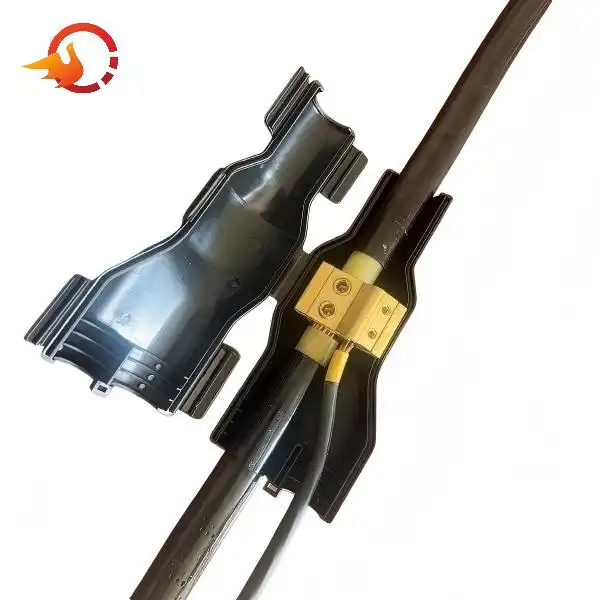
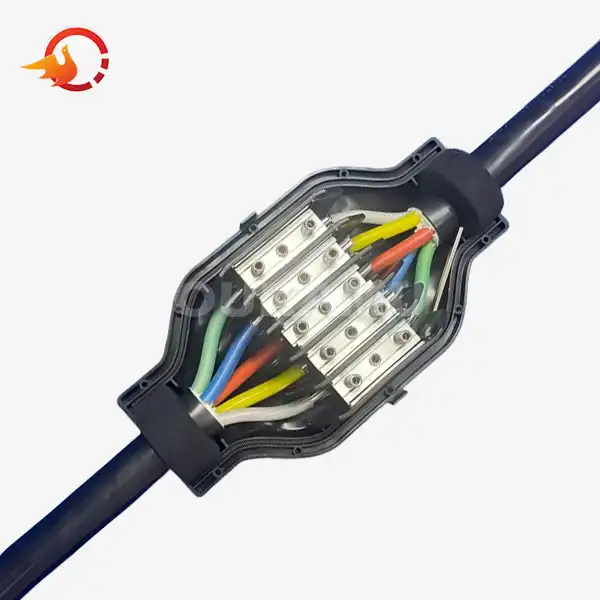
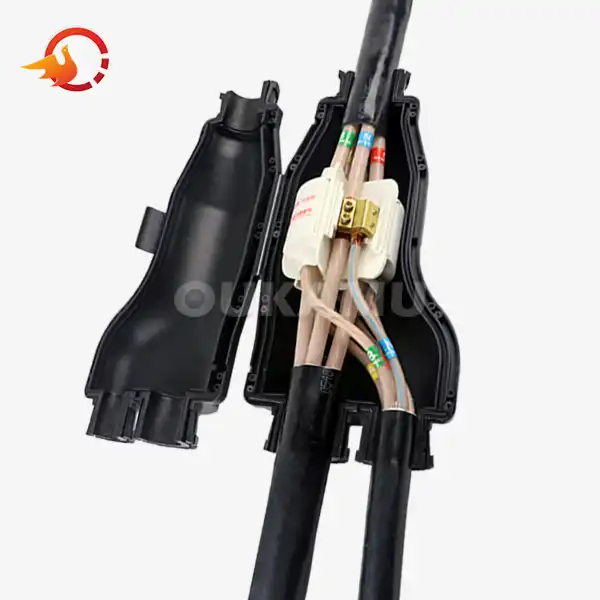
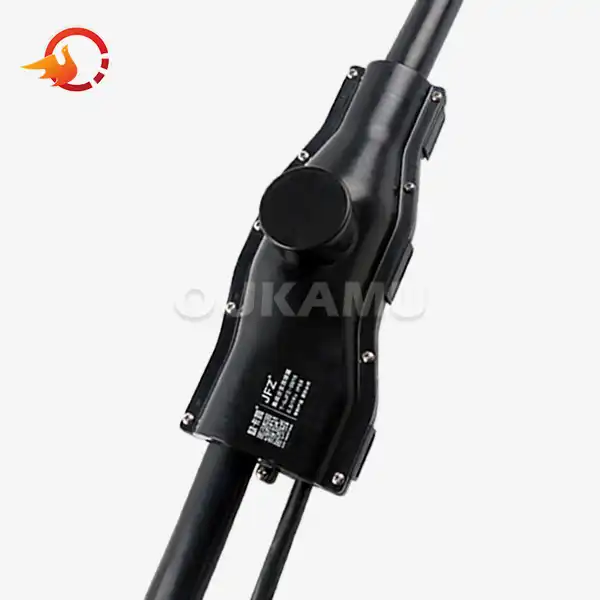
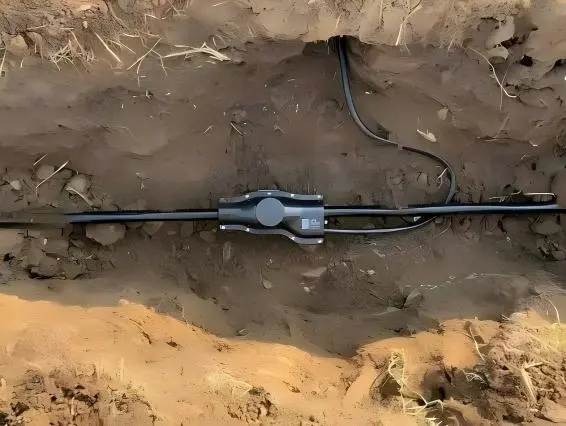
We offer a Waterproof Cable Joint Kit as a complete solution for outdoor and damp-environment connections. Gel-filled systems, like the T-GJFZ-70/16 model, use a silicone compound that flows around the conductors while they are being put together. This gets rid of any air pockets that could trap moisture.
These units can handle main wires with a diameter of 25 mm to 70 mm and branch lines with a diameter of 2.5 mm to 16 mm, which is enough for most low-voltage distribution needs. To install a branch cable, you just need to remove the insulation, put the wires into the piercing mechanism, and seal the box using the Waterproof Cable Joint Kit—there is no need to use heat or wait for the cable to cure.
Gel technology is great for tight areas where open flames or high-temperature tools could be dangerous because it doesn't need to be heated up. Phoenix's city water treatment plant upgraded without using hot work permits, which would have taken weeks longer to get approved. Instead, they used gel-filled joints.
| Specification | T-GJFZ-70/16 Model |
|---|---|
| Main Cable Range | 25–70mm |
| Branch Cable Range | 2.5–16mm |
| IP Rating | IP68 |
| Insulation Type | Gel-filled compound |
| Installation Method | Pierce-through, no cutting |
| Rated Voltage | 0.6/1kV |
Heat-Shrink Systems
Heat-shrink technology uses polymer tubes that get smaller when heated, sealing tightly around wires that have been joined together. These kits come with adhesive-lined tube that sticks to wire jackets to make waterproof barriers that can be used outside. Temperature control is very important during installation. Not enough heat can leave holes, and too much heat can damage the insulation. Electricians with a lot of experience can heat-shrink joints in fifteen to twenty minutes each, but new electricians take longer to learn how to do it.

Cold-Shrink Alternatives
Installers can put cold-shrink sleeves over connections and then take out the support structure because the sleeves come pre-stretched on detachable cores. The elastic material can stretch to hold wires in place without any power or tools. This method works well in remote areas where heat guns can't be used because the materials are usually twenty to thirty percent more expensive than gel or heat-shrink choices.
When procurement managers look at these technologies, they shouldn't just look at unit price; they should also look at how familiar the crew is with them, how easy it is to get to the site, and the total cost of installation. In the context of a large project, a connector that needs special tools or more time to install may end up costing more than a slightly more expensive option that is easier to set up.
Choosing the Best Waterproof Cable Joint Kit: Factors and Comparisons
To choose the right jointing options, you have to weigh technical requirements against what will actually happen on the job site. The decision framework includes more than just published ratings. It also looks at how reliable the supplier is, how good the documentation is, and how good the support infrastructure is.
Critical Selection Parameters
Compatible Cables: Make sure the connection works with the types of conductors you have (solid vs. stranded, copper vs. aluminium, and insulating materials). When two or more materials don't work well together, they form high-resistance joints that get hot and break early. The T-GJFZ model can handle normal PVC and XLPE insulated cables that are used in building wiring. It can also handle most business uses without the need for special ordering.
Voltage and Current Ratings: Make sure that the electrical capacity of the kit is right for the circuit loads, leaving enough room for error. When parts are too small, they cause jams that trip breakers during times of high demand. For normal lighting and power distribution, the 0.6/1kV rating works fine. However, industrial motor circuits may need higher-voltage versions.
Environmental Certification: Don't just believe what the maker says; get test records from a third party that back up the IP ratings. Submersion resistance, temperature cycling, and mechanical shock tolerance are all checked by independent labs like UL or CSA – and for a Waterproof Cable Joint Kit, these tests are especially critical to ensure long-term reliability in harsh conditions. Recognised licenses speed up reviews for projects that need to go through inspections.
Comparative Analysis
Often, procurement teams compare well-known foreign names to new companies that offer competitive prices. A company that provides infrastructure for telecommunications recently looked at different choices for a national rollout by testing samples from five different sources in the same way. Their research showed that premium brands cost forty percent more than mid-tier brands, but mid-tier brands met all performance criteria when they were asked to.
The study found that the quality of the paperwork was a difference. For example, vendors who provided thorough installation directions, troubleshooting guides, and technical support had half as many field calls as vendors who didn't provide much help. This finding shows how important it is to have partnerships with suppliers that go beyond just costing parts.
| Evaluation Factor | Premium Brands | Mid-Tier Manufacturers | Budget Options |
|---|---|---|---|
| Unit Cost | High | Moderate | Low |
| Test Certifications | Comprehensive | Selective | Limited |
| Technical Documentation | Extensive | Adequate | Minimal |
| Lead Time | 6–8 weeks | 3–4 weeks | 2 weeks |
| Warranty Coverage | 5 years | 2–3 years | 1 year |
Bulk Procurement Strategies
Buying in bulk means keeping an eye on supplies and making sure that suppliers are stable. When buying things, buyers should talk about stocking programs that balance saving money on costs with carrying costs. This is especially important for projects that last more than one year. Setting up lists of accepted vendors that include two or three qualified sources gives your supply chain extra security without spreading your purchases too thin across too many relationships.
Payment terms have a big effect on the cash flow of a project. Longer terms or progress-based billing matches payments with building milestones, and early payment savings may make it worth it to settle faster when cash flow permits. Value-added tax paperwork has to follow the rules of the country where it's used; make sure suppliers can give you invoices that do this before signing any contracts.
Troubleshooting and Maintenance of Waterproof Cable Joint Kits
When put correctly, gel-filled joints don't need much upkeep, but they should be checked on a regular basis to make sure they're still working well and to catch problems before they become major problems. Facility teams can keep systems running smoothly by knowing how to fix common problems.
Installation Error Prevention
Most joint breakdowns are caused by mistakes in the assembly process, not by problems with the product itself. When conductor stripping isn't done properly, insulation stays inside connection points, making high-resistance paths. Gel doesn't stick well when it's contaminated with oils or dirt. When screws are too tight, housings crack, and when they are too loose, wetness can get in. These problems can be avoided by following the manufacturer's instructions to the letter.
A university site had lighting systems that kept tripping six months after they were fixed up. An investigation showed that installers had used gel-filled connectors that had been taken off during the demolition, which made the seals less reliable. The problems were fixed by replacing all the joints with new units, but the cost of the upgrade was three times the cost of the original installation. This was an expensive lesson in how to handle materials properly.
Inspection Protocols
Visual checks should be done during commissioning and then once a year after that in critical applications. Inspectors look for cracks in the housing, fasteners that aren't tight enough, or water pools near the enclosures. Infrared thermography finds hot spots that mean connections aren't working well, so repairs can be made before the insulation breaks down. Insulation resistance testing with megohm meters can find moisture early on, but circuits have to be turned off for this method to work.
Remediation Approaches
Fixing small problems like loose covers is as easy as tightening the hardware and resealing it with the right chemicals. When housings are cracked or seals wear out, the whole joint needs to be replaced – and for a Waterproof Cable Joint Kit, this means swapping out the entire unit rather than attempting partial repairs. Trying to fix units that are already broken is rarely successful and can be dangerous.
When problems happen at the same time or in the same place, you should look into why. This could be because of bad storage, fitting issues, or environmental factors that are too high compared to the design parameters. Writing down upkeep tasks makes useful performance records that help with future buying choices and warranty claims. Data-driven asset management is possible with digital systems that keep track of installation dates, inspection results, and fix records.
Why Waterproof Cable Jointing Solutions Are the Preferred Choice for Future-Proofing
The move toward on-site-fabricated connections is in line with larger trends in the construction industry that value adaptability and reducing waste. Traditional premade cable arrangements force designers to stick to branch spacings that were set months before the installation, even though conditions in the field may have changed since then. Site-made joints put off final configuration until crews mark where the equipment will go. This gets rid of the problem where drawings and reality don't match up.
Economic Advantages
A study of costs shows that gel-filled branch systems lower overall installation costs in several ways. Cutting out the need to cut and splice saves about two to three meters of main cable per connection point. Because electricians can finish installations in ten to fifteen minutes instead of thirty minutes or more with the old way of doing things, work efficiency goes up. When working on projects with dozens or hundreds of delivery points, these time savings add up.
A big mixed-use development in Dallas kept track of the electricity costs for three similar buildings that were built right after each other. The first tower had standard junction boxes, the second had heat-shrink joints, and the third had branch connections filled with gel. Between the first and third building, the total cost of installing electricity went down by 12%, labour hours went down by 14%, and material waste went down by 28%.
Regulatory Compliance
More and more, building codes require better moisture protection in installations below grade, which is pushing the use of higher IP-rated parts. The 2020 National Electrical Code added more rules for damp and wet areas, making many places that were previously thought to be dry areas subject to stricter rules. These new rules apply to gel-filled systems that have IP68 certification and don't need any engineering exceptions or requests for variances.
Innovation Trajectory
Self-monitoring joint systems are being studied, and it looks like state tracking will be built right into the hardware of the connections. Temperature and humidity sensors are built into prototype devices. These sensors send data to building management platforms, which lets maintenance plans be based on real working conditions instead of set dates. With these smart parts, inspections will take less time and find problems earlier than with traditional methods.
Advances in material science keep making gels better for use in harsh temperatures and chemical environments. Next-generation compounds keep their sealing qualities over a wider range of temperatures, from sites in the Arctic to deserts with temperatures above 50°C. These kinds of features make it possible to use applications in areas that are currently serviced by more expensive specialised solutions.
Conclusion
Waterproof cable jointing technology solves the main problems that electrical workers and building managers have, like cutting down on installation time and costs, and making sure that systems will work reliably for a long time in harsh conditions. The IP68 sealing, flexible branch positioning, and maintenance-free operation make this product very valuable in residential, commercial, and industrial settings – and a Waterproof Cable Joint Kit embodies all these features in a single, ready-to-use package.
When purchasing managers look at these options, they shouldn't just look at unit prices, but also at technical certifications, the quality of the supplier documentation, and an analysis of the total installed cost. Multiple industries have shown that properly specified gel-filled systems deliver measurable returns through faster project completion, fewer service callbacks, and longer component lifetimes that make up for any initial price premiums.
FAQ
What distinguishes IP68 waterproof ratings from lower protection levels?
When parts are certified IP68, they can be submerged continuously in water up to one metre deep without getting wet. On the other hand, IP67 only allows temporary soaking up to one metre for thirty minutes. IP68 is the right level of security for deep rooms or places that could flood. Lower grades, like IP65, are good for covered indoor areas where dust and splashing are more of a worry than full submersion.
How do gel-filled connectors compare to heat-shrink joints for underground parking applications?
Gel-filled systems are better in small spaces because they don't need heat sources or time to cure. This means that there is no need for a fire watch and there are fewer complications. When placed correctly, both technologies get IP68 ratings, but gel compounds are better at adapting to small changes in wire length caused by thermal expansion. Heat-shrink is better at protecting cables from wear and tear if they are constantly being stressed by vibrations or impacts from vehicles.
Can these waterproof joints accommodate aluminum conductors or only copper?
Most gel-filled branch connectors can fit both copper and aluminium wires within their size ranges, but it is still important to make sure they are compatible. The teeth that pierce must match the hardness of the conductor. For example, aluminium needs sharper penetrators than copper. Always check the product specifications to make sure that the materials are compatible, and don't mix different types of conductors in the same joint to stop galvanic corrosion at the interface.
Partner With Oukamu for Reliable Waterproof Cable Solutions
Xi'an Oukamu Electric takes on every job with twenty years of specialised experience making branch cable connectors. Our T-GJFZ series Waterproof Cable Joint Kits offer protection against the elements (IP68) and installation options that can be changed to fit the needs of a real-life job site. As a well-known company that makes Waterproof Cable Joint Kits, we help procurement managers by providing detailed technical documentation, quick sampling programs, and reliable delivery that keeps projects on schedule.
Our gel-filled technology gets rid of the need to cut main cables, which cuts down on trash and labour hours and directly improves the economics of your project. Email our team at info@okmbranchcable.com to talk about your specific application needs and get samples to test in the field. You can look at all of our products at okmbranchcable.com, grab technical specs, and get installation guides that will help your teams while they are deployed. We offer the certifications, stability, and relationship approach that make buying parts a smart way to stay ahead of the competition.
References
1. National Electrical Manufacturers Association. (2021). Moisture Protection Standards for Electrical Enclosures. NEMA Standards Publication 250-2021.
2. Construction Specifications Institute. (2020). Cable Management Systems in Commercial Construction. CSI Technical Bulletin 48(3), 112-127.
3. Institute of Electrical and Electronics Engineers. (2022). Recommended Practice for Power Distribution in Commercial Buildings. IEEE Standard 1696-2022.
4. Associated Builders and Contractors. (2021). Labor Productivity Trends in Electrical Construction 2015-2020. ABC Research Report Series.
5. International Electrotechnical Commission. (2023). Degrees of Protection Provided by Enclosures (IP Code). IEC Standard 60529:2023.