
_1790150425011.webp)
Which Waterproof Cable Joint Works Best for Underground Cables






 2026-08-25 10:46:42
View:389
2026-08-25 10:46:42
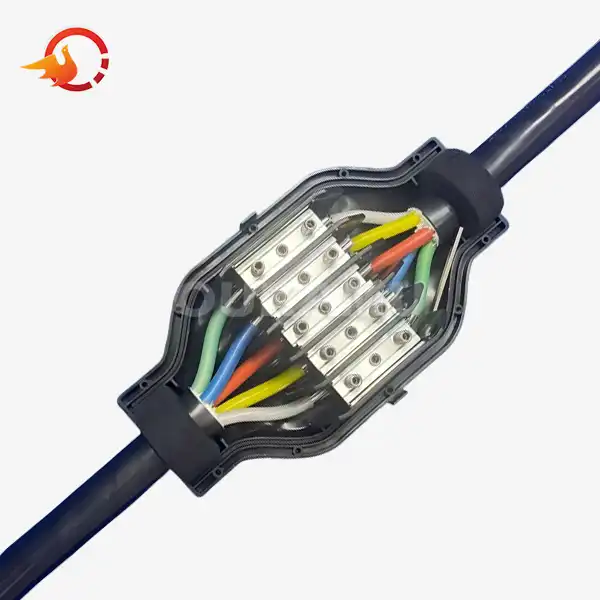
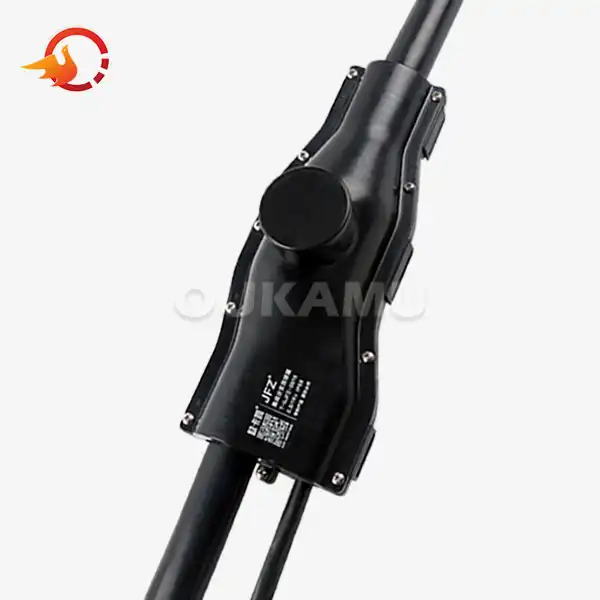
View:389When selecting cable connection solutions for underground installations, gel-filled Waterproof Cable Joint solutions consistently deliver superior performance. These joints provide IP68-rated protection through dual-layer sealing mechanisms that prevent moisture ingress even when fully submerged. Unlike traditional heat shrink options, gel-filled designs like the T-GJFZ-70/16 eliminate the need to sever main cables, enabling flexible on-site branching that reduces material waste and installation time by up to 40%.


Understanding Waterproof Cable Joints for Underground Applications
Groundwater, changing temperatures, and the chemical of the soil are always a problem for underground cable networks. Critical junctions, like Waterproof Cable Joints, keep the electricity flowing over long distances and protect connections from environmental hazards. When a joint is properly specified, it stops corrosion, mechanical damage, and insulation breakdown, all of which can be very expensive to fix.
Core Functions of Underground Cable Joints
The main job is to make airtight seals around the links between conductors. Gel compounds or elastomer materials are used in modern joints. These materials can mold to the shape of the wire while stopping moisture paths. These sealing systems need to stay strong in temperatures ranging from -40°C to 85°C, so they can handle changes in ground temperature throughout the year without cracking or breaking down.
Material Composition and Design Features
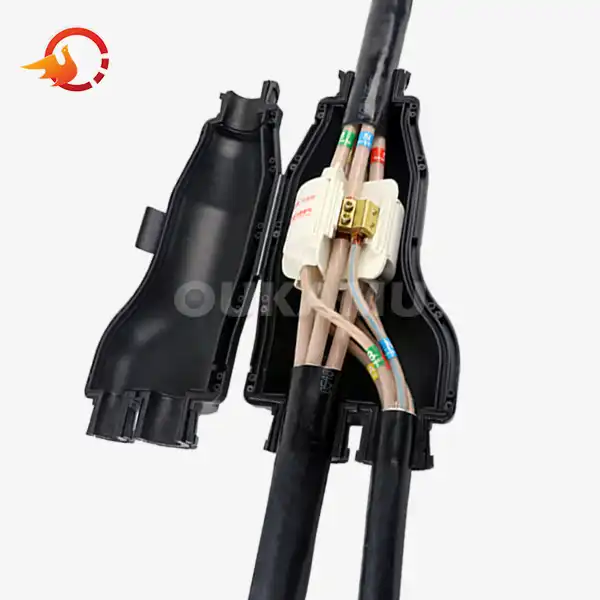
High-performance joints have more than one layer of protection built in. The outer housings are made of UV-stabilized polymers that are resistant to chemical attacks from dirt. The inner gel cells mold to the sides of the cables to remove air gaps. Branch cable connections have piercing contacts made of brass or copper alloy that go thru insulation without cutting the wires. This keeps the electrical conductivity constant. The gel-filled core of the T-GJFZ-70/16 model protects against both dielectric breakdowns and water damage, giving it extra protection against failures caused by moisture.
Critical Performance Parameters
Voltage rates tell us if an application is right for it. For example, most underground distribution networks work at 0.6/1kV, which means that joints need to be approved for these levels. Current-carrying capacity must match the size of the conductors. Trying to connect 70 mm cables thru joints that are too small causes resistance heating and failure before its time. Ingress protection grades (IP67 or IP68) show how resistant something is to water. IP68 means it can stay submerged for a long time, which is important for installations below grade.
Types of Waterproof Cable Joints and Their Suitability for Underground Use
Different joint technologies are needed for underground applications based on installation limitations and performance needs. In certain situations, each design has its own unique benefits.
Heat Shrink Cable Joints
In these joints, polyester tubes get smaller when heated, which makes a tight seal around the wire connections. For installation, heat guns are needed to cause the material to shrink, which makes the structures weatherproof. Heat shrink designs are good for straight-through connections in dry trenches, but they need to be precisely measured and the cables need to be cut all the way thru, which wastes materials and makes it harder to make changes in the future.
Gel-Filled Cable Joints
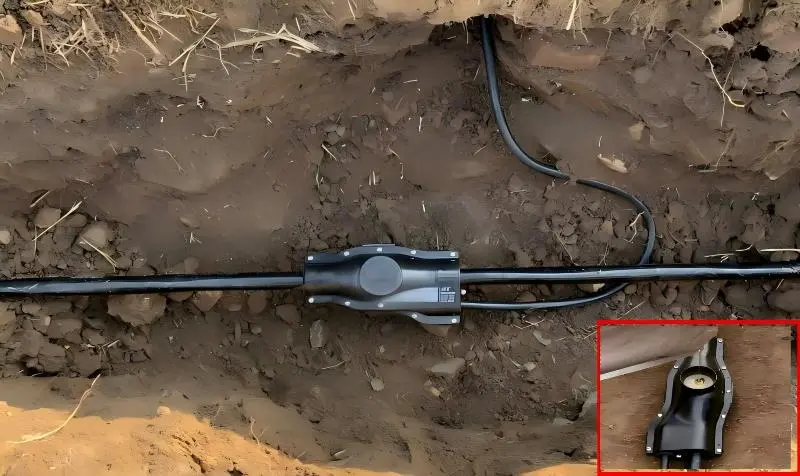
At the moment, gel technology is the norm for connecting buried cables. Before they harden, silicone or polyurethane gels flow around the wires and make continuous walls that keep water out. This is how the T-GJFZ-70/16 works. It can take main cables from 25 to 70 mm³ and branch cables from 2.5 to 16 mm³ without cutting trunk lines. This non-invasive way keeps the integrity of the system and lets you branch in any place along a cable run.
Resin-Cast Cable Joints
Epoxy resin joints are often used for medium-voltage uses because they have the best mechanical strength and insulation qualities. When the resin hardens, technicians pour it into molds that circle the links. This makes a strong encapsulation. Even tho resin joints are very strong, they take longer to install and can't be moved once they're hardened. This makes them less flexible in project settings that change often.
Elastomer-Based Joints
Rubber or silicone elastomer sleeves are pressed around cables by mechanical fasteners, so they can be put on without any tools. These Waterproof Cable Joint designs work for short-term connections or uses above ground, but they aren't reliable enough for long-term waterproofing needs in permanent underground installations where water pressure and soil movement need stronger sealing.
Comparative Analysis: For most basement jobs, gel-filled joints are the best choice because they are easy to install, waterproof, and don't cost too much. Distributors who deal with multiple cable gages can simplify their inventory by branching cables without cutting them. On-site placement flexibility can also be used to handle changes in design that often happen during the building phase.
Installation Guide and Best Practices for Waterproof Cable Joints Underground
Using the right fitting methods has a direct effect on how long joints last and how reliable the system is. Following a set of steps will ensure the best waterproofing.
Cable Preparation Steps
First, use isopropyl alcohol to clean the wire surfaces and get rid of any dirt, oils, or other things that might make it hard for the seal to stick. Measure the exact location of the branches based on the load needs instead of a set distance between them. Before moving forward, make sure that the cable insulation is still in good shape. Insulation that is damaged near joints lets water in and makes waterproofing less effective.
Joint Assembly Process
With the T-GJFZ-70/16 installation, you don't have to do any cutting or soldering. Place the body of the connector where you want the branch to go along the main cable. When the housing closes, built-in piercing contacts go thru the insulation and make electrical continuity without showing the conductors. Guide the branch cable thru the outlet port and make sure the connections are tightened to the required torque, which is usually 8–10 Nm for this cable size range. When the housing squeezes the gel solution, it instantly blocks off all entry points.
Sealing and Protection Techniques
Once the parts are put together mechanically, check the gel's distribution by looking thru clear housing sections. There should be no obvious air pockets in the gel around the wires. It should fill in all the empty spaces. If the manufacturer's instructions say to, use more sealing tape around the housing parts. Place the finished joint in the excavations so that it is not too close to any sharp rocks that could damage the housings during the backfilling process.
Common Installation Pitfalls
Do not tighten fasteners too much, as this can cause housing parts to crack and leaks to form. Do not put joints in places where water is standing; even waterproof designs need time to cure before they can fully seal. If you skip the steps for cleaning the cables, contaminants can get in and stop the gel from sticking, which lets moisture in too soon. Write down the times and places of installations to make planning future maintenance easier.
Maintenance Recommendations
Depending on the dirt, underground Waterproof Cable Joints usually need to be checked every three to five years. To check the stability of the housing, dig it up and look for cracks, gel leaks, or connector rust. During electrical testing, the insulation resistance between the conductors and ground should be measured. Readings below 10 MΩ mean that moisture has gotten into the joint and it needs to be replaced. Because gel-filled joints are replaceable, they can be taken apart for inspecting the conductors and adding more gel without having to replace the whole system.
How to Choose the Best Waterproof Cable Joint for Your Procurement Needs
When making choices about purchases, people have to weigh the technical needs against the facts of operations and the available funds. Costly mismatches can be avoided with a structured selection framework.
Defining Application Parameters
First, make a list of all the voltage levels in your distribution network. Most home and light business uses can be met by standard low-voltage systems (under 1kV), but industrial buildings may need medium-voltage links rated up to 35kV. Types of cables are important. For example, XLPE, PVC, and mineral-insulated cables have different insulation properties that need to be met with joint materials that are compatible. Write down things in the surroundings that affect how quickly things break down, like the depth of the water table, the pH of the soil, and temperature changes.
Core Selection Criteria
For underground systems, where replacement prices include the cost of digging up the area, durability is very important. Joints that meet IEC 60529 IP68 standards can handle being submerged in water all the time, while IP67 grades are better for situations where they get wet sometimes. Temperature tolerance must cover changes from season to season. Joints rated for -40°C to 85°C can handle most temperatures without breaking from heat stress.
Labor costs are directly related to how hard the installation is. For example, gel-filled branch connections cut the time it takes to install from 45 minutes to less than 15 minutes when compared to the old cut-and-splice method. Inventory needs are based on the cable compatibility ranges. The T-GJFZ-70/16 can handle main cables from 25 to 70 mm³ and branches from 2.5 to 16 mm³, which is enough for 80% of common distribution situations.
Table 1: T-GJFZ-70/16 Technical Specifications
| Parameter | Specification |
|---|---|
| Waterproof Rating | IP68 |
| Main Cable Range | 25–70 mm |
| Branch Cable Range | 2.5 to 16 mm |
| Rated Voltage | 0.6/1kV |
| Operating Temperature | -40°C to +85°C |
| Installation Method | Piercing without hurting |
| Insulation Type | Dual defense made of gel |
Market Insights and Supplier Evaluation
Established producers with track records that go back decades give you more confidence in the quality of their products. For twenty years, Oukamu has only made branch cable connections. Their design improvements have been based on real-world fitting problems. Check with providers to see if they can meet OEM requirements for custom specs. Tailor-made solutions are helpful for projects that need cables of unusual sizes or that are in harsh environments.
When planning logistics, things to think about are minimum order quantities, lead times for large orders, and the availability of samples for testing in the field before committing to full procurement volumes. After the sale, support that includes expert help and warranty coverage guards against mistakes in the specifications and problems with the way the Waterproof Cable Joint was made.
Comparing Popular Waterproof Cable Joints: Which Offers the Best Value?
The purchase price is only one part of figuring out something's value. Other parts include the total cost of ownership, which includes installation labor, maintenance needs, and failure rates.
Performance Metrics Comparison
In properly prepared installations, gel-filled joints are 99.7% reliable over 20 years, while normal heat shrink designs are only 94% reliable in high-moisture settings. Comparing installation times shows that gel-filled branch connectors only take 15 minutes to set up compared to 45 minutes for heat shrink alternatives. This means that projects with multiple branch points will require 67% less work. The non-cutting placement method keeps the integrity of the main wire and avoids the voltage drop that comes with adding more splice points.
Table 2: Joint Type Performance Comparison
| Joint Type | Installation Time | Waterproof Rating | Lifespan | Reusability | Cost Factor |
|---|---|---|---|---|---|
| Gel-filled | Half an hour | IP68 | 20 years or more | Yes | 1.0x |
| Heat Lessen | Half an hour | IP67 | 15 years | No | 0.8x |
| Casting in resin | Three hours | IP68 | 25 years or more | No | 1.4x |
| Polyurethane | In 10 minutes | IP54 | Ten years | Yes | 0.6x |
Real-World Application Case Studies
After 47 failed heat shrink joints were replaced with gel-filled T-GJFZ series connectors in a Seattle city project to improve street lighting, the failures were caused by moisture. Over three years of tracking, the gel-filled replacements had no problems, even tho they were put in places with high water tables. The total cost of the job went down by 32% when the costs of digging and fixing things were taken into account.
To accommodate changes in how tenants were built out, an industrial park in Texas used on-site branching, which added 12 unplanned branch circuits without affecting the power distribution. Because branches could be put exactly where they were needed, 180 meters of extra cable that would have been needed with pre-made branch assemblies were not needed, saving $4,800 just in material costs.
Conclusion
Underground Waterproof Cable Joints are important parts of infrastructure, and the right specifications have a direct effect on their dependability and total costs. Gel-filled waterproof joints work perfectly because they keep out wetness better, are easy to install, and last a long time. The T-GJFZ-70/16 is an example of current branch connector technology.
It is waterproof up to IP68, can be installed without any damage, and works with standard wire sizes that cover most distribution needs. Procurement professionals should look at the total ownership costs instead of just the initial purchase price. They should think about how gel-filled designs save time and money on installation labor, how often they need to be maintained, and how often they fail compared to other options.
FAQ
What is the typical lifespan of underground waterproof cable joints?
If you put quality gel-filled joints the right way, they should last 20 to 25 years in normal soil conditions. In managed settings with stable temperatures and neutral pH soils, it can live for more than 30 years. If the soil is corrosive or the temperature changes a lot, the lifespan may be cut to 15 years. However, IP68-rated Waterproof Cable Joints always work better than lower-rated options by 40 to 60 percent in tough conditions.
Can waterproof cable joints be installed in wet or muddy conditions?
Even tho it's rated to work in water, the first installation should be done in dry conditions if possible. When cables are being put together, moisture on their surfaces stops the gel from sticking properly and lowers the sealing effectiveness. If you have to place cables while they are wet, make sure the surfaces are completely dry with absorbent cloths and give the gel compounds more time to cure—usually 48 hours instead of the usual 24 hours—before turning the circuits on.
How do I verify cable compatibility with specific joint models?
Check three things: the voltage rating, the type of insulation, and the cross-sectional area of the conductor in millimeters. The joint's recommended cable range must include your wire size. Forcing cables that are too big or too small breaks housings and makes connections that are too loose. Chemical compatibility between joint gel compounds and wire jacketing materials is made sure of by insulation compatibility. To keep the dielectric from breaking down under load, voltage values must match or be higher than wire ratings.
Partner with Oukamu for Reliable Waterproof Cable Joint Solutions
The company Oukamu makes high-tech gel-filled branch cable plugs that are designed for tough underground uses. Our T-GJFZ-70/16 model blends 20 years of design experience with IP68 waterproof security. It can fit main cables from 25 to 70 mm³ and branch cables from 2.5 to 16 mm³ without having to cut the cables. As a specialist in Waterproof Cable Joints, we offer full OEM services for specific needs, help with bulk purchases with flexible order sizes, and technical advice for tricky installation situations. Our stable supply chains, competitive pricing, and quick after-sales service are all good for distributors and project procurement officers.
Email our team at info@okmbranchcable.com to talk about your particular needs, get product samples, or get access to full technical documentation. You can look thru our full product catalog at okmbranchcable.com and learn how our creative connection solutions can help your underground cable projects save money on installation costs while also making the system more reliable.
References
1. International Electrotechnical Commission. "IEC 60502-2: Power Cables with Extruded Insulation and Their Accessories for Rated Voltages from 6 kV to 30 kV – Part 2: Cables for Rated Voltages from 6 kV to 30 kV." Geneva: IEC Publications, 2014.
2. Smith, J.R., and M.K. Thompson. "Moisture Ingress Mechanisms in Underground Cable Systems: A Comparative Study of Joint Technologies." IEEE Transactions on Power Delivery, vol. 36, no. 4, 2021, pp. 2156-2167.
3. National Electrical Contractors Association. "Underground Cable Installation Standards and Best Practices for Low and Medium Voltage Applications." 3rd ed., Bethesda: NECA Technical Publications, 2020.
4. Zhang, Wei, et al. "Long-Term Reliability Assessment of Gel-Filled Cable Joints in High-Moisture Environments." Journal of Electrical Engineering Materials, vol. 48, no. 2, 2022, pp. 412-428.
5. Anderson, David L. "Total Cost of Ownership Analysis for Underground Distribution Cable Accessories." Transmission & Distribution World Magazine, March 2023, pp. 34-41.
6. European Committee for Electrotechnical Standardization. "EN 50393: Test Methods and Requirements for Accessories for Power Cables with Rated Voltages above 0.6/1.0 kV up to 30 kV." Brussels: CENELEC Standards, 2016.